

U1001 on 2012-2014 Nissan NV: CAN Communication Failure Causes and Fixes
The U1001 code on a 2012-2014 Nissan NV indicates a CAN communication network failure. The most common causes are poor ground connections (especially near the battery and on the engine block), low battery voltage, or a faulty Intelligent Power Distribution Module (IPDM). Before suspecting expensive components, thoroughly clean all major ground points and test the battery.
- U1001 is a serious network communication code; do not ignore it.
- Before suspecting expensive parts, always start with the basics: check the battery's health and thoroughly clean all main engine and chassis ground connections.
- The problem is almost always electrical, relating to wiring, connections, or power supply, not a mechanical part.
- Diagnosing this code can be difficult without a professional scan tool that can show the status of the entire vehicle network.
- Do not replace the ECM or other modules unless you have definitively proven they are the cause of the failure by checking their power, ground, and network connections first.
What's Unique About the 2012-2014 Nissan NV
The Nissan NV is built on the rugged F-Alpha body-on-frame platform, shared with the Titan and Armada. As a commercial vehicle, its extensive wiring to support various upfitter configurations, combined with demanding daily use, makes it more susceptible to wiring and connection issues. For many Nissan vehicles of this era, the Intelligent Power Distribution Module (IPDM), which acts as a central hub for power and communication, is a known weak point that can cause network codes like U1001 due to internal relay failure.
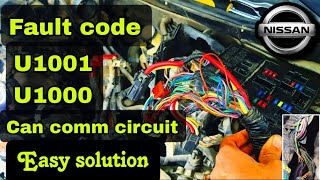
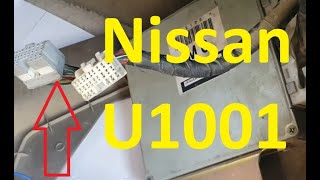
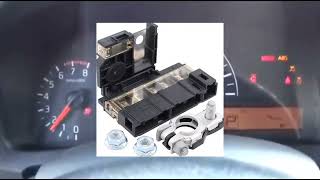
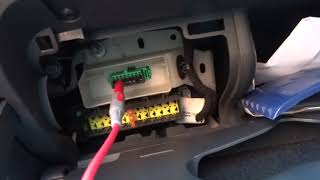
🎬 Watch: How to fix Nissan U1001 CAN communication circuit issues.Diagnostic Flowchart
Tap your situation to follow the diagnostic path that matches what you're seeing on this vehicle.
Symptoms You May Notice
- Check Engine Light is on
- Multiple other warning lights may illuminate (ABS, Traction Control, etc.)
- Engine cranks but will not start
- Engine may stall while driving, sometimes intermittently
- Erratic or non-functional instrument cluster gauges (speedometer, tachometer)
- Transmission may shift harshly or be stuck in one gear (limp mode)
- Cooling fans running at full speed even when the engine is cold
- Flickering lights or other strange electrical behavior
- Replacing the Engine Control Module (ECM) or another control unit without first verifying its power, ground, and the integrity of the CAN wiring. Modules are expensive and often not the root cause.
- Overlooking a simple corroded ground wire or a weak battery, which are the most frequent culprits for this code on Nissan trucks.
Most Likely Causes
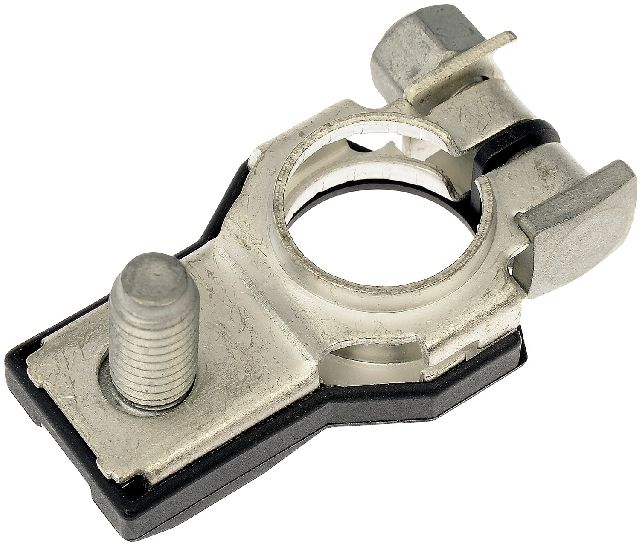
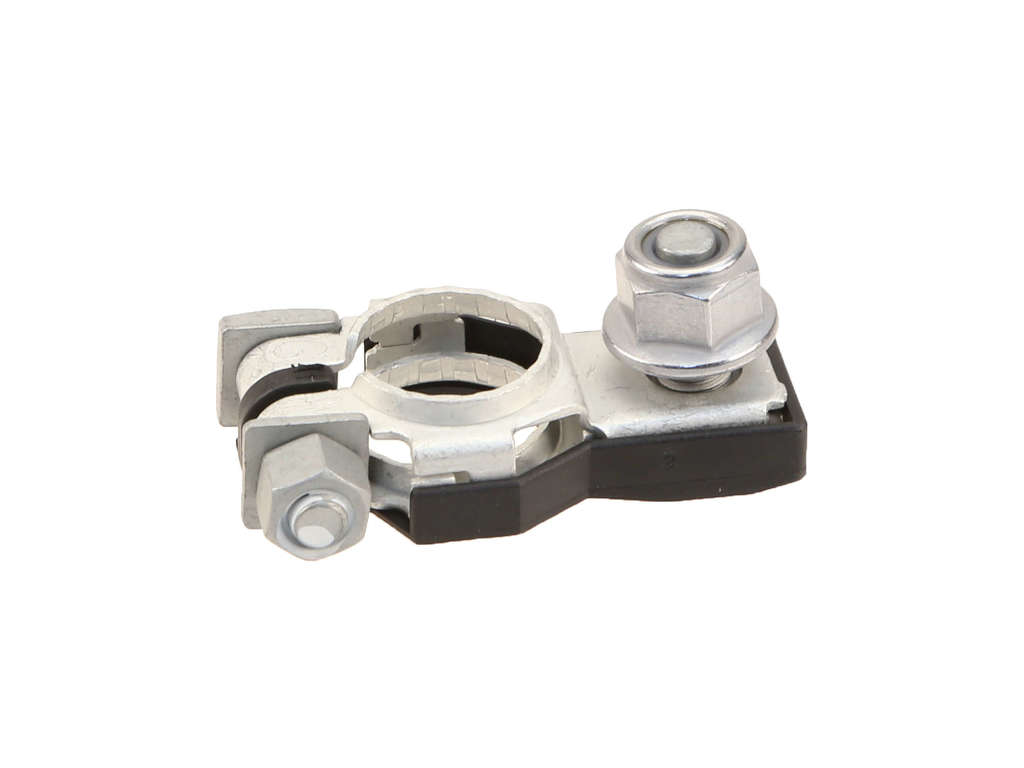
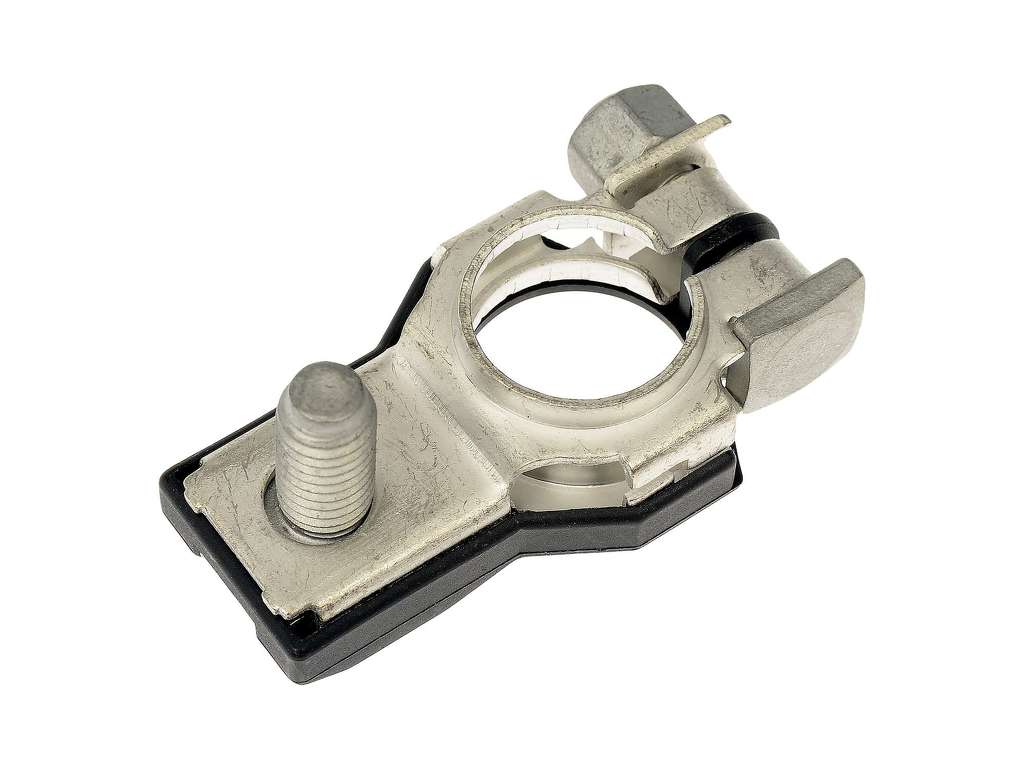
- Loose, Corroded, or Damaged Ground Wires 🔴 High Probability Nissan vehicles, particularly those on the F-Alpha platform, are notoriously sensitive to poor ground connections. Corrosion often builds up on main ground points in the engine bay, especially the strap from the battery to the chassis and connections on the engine block, interrupting the stable voltage required by control modules.
How to confirm: Visually inspect the main battery ground cable, engine-to-chassis ground straps, and any smaller ground wires bolted to the chassis in the engine bay near the battery. Look for fraying, looseness, or corrosion (green or white powder). A voltage drop test from the negative battery post to the engine block should show less than 0.5V while cranking.
Typical fix: Disconnect the ground connections, clean the cable ends and the mounting surface with a wire brush until shiny, apply dielectric grease, and re-secure tightly. Some owners opt to install additional or upgraded ground wire kits.
Est. part cost: $0-$25 - Low Battery Voltage or Weak Battery 🟡 Medium Probability → Shop Vehicle Battery Low system voltage (below 12V, and especially below 10V during cranking) can cause electronic modules to malfunction, reset, or drop off the CAN network, triggering communication codes.
How to confirm: Use a multimeter to test the battery voltage with the engine off. A healthy battery should read around 12.6 volts. Test the voltage while cranking; if it drops below 9.6 volts, the battery is likely weak. Also, have the charging system tested at an auto parts store.
Typical fix: Recharge or replace the vehicle's battery.
Est. part cost: $150-$300 - Damaged CAN Bus Wiring 🟡 Medium Probability Wiring can be damaged by chafing against sharp metal edges, previous improper repairs, or rodent activity. On commercial platforms like the NV, harnesses may be routed near aftermarket equipment, increasing the risk of damage.
How to confirm: Visually inspect the wiring harnesses, particularly where they pass through the firewall or are routed near the engine, exhaust, and around the IPDM. Look for any signs of abrasion, melting, or breaks. A multimeter can be used to check for continuity and shorts to ground on the CAN H and CAN L wires (requires a wiring diagram).
Typical fix: Repair the damaged section of wire, ensuring a solid, insulated connection. Reroute the harness if it is in a vulnerable position and secure it with zip ties.
Est. part cost: $5-$50 - Faulty Intelligent Power Distribution Module (IPDM) ⚪ Low Probability → Shop Fuse Box The IPDM on many Nissan platforms contains non-serviceable internal relays (e.g., for the ECM and fuel pump) that can fail, leading to a loss of power to a critical module and causing a U1001 code. Early models were often white and known to be problematic, while later replacements are typically black. Failure can manifest as a crank-no-start or sudden stalling.
How to confirm: This is difficult to confirm without swapping with a known-good part. A technician may check for power and ground at the IPDM and verify its outputs. An IPDM self-test can be performed to check its output functions (wipers, lights, etc.), but this may not identify a failing ECM relay. A key test is to check for voltage at the mass air flow sensor's source wire (often brown); a reading significantly less than battery voltage (e.g., 5-6V) points to a failing ECM relay inside the IPDM.
Typical fix: Replace the IPDM. This part is located in the engine bay fuse box. The OEM part number for the 2012-2014 NV is typically 284B6-1PA0A or 284B7-1PA0A. This part does not typically require programming on the NV.
Est. part cost: $250-$500
Rare But Worth Checking
- Faulty Control Module (ECM, BCM, TCM): While a module can fail internally, it is far more common for the issue to be in the wiring or connections to the module. Always rule out wiring and power/ground issues before condemning an expensive control unit. A module failure is often the last thing to suspect after all other possibilities are exhausted.
- Aftermarket Electronics: Improperly installed aftermarket accessories (remote start, alarm, stereo, GPS trackers, CB radio) can interfere with the CAN bus, causing communication errors. If you have such devices, try disconnecting them to see if the problem resolves.
Diagnosis Steps
- Check and record any other stored fault codes. Always diagnose U-codes first, as they can cause other codes to be set.
- Check battery voltage. Ensure it is at least 12.4V. Charge or replace the battery if necessary. Low voltage is a common cause of CAN faults.
- Thoroughly inspect all visible ground connections in the engine bay for corrosion or looseness. Pay special attention to the main battery ground cable where it bolts to the chassis and the engine-to-chassis straps. Disconnect, clean with a wire brush, and tighten them securely.
- Inspect fuses related to control modules, particularly in the IPDM (engine bay fuse box). Look for fuses labeled 'IGN', 'ECM', or 'Electronic Parts'.
- Using a professional scan tool like Nissan CONSULT, perform a network test ('CAN Diag Support Monitor') to see which modules are online and which are not communicating.
- If a specific module is offline, inspect its connector for corrosion or damage and verify it is receiving proper power and has a good ground connection.
- If wiring is suspected, disconnect the battery and measure the resistance between the CAN H (Pin 6) and CAN L (Pin 14) pins at the OBD-II port. A healthy network should read approximately 60 ohms. A reading of 120 ohms suggests an open circuit or a missing terminating resistor (often in the ECM or IPDM/BCM), while ~0 ohms indicates a short between the two CAN wires.
- Perform an IPDM self-test. With the ignition off, turn the ignition ON, and within 20 seconds, press the driver's door switch 10 times. Turn the ignition OFF, then ON again. The horn should chirp, and the test will cycle various components like wipers and lights. This helps verify some IPDM functions.
Parts You'll Likely Need
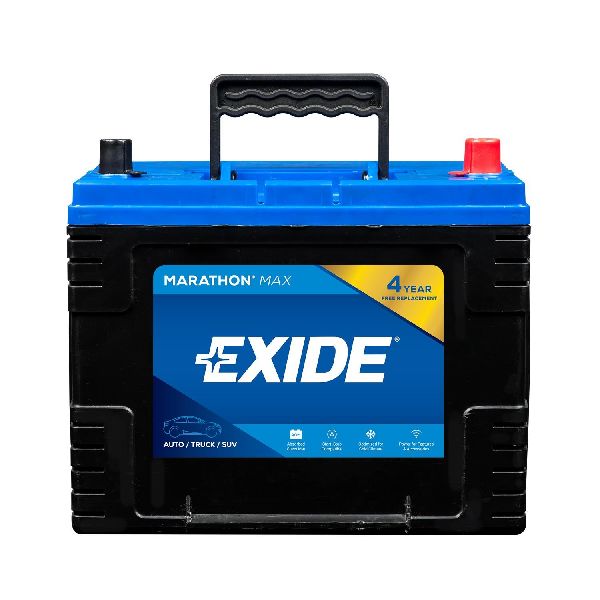
- Battery — A weak or failing battery is a common cause of communication codes due to low system voltage.
Trusted brands: Interstate, Duralast, DieHard
OEM price range: $200-$350
Aftermarket price range: $150-$300 - Intelligent Power Distribution Module (IPDM)
(OEM #284B6-1PA0A, 284B7-1PA0A)— The IPDM is a known failure point on many Nissan vehicles that can cause a variety of electrical and communication problems, including the U1001 code, often due to an internal ECM relay failure.
Trusted brands: Hitachi, Standard Motor Products, Nissan (OEM)
OEM price range: $300-$500
Aftermarket price range: $150-$400
Related Codes That Often Appear With This One
- U1000 — U1000 is a general CAN communication failure code. It is often stored alongside U1001 and indicates a widespread network problem.
- P0300 — If the CAN communication issue is intermittent, it can disrupt signals needed for ignition timing, potentially causing random misfires.
Technical Service Bulletins (TSBs) & Recalls
- NTB10-066a: This bulletin provides general diagnostic guidelines for Nissan CAN communication codes like U1000 and U1001, advising technicians to diagnose these codes first and outlining basic electrical checks like power, ground, and CAN resistance.
- NTB12-075c: While not directly for U1001, this TSB addresses infotainment software updates. Out-of-date module software can sometimes cause communication issues on the network, making it important to keep vehicle software updated.
Platform-Specific Known Issues
- Some 2013 NV models were subject to a recall for improper wire routing that could cause a short circuit and lead to an engine stall, which is a symptom of CAN failure.
- As a commercial vehicle, aftermarket modifications like CB radios or shelving can lead to damaged wiring or improper grounds if not installed carefully, creating a potential source for CAN bus faults.
Mechanic-Grade Diagnostic Values
- CAN Bus Resistance at OBD-II Port — expected: ~60 Ω (ohms). Failure: A reading of ~120 Ω indicates an open circuit or one of the two terminating resistors is offline. A reading near 0 Ω indicates a short between CAN-H and CAN-L wires.
- CAN Bus Voltage (Ignition ON) — expected: CAN-H (Pin 6 to Ground): ~2.6V to 2.7V. CAN-L (Pin 14 to Ground): ~2.3V to 2.4V.. Failure: Voltages that are the same (e.g., both 2.5V) can indicate a short between the lines. Both at 0V can indicate a short to ground.
- Terminating Resistor Resistance — expected: ~120 Ω (ohms). Failure: An open or significantly different reading when measuring resistance across the CAN pins of an isolated terminating module (like the ECM or IPDM) indicates a faulty module.
- Voltage at Mass Airflow Sensor (MAF) power wire — expected: Should be within 0.5V of battery voltage.. Failure: A significantly lower voltage, such as 5-6 volts, is a common symptom of a failing ECM relay inside the IPDM.
Scan Tool Commands That Help
- Nissan CONSULT-III plus: CAN Diag Support Monitor — This is the primary diagnostic function to get a network-wide view of module communication status. It will show which modules are communicating normally (Green), which have a current error (Red), and which have a past error (Orange), guiding the technician to the source of the network disruption.
- Nissan CONSULT-III plus: Self Diagnosis (All Systems) — Should be performed before any reprogramming or deep diagnosis to ensure no other DTCs are present that could interfere with the procedure.
- Generic Scan Tool: IPDM Auto Active Test (Self-Test) — This is a built-in vehicle function, not a scan tool command, but is a critical diagnostic step. It verifies if the IPDM's logic and relays can power outputs like wipers, lights, and the horn. A failure strongly suggests a faulty IPDM, though a successful test does not completely rule out a failure of the non-tested ECM power relay.
Wiring & Ground Locations
- Main Battery Ground — The negative battery cable connects to the passenger-side inner fender panel. This is often a 'strip-and-clip' style ground where insulation is removed from the main cable and strapped to the body.. This is the primary ground return path for the entire vehicle's electrical system. Corrosion here creates high resistance, causing unstable voltage for all control modules and is a top cause of CAN communication codes.
- Engine Block / Cylinder Head Grounds — There are typically multiple ground straps from the engine to the chassis/firewall. One common location on F-Alpha platforms is from the exhaust side of the cylinder head to the firewall, and another from the intake area to the body.. Ensures the engine-based modules (ECM, TCM) have the same ground potential as body-based modules (BCM, IPDM). A poor engine ground can create a voltage differential that disrupts sensitive CAN signals.
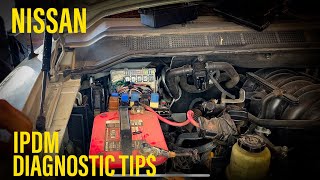
- IPDM (Intelligent Power Distribution Module) — Located in the engine compartment, typically a black box with fuses and relays near the battery.. The IPDM is a CAN network module itself and also contains the terminating resistor for one end of the bus on many models. It also houses the ECM power relay, which is a common failure point causing U1001.
- OBD-II Connector Pins — Under the driver's side dashboard.. Pin 6 is CAN-H and Pin 14 is CAN-L. These are the primary access points for testing the resistance and voltage of the entire CAN bus network with a multimeter.
Real Owner Repair Stories
- YouTube channel 'Aaron Hines' (2008 Nissan Titan (shares F-Alpha platform and IPDM design)) — Stalling, no-start, rough idle, low power conditions.
❌ Tried (didn't work) The video focuses on diagnosis, but implies that simply replacing parts without testing is a common mistake.
✅ What actually fixed it The issue was a faulty ECM relay located inside the IPDM. The fix was to replace the relay or the entire IPDM unit. The video demonstrates confirming the fault by testing for low voltage (5-6V instead of battery voltage) at the MAF sensor power wire, which is fed by the ECM relay.
OEM Part Supersession History
Various 'white-colored' IPDM units→Various 'black-colored' IPDM units (e.g., 284B7-1PA0A)— The original white-cased IPDMs were known to have higher failure rates, particularly of the internal, non-serviceable ECM relay. Nissan issued service bulletins for other platforms regarding this issue.
Heads up: While the IPDM for a 2012-2014 NV does not typically require programming, it is critical to match the part number exactly to the vehicle's options.
Helpful Videos


We Have This Part in Stock


The information in this article is provided for general reference and educational purposes only. Vehicle specifications, procedures, and part compatibility can vary by production date, trim level, and region. Always consult your vehicle's factory service manual and verify part numbers before purchasing or performing repairs. Safety-critical components such as airbags, seat belts, and braking systems should be installed by a qualified professional.
- Nissan NV:
- 🧭 Diagnostic Flowchart
- 🎬 Helpful Videos
- 🛍️ Shop This Part
- What's Unique About the 2012-2014 Nissan NV
- Symptoms You May Notice
- Most Likely Causes
- Rare But Worth Checking
- Diagnosis Steps
- Parts You'll Likely Need
- Related Codes That Often Appear With This One
- Technical Service Bulletins (TSBs) & Recalls
- Platform-Specific Known Issues
- Mechanic-Grade Diagnostic Values
- Scan Tool Commands That Help
- Wiring & Ground Locations
- Real Owner Repair Stories
- OEM Part Supersession History
- 🎟️ Get 5% Off