

U1001 on 2011-2014 Nissan Quest: CAN Communication Fault Causes and Fixes
U1001 on a Nissan Quest means there's a communication failure between the vehicle's computers. The most common causes are a weak battery, corroded ground wires, or damaged wiring. Do not replace any computers until a full electrical diagnosis is performed, starting with the battery and main ground connections.
- U1001 is a network communication error, not a specific part failure.
- Always check the battery, its connections, and all major ground wires first. This is the most common and cheapest fix.
- Do not replace any expensive control modules (ECM, TCM, BCM) unless you have definitively proven through testing that it is the point of failure.
- Diagnosis is complex and requires more than a basic code reader. Professional help is strongly recommended to avoid costly mistakes.
- A healthy CAN bus should have about 60 Ohms of resistance between pins 6 and 14 of the OBD-II port with the battery disconnected.
What's Unique About the 2011-2014 Nissan QUEST
The 2011-2014 Nissan Quest (generation RE52) is a sophisticated minivan with numerous electronic modules. Like many Nissans from this era, its CAN network is highly sensitive to voltage and grounding issues. Problems that might not cause issues on other vehicles, like minor corrosion on a ground strap or a slightly weak battery, can be enough to disrupt communication and trigger a U1001 code on the Quest. Owners often report a cascade of seemingly unrelated warning lights as different modules drop off the network. A specific vulnerability for minivans like the Quest is water intrusion from clogged sunroof drains, which can drip directly onto the Body Control Module (BCM) located in the passenger footwell, causing widespread electrical chaos.
Diagnostic Flowchart
Tap your situation to follow the diagnostic path that matches what you're seeing on this vehicle.
Symptoms You May Notice
- Multiple warning lights on the dashboard (Check Engine, ABS, VDC, etc.)
- Erratic or non-functional instrument cluster gauges (e.g., speedometer or tachometer at zero)
- Harsh shifting or getting stuck in one gear (limp mode)
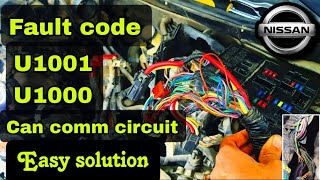
- Engine cranks but will not start 🎬 Watch: Troubleshooting a Quest that won't start or has no power.
- Power windows, locks, or sliding doors not working correctly
- Headlights or other electronics behaving strangely
- Radio/infotainment screen staying on with the car off, causing battery drain
- Security indicator light stays on or blinks
- Replacing the ECM or TCM without diagnosis. People often blame the most expensive computer first, but the issue is far more likely to be a simple wiring or ground problem.
- Replacing a single module that is reporting a U1000/U1001 code. The module reporting the code is often the one that is *not* receiving a signal, meaning the fault lies elsewhere on the network.
Most Likely Causes
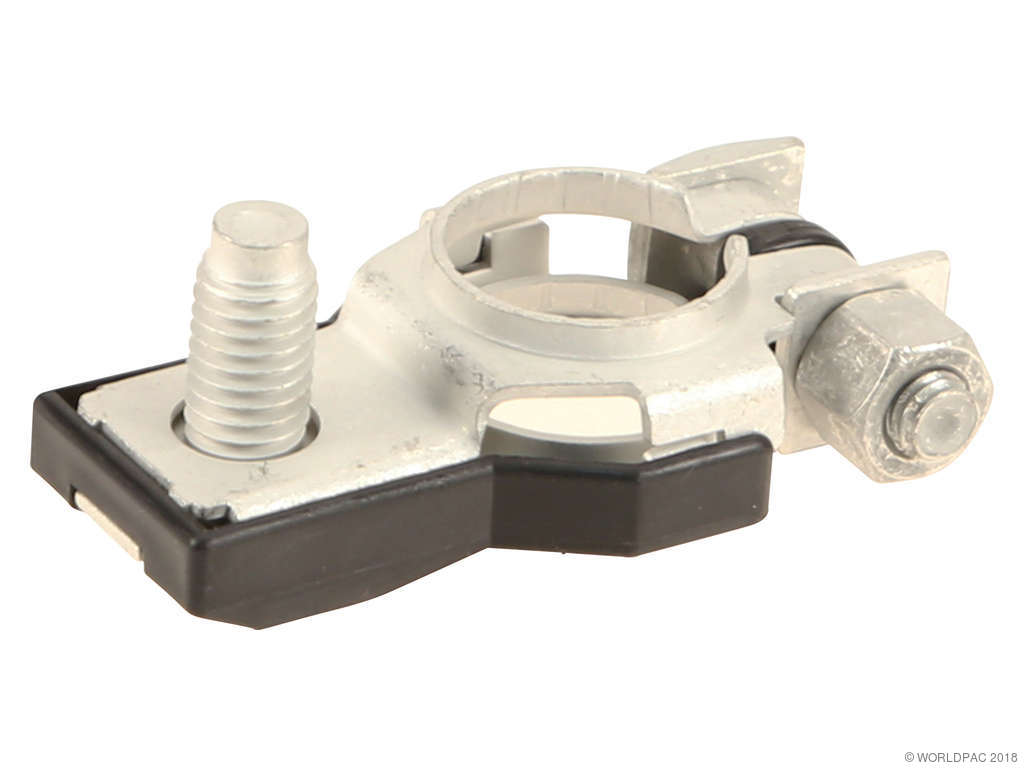
- Low Battery Voltage or Poor Connections 🔴 High Probability → Shop Vehicle Battery Nissan vehicles are notoriously sensitive to low voltage; modules may stop communicating below 10V. A weak or dying battery, or terminals with even light corrosion, can cause modules to drop off the CAN network during startup or operation. Corrosion on the negative terminal is a particularly common culprit.
How to confirm: Test the battery with a multimeter. A healthy, fully charged battery should read approximately 12.6 volts with the engine off and over 14 volts with the engine running. Check terminals for any white, green, or blue powdery buildup and ensure they are tight.
Typical fix: Disconnect the battery and clean the terminals and cable ends thoroughly with a wire brush and a baking soda/water solution. If the battery fails a load test or is over 4 years old, replace it. Apply dielectric grease to the terminals 🎬 See this simple fix for Nissan U1001 and U1000 communication codes. after cleaning to prevent future corrosion.
Est. part cost: $150-$300 - Corroded or Loose Ground Wires 🔴 High Probability This is a leading cause for Nissan communication codes. Ground straps from the engine to the chassis and from the battery to the chassis are exposed to the elements and can corrode, creating high resistance that disrupts the network. A key ground point on similar platforms is located near the battery and brake fluid reservoir.
How to confirm: Visually inspect all major ground points, especially the main negative battery cable connection to the chassis, the strap from the engine block to the firewall, and any grounds near the transmission. Look for rust, fraying, or looseness. A voltage drop test on the ground circuit should read below 0.2V; anything higher indicates a problem.
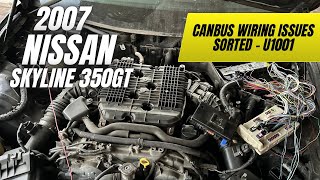
Typical fix: Remove, clean, and securely re-fasten the ground connections. This involves wire brushing the terminal and the contact point on the chassis/engine to ensure a clean metal-to-metal connection. Replace corroded straps if necessary. The negative battery cable (a common failure point) 🎬 Watch: How to fix ECM to transmission communication issues. for related models is OEM part # 24080-JA10A.
Est. part cost: $10-$75 - Damaged CAN Bus Wiring or Connectors 🟡 Medium Probability Wiring harnesses in the engine bay, particularly around the air filter box and battery tray, can chafe against the chassis, leading to shorts. Water intrusion into connectors is also a major issue, especially for the Body Control Module (BCM) in the passenger kick panel area, which is vulnerable to leaks from clogged sunroof drains.
How to confirm: Visually inspect harnesses for chafing, cuts, or signs of rodent damage. Disconnect connectors for key modules (ECM, TCM, BCM) and check for green or white corrosion on the pins. A multimeter can be used to check for continuity and resistance on the CAN High and CAN Low wires.
Typical fix: Repair the damaged section of wire. Clean corroded connector pins with a specialized contact cleaner and brush. If a connector or module was damaged by water, the source of the leak (e.g., sunroof drain tube) must be cleared and repaired to prevent recurrence.
Est. part cost: $20-$200 - Faulty Control Module ⚪ Low Probability While less common than wiring or ground issues, any module on the network (ECM, TCM, BCM, ABS, etc.) can fail internally and either stop communicating or broadcast disruptive signals (a 'babbling node'). Water damage to the BCM is a known specific risk on these minivans.
How to confirm: This is a process of elimination. After confirming all wiring, grounds, and power sources are good, the non-communicating module is the likely culprit. A high-end scan tool can show which modules are offline. Disconnecting the suspect module should allow the rest of the network to function.
Typical fix: Replace the faulty module. This often requires programming or configuration with a dealer-level scan tool. A used BCM, for example, would need to have the keys reprogrammed to it.
Est. part cost: $300-$1500+
Rare But Worth Checking
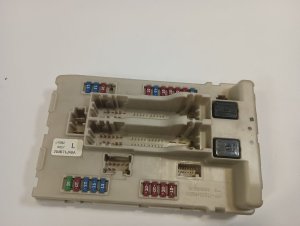
- Faulty Intelligent Power Distribution Module (IPDM): → Shop Fuse Box The IPDM is a 'smart' fuse and relay box in the engine bay that powers many other modules. An internal failure or a bad ECM relay within the IPDM can cut power to a section of the CAN network, causing communication codes. Some owners report a blown 10A fuse in the IPDM related to a control unit being the source of the U1001 code.
- Improperly Installed Aftermarket Electronics: Tapping into CAN bus wires for aftermarket stereos, alarms, or remote starters is a common source of network interference and can trigger U-codes. This is often discovered after an owner reports issues following a recent installation.
Diagnosis Steps
- Check Battery Health: Ensure the battery is fully charged (12.6V+) and the engine is off. Test with a load tester. Clean any corrosion from the terminals and cable ends, as this is a primary cause.
- Perform a Full System Scan: Use a high-quality OBD-II scanner that can read manufacturer-specific codes from all modules (ECM, TCM, BCM, ABS, etc.). Make a list of all modules that are not communicating.
- Inspect Grounds: Visually inspect and physically check the main battery-to-chassis ground, engine-to-chassis ground strap, and any other major ground points, especially near the battery and transmission. They should be clean, tight, and free of corrosion. Perform a voltage drop test if possible.
- Check Fuses: Inspect all fuses related to the non-communicating modules, including those in the IPDM (engine bay fuse box) and interior fuse panel. Pay special attention to any fuses labeled for 'Electronic Parts' or specific control units, like a 10A fuse that has been reported to cause this issue.
- Check CAN Bus Resistance: Disconnect the negative battery terminal. At the OBD-II port, use a multimeter to measure the resistance between Pin 6 (CAN High) and Pin 14 (CAN Low). A healthy network should read approximately 60 Ohms.
- Interpret Resistance Readings: If the reading is 120 Ohms, it means one of the two terminating resistors (usually in the ECM and BCM) is missing from the circuit, indicating an open wire or faulty module. If the reading is close to 0 Ohms, there is a short between the CAN High and CAN Low wires. If the reading is correct (60 Ohms), the problem may be intermittent or related to power/ground for a specific module.
- Inspect for Water Intrusion: Check the passenger side floor and kick panel area for any signs of dampness. Clogged sunroof drains are known to leak water onto the BCM in this location, causing these exact symptoms.
- Isolate the Fault: If the resistance reading is abnormal, begin disconnecting modules one by one from the CAN network and re-testing. When the resistance returns to normal (e.g., from 0 to 60 Ohms), the last module disconnected is likely the one with the internal short.
Parts You'll Likely Need
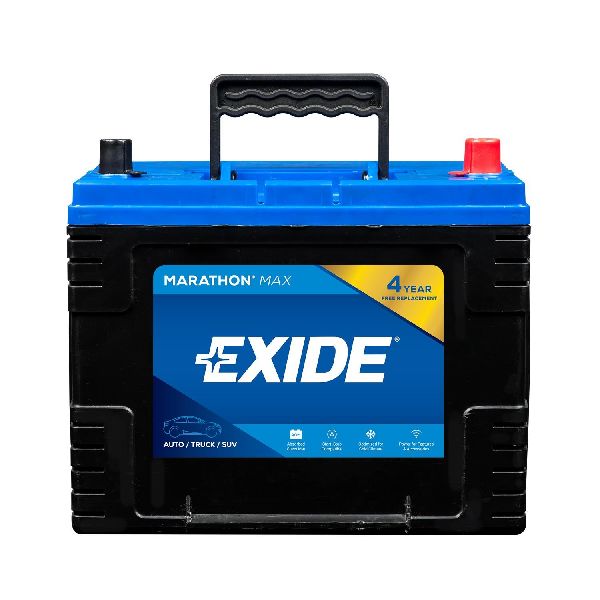
- Battery — A weak or failing battery is a primary cause of communication codes on modern Nissans.
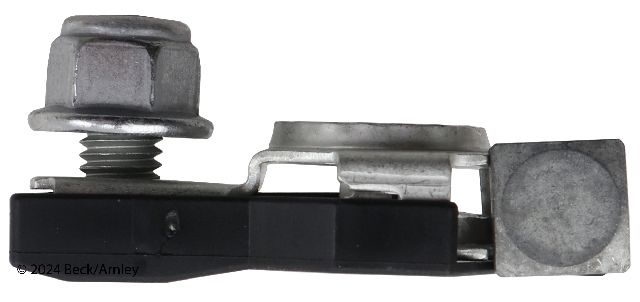
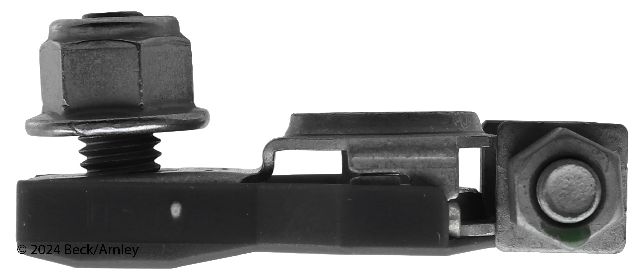
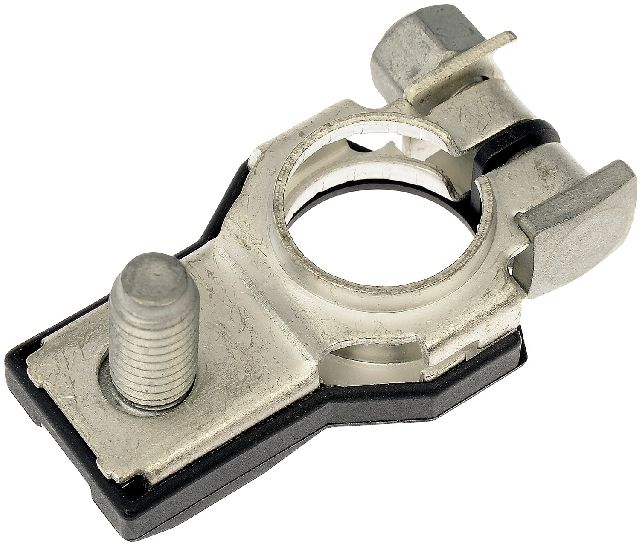
- Negative Battery Cable / Ground Strap
(OEM #24080-JA10A (for related platforms, verify for Quest))— The main ground cable from the battery is a common failure point due to corrosion, causing high resistance and network faults. - Body Control Module (BCM) — Can fail due to internal faults but is particularly susceptible to water damage from clogged sunroof drains on the Quest.
- Intelligent Power Distribution Module (IPDM) — An internal failure in this 'smart fuse box' can cut power to essential modules, causing them to drop off the network.
Related Codes That Often Appear With This One
- U1000 — U1000 is a general CAN communication failure code. U1000 and U1001 often appear together, indicating a widespread network problem.
- U0101 — This code means 'Lost Communication with TCM'. If seen with U1001, it strongly points to a problem with the Transmission Control Module or its wiring/power/ground.
- U0100 — This code means 'Lost Communication with ECM/PCM'. If seen with U1001, it points towards an issue with the Engine Control Module's power, ground, or wiring.
Technical Service Bulletins (TSBs) & Recalls
- NTB10-066A: Confirms that U1000/U1001 are communication codes that must be diagnosed first. It provides diagnostic tips, emphasizing checking for low battery voltage and using the CONSULT tool for proper analysis.
Platform-Specific Known Issues
- Sunroof Drain Clogs Causing BCM Failure: The front sunroof drain tubes on the RE52 Quest can become clogged with debris. When this happens, rainwater backs up and overflows the drain tray, leaking into the headliner and running down the A-pillar. This water often drips directly onto the Body Control Module (BCM) located in the passenger-side kick panel area. A wet BCM can lead to a host of bizarre electrical problems, including a no-start condition, random alarms, and the U1001 communication code.
Mechanic-Grade Diagnostic Values
- CAN Bus Resistance — expected: ~60 Ω (measured between Pin 6 and Pin 14 of the DLC with battery disconnected). Failure: 120 Ω indicates an open circuit or missing terminating resistor. ~0 Ω indicates a short between CAN High and Low wires.
- CAN Bus Voltage (Key On, Engine Off) — expected: CAN High (Pin 6): ~2.7V to Ground. CAN Low (Pin 14): ~2.3V to Ground.. Failure: Voltages that are stuck high, low, or at 0V indicate a short or open circuit.
- Ground Circuit Voltage Drop — expected: < 0.2V (measured between negative battery post and a clean spot on the chassis/engine block). Failure: A reading higher than 0.2V indicates high resistance in the ground path, a common cause of U-codes.
- System Operating Voltage — expected: > 12.4V (Engine Off), ~14V (Engine Running). Failure: Operating voltage below 10V can cause various modules to stop communicating intermittently.
Scan Tool Commands That Help
- Nissan CONSULT-III plus: V-CAN Diagram / CAN Diag Support Monitor — This is the primary diagnostic screen for U-codes. It visually displays the entire CAN network and highlights non-communicating modules in red or orange, immediately showing a technician where the network break is located.
- Nissan CONSULT-II / III: Active Test — After identifying a potentially faulty module, the Active Test can be used to send direct commands to components controlled by that module (e.g., 'turn on wipers' for IPDM). If the component doesn't respond, it helps confirm a fault in the module or its wiring.
- Manual Procedure: IPDM E/R Self-Test — To quickly check the IPDM's basic functions without a scan tool. With the ignition ON, push the driver's door switch 10 times in 15 seconds. The horn will chirp, and the IPDM will cycle its outputs (wipers, lights, etc.) for about 20 seconds. If it fails to initiate or perform this test, the IPDM itself may be faulty.
Wiring & Ground Locations
- Body Control Module (BCM) — Inside the passenger cabin, typically located in the passenger's footwell area behind the kick panel or glove box.. This module is a terminating resistor for the CAN bus. It is also highly vulnerable to water damage from clogged sunroof drains, a known issue that directly causes U1001 codes.
- Intelligent Power Distribution Module (IPDM E/R) — In the engine compartment, on the left (driver's) side, under a protective cover. It's the main fuse and relay box.. The IPDM powers many other modules. An internal failure of the IPDM or just its ECM relay can cut power to a part of the CAN network, triggering communication codes.
- Main Chassis Ground — Near the battery, where the main negative battery cable bolts to the vehicle's frame/chassis. Another key ground strap runs from the engine block to the firewall.. Corrosion at these primary ground points is one of the most common causes of CAN communication faults on Nissans.
- CAN Bus Terminating Resistors — These are not separate parts, but are located inside two different control modules, typically the ECM and the BCM on this platform.. The health of the entire network depends on these two 120 Ohm resistors being present. If one of these modules fails or is disconnected, the total network resistance will change from 60 Ohms to 120 Ohms, causing communication to fail.
Real Owner Repair Stories
- YouTube user 'Car fan' (Nissan vehicle with similar CAN architecture) — U1001 and U1000 codes present, car runs but has communication faults.
❌ Tried (didn't work) Initial visual inspection showed nothing obvious.
✅ What actually fixed it A 10A fuse for a control unit was repeatedly blowing. After removing the air filter box and tracing the harness, a wire was found with its insulation chafed through, causing it to intermittently short to ground. Repairing the damaged wire and wrapping the harness resolved the issue permanently. - Reddit user in r/G35 (Infiniti G35 (shares electronics with Nissan)) — Water leak on the passenger side floor, followed by numerous random electrical problems and CAN communication codes.
❌ Tried (didn't work) Initially drying the floor did not solve the electrical issues.
✅ What actually fixed it The dealership identified that the sunroof drain grommets were clogged, causing water to back up and leak into the cabin, soaking the BCM. The user performed a DIY fix by completely re-routing the sunroof drain tubes to bypass the faulty factory grommets, preventing future leaks and allowing the BCM to be dried out/replaced. - MyG37.com forum user (Infiniti G37) — Multiple CAN codes including U1001 after installing aftermarket electronics.
❌ Tried (didn't work) Clearing codes, checking battery.
✅ What actually fixed it The issue was traced to a blown 10A fuse in the driver's side kick panel fuse box. The fuse was shorted during the installation of a radar detector that tapped into the powered mirror wiring. Replacing the fuse and removing the aftermarket tap fixed the communication errors.
"I Checked Everything" — The Actual Cause
- A common scenario for U1001 is an intermittent short in a wiring harness. A standard resistance or continuity test may show the circuit is fine, but as the engine vibrates or the vehicle moves, a chafed wire briefly touches the chassis, blowing a fuse or disrupting the CAN signal. The only way to find this is by noticing a recurring blown fuse tied to a specific module and then performing a meticulous visual inspection of the entire harness for that circuit, especially where it passes near sharp metal edges or other components.
OEM Part Supersession History
White-colored IPDM (various PNs)→Black-colored IPDM (various PNs)— The original white-cased IPDM units were known for a higher rate of internal failures.
Heads up: When replacing an IPDM, it's crucial to get the correct part for the vehicle's specific options. However, if you see an original white IPDM, it is advisable to replace it with the updated black version, as they are known to be more reliable.
Helpful Videos

Used OEM Parts in Stock
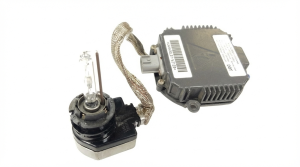
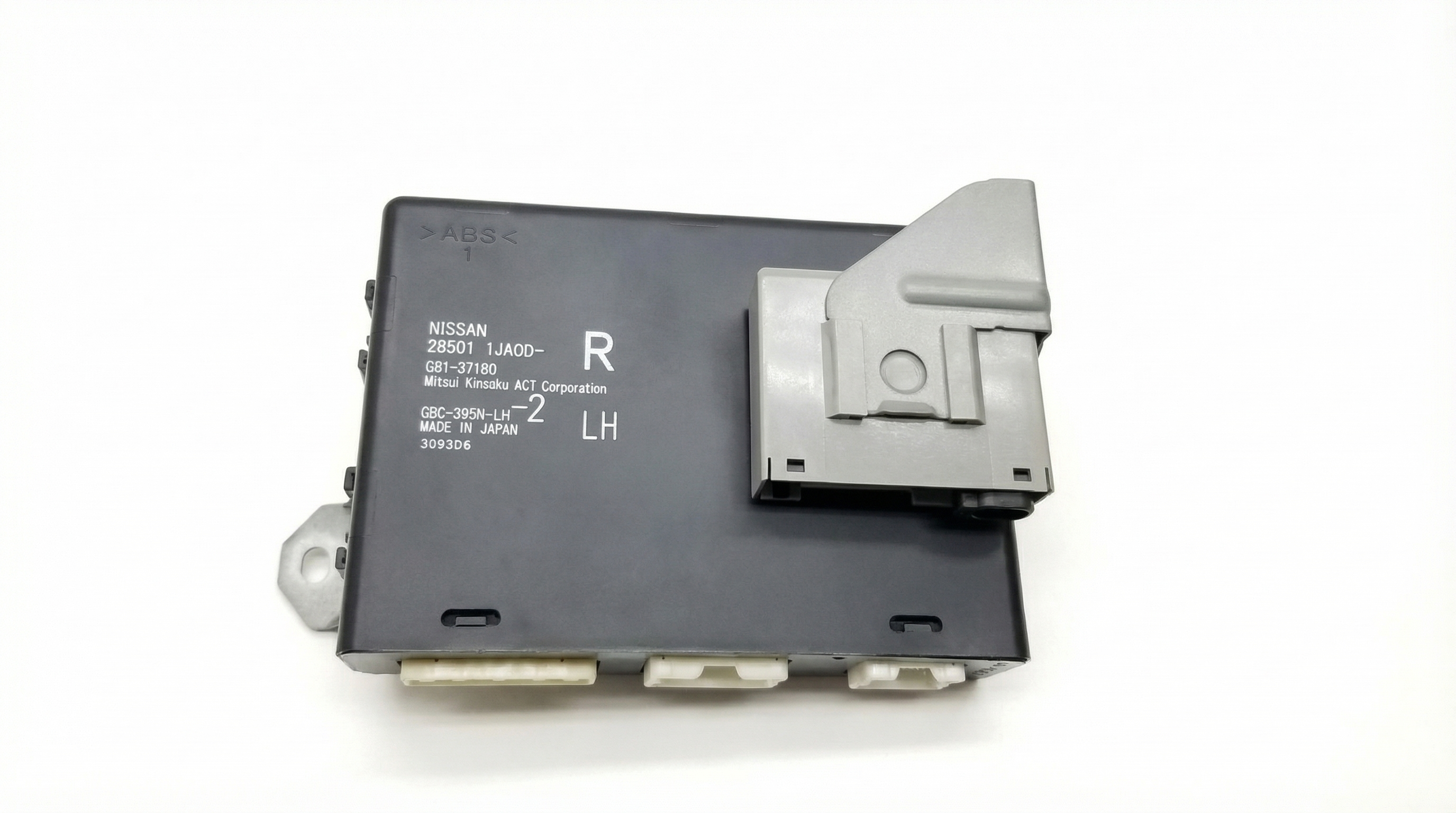
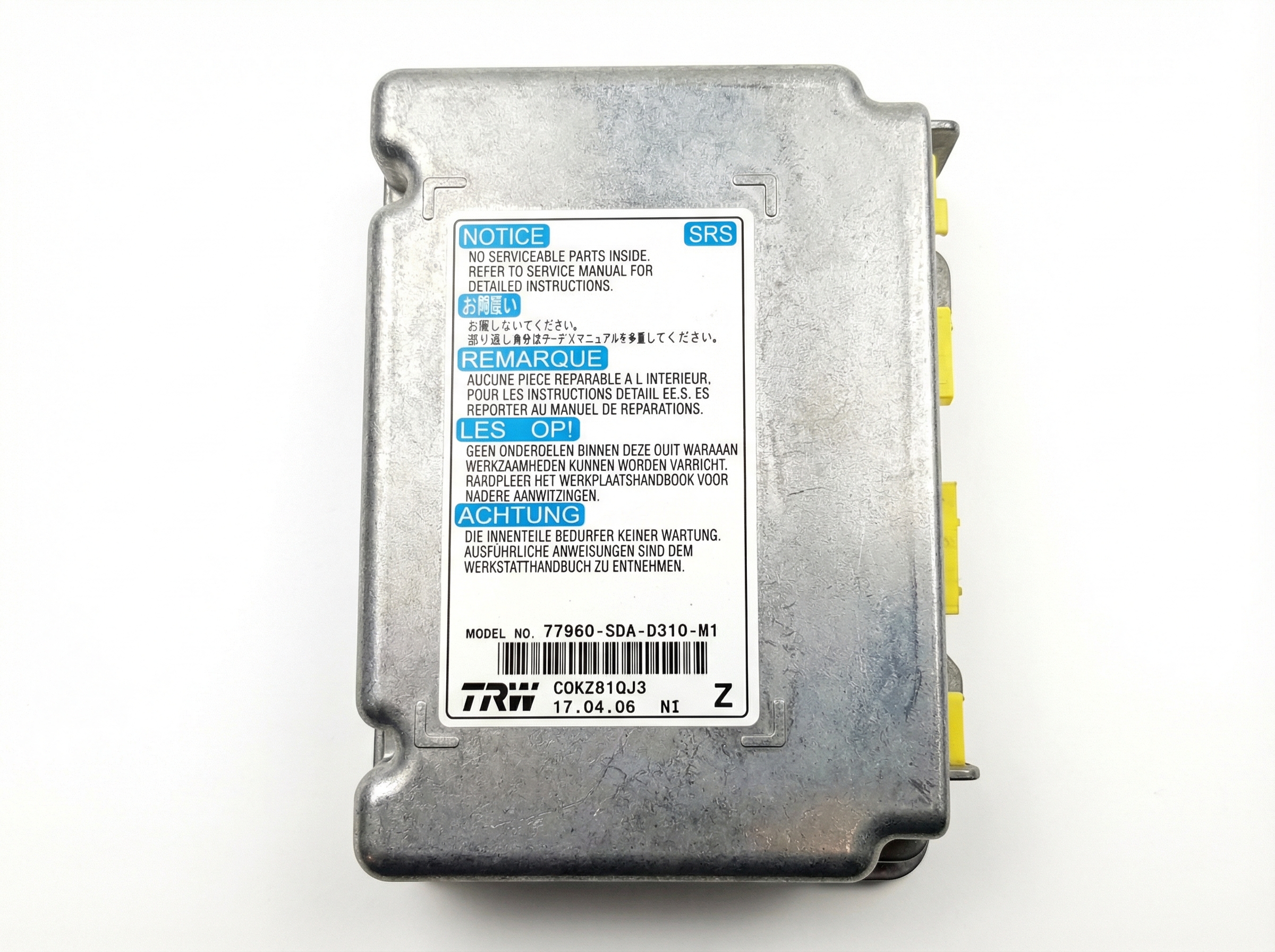
New Aftermarket Parts Available


The information in this article is provided for general reference and educational purposes only. Vehicle specifications, procedures, and part compatibility can vary by production date, trim level, and region. Always consult your vehicle's factory service manual and verify part numbers before purchasing or performing repairs. Safety-critical components such as airbags, seat belts, and braking systems should be installed by a qualified professional.
- Nissan QUEST:
- 🧭 Diagnostic Flowchart
- 🎬 Helpful Videos
- 🛍️ Shop This Part
- What's Unique About the 2011-2014 Nissan QUEST
- Symptoms You May Notice
- Most Likely Causes
- Rare But Worth Checking
- Diagnosis Steps
- Parts You'll Likely Need
- Related Codes That Often Appear With This One
- Technical Service Bulletins (TSBs) & Recalls
- Platform-Specific Known Issues
- Mechanic-Grade Diagnostic Values
- Scan Tool Commands That Help
- Wiring & Ground Locations
- Real Owner Repair Stories
- "I Checked Everything" — The Actual Cause
- OEM Part Supersession History
- 🎟️ Get 5% Off