

U1001 on 2007-2014 Nissan Sentra: CAN Communication Circuit Causes and Fixes
On a 2007-2014 Nissan Sentra, code U1001 almost always points to an electrical issue, not a specific bad part. The most common cause is a poor or corroded ground connection, especially the main battery, engine, and chassis grounds. Specific problem areas include the ground strap on the transmission housing and the point under the battery tray. Checking and cleaning these grounds is the first and most important step.
- Code U1001 is a network communication error, not a specific part failure.
- The most likely cause on a 2007-2014 Sentra is a bad ground connection. Start by cleaning all major grounds.
- Ensure your battery is healthy and the alternator is charging correctly before diving into complex diagnostics.
- Do not replace expensive control modules like the ECM or TCM unless you have definitively proven they are the cause of the failure.
- Due to the complexity of CAN bus diagnostics, seeking professional help is highly recommended if the initial checks (battery, grounds, fuses) do not solve the issue.
What's Unique About the 2007-2014 Nissan SENTRA

The 2007-2014 Nissan Sentra spans two generations, the B16 (2007-2012) and B17 (2013-2014). Both are known to be sensitive to battery voltage and ground integrity. A weak battery or corroded ground straps are very common culprits for triggering network communication codes like U1001. While the underlying cause is often simple (a bad ground), diagnosing it can be complex because the code doesn't point to the specific location of the failure. Key ground points prone to corrosion are the strap from the engine/transmission to the firewall/chassis and the main negative battery cable connection to the chassis, often located under the battery tray.
Diagnostic Flowchart

Tap your situation to follow the diagnostic path that matches what you're seeing on this vehicle.
Generation note: This range covers the sixth generation (B16, 2007-2012) and the beginning of the seventh generation (B17, 2013-2014). While the electronic architecture differs, the root causes for a U1001 code (grounds, wiring, module failures) are common to both generations. The B16 is particularly noted for ground strap issues. The B17 generation (2013+) introduced a different engine and subframe design, which can alter the specific locations of grounds and harness routing.
Symptoms You May Notice

- Check Engine Light is on or flashing
- Tachometer (RPM gauge) not working or erratic
- Multiple warning lights on the dashboard (ABS, TCS, Airbag)
- Vehicle cranks but will not start (crank-no-start) 🎬 Watch: Diagnosing a no-crank, no-start issue on a 2014 Sentra.
- Vehicle may not start or may die while driving
- Erratic or non-functional gauges
- Transmission shifting issues, such as hard shifts or being stuck in one gear
- Security light stays on
- Replacing the ECM or TCM without proper diagnosis. The U1001 code is often stored in these modules, but they are rarely the cause. The problem is usually external to the module itself, most often a ground or power supply issue.
Most Likely Causes

- Poor or Corroded Ground Connections 🔴 High Probability Nissans of this era are known to be sensitive to ground issues. Ground straps can corrode or loosen over time, creating high resistance and disrupting module communication. The main ground from the battery to the chassis (often under the battery) and the strap from the engine/transmission to the firewall are the most common culprits.
How to confirm: Visually inspect the main battery-to-chassis ground, engine-to-chassis ground (check on the transmission case), and smaller ground points in the engine bay for corrosion, looseness, or breakage. Use a multimeter to perform a voltage drop test across ground connections; a reading of more than 0.1-0.2V indicates a problem.
Typical fix: Disconnect, clean the contact points of the ground wire and chassis with a wire brush until they are shiny. Apply dielectric grease to prevent future corrosion. Replace any frayed or broken ground straps. Upgraded braided ground straps are a popular preventative measure.
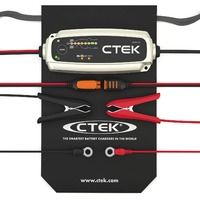
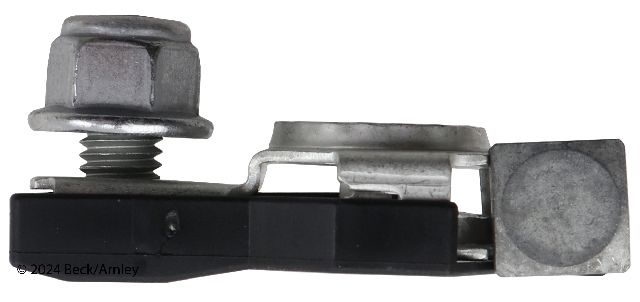
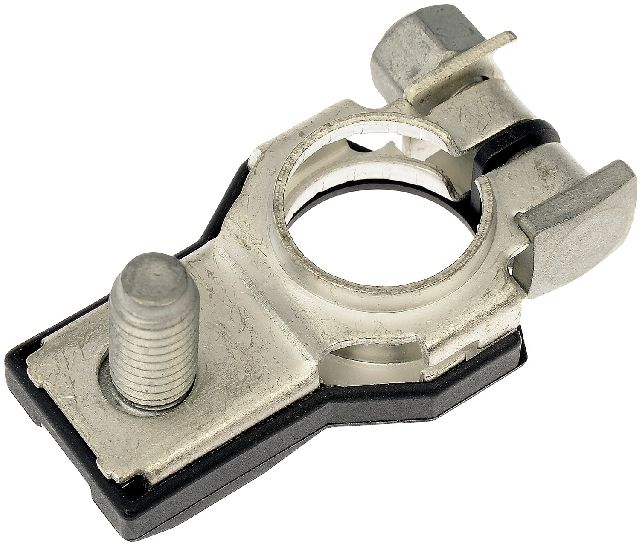
Est. part cost: $5-$50 - Low Battery Voltage or Failing Alternator 🟡 Medium Probability → Shop Vehicle Battery Control modules require a stable voltage to operate. If battery voltage drops below a certain threshold (often around 10V), modules can stop communicating randomly, setting CAN codes. The stock battery terminals are also a known weak point.
How to confirm: Test the battery voltage with the engine off (should be ~12.4-12.6V) and with the engine running (should be ~13.7-14.7V). A load test on the battery is the most definitive way to confirm its health. Check terminals for corrosion or looseness.
Typical fix: Recharge or replace the battery. If the charging voltage is low, the alternator may need to be replaced. Clean or replace battery terminals.
Est. part cost: $100-$400 - Damaged CAN Bus Wiring Harness 🟡 Medium Probability Wires can become chafed, corroded, or damaged from vibrations, improper repairs, or rodent activity, causing a short or open in the CAN circuit. Common chafe points are where the harness passes through the firewall or routes near the engine and transmission.
How to confirm: Visually inspect the wiring harness for any signs of damage, particularly around the engine bay, under the dashboard, and near control modules. Check for continuity and resistance between the CAN-H and CAN-L wires at the DLC and module connectors. The resistance between CAN-H and CAN-L should be approximately 60 ohms with the battery disconnected.
Typical fix: Repair the damaged section of wire. In severe cases, a portion of the wiring harness may need to be replaced.
Est. part cost: $10-$500 - Faulty Control Module (TCM, ECM, IPDM) ⚪ Low Probability While less common, any module on the network (ECM, TCM, BCM, ABS) can fail internally. On Sentras with the CVT, the Transmission Control Module (TCM) is a more frequent, though still uncommon, point of failure that can disrupt the entire CAN bus. The IPDM (Intelligent Power Distribution Module) itself can also fail, causing a variety of electrical issues including no-start and communication codes.
How to confirm: This is a process of elimination. After confirming all wiring, grounds, and power sources are good, a technician can use a scan tool to see which module is offline. Disconnecting the suspect module may restore communication to the rest of the network.
Typical fix: Replace the faulty module and program the new one to the vehicle.
Est. part cost: $200-$1500
Rare But Worth Checking
- Blown Fuse in IPDM: The Intelligent Power Distribution Module (IPDM) contains fuses that power various control units. A blown fuse, such as the 10A fuse for 'Electronic Parts', can take a module offline and trigger a U1001 code.
- Aftermarket Electronics: Improperly installed aftermarket alarms, remote starters, or stereos can interfere with the CAN bus network and cause communication errors. Tapping into the wrong wires or creating a poor ground is a common cause.
Diagnosis Steps
- Check and record any other stored fault codes. Always diagnose U-codes first, as they can cause other codes to appear.
- Check battery voltage and the charging system. Ensure the battery is fully charged (>12.4V engine off) and the alternator is working correctly (~14V engine running).
- Inspect all major ground connections. Disconnect, clean, and re-secure the battery terminals, the main chassis ground (often under the battery tray), and the engine-to-body ground strap (check the connection point on the transmission case).
- Inspect all fuses, especially those in the IPDM (Intelligent Power Distribution Module) related to control modules, such as the 'Electronic Parts' fuse.
- With the battery disconnected, measure the resistance between Pin 6 (CAN-H) and Pin 14 (CAN-L) at the OBD-II port. It should be approximately 60 ohms. If it's 120 ohms, a terminating resistor or module is offline. If it's near 0 ohms, there is a short between the wires.
- Visually inspect the main wiring harnesses for any signs of physical damage, chafing, or corrosion, especially where they pass near the engine or through the firewall.
- If the problem persists, use an advanced scan tool to perform a network test and identify which specific control modules are not communicating.
- Isolate the non-communicating module by checking for power, ground, and CAN signals at its connector before condemning the module.
Parts You'll Likely Need
- Battery Ground Cable / Strap
(OEM #24080-ZJ60A (for B16 Sentra w/ MR20DE engine))— The original ground straps are a very common failure point due to corrosion, leading to high resistance and causing a host of electrical and communication issues.
Trusted brands: Nissan OE, Dorman
OEM price range: $25-$50
Aftermarket price range: $10-$30
Related Codes That Often Appear With This One
- U1000 — U1000 is a general CAN Communication Circuit code. U1001 is a more specific version of this, often related to the ECM not communicating. They frequently appear together, indicating a network-wide communication fault.
- U0101 — This code specifically indicates 'Lost Communication with TCM'. If you see this with U1001, it points more strongly towards an issue with the Transmission Control Module or its dedicated wiring/power/ground.
Technical Service Bulletins (TSBs) & Recalls
- NTB10-066A: 'CAN COMMUNICATION CODES – DIAGNOSTIC TIPS & GUIDELINES' - This bulletin advises diagnosing communication codes first and notes that low battery voltage can set CAN DTCs. It also provides diagnostic procedures for codes U1000, U1001, U1002, and U1010.
- NTB12-051k: 'MIL ON WITH DTC P0101' - While this TSB is for a Mass Air Flow sensor code, it applies to the 2011-2012 Sentra and involves reprogramming the ECM. Electrical issues causing CAN codes can sometimes be related to or resolved by ensuring the vehicle has the latest module software.
Platform-Specific Known Issues
- Corroded Transmission Ground: → Shop Transmission Assembly A key ground point is a strap that connects from the transmission case to the chassis/firewall. This area is exposed to the elements and heat, causing corrosion and high resistance that directly leads to U1001 codes and erratic shifting behavior.
- Crank-No-Start Condition: A common and frustrating symptom of a severe U1001 fault is a crank-no-start condition. One owner on YouTube documented this exact issue on a 2012 Sentra, which was ultimately traced back to a faulty ground connection preventing the ECU from communicating.
Mechanic-Grade Diagnostic Values
- CAN Bus Resistance — expected: ~60 ohms between Pin 6 (CAN-H) and Pin 14 (CAN-L) at the DLC with the battery disconnected.. Failure: A reading of ~120 ohms indicates one of the two terminating resistors (or a module containing one) is offline. A reading near 0 ohms indicates a short circuit between the CAN-H and CAN-L wires.
- CAN Bus Voltage (at DLC with key ON) — expected: CAN-H (Pin 6 to ground) should be ~2.5-3.5V. CAN-L (Pin 14 to ground) should be ~1.5-2.5V. The sum of both voltages should be approximately 5V.. Failure: Voltages outside these ranges, or a voltage of 0V on either line, indicates a short to ground or power, or an open circuit.
- Module Power Supply — expected: Should be equal to battery voltage at the module's power pin(s) with the key on.. Failure: Low or no voltage indicates a problem with the fuse, relay, or wiring supplying power to that module.
- Module Ground Connection (Voltage Drop) — expected: Less than 0.1V between the module's ground pin and the negative battery terminal with the circuit operating.. Failure: A voltage reading higher than 0.1V-0.2V indicates high resistance in the ground circuit, which is a primary cause of U1001.
Scan Tool Commands That Help
- Nissan CONSULT-II / CONSULT-III plus: CAN Diagnosis Support Monitor — This is the primary diagnostic function for U-codes. It polls all modules on the CAN network and displays a list of which ones are transmitting ('TX') and which are receiving ('RX'). A module that is not listed or shows an error is the starting point for diagnosis.
- Nissan CONSULT-II / CONSULT-III plus: Self-Diagnostic Results — After running the CAN system test, this function shows which module detected the fault and which module is suspected of causing it. For a U1001, the ECM will typically report the fault, but the tool may point to another module (like the TCM or IPDM) as the source of the missing messages.
- Advanced Aftermarket Scanners (e.g., Autel): Network Topology / CAN Bus Check — Modern scan tools can display a visual 'map' of the CAN network, showing all connected modules. Modules that are offline or not communicating are often highlighted in red, providing a quick visual guide to where the communication break is located.
Wiring & Ground Locations

- Engine Grounds E9, E15 (B16 Sentra) — These are primary ground points for the engine and its components, located on the engine block and transmission case.. The ECM and TCM rely on these grounds. Corrosion or looseness at E9 or E15 is a direct cause of communication codes like U1001 and associated shifting problems.
- Body Ground F5 (B16 Sentra w/ MR20DE) — This is a main body ground connection point in the engine bay, often near the battery or on the strut tower.. Multiple systems, including the IPDM, may use this ground point. A poor connection here can cause widespread, intermittent electrical issues.
- Battery to Chassis Ground — The main negative battery cable connects directly to the vehicle's chassis, often on the frame rail underneath or near the battery tray.. This is the master ground for the entire vehicle's electrical system. Corrosion here creates system-wide voltage instability, a leading cause of CAN communication faults.
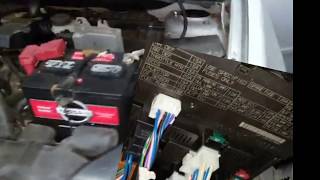
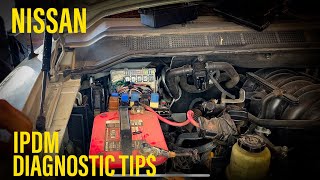
- IPDM E/R (Intelligent Power Distribution Module Engine Room) — Located in the engine bay, typically a black box near the battery with fuses and relays.. The IPDM is a 'smart' fuse box that acts as a CAN module itself. It powers other modules and communicates with the BCM and ECM. An internal failure of the IPDM or a blown fuse within it can take other modules offline, triggering a U1001.
Real Owner Repair Stories
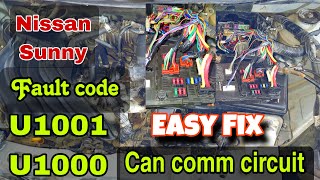
- YouTube channel 'Car Hospital' (2015 Nissan Sunny (similar platform/electronics to Sentra)) — U1001 and U1000 codes present, intermittent stalling, and a specific 10A fuse for the control unit kept blowing.
❌ Tried (didn't work) The owner had likely tried replacing fuses repeatedly.
✅ What actually fixed it After removing the air filter box and ECM to access the harness, the technician found an improperly repaired wire in the main engine harness. The wire's insulation was gone, causing it to intermittently short to ground, which blew the fuse and triggered the CAN communication codes. Repairing the damaged wire and properly insulating it resolved all issues. - YouTube channel 'YOUSAF AUTO Electrician' (Nissan Altima with CVT (similar CAN architecture)) — U1000 and U1001 codes, transmission shifting problems.
❌ Tried (didn't work) Initial checks of the TCM and ECM did not reveal the fault.
✅ What actually fixed it The technician traced the wiring and found a loose connector underneath the speedometer cluster. The connector was not fully seated, causing an intermittent open in the CAN circuit. Securing the loose connector restored communication and fixed the shifting problems. - YouTube channel 'Peter L.' (2012 Nissan Sentra) — Crank-no-start condition, all electronics worked but the engine would not turn over.
❌ Tried (didn't work) Jumping the battery did not work., Checking fuses and relays showed no obvious failures., Cleaning the battery terminals did not solve the issue.
✅ What actually fixed it The problem was a failed starter motor. While not a direct CAN bus failure, a failing starter can sometimes cause electrical noise or voltage drops that may trigger communication codes alongside the no-crank symptom. In this case, the primary failure was the starter itself.
OEM Part Supersession History
24080-JA10A→— This is a common OEM ground cable part number for Nissan vehicles of the era (e.g., Altima, Maxima) that experience similar grounding issues. While not the exact Sentra part, it's representative of the type of part that fails.
Heads up: Part numbers are highly specific. Always verify the correct part number for your Sentra's specific year, engine, and VIN before ordering.
Model Year Variations Within This Range
- 2007-2012 (B16 Generation): The B16 generation uses specific ground points designated E9, E15, and F5 in service manuals. The IPDM E/R is a central communication hub.
- 2013-2014 (B17 Generation): The B17 Sentra features a different engine (MRA8DE), transmission, and chassis. This results in different physical locations for ground points, harness routing, and component placement (e.g., engine oil pan, transmission pan). While the principles of CAN diagnosis are the same, the specific points to check are physically different from the B16.
- 2020+ (B18 Generation): Later models like the B18 Sentra introduce a Secure Gateway Module. This requires a special 16+32 adapter for aftermarket scan tools to perform many diagnostic and key programming functions, adding a layer of complexity not present in the 2007-2014 models.
Helpful Videos


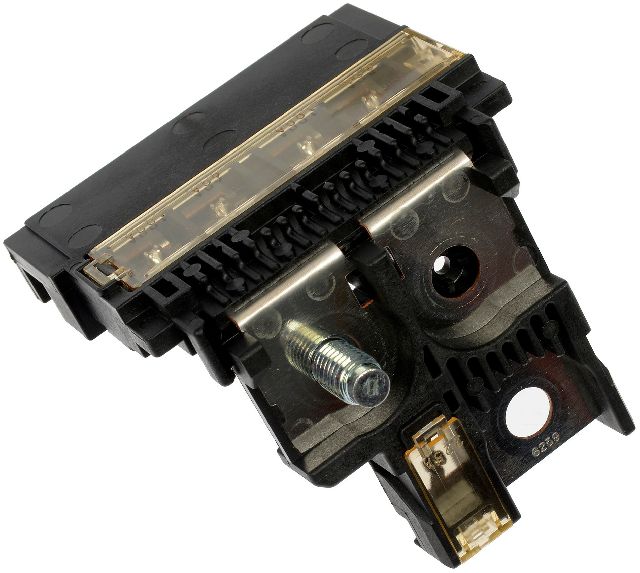
We Have This Part in Stock


The information in this article is provided for general reference and educational purposes only. Vehicle specifications, procedures, and part compatibility can vary by production date, trim level, and region. Always consult your vehicle's factory service manual and verify part numbers before purchasing or performing repairs. Safety-critical components such as airbags, seat belts, and braking systems should be installed by a qualified professional.
- Nissan SENTRA:
- 🧭 Diagnostic Flowchart
- 🎬 Helpful Videos
- 🛍️ Shop This Part
- What's Unique About the 2007-2014 Nissan SENTRA
- Symptoms You May Notice
- Most Likely Causes
- Rare But Worth Checking
- Diagnosis Steps
- Parts You'll Likely Need
- Related Codes That Often Appear With This One
- Technical Service Bulletins (TSBs) & Recalls
- Platform-Specific Known Issues
- Mechanic-Grade Diagnostic Values
- Scan Tool Commands That Help
- Wiring & Ground Locations
- Real Owner Repair Stories
- OEM Part Supersession History
- Model Year Variations Within This Range
- 🎟️ Get 5% Off