

U1002 on 2007-2014 Nissan Sentra: CAN Communication Fault Causes and Fixes
This is a network communication code, not a specific part failure. The most common causes are poor electrical grounds, low battery voltage, or damaged wiring. Start by checking the battery and cleaning all major ground connections in the engine bay before replacing any parts. Key ground points include the negative battery cable to the chassis, the engine block to the chassis, and the transmission to the chassis.
- U1002 is a network communication problem, not a specific component failure.
- Always start your diagnosis by checking the battery and cleaning all major engine/chassis ground connections.
- Do not replace any expensive control modules (like the ECM or TCM) unless you have definitively ruled out all wiring, power, and ground issues.
- Diagnosing the fault requires a logical process of elimination and is difficult without an advanced scan tool.
- The module that stores the U1002 code is often working correctly; it's simply reporting that it lost communication with another module.
What's Unique About the 2007-2014 Nissan SENTRA

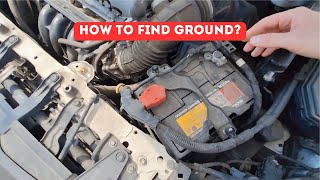
On this generation of Sentra, like many Nissans from this era, electrical ground integrity is a common point of failure. Over time, corrosion can build up on the main ground points connecting the engine, transmission, and chassis to the battery's negative terminal. This creates electrical resistance that can disrupt the sensitive communications between modules, leading to codes like U1002. Owners often chase this code by replacing expensive modules when the root cause is simply a corroded ground wire 🎬 Watch: How to diagnose and solve bad ground connection symptoms. that needs to be cleaned or replaced. A video of a grounding kit installation for a Sentra shows key grounding points on the alternator, strut tower, EGR/thermostat housing, and transmission. These are all potential failure points.
Diagnostic Flowchart

Tap your situation to follow the diagnostic path that matches what you're seeing on this vehicle.
Generation note: The 2007-2014 range covers two Sentra generations: the B16 (2007-2012) and the B17 (2013-2014). While the underlying CAN bus principles are the same, the physical location of control modules and grounding points may differ. The B17 generation, in particular, has more integrated electronics, making network diagnosis potentially more complex. However, the root causes of poor grounds and wiring issues are common to both. Forum discussions and videos confirm that ground strap and battery issues are prevalent across these model years.
Symptoms You May Notice

- Check Engine Light is on
- Multiple dashboard warning lights appearing at once (e.g., ABS, VDC, Airbag).
- Transmission may enter a 'fail-safe' or 'limp' mode, with harsh shifting or getting stuck in one gear
- Erratic or non-functional gauges on the instrument cluster
- Engine may stall or have difficulty starting, sometimes intermittently.
- RPMs fluctuating unexpectedly.
- No-start condition where accessories and lights work, but the engine does not crank.
- Inability for an OBD-II scanner to communicate with the ECM, sometimes showing an 'error' message.
- Replacing the control module that stored the U1002 code. The module storing the code is usually the one that is *not* receiving a signal, meaning it is likely functioning correctly while another module or the wiring is the problem.
- Replacing the starter for a no-start symptom without checking for communication codes first. A no-crank condition can be caused by the IPDM or ECM not communicating properly.
Most Likely Causes

- Poor or Corroded Ground Connections 🔴 High Probability Engine bay grounds are exposed to the elements, leading to corrosion over time. The negative battery cable connection to the chassis is a frequent culprit, as are the straps from the engine and transmission to the body. A Reddit user with a 2016 Sentra even reported a ground strap catching fire.
How to confirm: Visually inspect the main ground straps from the engine block to the chassis, the transmission to the chassis, and the negative battery terminal connection point. Key locations to check are near the battery on the passenger fender, a braided strap to the firewall, and grounds near the starter. Unbolt them, clean all contact surfaces to bare metal with a wire brush or sandpaper, and re-secure them tightly.
Typical fix: Cleaning the existing ground points and cable ends. In severe cases, replacing the ground straps or the entire negative battery cable assembly. Aftermarket grounding kits are also available.
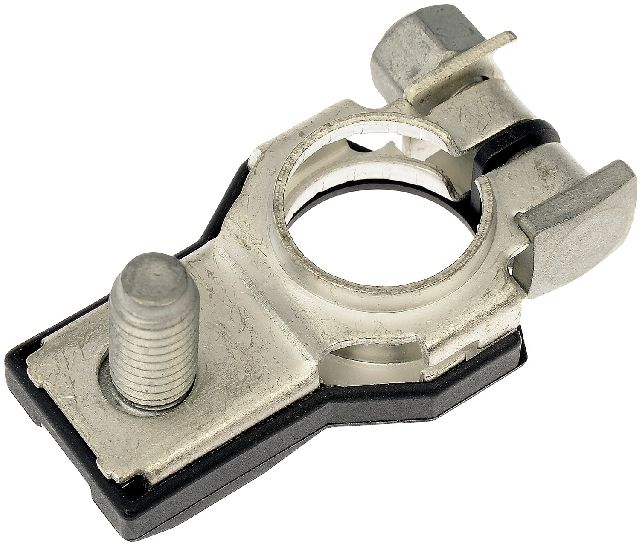
Est. part cost: $0-$75 - Low Battery Voltage or Failing Battery 🟡 Medium Probability → Shop Vehicle Battery Modern electronics are sensitive to voltage. Nissan TSBs note that when battery voltage drops below 10V, modules can stop communicating properly, triggering U-codes. A battery that reads 12V at rest may still not have enough power to sustain the network during startup.
How to confirm: Test the battery with a multimeter or a load tester. A healthy, resting battery should be at approximately 12.5-12.6V. With the engine running, alternator output should be around 13.7-14.7V. A load test is the most definitive way to confirm a weak battery.
Typical fix: Recharge or replace the vehicle's 12V battery.
Est. part cost: $150-$250 - Damaged or Corroded Wiring Harness ⚪ Low Probability Wiring harnesses can be damaged by vibrations, chafing against sharp edges, or rodent activity. Water intrusion into connectors, especially the ECM connector, can cause pin corrosion and lead to communication failures.
How to confirm: Visually inspect the wiring harnesses leading to the major control modules (ECM, TCM, IPDM) for any signs of damage. Check connectors for green or white corrosion or bent pins. A YouTube video on a 2014 Sentra with a U1000 code showed a corroded and broken pin in the ECM connector due to water damage.
Typical fix: Repairing the specific damaged wire or cleaning/replacing the affected connector. This is often labor-intensive and may require specialized tools for pin extraction.
Est. part cost: $5-$100
Rare But Worth Checking
- Failing Control Module (ECM/TCM): While possible, a control module is less likely to be the cause than wiring or ground issues. A module that sets a U1002 code is often reporting that it can't hear from another module, meaning the reporting module itself is usually working. However, an internal failure in a terminating module like the ECM can bring down the network. On some models, the TCM is located inside the transmission and can be damaged from impacts to the transmission pan.
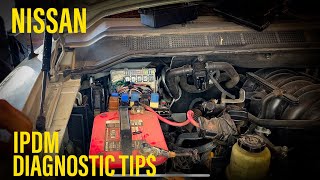
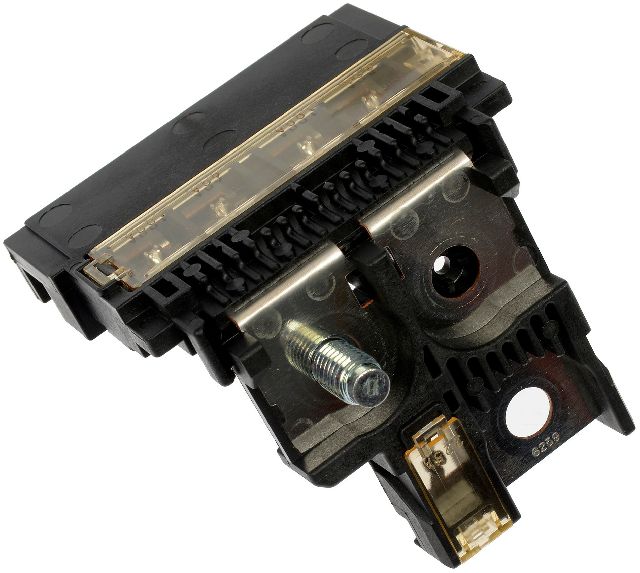
- Faulty Intelligent Power Distribution Module (IPDM): → Shop Fuse Box The IPDM is a 'smart' fuse and relay box that powers many other modules. An internal failure, such as a faulty ECM relay within the IPDM, can cut power to a module, causing it to drop off the network and trigger communication codes. Symptoms of a bad IPDM can include stalling, no-start conditions, and various electrical components malfunctioning.
- Aftermarket Electronics: Improperly installed remote starters, alarms, or stereos that are tapped into the CAN bus wiring can disrupt communication and cause a flood of U-codes. TSB NTB10079 specifically warns that aftermarket remote starters can cause MIL illumination.
Diagnosis Steps
- Check and record all stored trouble codes from all available modules. Pay attention to which modules are reporting communication faults and which modules are not communicating at all.
- Check the battery. Ensure it has a full charge (12.6V+) and that the terminals are clean and tight. Perform a load test to confirm its health. Test the charging system to confirm it's working correctly (13.7-14.7V). A low battery (under 10V) is a known cause of CAN faults.
- Inspect all primary ground connections. Disconnect the negative battery cable. Unbolt, clean to bare metal, and securely retighten the ground straps between the engine/transmission and the chassis. Key points are the negative cable-to-chassis connection, a strap from the engine block to the firewall/chassis, and any grounds on or near the transmission.
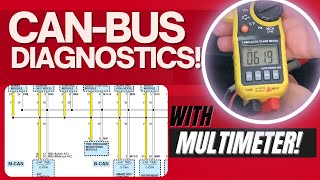
- With the battery disconnected, measure the resistance between Pin 6 (CAN High) and Pin 14 (CAN Low) at the OBD-II port. A healthy network should read approximately 60 ohms. A reading of 120 ohms indicates a break in the circuit or a problem with one of the two terminating resistors (often in the ECM and BCM). A reading below 60 ohms suggests a short circuit.
- If grounds and resistance are good, perform a visual inspection of the main wiring harnesses for any signs of physical damage, chafing, or corrosion, especially around the ECM, TCM, and IPDM connectors.
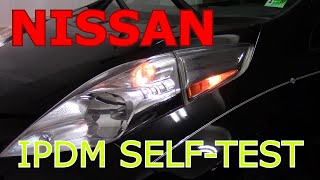
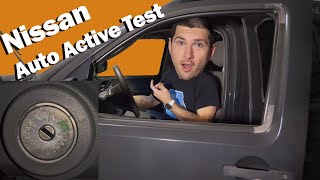
- Perform the IPDM self-test. This test cycles various components (wipers, lights, A/C clutch) to confirm the IPDM is capable of powering them. The procedure typically involves turning the ignition on and pressing the driver's door switch 10 times within 20 seconds.
- If the problem persists, the issue likely requires advanced diagnostics, such as using a scan tool to perform a CAN system diagnosis or an oscilloscope to check the CAN signal waveform for noise or incorrect voltage levels.
Parts You'll Likely Need
- Battery
Related Codes That Often Appear With This One
- U1000 — U1000 is a general CAN communication failure code. U1002 is a more specific version of the same fault with a tighter timing specification. They frequently appear together as part of the same underlying network issue.
- U1001 — This code specifically points to a loss of communication with the ECM. It often accompanies other U-codes when a network-wide issue is present.
- C1103, C1145 — These are ABS-related codes that can appear alongside U1002 if the ABS module is the one losing communication or causing the network disruption. A video shows a 2014 Sentra with this combination of codes.
Technical Service Bulletins (TSBs) & Recalls
- NTB10-066A: Mentions that U1000, U1001, U1002 are communication codes that should always be diagnosed first. It clarifies that the module reporting the code is often working correctly.
- NTB13-027C: Provides a detailed diagnostic flowchart for CAN communication issues, defining U1002 as a communication error with a tighter timing spec than U1000. It covers many Nissan vehicles from 2005-2022.
Platform-Specific Known Issues
- Corrosion of the main ground point on the chassis rail near the battery is a very common issue.
- On models with a CVT, a U1002 code can sometimes be triggered by internal TCM faults, though this should be considered only after all wiring and ground issues are ruled out.
- The air intake hose between the air filter box and the throttle body is known to crack, causing RPM fluctuations and stalling, which can sometimes be confused with or occur alongside electrical issues.
- Water intrusion into the engine bay can corrode the IPDM or ECM connectors, leading to broken pins and communication failures.
Mechanic-Grade Diagnostic Values
- CAN Bus Resistance (Total Network) — expected: Approximately 60 Ω. Failure: 120 Ω indicates an open in one of the terminating resistors/circuits. A reading near 0 Ω indicates a short between CAN High and CAN Low lines.
- CAN Bus Resistance (at Terminating Module) — expected: Approximately 120 Ω. Failure: A reading significantly different from 120 Ω at a known terminating module (like the ECM or IPDM) suggests an internal module fault.
- CAN High Voltage (to ground) — expected: Approximately 2.6V - 2.7V (average, with network active). Failure: Significant deviation, 0V, or being identical to CAN Low voltage can indicate a short or open circuit.
- CAN Low Voltage (to ground) — expected: Approximately 2.3V - 2.4V (average, with network active). Failure: Significant deviation, 0V, or being identical to CAN High voltage can indicate a short or open circuit.
- System Voltage Threshold — expected: Above 10.0V. Failure: When battery voltage drops below 10V, various modules will begin to stop communicating, triggering U-codes.
Scan Tool Commands That Help
- Nissan CONSULT-III / CONSULT-III plus: CAN Diagnosis Support Monitor — This function displays the status of communication between all modules on the CAN network. It will show which modules have current (Red) or past (Orange) communication errors, helping to pinpoint the source of the network failure.
- Nissan CONSULT-III / CONSULT-III plus: Self-Diagnosis Results — Used to retrieve DTCs from individual control units (like ABS, TCM, BCM). This is the first step to see which module is logging the U1002 code.
- Nissan CONSULT-III / CONSULT-III plus: ECU Identification — This function reads and displays the part number of a selected control unit, which is critical for verifying that the correct module is installed and for ordering a replacement if necessary.
- IPDM E/R Auto-Active Test: → Shop Fuse Box IPDM Self-Test — This is a manual procedure (no scan tool required) that confirms the IPDM's CPU is functioning and can control its outputs (lights, wipers, etc.). A failure here points strongly to a faulty IPDM. The test is typically initiated by pressing the driver's door switch multiple times after turning the ignition on.
Wiring & Ground Locations
- E9, E15 — On B16 models (2007-2012), these are body grounds located on the right and left sides of the engine compartment, respectively.. These are primary ground points for various engine and body control systems. Corrosion or looseness at these points can disrupt module communication.
- F16 — On B17 models (2013-2014), this is a ground point located at the left front of the engine compartment.. This ground is a common connection point for components in the engine bay. Ensuring its integrity is a key step in diagnosing network codes.
- M57, M61 — On B17 models (2013-2014), these are body grounds located at the left and right ends of the dash, respectively.. Interior grounds are crucial for modules located inside the cabin, such as the BCM. A fault at these points can cause widespread communication issues.
- IPDM E/R — The Intelligent Power Distribution Module Engine Room is the main underhood fuse/relay box, typically located near the battery.. The IPDM contains terminating resistors on some models and powers many of the vehicle's other control modules. An internal failure or a bad connection here can take down the entire CAN network.
Real Owner Repair Stories
- Reddit user on r/nissansentra (2014 Nissan Sentra S (B17)) — Started car, put in reverse, felt like handbrake was on. Put in drive, car would not move, and RPMs would not climb. Check engine light came on.
❌ Tried (didn't work) The user first checked the handbrake, which was off.
✅ What actually fixed it The user's post describes the initial failure as a "TCM lost communication" event. While the final fix is not detailed in the initial post, this story is a classic example of how a U1002/CAN bus failure manifests to the driver: a critical system (the transmission) fails to operate because its control module is offline, leading to a no-move condition. This points directly to a network communication breakdown rather than a mechanical transmission failure. - Reddit user on r/Nissan (2016 Nissan Sentra, 142k miles) — Transmission slipping, jerking, RPM fluctuation, and slight stalling. The U1002 code was present.
❌ Tried (didn't work) A transmission fluid change did not resolve the issue.
✅ What actually fixed it Another user in the thread suggested checking the air intake hose between the air filter and throttle body for cracks, especially on the underside. They reported that replacing a cracked hose on their Sentra fixed similar stalling and RPM fluctuation issues. While not directly tied to the U1002 code, it highlights how a seemingly unrelated mechanical issue (a vacuum leak) can cause drivability symptoms that might be confused with a network problem.
OEM Part Supersession History
284B7-1KM0B→284B7-3RA1B, 284B7-3RA3B— Part revision and update for different model years within the B17 generation.
Heads up: The IPDM part number is specific to the model year and whether the vehicle has an Intelligent Key system. For 2013-2014 models, 284B7-1KM0B is used. For 2015, it's 284B7-3RA1B. For 2016-2019, it's 284B7-3RA3B. Using the wrong part number can lead to system incompatibility.284B6-ET01A→N/A— Part for the B16 generation.
Heads up: This IPDM is for the B16 generation (2007-2012) and is not interchangeable with the B17 generation parts.
Model Year Variations Within This Range
- 2013-2014 vs 2015 vs 2016-2019: The part number for the Intelligent Power Distribution Module (IPDM) changed multiple times during the B17 Sentra's production run. For example, part number 284B7-1KM0B was used for 2013-2014 models (without I-Key), while 284B7-3RA1B was used for 2015, and 284B7-3RA3B for 2016-2019. It is critical to use the correct part for the specific model year.
Helpful Videos
![How To Test CAN BUS With A Multimeter [CAN Bus Resistance Check] Mechanic Mindset](https://img.youtube.com/vi/JPE42HSJxAk/mqdefault.jpg)

We Have This Part in Stock


The information in this article is provided for general reference and educational purposes only. Vehicle specifications, procedures, and part compatibility can vary by production date, trim level, and region. Always consult your vehicle's factory service manual and verify part numbers before purchasing or performing repairs. Safety-critical components such as airbags, seat belts, and braking systems should be installed by a qualified professional.
- Nissan SENTRA:
- 🧭 Diagnostic Flowchart
- 🎬 Helpful Videos
- 🛍️ Shop This Part
- What's Unique About the 2007-2014 Nissan SENTRA
- Symptoms You May Notice
- Most Likely Causes
- Rare But Worth Checking
- Diagnosis Steps
- Parts You'll Likely Need
- Related Codes That Often Appear With This One
- Technical Service Bulletins (TSBs) & Recalls
- Platform-Specific Known Issues
- Mechanic-Grade Diagnostic Values
- Scan Tool Commands That Help
- Wiring & Ground Locations
- Real Owner Repair Stories
- OEM Part Supersession History
- Model Year Variations Within This Range
- 🎟️ Get 5% Off