

U1010 on 2005-2012 Infiniti QX56: Internal Module Error Causes and Fixes
Code U1010 on a 2005-2012 Infiniti QX56 means a specific control module has an internal fault. The most common culprits are the ABS module, IPDM, or BCM. Diagnosis requires an advanced scan tool to identify the failed module, which will then need to be replaced and possibly programmed.
- U1010 means a module has failed internally, not that there is just a wiring issue.
- The first step is always to use a good scan tool to find out WHICH module is reporting the U1010 code.
- The most likely culprits on a 2005-2012 QX56 are the ABS module, the IPDM, or the BCM.
- Always check the battery, charging system, and main ground connections before condemning an expensive module.
- Be aware that replacing most of these modules is not a simple swap; professional programming is required.
What's Unique About the 2005-2012 Infiniti QX56
The 2005-2012 QX56 spans two generations, both with specific known module failure points that can lead to a U1010 code. The earlier JA60 generation (2005-2010), which shares its platform with the Nissan Armada and Titan, is particularly known for failures of the ABS control module and the Intelligent Power Distribution Module (IPDM). The later Z62 generation (2011-2012) has a different IPDM design but can see faults in systems like the ADAS control unit, as noted in factory service manuals. The key is that U1010 points to one of these specific modules failing internally, not just a simple wiring issue between them.
Diagnostic Flowchart
Tap your situation to follow the diagnostic path that matches what you're seeing on this vehicle.
Generation note: This range covers two generations: the JA60 (2005-2010) and the Z62 (2011-2012). The JA60 is known for specific IPDM and ABS module failures. The Z62 uses a different IPDM, and service manuals specifically note the ADAS control unit as a potential source for a U1010 code if its internal CAN controller fails.
Symptoms You May Notice
- Multiple, seemingly unrelated warning lights on the dashboard (VDC, SLIP, ABS, Check Engine).
- Engine stalls while driving, sometimes after hitting a bump.
- Crank-but-no-start or intermittent no-start condition.
- Erratic behavior of electrical components like lights, wipers, or windows, which can be tested using the IPDM self-test.
- Brake pedal feels hard, or ABS activates incorrectly at low speeds.
- Parasitic battery drain, leading to a dead battery overnight, often caused by a faulty BCM.
- Inability of a standard OBD-II scanner to communicate with a specific system.
- Horn may sound randomly or alarm may trigger for no reason if the BCM is failing due to water damage.
- Replacing a single sensor when multiple unrelated warning lights are on. A U1010 code points to a central module failure, not a peripheral sensor.
- Replacing the battery without testing the alternator, which could be the root cause of the low voltage.
- Assuming a U1010 is a simple wiring problem between modules. While possible, the Infiniti-specific definition points to an internal module fault, which should be the primary focus after checking power and grounds.
- Replacing the BCM due to water damage without first fixing the clogged sunroof drain that caused the leak. The new module will fail again.
Most Likely Causes
- Faulty ABS Control Module (HECU) 🔴 High Probability → Shop ABS Control Module This is a well-documented failure on the 2005-2010 (JA60) models. Internal seals can leak brake fluid onto the circuit board, causing a short and a potential fire risk. Nissan has advised parking vehicles with the ABS light on outdoors due to this risk.
How to confirm: Use a professional scan tool to check if the U1010 code is stored in the ABS system. The ABS, VDC, and SLIP lights will typically be illuminated. The ABS pump may run continuously. Codes C1110 (Controller Failure) or C1111 (ABS Pump Motor) often accompany U1010.
Typical fix: The ABS module/pump assembly must be replaced. It is critical to match the OEM part number exactly based on 4WD/RWD and whether the vehicle has adaptive cruise control. The new or used module will require VIN programming and calibration of the steering angle sensor using a capable scan tool.
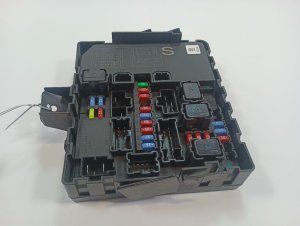
Est. part cost: $400-$1200 - Faulty Intelligent Power Distribution Module (IPDM) 🔴 High Probability → Shop Fuse Box Early versions of the IPDM on 2005-2010 models, often with a white housing, are known for internal relay and solder joint failures. Water intrusion from clogged cowl drains can also damage the module.
How to confirm: Confirm with a scan tool that the IPDM is the source. Symptoms often include a crank-no-start or sudden stalling, as the IPDM fails to power the fuel pump or ECM. An IPDM self-test (Auto Active Test) can be initiated without a scan tool by pressing the driver's door switch 10 times, which cycles various components like wipers and lights.
Typical fix: Replace the IPDM module located in the engine bay, typically behind the battery. This part is plug-and-play and does not require programming, but it's crucial to match the part number exactly. Swapping the ECM relay with the fog light relay within the IPDM can be a temporary diagnostic step.
Est. part cost: $200-$500 - Faulty Body Control Module (BCM) 🟡 Medium Probability → Shop Body Control Module On many Infiniti models, the BCM is highly susceptible to water damage from clogged sunroof drains. The drains pass through the A-pillar and can leak directly onto the BCM in the passenger kick panel area, causing corrosion and internal failure.
How to confirm: Check for U1010 in the BCM. Symptoms include a wide range of electrical issues: key fob not working, security alarm acting up, parasitic battery drain, and a no-start due to the anti-theft system. Look for physical signs of water damage or corrosion on the BCM and its connectors.
Typical fix: First, the source of the water leak (usually the sunroof drain) MUST be repaired. Then, replace the BCM, which is located under the passenger's side dashboard. The new BCM must be programmed to the vehicle's anti-theft system and key fobs.
Est. part cost: $250-$600 - Low Battery Voltage or Faulty Charging System ⚪ Low Probability → Shop Vehicle Battery
How to confirm: Before replacing any modules, test the battery and alternator. A voltage below 12.4V with the engine off, or outside the 13.5-14.5V range when running, indicates a problem. Low voltage can cause modules to malfunction and set various communication codes, including U1010 and U0101.
Typical fix: Charge or replace the battery. If the charging system is at fault, replace the alternator. Ensure all battery connections are clean and tight.
Est. part cost: $150-$400 - Corroded Ground Connection ⚪ Low Probability
How to confirm: Visually inspect the main battery ground cable, engine-to-chassis ground straps, and ground points near the suspect module. A loose or corroded ground can cause intermittent and bizarre electrical behavior that mimics module failure.
Typical fix: Remove, clean, and securely re-tighten the ground connection. Replace the ground strap if it is heavily corroded.
Est. part cost: $5-$50
Rare But Worth Checking
- Faulty ADAS Control Unit: On 2011-2012 models equipped with Advanced Driver-Assistance Systems, the service manual specifically lists the ADAS module as a potential source of a U1010 code if its internal CAN controller fails. Diagnosis involves checking for this specific code in the ADAS unit.
- Faulty Engine Control Module (ECM): → Shop Engine Control Module (ECM) While less common than IPDM or BCM failure, a shorted ECM can cause a no-start and blow fuses related to its power supply, potentially logging a U1010 as it fails.
Diagnosis Steps
- Connect a professional-grade scan tool capable of communicating with all vehicle modules (BCM, ABS, IPDM, etc.).
- Perform a full system scan and identify which specific module is reporting the U1010 code. This is the suspect module.
- Check and record any other DTCs present in other modules, especially U1000, C1110, or C1111.
- Test the battery voltage with the engine off (should be >12.4V) and running (should be 13.5-14.5V). Address any charging system issues first.
- If the IPDM is suspected, perform the 'Auto Active Test' by turning the ignition ON, pressing the driver's door jamb switch 10 times within 10 seconds, turning the ignition OFF, then ON again. The horn should honk, and lights/wipers will cycle, confirming IPDM function.
- Locate the suspect module. Visually inspect its housing and electrical connectors for signs of physical damage, corrosion, or water intrusion, especially for the BCM in the passenger kick panel.
- Check all fuses related to the suspect module in both the interior and engine bay fuse boxes.
- Using a multimeter and the vehicle's wiring diagram, disconnect the module and test for proper battery voltage and a clean ground signal at the connector's pins.
- If power and ground are good, and there is no visible damage to the wiring harness, the suspect module is faulty and needs to be replaced.
- After replacement, clear all codes and perform any necessary programming or calibration procedures for the new module, such as VIN writing for the ECM or Steering Angle Sensor calibration for the ABS module.
Parts You'll Likely Need
- ABS Control Module / Actuator Assembly
(OEM #47660-ZC30C (Example for 2006-2010 4x4, always verify))— A common failure point on 2005-2010 models that can cause a U1010 along with ABS/VDC/SLIP lights.
Trusted brands: Hitachi, Bosch (OEM Supplier)
OEM price range: $800-$1500
Aftermarket price range: $400-$800 (Remanufactured) - Intelligent Power Distribution Module (IPDM)
(OEM #284B7-ZE03B (Example, always verify))— High failure rate on 2005-2010 models, causing stalling or no-start conditions.
Trusted brands: Nissan (OEM)
OEM price range: $250-$500
Aftermarket price range: $150-$300 (Used) - Body Control Module (BCM) — Frequently fails due to water intrusion from clogged sunroof drains, causing widespread electrical issues.
Trusted brands: Nissan (OEM)
OEM price range: $400-$700
Aftermarket price range: $100-$250 (Used, requires programming)
Related Codes That Often Appear With This One
- U1000 — If a module is failing internally (U1010), it will also fail to communicate on the network, causing other healthy modules to log a U1000 (CAN Communication Circuit) code because they can no longer hear from the faulty module.
- C1110 — This code means 'Controller Failure' and often appears with a U1010 when the ABS control module is the source of the problem.
- C1111 — This code for 'ABS Pump Motor' failure is also a strong indicator that the entire ABS module assembly is faulty, often in conjunction with U1010 and C1110.
Technical Service Bulletins (TSBs) & Recalls
- ITB10-029A / ITB10-029B: Provides general diagnostic procedures for CAN communication codes like U1010, emphasizing checking power/ground at the suspect module and using the CONSULT scan tool's V-CAN diagnosis.
Platform-Specific Known Issues
- A known fire risk exists for the ABS module on 2005-2010 models, where an internal seal leak can short the circuit board. Infiniti has advised parking outdoors if the ABS light is on.
- The early-style IPDM with a white-colored case is particularly prone to failure and was later superseded by a more reliable black-cased version.
- Water intrusion from clogged sunroof drains or a leaking cowl seal is a primary killer of BCMs and IPDMs on these and other Infiniti vehicles.
Mechanic-Grade Diagnostic Values
- CAN Bus Network Resistance — expected: ~60 Ω. Failure: A reading of ~120 Ω indicates one of the two terminating resistors (or modules) is offline. A reading significantly different from 60 or 120 Ω (e.g., 45 Ω or 0 Ω) indicates a wiring short, shorted module, or an unexpected third resistance.
- IPDM Starter Signal Voltage — expected: ~10-12V during crank. Failure: 0V at the starter signal wire (typically red) when the ignition is turned to START indicates the IPDM is not sending the signal. This points to a faulty IPDM, not a bad starter.
- ECM Power Supply Voltage at MAF Sensor — expected: Within 0.5V of battery voltage. Failure: A significantly lower voltage, such as 5-6V, on the source voltage wire (often brown) at a 5-wire sensor indicates a problem with the ECM power supply, likely the ECM relay within the IPDM.
Scan Tool Commands That Help
- Infiniti CONSULT-III: Self Diagnosis (All Systems) — This is the initial and most critical step. It polls every module on the network to determine which one is logging the U1010 internal fault, distinguishing it from a U1000 communication fault logged by a healthy module.
- Infiniti CONSULT-III: Reprogramming — Required after replacing the ECM or TCM. The tool guides the technician through the process, which requires a stable power supply (12.0V-15.5V) from a battery charger.
- Infiniti CONSULT-III: Idle Air Volume Learn (IAVL) — This is a mandatory follow-up procedure after performing ECM reprogramming to ensure the engine idles correctly.
- Infiniti CONSULT-III: Work Support > ABS > "Steering Angle Sensor Adjustment" — Mandatory after replacing the ABS control module to calibrate the new unit with the steering system for VDC to function correctly.
Wiring & Ground Locations
- BCM (Body Control Module) — Under the left (driver's) side of the dashboard.. The BCM is a central communication hub. A U1010 in the BCM is often due to water intrusion from a clogged sunroof drain or A-pillar leak, causing internal corrosion.
- ABS Control Unit — At the left rear of the engine compartment (for 2011+ Z62 models).. This is a primary suspect for U1010, especially on JA60 models. Its location can expose it to heat and potential brake fluid leaks from its own seals, causing internal failure.
- Ground Points B33 & B222 — B33 is under the driver's seat; B222 is under the front passenger's seat (on 2012 Z62 models).. These are major body ground points for numerous modules. Corrosion or looseness here can cause floating grounds and unpredictable behavior that mimics a module failure.
- Ground Points E38 & E43 — E38 is at the right front of the engine compartment; E43 is at the left front (on 2012 Z62 models).. These are primary engine compartment grounds for components like the ECM, ICC sensor, and ABS unit. A bad ground here can directly impact the modules most likely to set a U1010.
- Air Levelizer Control Module — In the driver's side rear quarter panel, behind the interior trim (on 2011+ Z62 models).. This module is on the CAN bus. While not a common failure point for U1010, if other modules check out, a fault here could disrupt the network. It is often misidentified as being under the third-row seat.
Real Owner Repair Stories
- Lucore Auto, YouTube (2013 Infiniti QX56 (Z62)) — Crank position sensor code, vehicle would enter limp mode when accelerating above 20 mph.
❌ Tried (didn't work) A visual inspection of the flywheel/flexplate did not show any obvious damage.
✅ What actually fixed it The flywheel/flexplate was replaced. A subtle, barely visible bend on one of the crank sensor reluctor teeth was causing an erratic signal. This damage likely occurred during a previous engine installation. The support plate was also found to be indexed 180 degrees incorrectly. - Victor Martinez, YouTube (2011 Infiniti QX56 (Z62)) — No crank, no start, no communication with PCM (U1000 logged by other modules).
❌ Tried (didn't work) Checking for 5V reference at sensors (it was absent)., Replacing a blown 30A fuse, which immediately blew again upon connecting the ECM.
✅ What actually fixed it The Engine Control Module (ECM) was internally shorted to power. This short was the cause of the main ECM power fuse blowing instantly. Replacing the ECM restored communication and allowed the vehicle to start.
"I Checked Everything" — The Actual Cause
- In the context of a U1010, the equivalent of a 'smoke test clean' is when all wiring and ground checks appear normal. A documented case showed a 2011 QX56 with a no-start and U1000 (loss of communication with PCM). Technicians found a 30A fuse that would blow instantly when the ECM was connected. The CAN wiring and grounds were intact, but the ECM itself had an internal short to power, causing the failure. The root cause was not the network wiring, but the failed module taking down its own power supply.
OEM Part Supersession History
Multiple, e.g., 47660-ZC000 (2005)→e.g., 47660-ZQ02B (for 2005-2007), 47660-ZC30C (for 2006-2010 4x4)— Internal revisions and improvements.
Heads up: ABS Module for JA60 (2005-2010) is highly specific. Part numbers differ based on RWD vs. 4WD and the presence of the adaptive cruise control option. The wrong module will not program or function correctly.Varies by year, e.g., white housing units on early models→e.g., 284B7-1LA0A (for 2011-2012)— Design change between JA60 and Z62 generations.
Heads up: The IPDM from a JA60 (2005-2010) is not compatible with a Z62 (2011-2012) and vice-versa. Part numbers must be matched exactly to the vehicle's year and model.
Model Year Variations Within This Range
- 2005-2010 (JA60): These models are known for IPDMs with internal relay failures and ABS modules prone to internal fluid leaks onto the circuit board. The ABS module part number is also dependent on whether the vehicle is equipped with adaptive cruise control.
- 2011-2012 (Z62): This generation uses a redesigned, more reliable IPDM, though it can have issues with the Variable Voltage Control System, leading to charging faults. The service manual for this generation specifically calls out the ADAS control unit as a potential source for a U1010 code.
Helpful Videos
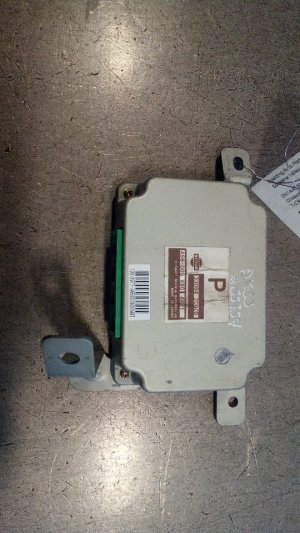
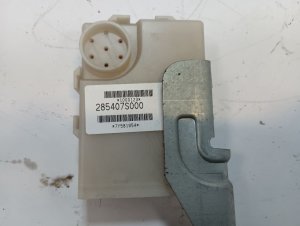
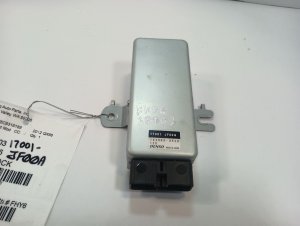
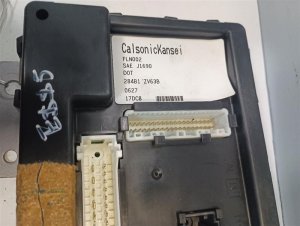
We Have This Part in Stock

The information in this article is provided for general reference and educational purposes only. Vehicle specifications, procedures, and part compatibility can vary by production date, trim level, and region. Always consult your vehicle's factory service manual and verify part numbers before purchasing or performing repairs. Safety-critical components such as airbags, seat belts, and braking systems should be installed by a qualified professional.
- Infiniti QX56:
- 🧭 Diagnostic Flowchart
- 🎬 Helpful Videos
- 🛍️ Shop This Part
- What's Unique About the 2005-2012 Infiniti QX56
- Symptoms You May Notice
- Most Likely Causes
- Rare But Worth Checking
- Diagnosis Steps
- Parts You'll Likely Need
- Related Codes That Often Appear With This One
- Technical Service Bulletins (TSBs) & Recalls
- Platform-Specific Known Issues
- Mechanic-Grade Diagnostic Values
- Scan Tool Commands That Help
- Wiring & Ground Locations
- Real Owner Repair Stories
- "I Checked Everything" — The Actual Cause
- OEM Part Supersession History
- Model Year Variations Within This Range
- 🎟️ Get 5% Off