

U1010 on 2011-2014 Nissan JUKE: Module Internal Error Causes and Fixes
The U1010 code on a Nissan JUKE means a specific electronic module has an internal error. However, the most common cause is not a bad module, but a weak battery or corroded ground wires tricking the module into failing its self-test. The ABS module is the most frequent culprit for this code on the Juke. Always test the battery and clean main ground connections before replacing any expensive parts.
- U1010 means a module has an internal error, but the actual cause is often a simple electrical issue.
- DO NOT replace any modules until you have fully tested the battery and cleaned the main ground connections.
- A professional scan tool is required to know which module is faulting; a basic code reader is not enough.
- Symptoms can be severe, including limp mode or stalling, so it is not safe to ignore this code.
- If a module replacement is necessary, it will almost certainly require programming to work with your vehicle.
What's Unique About the 2011-2014 Nissan JUKE
The first-generation Nissan JUKE, like many Nissans from this era built on the Renault-Nissan B platform, is sensitive to electrical system health. While the U1010 code points to a failed module, experienced technicians and owner forums frequently report that foundational electrical issues are the true culprit. Problems like poor ground connections and low battery voltage are known to trigger false communication codes across the Nissan lineup, making a thorough electrical check the most critical first step before condemning an expensive computer. Specifically on the Juke, the ABS pump/module assembly is a very common point of failure that sets this code.
Diagnostic Flowchart
Tap your situation to follow the diagnostic path that matches what you're seeing on this vehicle.
Symptoms You May Notice
- Check Engine Light is on
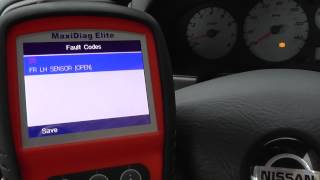
- ABS and/or Vehicle Dynamic Control (VDC) warning lights are on 🎬 See how to diagnose a Nissan ABS light on your dash.
- Vehicle enters 'limp mode' with reduced power
- Transmission may not shift correctly or may be stuck in one gear
- Intermittent no-start or stalling condition
- Gauges or other electronics behave erratically
- ABS pump motor may run continuously, even with the key off
- Brake pedal feels spongy or unresponsive
- Replacing a control module (ECM, TCM, BCM, ABS) without first verifying battery health and the integrity of all power and ground connections. The root cause is often the electrical supply to the module, not the module itself.
Most Likely Causes
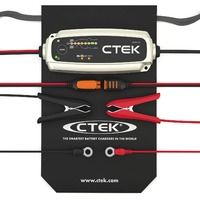
- Weak or Failing Battery 🔴 High Probability → Shop Vehicle Battery Modern control modules require stable voltage to operate. Low voltage during startup or operation is a very common trigger for false communication codes on Nissans.
How to confirm: Test the battery with a digital multimeter or a professional battery tester. A healthy, fully charged battery should read approximately 12.6V with the engine off and 13.7V-14.7V with the engine running. A load test is the most definitive way to confirm battery health.
Typical fix: Recharge or replace the battery.
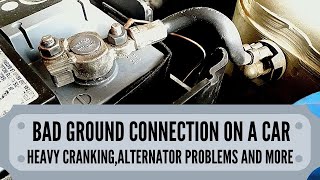
Est. part cost: $150-$300 - Poor or Corroded Ground Connections 🔴 High Probability Nissan vehicles of this era are known to develop resistance in ground connections over time, leading to a wide range of electrical and communication faults. Key grounds are the main battery-to-chassis strap (often under the battery tray) and engine-to-chassis grounds.
How to confirm: Visually inspect the main battery-to-chassis ground strap and other major ground points on the engine and frame for corrosion or looseness. Perform a voltage drop test on the ground circuit; any reading over 0.2V indicates a problem. 🎬 Watch: How to diagnose and fix bad ground connections.
Typical fix: Remove, clean all contact surfaces with a wire brush, and securely re-tighten all affected ground connections. Applying dielectric grease can prevent future corrosion.
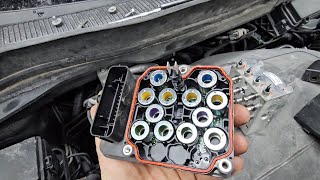
Est. part cost: $5-$20 - Failed ABS Control Module/Pump Assembly 🔴 High Probability → Shop ABS Control Module The ABS module (also called an HECU or Actuator Assembly) is the most commonly reported module to fail and set a U1010 code on the Juke and its platform mates. The failure is internal to the electronics of the module itself.
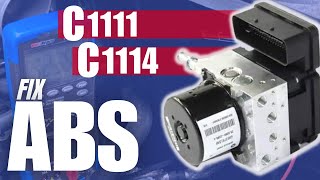
How to confirm: This is a process of elimination. If an advanced scan tool identifies the ABS module as the source of the U1010, and you have verified with a multimeter that the module is receiving proper power and ground at its main connector, the module itself is faulty. Often accompanied by codes like C1110 (Controller Failure) or C1111 (Pump Motor Fault).
Typical fix: Replace the failed ABS module and pump assembly. The replacement unit must match the vehicle's drivetrain (FWD or AWD) and will require programming/initialization to the vehicle's VIN. Alternatively, the original module can be sent to a specialist for repair.
Est. part cost: $400-$1500 - Damaged CAN Bus Wiring or Connectors ⚪ Low Probability
How to confirm: Visually inspect the wiring harness for chafing, breaks, or corrosion, especially near the faulting module. Test the CAN bus for proper resistance (typically 60 ohms between Pin 6 and Pin 14 at the OBD-II port with the battery disconnected) and check for shorts to power or ground.
Typical fix: Repair the damaged section of the wiring harness.
Est. part cost: $10-$100
Rare But Worth Checking
- Failed IPDM E/R (Intelligent Power Distribution Module Engine Room): → Shop Fuse Box
Diagnosis Steps
- Connect an advanced, bi-directional scan tool capable of performing a full network test (e.g., Nissan CONSULT).
- Perform a full system scan and identify which specific module is storing the U1010 code. This is the primary suspect.
- Record and diagnose any other communication codes (like U1000 or U0xxx) first, as per Nissan TSB NTB10-066A.
- Test the battery's state of charge and health. Ensure it reads ~12.6V engine-off and ~14V engine-on. Perform a load test.
- Inspect the main negative battery cable and its connection points to the chassis and engine block. Disconnect, clean all contact surfaces to bare metal, and tighten these grounds. The ground under the battery tray is a common failure point.
- Locate the fuses for the faulting module (e.g., ABS, TCM) in the engine bay fuse boxes (IPDM E/R) and check them. For the ABS, there are multiple fuses to check, including high-amperage fuses in the box near the battery and a 10A fuse (F17) in the main IPDM box.
- If power and grounds are good, locate the suspect module. For the ABS module, check for power on pins 45 & 46 and ground on pins 41 & 42 of the main connector.
- With the battery disconnected, measure the resistance between Pin 6 (CAN-H) and Pin 14 (CAN-L) at the OBD-II port. A reading of ~60 ohms is normal. A reading of 120 ohms or an open circuit indicates a wiring problem or a failed terminating module.
- If all external factors (power, ground, wiring) are ruled out, the module itself is the likely culprit and should be considered for replacement.
- After replacement, the new module (especially the ABS module) will need to be programmed or configured to the vehicle.
Parts You'll Likely Need
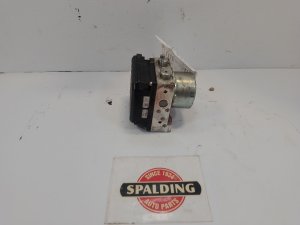
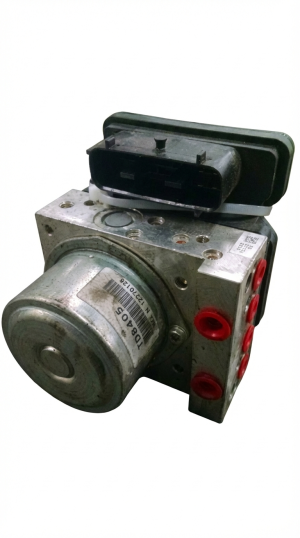
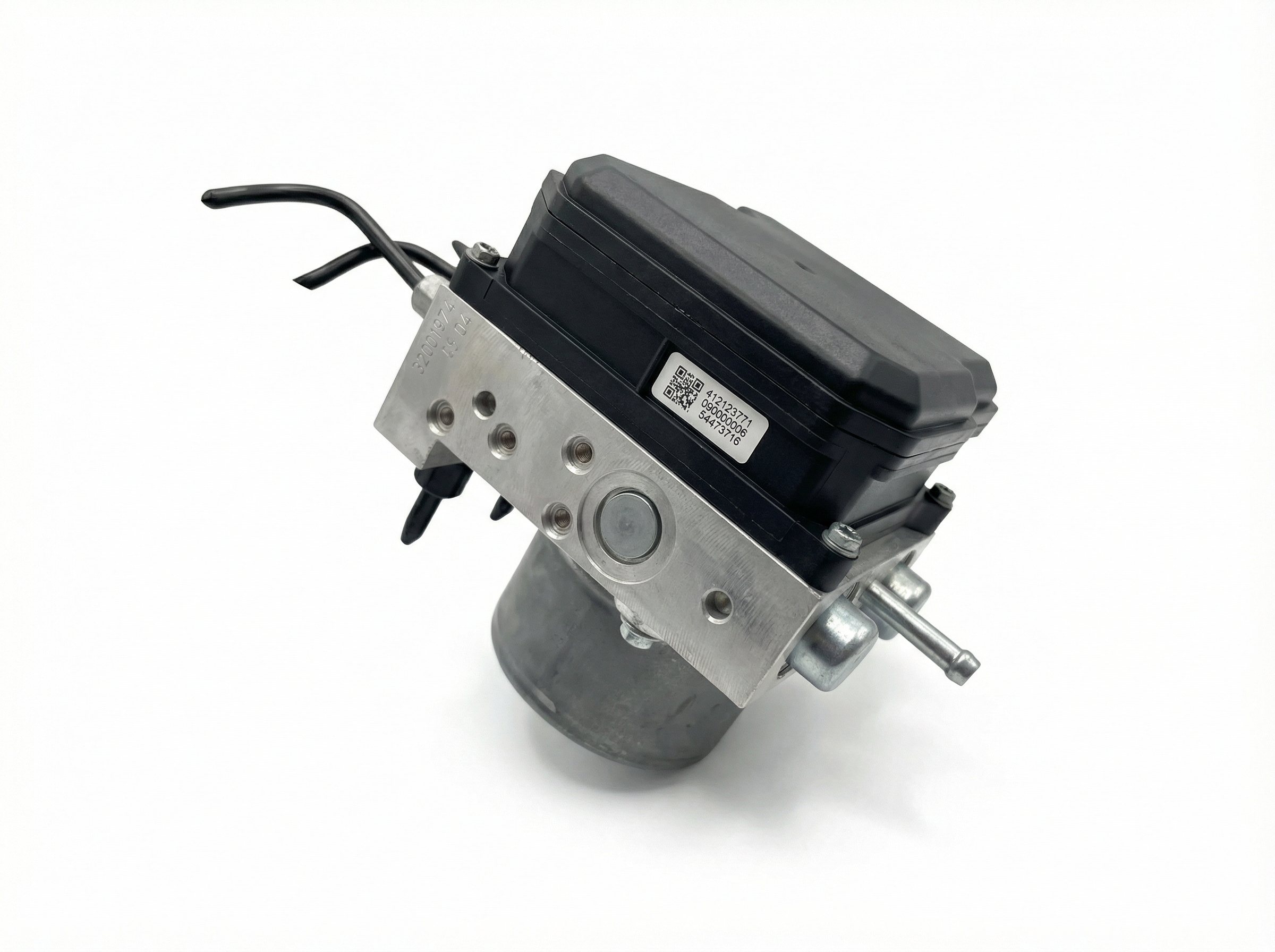
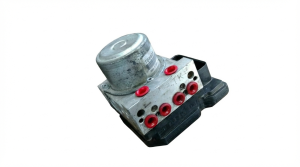
- ABS Pump and Module Assembly
(OEM #47660-1KF4B (FWD, representative), 47660-1KA2A, 47660-1KD2A)— This is the most common module to fail and set a U1010 code on this vehicle. It is sold as a single unit.
Trusted brands: Nissan (OEM), Bosch (OEM supplier)
OEM price range: $800-$1500
Aftermarket price range: $300-$900 (Remanufactured) - Battery — A weak or failing battery is a primary trigger for communication fault codes on this vehicle.
Trusted brands: Interstate, DieHard, Duralast
OEM price range: $200-$350
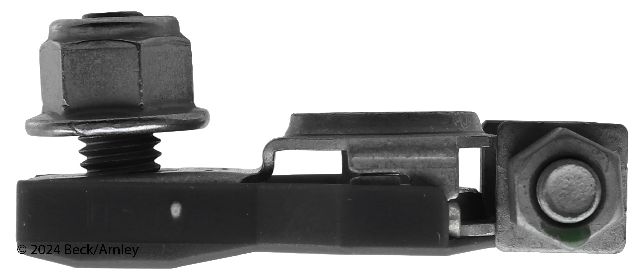
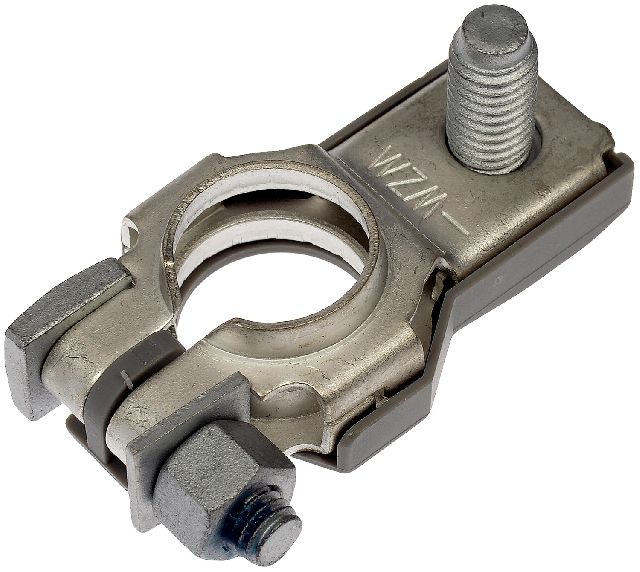
Aftermarket price range: $150-$300 - Battery Ground Cable
(OEM #24080-JA10A (Example from similar platforms))— The factory ground cable can corrode internally or at its chassis connection point, causing high resistance that leads to communication faults.
Trusted brands: Nissan (OEM)
OEM price range: $50-$100
Aftermarket price range: $30-$70
Related Codes That Often Appear With This One
- U1000 — U1000 is a general CAN communication failure. It often appears alongside U1010, where U1000 indicates the network is down, and U1010 is the code from the specific module that believes it has an internal fault causing the issue.
- U0121 — This code means 'Lost Communication With Anti-Lock Brake System (ABS) Control Module'. If the ABS module is the source of the U1010 fault, other modules like the ECM will log U0121 because they can no longer hear from it.
- C1110 — This is a specific ABS code for 'Controller Failure'. It strongly corroborates that the ABS module itself has an internal electronic fault when seen with a U1010 stored in the ABS module.
- C1111 — This code for 'ABS Pump Motor Fault' also points directly to an internal failure within the ABS pump/module assembly. It is frequently found with U1010 when the ABS unit is the problem.
Technical Service Bulletins (TSBs) & Recalls
- NTB10-066A: Advises that communication codes like U1000, U1001, and U1010 must always be diagnosed first before other trouble codes. It also mentions that high resistance in ground connections can be a cause.
- NTB12-051 (and its revisions): While for a P0101 MAF sensor code, this TSB is relevant as it applies to many platform-mate vehicles and involves ECM reprogramming. It highlights the sensitivity of Nissan electronics and the importance of stable battery voltage (12.9V+) during any diagnostic or programming procedure, which is critical when dealing with U-codes.
Platform-Specific Known Issues
- Prevalent ABS Module Failure: → Shop ABS Control Module The ABS control module/pump assembly is a widely acknowledged weak point on the 2011-2014 Juke that directly causes the U1010 code. The failure is internal to the module's electronics. When this occurs, it is often accompanied by ABS-specific codes like C1110 or C1111. Replacement modules must be matched to the drivetrain (FWD vs. AWD) and require programming.
Mechanic-Grade Diagnostic Values
- CAN High (CAN-H) Voltage to Chassis Ground — expected: ~2.5V to 3.0V (Ignition ON). Failure: Voltage significantly outside this range suggests a short to power, short to ground, or a faulty module pulling the line voltage.
- CAN Low (CAN-L) Voltage to Chassis Ground — expected: ~2.0V to 2.5V (Ignition ON). Failure: Voltage significantly outside this range suggests a short to power, short to ground, or a faulty module pulling the line voltage.
- ABS Module Power Supply Pins to Chassis Ground — expected: 10V to 14V (Battery Voltage). Failure: Low or no voltage indicates a problem with the fuse, wiring, or the IPDM E/R.
- ABS Module Ground Pins to Chassis Ground — expected: Below 1 Ω. Failure: High resistance indicates a corroded or loose ground connection, which is a common cause of communication faults.
Scan Tool Commands That Help
- Nissan CONSULT-III: ABS 'Work Support' > 'Variant Coding' / 'Configuration' — This is a mandatory procedure after replacing the ABS control module. It configures the new module to the vehicle's specific equipment (e.g., FWD vs. AWD). Failure to perform this step will prevent the ABS system from working and may set additional codes like C1170.
- Nissan CONSULT-III: Self-Diagnostic Result — This is the primary function used to determine which specific control unit is logging the U1010 internal fault.
- Nissan CONSULT-III: CAN Diag Support Monitor — Used to monitor the status of CAN communication signals as seen by a specific module, like the BCM. This helps in diagnosing general network health issues that might occur alongside a U1010.
Wiring & Ground Locations
- ABS Actuator & Electric Unit Ground — In the engine compartment, typically on the frame rail or inner fender near the ABS unit itself.. The ABS module is the most common source of U1010 on the Juke. A poor ground connection at this point can cause low voltage or electrical noise, tricking the module into failing its self-test and setting the U1010 code.
- Ground Points F6, F9, F44 — These are primary ground distribution points in the engine compartment. F6 is at the top front of the engine, F9 at the top rear, and F44 at the right rear of the engine compartment.. Multiple control modules, including the ECM and ABS unit, rely on these main engine compartment grounds. Corrosion or looseness at any of these points can cause intermittent communication faults across the network.
- E104 (Dash Ground) — Located at the left end of the dashboard, likely behind the driver's side kick panel.. This ground point serves interior modules like the BCM. While less likely to be the primary cause for an ABS-related U1010, a fault here can cause widespread, confusing electrical issues and other communication codes.
- OBD-II Connector (DLC) — Under the driver's side dashboard.. This is the primary diagnostic access point. CAN bus integrity is tested between Pin 6 (CAN-H) and Pin 14 (CAN-L). The Juke's CAN bus baud rate is 500k.
Real Owner Repair Stories
- YouTube video by 'Automotive Diagnosis: Cars Repair & Training Guides' (Nissan vehicle (specific model not Juke, but demonstrating identical diagnostic principle for C1111/U1010)) — ABS light on with codes C1111 (ABS Motor Fault) and often U1010.
❌ Tried (didn't work) Simply clearing the codes without diagnosis.
✅ What actually fixed it The diagnostic process confirmed that the main power and ground circuits to the ABS module connector were good, and the high-amperage fuses were intact. This process of elimination proved the fault was internal to the ABS pump/module assembly itself, requiring its replacement.
OEM Part Supersession History
47660-1KA4B→47660-1KF4B— Part revision or supplier change.
Heads up: Part 47660-1KF4B is specified for FWD Juke models (S, SL, SV) with automatic transmissions. Using an AWD module on a FWD car (or vice-versa) will result in configuration errors and a non-functional ABS/VDC system.
Model Year Variations Within This Range
- 2011-2014: While electrically very similar, there can be minor running changes to wiring harness routing and connector types. The Juke received a significant facelift for the 2015 model year, so parts and procedures for later models may not be identical. Always verify part numbers against the vehicle's VIN.
Helpful Videos

Used OEM Parts in Stock
New Aftermarket Parts Available


The information in this article is provided for general reference and educational purposes only. Vehicle specifications, procedures, and part compatibility can vary by production date, trim level, and region. Always consult your vehicle's factory service manual and verify part numbers before purchasing or performing repairs. Safety-critical components such as airbags, seat belts, and braking systems should be installed by a qualified professional.
- Nissan JUKE:
- 🧭 Diagnostic Flowchart
- 🎬 Helpful Videos
- 🛍️ Shop This Part
- What's Unique About the 2011-2014 Nissan JUKE
- Symptoms You May Notice
- Most Likely Causes
- Rare But Worth Checking
- Diagnosis Steps
- Parts You'll Likely Need
- Related Codes That Often Appear With This One
- Technical Service Bulletins (TSBs) & Recalls
- Platform-Specific Known Issues
- Mechanic-Grade Diagnostic Values
- Scan Tool Commands That Help
- Wiring & Ground Locations
- Real Owner Repair Stories
- OEM Part Supersession History
- Model Year Variations Within This Range
- 🎟️ Get 5% Off