

U1010 on 2011-2015 Nissan LEAF: Causes and Fixes for This Network Code
The U1010 code on a 2011-2015 Nissan LEAF indicates an internal error within a control module, disrupting network communication. The most common cause is a weak or failing 12V auxiliary battery, which can cause widespread and alarming electronic issues, including brake system failure warnings. Replacing the 12V battery (Group Size 51R) is an inexpensive first step that resolves the issue in a vast majority of cases.
- U1010 on a 2011-2015 LEAF means a control module has an internal fault.
- Before any complex diagnostics, test and, if necessary, replace the 12V auxiliary battery. This is the most likely and cheapest fix.
- Check and clean the main battery and chassis ground connections, as this is another common, low-cost solution.
- Due to the complexity of the CAN network, further diagnosis of wiring or modules should be left to a professional with the correct tools.
What's Unique About the 2011-2015 Nissan LEAF
As an early mass-market electric vehicle, the 2011-2015 LEAF's electronic architecture is highly dependent on a stable 12V power supply to operate its network of control modules, even when the high-voltage traction battery is fully charged. The vehicle's system for charging the 12V battery from the main traction battery is a known weak point; forum users note the charging parameters seem too conservative, often failing to keep the lead-acid battery above an 80% state of charge, which leads to sulfation and premature failure. Consequently, a weak 12V battery is a very frequent trigger for a cascade of communication codes like U1010, causing severe symptoms like total brake failure warnings that are often resolved with a simple battery replacement.
Diagnostic Flowchart
Tap your situation to follow the diagnostic path that matches what you're seeing on this vehicle.
Symptoms You May Notice
- Multiple warning lights on the dashboard, including ABS, ESP, EV System Warning, and both red and yellow master warning lights.
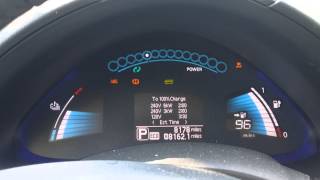
- Brake system failure warning on the dash, often accompanied by a complete loss of power braking. 🎬 Watch: See what these brake system failure symptoms look like. The pedal may feel hard, go to the floor, or pulse without applying the brakes.
- Audible clicking or whirring from the ABS actuator/brake booster area under the hood when pressing the brake pedal.
- Vehicle will not start or enter 'Ready' mode, sometimes displaying a message to 'Push brake and power switch to start' even when the brake is depressed.
- Inability to shut the car off.
- Loss of features like cruise control.
- Inability to charge the high-voltage battery.
- Scan tool (like LeafSpy) cannot communicate with one or more modules, particularly the ABS/VDC unit.
- Replacing the extremely expensive ABS actuator assembly ($3000+) before exhaustively testing and replacing the 12V auxiliary battery. Many forum posts describe identical symptoms of a failed ABS unit that were completely resolved with a new $200 battery.
Most Likely Causes
- Weak or Failing 12V Auxiliary Battery 🔴 High Probability → Shop Vehicle Battery The LEAF's 12V battery charging logic is widely documented by owners as being suboptimal, leading to chronic undercharging and premature battery failure (often in 2-4 years). This low voltage condition causes CAN bus communication errors between critical modules.
How to confirm: Test the 12V battery voltage with a multimeter when the car is off and has been sitting for at least an hour. A healthy battery should read above 12.4V. Readings below 12.0V indicate a discharged or failing battery that can trigger these faults. Note that LeafSpy may report a good voltage if the car is ON, as the DC-to-DC converter will be actively charging it, masking the underlying problem.
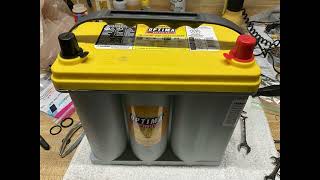
Typical fix: Replace the 12V auxiliary battery. The correct size is Group 51R. 🎬 See this walkthrough on replacing your battery with an Optima. Many owners recommend upgrading from the standard flooded lead-acid battery to an AGM or even a LiFePO4 (LFP) battery, which are more tolerant of the LEAF's charging patterns.
Est. part cost: $150-$250 for AGM, $400+ for LiFePO4 - Failed ABS Actuator / Intelligent Brake Control Unit ⚪ Low Probability This complex electro-hydraulic unit is critical for the brake-by-wire system. An internal failure, such as a worn motor or intermittent short, can cause it to stop communicating, triggering a U1010 from the unit itself and a cascade of brake warnings. This is often misdiagnosed when the real problem is the 12V battery.
How to confirm: This is a diagnosis by elimination after confirming the 12V battery and grounds are perfect. A professional scan tool is needed to confirm that the ABS module is the one that is offline. A user on the MyNissanLeaf forum reported a diagnosis of an 'intermittent short in the Brake Actuator Assembly' from a dealer.
Typical fix: Replace the ABS actuator assembly. This is a very expensive part and typically requires programming and brake bleeding by a dealership or specialized shop. Used units are a more affordable but riskier option.
Est. part cost: $2000-$4800+ OEM, $200-$500 Used - Poor Ground Connections ⚪ Low Probability While less common than the battery, corrosion or looseness at main chassis ground points can introduce electrical noise and voltage drops, disrupting sensitive CAN bus communications.
How to confirm: Visually inspect and physically check the main ground straps from the 12V battery negative terminal to the chassis and from powertrain components to the chassis. Look for green or white corrosion, looseness, or frayed wires.
Typical fix: Disconnect, clean all contact surfaces with a wire brush until they are shiny, and securely re-tighten the ground connections. Applying dielectric grease can prevent future corrosion.
Est. part cost: $1-$10 - Failed Vehicle Control Module (VCM) Very Low Probability While any module can fail, the VCM is the central brain. An internal fault is rare but would have widespread consequences, including setting a U1010.
How to confirm: This is a final diagnosis of exclusion by a professional technician with a Nissan CONSULT tool after all other possibilities (battery, grounds, wiring, other modules) have been exhausted.
Typical fix: Replace and reprogram the VCM, which must be done at a dealership.
Est. part cost: $500-$1500+
Rare But Worth Checking
- Aftermarket Device Interference: Improperly installed aftermarket accessories (e.g., remote starters, tracking devices, custom stereos) that tap into the CAN bus wiring can disrupt network communication.
- Parasitic Drain from Telematics Control Unit (TCU): The older 2G/3G telematics unit (NissanConnect/CarWings) is known to sometimes fail to shut down properly, causing a slow drain on the 12V battery. This drain eventually weakens the battery enough to cause the U1010 code and related symptoms. Some owners physically disconnect the TCU, which is located behind the glove box, 🎬 Watch: How to access and fix the Carwings telematics unit. to solve the drain.
Diagnosis Steps
- Check for other stored DTCs using a scan tool like LeafSpy Pro. Per Nissan TSB NTB10066A, communication codes should always be diagnosed first. Note all codes present.
- Test the 12V auxiliary battery's state of health. Do not just check voltage with the car on. Let the car sit OFF for at least an hour, then measure the voltage at the terminals with a multimeter. A reading below 12.4V is suspect; below 12.0V is a strong indicator of a bad battery. If in doubt, replace it. This is the most likely fix.
- If the battery is new and healthy, inspect all main power and ground connections. Check the battery terminals for corrosion and tightness. Locate and inspect the main chassis ground straps for corrosion or damage. Clean and tighten as necessary.
- As a temporary reset, try disconnecting the negative terminal of the 12V battery for 5-10 minutes and then reconnecting it. This can often clear the CAN bus error and restore normal function, further pointing to a low-voltage event as the root cause.
- Inspect the fuses related to the ABS, VDC, and VCM control modules. A blown fuse can take a module offline. The primary fuses for the ABS module are typically a 30A and a 40A fusible link in the engine room fuse box.
- If the battery and grounds are good, the issue is likely in the CAN wiring or a specific module. This step requires professional tools.
- A technician will measure CAN bus resistance at the OBD-II port (pins 6 and 14). A reading of ~60 ohms is normal. A reading of ~120 ohms suggests a break in the circuit or a missing terminating resistor. A reading near 0 ohms indicates a short circuit.
- Using an advanced scan tool, attempt to communicate with all modules on the network to identify which one is offline (often the ABS unit). Isolate the faulty module by disconnecting it and re-checking network integrity.
Parts You'll Likely Need
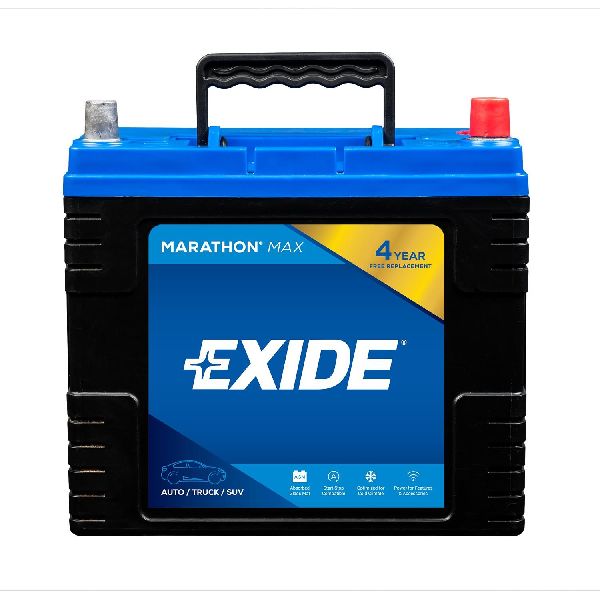
- 12V Auxiliary Battery
(OEM #Group Size 51R is the key identifier, specific OEM P/N varies.)— This is the most common cause of U1010 and other electronic issues on the Nissan LEAF due to the car's charging system characteristics.
Trusted brands: Nissan OEM, Bosch Platinum Series AGM (Size 51R), Optima Yellow Top, Ohmmu (LiFePO4)
OEM price range: $200-$280
Aftermarket price range: $150-$250 (AGM), $400+ (LiFePO4)
Related Codes That Often Appear With This One
- U1000 — U1000 is a general CAN communication failure code. When a module (like the ABS unit) fails internally and sets a U1010, other modules on the network will log a U1000 because they can no longer communicate with the faulty module.
- U0121 — Lost Communication With Anti-Lock Brake System (ABS) Control Module. This code will be logged by other modules when the ABS unit is the source of the U1010 fault.
- C118C — EV/HEV-ECU. This is another CAN communication related code often seen in conjunction with the others when the 12V battery is weak. If this code is present, some service manuals suggest replacing the ABS actuator and control unit.
- C1A70 — Brake Control System. This code points towards a fault in the electronic brake system, often triggered by the communication loss from the ABS module.
Technical Service Bulletins (TSBs) & Recalls
- NTB10066A: States that communication codes like U1010 should be diagnosed first before other codes. This reinforces the strategy of addressing the potential causes of network failure (like the 12V battery) before attempting to diagnose individual component codes.
Platform-Specific Known Issues
- Chronic 12V Battery Undercharging: → Shop Vehicle Battery The 12V battery charging system in the first-generation LEAF is a widely documented issue. It may not adequately charge the battery, especially with short trips or long periods of inactivity, leading to premature battery failure and a host of electrical codes. Owners on the MyNissanLeaf forums frequently advise proactive replacement every 3-4 years, regardless of whether it tests 'good'.
- Telematics (CarWings) Parasitic Drain: The onboard 2G/3G telematics unit (TCU) can get stuck in an 'on' state, creating a parasitic drain that slowly kills the 12V battery. Since the 2G/3G networks are now defunct, the unit provides no benefit. Some owners opt to physically disconnect the TCU, which is located behind the glovebox, to eliminate this as a potential cause of battery drain.
- Brake Actuator Failure Scare: A common and frightening symptom of the low 12V battery is a 'Brake System Failure' warning and loss of power brakes. This happens when the ABS/VDC module loses power or communication. Many owners have been quoted thousands of dollars for a new ABS actuator when the true fault was just the 12V battery. Disconnecting the 12V battery for a few minutes can often temporarily resolve the brake issue, confirming it's a communication glitch, not a mechanical failure.
Mechanic-Grade Diagnostic Values
- CAN Bus Resistance (Car-CAN) — expected: ~60 Ω. Failure: ~120 Ω indicates an open circuit or a missing terminating resistor. ~0 Ω indicates a short between CAN High and CAN Low lines.
- CAN Bus Voltage (Car-CAN, key on) — expected: CAN High (Pin 6): ~2.5V to 3.5V. CAN Low (Pin 14): ~1.5V to 2.5V. Both should show ~2.5V when idle (no messages).. Failure: Voltages stuck high, low, or at 0V indicate a short to power or ground on the respective line.
- ABS Actuator Power Supply Voltage — expected: Battery voltage (12.0V+). Failure: Low or no voltage indicates a problem with the dedicated 30A or 40A fuses or the wiring to the module.
Scan Tool Commands That Help
- Nissan CONSULT-III / CONSULT-III plus: Self Diagnostic Result — To retrieve DTCs from all individual control modules (ECM, BCM, ABS, etc.). This is the first step to see which module is logging the U1010.
- Nissan CONSULT-III / CONSULT-III plus: CAN DIAG SUPPORT MNTR — To perform a network-wide communication test. It shows which modules are actively transmitting and receiving on the CAN bus, helping to pinpoint the module that is offline.
- Nissan CONSULT-III / CONSULT-III plus: Data Monitor — To view live data from a specific module (e.g., wheel speed sensor inputs to the ABS module). This helps verify if a module is receiving correct information before condemning it.
- Nissan CONSULT-III / CONSULT-III plus: Active Test — To command specific components to operate, such as the ABS pump motor. This can test the functionality of the actuator's internal components directly.
Wiring & Ground Locations
- OBD-II Connector (Car-CAN) — Beneath the steering column.. This is the primary diagnostic access point. Pin 6 is CAN-H and Pin 14 is CAN-L for the main vehicle communication network (Car-CAN). These pins are used to test bus voltage and resistance.
- OBD-II Connector (EV-CAN) — Beneath the steering column.. Pin 12 is EV-CAN Low and Pin 13 is EV-CAN High. A fault on this separate bus, which handles battery and drive system data, could potentially cause system-wide issues, though Car-CAN is more directly related to the U1010 symptoms.
- Telematics Control Unit (TCU) — Behind the glove box, typically on the right side of the opening in US models.. A faulty TCU is a known source of parasitic drain on the 12V battery. Disconnecting its main grey power connector can eliminate this drain and resolve the low-voltage condition that triggers the U1010 code.
- Chassis Ground Points — Main ground from 12V battery negative terminal to the vehicle body, and other straps from the powertrain to the chassis.. Corroded or loose grounds are a common cause of intermittent and difficult-to-diagnose communication errors on many Nissan platforms.
Real Owner Repair Stories
- Reddit user u/Brakethecycle (2011 Nissan Leaf SV) — ABS and VCL warning lights on constantly. Regenerative braking did not work.
❌ Tried (didn't work) Replaced the 12V auxiliary battery with a brand new one., Visually inspected the front two ABS speed sensors., Attempted to clear the code with LeafSpy Pro, but it would not clear.
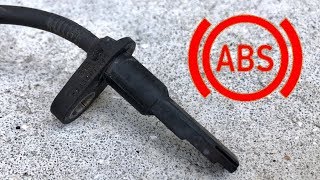
✅ What actually fixed it The user ran DTCs in LeafSpy Pro and found a C1105 code pointing to the rear right (Rr rh) wheel speed sensor. They replaced the sensor ($15 part) and the warning lights went off after driving about 100 feet, restoring normal function. - Reddit user u/eggGreen (2015 Nissan Leaf SV with 3G TCU upgrade) — Repeated instances of a dead 12V battery in the morning.
❌ Tried (didn't work) Multiple attempts to have the issue fixed at the dealer without a specific TSB., Replacing the 12V battery (implied, as the problem kept returning).
✅ What actually fixed it The owner directed the dealer to a specific Technical Service Bulletin, NTB18-045 ("SB 2011-2015 LEAF; 12 V Battery Dead And/Or Telematics Not Working"). The dealer applied the software update described in the TSB, which resolved the parasitic drain from the TCU and fixed the dead 12V battery problem.
OEM Part Supersession History
47660-3NA0A→N/A - This is a common part number for 2011-2012 models.— This is the ABS Actuator and Electric Unit (Control Unit) for early Gen 1 LEAFs.
Heads up: Part numbers for the ABS actuator are very specific to model year ranges and features. Using an incorrect part number will likely result in communication failure or improper brake function.Multiple, e.g., 296A0-3NA0A, 296A0-3NA5A→296A0-3NA8A— This is the Onboard Battery Charger for 2011-2012 models. It has been superseded multiple times.
Heads up: While not a direct cause of U1010, a failing onboard charger can affect the 12V charging system. It's critical to use the correct, latest part number for replacement.
Model Year Variations Within This Range
- 2013-2015: A recall was issued for some 2013-2015 models because the electronic brake booster could fail in very cold temperatures. The fix was a software update (reprogramming) of the Intelligent Brake Control Unit. This highlights that brake control software varies from the earlier 2011-2012 models.
- 2011-2012: These models had different brake system firmware from later models. Nissan released updates to improve 'grabby' brake feel at low speeds. An un-updated car may have different braking characteristics.
- 2011-2015: The Telematics Control Unit (TCU) was upgraded from 2G to 3G, and later a software update (TSB NTB18-045) was released to fix a parasitic drain issue caused by the upgraded TCU. A vehicle's TCU status (original 2G, upgraded 3G, disconnected) can affect its likelihood of 12V battery drain.
Helpful Videos

We Have This Part in Stock


The information in this article is provided for general reference and educational purposes only. Vehicle specifications, procedures, and part compatibility can vary by production date, trim level, and region. Always consult your vehicle's factory service manual and verify part numbers before purchasing or performing repairs. Safety-critical components such as airbags, seat belts, and braking systems should be installed by a qualified professional.
- Nissan LEAF:
- 🧭 Diagnostic Flowchart
- 🎬 Helpful Videos
- 🛍️ Shop This Part
- What's Unique About the 2011-2015 Nissan LEAF
- Symptoms You May Notice
- Most Likely Causes
- Rare But Worth Checking
- Diagnosis Steps
- Parts You'll Likely Need
- Related Codes That Often Appear With This One
- Technical Service Bulletins (TSBs) & Recalls
- Platform-Specific Known Issues
- Mechanic-Grade Diagnostic Values
- Scan Tool Commands That Help
- Wiring & Ground Locations
- Real Owner Repair Stories
- OEM Part Supersession History
- Model Year Variations Within This Range
- 🎟️ Get 5% Off