

U1010 on 2011-2014 Nissan Quest: Module Internal Error Causes and Fixes
U1010 on a 2011-2014 Nissan Quest indicates an internal error within a control module, preventing it from communicating. Before suspecting a costly module failure, check the battery, fuses, and all major ground connections, as these are common, inexpensive fixes for this code. On this platform, poor grounds and low voltage are more frequent culprits than actual module failure.
- U1010 means a control module has an internal fault, but the actual cause is often an external electrical issue.
- Always start diagnosis by testing the battery and cleaning all major ground connections before buying any parts.
- This is a complex code to diagnose. Professional help is highly recommended to avoid replacing expensive modules unnecessarily.
- If a module like the TCM or ECM needs replacement, it will require programming by a dealer or specialized shop.
- Check for other communication codes like U1000 or U0101, as they provide clues as to which system is being affected.
What's Unique About the 2011-2014 Nissan QUEST
For the 2011-2014 Nissan Quest (generation RE52), the U1010 code often creates confusion. While the definition points to an internal module failure, these vehicles are highly sensitive to voltage and grounding issues that can falsely trigger the code. Problems that seem like a complex module failure can often be traced back to simpler, more common Nissan issues like corroded ground straps (especially the main engine-to-chassis ground under the airbox) or a weak battery, making a thorough electrical system check a critical first step before condemning an expensive computer.
Diagnostic Flowchart
Tap your situation to follow the diagnostic path that matches what you're seeing on this vehicle.
Symptoms You May Notice
- Check Engine Light is on
- Transmission may be stuck in 'limp mode' (a single gear).
- Harsh or erratic shifting.
- Vehicle may not start or may stall unexpectedly.
- Warning lights for other systems (ABS, VDC, SLIP) may illuminate.
- Gauges or other electronics may behave erratically.
- Gear position indicator (PRNDL) on the dashboard may be blank or incorrect.
- Parasitic battery drain leading to a dead battery.
- Replacing a control module (like the TCM or ECM) without first verifying its power and ground connections are clean and stable. Many U1010 codes are caused by simple electrical issues, not a failed module.
- Replacing the module that logged the U1000 code instead of finding the module that is actually offline and causing the network disruption.
Most Likely Causes
- Low Battery Voltage or Poor Ground Connections 🔴 High Probability → Shop Vehicle Battery Many Nissan vehicles are sensitive to voltage drops, and corroded ground connections are a well-documented cause of communication codes. The main engine-to-chassis and battery-to-chassis grounds are common failure points.
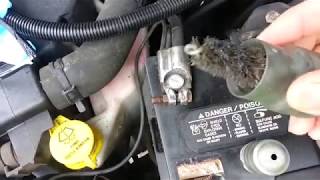
How to confirm: Test the battery with a multimeter or load tester to ensure it's above 12.4 volts at rest and holding a charge. Inspect and clean the main battery terminals, the chassis ground strap near the battery, and the engine-to-body ground (often located under the air intake box) for any signs of corrosion or looseness.
Typical fix: Charge or replace the battery. Thoroughly clean all ground connection points with a wire brush until they are shiny metal and re-secure them tightly. Applying dielectric grease can prevent future corrosion.
Est. part cost: $5-$250 - Blown Fuse for a Control Module 🟡 Medium Probability A short circuit in a related component can blow the fuse that powers a control module, causing it to go offline and trigger a communication fault.
How to confirm: Inspect all fuses in both the interior and engine bay fuse boxes (IPDM), paying close attention to any labeled ECM, TCM, or BCM.
Typical fix: Replace the blown fuse. If the fuse blows again immediately, it indicates a short circuit in the wiring or the module itself that requires further diagnosis.
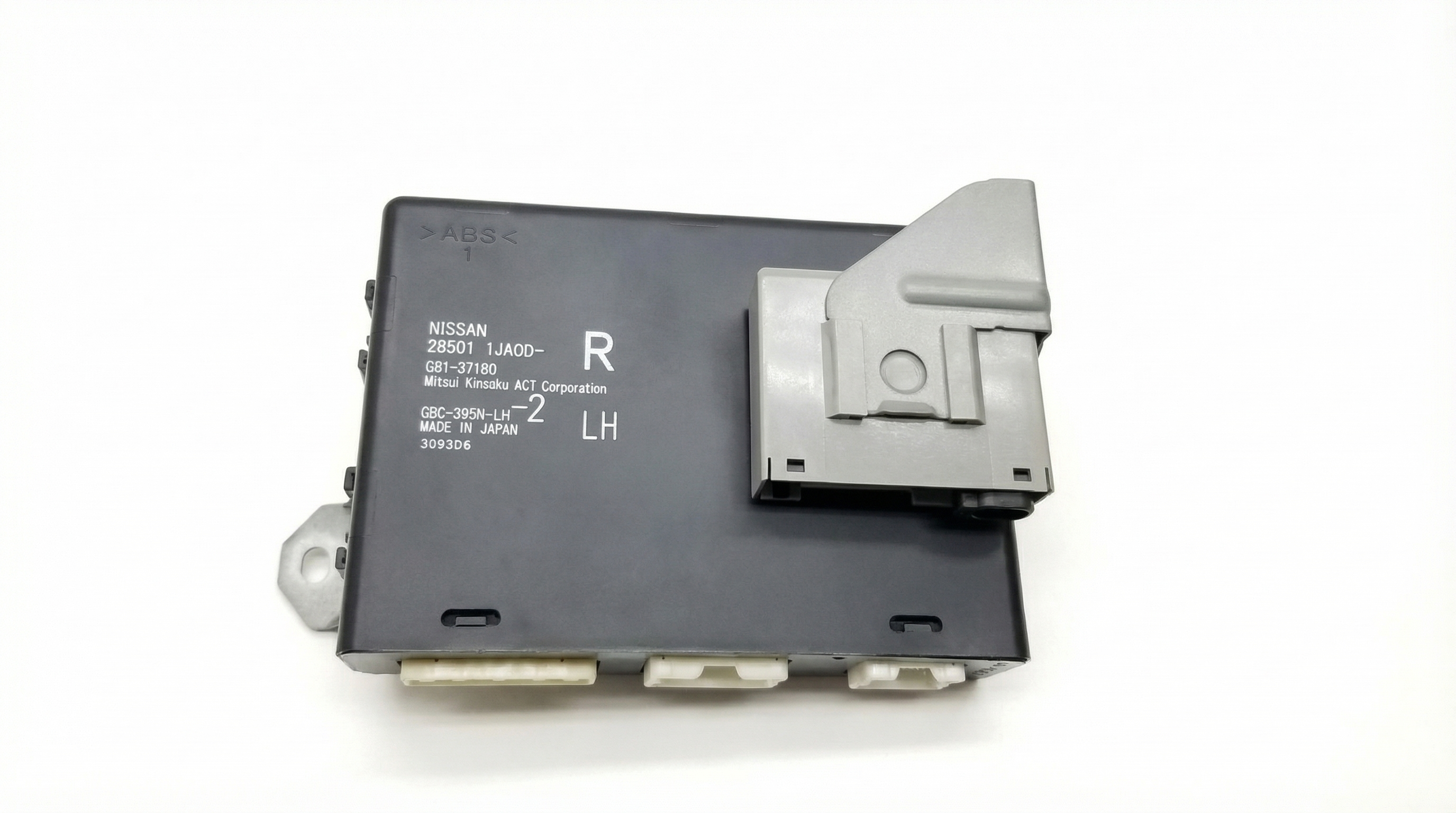
Est. part cost: $1-$10 - Faulty Transmission Control Module (TCM) 🟡 Medium Probability → Shop Transmission Assembly The TCM is a common failure point on Nissans with CVTs. If U1010 is accompanied by U0101 and transmission symptoms, the TCM is a prime suspect after external electrical issues are ruled out.
How to confirm: This is a diagnosis of exclusion. After verifying the TCM has stable power and clean grounds, and the CAN wiring to it is intact, a professional scan tool is used to attempt direct communication. If it's unresponsive, it has likely failed.
Typical fix: Replace the faulty TCM. The replacement module must be programmed to the vehicle's VIN using a tool like Nissan CONSULT, which typically requires a dealer or specialized shop.
Est. part cost: $250-$900 - Faulty Body Control Module (BCM) ⚪ Low Probability → Shop Body Control Module The BCM acts as a network gateway. Its failure, sometimes due to water intrusion in the cabin, can cause widespread, seemingly unrelated electrical issues in addition to the U1010 code.
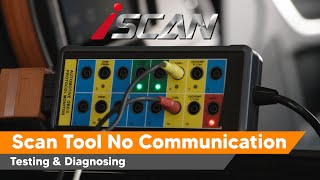
How to confirm: If you are experiencing a bizarre combination of failures (e.g., windows, wipers, lights, and starting issues all at once), the BCM is a likely culprit. A professional scan tool can check if the BCM is offline. 🎬 Watch: How to diagnose a module that won't communicate.
Typical fix: Replace the BCM. Like the TCM, a new BCM must be programmed and configured for the specific options on the vehicle.
Est. part cost: $200-$700 - Damaged Wiring or Corroded Connector ⚪ Low Probability Wiring harnesses can be damaged by chafing, heat, or rodents, and connectors can corrode from moisture, leading to an open or short in the CAN bus lines.
How to confirm: Visually inspect the wiring harnesses leading to the major control modules for any signs of damage. Disconnect connectors to check for green or white corrosion on the pins. Check for CAN bus resistance at the DLC, which should be ~60 ohms with the battery disconnected.
Typical fix: Repair the damaged section of wire or clean the corroded connector pins. In severe cases, the connector or a section of the harness may need to be replaced.
Est. part cost: $10-$300
Diagnosis Steps
- Check and record all stored DTCs from all modules using an advanced scan tool capable of a full network scan.
- Check the battery's state of charge and the charging system's performance. A weak battery or faulty alternator can cause numerous communication codes.
- Inspect all fuses in the interior and engine compartment fuse boxes, especially those for the TCM, BCM, and ECM.
- Locate and inspect the main battery-to-chassis and engine-to-chassis ground straps. Remove, clean all contact surfaces to bare metal, and securely reattach them.
- With the battery disconnected, measure the resistance between pins 6 (CAN-H) and 14 (CAN-L) at the DLC. A healthy network should read approximately 60 Ohms.
- Using a wiring diagram, identify the power and ground pins for the module that is suspected to be offline (often the TCM or BCM). Verify with a multimeter that the module is receiving proper voltage and has a good ground (<0.1 Ohms resistance to chassis ground).
- If power and ground are good, inspect the CAN bus wiring to the module for opens, shorts, or corrosion.
- If all wiring, power, and grounds are confirmed to be good, the control module itself is the most likely cause of the failure.
Parts You'll Likely Need
- Transmission Control Module (TCM)
(OEM #31036-3WS0A)— If the vehicle is experiencing severe shifting problems or is in limp mode along with the U1010 and U0101 codes, the TCM is a primary suspect after external wiring and power issues are ruled out.
Trusted brands: Nissan (OEM)
OEM price range: $400-$900
Aftermarket price range: $250-$600 - Body Control Module (BCM) — The BCM acts as a central hub for network communications. Its failure can cause widespread, seemingly unrelated electrical issues in addition to the U1010 code, such as problems with lights, locks, and wipers.
Trusted brands: Nissan (OEM)
OEM price range: $300-$700
Aftermarket price range: $200-$500 - Battery — A weak or failing battery is a very common cause of communication codes on modern vehicles. It should always be tested and ruled out first before any complex diagnostics.
Trusted brands: Duralast, ACDelco, Interstate
OEM price range: $200-$350
Aftermarket price range: $150-$250
Related Codes That Often Appear With This One
- U1000 — U1000 is a general CAN communication failure. When one module fails and logs a U1010 (internal error), other modules on the network lose communication with it and log a U1000.
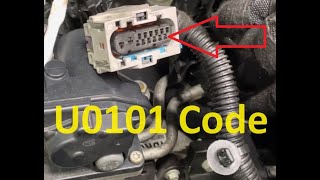
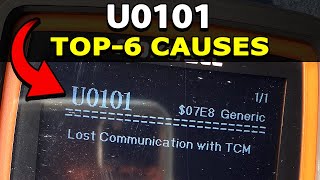
- U0101 — This code means 'Lost Communication with TCM'. If the Transmission Control Module (TCM) is the one with the internal U1010 fault, other modules will log U0101 because they can no longer talk to it. 🎬 See the top 6 causes for a U0101 fault code.
- U0140 — This code means 'Lost Communication with BCM'. If the Body Control Module (BCM) is the source of the U1010 fault, other modules will log U0140.
Technical Service Bulletins (TSBs) & Recalls
- NTB10-066A: States that communication codes like U1000, U1001, U1002, and U1010 should always be diagnosed first before other trouble codes. It also defines U1010 as a module with an internal error.
- NTB12-051j (Related): While for a P0101 MAF sensor code, this TSB involves reprogramming the ECM on many Nissan models from the same era, including platform mates. It highlights the manufacturer's use of software updates to fix control module issues and the strict voltage requirements (12.0V-15.5V) needed during reprogramming, underscoring the system's sensitivity to voltage.
Platform-Specific Known Issues
- TCM Failure Leading to Limp Mode: Owners have reported experiencing U1010 along with U0101, where the vehicle enters limp mode, particularly under acceleration. After verifying grounds and wiring, the fix was often a replacement o
Mechanic-Grade Diagnostic Values
- CAN Bus Network Resistance — expected: ~60 Ω. Failure: A reading of ~120 Ω indicates a missing terminating resistor or a break in the circuit. A reading near 0 Ω indicates a short between CAN High and CAN Low wires.
- Module Ground Connection Resistance — expected: < 0.5 Ω. Failure: A reading higher than 0.5 Ohms indicates a poor ground connection, which can cause a module to malfunction.
- Alternator AC Ripple Voltage — expected: < 0.2 V (200 mV) AC. Failure: A reading above 0.5V (500mV) AC indicates failing alternator diodes, which introduce electrical noise that can disrupt module communication.
- Module Power Supply Under Load — expected: Stable battery voltage (~12.0V+). Failure: A significant voltage drop when the module's connector is plugged in, compared to when it's unplugged, suggests an internal short in the module pulling the voltage down.
Hidden / Shadow Codes Worth Checking
- V-CAN Diagram Status: The Nissan CONSULT scan tool displays a network topology map. Modules highlighted in Pink indicate an internal module error (consistent with U1010). Red indicates a current communication error, Orange is a past error, and Green is normal. (see via Requires a Nissan CONSULT-II or CONSULT-III plus scan tool to run the 'CAN Diag Support Monitor' or 'Auto CAN diagnosis' function.)
Scan Tool Commands That Help
- Nissan CONSULT-III plus: Re/programming, Configuration — This function is required after replacing a major control module like the TCM or BCM to program it to the vehicle's VIN and specific configuration.
- Nissan CONSULT-III plus: Work Support > READ IP CHARA - REPLACEMENT TCM — Used to save the existing transmission calibration data from the old TCM to the CONSULT PC before replacement. This data is then written to the new module.
- Manual Procedure (No Scan Tool): IPDM E/R Self-Diagnostic Test — To quickly verify if the Intelligent Power Distribution Module (IPDM) is functional and capable of sending power to various components. With the ignition off, turn it ON, and within 20 seconds, press the driver's door jamb switch 10 times, then turn the ignition OFF and back ON. The test will begin, cycling the wipers, lights, and fans.
Wiring & Ground Locations
- Body Control Module (BCM) — Inside the passenger cabin, typically located behind the glove box or in the driver's side lower dash area.. The BCM is a central network gateway. Its failure or loss of power/ground can cause a U1010 and widespread communication loss with other modules. Its location makes it susceptible to water intrusion from a leaking windshield or cowl.
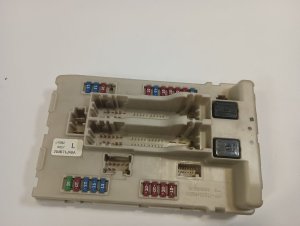
- Intelligent Power Distribution Module (IPDM E/R) — The main fuse and relay box located in the engine compartment.. The IPDM supplies power to many other control modules. An internal failure of the IPDM's circuit board or main ECM relay can cut power to the TCM or ECM, causing them to go offline and trigger communication codes.
- CAN Bus Terminating Resistors — These are not separate parts but are integrated within control modules at the two physical ends of the CAN bus. Typically, one is in the ECM and the other is in a module like the BCM or IPDM.. The two 120-ohm resistors create the 60-ohm total network resistance. If a terminating module fails, the resistance will change to 120 ohms, causing communication instability.
"I Checked Everything" — The Actual Cause
- A common scenario is where all wiring resistance and continuity checks pass, and grounds appear clean, yet the U1010 code persists. The hidden cause is often excessive AC ripple voltage from a failing alternator. The alternator's internal rectifier diodes go bad, allowing AC voltage onto the DC system, which creates electrical noise that disrupts sensitive module communications. This can only be detected with a multimeter set to AC volts or an oscilloscope.
Model Year Variations Within This Range
- 2011-2014: The Body Control Module (BCM) is highly specific to the vehicle's trim level (S, SV, SL, Platinum) and options. Multiple part numbers exist across these years. When replacing a BCM, the part number on the new unit MUST exactly match the original to ensure compatibility with features like power sliding doors and the anti-theft system.
Helpful Videos
Used OEM Parts in Stock
New Aftermarket Parts Available

The information in this article is provided for general reference and educational purposes only. Vehicle specifications, procedures, and part compatibility can vary by production date, trim level, and region. Always consult your vehicle's factory service manual and verify part numbers before purchasing or performing repairs. Safety-critical components such as airbags, seat belts, and braking systems should be installed by a qualified professional.
- Nissan QUEST:
- 🧭 Diagnostic Flowchart
- 🎬 Helpful Videos
- 🛍️ Shop This Part
- What's Unique About the 2011-2014 Nissan QUEST
- Symptoms You May Notice
- Most Likely Causes
- Diagnosis Steps
- Parts You'll Likely Need
- Related Codes That Often Appear With This One
- Technical Service Bulletins (TSBs) & Recalls
- Platform-Specific Known Issues
- Mechanic-Grade Diagnostic Values
- Hidden / Shadow Codes Worth Checking
- Scan Tool Commands That Help
- Wiring & Ground Locations
- "I Checked Everything" — The Actual Cause
- Model Year Variations Within This Range
- 🎟️ Get 5% Off