

U1010 on 2008-2014 Nissan Rogue: Internal Module Failure Causes and Fixes
The U1010 code on a Nissan Rogue means a control module has an internal error. Before replacing any expensive parts, check for low battery voltage and inspect the driver's side kick panel wiring for water damage, a known recall issue. This is often an electrical problem, not a part failure.
- U1010 means a module has failed internally, not that communication is lost.
- The MOST IMPORTANT first check on a 2008-2014 Rogue is the driver's kick panel wiring for water damage due to a known recall.
- Always verify the battery is fully charged and the charging system is working before starting complex electrical diagnosis.
- An advanced scan tool is required to know which module is setting the code.
- Do not replace any modules until all wiring, power, and ground checks have been completed.
What's Unique About the 2008-2014 Nissan ROGUE
The first-generation Rogue (S35 platform) has a well-documented and critical vulnerability related to this type of code. A recall was issued because water and salt can seep through the driver's side floor carpet and corrode a major wiring harness connector in the kick panel. This electrical short is a very common cause for a variety of communication codes, including U1010, making it a primary suspect before blaming an expensive control module. The official recall describes how a mixture of snow/water and salt can cause an electrical short, leading to connector damage and, in rare cases, a thermal event.
Diagnostic Flowchart
Tap your situation to follow the diagnostic path that matches what you're seeing on this vehicle.
Symptoms You May Notice
- Check Engine Light is on
- ABS, VDC, or SLIP warning lights are illuminated
- Transmission may enter 'limp mode' with harsh or no shifting
- Erratic behavior from other electronic systems
- Multiple other communication codes (like U1000, U0101) 🎬 Watch: A basic explanation of Nissan U1000 and U1010 codes. may be present
- No-start or rough idle condition after electrical issues are noticed
- Loss of power to driver's side window or power seat
- Replacing a control module without first checking for the water intrusion issue at the driver's kick panel. The new module will likely fail to communicate as well if the wiring is the real problem.
- Replacing the ABS module for a U1000 code alone, without further diagnostics to pinpoint the source of the communication break.
Most Likely Causes
- Water Intrusion / Corrosion in Driver's Kick Panel Connector 🔴 High Probability A specific recall (NHTSA Campaign ID: 15V032000) was issued for 2008-2014 Rogues where a mixture of snow, water, and salt can seep through the driver's floor carpet and short the main-to-body harness connector, causing network failures.
How to confirm: Peel back the driver's side carpet and remove the plastic kick panel trim. 🎬 See how water leaks can flood the Rogue floorboard. Visually inspect the large white wiring harness connector (may be identified as M29/M30 in diagrams) for any signs of green or white corrosion, moisture, or pin damage. Forum users report finding significant corrosion in this specific area.
Typical fix: The connector and any damaged terminals must be professionally repaired or replaced, and a waterproof seal must be installed as per the recall procedure. The dealer fix involves inspecting for corrosion, replacing the connector if damaged, and applying lithium grease to the new connector to prevent future moisture intrusion.
Est. part cost: $50-$250 - Low Battery Voltage 🟡 Medium Probability → Shop Vehicle Battery Nissan Technical Service Bulletins explicitly state that low battery voltage (under 12.0V during diagnostics) can cause various CAN communication DTCs to be set erroneously. Forum discussions frequently cite a weak or failing battery as the root cause of multiple, seemingly unrelated electronic faults, including VDC/SLIP/ABS lights.
How to confirm: Test the battery voltage with a multimeter with the engine off. It should be above 12.4V. Then, start the engine and test again; the voltage should be between 13.5V and 14.5V, indicating a healthy alternator. A load test is the most definitive way to confirm battery health.
Typical fix: Recharge or replace the battery. A weak or old battery that cannot hold a proper charge should be replaced.
Est. part cost: $150-$300 - Faulty ABS Control Module 🟡 Medium Probability → Shop ABS Control Module The code U1010 specifically means 'Module has internal errors'. If all wiring, power, and grounds are confirmed to be good, the module that set the code, often the ABS module, has failed internally. This is a common point of failure that triggers the U1010 code.
How to confirm: This is a process of elimination. After confirming good power, ground, and CAN bus integrity at the module's connector, the module itself is condemned. This requires an advanced scan tool and wiring diagrams. Do not replace the module based only on a U1000 code, as per TSB NTB10-145B.
Typical fix: Replace the faulty ABS Control Unit/Actuator. The new module must be configured for the specific vehicle (e.g., AWD vs. FWD) using Nissan's CONSULT diagnostic tool to avoid a C1170 code. Used modules are available but must match the part number exactly.
Est. part cost: $400-$1200 - Poor Ground Connections ⚪ Low Probability Older Nissan TSBs have noted that excess resistance in main ground connections can cause intermittent U1000/U1010 codes. Corrosion at chassis ground points can introduce electrical noise and communication errors.
How to confirm: Locate the main ECM and chassis ground points using a service manual. Disassemble, clean any corrosion from the terminals and mounting surfaces with a wire brush, and re-tighten securely. Perform a voltage drop test on the ground circuit.
Typical fix: Cleaning and securing ground points.
Est. part cost: $0-$10
Rare But Worth Checking
- Faulty Brake Light Switch:
Diagnosis Steps
- Connect a professional-grade scan tool capable of reading manufacturer-specific codes from all modules.
- Identify which specific control module has stored the U1010 code. This is your primary suspect.
- Check battery voltage. Ensure it is above 12.4V with the engine off and that the charging system is working correctly (13.5V-14.5V when running). A low battery is a known cause of CAN faults.
- CRITICAL: Perform a thorough visual inspection of the wiring harness connector in the driver's side kick panel for any signs of corrosion or water damage, as specified in Nissan Recall 15V032000. This is the most common vehicle-specific cause.
- If the kick panel wiring is clean, check all fuses related to the module that set the code (e.g., ABS, BCM fuses).
- If fuses are good, locate the suspect module. Using a wiring diagram, test for proper power and ground at the module's connector with a multimeter. A voltage drop test is recommended.
- With the battery disconnected, measure the resistance between the CAN High and CAN Low pins at the DLC. It should be approximately 60 ohms. If it's 120 ohms, there is a break in the wiring or a faulty terminating module. If it's near 0 ohms, the CAN High and Low wires are shorted together.
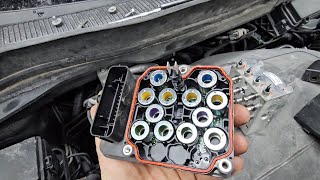
- If power, ground, and CAN network integrity are all confirmed to be good, the module that set the U1010 code is faulty and requires replacement and subsequent programming/configuration. 🎬 Watch: A mechanic's time-saving tip for replacing the ABS module.
Parts You'll Likely Need
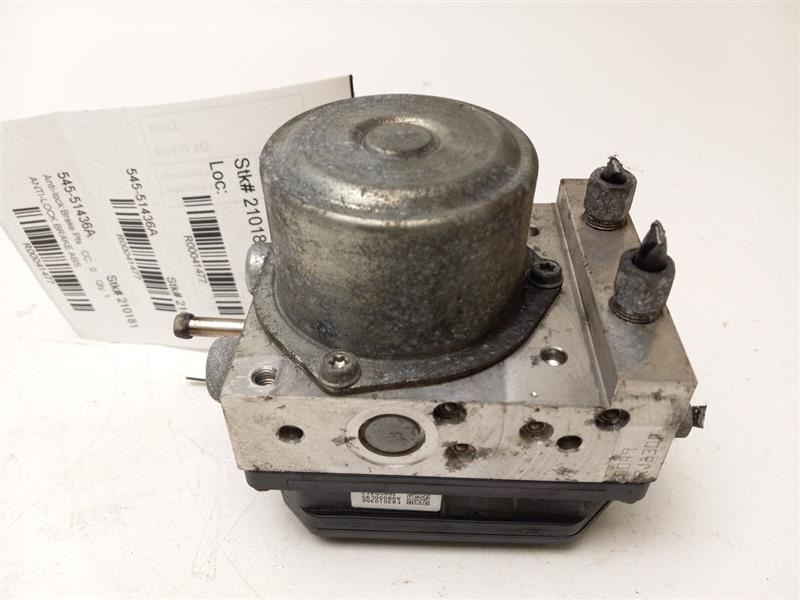
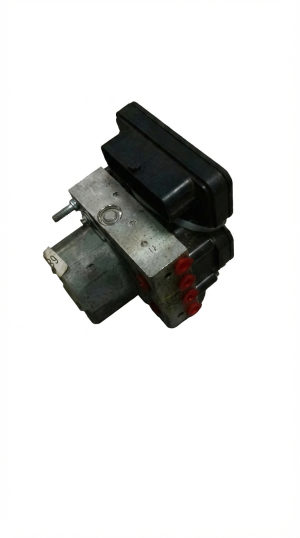
- ABS Control Module / Actuator Assembly
(OEM #47660-JM04A (example for 2011 AWD, always verify by VIN))— This is one of the most common modules to fail and set a U1010 code. If diagnostics confirm the module is faulty, it must be replaced.
Trusted brands: Hitachi, Bosch, Nissan OE
OEM price range: $800-$1500
Aftermarket price range: $400-$800 - Battery — Low system voltage is a common trigger for spurious communication codes on Nissan vehicles.
Trusted brands: Interstate, DieHard, Duralast
OEM price range: $200-$350
Aftermarket price range: $150-$250 - Dash Side Harness Connector
(OEM #24017-6MA0A (example from related recall, verify by VIN))— This connector in the driver's kick panel is prone to corrosion from water intrusion, as detailed in a major recall, causing widespread network faults.
Related Codes That Often Appear With This One
- U1000 — U1000 is a general CAN communication error. It often appears alongside U1010 because when one module fails internally (U1010), other modules on the network will report that they can no longer communicate with it (U1000).
- U0101 — This code means 'Lost Communication with TCM'. If the Transmission Control Module (TCM) is the unit that has failed internally and set the U1010, other modules will log U0101.
- C1170 — This code for 'VARIANT CODING' will appear if an ABS module is replaced but not correctly configured to the vehicle's specifications (e.g., FWD/AWD) using the Nissan CONSULT tool.
Technical Service Bulletins (TSBs) & Recalls
- NTB10-066A: Provides diagnostic guidelines for CAN communication codes U1000, U1001, U1002, and U1010, defining U1010 as 'Module has internal errors'.
- NTB13-027C: Provides a general diagnostic flow chart for CAN network issues and reiterates the definition of U1010 as a module with internal issues.
- NTB15-082: While for other models/codes (Versa/P0705), this TSB highlights Nissan's history of seemingly unrelated components (like tail lights) causing major communication and transmission codes due to water intrusion and voltage back-feeding, reinforcing the diagnostic principle of checking for water damage first.
- NTB14-105a: Pertains to the second-generation Rogue (T32), but details procedures for finding and sealing body seam leaks in the cowl and kick panel area, which owners of first-generation Rogues have also reported as a source of water intrusion.
Platform-Specific Known Issues
- A recall was issued for 2008-2014 Rogues due to water seeping into a harness connector in the driver-side kick panel, causing electrical shorts and potential fire risk. This is a primary cause for network communication faults.
- Some owners on NICOclub forums have reported water leaks originating from missed factory body seam welds in the fender well or A-pillar area, leading to wet carpets and potential electrical issues.
Mechanic-Grade Diagnostic Values
- CAN Bus Resistance — expected: ~60 Ω. Failure: A reading of ~120 Ω indicates one of the two terminating resistors is missing or the circuit is open. A reading near 0 Ω indicates a direct short between the CAN High and CAN Low wires.
- CAN High Voltage to Ground (Key On, Engine Off) — expected: ~2.6V - 2.7V DC. Failure: Significant deviation from this voltage suggests a faulty transceiver in a module or a short to power/ground.
- CAN Low Voltage to Ground (Key On, Engine Off) — expected: ~2.3V - 2.4V DC. Failure: Significant deviation from this voltage suggests a faulty transceiver in a module or a short to power/ground.
Hidden / Shadow Codes Worth Checking
- Source Module ID: The U1010 code indicates an internal module failure, but a basic OBD-II scanner won't tell you *which* module is at fault. A professional scan tool like Nissan's CONSULT-III is required to perform a full network scan and identify the specific module (e.g., 'ABS', 'BCM', 'TCM') that has self-diagnosed the internal error and set the U1010 code. (see via Nissan CONSULT-III or equivalent advanced, bi-directional scan tool.)
Scan Tool Commands That Help
- Nissan CONSULT: ABS 'Work Support' > 'Variant Coding' / 'Configuration' — This function is mandatory after replacing the ABS control module. It configures the new module to the vehicle's specific options (e.g., FWD vs. AWD). Failure to perform this step will cause the ABS system to remain non-functional and will set a C1170 'VARIANT CODING' fault code.
- Nissan CONSULT / Professional Scan Tool: ABS 'Special Functions' > 'Steering Angle Sensor Adjustment' — This calibration is required any time a wheel alignment is performed or steering/suspension components are replaced. An uncalibrated steering angle sensor can cause the VDC/Traction Control system to activate improperly and illuminate warning lights.
Wiring & Ground Locations
- M13/B3 and M14/B4 — Large white harness-to-harness connectors located in the driver's side kick panel, at the bottom of the A-pillar.. These specific connectors are the subject of a major recall for corrosion due to water intrusion from the driver's footwell. Corrosion here is a primary cause of CAN network failures and codes like U1010.
- M76 — Chassis ground point located behind the left side of the dashboard, near the kick panel area.. This is a shared ground point for several components. Corrosion or a loose connection at this ground can introduce electrical noise and intermittent communication faults across the network.
- IPDM E/R (Intelligent Power Distribution Module Engine Room) — Located in the engine bay, on the left side of the engine compartment.. This is the 'smart' fuse and relay box that supplies power to many of the vehicle's control modules. A fault within the IPDM E/R can cut power to a module, causing it to drop off the network and trigger communication codes.
"I Checked Everything" — The Actual Cause
- A common misdiagnosis occurs when a technician confirms the CAN bus resistance is a perfect 60 ohms with the power off and assumes the wiring is good. However, the U1010 code indicates an *internal* module fault, which may only manifest under specific conditions (e.g., thermal stress, vibration). The module can pass a static resistance test but still fail its internal self-check when powered on, setting the U1010. The 60-ohm reading only confirms the two terminating resistors are present; it does not prove the integrity of every module connected to the bus.
OEM Part Supersession History
Varies (e.g., 47660-JM04A for 2WD)→Varies— N/A
Heads up: Extreme caution is required when sourcing a replacement ABS module. The part number must be matched exactly. Furthermore, modules are specific to the drivetrain (FWD vs. AWD) and, on some later models, the vehicle's country of manufacture (Japan-built vs. US-built). Installing the wrong variant, even if it physically fits, will result in a C1170 'Variant Coding' error and a non-functional ABS system.
Model Year Variations Within This Range
- 2011-2014: The Nissan Rogue received a mid-cycle facelift for the 2011 model year. While the core electrical architecture and U1010 vulnerability remained, part numbers for modules and harnesses may differ between pre-facelift (2008-2010) and post-facelift (2011-2014) models. Always verify part numbers by VIN.
Helpful Videos



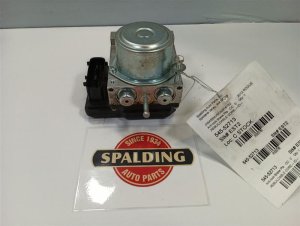
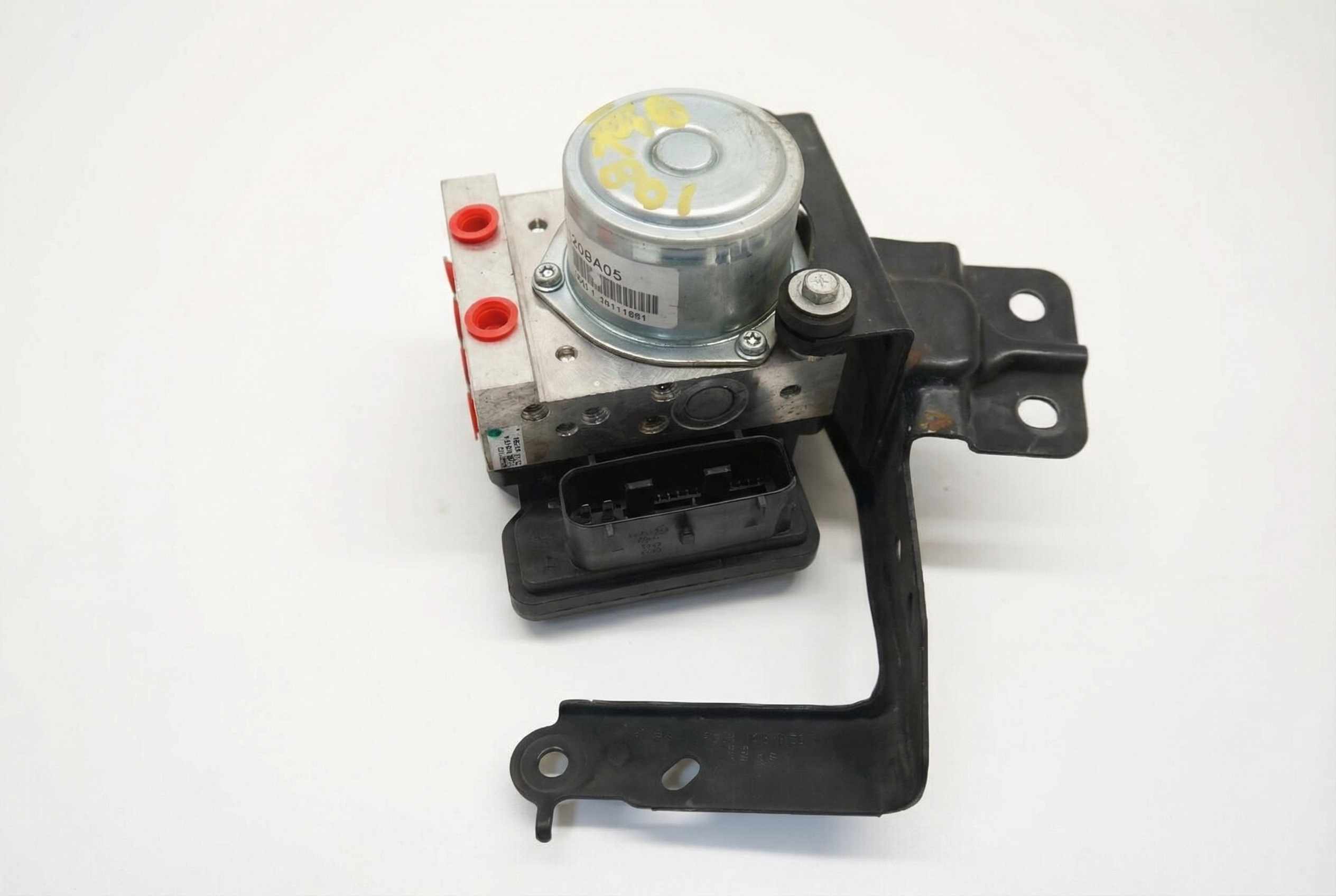
Used OEM Parts in Stock
New Aftermarket Parts Available


The information in this article is provided for general reference and educational purposes only. Vehicle specifications, procedures, and part compatibility can vary by production date, trim level, and region. Always consult your vehicle's factory service manual and verify part numbers before purchasing or performing repairs. Safety-critical components such as airbags, seat belts, and braking systems should be installed by a qualified professional.
- Nissan ROGUE:
- 🧭 Diagnostic Flowchart
- 🎬 Helpful Videos
- 🛍️ Shop This Part
- What's Unique About the 2008-2014 Nissan ROGUE
- Symptoms You May Notice
- Most Likely Causes
- Rare But Worth Checking
- Diagnosis Steps
- Parts You'll Likely Need
- Related Codes That Often Appear With This One
- Technical Service Bulletins (TSBs) & Recalls
- Platform-Specific Known Issues
- Mechanic-Grade Diagnostic Values
- Hidden / Shadow Codes Worth Checking
- Scan Tool Commands That Help
- Wiring & Ground Locations
- "I Checked Everything" — The Actual Cause
- OEM Part Supersession History
- Model Year Variations Within This Range
- 🎟️ Get 5% Off