

U1010 on 2007-2014 Nissan Sentra: Meaning, Causes, and Fixes
The U1010 code on a 2007-2014 Nissan Sentra indicates an internal error within a control module, preventing it from communicating on the vehicle's network. Diagnosis is complex and often requires professional tools to identify the faulty module. The fix typically involves replacing the failed module, which can be the ECM, BCM, or, particularly on B17 models (2013-2014), the TCM.
- U1010 on a Nissan Sentra means a specific control module has an internal failure, not just a communication problem between modules.
- Diagnosing this code almost always requires a professional scan tool to identify which module has failed.
- Before replacing any expensive module, always verify it has a stable 12V power supply and a clean, tight ground connection.
- Low battery voltage can cause false communication codes, so rule this out first by testing the battery and charging system.
- This is not a DIY-friendly repair for beginners due to the complexity of vehicle network diagnostics.
What's Unique About the 2007-2014 Nissan SENTRA
The 2007-2014 Nissan Sentra spans two generations (B16 and B17) which rely heavily on CAN bus communication for all major vehicle functions. Unlike a simple sensor code, U1010 points to a more complex electronic failure. Nissan's technical service bulletins emphasize diagnosing these communication codes first, as they can trigger a cascade of other apparent issues. The key challenge on this platform is that a professional scan tool (like Nissan's CONSULT) is often required to determine *which* module is reporting the internal U1010 fault, as a basic code reader may not be able to isolate it. For the B17 generation (2013-2014), this code is often seen in conjunction with TCM failure due to known CVT issues.
Diagnostic Flowchart
Tap your situation to follow the diagnostic path that matches what you're seeing on this vehicle.
Generation note: This range covers the B16 (2007-2012) and the beginning of the B17 (2013-2014) generations. While the U1010 code has the same meaning for both, the physical location of modules (ECM, BCM, TCM) and wiring harness routing can differ, affecting diagnostic procedures. The B17 generation is particularly known for CVT and associated TCM problems that can manifest as communication codes.
Symptoms You May Notice
- Check Engine Light is on
- Vehicle may not start or may stall intermittently
- Transmission may enter 'limp mode' (stuck in one gear)
- Erratic or harsh shifting
- Loss of communication with the scan tool for certain modules
- Multiple warning lights on the dashboard (ABS, Airbag, VDC, etc.)
- Gear position indicator (PRNDL) not displaying on the dashboard
- Erratic behavior of interior electronics (radio, windows, lights) if the BCM is the cause
- Parasitic battery drain leading to a dead battery overnight
- Replacing a functional module when the actual problem is a bad ground or poor power connection.
- Replacing the wrong module because a basic scan tool could not pinpoint which one was setting the U1010 code.
- Replacing the ECM when the actual fault is with the TCM or BCM, which are also common failure points.
Most Likely Causes
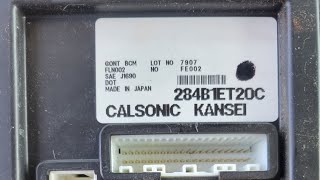
- Failed Control Module (ECM, BCM, TCM, etc.) 🔴 High Probability Electronic modules can fail over time due to heat, vibration, or internal component degradation. On B17 models (2013-2014), the TCM is a particularly common failure point. Water intrusion can also damage modules, especially the BCM which is often located in the passenger cabin. 🎬 Watch: How to locate and remove the BCM
How to confirm: Use a professional scan tool (like Nissan CONSULT) to perform a full network scan. The tool can identify which module is reporting the U1010 internal fault and is unresponsive. If the TCM is suspected, a scan tool may fail to communicate with it at all.
Typical fix: Replace the faulty control module. The new module will require programming to the vehicle's specific VIN and configuration by a dealer or a qualified shop with advanced tools.
Est. part cost: $200-$1000+ - Low or Unstable Battery Voltage 🟡 Medium Probability → Shop Vehicle Battery Modern vehicles are highly sensitive to voltage. A weak battery or failing alternator can cause modules to malfunction and set communication codes before more obvious starting issues appear.
How to confirm: Test the battery voltage with the engine off (should be ~12.4V or higher) and with the engine running (should be ~13.8V-14.5V). Check for corroded or loose battery terminals. A voltage drop test on the main power and ground cables is also recommended.
Typical fix: Charge or replace the battery. Clean battery terminals and cable ends. Test the alternator and replace if necessary.
Est. part cost: $100-$300 - Poor Power or Ground Connection to a Module 🟡 Medium Probability Corrosion on main battery ground cables, chassis grounds, or specific module ground points is a well-documented issue on many Nissan vehicles, leading to a host of electrical gremlins that can mimic module failure.
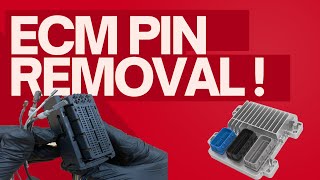
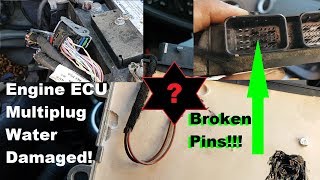
How to confirm: After identifying the suspect module, use a multimeter to verify it is receiving proper battery voltage and has a solid ground connection (less than 0.1 ohms of resistance to the chassis). A common failure point is a corroded pin in the module connector itself 🎬 See how to fix broken or missing module pins due to water intrusion.
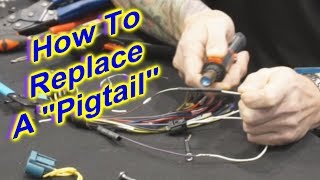
Typical fix: Clean and secure the ground connection (e.g., battery to chassis, chassis to engine block). Repair the damaged section of the wiring harness 🎬 Watch: A guide to replacing corroded and broken connectors or corroded pin providing power or ground to the module.
Est. part cost: $10-$100
Rare But Worth Checking
- CAN Bus Wiring Issue: While U1010 specifically points to an internal module error, a short or open in the CAN wiring could potentially corrupt a module's software or cause it to report an internal fault under very specific circumstances. This is less likely than a U1000 or U0073 code but possible. Water damage to connectors is a common cause of this.
- Failed ECM Power Relay: A faulty ECM power relay, located in the under-hood fuse box (IPDM), can cause intermittent power loss to the ECM, leading to communication codes and no-start conditions.
Diagnosis Steps
- Always diagnose communication codes first, as stated in Nissan TSB NTB10-066A and NTB13-027C.
- Connect a professional-grade scan tool capable of performing a full network scan (e.g., Nissan CONSULT).
- Perform a full system scan and identify which specific module is storing the U1010 code. This is the module that believes it is faulty.
- Check and record all other stored DTCs in other modules. Codes like U1000, U0100, or U0101 in other modules will help confirm which module is offline.
- Check battery voltage and the charging system to rule out low voltage as a cause. Ensure battery terminals are clean and tight.
- Locate the module identified in step 3. Visually inspect its connectors and wiring harness for any signs of damage, corrosion, or moisture. Water intrusion at the connector is a known issue.
- Using a wiring diagram for the specific year/model, test the power and ground circuits at the module's connector with a multimeter. A common diagnostic step is to check for voltage drop under load, not just static voltage, as a weak connection can test fine with no load.
- Inspect major ground points, including the main battery-to-chassis ground cable and any grounds near the suspect module.
- If power and ground are good, the module itself is the most likely culprit.
- Before replacing the module, it's wise to check the CAN bus resistance at the DLC (with the battery disconnected). It should be approximately 60 ohms. If it's 120 ohms, it indicates a break in the circuit or a problem with a terminating resistor.
Parts You'll Likely Need
- Engine Control Module (ECM) — If the ECM is the source of the U1010, the vehicle may not start or run properly. It is a common point of failure for network issues, often due to corroded pins or internal failure.
Trusted brands: Hitachi, Bosch
OEM price range: $800-$1200
Aftermarket price range: $300-$600 (Remanufactured) - Body Control Module (BCM) — The BCM acts as a central gateway for many network communications. Its failure can cause widespread and bizarre electrical issues alongside a U1010 code. It is often located inside the cabin and susceptible to water damage from a leaking windshield or firewall grommet.
Trusted brands: Nissan (OEM)
OEM price range: $400-$700
Aftermarket price range: $200-$400 (Remanufactured) - Transmission Control Module (TCM)
(OEM #310F6-3BE0A, 31036-4AF6B (for 2013-2016 Sentra, verify by VIN))— If the U1010 is accompanied by transmission-related symptoms and U0101 codes in other modules, the TCM is the likely failed component. This is a very common issue on the B17 Sentra (2013+).
Trusted brands: Jatco (often integrated), Nissan (OEM)
OEM price range: $600-$900
Aftermarket price range: $250-$500 (Remanufactured)
Related Codes That Often Appear With This One
- U1000 — U1000 indicates a general CAN communication failure. If a module with a U1010 internal fault goes offline, other modules on the network will log a U1000 because they can no longer communicate with the failed module.
- U0100 — Lost communication with ECM/PCM. If the ECM is the module that has failed internally with a U1010, other modules will report a U0100.
- U0101 — Lost communication with TCM. If the Transmission Control Module is the one with the internal U1010 fault, other modules will log a U0101. This is a very common combination, especially on 2013-2014 models.
Technical Service Bulletins (TSBs) & Recalls
- NTB10-066A: States to always diagnose communication codes like U1010 first and defines the code as a module with internal issues.
- NTB13-027C: Provides a detailed CAN communication diagnostic flowchart for Nissan vehicles and reiterates that U1010 points to an internal module issue.
- NTB12-051 (and its revisions): While this TSB is for a P0101 (MAF sensor) code, it involves reprogramming the ECM. It's relevant because it shows that ECM software updates are a common procedure and that improper voltage during reprogramming can damage the ECM, potentially leading to communication faults.
Platform-Specific Known Issues
- TCM Failure on B17 Generation (2013-2014): The 2013 and newer Sentras use a CVT that has a high rate of associated TCM failures. The TCM can fail internally, causing U1010 in the TCM itself, and U0101 (Lost Communication with TCM) in all other modules. Symptoms are often limp mode and no gear indicator on the dash. The TCM is a separate module that can be replaced, but it requires programming.
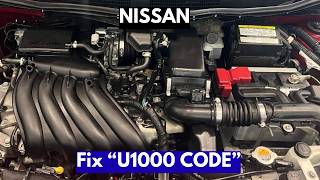
- ECM Connector Pin Corrosion: There are owner reports and videos showing that the ground pin on the ECM connector can corrode and break off, causing a no-start and U1000/U1010 codes. This is caused by water intrusion into the connector. The fix involves repairing the pin/wire and sometimes replacing the ECM if the pin is broken off inside the module.
- BCM Water Damage: The BCM is located in the passenger cabin, often behind the glove box or integrated into the interior fuse panel. Water leaks from the windshield cowl or A-pillar can drip onto the BCM, causing corrosion and failure, leading to a host of electrical issues and communication codes.
Mechanic-Grade Diagnostic Values
- CAN Bus Network Resistance — expected: Approximately 60 Ω. Failure: A reading of 120 Ω indicates a missing terminating resistor or a break in the circuit. A reading near 0 Ω indicates a short between CAN High and CAN Low wires.
- CAN Bus Voltage (Key On, Engine Off) — expected: CAN High (Pin 6 to Ground): ~2.7V. CAN Low (Pin 14 to Ground): ~2.3V.. Failure: Voltages that are stuck high, low, or at battery/ground potential indicate a short or open on the respective line.
Scan Tool Commands That Help
- Nissan CONSULT: CAN Diagnosis (Self-Diagnosis) — This is the primary function used to poll all modules on the network and identify which specific module is reporting the U1010 internal fault. It is significantly faster and more accurate than manual checks.
- Manual Procedure (No Scan Tool): IPDM E/R Auto Active Test — This built-in self-test can verify the functionality of the Intelligent Power Distribution Module (IPDM) and the components it controls (wipers, lights, A/C clutch, fans). To initiate, turn the ignition on, press the driver's door switch 10 times within 20 seconds, turn the ignition off, then on again. A horn chirp confirms activation. While it doesn't directly diagnose U1010, it can help rule out the IPDM as a source of widespread electrical issues that might accompany the code.
- Nissan CONSULT: WRITE CONFIGURATION — This function is mandatory after replacing the BCM. It writes the vehicle's specific configuration (options, trim level, etc.) to the new module. Failure to perform this step will result in incorrect operation of body systems.
Wiring & Ground Locations
- BCM (Body Control Module) - B16 — For the 2007-2012 (B16) Sentra, the BCM is located to the right of the steering column, high up in the dashboard. It is often necessary to remove the lower dash panels and potentially the steering column to access it.. The BCM is a central hub for CAN communication. If it fails or loses its power/ground due to a poor connection at this location, it can set a U1010 and cause other modules to log communication loss codes.
- BCM (Body Control Module) - B17 — For the 2013-2014 (B17) Sentra, the BCM is typically integrated with or located near the interior fuse panel (J/B) inside the passenger cabin, often under the driver's side dashboard.. Similar to the B16, a failure of the BCM in the B17 can bring down network communication. This location can be susceptible to water intrusion from a leaking cowl or windshield.
- IPDM E/R (Intelligent Power Distribution Module Engine Room) — Located in the engine compartment, usually a black box near the battery and air duct.. The IPDM E/R is not just a fuse box; it's a control module on the CAN network. It controls power to many other modules, including the ECM and TCM. A failure within the IPDM E/R can cause communication codes and no-start conditions.
- Main Chassis Grounds — Key ground points include the negative battery cable connection to the chassis, chassis-to-engine-block ground straps, and specific ground points in the engine bay (e.g., on the fender apron) and inside the cabin (e.g., under the dash).. Poor grounding is a notorious cause of intermittent and difficult-to-diagnose communication faults on Nissan vehicles. A high-resistance ground can cause a module to malfunction and incorrectly report an internal U1010 error.
Real Owner Repair Stories
- Reddit user in /r/MechanicAdvice (2014 Nissan Sentra) — Failed smog test three times due to a permanent U0101 fault code. The check engine light was on.
❌ Tried (didn't work) Took the car to a Nissan dealer for a TCM-related recall. The dealer claimed 'No ECM reprogram needed' and did not fix the issue.
✅ What actually fixed it The user did not post the final resolution, but the strong implication, given the vehicle and the U0101 code, is a failed Transmission Control Module (TCM) that the dealer failed to properly diagnose or address during the recall service. The U0101 code directly points to a loss of communication with the TCM.
OEM Part Supersession History
310F6-3BE0A→31036-4AF6B, among others.— Part revision to address common failure modes in the Jatco CVT's Transmission Control Module.
Heads up: When replacing the TCM, the part number must be an exact match or a verified superseded number for the vehicle's VIN. Using an incorrect module, even if it physically fits, will result in a no-start condition or immediate communication faults as the data streams will be different.34901-9AN0B (Control Assembly)→34901-9AN2B— Part revision for the automatic transmission control device assembly.
Heads up: Always verify the correct assembly part number by VIN, as different trim levels (S, SV, SR, SL) used different parts that were later superseded.
Model Year Variations Within This Range
- 2007-2012 (B16): The Body Control Module (BCM) is a standalone unit located high in the dash to the right of the steering column, making access more difficult.
- 2013-2014 (B17): The BCM is typically located with the interior fuse panel, making it easier to access. However, this generation is highly prone to TCM failure related to the CVT transmission, making the U1010/U0101 combination a very common and specific diagnostic pointer towards the TCM.
Helpful Videos
Used OEM Parts in Stock
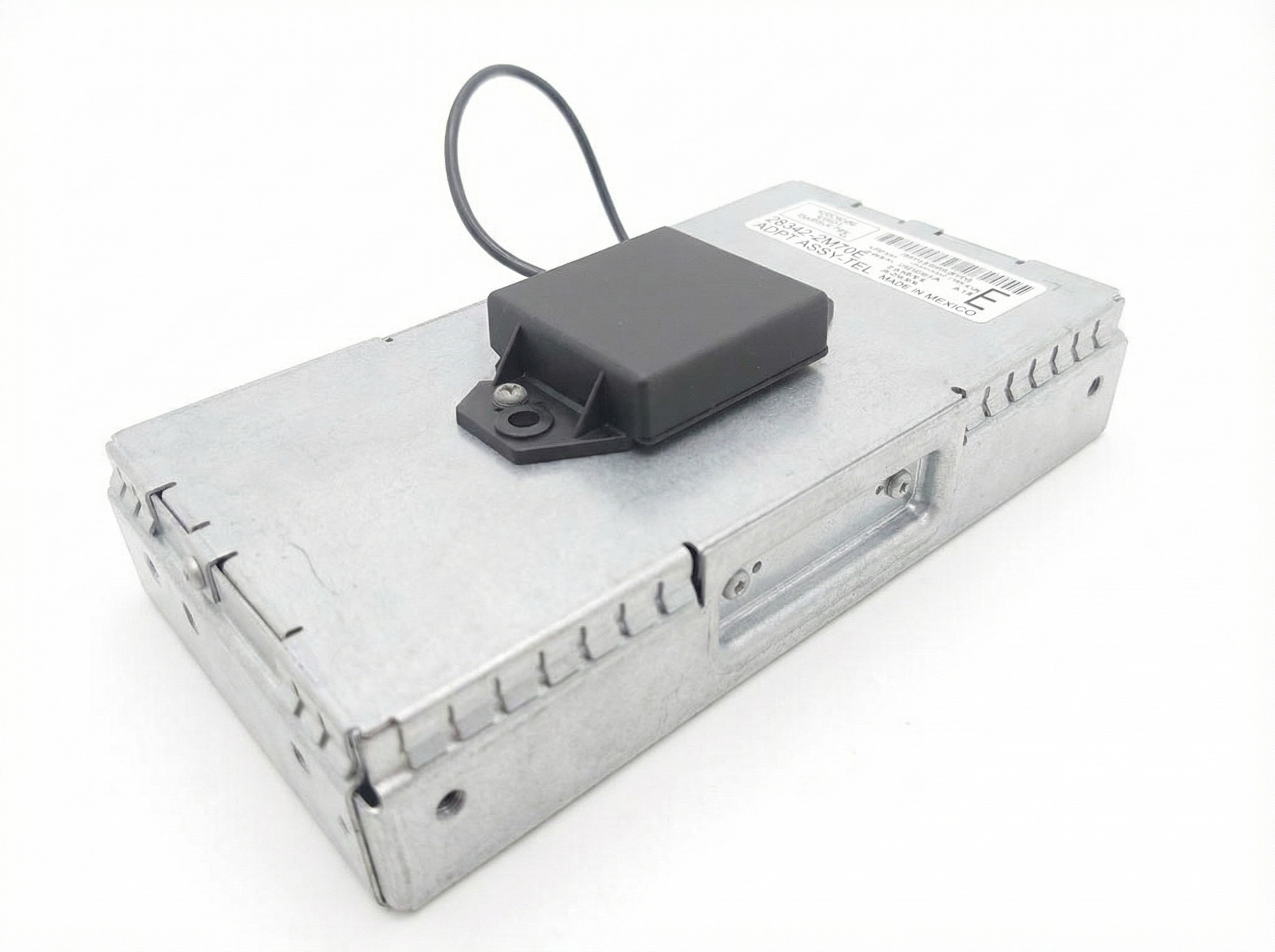
New Aftermarket Parts Available




The information in this article is provided for general reference and educational purposes only. Vehicle specifications, procedures, and part compatibility can vary by production date, trim level, and region. Always consult your vehicle's factory service manual and verify part numbers before purchasing or performing repairs. Safety-critical components such as airbags, seat belts, and braking systems should be installed by a qualified professional.
- Nissan SENTRA:
- 🧭 Diagnostic Flowchart
- 🎬 Helpful Videos
- 🛍️ Shop This Part
- What's Unique About the 2007-2014 Nissan SENTRA
- Symptoms You May Notice
- Most Likely Causes
- Rare But Worth Checking
- Diagnosis Steps
- Parts You'll Likely Need
- Related Codes That Often Appear With This One
- Technical Service Bulletins (TSBs) & Recalls
- Platform-Specific Known Issues
- Mechanic-Grade Diagnostic Values
- Scan Tool Commands That Help
- Wiring & Ground Locations
- Real Owner Repair Stories
- OEM Part Supersession History
- Model Year Variations Within This Range
- 🎟️ Get 5% Off