

OBD-II Code U1012: Invalid Data Received From ABS Module
The Ultimate 2026 Guide to What U1012 Means, Why It Triggers, and How to Fix It
- Code U1012 indicates the ABS module is broadcasting corrupt data over the CAN bus, instantly disabling your ABS and stability control systems.
- Test your battery first; a voltage drop below 12.0V during engine cranking is the number one cause of phantom U1012 communication errors.
- Never replace the $500+ ABS module without first performing a voltage drop test on its ground circuit to rule out a high-resistance connection.
- Do not drive in wet or icy conditions with this code active, as emergency braking causes immediate wheel lock-up and a complete loss of steering control.
What Does U1012 Mean?
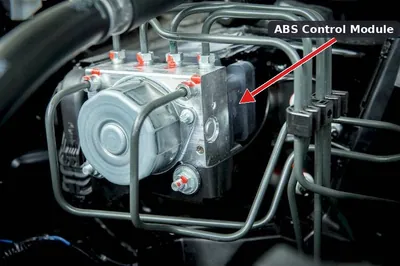
U1012 is a manufacturer-specific network communication code indicating the Powertrain Control Module (PCM) received illogical, corrupt, or invalid data from the Anti-lock Brake System (ABS) module. The ABS module is powered on and transmitting over the Controller Area Network (CAN bus), but its data packets fail integrity checks and make no sense to the rest of the vehicle.
Technical definition: The SAE/ISO definition translates to 'Invalid Internal Control Module Monitoring Data Received From Anti-Lock Brake System (ABS) Control Module'. Unlike code U0121 (which means the ABS module is completely offline), U1012 confirms the module is active but broadcasting nonsensical data that fails network validation.
Can I Drive With U1012?

Yes, But With Caution. Yes, but drive with extreme caution. Your primary safety systems—the Anti-lock Braking System (ABS) and Traction/Stability Control—are disabled. Base hydraulic brakes function, but the risk of wheels locking up during hard braking is high, causing skidding and a complete loss of steering control. Stopping distances increase significantly on wet, icy, or gravel surfaces. This is a critical safety failure requiring immediate repair. Continuing to drive does not cause mechanical damage, but the accident risk is severe.
Common Causes
- Low Battery Voltage or Parasitic Drain (Very Common) — Vehicle control modules require a stable voltage above 12.0V to communicate correctly. A weak battery, or a parasitic drain from another component, causes voltage to drop significantly during engine startup. This voltage starvation corrupts data between modules, triggering a phantom U1012 code.
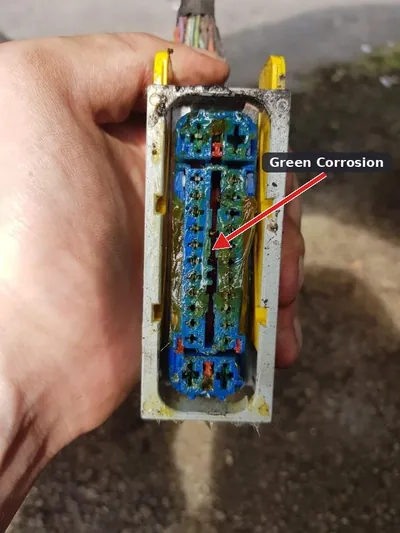
- Corroded or Damaged Wiring/Connectors (Common) — The ABS module wiring harness is exposed to moisture, road salt, and debris. Corrosion on the connector pins or physical damage to the twisted-pair CAN bus wires distorts the digital signal and causes data errors.
- Poor Ground Connection (Common) — A loose or corroded ground strap for the ABS module creates high electrical resistance. Without a solid ground path, the module's electrical signals become unstable, leading directly to communication faults.
- Blown ABS Fuse (Common) — A blown fuse cuts primary or logic power to the ABS module, causing it to behave erratically on the network or transmit incomplete data packets.
- Faulty Wheel Speed Sensor (Common) — A failing wheel speed sensor sends impossible data (e.g., one wheel spinning at 100 mph while others are at 0) to the ABS module. The ABS module broadcasts this invalid data over the CAN bus, causing the PCM to flag the ABS module's output as corrupt.
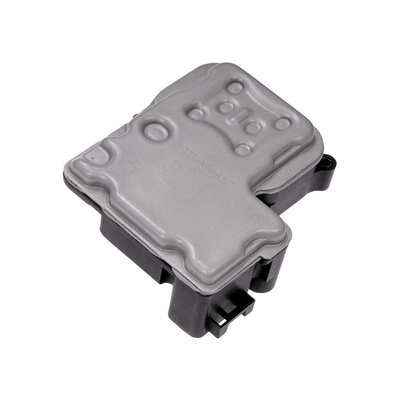
- Faulty ABS Control Module (Less Common) — The ABS module fails internally due to cracked solder joints, failed processors, or internal power supply failure. This physical hardware failure forces the module to send garbled data.
- Aftermarket OBD-II Device Interference (Uncommon) — Low-quality aftermarket devices (insurance trackers, cheap diagnostic dongles) plugged into the OBD-II port broadcast electrical noise on the CAN bus, disrupting normal communication and triggering 'U' codes.
Symptoms

- ABS and Traction Control Lights On — These systems rely entirely on valid ABS data. When U1012 triggers, both systems disable immediately and illuminate their warning lights.
- Wheels Lock Up During Hard Braking — Without a functioning ABS, the wheels lock and skid during a panic stop, significantly increasing stopping distance and eliminating steering control.
- Cruise Control Inoperative — Cruise control systems require accurate wheel speed data. As a safety measure, cruise control disables when a U1012 code is present.
- Check Engine or Wrench Light On — The PCM triggers a general malfunction light to alert the driver that a critical network communication fault is stored.
- Erratic Speedometer Behavior (also visible on scanner) — If the instrument cluster receives vehicle speed information from the ABS module, a communication fault causes the speedometer to read incorrectly or drop to zero.
- Stored Communication Codes in Other Modules (scan-tool only — no driver-felt sign) — An advanced scan tool reveals related 'U' codes (lost communication) stored in the PCM, BCM, or instrument cluster, pointing to a network-wide issue.
Diagnostic Flowchart
Tap your situation to follow the diagnostic path that matches what you're seeing on this code.
Common Fixes & Costs
- Replace Vehicle Battery — Parts: $150-$250, Labor: $0-$50, ~0.5 hr book time (DIY)
- Replace Blown Fuse — Parts: $1-$10, Labor: $0, ~0.1 hr book time (DIY)
- Repair Damaged Wiring or Connector — Parts: $20-$50, Labor: $150-$300, ~2.0 hr book time (Intermediate)
- Repair/Replace Main Ground Straps — Parts: $15-$50, Labor: $100-$200, ~1.0 hr book time (Intermediate)
- Remanufacture/Repair ABS Module — Parts: $150-$350, Labor: $150-$300, ~2.0 hr book time (Professional)
- Replace ABS Control Module (EBCM) — Parts: $500-$1,200, Labor: $150-$400, ~2.0 hr book time (Professional)
Used vs. New Parts: Buying Guide
When a used part is worth it: A used ABS module is only viable for older vehicles (10+ years) when new parts are discontinued. A remanufactured module is always a better compromise, offering cost savings with a warranty and no programming headaches.
Donor-vehicle mileage cap: roughly under 100000 miles for the part to have meaningful remaining life.
Donor quality checklist:
- Match the part number exactly; slight variations guarantee incompatibility.
- Purchase from a seller offering at least a 90-day warranty.
- Reject sellers claiming the module is 'pre-programmed,' as on-vehicle VIN programming is mandatory.
Decision logic:
- If Vehicle is newer and under warranty → Use a new OEM part installed by the dealer.
- If Budget is the primary concern and vehicle is older → Choose a remanufactured module from a specialist; it is your original unit repaired and requires no VIN programming.
- If New OEM parts are discontinued → Source a used part, but verify a local shop has the software to program it to your VIN before purchasing.
Warranty tradeoff: Used parts have a 30-90 day functional warranty. Remanufactured parts offer 1-year to lifetime warranties. New OEM parts carry a 1-2 year warranty.
Worst-case if a used part fails: $400-$800. This covers repeat labor to install a second part plus the fee for a failed programming attempt.
What Happens If You Wait — Timeline
- 0-1 month: Code is set, ABS/Traction Control lights are on. ABS and stability control systems are fully disabled. Base hydraulic brakes function normally. (MPG impact: 0%% · Added cost: $0. The primary cost is the immediate loss of safety features.)
- 1-6 months: The safety risk remains constant. In a panic stop, the risk of an accident is significantly higher due to wheel lock-up. The underlying electrical issue slowly worsens. (MPG impact: 0%% · Added cost: $0, unless an accident occurs.)
- 6-12 months: The vehicle fails state safety inspections. An intermittent electrical issue shorts completely, potentially causing other modules to fail or blowing fuses repeatedly. (MPG impact: 0%% · Added cost: $50-$200 in failed inspection fees. If a wiring short worsens, it damages connected modules, increasing repair costs by $500+.)
- 12+ months: Long-term neglect of a bad ground allows the issue to spread, causing other electronics to behave erratically. Driving without ABS normalizes a dangerous condition. (MPG impact: 0%% · Added cost: The cost remains the high potential of an accident and potential insurance claim denial.)
Cost of Not Fixing It
- Immediate: Loss of ABS, traction control, and stability control. This creates a severe safety hazard, increasing the risk of wheel lock-up and loss of steering control in a panic stop. (Added cost: No direct mechanical cost, but the potential financial cost of an accident is extreme.)
- 1-6 Months: Continued operation without safety systems. The risk of an accident in adverse weather remains elevated. The underlying electrical fault may worsen. (Added cost: No direct mechanical cost. The primary cost is the ongoing safety risk.)
- 6+ Months: The vehicle fails state safety inspections. An intermittent electrical short eventually damages connected modules or repeatedly blows fuses. (Added cost: Cost of failed inspection fees ($50-$100) plus potential secondary module damage ($500+).)
Diagnosis Steps

- Check the Battery and Charging System
Verify battery health first. Use a multimeter to test the battery. It must read ~12.6 volts with the engine off and 13.7-14.7 volts while running. A reading below 12.4V at rest indicates a weak battery causing voltage drops during startup.
Tools: ['Multimeter'] - Inspect All Related Fuses
Locate all fuses related to the 'ABS', 'EBCM', or 'VSC' systems in the owner's manual. Pull each fuse and test for continuity with a multimeter. Replace any blown fuses with the exact same amperage rating.
Tools: ['Fuse puller', 'Multimeter'] - Visually Inspect Wiring and Connectors
Disconnect the main ABS module connector. Inspect the pins for green/white corrosion, moisture, or bent pins. Follow the wiring harness, looking for chafing, melting, or physical damage near the wheel wells and frame rails.
Tools: ['Flashlight'] - Check for Power and Ground at the ABS Module
Identify the power and ground pins on the ABS module's connector using a wiring diagram. With the key on, use a multimeter to confirm battery voltage is present at all specified power pins.
Tools: ['Multimeter', 'Vehicle-specific wiring diagram'] - [PRO TIP] Perform a Voltage Drop Test on the Ground Circuit
Connect the multimeter's black lead to the battery's negative terminal and the red lead to the ground pin on the ABS module connector (while plugged in and key on). A reading above 0.1 volts (100mV) proves high resistance in the ground circuit, requiring you to clean or replace the ground strap.
Tools: ['Multimeter', 'T-pins or back-probes'] - [PRO TIP] Test the CAN Bus Network Resistance
Disconnect the battery. Set a multimeter to Ohms (Ω) and measure resistance between CAN High and CAN Low pins at the OBD-II port (pins 6 and 14). A healthy network reads exactly 60 Ω. A reading of 120 Ω indicates an open circuit; 0 Ω indicates a short.
Tools: ['Multimeter'] - Scan All Vehicle Modules with an Advanced Tool
Use a scan tool to communicate with all modules (ABS, BCM, TCM). If only the ABS module sets communication codes, the fault is isolated to the module or its wiring. If multiple modules log 'U' codes, you have a network-wide CAN bus short or a faulty gateway module.
Tools: ['Professional-grade scan tool'] - Analyze Wheel Speed Sensor Live Data
View the output of all four wheel speed sensors in real-time while driving. All sensors must read 0 mph when stopped and increase smoothly in unison. A sensor reading erratically is the root cause, feeding bad data to the ABS module.
Tools: ['Professional-grade scan tool'] - [ADVANCED] Conduct a Parasitic Draw Test
With the vehicle off and doors closed for 30 minutes, place a multimeter in-series between the negative battery cable and the battery post. A draw above 50 milliamps (0.05A) indicates a module is staying awake and draining the battery. Pull fuses one by one until the amperage drops to isolate the circuit.
Tools: ['Multimeter with 10A DC setting'] - [ADVANCED] Analyze the CAN Bus Signal with an Oscilloscope
Connect probes to the CAN High and CAN Low lines. A healthy signal shows clean, sharp square waves. Look for distorted waveforms, noise, or signals failing to reach proper voltages (~3.5V High, ~1.5V Low), which proves a wiring short or failing module.
Tools: ['Oscilloscope', 'Back-probe pins']
When This Code Triggers (Freeze-Frame Conditions)
- System Voltage: 11.5-14.5V (Occurs during engine crank when voltage is lowest, or during normal operation if a ground fault exists.)
- Vehicle Speed: 0-70 mph (Logged at any speed, including key-on/engine-off, as it is a communication network fault.)
- RPM: 0-3000 (Independent of engine RPM. Logged when the PCM requests data and receives an invalid response.)
- Engine Run Time: > 2 seconds (Set immediately after the vehicle's network initializes and modules begin communicating.)
Related Codes
- U0121 — The generic SAE code for 'Lost Communication With ABS Module'. U0121 means the module is completely offline. U1012 means the module is online but sending corrupt data.
- U0415 — Another generic code for 'Invalid Data Received From ABS Control Module'. It is functionally identical to U1012.
- U0100 — Means 'Lost Communication With ECM/PCM'. If present alongside U1012, it proves a network-wide CAN bus failure rather than an isolated ABS module fault.
- C-Codes (e.g., C0035-C0050) — Wheel speed sensor codes. A faulty sensor feeds nonsensical data to the ABS module, which broadcasts it, causing the PCM to log U1012. The sensor is the root cause.
Climate & Environmental Factors
- Cold Climates / Road Salt: Road salt is highly corrosive and attacks the ABS module's electrical connector and ground points, leading to high resistance. This is the number one cause of wiring-related U1012 codes in winter regions.
- Low Temperatures: Cold weather reduces battery cranking power. A weak battery shows its faults on a cold morning, where the severe voltage drop during startup corrupts module communication.
- High Humidity: Moisture penetrates poorly sealed electrical connectors over time, causing pin corrosion that leads to intermittent signal loss and invalid data transmission.
- High Altitude: High altitude slightly reduces charging system efficiency, acting as a minor contributing factor if the battery or alternator is already failing.
How to Talk to a Mechanic About This Code
Say this: "I have an ABS light on and my scanner shows a U1012 code. Please start by testing the battery, checking fuses, and performing a power and ground voltage drop test at the ABS module connector before recommending a module replacement."
This signals to the shop that you understand the common, inexpensive causes of this code. It directs them to perform a proper electrical diagnosis first, preventing an expensive misdiagnosis.
Avoid saying:
- My ABS light is on, can you fix it?
- Just replace the ABS module.
- I have a 'U' code, I don't know what it means.
Questions to ask before authorizing the repair:
- What were the exact results of the battery load test?
- Did you perform a voltage drop test on the ABS module's ground wire? What was the reading in millivolts?
- Did you confirm the module receives full battery voltage on all power pins?
- If recommending a module replacement, can you confirm the CAN bus network resistance is exactly 60 ohms?
Where to Take It: Dealer vs Independent vs Chain
- Dealer:
A good, but expensive, option. Best if diagnosis confirms a new module is needed, as they possess guaranteed-compatible programming tools.
Best for: Vehicles under warranty., Repairs confirmed to require ABS module replacement and VIN programming., Complex electrical issues with a related Technical Service Bulletin (TSB).
Downsides: Highest labor rates ($150-$250/hr)., Quick to replace an expensive module rather than diagnose a complex wiring fault. (Typical cost: +50% vs. baseline) - Independent Shop:
Best overall fit. An independent shop with strong electrical diagnostic skills is the most cost-effective choice for finding the true cause of a U1012.
Best for: Out-of-warranty vehicles where cost is a factor., Tracing electrical faults like bad grounds, corroded connectors, or shorted wires.
Downsides: Diagnostic skill varies greatly. Require an ASE-certified electrical specialist., May lack the tools to program a new module for all vehicle makes. (Typical cost: +0% vs. baseline) - Chain Shop:
AVOID for diagnosis. They are not equipped for complex communication faults, creating a high risk of an expensive misdiagnosis.
Best for: Free battery testing as a first step.
Downsides: Technicians are incentivized to replace parts rather than perform in-depth diagnostics., Not equipped for complex network or electrical troubleshooting., High risk of being sold an unnecessary ABS module. (Typical cost: -10% vs. baseline)
When to Walk Away From the Repair
If the estimated repair cost exceeds 40% of the car's private-party value, seriously consider selling the car as-is or trading it in.
- Car worth $5000, fix is $2200: Walk away. The repair cost is nearly half the car's value. Sell as-is or trade it in.
- Car worth $15000, fix is $1800: Fix it. The repair cost is well below the 40% threshold and restores a critical safety system.
- Car worth $3000, fix is $400: Fix it. A low-cost repair (like a new battery or wiring fix) is a worthwhile investment to make the car safe.
What Scan Tool You Need for This Code
Minimum: A scanner that reads and clears 'enhanced' codes from the ABS module. A basic engine-only code reader will not work.
A $20 scanner only reads generic 'P' (Powertrain) codes. It cannot communicate with the ABS module to retrieve 'U' (Network) codes, read live wheel speed data, or clear the code after a repair.
Budget: BlueDriver Pro (~$100) — Connects to your smartphone to read/clear ABS codes and display live data from wheel speed sensors.
Mid-range: Foxwell NT510 Elite (~$180) — A handheld tool offering OEM-level diagnostics for one car brand. It features bi-directional controls to perform automated ABS bleed procedures.
Professional: Autel MaxiCOM MK808S (~$480) — A full-featured tablet with extensive bi-directional controls, ABS bleeding, sensor calibrations, and full-network scanning to identify gateway module failures.
Rent vs buy: Auto parts store loaner tools are basic code readers and will NOT work. Buying a budget pick like the BlueDriver is cheaper than paying for a single hour of shop diagnostic time.
How to Clear the Code After You Fix It
- Reconnect battery if disconnected for repair.
- Use a professional-grade OBD-II scan tool to access the ABS module and clear the specific fault code.
- Perform a 15-minute test drive including several stops and turns to allow the system to self-check.
Drive cycle (~30 minutes): Start with a cold engine. Idle for 3 minutes. Drive in stop-and-go traffic for 15 minutes. Drive at a steady 60 mph for 10 minutes. Let the vehicle cool down completely.
Readiness monitors affected: Clearing codes with a scanner or disconnecting the battery resets all emissions monitors to 'Not Ready'.
Before emissions retest: drive at least 100 miles to fully set monitors.
Watch out for:
- Disconnecting the battery fails to clear the code from the ABS module's permanent memory.
- The code returns immediately if the root cause of the communication error is not repaired.
- Basic $20 code readers cannot access the ABS module to clear the code.
Will This Fail Emissions / State Inspection?
Yes — this code typically fails an OBD-II emissions inspection.
- California: Automatic failure. The presence of a 'U' code or an illuminated Check Engine/ABS light fails the OBD-II portion of the Smog Check.
- New York: An illuminated ABS warning light is NOT a cause for rejection during the annual safety inspection, but an illuminated Check Engine Light causes an automatic failure.
- Texas: Failure. The safety inspection checks for illuminated malfunction indicator lamps, including the ABS light, which constitutes an automatic failure.
Most Commonly Affected Vehicles
- Ford F-150 (2015-2020) — Extremely common issue caused by a weak battery, a parasitic drain from the backup camera, or chafed wiring near the frame rails.
- Ford F-150 (2021-2022) — TSB SSM 50799 links U1012 to metal contamination on the rear axle wheel speed sensors. The fix is removing and cleaning the components.
- Ford Mustang (2018-2022) — Frequently triggered by low battery voltage or incompatible third-party OBD-II devices disrupting CAN bus communications.
- GMC / Chevrolet Silverado / Sierra (2007-2014) — Often points directly to a failure of the Electronic Brake Control Module (EBCM) or corrosion in its main connector. Remanufacturing the module is the standard repair.
- Ford F-250 / F-350 Super Duty (2017-2019) — Reported alongside other communication codes, disabling cruise control. Wiring harness integrity and battery voltage are primary suspects.
- Volkswagen Jetta, Golf, Tiguan (2012-2018) — Traced to blown fuses in the under-hood fuse box or internal failure of the ABS module. The electronic portion is easily repaired by specialists.
- Nissan Titan, Altima, Rogue (2010-2017) — Related to low battery voltage or internal failures within the expensive ABS actuator assembly, which requires full replacement.
- Subaru Outback, Forester (2015-2020) — Caused by faulty grounds or a failing brake light switch, which triggers a cascade of ABS/VDC warning lights and communication codes.
Manufacturer-Specific Notes
- Ford: U1012 specifically means the PCM received invalid data from the ABS. It is frequently caused by low battery voltage. TSB SSM 50799 for 2021-22 F-150s points to metal debris on rear wheel speed sensors.
- General Motors (GM): Often a 'Class 2' data link failure pointing to a bad ground connection for the Electronic Brake Control Module (EBCM) or an internal failure of the EBCM itself.
- Subaru: A faulty brake light switch is a known cause for a cluster of warning lights including ABS and VDC, resulting in communication-related fault codes like U1012.
- Volkswagen / Audi: Internal failure of the ABS control module is common. Specialized shops repair the electronic controller portion for a fraction of the cost of a full dealer replacement.
Real Owner Stories
2016 Ford F-150 at 128K miles
Wrench light came on, but the truck ran fine. Scanner showed U1012 and a backup camera code. Later, the battery was found dead after hearing a buzzing from the fuse box.
What they tried:
- Cleared codes, but they returned.
- Jump-started the truck and verified alternator output was good (14V).
- Inspected and re-seated all fuses and relays.
Outcome: The owner discovered a parasitic battery drain causing low voltage, which triggered the communication codes. The root cause was traced to a fault in the backup camera system causing a module to stay awake.
Lesson: A U1012 code accompanied by a dead battery or other module codes points to a systemic voltage problem, like a parasitic drain, rather than a primary ABS fault.
2015 Ford F-150 with multiple codes
A wrench light with code U1012 appeared. After clearing it, it returned along with fuel pump codes P025A and U0109. The truck then refused to shut off and eventually died.
What they tried:
- Cleared the initial U1012 code, providing a temporary fix.
- Checked fuel pump and camera connections based on the new codes.
Outcome: The combination of U1012 with fuel pump control module codes and strange electrical behavior proved a shared wiring harness failure affecting multiple systems.
Lesson: When U1012 appears with unrelated, severe symptoms, suspect a shared wiring harness or ground point failure. In F-150s, wiring to the Fuel Pump Control Module is a known issue.
2012 Subaru Outback with a cascade of lights
The dash lit up with Check Engine, VDC, flashing AT Oil Temp, and flashing Brake lights. The battery terminals were heavily corroded.
What they tried:
- Cleaned the corroded terminals, temporarily clearing the lights.
- Replaced the battery due to age and corrosion.
- Cleaned multiple engine bay ground connections.
Outcome: The issue was persistent low voltage and communication glitches between the traction control and transmission computers caused by the corroded grounds.
Lesson: On a Subaru, a dash full of warning lights is a classic symptom of a grounding issue. Thoroughly cleaning all ground points to bare metal is a critical diagnostic step.
How to Prevent This Code From Triggering
- Clean Battery Terminals and Posts Annually (Once per year, or every 6 months in salt-belt climates) — Corrosion creates high resistance, causing voltage drops during engine startup. This voltage instability is a primary cause of communication codes like U1012.
- Apply Dielectric Grease to Critical Connectors (Anytime a connector is disconnected.) — Dielectric grease seals electrical connections from moisture and road salt, preventing pin corrosion that distorts network signals.
- Perform Regular Visual Inspection of Wiring (During every oil change.) — Visually check harnesses near the ABS module for chafing or rodent damage. Catching a compromised wire prevents an intermittent fault from becoming a hard failure.
- Wash the Vehicle's Undercarriage After Winter Events (After snow/ice storms where roads are salted.) — Road salt is highly corrosive to electrical grounds. Washing the underbody slows the corrosion process that leads to electrical faults.
Frequently Asked Questions
Can a bad wheel speed sensor cause a U1012 code?
Yes. A failing sensor sends erratic signals to the ABS module, which then broadcasts this illogical data onto the network. The receiving module flags this bad data as a U1012 fault.
What is the most common misdiagnosis for a U1012 code?
The most costly mistake is replacing the $500+ ABS control module without proper electrical diagnosis. Technicians must first rule out cheaper causes like a weak battery, blown fuses, or poor ground connections.
Can I install a used ABS module from a junkyard?
It is highly risky and often fails. Most modern ABS modules require VIN-specific programming to communicate with the vehicle's network. A used module will not work until reprogrammed by a dealer, and some cannot be overwritten.
What is the difference between code U1012 and U0121?
U0121 is a generic code meaning the ABS module is completely offline and unresponsive. U1012 is a manufacturer-specific code indicating the module is online but transmitting corrupt or invalid data.
Can a bad ground really cause a U1012 communication code?
Yes. Control modules rely on a stable ground reference to send clear digital signals. A loose or corroded ground introduces electrical noise that corrupts data packets, triggering communication codes.
What does 'invalid data from ABS module' actually mean?
It means the data packets sent by the ABS module fail a network integrity check. The data arrives at the wrong time, is formatted incorrectly, or contains logically impossible values like conflicting wheel speeds.
How do I check the CAN bus resistance?
Disconnect the battery and set a multimeter to Ohms. Probe pins 6 and 14 at the OBD-II port; a healthy bus reads exactly 60 Ohms. A reading of 120 Ohms indicates an open circuit, while 0 Ohms means the wires are shorted together.
The shop wants to replace my ABS module for $1500. Is that right?
It is possible, as new OEM modules often exceed $1,000 for the part alone. However, ask the shop if they performed a voltage drop test on the ground circuit and tested CAN bus resistance first. If they skipped these steps, seek a second opinion.
Key Takeaways
- Code U1012 indicates the ABS module is broadcasting corrupt data over the CAN bus, instantly disabling your ABS and stability control systems.
- Test your battery first; a voltage drop below 12.0V during engine cranking is the number one cause of phantom U1012 communication errors.
- Never replace the $500+ ABS module without first performing a voltage drop test on its ground circuit to rule out a high-resistance connection.
- Do not drive in wet or icy conditions with this code active, as emergency braking causes immediate wheel lock-up and a complete loss of steering control.
Helpful Videos
Shop the Parts Behind U1012
Below are the parts most often responsible for code U1012, ranked by how frequently each one is the actual culprit (per the diagnosis above). Tap any to see what we have for your vehicle.



The information in this article is provided for general reference and educational purposes only. Vehicle specifications, procedures, and part compatibility can vary by production date, trim level, and region. Always consult your vehicle's factory service manual and verify part numbers before purchasing or performing repairs. Safety-critical components such as airbags, seat belts, and braking systems should be installed by a qualified professional.
- 🧭 Diagnostic Flowchart
- 🎬 Helpful Videos
- 🛍️ Shop This Part
- What Does U1012 Mean?
- Can I Drive With U1012?
- Common Causes
- Symptoms
- Common Fixes & Costs
- Used vs. New Parts: Buying Guide
- What Happens If You Wait — Timeline
- Cost of Not Fixing It
- Diagnosis Steps
- When This Code Triggers (Freeze-Frame Conditions)
- Related Codes
- Climate & Environmental Factors
- How to Talk to a Mechanic About This Code
- Where to Take It: Dealer vs Independent vs Chain
- When to Walk Away From the Repair
- What Scan Tool You Need for This Code
- How to Clear the Code After You Fix It
- Will This Fail Emissions / State Inspection?
- Most Commonly Affected Vehicles
- Manufacturer-Specific Notes
- Real Owner Stories
- 2016 Ford F-150 at 128K miles
- 2015 Ford F-150 with multiple codes
- 2012 Subaru Outback with a cascade of lights
- How to Prevent This Code From Triggering
- Frequently Asked Questions
- Can a bad wheel speed sensor cause a U1012 code?
- What is the most common misdiagnosis for a U1012 code?
- Can I install a used ABS module from a junkyard?
- What is the difference between code U1012 and U0121?
- Can a bad ground really cause a U1012 communication code?
- What does 'invalid data from ABS module' actually mean?
- How do I check the CAN bus resistance?
- The shop wants to replace my ABS module for $1500. Is that right?
- Key Takeaways
- 🎟️ Get 5% Off