

OBD-II Code U1013: Invalid or Missing Data from a Control Module
The Ultimate Guide to Diagnosing and Fixing U1013 Network Faults
- Code U1013 indicates a critical computer module is broadcasting invalid data, causing sudden power loss and making the vehicle unsafe to drive.
- Ford Focus (2012-2016) and Fiesta (2011-2016) owners must check their VIN against warranty program 14M02 for a free Transmission Control Module replacement before the June 30, 2025 deadline.
- Test your battery to ensure it holds at least 12.4V at rest and 10.0V during cranking before replacing any modules, as low voltage is the second most common cause of U1013.
- Chrysler, Dodge, and Jeep vehicles displaying U1013 alongside erratic wipers, horn, or locks require a Totally Integrated Power Module (TIPM) replacement, costing between $650 and $1,500.
What Does U1013 Mean?
U1013 is a network communication code indicating a critical control module, typically the Powertrain Control Module (PCM), received illogical or invalid data from another module. The most common culprit is the Transmission Control Module (TCM) sending corrupt data over the CAN bus network. Think of it as a critical conversation between two computers where one starts speaking nonsense—the receiving computer flags the unusable message as a fault.
Technical definition: Invalid Internal Control Module Monitoring Data Received. This code sets when a control module receives a message over the Controller Area Network (CAN) bus, but the data is not plausible or falls outside its expected range. On Volkswagen/Audi vehicles, it translates to 'Control Module Not Coded'.
Can I Drive With U1013?
No — Do Not Drive. Do not drive. This code indicates a failing transmission control module that causes the vehicle to suddenly shift into neutral or lose all power while driving. It also leads to a no-start condition, leaving you stranded without warning. The safety risk is significant.
Common Causes
- Failing Transmission Control Module (TCM) (Very Common) — This is the primary cause, especially on 2011-2016 Ford Fiesta and 2012-2016 Ford Focus models with the DPS6 transmission. Internal solder joints and components fail from heat and vibration, causing the TCM to send garbled data before failing completely.
- Low Battery Voltage or Failing Alternator (Common) — Control modules require a stable voltage (above 12.4V) to communicate. A weak battery, failing alternator, or poor connections cause modules to behave erratically, sending invalid data and triggering U1013.
- Failing Totally Integrated Power Module (TIPM) (Common On Specific Makes) — On 2007-2016 Chrysler, Dodge, Jeep, and Ram vehicles, the TIPM (central fuse box) is a known failure point. Internal relay failures disrupt power and communication, causing a cascade of network codes and random electrical problems.
- Poor Main Ground Connections (Common) — Corroded or loose ground straps between the battery, chassis, and engine/transmission destabilize signals. Modules reference this ground for communication; if the connection is poor, data corrupts.
- Damaged Wiring or Corroded Connectors (Less Common) — The CAN bus wiring harness suffers damage from chafing, heat, or rodents. Electrical connector pins at the TCM, PCM, or ABS module corrode from moisture, disrupting sensitive network signals.
- Incorrect Module Programming or Coding (Less Common) — If a module is replaced, it must be programmed with the vehicle's specific VIN and equipment configuration. Skipping this step, especially on Volkswagen/Audi vehicles, triggers a U1013 code.
- Faulty ABS Module (Rare) — A failing Anti-lock Brake System (ABS) module broadcasts invalid data across the network, causing the PCM to log a U1013 fault, particularly on Nissan and Volkswagen models.
- Software Glitches (Rare) — Manufacturers occasionally release Technical Service Bulletins (TSBs) involving software updates to resolve communication bugs that cause a U1013 code.
- Aftermarket Accessories or Remote Starters (Rare) — Poorly installed aftermarket equipment (remote starters, alarms) tapped into the CAN bus introduces electrical noise or voltage drops that corrupt network communication.
Symptoms
- Sudden loss of power or shifting to Neutral while driving — The vehicle suddenly stops accelerating as if shifted into neutral, requiring a restart to temporarily resolve.
- Vehicle will not start or crank — The engine fails to turn over, or cranks but refuses to start.
- Harsh, erratic, or delayed shifting — The transmission bangs into gear, hesitates, or gets stuck in one gear.
- Random electrical issues (Chrysler/Dodge/Jeep) — You experience bizarre symptoms like the horn honking randomly, wipers turning on by themselves, or the fuel pump running continuously.
- Flashing gear selector light (PRNDL) — The gear indicator on the dashboard flashes, indicating a serious transmission fault.
- Check Engine Light and warning messages — The Check Engine Light illuminates alongside ABS, traction control, or battery lights. Messages like 'Transmission Malfunction Service Now' appear.
Diagnostic Flowchart
Tap your situation to follow the diagnostic path that matches what you're seeing on this code.
Common Fixes & Costs
- Replace and Program Transmission Control Module (TCM) — Parts: $300-$600, Labor: $250-$500, ~1.8 hr book time (Professional)
- Replace Vehicle Battery — Parts: $150-$350, Labor: $0-$75, ~0.5 hr book time (DIY)
- Clean and Secure Ground Connections — Parts: $0-$10, Labor: $120-$250, ~1.5 hr book time (DIY)
- Repair or Replace Totally Integrated Power Module (TIPM) — Parts: $500-$1200, Labor: $150-$300, ~1.2 hr book time (Intermediate)
- Reprogram Existing Control Module — Parts: $0, Labor: $150-$400, ~1.5 hr book time (Professional)
Used vs. New Parts: Buying Guide
When a used part is worth it: For a Chrysler/Dodge/Jeep TIPM, a used part from a matching donor vehicle is a cost-effective plug-and-play solution for core functions, though some features might require programming. For a Ford TCM, a used part is only viable with professional programming tools; it is never plug-and-play.
Donor-vehicle mileage cap: roughly under 80000 miles for the part to have meaningful remaining life.
Donor quality checklist:
- Match the part number exactly. For Ford TCMs, look for later hardware revisions (e.g., 'K05') known for better reliability.
- For TIPMs, ensure the donor vehicle had the exact same options (e.g., fog lights, premium sound) as yours.
- Purchase from a reputable seller offering at least a 30-90 day warranty.
Decision logic:
- If The part is a Ford TCM and you lack access to programming tools like FORScan or Ford IDS → Buy a new or remanufactured part and have it professionally installed and programmed.
- If The part is a Chrysler TIPM and your budget is tight → A used, matching part number TIPM is a reasonable risk, or consider a mail-in repair service which is more reliable than a random used part.
- If The part has a known high failure rate (like the Ford DPS6 TCM) → Favor a new OEM part or a remanufactured unit with an upgraded design and a long warranty over a standard used part.
Warranty tradeoff: Used parts typically offer a 30-90 day warranty for part replacement only. Remanufactured/aftermarket parts carry a 1-year to lifetime warranty. New OEM parts installed by a dealer include a 1-2 year parts and labor warranty.
Worst-case if a used part fails: $500-$1500 if a used or improperly programmed module fails, covering repeat labor, towing, and sourcing another replacement.
What Happens If You Wait — Timeline
- 0-1 month: Intermittent Check Engine Light with code U1013. Maybe an occasional, barely noticeable harsh shift or hesitation. No other consistent symptoms. (MPG impact: 0-2%% · Added cost: $0)
- 1-3 months: Check Engine Light is now on constantly. Harsh or delayed shifting becomes more frequent, especially when hot. You notice a definitive drop in fuel economy as shift points become inefficient. (MPG impact: 3-8%% · Added cost: $50-$150 in wasted fuel.)
- 3-6 months: Dangerous symptoms appear. The vehicle suddenly shifts to neutral or enters 'limp mode' while driving. Intermittent no-start conditions occur. Each harsh shift causes premature wear on transmission clutches. (MPG impact: 5-15%% · Added cost: $500-$1500 (Potential for accelerated wear on transmission clutches and solenoids).)
- 6+ months: The module fails completely. The vehicle will not start, or will not shift out of gear. Continued driving in earlier stages caused enough mechanical damage to now require a full transmission rebuild on top of the electronic failure. (MPG impact: N/A (Vehicle is likely undrivable)% · Added cost: $2000-$5000+ (The cost of the initial electronic fix plus the now-necessary mechanical transmission repairs).)
Cost of Not Fixing It
- Immediate: Sudden, unpredictable loss of power or shifting to neutral while driving, creating a severe safety hazard. The vehicle also fails to start, leaving you stranded. (Added cost: Potential for accident-related costs or towing fees.)
- 1-3 months: Continued erratic shifting causes excessive heat and premature wear on transmission clutches and internal mechanical components. Fuel economy decreases by 5-10% due to inefficient shifting. (Added cost: $2000-$4000)
- 3+ months: Catastrophic internal transmission damage occurs. A failing TCM sends signals that burn out clutches or damage gears, leading to a complete transmission failure requiring a rebuild or replacement. (Added cost: $4000-$7000)
Diagnosis Steps
- Check for Manufacturer Warranty Programs (Especially Ford)
Before any diagnosis, Ford Focus (2012-16) or Fiesta (2011-16) owners must call a dealer with their VIN. Ask for coverage under Customer Satisfaction Program 14M02 for a free TCM replacement through June 30, 2025.
Tools: Phone, Vehicle Identification Number (VIN) (Beginner) - Test the Battery and Charging System
Use a digital multimeter to test the battery. A healthy battery shows at least 12.4V with the engine off and stays above 10.0V during cranking. Alternator output must be 13.7V-14.7V running. Fix power supply issues first.
Tools: Digital Multimeter (Beginner) - Perform a Full System Diagnostic Scan
Use a bidirectional OBD-II scanner to read codes from ALL modules. The presence of U1013 alongside U0101, U0100, or P0606 on a Ford confirms a failed TCM. On a Chrysler, dozens of codes point to a TIPM failure.
Tools: Advanced Bi-Directional OBD-II Scanner (Beginner) - Inspect and Clean Main Ground Connections
Locate primary ground points: battery-to-chassis, chassis-to-engine, and computer grounds. Disconnect, clean terminals and chassis points to bare metal with a wire brush, and re-tighten securely.
Tools: Socket set, wire brush or sandpaper, flashlight (Intermediate) - Inspect Module Connectors and Wiring Harness
Visually inspect the wiring harness to the primary suspect module (usually the TCM). Look for chafing or melting. Disconnect the module and check for corroded or bent pins. Apply dielectric grease before reconnecting.
Tools: Flashlight, socket set, dielectric grease (Intermediate) - [PRO TIP] Test CAN Bus Resistance
Disconnect the negative battery terminal. Measure resistance between OBD-II Pin 6 (CAN High) and Pin 14 (CAN Low). A healthy network reads 60 Ω. A 120 Ω reading means a terminating resistor is offline. Near 0 Ω indicates a short.
Tools: Digital Multimeter, OBD-II port pinout diagram (Advanced) - [PRO TIP] Test CAN Bus Voltage
Reconnect the battery and turn ignition ON. Measure voltage between Pin 6 and ground (approx 2.6V), then Pin 14 and ground (approx 2.4V). If both show 0V, 5V, or identical voltage, the network is shorted.
Tools: Digital Multimeter, OBD-II port pinout diagram (Advanced) - [ADVANCED] Perform Voltage Drop Test on Grounds
With the engine running, set a multimeter to low DC Volts. Place the black probe on the negative battery post and red probe on the engine block. A reading over 0.1V indicates a poor ground causing a voltage drop.
Tools: Digital Multimeter (Advanced) - Isolate the Faulty Module
If CAN resistance is incorrect, disconnect one module at a time and re-check. If resistance returns to 60 Ω after unplugging the ABS module, the fault lies within that module or its connector.
Tools: Digital Multimeter, vehicle-specific wiring diagram (Professional)
When This Code Triggers (Freeze-Frame Conditions)
- Engine Coolant Temp: 180-205°F (82-96°C) (The engine has reached full operating temperature.)
- RPM: 1200-2500 RPM (The fault occurs during steady-state cruising or light acceleration, rarely at idle.)
- Vehicle Speed: 25-60 mph (40-97 kph) (The code sets during normal city or highway driving as the TCM actively manages shifts.)
- Time Since Engine Start: 10-20 minutes (Failures manifest after the module heats up from normal operation, indicating a heat-related internal fault.)
Related Codes
- U0101 — Means 'Lost Communication with TCM'. U1013 is the first stage where the module sends bad data; U0101 is the final stage where it goes silent. Seeing both guarantees a failed TCM.
- P0606 — Means 'ECM/PCM Processor Fault'. The engine computer sets this when it receives illogical data from the TCM. Ford TSBs group U1013 and P0606 as a TCM failure pattern.
- U0100 — Means 'Lost Communication With ECM/PCM'. A failing TCM sending junk data destabilizes the entire network, causing other modules to lose communication with the PCM.
- U3003 — Means 'Battery Voltage'. If U3003 appears alongside U1013, the root cause is a weak battery or failing alternator. Fix the voltage problem before suspecting control modules.
Climate & Environmental Factors
- High Heat and Vibration: These are the primary causes of internal failure in Ford's DPS6 TCM. The module's location on the transmission subjects it to constant heat cycles and vibration, leading to the breakdown of internal solder joints.
- Humidity and Road Salt: Salt-laden moisture acts as an electrolyte, accelerating corrosion on wiring connectors, ground points, and module pins, leading to poor connections and signal degradation.
- Extreme Cold: Cold temperatures weaken an already marginal battery, causing its voltage to drop below the threshold required for stable module communication.
How to Talk to a Mechanic About This Code
Say this: "I have a U1013 network communication code and I'd like to schedule a diagnostic. Can you please start by testing the battery, charging system, and main ground connections before checking the CAN bus? If it's a Ford, please also check my VIN for the 14M02 warranty program."
This signals you understand U1013 is a network fault and directs the technician to follow a logical, cost-effective diagnostic path (power supply -> wiring -> module) instead of immediately replacing an expensive part.
Avoid saying:
- 'My check engine light is on.'
- 'My car is acting weird, can you fix it?'
- 'I think I need a new transmission computer.'
Questions to ask before authorizing the repair:
- What were the battery voltage readings at rest and while cranking?
- Did you perform a voltage drop test on the main grounds? What were the results?
- What was the CAN bus resistance between pins 6 and 14?
- If you are recommending a module replacement, is programming required and is that included in the quote?
- Have you confirmed my VIN is not covered by an extended warranty for this specific part?
Where to Take It: Dealer vs Independent vs Chain
- Dealer:
Best fit for Ford owners due to the specific warranty program. For other makes, a good independent shop is often a better value if they have the right tools.
Best for: Ford Focus/Fiesta owners who may be eligible for the 14M02 free TCM replacement., Vehicles still under warranty., Complex module programming that an independent shop cannot perform.
Downsides: Highest labor rates., May be quick to replace a module without thoroughly checking cheaper possibilities like grounds or wiring. (Typical cost: +50% vs. baseline) - Independent Shop:
A strong choice, but you MUST vet the shop first. Ask if they have experience with CAN bus diagnostics and if they have the capability to program new control modules for your specific vehicle make.
Best for: Out-of-warranty vehicles where the owner has a trusted relationship with the shop., Shops that specialize in electrical and diagnostic work.
Downsides: May not have the expensive, manufacturer-specific software to program a new module, requiring a second trip to the dealer anyway. (Typical cost: +0% vs. baseline) - Chain Shop:
AVOID for diagnosing U1013. While they can test or replace a battery (a valid first step), they are not equipped for the in-depth electrical diagnosis this code requires.
Best for: Battery testing and replacement.
Downsides: Technicians are often not trained for complex network diagnostics., High risk of misdiagnosis, leading to unnecessary and expensive parts replacement. (Typical cost: -10% vs. baseline)
When to Walk Away From the Repair
If the estimated repair cost exceeds 50% of the car's private-party value, sell or trade in the vehicle instead of repairing it.
- Car worth $3500, fix is $1800: Walk away. The repair cost is over 50% of the car's value.
- Car worth $10000, fix is $1500: Fix it. The repair is well below the 50% threshold and will likely provide significant remaining life.
- Car worth $5000, fix is $2500: Borderline. This is exactly at the 50% mark. Get a second opinion and consider the car's overall condition before proceeding.
What Scan Tool You Need for This Code
Minimum: A scanner that can perform an 'All Module Scan' to read codes from the TCM, ABS, BCM, etc., not just the engine computer.
A basic $20 reader only checks the engine, but U1013 is a network problem. You need to see the codes in all other modules to know if the TCM, ABS module, or something else is the source of the bad data. The free rental tools at auto parts stores are often basic readers and are not sufficient for this code.
Budget: BlueDriver Pro or Autel AP200 (~$100) — These Bluetooth dongles use a smartphone app to perform an all-system scan, showing you codes from the transmission, brakes, and body modules, which is essential for U1013.
Mid-range: Foxwell NT510 Elite or MUCAR VO8 (~$180) — Provides all-module scanning and live data graphing to watch module communication. Some, like the Foxwell, offer manufacturer-specific functions that are more powerful than generic OBD-II.
Professional: Autel MaxiCOM MK808BT or Launch X431 CRP919XBT (~$450-600) — These professional-grade tools offer full bidirectional control to actively test components, view network topology maps, and perform module coding/programming required for replacing a TCM or TIPM.
Rent vs buy: For this specific code, the free rental scanners from parts stores are generally inadequate as they don't scan all modules. You will need to buy a capable scanner or take the vehicle to a shop.
How to Clear the Code After You Fix It
- Ensure battery is fully charged and reconnected.
- Use a quality OBD-II scan tool to perform a 'Clear Codes' or 'Reset DTCs' function.
- Perform a complete drive cycle to allow the vehicle's readiness monitors to run their self-tests.
Drive cycle (~30 minutes): 1) Cold start and idle for 2-3 minutes. 2) Drive at a steady speed between 40-55 mph for 10-15 minutes on a highway. 3) Perform 5-10 minutes of stop-and-go city driving. 4) Allow the vehicle to cool down completely (8 hours) and repeat if necessary.
Readiness monitors affected: Catalyst Monitor, O2 Sensor Monitor, Evaporative System (EVAP) Monitor, EGR System Monitor
Before emissions retest: drive at least 100 miles to fully set monitors.
Watch out for:
- Disconnecting the battery clears the code but resets all readiness monitors to 'Not Ready', guaranteeing an emissions test failure.
- The code returns immediately or within a few drive cycles if the underlying hardware or software fault remains uncorrected.
- Some monitors, like the EVAP monitor, require specific run criteria (e.g., fuel level between 1/4 and 3/4 tank) to set.
Will This Fail Emissions / State Inspection?
Yes — this code typically fails an OBD-II emissions inspection.
- California: An active Check Engine Light from code U1013 is an automatic failure. After repair, all readiness monitors must be 'Ready' before a re-test is allowed, requiring 100+ miles of driving.
- New York: The NYS DMV inspection includes an OBD-II scan. The presence of U1013 causes an immediate test failure.
- Texas: In the 17 counties requiring emissions testing, a vehicle with U1013 fails the OBD portion of the inspection.
Most Commonly Affected Vehicles
- Ford Focus (2012-2016) — Extremely common due to DPS6 transmission TCM failure. Check VIN for warranty program 14M02, offering a free replacement through June 30, 2025.
- Ford Fiesta (2011-2016) — Shares the problematic DPS6 TCM with the Focus. Covered under warranty program 14M02 with the June 30, 2025 deadline.
- Dodge Grand Caravan (2008-2016) — Highly susceptible to internal failure of the TIPM, causing U1013 and random electrical issues like the fuel pump not shutting off.
- Chrysler Town & Country (2008-2016) — Identical to the Grand Caravan, these minivans frequently suffer from TIPM failure acting as the root cause for network faults.
- Jeep Grand Cherokee / Wrangler (2007-2018) — Experience high rates of TIPM failure, leading to no-start conditions, stalling, and electrical problems triggering U-codes.
- Chevrolet Cruze (2011-2015) — U1013 stems from communication issues between the TCM and ECM. Common causes include poor ground connections and chafed wiring harnesses.
- Nissan Juke / Rogue (2011-2017) — U1013 relates to internal faults in the ABS actuator broadcasting invalid data over the CAN line.
- Volkswagen Jetta / Golf / Passat (2010-2016) — U1013 appears after a module is replaced, meaning the new module has not been correctly 'coded' to the car's specific equipment.
Manufacturer-Specific Notes
- Ford: On Focus/Fiesta models with the DPS6 transmission, U1013 is a direct indicator of TCM failure. Do not proceed with paid repairs until checking your VIN against warranty program 14M02 for a free replacement.
- Chrysler/Dodge/Jeep: Network codes like U1013 paired with bizarre electrical symptoms (horn, wipers, fuel pump) almost always point to a failing Totally Integrated Power Module (TIPM).
- Volkswagen/Audi: U1013 translates to 'Control Module Not Coded'. This occurs after a module replacement and requires a tool like VCDS to perform the correct coding procedure.
- Mitsubishi: U1013 has a unique definition of 'Driver Demand Torque Signal' pointing to a communication breakdown between the Active Stability Control (ASC) module and the ECM.
Real Owner Stories
2013 Ford Focus at 127K miles with U1013, P0606
Car began hesitating and jerking when accelerating from a stop, especially after long drives. Transmission light came on.
What they tried:
- Took to Ford dealer, who diagnosed a clutch issue and quoted $2,659 to replace clutch, slave cylinder, and actuators.
- Got second opinions from independent mechanics quoting $1500-$2000.
Outcome: Owner discovered the widespread DPS6 transmission issues and the 14M02 warranty program online. Confirmed with the dealer that the TCM was the actual root cause and was eligible for a free replacement.
Lesson: For a Ford Focus/Fiesta with U1013, always check your VIN for the 14M02 warranty program before paying for any transmission-related repairs. A dealer diagnosis may incorrectly blame mechanical parts when the TCM is the true culprit.
2012 Dodge Grand Caravan with 110K miles and multiple U-codes
Vehicle experienced bizarre electrical problems: horn honking randomly, wipers activating on their own, and an intermittent no-start condition. U1013 was present along with a dozen other communication codes.
What they tried:
- Replaced the battery, which did not solve the issue.
- Cleaned the main battery-to-chassis ground, which provided a temporary fix for a few days before symptoms returned.
Outcome: Diagnosed as a classic TIPM failure. Owner opted for a remanufactured TIPM from a specialty online vendor for $550 instead of the $1200 dealer part. The replacement was plug-and-play and resolved all electrical issues and codes.
Lesson: On Chrysler/Dodge/Jeep vehicles, a flurry of network codes and 'haunted' electrical behavior is almost certainly a failing TIPM. A remanufactured or repaired unit is a viable, cost-effective alternative to an expensive dealer replacement.
2011 Chevy Cruze at 95K miles with U1013
Check Engine Light came on with code U1013, but no noticeable driving symptoms initially. Over the next few weeks, the car developed a harsh 1-2 shift when cold.
What they tried:
- A mechanic recommended replacing the TCM for $900.
- Owner decided to perform a visual inspection first and found the main engine-to-chassis ground strap under the airbox was green and fuzzy with corrosion.
Outcome: Owner disconnected the battery, removed the ground strap, cleaned the cable end and chassis contact point to bare metal with a wire brush, and re-secured it tightly. The U1013 code was cleared and did not return. The harsh shifting resolved.
Lesson: Always inspect and clean the main power and ground connections before replacing expensive electronic modules. A $5 wire brush and 30 minutes of labor can often solve complex-looking electrical network codes.
How to Prevent This Code From Triggering
- Perform regular battery and charging system tests (Annually, especially before winter) — Control modules require stable voltage to operate. A weak battery or failing alternator causes voltage drops that corrupt data and trigger U-codes long before the car fails to start.
- Clean and protect main ground connections and battery terminals (Every 2-3 years or during battery replacement) — Corrosion creates resistance, leading to voltage drops and unstable ground references for computer modules. Cleaning terminals to bare metal prevents this degradation.
- Apply dielectric grease to critical electrical connectors (Whenever a connector is disconnected for service) — Dielectric grease is a non-conductive sealant that blocks moisture and oxygen from reaching the metal pins of a connector, preventing the corrosion that causes intermittent signals.
- Keep vehicle software updated (Ask dealer during regular service visits) — Manufacturers release software updates (re-flashes) for modules like the TCM and PCM to fix communication bugs that cause erroneous codes like U1013.
- Ensure proper transmission fluid service (Per manufacturer's schedule) — On modules located inside or on the transmission, old or low fluid leads to overheating, which in turn stresses and damages the electronics of the TCM.
Frequently Asked Questions
Can I just clear the U1013 code and keep driving?
You can clear it, but it will return. Because the code signifies a critical control failure, ignoring it is a safety risk. The car could lose power on the highway or fail to start, leaving you stranded.
Is replacing the TCM a DIY job?
For 99% of people, no. The new module is a paperweight until it is electronically programmed to your car's specific VIN using proprietary software. The vehicle will not start or run without this programming step.
What is the deadline for Ford's free TCM replacement program?
Under program 14M02, Ford offers a one-time free replacement of the TCM for affected Focus and Fiesta models through June 30, 2025. This applies even if your vehicle is past the 10-year/150,000-mile extended warranty limits.
Could a bad ground wire really make my car stop working?
Absolutely. Modern cars are networks of computers that rely on a clean, stable ground reference to send and receive data. A corroded ground corrupts the data, causing modules to shut down as a safety precaution.
My shop wants to replace the whole transmission for a U1013 code. Is that necessary?
It is extremely unlikely. U1013 is an electronic communication code, not a mechanical failure. Get a second opinion from an electrical diagnostician before agreeing to a major mechanical repair.
I replaced the TCM and the code is still there. What now?
The new module was not programmed correctly, or the root cause was a poor power supply (bad battery/alternator) or bad ground connection. There could also be a break in the CAN bus wiring between the TCM and PCM.
What's the difference between U1013 and U0101?
They represent two stages of the same failure. U1013 means 'Invalid Data Received'—the module is communicating corrupt information. U0101 means 'Lost Communication'—the module has died completely.
My car's horn, wipers, and locks are acting erratically. Is this related to U1013?
If you drive a Chrysler, Dodge, or Jeep, yes. These behaviors are classic symptoms of a failing Totally Integrated Power Module (TIPM), a common cause of code U1013 on those vehicles.
Key Takeaways
- Code U1013 indicates a critical computer module is broadcasting invalid data, causing sudden power loss and making the vehicle unsafe to drive.
- Ford Focus (2012-2016) and Fiesta (2011-2016) owners must check their VIN against warranty program 14M02 for a free Transmission Control Module replacement before the June 30, 2025 deadline.
- Test your battery to ensure it holds at least 12.4V at rest and 10.0V during cranking before replacing any modules, as low voltage is the second most common cause of U1013.
- Chrysler, Dodge, and Jeep vehicles displaying U1013 alongside erratic wipers, horn, or locks require a Totally Integrated Power Module (TIPM) replacement, costing between $650 and $1,500.
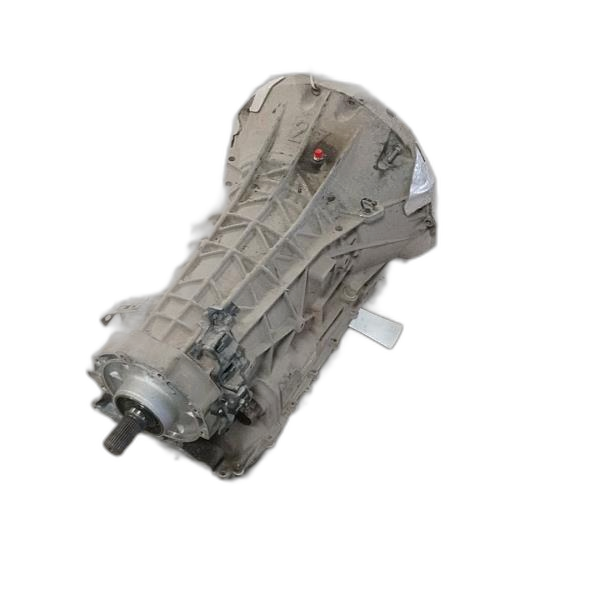
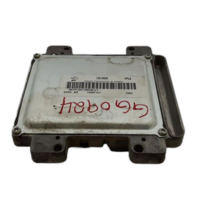
Shop the Parts Behind U1013
Below are the parts most often responsible for code U1013, ranked by how frequently each one is the actual culprit (per the diagnosis above). Tap any to see what we have for your vehicle.



The information in this article is provided for general reference and educational purposes only. Vehicle specifications, procedures, and part compatibility can vary by production date, trim level, and region. Always consult your vehicle's factory service manual and verify part numbers before purchasing or performing repairs. Safety-critical components such as airbags, seat belts, and braking systems should be installed by a qualified professional.
- 🧭 Diagnostic Flowchart
- 🛍️ Shop This Part
- What Does U1013 Mean?
- Can I Drive With U1013?
- Common Causes
- Symptoms
- Common Fixes & Costs
- Used vs. New Parts: Buying Guide
- What Happens If You Wait — Timeline
- Cost of Not Fixing It
- Diagnosis Steps
- When This Code Triggers (Freeze-Frame Conditions)
- Related Codes
- Climate & Environmental Factors
- How to Talk to a Mechanic About This Code
- Where to Take It: Dealer vs Independent vs Chain
- When to Walk Away From the Repair
- What Scan Tool You Need for This Code
- How to Clear the Code After You Fix It
- Will This Fail Emissions / State Inspection?
- Most Commonly Affected Vehicles
- Manufacturer-Specific Notes
- Real Owner Stories
- 2013 Ford Focus at 127K miles with U1013, P0606
- 2012 Dodge Grand Caravan with 110K miles and multiple U-codes
- 2011 Chevy Cruze at 95K miles with U1013
- How to Prevent This Code From Triggering
- Frequently Asked Questions
- Can I just clear the U1013 code and keep driving?
- Is replacing the TCM a DIY job?
- What is the deadline for Ford's free TCM replacement program?
- Could a bad ground wire really make my car stop working?
- My shop wants to replace the whole transmission for a U1013 code. Is that necessary?
- I replaced the TCM and the code is still there. What now?
- What's the difference between U1013 and U0101?
- My car's horn, wipers, and locks are acting erratically. Is this related to U1013?
- Key Takeaways
- 🎟️ Get 5% Off