

OBD-II Code U1027: Lost Communication with ABS Control Module
What U1027 means, why it triggers, and how to fix it
- Code U1027 indicates a total communication failure with the ABS module, immediately disabling your anti-lock brakes and traction control.
- Over 70% of U1027 codes stem from damaged wiring, corroded ground connections, or a blown $5 fuse rather than a failed module.
- Standard hydraulic brakes remain functional, but stopping distances increase significantly on wet or icy roads without ABS intervention.
- Never replace the $500+ ABS module without first testing the CAN bus resistance at the OBD-II port to rule out network-wide electrical shorts.
What Does U1027 Mean?
U1027 means your car's main computer lost communication with the Anti-lock Brake System (ABS) module. These modules constantly exchange data over the CAN bus network for safety systems to function. When the ABS module stops sending or receiving messages, this code stores, disabling ABS and traction control.
Technical definition: The SAE/ISO definition for U1027 is "Lost Communication with ABS Control Module." On some Ford vehicles, it defines as "Invalid or Missing Data for Engine RPM," indicating the ABS module isn't receiving engine data. The code sets when a module misses a critical ABS message for a specified period, typically 2-3 seconds.
Can I Drive With U1027?
Yes, But With Caution. You can drive, but your Anti-lock Braking System (ABS) and traction control are disabled. Standard brakes function normally, but wheels will lock up during hard braking, increasing stopping distances and skidding risk. Continued driving does not damage components, but compromised safety systems make it inadvisable for more than short trips.
Common Causes
- Damaged Wiring or Poor Connections (Very Common) — The wiring harness leading to the ABS module is exposed to harsh under-vehicle conditions. Frayed wires, rodent damage, or a loose, corroded connector at the ABS module interrupts communication.
- Low Battery Voltage or Bad Ground (Common) — Control modules require stable voltage (9V-16V) to operate. A weak battery, failing alternator, or a corroded chassis ground connection causes communication errors across the CAN bus.
- Blown ABS Module Fuse (Common) — The ABS module relies on dedicated fuses. If a fuse blows due to a short circuit or power surge, the module loses power entirely and drops off the vehicle's network.
- Faulty ABS Control Module (Common) — The ABS module fails internally due to age, vibration, heat, or cracked solder joints on its circuit board, preventing it from transmitting data.
- Faulty Instrument Cluster (Less Common) — On specific vehicles (notably 2002-2008 Ford Focus), the instrument cluster acts as a network gateway. A failure within the cluster's circuit board disrupts the CAN bus and triggers a U1027 code.
- Faulty CAN Gateway Module (Rare) — In Volkswagen and Audi vehicles, a central CAN Gateway module manages communication between networks. A gateway failure prevents ABS messages from reaching the PCM or instrument cluster.
- Interference from Aftermarket Devices (Rare) — Incompatible aftermarket accessories plugged into the OBD-II port (insurance trackers, cheap scanners) disrupt the vehicle's communication network, causing modules to stop talking.
Symptoms
- ABS Light On — The ABS warning light illuminates immediately on the dashboard.
- Traction Control/Stability Control Light On — Traction and stability control systems rely on the ABS, triggering their respective warning lights.
- Check Engine Light On — A communication error with a critical system triggers the main check engine light, especially if the PCM requires ABS data.
- No Cruise Control — Cruise control disables when an active ABS or communication fault exists, as it relies on wheel speed data.
- Erratic or Inoperative Speedometer — If the ABS module sends vehicle speed data to the instrument cluster, a failure causes the speedometer to drop to zero or behave erratically.
- Stalling or No-Start — On certain Ford or GM models, a severe communication network short causes the engine to stall or fail to start.
Diagnostic Flowchart
Tap your situation to follow the diagnostic path that matches what you're seeing on this code.
Common Fixes & Costs
- Repairing Damaged Wiring Harness — Parts: $10-$50, Labor: $200-$600, ~2.5 hr book time (Intermediate)
- Cleaning or Repairing Ground Connections — Parts: $1-$5, Labor: $75-$200, ~0.8 hr book time (DIY)
- Replacing a Blown ABS Fuse — Parts: $1-$10, Labor: $0-$50, ~0.1 hr book time (DIY)
- Replacing the ABS Control Module
— Parts: $300-$1200, Labor: $150-$300, ~1.5 hr book time
(Professional)
2004-2008 Ford F-150: OEM 8L3Z-2C219-A (Alt: Dorman 599-739)
2007-2013 Chevy Silverado: OEM ACDelco 20896914 (Alt: Dorman 599-736)
2009-2012 Ram 1500: OEM Mopar 68142314AC (Alt: Dorman 499-796) - Replacing the Instrument Cluster
— Parts: $200-$800, Labor: $150-$350, ~2 hr book time
(Intermediate)
2005-2007 Ford Focus: OEM 4S4Z-10849-FA (Alt: Dorman Remanufactured)
DIY vs Professional
- Repairing Damaged Wiring Harness — Beginner: False
Tools: Multimeter, wiring diagrams, soldering iron, heat shrink tubing, wire strippers. - Cleaning or Repairing Ground Connections — Beginner: True
Tools: Socket/wrench set, wire brush, sandpaper, dielectric grease. - Replacing a Blown ABS Fuse — Beginner: True
Tools: Fuse puller or small pliers. - Replacing the ABS Control Module — Beginner: False
Tools: Socket set, Torx sockets, bi-directional scan tool for brake bleeding and programming. - Replacing the Instrument Cluster — Beginner: False
Tools: Trim removal tools, socket set, screwdrivers.
Used vs. New Parts: Buying Guide
When a used part is worth it: A used or remanufactured ABS module makes sense for older, high-mileage vehicles where a new OEM part is prohibitively expensive.
Donor-vehicle mileage cap: roughly under 100000 miles for the part to have meaningful remaining life.
Donor quality checklist:
- Verify the part number matches your original module exactly.
- Buy from a reputable seller offering a 30-90 day warranty.
- The used module requires VIN programming by a professional.
Decision logic:
- If Vehicle is under warranty or low mileage → Buy new OEM to ensure longevity and compatibility.
- If Budget is the primary concern and vehicle is older → A tested used or professionally remanufactured module is a viable option.
- If You want a plug-and-play solution without programming hassles → Send your original module out for repair/rebuild to retain its original programming.
Warranty tradeoff: Used parts have a 30-90 day warranty. Remanufactured units offer 1-year or lifetime warranties. New OEM parts carry a 1-2 year warranty.
Worst-case if a used part fails: $300-$600 if a used part is defective or cannot be programmed.
What Happens If You Wait — Timeline
- Immediate: Code U1027 sets. ABS and Traction/Stability Control warning lights illuminate. Safety systems disable. (MPG impact: 0%% · Added cost: $0)
- 0-1 month: The risk of skidding and losing control during an emergency stop increases significantly. Base hydraulic brakes continue to function. (MPG impact: 0%% · Added cost: $0)
- 1-6 months: If caused by an underlying electrical issue like a corroding ground wire, the problem worsens, leading to flickering lights or other trouble codes. (MPG impact: 0%% · Added cost: $0 - $500)
- 6+ months: Moisture intrusion in a wiring harness spreads, causing extensive corrosion. A simple connector cleaning escalates into a full harness replacement. (MPG impact: 0%% · Added cost: $500 - $1500+)
Cost of Not Fixing It
- Immediate: ABS and Traction/Stability Control are disabled. Increased risk of skidding and loss of control during emergency braking. (Added cost: Negligible)
- 1-6 months: An underlying electrical issue, like a bad ground or failing alternator, worsens and affects other vehicle systems. (Added cost: $0 - $500+)
- 6+ months: The primary cost remains the elevated safety risk and potential accident costs. (Added cost: Variable)
Diagnosis Steps
- Scan All Modules and Clear Codes
Use an advanced OBD-II scanner to read codes from ALL modules (PCM, BCM, ABS), not just the engine. Note all codes, clear U1027, and test drive. If it doesn't return immediately, it was an intermittent glitch.
Tools: Advanced OBD-II Scanner (Beginner) - Check the Battery and Fuses
Ensure the battery is fully charged (>12.4V engine off) and terminals are tight. Locate the ABS module fuse(s) in your owner's manual and test for continuity with a multimeter.
Tools: Multimeter, Owner's Manual (Beginner) - Inspect Wiring and Grounds
Inspect the wiring harness at the ABS hydraulic unit for frayed wires, corrosion, or rodent damage. Locate the main chassis and ABS ground points, ensuring they are clean, tight, and rust-free.
Tools: Flashlight, Socket/Wrench Set, Wire Brush (Intermediate) - Test the ABS Module Power and Ground
Disconnect the ABS module connector. Using a wiring diagram, check for battery voltage (>12.0V key on) at the power pins. Check ground pins for less than 0.1 ohms of resistance to the negative battery terminal.
Tools: Multimeter, Vehicle-Specific Wiring Diagram (Advanced) - Test the CAN Bus Network Resistance
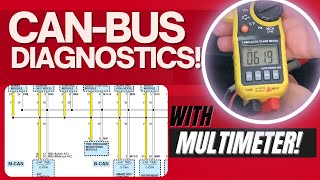
Disconnect the battery. At the OBD-II port, measure resistance between CAN-High (Pin 6) and CAN-Low (Pin 14). A healthy bus reads ~60 ohms. 120 ohms indicates an open circuit; 0 ohms indicates a short.
Tools: Multimeter (Advanced) - Check Live Data PIDs
Using an advanced scan tool, view live data for the Body Control Module (BCM). Monitor 'Module Input Voltage' for the ABS. If the scanner cannot communicate with the ABS module at all, it confirms a power, ground, or network wiring fault.
Tools: Advanced OBD-II Scanner (Advanced) - Check Signal Activity with an Oscilloscope
Back-probe the CAN-High and CAN-Low wires at the ABS module connector. With the key on, CAN-High should toggle between 2.5V and 3.5V, and CAN-Low between 2.5V and 1.5V. A flat signal confirms a communication line fault.
Tools: Oscilloscope, Vehicle-Specific Wiring Diagram (Professional) - Isolate the Faulty Module
If CAN bus resistance is incorrect (120 or 0 ohms), disconnect modules one by one. When resistance returns to 60 ohms after unplugging a specific module, you have found the source of the short or open circuit.
Tools: Multimeter, Repair Manual (Professional)
When This Code Triggers (Freeze-Frame Conditions)
- Vehicle Speed: 0-10 mph (The code sets during the initial key-on self-test before the vehicle moves.)
- Battery Voltage: 11.5V - 12.5V (Key On) or 13.2V - 14.8V (Running) (A communication fault triggers from low or unstable battery voltage during startup.)
- Engine RPM: 0 or 700-800 RPM (The fault logs immediately at key-on (0 RPM) or just after the engine starts (idle RPM).)
- System Status: N/A (Communication codes set based on a lack of signal, so freeze frame data shows the state of the reporting module, not the failed one.)
Related Codes
- U0121 — U0121 is the generic SAE code for 'Lost Communication with ABS Control Module.' U1027 is a manufacturer-specific code providing more detail (e.g., missing Engine RPM data).
- U1262 — An 'SCP Data Link Fault' code on older Fords. Seeing U1262 and U1027 together strongly hints the problem is the communication network wiring itself.
- C-codes (e.g., C1027, C0035) — A 'U' code is a network problem. A 'C' code (Chassis) points to a specific circuit fault. Dodge C1027 means 'Left Rear Wheel Speed Sensor,' a completely different diagnosis.
- P0500 — Means 'Vehicle Speed Sensor Malfunction.' The offline ABS module cannot send speed data to the PCM, triggering P0500. Fixing U1027 resolves P0500.
Climate & Environmental Factors
- Road Salt and High Humidity: Regions using road salt see a higher incidence of U1027. Saltwater seeps into connectors, accelerating corrosion of copper wires and ground points, creating open circuits.
- Extreme Cold: Low temperatures make wire insulation brittle, leading to cracks. Cold also increases battery internal resistance; low voltage triggers random communication codes.
How to Talk to a Mechanic About This Code
Say this: "I have a U1027 'Lost Communication with ABS Module' code and an ABS light on. Please start by checking the ABS fuse, module power and ground, and for visible wiring damage before quoting a module replacement."
This directs the technician to perform a logical diagnosis instead of jumping to the most expensive conclusion, saving you diagnostic time and money.
Avoid saying:
- 'My ABS light is on, can you fix it?'
- 'Just do whatever it takes to get the light off.'
- 'I think I need a new ABS computer.'
Questions to ask before authorizing the repair:
- What were the results of the power and ground tests at the ABS module connector?
- What was the CAN bus resistance measurement at the OBD-II port?
- Did you find any specific wiring damage, corrosion, or bad grounds?
- If a new module is required, does the quoted price include programming?
- What is the warranty on both parts and labor?
Where to Take It: Dealer vs Independent vs Chain
- Dealer:
Good for known manufacturer quirks or programming, but expensive for standard wiring faults.
Best for: Vehicles under warranty, Complex, vehicle-specific issues, Repairs requiring module programming
Downsides: Highest labor rates, Defaults to module replacement over wiring diagnostics (Typical cost: +50% vs. baseline) - Independent Shop:
Best choice for most U1027 scenarios, especially wiring or ground issues.
Best for: Out-of-warranty vehicles, Diagnosing wiring and ground faults, General electrical diagnostics
Downsides: Diagnostic capabilities vary. Look for ASE-certified auto electric specialists. (Typical cost: +0% vs. baseline) - Chain Shop:
AVOID. They are not equipped to trace network wiring or module communication failures.
Best for: Simple part replacements like batteries or fuses.
Downsides: Technicians lack advanced electrical diagnostic training and equipment. (Typical cost: -10% vs. baseline)
When to Walk Away From the Repair
If the estimated repair cost exceeds 40-50% of the car's current private-party value, consider selling or trading it in.
- Car worth $3000, fix is $1500: Walk away. The repair is 50% of the car's value.
- Car worth $10000, fix is $1500: Fix it. The repair cost is 15% of the vehicle's value and restores a critical safety system.
- Car worth $5000, fix is $450: Fix it. A wiring or ground repair is a low-cost fix well below the threshold.
What Scan Tool You Need for This Code
Minimum: A scanner that reads codes from ABS/Chassis ('C') and Network ('U') systems and displays live data.
A basic $20 engine-only code reader cannot communicate with the ABS module or see network codes.
Budget: BlueDriver Pro (~$100) — Reads and clears ABS codes, views live data, and scans all system modules on most vehicles.
Mid-range: Foxwell NT630 Plus / Autel MaxiCOM MK808Z (~$150-350) — Offers broader vehicle coverage, bi-directional controls for ABS automated bleeding, and component activation.
Professional: Autel MaxiCOM MK808BT Pro / Launch X431 Series (~$450-900) — Offers full bi-directional control, wireless connectivity, and advanced functions like module coding and programming.
Rent vs buy: Buy. Free loaner tools at parts stores are typically basic engine code readers and cannot diagnose a U1027 fault.
How to Clear the Code After You Fix It
- Reconnect any disconnected components (battery, modules).
- Use an OBD-II scan tool to clear Diagnostic Trouble Codes (DTCs) from all modules.
- Perform a complete drive cycle to allow readiness monitors to run.
Drive cycle (~20 minutes): A drive cycle involves a cold start, a few minutes of idling, followed by mixed city and highway driving (steady cruise at 55+ mph for 5-10 minutes).
Readiness monitors affected: This communication code does not directly affect emissions readiness monitors., Clearing 'U' codes resets all monitors to 'Not Ready' status.
Before emissions retest: drive at least 50 miles to fully set monitors.
Watch out for:
- Disconnecting the battery will not clear the code from the ABS module's memory.
- The code returns immediately if the underlying communication issue is not resolved.
- Failing to perform a complete drive cycle leaves readiness monitors incomplete, causing an emissions test failure.
Will This Fail Emissions / State Inspection?
Yes — this code typically fails an OBD-II emissions inspection.
- California: An illuminated Check Engine Light is an automatic failure. All readiness monitors must be 'Ready' before re-testing.
- New York: An illuminated ABS warning light fails the safety inspection. If the Check Engine Light is on, it fails the emissions portion.
- Texas: An illuminated Check Engine Light is an automatic failure. If U1027 only illuminates the ABS light, it passes emissions but fails safety.
Most Commonly Affected Vehicles
- Ford F-150 / F-250 / F-350 (2002-2010) — Prone to wiring harness chafing over the driver's side valve cover or frame rails, causing a short.
- Chevrolet / GMC Silverado / Sierra (2003-2014) — Known for issues with the G103 ground on the engine block, triggering multiple 'U' codes simultaneously.
- Dodge / Ram Ram 1500 / 2500 (2008-2018) — Wiring to rear wheel speed sensors and the main ABS harness is frequently damaged by road debris.
- Ford Focus (2002-2008) — Experiences this code due to a faulty instrument cluster with failed solder joints.
- Ford Windstar (2001-2003) — Communication issues between the BCM and ABS module are caused by corrosion in driver's side kick panel connectors.
- Nissan Leaf (2018-2024) — U1027 relates to the charging system, indicating a communication failure with the charging station or Power Delivery Module.
- Honda Ridgeline / Pilot (2020-2023) — Presents a similar communication error caused by a failing Auto Start-Stop module under the driver's side dash.
- Volkswagen / Audi Various (2005-2015) — Communication codes point to a failure in the CAN Gateway module, requiring a full VCDS scan for diagnosis.
Manufacturer-Specific Notes
- Ford / Lincoln / Mercury: U1027 defines as 'Invalid or Missing Data for Engine RPM,' pointing to a communication breakdown with the PCM. Software updates (e.g., TSB 18-2274) sometimes resolve related faults.
- General Motors (Chevy/GMC/Cadillac): U-codes point to network-wide issues. U1027 is frequently caused by a bad ground or a different failing module (like the throttle body) pulling the whole network down.
- Chrysler / Dodge / Ram: Distinguish between U1027 and C1027. A 'U' code is communication; a 'C' code points to a specific wheel speed sensor circuit problem.
- Nissan: On EVs like the Leaf, U1027 links to the charging system, indicating a communication failure with the EVSE. Clearing the code with LeafSpy resumes charging.
Real Owner Stories
2008 Ford Focus with multiple warning lights
While driving, the speedometer dropped to zero, and the engine malfunction, ABS, and traction control lights illuminated. The car drove with reduced power.
What they tried:
- Restarting the car temporarily fixed the issue.
- Hitting the top of the dashboard made the gauges work momentarily, pointing to a loose connection.
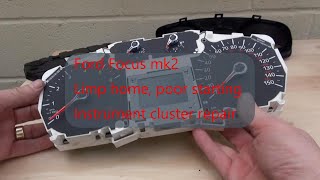
Outcome: The owner removed the instrument cluster and re-soldered the main connector on the circuit board. This common failure on this model permanently fixed the problem.
Lesson: On a 2002-2008 Ford Focus, random gauge failures and a U1027 code almost always point to a faulty instrument cluster. A dash-top tap test is an effective diagnostic tool.
2018 Nissan Leaf with a charging failure
The car stopped charging at a public station and refused charges at home. The dealer pulled codes U1027-16 and U1027-23.
What they tried:
- Plugging and unplugging the charger multiple times.
- The dealer recommended replacing the expensive Power Delivery Module (PDM).
Outcome: The owner used the LeafSpy Pro app and an OBD-II dongle to clear the fault codes. The vehicle charged normally again. The fault was a communication glitch with the third-party station.
Lesson: On a Nissan Leaf, U1027 relates to the charging system. A communication glitch with a charger sets a persistent code that disables charging until manually cleared with an advanced tool.
2002 Ford F-250 7.3L with stalling issues
The truck stalled in reverse. The check engine light showed codes U1027 (Invalid or missing data for Engine RPM) and U1262 (SCP Data Link Fault).
What they tried:
- Replaced the Camshaft Position Sensor (CPS), but the problem returned after 90 miles.
- Inspected the wiring harness.
Outcome: The combination of U1027 and U1262 pointed to a network wiring issue. A chafed wiring harness rubbing against the driver's side valve cover shorted the communication network. Repairing the wire fixed the stall.
Lesson: Multiple communication codes (U1027 and U1262) indicate a network wiring short. Always check known wiring chafe points before replacing sensors or modules.
GMC Envoy with a blown fuse and no communication
The vehicle failed a smog check due to 'no communication' with the OBD-II port. The cigarette lighter was also dead, and Fuse 13 was blown.
What they tried:
- Replacing the fuse, which blew immediately.
- Tracing the circuit with a multimeter.
Outcome: Wiring leading to the cigarette lighter rubbed through and shorted to ground. This blew the shared fuse powering the OBD-II port, causing the communication failure. Repairing the bare wires fixed the issue.
Lesson: A 'no communication' issue isn't always a complex network failure. Check for blown fuses first and investigate all components on that circuit.
How to Prevent This Code From Triggering
- Clean and Protect Battery Terminals and Ground Points (Every 12 months or during oil change) — Corrosion creates high resistance, leading to unstable voltage for modules. Cleaning these points to bare metal and applying dielectric grease ensures a solid connection.
- Apply Dielectric Grease to Critical Connectors (Whenever a connector is disconnected.) — Dielectric grease blocks moisture and oxygen from reaching metal pins, preventing corrosion that causes open circuits at the ABS module.
- Regularly Inspect Wiring Harnesses (Every 24 months or when working in the area.) — Checking for wires rubbing against sharp metal edges prevents chafing that leads to short circuits. Securing loose harnesses with zip ties prevents damage.
- Implement Rodent Deterrents (Ongoing, especially if parking outdoors.) — Rodents chew soy-based insulation on modern wiring. Using peppermint oil or capsaicin-laced tape in the engine bay prevents nesting and harness damage.
- Wash the Vehicle's Undercarriage (Seasonally, especially after winter in the 'Salt Belt'.) — Road salt is highly corrosive. Washing the underbody removes corrosive agents and slows the degradation of wiring and ground connections.
Frequently Asked Questions
Can I just reset the U1027 code and keep driving?
You can try resetting it with a scanner. If it was a temporary glitch, it won't return. If the code comes back immediately, a persistent hardware or wiring problem requires repair.
Is it safe to drive with the ABS light on and a U1027 code?
Your regular hydraulic brakes work, but the anti-lock function is disabled. Drive cautiously, increase following distance, and avoid hard braking to prevent skidding.
How much does it cost to fix a U1027 code?
Costs range from $10 for a blown fuse to $600 for a wiring harness repair. Replacing the ABS module costs between $500 and $1,500 including parts, labor, and programming.
What are common misdiagnosis mistakes for U1027?
A common mistake is replacing the expensive ABS module without checking basics. Technicians must rule out bad grounds, blown fuses, and wiring damage first. On specific models, the instrument cluster (Ford) or Auto Start-Stop module (Honda) causes the fault.
Could a bad instrument cluster cause a U1027 code?
Yes. On vehicles like the 2002-2008 Ford Focus, a failure of the solder joints on the cluster's circuit board interrupts communication, causing the ABS to log U1027.
Can a bad wheel speed sensor cause a U1027 code?
No. A bad wheel speed sensor sets a 'C' (Chassis) code, such as C0035. U1027 indicates the entire ABS module is not communicating, which is a network-level problem.
Do I need a special scanner to read this code?
Standard OBD-II scanners read 'U' codes, but an advanced bi-directional scanner is required for proper diagnosis. These tools communicate with individual modules and read live data streams.
Could a bad battery cause a U1027 code?
Yes. Low battery voltage causes communication faults between modules. Always ensure your battery is fully charged (>12.4V) before starting complex diagnostics.
Key Takeaways
- Code U1027 indicates a total communication failure with the ABS module, immediately disabling your anti-lock brakes and traction control.
- Over 70% of U1027 codes stem from damaged wiring, corroded ground connections, or a blown $5 fuse rather than a failed module.
- Standard hydraulic brakes remain functional, but stopping distances increase significantly on wet or icy roads without ABS intervention.
- Never replace the $500+ ABS module without first testing the CAN bus resistance at the OBD-II port to rule out network-wide electrical shorts.
Helpful Videos

Shop the Parts Behind U1027
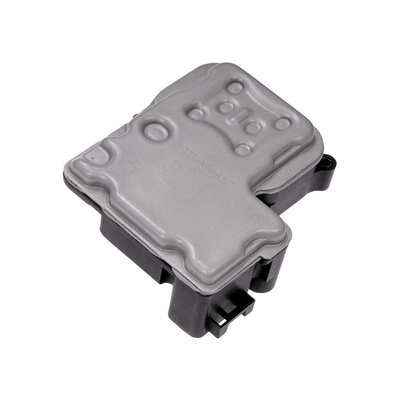
Below are the parts most often responsible for code U1027, ranked by how frequently each one is the actual culprit (per the diagnosis above). Tap any to see what we have for your vehicle.



The information in this article is provided for general reference and educational purposes only. Vehicle specifications, procedures, and part compatibility can vary by production date, trim level, and region. Always consult your vehicle's factory service manual and verify part numbers before purchasing or performing repairs. Safety-critical components such as airbags, seat belts, and braking systems should be installed by a qualified professional.
- 🧭 Diagnostic Flowchart
- 🎬 Helpful Videos
- 🛍️ Shop This Part
- What Does U1027 Mean?
- Can I Drive With U1027?
- Common Causes
- Symptoms
- Common Fixes & Costs
- DIY vs Professional
- Used vs. New Parts: Buying Guide
- What Happens If You Wait — Timeline
- Cost of Not Fixing It
- Diagnosis Steps
- When This Code Triggers (Freeze-Frame Conditions)
- Related Codes
- Climate & Environmental Factors
- How to Talk to a Mechanic About This Code
- Where to Take It: Dealer vs Independent vs Chain
- When to Walk Away From the Repair
- What Scan Tool You Need for This Code
- How to Clear the Code After You Fix It
- Will This Fail Emissions / State Inspection?
- Most Commonly Affected Vehicles
- Manufacturer-Specific Notes
- Real Owner Stories
- 2008 Ford Focus with multiple warning lights
- 2018 Nissan Leaf with a charging failure
- 2002 Ford F-250 7.3L with stalling issues
- GMC Envoy with a blown fuse and no communication
- How to Prevent This Code From Triggering
- Frequently Asked Questions
- Can I just reset the U1027 code and keep driving?
- Is it safe to drive with the ABS light on and a U1027 code?
- How much does it cost to fix a U1027 code?
- What are common misdiagnosis mistakes for U1027?
- Could a bad instrument cluster cause a U1027 code?
- Can a bad wheel speed sensor cause a U1027 code?
- Do I need a special scanner to read this code?
- Could a bad battery cause a U1027 code?
- Key Takeaways
- 🎟️ Get 5% Off