

OBD-II Code U1028: Network Communication Failure
What U1028 means, why it triggers, and how to fix it
- Code U1028 indicates a critical communication breakdown on the CAN bus network, meaning at least one module is missing expected data.
- A corrupted dealership software update, a failed Instrument Panel Cluster (IPC), or damaged wiring cause over 80% of U1028 faults.
- Do not drive with an active U1028 code, as it triggers sudden highway-speed stalling and limp mode, creating an immediate safety hazard.
- Expect to pay $150 to $300 for a professional diagnosis, as pinpointing the exact network failure requires an advanced bidirectional scanner or oscilloscope.
- Isolate the root cause by scanning all modules; the component with the highest number of 'Lost Communication With' codes (like U0155) is usually the culprit.
What Does U1028 Mean?
U1028 indicates a module on the vehicle's Controller Area Network (CAN bus) is not receiving expected data from another module. This breakdown in communication prevents different vehicle systems from working together properly.
Technical definition: The official SAE/ISO definition for U1028 is 'SCP (J1850) Invalid or Missing Data for Primary Id.' Manufacturers use specific definitions, such as Ford's 'ABS Control Module Received Invalid Data from ECM/PCM A.' It signifies a physical or software failure on the communication network, meaning a module is missing expected data.
🎬 Watch: How to test a CAN bus network with a meterCan I Drive With U1028?
No — Do Not Drive. Do not drive. The primary risk is a sudden and unexpected loss of power where the vehicle enters 'limp mode' or stalls completely at highway speeds. This creates an extremely hazardous situation. Additionally, the instrument cluster goes blank, leaving you without a speedometer or critical warning indicators. Continued driving causes further module corruption.
Common Causes
- Corrupted Software or Failed Module Update (Very Common) — A recent dealership software update, especially for a recall, often fails, gets interrupted, or contains bugs. This is a widely reported issue on certain vehicles that immediately crashes network communication.
- Faulty Instrument Panel Cluster (IPC) (Very Common) — The instrument cluster acts as a central hub (gateway) for communication on modern cars. Internal failure disrupts the entire network, causing a flood of communication codes like U1028.
- Damaged Wiring or Poor Connection (Common) — Network wires suffer damage from chafing, corrosion, or rodents. A single severed wire, a loose connector, or a corroded pin takes down the network and sets this code. 🎬 Learn how to perform a CAN bus resistance check
- Failed Smart Junction Box (SJB) or IPDM (Common) — The SJB (Fords) or Intelligent Power Distribution Module (Nissans) acts as a critical communication hub and fuse box. Internal failure due to age, heat, or moisture severs communication to multiple modules.
- Low Battery Voltage or Bad Ground (Common) — Computer modules require a stable voltage to function. A weak battery or poor ground connection causes modules to reset or broadcast corrupt data, triggering communication fault codes. 🎬 See this quick guide for testing CAN bus voltage and grounds
- Failing Body Control Module (BCM) (Less Common) — The BCM controls the vehicle's body and electronic features. Internal BCM failure stops communication with other modules, leading to network codes.
- Leaking Fluid Contaminating a Module (Uncommon) — On specific vehicles like the Ford Focus, leaking windshield washer fluid wicks down the wiring harness directly into the Body Control Module (BCM), causing short circuits and network failure.
- Faulty Inline Connector with Overheating Resistor (Rare) — Specific electrical connectors between major modules contain tiny, integrated resistors. These resistors fail or overheat after driving, interrupting data flow on a single wire and bringing down the network intermittently.
Symptoms
- Vehicle Enters 'Limp Mode' or Stalls — The car suddenly loses power and refuses to accelerate. In severe cases, the engine stalls completely at highway speeds.
- Multiple Warning Lights on Dash — A cascade of warnings for the ABS, traction control, and pre-collision assist illuminates simultaneously as systems lose communication.
- Instrument Cluster is Blank or Erratic — The speedometer, tachometer, and other gauges stop working, flicker, or the entire screen goes black.
- No-Crank, No-Start Condition — The engine refuses to crank because the security system and engine computer cannot communicate to verify the key.
- Check Engine Light is On — The primary indicator that a hard fault is stored in the vehicle's computer.
Common Fixes & Costs
- Perform a Software Update or Re-flash — Parts: $0, Labor: $150-$300, ~1.5 hr book time (Professional)
- Replace the Instrument Panel Cluster (IPC)
— Parts: $400-$900, Labor: $150-$300, ~1.5 hr book time
(Professional)
Ford Maverick Hybrid (2022-2024): OEM NZ6T-10849-AE, NZ6T-10849-CE (Alt: N/A (OEM only currently available))
Ford F-150 (2018): OEM JL3Z-10849-CJC, HL3Z-10849-CXF (Alt: Dorman, ISS Automotive)
Chevrolet Trailblazer (2002-2009): OEM 15945375, 15238840 (Alt: Dorman, Cardone) - Replace SJB or IPDM Fuse Box Assembly
— Parts: $250-$700, Labor: $150-$300, ~1.2 hr book time
(Professional)
Nissan Titan (2004-2015): OEM 284B6-ZE03C, 284B6-ZE03B (Alt: Standard Motor Products (T-Series), WVE)
Ford F-150: OEM JL3Z-14A068-A (Alt: Dorman) - Replace the Body Control Module (BCM)
— Parts: $200-$600, Labor: $150-$400, ~2 hr book time
(Professional)
Ford Focus (2012-2018): OEM CM5Z-14F642-B, F1DT-14A073-DF (Alt: Dorman, Cardone)
Hyundai Elantra (2011-2016): OEM 95400-3X250, 95400-3X100 (Alt: N/A (OEM or used recommended)) - Repair a Damaged Wiring Harness — Parts: $10-$50, Labor: $200-$1500, ~4.5 hr book time (Professional)
Used vs. New Parts: Buying Guide
When a used part is worth it: For older vehicles (>10 years) where the cost of a new OEM module is prohibitive. A used part from a low-mileage donor is cost-effective if programming is available.
Donor-vehicle mileage cap: roughly under 80000 miles for the part to have meaningful remaining life.
Donor quality checklist:
- Verify the part number matches exactly; superseded numbers are often incompatible.
- Source from a reputable seller offering at least a 30-90 day warranty.
- Avoid parts from flood-damaged or rust-belt vehicles, as corrosion destroys electronics.
Decision logic:
- If The part requires security programming (IPC, BCM) and you lack dealer-level tools → Buy new from a dealer or use a professional repair service that programs the module.
- If The vehicle is newer (<8 years) and you plan to keep it long-term → Buy a new OEM or professionally remanufactured part for better reliability and warranty.
- If The part is a simple, non-security module (like some IPDMs) and is plug-and-play → A used part is a reasonable risk to save money.
Warranty tradeoff: Used parts typically have a 30-90 day functional warranty. New aftermarket parts carry a 1-year to limited lifetime warranty. New OEM parts have a 1-2 year warranty if installed by a dealer.
Worst-case if a used part fails: $400-$1500 if a used, programmed module fails prematurely, requiring repeat labor costs.
What Happens If You Wait — Timeline
- 0-1 month: Intermittent fault. The check engine light illuminates intermittently. The instrument cluster flickers or the vehicle experiences a momentary loss of power that corrects itself. (MPG impact: 0%% · Added cost: $0)
- 1-3 months: Fault becomes frequent. The vehicle enters 'limp mode' or stalls weekly, becoming operable again after a restart. Multiple warning lights flash during the event, creating a serious safety risk. (MPG impact: 0-5% (due to inefficient limp mode operation)% · Added cost: $75-$250 in potential towing fees if the vehicle fails to restart.)
- 3-6 months: Component failure becomes persistent. The vehicle stalls frequently or refuses to start. The underlying unstable voltage or short circuit causes software corruption in other connected modules. (MPG impact: N/A (vehicle likely undrivable)% · Added cost: $200-$750 for reprogramming or replacement of secondarily damaged modules.)
- 6+ months: Catastrophic failure. An ignored water leak or wiring short destroys a major component like the BCM or main wiring harness. The no-start condition is permanent. (MPG impact: N/A% · Added cost: $1,500-$4,000+ for replacement of a main wiring harness or multiple control modules.)
Cost of Not Fixing It
- Immediate: Sudden vehicle stall or entry into 'limp mode' at any speed, creating a severe safety hazard. Instrument cluster goes blank. (Added cost: Potential accident costs, towing fees ($75-$250).)
- 1-3 months: Continued driving with intermittent network faults leads to software corruption in other, previously healthy modules. (Added cost: $200-$1000+ for additional module programming or replacement.)
- 3+ months: A no-start condition becomes permanent. Ignoring the root cause leads to catastrophic failure of expensive components like the BCM or main fuse box. (Added cost: $1000-$3000+)
Diagnosis Steps
- Scan for All Trouble Codes (from all modules)
Use an advanced OBD-II scanner to read manufacturer-specific 'U' codes from ALL modules (BCM, PCM, ABS, IPC). The module with the most 'Lost Communication With...' codes pointing to it is the source of the network failure.
Tools: Advanced OBD-II Scanner (Beginner) - Check the Battery and Grounds
Ensure the battery is fully charged (above 12.4 volts) and terminals are clean and tight. Inspect the main battery ground cable and chassis ground straps for tightness and corrosion.
Tools: Multimeter, Socket Set, Wire Brush (Beginner) - Inspect for Obvious Wiring Damage
Visually inspect the wiring harnesses going to the main computer modules (PCM, BCM, ABS, IPC). Look for rodent damage, chafing, or corrosion around the main fuse box and under the dashboard.
Tools: Flashlight (Intermediate) - Check Main Module Connectors
Disconnect the main electrical connectors at the Instrument Panel Cluster (IPC) and Body Control Module (BCM). Look for bent, corroded, or backed-out pins. Re-seat the connectors firmly.
Tools: Trim Removal Tools, Socket Set (Intermediate) - Test Network Resistance
With the battery disconnected, measure the resistance between CAN High and CAN Low at the OBD-II port (pins 6 and 14). A healthy network reads 60 ohms. 120 ohms indicates a missing terminating resistor, and 0 ohms indicates a short circuit.
Tools: Multimeter, Vehicle-Specific Wiring Diagram (Advanced) - Test Network Voltage (Static)
With the ignition on but engine off, measure the voltage of the CAN lines to ground. CAN High (Pin 6) should be 2.5V to 3.0V. CAN Low (Pin 14) should be 2.5V to 2.0V. If both lines show the same incorrect voltage, they are shorted together.
Tools: Multimeter, Back-Probe Kit (Advanced) - Test Network Voltage (Dynamic)
With the engine running, CAN High averages 2.6V-2.7V and CAN Low averages 2.3V-2.4V. Significant deviation from these ranges points to an active network fault.
Tools: Multimeter (Advanced) - Check for Voltage Drops at Key Connectors
Back-probe the power and ground pins on the suspect module's connector while the system is active. A voltage drop of more than 0.1V on ground or 0.2V on power indicates a poor connection causing the module to drop off the network.
Tools: Multimeter, Back-Probe Kit, Wiring Diagram (Advanced) - Isolate the Faulty Module
Disconnect one module at a time from the communication network and re-check for codes or network activity. When the faulty module is disconnected, communication between the remaining modules is restored.
Tools: Advanced Scanner, Wiring Diagram, Depinning Tools (Advanced) - Perform Oscilloscope Network Test
Use an oscilloscope to view the CAN bus signals directly. A healthy signal produces a mirrored square wave pattern. Voltage spikes, dropouts, or a flat line at 2.5V reveal the exact nature of the electrical fault.
Tools: Automotive Oscilloscope, Probes (Professional)
When This Code Triggers (Freeze-Frame Conditions)
- Vehicle Speed: 35-65 mph (Steady cruise or light acceleration)
- System Voltage: 11.5-13.5V (During cranking or high electrical load)
- Time Since Engine Start: 10-20 minutes (After the vehicle has warmed up and thermal stress affects a failing component)
- Ambient Temperature: <40°F or >90°F (Extreme cold or heat, which affects battery performance and electronic component integrity)
Related Codes
- U0155 — Means 'Lost Communication With Instrument Panel Cluster.' If you have U0155 along with U1028, the Instrument Panel Cluster is the root cause, as other modules report they cannot talk to it.
- U1011 — Translates to 'SCP (J1850) Network Harness Failure.' Seeing both codes together confirms the problem is a physical fault in the wiring harness (short, open, corrosion) rather than a failed module.
- U1027 — Means 'Invalid or Missing Data For Engine RPM.' It is a direct consequence of the main network failure. U1027 tells you what data is missing, while U1028 tells you that data is missing.
- U0074 — Means 'Control Module Communication Bus A Off'. Indicates the entire CAN bus network has shut down due to a major power loss or short circuit.
Climate & Environmental Factors
- Cold Weather: Low temperatures cause metal contacts to contract, increasing electrical resistance. A weak battery's performance degrades significantly in the cold, providing unstable voltage to modules.
- High Humidity / Moisture: Moisture accelerates corrosion on wiring, ground points, and connector pins. Water intrusion into modules like the BCM or IPDM causes catastrophic failure.
- Thermal Cycling (Hot/Cold): Repeated expansion and contraction of electronic components leads to microscopic cracks and connection failures over time, causing intermittent issues as the vehicle heats up.
How to Clear the Code After You Fix It
- Reconnect battery if disconnected for repair.
- Use a compatible OBD-II scan tool to clear all Diagnostic Trouble Codes (DTCs) from all modules.
- Perform a complete drive cycle to allow readiness monitors to run.
Drive cycle (~30 minutes): Cold start after sitting for 8+ hours. Idle for 2-3 minutes with electrical loads on. Drive for 15 minutes in mixed city conditions. Drive for 5-10 minutes at a steady highway speed (55-60 mph). Allow the vehicle to cool down completely.
Readiness monitors affected: Comprehensive Component Monitor, Misfire Monitor
Before emissions retest: drive at least 100 miles to fully set monitors.
Watch out for:
- Disconnecting the battery will not clear the U1028 code from all modules and resets all readiness monitors to 'Not Ready'.
- The code returns immediately if the root electrical or communication fault is not repaired.
- In California, Permanent DTCs (pDTCs) cannot be cleared with a scan tool and require fixing the fault and completing a specific drive cycle.
Will This Fail Emissions / State Inspection?
Yes — this code typically fails an OBD-II emissions inspection.
- California: An active U-code causes an automatic failure of the Smog Check. After repair, the vehicle must be driven through a complete drive cycle to set the readiness monitors.
- New York: A U-code that illuminates the 'Check Engine' light causes an automatic failure of the NYS vehicle inspection.
- Texas: A vehicle fails the emissions inspection if any DTC commands the Malfunction Indicator Lamp (MIL) on. Readiness monitors must be set to 'Ready' to pass.
Most Commonly Affected Vehicles
- Ford Maverick Hybrid (2022-2024) — Extremely common on these models, appearing after a PCM or BCM software update related to recalls (e.g., 23P18, 24V-140). The fix requires the dealer to re-apply the update.
- Ford F-150 (2015-2024) — Prone to instrument cluster and Smart Junction Box (SJB) failures that act as a gateway module, causing widespread network communication codes.
- Ford Focus (2012-2018) — Leaking windshield washer fluid travels down the wiring harness and shorts out the Body Control Module (BCM). Check for purple fluid residue near the BCM.
- Chevrolet Trailblazer (2002-2009) — A single faulty module (commonly the HVAC controls, radio, or door module) fails and pulls the entire GM Class 2 network down, causing a no-start.
- GMC Envoy (2002-2009) — Mechanically identical to the Trailblazer, suffering from the same Class 2 network vulnerabilities where a bad module causes a network-wide failure.
- Nissan Titan (2004-2015) — Susceptible to failures in the IPDM. A faulty ECM relay within the IPDM was subject to a recall and causes stalling and communication issues.
- Hyundai Elantra (2011-2016) — Documented issues with various electronic modules and sensors lead to intermittent communication faults on the network.
- Chrysler Pacifica Hybrid (2017-2023) — A loose power distribution connection post causes a flood of communication codes. Diagnosing requires bypassing the secure gateway module.
Manufacturer-Specific Notes
- Ford: On the Maverick Hybrid, U1028 is triggered by a faulty software update. Recall 24V-140 was issued because a software issue prevented the instrument cluster from illuminating. A subsequent recall addressed vehicles that received an incorrect software fix.
- General Motors (GM): On older GM trucks (2002-2009), the Class 2 data network wires through a 'splice pack' connector. Unplug modules one by one from this splice pack to see which one is crashing the network.
- Nissan: The IPDM has a self-test function initiated without a scan tool by using a sequence of ignition and door switch maneuvers. Nissan issued a recall for the ECM relay inside some IPDMs.
- Chrysler/Jeep/Dodge: On 2017+ models, a Secure Gateway Module (SGW) prevents standard scanners from clearing codes. Technicians must use a licensed scan tool with internet authentication or physically bypass the SGW.
Real Owner Stories
2022 Ford Maverick Hybrid after recall
Immediately after a dealership performed software recalls, the truck accelerated on its own, flashed multiple warnings, and entered limp mode.
What they tried:
- Towed back to the dealer. The dealer initially blamed an unrelated recall.
- Dealer found 'incorrectly placed connections', reconnected them, but the issue recurred 1,000 miles later.
Outcome: A second dealership diagnosed incorrectly downloaded software from the initial recall. They resolved the problem by properly re-flashing the modules.
Lesson: If a major network fault appears immediately after a software update, the update itself is the prime suspect. Insist the dealer re-flash the modules.
2015 Ford F-150 with ~100K miles
Instrument cluster randomly went blank, gauges dropped to zero, and the truck stalled. Codes U1028 and U0155 ('Lost Communication with IPC') were stored.
What they tried:
- Checked battery and ground connections; they were clean and tight.
- A shop spent 5 hours tracing wires but found no obvious damage.
Outcome: Based on the U0155 code, the owner replaced the Instrument Panel Cluster (IPC) for $950 including programming. This completely resolved the stalling and communication issues.
Lesson: When a flood of 'U' codes accompanies a specific 'Lost Communication With...' code (like U0155), the targeted module is the culprit. It acts as a gateway, and its failure drops all other modules.
2007 Chevy Trailblazer with 150K miles
Vehicle intermittently refused to start. Multiple 'U' codes, including U1028, were present.
What they tried:
- Replaced the battery and checked all fuses.
- A mechanic replaced the ignition switch for $400, which did not fix the problem.
Outcome: The owner disconnected modules one by one from the GM Class 2 'splice pack' connector hub. Disconnecting the factory radio restored the network and the vehicle started. Replacing the radio permanently fixed the issue.
Lesson: On older GM vehicles, a single non-essential module (like the radio) fails and takes down the entire communication bus. Isolating modules at the splice pack is mandatory before replacing expensive core components.
2013 Ford Fusion after rodent damage
Car refused to start and showed multiple communication codes after parking outside for a week. Owner noticed chewed nesting material.
What they tried:
- Visual inspection revealed chewed wires in the main engine harness near the firewall.
Outcome: An independent shop quoted $2,200 to replace the entire harness. An auto electronics specialist repaired the 5 damaged wires by soldering in new sections for $450.
Lesson: For localized rodent damage, a full harness replacement is unnecessary. A wiring repair by a competent technician is a permanent, affordable solution.
How to Prevent This Code From Triggering
- Clean and tighten battery terminals and grounds. (Every 6 months) — A poor ground or unstable voltage is a primary cause of network errors. Corrosion adds resistance, corrupting data signals between modules.
- Apply dielectric grease to critical connectors. (When servicing or exposing connectors) — Applying dielectric grease to the seals of key modules (BCM, PCM, IPDM) prevents moisture intrusion and corrosion, stopping short circuits.
- Take measures to deter rodents. (Ongoing, especially if parking outdoors) — Modern soy-based wire insulation attracts rodents. Using capsaicin-infused tape or peppermint oil prevents them from severing critical network wires.
- Address water leaks promptly. (As needed) — Fix clogged sunroof drains or bad window seals immediately. Water leaking into the cabin destroys modules like the BCM, causing catastrophic network failure.
- Ensure software updates use a stable power supply. (During dealership service) — A voltage drop during a module flash corrupts the software, causing network codes like U1028. Dealerships must use a dedicated battery maintainer during updates.
Frequently Asked Questions
Can I fix U1028 myself by clearing the code?
No. Clearing the code only hides the check engine light temporarily. U1028 is a hard fault indicating a physical or software communication failure. The code returns immediately until the underlying issue is fixed.
What is the difference between a U-code and a P-code?
A 'P' code (Powertrain) points to a specific engine or transmission problem, like a bad sensor. A 'U' code (Network) indicates a communication breakdown between the vehicle's computers. U-codes require diagnosing the network itself rather than replacing a single mechanical part.
Can a bad ground cause U codes?
Yes. A corroded or loose ground strap introduces electrical noise and voltage fluctuations that corrupt data signals. Modules require a clean, stable ground to communicate effectively on the CAN bus.
My car has a ton of 'U' codes along with U1028. Where do I start?
Use an advanced scanner to identify which module has the most 'Lost Communication With...' codes aimed at it. For example, if the ABS, transmission, and airbag modules all report lost communication with the instrument cluster (U0155), the cluster is the root cause. Focus your diagnosis on that specific gateway module.
Why did this code appear right after I went to the dealer for a recall?
Recall work often involves flashing a software update to a control module. If the update process is interrupted, experiences a voltage drop, or contains a software bug, it corrupts the module. This immediately causes communication failures and triggers the U1028 code.
Will replacing the battery fix a U1028 code?
Replacing the battery rarely fixes a persistent U1028 code. While a weak battery causes temporary module malfunctions, a hard U1028 fault usually points to a damaged wire, failed module, or corrupted software. Start with a fully charged battery, but expect to diagnose the network.
The shop wants $150-$200 just to diagnose the problem. Is that normal?
Yes, a $150 to $300 diagnostic fee is standard and fair. Diagnosing CAN bus network problems requires specialized tools like an oscilloscope and advanced bidirectional scanner. The fee covers the technician's time to pinpoint the exact electrical fault before replacing expensive parts.
Key Takeaways
- Code U1028 indicates a critical communication breakdown on the CAN bus network, meaning at least one module is missing expected data.
- A corrupted dealership software update, a failed Instrument Panel Cluster (IPC), or damaged wiring cause over 80% of U1028 faults.
- Do not drive with an active U1028 code, as it triggers sudden highway-speed stalling and limp mode, creating an immediate safety hazard.
- Expect to pay $150 to $300 for a professional diagnosis, as pinpointing the exact network failure requires an advanced bidirectional scanner or oscilloscope.
- Isolate the root cause by scanning all modules; the component with the highest number of 'Lost Communication With' codes (like U0155) is usually the culprit.
Helpful Videos
![How To Test CAN BUS With A Multimeter [CAN Bus Resistance Check] Mechanic Mindset](https://img.youtube.com/vi/JPE42HSJxAk/mqdefault.jpg)
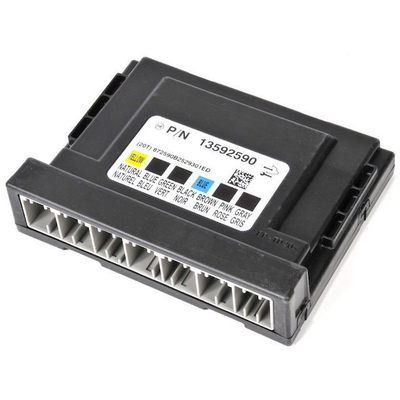
Shop the Parts Behind U1028
Below are the parts most often responsible for code U1028, ranked by how frequently each one is the actual culprit (per the diagnosis above). Tap any to see what we have for your vehicle.



The information in this article is provided for general reference and educational purposes only. Vehicle specifications, procedures, and part compatibility can vary by production date, trim level, and region. Always consult your vehicle's factory service manual and verify part numbers before purchasing or performing repairs. Safety-critical components such as airbags, seat belts, and braking systems should be installed by a qualified professional.
- 🎬 Helpful Videos
- 🛍️ Shop This Part
- What Does U1028 Mean?
- Can I Drive With U1028?
- Common Causes
- Symptoms
- Common Fixes & Costs
- Used vs. New Parts: Buying Guide
- What Happens If You Wait — Timeline
- Cost of Not Fixing It
- Diagnosis Steps
- When This Code Triggers (Freeze-Frame Conditions)
- Related Codes
- Climate & Environmental Factors
- How to Clear the Code After You Fix It
- Will This Fail Emissions / State Inspection?
- Most Commonly Affected Vehicles
- Manufacturer-Specific Notes
- Real Owner Stories
- 2022 Ford Maverick Hybrid after recall
- 2015 Ford F-150 with ~100K miles
- 2007 Chevy Trailblazer with 150K miles
- 2013 Ford Fusion after rodent damage
- How to Prevent This Code From Triggering
- Frequently Asked Questions
- Can I fix U1028 myself by clearing the code?
- What is the difference between a U-code and a P-code?
- Can a bad ground cause U codes?
- My car has a ton of 'U' codes along with U1028. Where do I start?
- Why did this code appear right after I went to the dealer for a recall?
- Will replacing the battery fix a U1028 code?
- The shop wants $150-$200 just to diagnose the problem. Is that normal?
- Key Takeaways
- 🎟️ Get 5% Off