

OBD-II Code U1036: Lost Communication With Wheel Control Systems
What U1036 means, why it triggers, and how to fix it
- Code U1036 indicates a critical communication failure between the Powertrain Control Module (PCM) and the Anti-lock Brake System (ABS) module over the J1850 data network.
- Driving with U1036 disables your ABS and traction control, increasing stopping distances by up to 20% on wet surfaces and removing steering control during panic stops.
- Before replacing a $500+ ABS module, inspect and clean the main ABS chassis ground wire, which causes over 30% of these failures in rust-belt states.
- If U1036 appears alongside multiple other 'U' codes, a single shorted module or aftermarket stereo installation is likely crashing the entire vehicle data bus.
What Does U1036 Mean?
U1036 is a network communication code indicating your car's main computer (PCM) lost its data connection with the Anti-lock Brake System (ABS) module. Your car's computers constantly exchange data over a network. This code flags a critical breakdown in that conversation, specifically isolating the braking and traction control systems.
Technical definition: The SAE/ISO definition for U1036 is 'SCP (J1850) Invalid or Missing Data for Wheels'. This flags a communication failure on the J1850 Standard Corporate Protocol (SCP) network, an older system used in Ford, GM, and Chrysler vehicles before the 2008 CAN bus mandate. 🎬 See how to test the J1850 communication protocol with a multimeter. The PCM expected a mandatory status message from the ABS module, but the data never arrived or was corrupted.
Can I Drive With U1036?
Yes, But With Caution. Yes, but exercise extreme caution. Your Anti-lock Braking System (ABS) and Traction Control are disabled. Wheels will lock up and skid during a hard stop, significantly increasing stopping distances on wet or slippery surfaces. This loss of ABS removes your ability to steer during a panic brake. The underlying electrical fault also risks stalling or disabling other systems without warning.
Common Causes
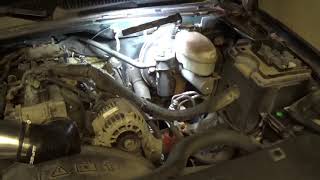
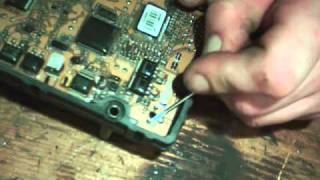
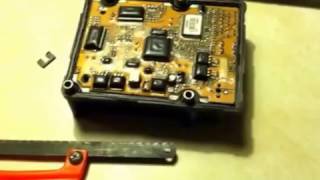
- Failed ABS Control Module (Very Common) — The ABS module is a frequent failure point. Internal electronic components break down, or solder joints crack from heat and vibration. 🎬 Watch: Step-by-step Ford F-150 ABS control module replacement guide. On a J1850 network, a single bad module transmits corrupt data or shorts the bus, preventing all communication.
- Damaged Data Bus Wiring or Connectors (Very Common) — Data bus wires are highly susceptible to physical damage. Wires chafe against the frame, rodents chew insulation, or connectors corrode. Intermittent shorts to power or ground disrupt the entire network.
- Poor Ground Connection (Common) — Every electronic module requires a solid chassis ground. If the ground strap for the ABS module becomes loose, frayed, or corroded, the module drops off the network.
- Blown ABS/BCM Fuse (Less Common) — The ABS module and network gateways rely on specific fuses. A blown fuse instantly cuts power, silencing the module and triggering a U-code.
- Faulty Aftermarket Electronics (Less Common) — Improperly installed remote starters, alarms, or stereos interfere with the vehicle's data network. Incorrectly tapping into the data bus corrupts signals and triggers widespread U-codes.
- Secondary Module Failure (BCM, IPC, or PCM) (Rare) — The Body Control Module (BCM) or Instrument Panel Cluster (IPC) often act as network gateways. An internal failure in these secondary modules crashes the entire bus, causing the PCM to report lost communication with the ABS.
Symptoms
- ABS Light On — The ABS warning light on your dashboard illuminates steadily, indicating the system is offline.
- Traction Control / Stability Control Light On — The warning light for your traction control system (TCS) or electronic stability control (ESC) turns on, as these systems rely on the disabled ABS module.
- ABS System Not Working — During a hard stop, wheels lock up and skid on low-traction surfaces, confirming the anti-lock braking function is inactive.
- Multiple Warning Lights or Electrical Glitches — A crashed data network triggers a 'Check Engine' light, dead gauges, a flickering radio, or random warning lights as communication fails between multiple modules.
- Inability to Shift Out of Park — Some vehicles require communication with the ABS module to verify the brake pedal is pressed. A communication loss leaves the vehicle stuck in Park.
- No Communication with Scan Tool (scan-tool only — no driver-felt sign) — A severe data bus short prevents a diagnostic scan tool from communicating with any module on the network.
Diagnostic Flowchart
Tap your situation to follow the diagnostic path that matches what you're seeing on this code.
Common Fixes & Costs
- Clean or Replace ABS Module Ground — Parts: $5-$20, Labor: $75-$150, ~0.8 hr book time (Beginner)
- Repair Damaged Wiring or Connector — Parts: $10-$50, Labor: $150-$450, ~2.5 hr book time (Intermediate)
- Replace or Rebuild ABS Control Module — Parts: $250-$1,200, Labor: $150-$300, ~1.5 hr book time (Professional)
- Professional Diagnostic Check — Parts: $0, Labor: $120-$400, ~1.5 hr book time (Professional)
- Replace Body Control Module (BCM) — Parts: $200-$600, Labor: $100-$300, ~2 hr book time (Professional)
DIY vs Professional
- Clean or Replace ABS Module Ground — Beginner:
- Repair Damaged Wiring or Connector — Beginner:
- Replace ABS Control Module — Beginner:
- Replace Body Control Module (BCM) — Beginner:
Used vs. New Parts: Buying Guide
When a used part is worth it: A used or remanufactured ABS module makes sense for older, high-mileage vehicles (over 120k miles) where the cost of a new OEM part is a significant fraction of the car's value.
Donor-vehicle mileage cap: roughly under 100000 miles for the part to have meaningful remaining life.
Donor quality checklist:
- Verify the part number on the used module EXACTLY matches your original module.
- Purchase from a reputable seller offering at least a 90-day warranty.
- Avoid parts from flood-damaged or heavily corroded vehicles.
Decision logic:
- If The vehicle is less than 8 years old or has low mileage (<80k) → Favor a new OEM part for maximum reliability and warranty, or a professionally remanufactured unit.
- If The vehicle is over 12 years old and budget is the primary concern → A tested, used module from a reputable salvage yard is a viable option, but requires programming.
- If You want a DIY-friendly option without programming headaches → Send your ORIGINAL module to a specialist for repair. It returns ready to install with no programming needed.
Warranty tradeoff: Used parts typically have a 30-90 day warranty. Remanufactured parts offer a 1-year or lifetime warranty. New OEM parts carry a 1-2 year manufacturer warranty.
Worst-case if a used part fails: $300-$600 if a used part is dead on arrival, covering repeat labor and diagnostic fees.
What Happens If You Wait — Timeline
- Immediate: ABS and Traction Control lights illuminate. The systems are disabled. Regular hydraulic brakes function, but without the anti-lock safety feature. (MPG impact: 0%% · Added cost: $0)
- 1-3 months: The failing module causes a parasitic battery drain, failing to enter 'sleep mode' when the car is off. This leads to a weak or dead battery. (MPG impact: 0%% · Added cost: $150-$250 for a new battery and potential tow.)
- 2-6 months: Network instability worsens. The fault intermittently affects other modules, causing cascading glitches like a flickering instrument cluster or inability to shift from park. (MPG impact: 0%% · Added cost: $200-$400 in added diagnostic labor.)
- 6+ months: A critical failure occurs. The driver is unable to maintain control during a panic stop, resulting in a collision. Alternatively, the unstable data bus causes a stall-while-driving condition. (MPG impact: 0%% · Added cost: $500+ for emergency repairs, or thousands in accident-related costs.)
Cost of Not Fixing It
- Immediate: Loss of ABS and traction control, leading to a significantly increased risk of skidding, longer stopping distances, and loss of steering control during emergency braking. (Added cost: Potential cost of an at-fault accident, which could be thousands of dollars.)
- 1-6 months: The underlying electrical fault causes intermittent and unpredictable behavior in other electronic systems, including stalling, instrument cluster failure, or a no-start condition. (Added cost: $200-$500 in additional diagnostic time if cascading electrical issues mask the original problem.)
- 6+ months: Continued driving with a known safety defect has insurance implications. An insurer might argue the vehicle was not maintained in a safe condition, affecting claim coverage. (Added cost: Potential denial of an insurance claim.)
Diagnosis Steps
- Scan for All Module Codes
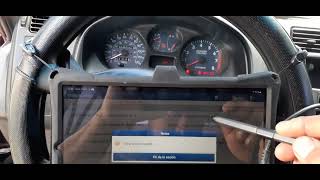
Use an advanced OBD-II scanner to perform a full network scan. Identify which modules report 'no communication' with the ABS. Multiple 'U' codes across various modules confirm a network-wide failure rather than an isolated ABS issue.
Tools: Advanced OBD-II Scanner (Intermediate) - Check the Battery and Fuses
Verify the battery holds at least 12.4V and the charging system operates correctly. Low voltage causes unpredictable module shutdowns. Locate and visually inspect all fuses related to the ABS, BCM, and Instrument Cluster.
Tools: Digital Multimeter, Owner's Manual, Fuse Puller (Beginner) - Visual Inspection of Wiring and Grounds
Inspect all visible wiring harnesses routing to the ABS module and wheel speed sensors. Look for chafed wires, green corrosion in connectors, or loose chassis ground bolts.
Tools: Flashlight, Inspection Mirror (Beginner) - Check Power and Ground at the ABS Module
Disconnect the ABS module connector. Using a multimeter and pinout diagram, verify battery voltage on the power pins. Perform a voltage drop test on the ground pins: with the ignition on, the reading between the negative battery terminal and the module ground pin must be under 0.1V.
Tools: Digital Multimeter, Vehicle Service Manual (Advanced) - Test the Data Bus at the OBD-II Port
With the key on, check the data line voltage at the OBD-II port. For GM Class 2 (Pin 2), expect a fluctuating 0V to 7V signal. For Ford SCP (Pins 2 and 10), expect a mirrored 0-5V signal. A fixed voltage (stuck at 0V or 12V) confirms a shorted, dead bus.
Tools: Digital Multimeter, OBD-II Port Pinout Diagram (Advanced) - Isolate the Faulty Module
If the data bus is shorted, locate the 'splice pack' or 'star connector' where data lines converge. Disconnect branches one by one until the short disappears and communication restores. The unplugged module is the faulty unit.
Tools: OBD-II Scanner, Multimeter, Basic Hand Tools (Advanced) - Check Wheel Speed Sensor Resistance
A shorted wheel speed sensor circuit sometimes disables the ABS module internally. Disconnect each sensor and measure resistance (typically 1500-2100 ohms). Spin the wheel with the multimeter set to AC Volts; it must generate at least 0.5V.
Tools: Digital Multimeter, Jack and Jack Stands (Advanced)
When This Code Triggers (Freeze-Frame Conditions)
- Engine Coolant Temp: 180-200°F (The code sets after the vehicle reaches full operating temperature.)
- RPM: 1200-2500 (The fault is detected during steady-state driving or light acceleration.)
- Vehicle Speed: 25-60 mph (Communication loss occurs once the vehicle moves at city or highway speeds, as the PCM actively polls the ABS module for data.)
- System Voltage: 13.5-14.5V (The code sets when the charging system is active and voltage is normal.)
Related Codes
- U1000 — A generic code for 'Class 2 Communication Malfunction' on GM or 'CAN Communication Circuit' on Nissan. It often appears with U1036, indicating a general network failure. If both are present, the ABS module is a prime suspect.
- U0121 — Means 'Lost Communication With Anti-Lock Brake System (ABS) Control Module'. It is the modern (CAN bus) equivalent of U1036. The diagnostic process is identical, focusing on power, ground, and communication lines.
- U1041 — On GM vehicles, this means 'Lost Communication with EBCM'. It is functionally identical to U1036 and points directly to a communication failure with the ABS module.
- C0035 — Means 'Left Front Wheel Speed Sensor Circuit'. An internal fault related to a wheel speed sensor circuit causes the entire ABS module to malfunction and stop communicating, triggering U1036.
Climate & Environmental Factors
- Road Salt / Corrosion: In regions using road salt, corrosive brine attacks underbody components. This accelerates corrosion of wiring harnesses, electrical connectors, and module ground points, leading to high resistance or open circuits that trigger U1036.
- High Humidity: High humidity and frequent temperature changes cause condensation inside electrical connectors and modules. Moisture promotes corrosion and leads to intermittent electrical faults.
How to Talk to a Mechanic About This Code
Say this: "I have a U1036 code and an ABS light on. I'd like to schedule a diagnostic appointment. Please test the ABS module's power and ground circuits, and check the integrity of the J1850 data bus before recommending a module replacement."
This signals that you understand the fault could be in the wiring or grounds, not just the expensive module. It directs the technician to perform a thorough diagnosis.
Avoid saying:
- 'My ABS light is on, can you fix it?'
- 'Just replace the ABS computer.'
- 'I have a U-code, I don't know what it means.'
Questions to ask before authorizing the repair:
- What were the results of the power, ground, and data bus tests at the module?
- If the module needs to be replaced, is a remanufactured unit or sending mine for repair an option?
- If the fault is in the wiring, can you describe the location and nature of the damage?
- What is the warranty on this specific repair, covering both parts and labor?
Where to Take It: Dealer vs Independent vs Chain
- Dealer:
A reliable, but most expensive, option. They have the specific tools, but may not offer the most cost-effective repair paths for an out-of-warranty vehicle.
Best for: Complex, manufacturer-specific network issues., When a brand-new module requiring proprietary programming is the only option., Vehicles still under any form of extended warranty.
Downsides: Highest labor rates and part costs., More likely to replace an entire module assembly rather than repair wiring or send a module for rebuilding. (Typical cost: +50% vs. baseline) - Independent Shop:
Best fit, provided you choose the right shop. An independent specialist in electrical systems has the diagnostic skill to trace wiring and ground faults. Ask if they are comfortable diagnosing J1850 network issues.
Best for: Out-of-warranty vehicles where cost is a major factor., Shops that specialize in automotive electrical and diagnostic work.
Downsides: Quality and expertise vary widely; you must find a shop with proven experience in network diagnostics., May lack the very latest dealer-level programming tools for brand-new modules. (Typical cost: +0% vs. baseline) - Chain Shop:
AVOID. This fault is far outside the scope of what chain shops handle. Their business model is not set up for the time-consuming diagnostic process required for network codes.
Best for: Simple, routine maintenance like oil changes and brake pad replacement.
Downsides: Technicians are generally not trained or equipped for complex network diagnostics., High risk of misdiagnosis, leading to unnecessary replacement of expensive parts. (Typical cost: -10% vs. baseline)
When to Walk Away From the Repair
If the estimated repair cost exceeds 50% of the car's private-party value, seriously consider selling the vehicle as-is or trading it in.
- Car worth $4000, fix is $1500: Borderline. The repair is a significant percentage of the car's value. Get a second opinion, and explore the cost of a remanufactured or repaired module.
- Car worth $8000, fix is $750: Fix it. The repair cost is well within a reasonable threshold to restore a key safety feature.
- Car worth $2500, fix is $1200: Walk away. The repair cost is nearly half the vehicle's value. It is not an economical repair unless the rest of the vehicle is in pristine condition.
What Scan Tool You Need for This Code
Minimum: A scanner that reads manufacturer-specific codes from all vehicle modules (ABS, BCM, IPC) and supports the J1850 VPW (GM) or J1850 PWM (Ford) protocol.
A basic $20 code reader only scans the Powertrain Control Module (PCM) for engine codes. It cannot communicate with the ABS system and will show 'no codes found'.
Budget: BlueDriver Pro (~$90) — Performs a full system scan to read codes from the ABS, BCM, and other modules on compatible vehicles. It confirms which modules report the communication loss.
Mid-range: Foxwell NT510 Elite / Autel MaxiCOM MK808S (~$180-350) — Offers full-system scanning with live data graphing and bidirectional controls. This allows you to command modules directly to test their function, which is invaluable for network diagnostics.
Professional: Launch X431 Series / Autel MaxiSYS Series (~$500-1500) — Provides dealer-level diagnostics, including module programming and coding required if an ABS or BCM module is replaced. Features topology mapping to visually display network communication status.
Rent vs buy: Free 'loaner tool' programs at auto parts stores only offer basic code readers that are insufficient. If this is a one-time diagnosis, pay a professional. If you plan to do more DIY work, invest in a mid-range scanner.
How to Clear the Code After You Fix It
- Fix the underlying hardware fault (e.g., replace module, repair wiring).
- Reconnect the battery if it was disconnected for the repair.
- Use an OBD-II scan tool to clear the U1036 code and any other related trouble codes.
- Perform a complete drive cycle to allow the vehicle's readiness monitors to reset.
Drive cycle (~20 minutes): A GM-specific drive cycle is effective: 1. Cold start (engine temp below 122°F). 2. Idle for 2.5 minutes with A/C and rear defrost on. 3. Turn A/C off, accelerate to 55 mph and hold for 3 minutes. 4. Decelerate (coast down, no brakes) to 20 mph. 5. Accelerate to 55-60 mph and hold for 5 minutes. 6. Decelerate to a stop.
Readiness monitors affected: Evaporative System (EVAP), Catalyst (CAT), Oxygen (O2) Sensor, Oxygen Sensor Heater
Before emissions retest: drive at least 50 miles to fully set monitors.
Watch out for:
- Clearing the code without fixing the hardware issue causes the code to return immediately.
- Disconnecting the battery clears the code but resets all readiness monitors, guaranteeing an emissions test failure until a full drive cycle is completed.
- Failing to complete the specific drive cycle leaves EVAP and Catalyst monitors in a 'not ready' state.
Will This Fail Emissions / State Inspection?
Yes — this code typically fails an OBD-II emissions inspection.
- California: An illuminated ABS light is not an automatic failure, but a 'U' code stored in the PCM is. If the battery was disconnected, the vehicle fails because OBD readiness monitors are not set.
- New York: An illuminated ABS warning light is grounds for failing the state safety inspection.
- Texas: An illuminated ABS light is NOT a cause for rejection in the safety inspection. However, the stored code causes a failure in the 17 counties requiring an OBD-II emissions test.
Most Commonly Affected Vehicles
- Ford F-150 (1997-2003) — These model years heavily used the J1850 PWM (SCP) communication protocol. Wiring to the rear ABS sensor on the differential is a common failure point, as is internal failure of the ABS module itself.
- Chevrolet Silverado 1500 (1999-2007) — Used the GM Class 2 (J1850 VPW) network. A bad ABS module notoriously takes down the entire data bus. Corroded ground wires on the frame rail beneath the driver's door are a primary cause of ABS electrical issues.
- GMC Sierra 1500 (1999-2007) — Mechanically identical to the Chevrolet Silverado, it shares the same GM Class 2 network vulnerabilities, including module failure and frame ground corrosion.
- Jeep Grand Cherokee (1999-2004) — The 'WJ' generation used a Chrysler variant of the J1850 protocol. Solder joints inside the ABS module frequently crack, leading to intermittent communication loss.
- Ford Explorer (1996-2003) — Relied on the SCP network protocol. The ABS module is a common failure item, and wiring issues near the wheels trigger this code.
- Nissan Titan / Armada / Frontier (2004-2010) — A related U1000 code is extremely common and points to a poor ground connection for the Engine Control Module (ECM) or a failing IPDM (Intelligent Power Distribution Module).
- Cadillac DeVille / Seville (1998-2004) — Uses the GM Class 2 data network. A failing ABS, BCM, or instrument cluster brings down the network, causing a no-start condition and a flood of U-codes.
- Honda Accord (2008-2012) — Uses a modern CAN bus system, but a related body code (B1036) triggers from a fault in the ignition line input to the MICU, often caused by a blown 7.5A fuse.
Manufacturer-Specific Notes
- General Motors (GM): On GM's Class 2 network, a single failing module shorts the single data wire to voltage or ground, pulling the entire communication network down. Diagnosis involves isolating modules at a central 'splice pack'. GM also issued Safety Recall 05068 for 1999-2002 trucks in 'Salt Belt' states for unwanted ABS activation caused by rust under the front wheel speed sensors.
- Ford: Ford's SCP (J1850) is a two-wire system. A short-to-ground or short-to-power on either wire disables communication. The ABS module mounted to the hydraulic block is a common failure point and requires programming with a dealer-level tool upon replacement.
- Chrysler (Jeep): On the Jeep Grand Cherokee (WJ), the ABS module develops cracked internal solder joints, leading to intermittent failures sensitive to temperature and vibration.
- Nissan: The related U1000 code is frequently caused by poor or corroded ground connections for the Engine Control Module (ECM) or a failing Intelligent Power Distribution Module (IPDM). Always clean ECM and BCM ground points before replacing modules.
Real Owner Stories
2004 Chevy Silverado 1500 at 145K miles
ABS and Brake lights stayed on. Scan tool showed U1036 and U1041. Speedometer dropped to zero intermittently.
What they tried:
- Initially suspected a bad ABS module (EBCM).
- Located the main ground wire for the ABS system on the frame rail below the driver's door.
Outcome: The ground wire connection to the frame was heavily corroded. The owner cleaned the wire's ring terminal and the frame contact point to bare metal, re-secured it, and coated it with dielectric grease. This fixed the issue for less than $10.
Lesson: On GM trucks, always check the frame ground beneath the driver's door before replacing the expensive ABS module.
2002 Ford Explorer at 110K miles
ABS light on and a flood of 'U' codes appeared immediately after installing a new aftermarket stereo.
What they tried:
- Cleared codes, but they returned instantly.
- Took the vehicle to a mechanic who suspected the recent installation.
Outcome: The installer improperly tapped a wire for the new stereo into the vehicle's J1850 SCP data bus wire, corrupting the network. Disconnecting the stereo restored communication. The stereo was re-wired correctly using a proper adapter harness.
Lesson: If a communication code appears right after installing aftermarket electronics, the new device is the primary suspect. Disconnect it completely before diagnosing other modules.
2004 Jeep Grand Cherokee (WJ) at 160K miles
ABS light and code U1036 appeared on hot days and disappeared overnight when the vehicle cooled down.
What they tried:
- Checked wiring and grounds, which appeared in good condition.
- Suspected an internal failure in the ABS module related to heat.
Outcome: The owner sent the original ABS electronic module to a specialized repair service. The service re-soldered the internal connections known to fail from heat stress. After re-installing the repaired module, the code cleared permanently. The cost was $150.
Lesson: Intermittent, temperature-sensitive communication faults point to failing solder joints inside a module. Rebuilding your original module is cheaper and avoids VIN programming.
How to Prevent This Code From Triggering
- Clean Key Chassis Grounds Periodically (Every 2-3 years, or if electrical issues arise) — Corrosion on the main ground points for the ABS and BCM causes communication failure. Cleaning the contact points to bare metal ensures modules have a stable reference.
- Apply Dielectric Grease to Connectors (Whenever a connector is disconnected for service) — Applying dielectric grease to the rubber seals of connectors seals out moisture and oxygen, preventing corrosion and high resistance.
- Regularly Wash Vehicle Undercarriage in Winter (Monthly during winter in 'Salt Belt' regions) — Road salt creates a corrosive brine that attacks wiring harnesses and ground points. Washing the underbody rinses salt away, slowing corrosion.
- Inspect and Secure Wiring Harnesses (During oil changes or routine maintenance) — Vibrations cause wiring harnesses to rub against the frame, wearing through insulation and causing a short. Visual inspections prevent future network-killing shorts.
Frequently Asked Questions
Can a bad battery cause a U1036 code?
Yes. Low system voltage (under 12.4V) causes electronic modules to malfunction, reset, or fail to communicate. Always verify battery health before diagnosing complex network faults.
Will clearing the code fix the problem?
No. Clearing the code only turns the warning lights off temporarily. The code returns immediately once the modules attempt to communicate and detect the hardware fault.
What does SCP (J1850) mean?
Standard Corporate Protocol (SCP) is the communication language used by Ford, GM, and Chrysler computers before the 2008 CAN bus mandate. Ford used J1850 PWM, while GM used J1850 VPW. Code U1036 is specific to vehicles using this older network architecture.
Why are my ABS and traction control lights on?
The main computer disables these safety systems as a precaution because it cannot communicate with the ABS module. Without real-time wheel speed data, the systems cannot function safely.
Is this an expensive repair?
It ranges widely. Cleaning a corroded ground wire costs almost nothing, while replacing and programming a new ABS module exceeds $1,000. Professional diagnosis typically adds $120 to $200 to the final bill.
Can I replace the ABS module myself?
It is not recommended unless you are sending your original module out for repair. New or used replacement modules require VIN programming with a professional scan tool to function. Rebuilding your original module bypasses this programming requirement.
What is a common misdiagnosis for U1036?
Immediately replacing the ABS module without testing the network is a costly mistake. The fault frequently lies in a corroded ground wire, a chafed data bus wire, or a different module crashing the shared network.
I have a dozen 'U' codes along with U1036. What does that mean?
A flood of U-codes indicates a system-wide network crash. On older J1850 vehicles, a single shorted module or wire pulls the entire data bus down, causing all modules to report communication loss.
Key Takeaways
- Code U1036 indicates a critical communication failure between the Powertrain Control Module (PCM) and the Anti-lock Brake System (ABS) module over the J1850 data network.
- Driving with U1036 disables your ABS and traction control, increasing stopping distances by up to 20% on wet surfaces and removing steering control during panic stops.
- Before replacing a $500+ ABS module, inspect and clean the main ABS chassis ground wire, which causes over 30% of these failures in rust-belt states.
- If U1036 appears alongside multiple other 'U' codes, a single shorted module or aftermarket stereo installation is likely crashing the entire vehicle data bus.
Helpful Videos
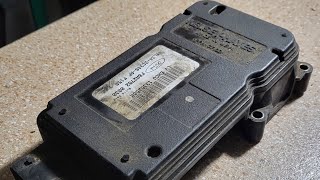
Shop the Parts Behind U1036
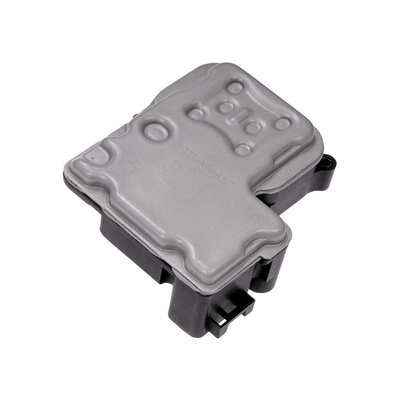
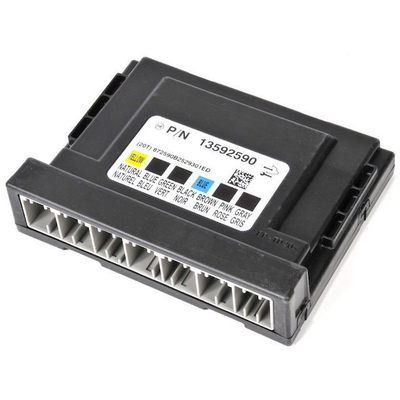
Below are the parts most often responsible for code U1036, ranked by how frequently each one is the actual culprit (per the diagnosis above). Tap any to see what we have for your vehicle.

The information in this article is provided for general reference and educational purposes only. Vehicle specifications, procedures, and part compatibility can vary by production date, trim level, and region. Always consult your vehicle's factory service manual and verify part numbers before purchasing or performing repairs. Safety-critical components such as airbags, seat belts, and braking systems should be installed by a qualified professional.
- 🧭 Diagnostic Flowchart
- 🎬 Helpful Videos
- 🛍️ Shop This Part
- What Does U1036 Mean?
- Can I Drive With U1036?
- Common Causes
- Symptoms
- Common Fixes & Costs
- DIY vs Professional
- Used vs. New Parts: Buying Guide
- What Happens If You Wait — Timeline
- Cost of Not Fixing It
- Diagnosis Steps
- When This Code Triggers (Freeze-Frame Conditions)
- Related Codes
- Climate & Environmental Factors
- How to Talk to a Mechanic About This Code
- Where to Take It: Dealer vs Independent vs Chain
- When to Walk Away From the Repair
- What Scan Tool You Need for This Code
- How to Clear the Code After You Fix It
- Will This Fail Emissions / State Inspection?
- Most Commonly Affected Vehicles
- Manufacturer-Specific Notes
- Real Owner Stories
- 2004 Chevy Silverado 1500 at 145K miles
- 2002 Ford Explorer at 110K miles
- 2004 Jeep Grand Cherokee (WJ) at 160K miles
- How to Prevent This Code From Triggering
- Frequently Asked Questions
- Can a bad battery cause a U1036 code?
- Will clearing the code fix the problem?
- What does SCP (J1850) mean?
- Why are my ABS and traction control lights on?
- Is this an expensive repair?
- Can I replace the ABS module myself?
- What is a common misdiagnosis for U1036?
- I have a dozen 'U' codes along with U1036. What does that mean?
- Key Takeaways
- 🎟️ Get 5% Off