

OBD-II Code U1045: A Comprehensive Guide to Network Communication Faults
What U1045 means, why it triggers, and how to fix it like a pro
- Code U1045 indicates a manufacturer-specific network communication error, ranging from a harmless sticky radio button to a critical engine stalling hazard.
- Before replacing expensive modules, spend $10 on electronics-safe cleaner to unstick center console buttons, which resolves the code on most Hyundai models.
- On 2002-2009 GM SUVs, a U1045 code accompanied by engine stalling requires an immediate $150-$300 ignition switch replacement to prevent a dangerous loss of power steering.
- For 2018-2019 Volkswagen models displaying a 'Service Blind Spot' warning, do not replace hardware; the required fix is a dealer-performed software update outlined in TSB 96-18-08.
What Does U1045 Mean?
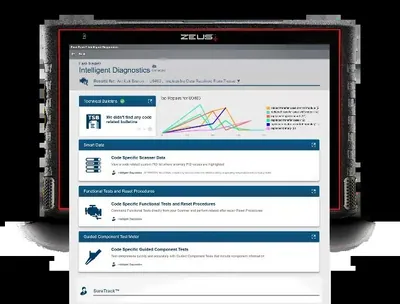
Code U1045 signifies a control module detected a communication error on the vehicle's data network. This is either a complete loss of signal from another module or an input, like a button, stuck in the 'on' position. Because manufacturers use this code for different systems, its exact meaning varies. It ranges from a sticky radio button on a Hyundai to a critical loss of traction control data on a Ford, or a failing ignition switch on a GM vehicle.
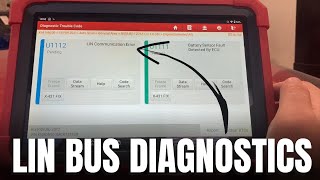
Technical definition: The official SAE/OBD-II definition for U1045 is manufacturer-specific. Common definitions include 'SCP (J1850) Invalid or Missing Data for Traction Motor', 'Sticking Key on Central Control Panel', or 'LIN Bus Error'. 🎬 Watch: A professional walkthrough of LIN Bus communication diagnostics. The 'U' prefix designates a Network/Data Link problem. The code sets when a primary module expects a specific data message from another module or sensor within a set timeframe (e.g., 5 seconds of startup) and fails to receive it. This forces the module to use a default fail-safe value and log the fault.
Can I Drive With U1045?
Yes, but with caution Driving with code U1045 depends on the symptoms. If only minor features like radio buttons fail, driving is safe. If the code appears on a GM vehicle and is accompanied by stalling, do not drive; the engine will shut off unexpectedly, causing a loss of power steering and a high crash risk. If safety systems like blind spot monitoring disable, exercise extreme caution. In cases causing a no-start or transmission shifting issues, tow the vehicle.
Common Causes

- Spilled liquid causing a sticky button (Very Common) — This is a leading cause on brands like Hyundai. Spilling soda or coffee on the center console leaves a sticky residue that prevents a button from fully returning to its 'off' position. A control module interprets this continuous press as a network fault.
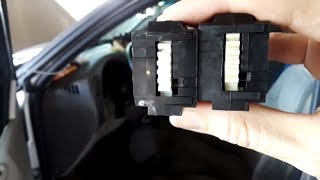
- Failed ignition switch (Common) — On 2002-2009 GM vehicles, a failing 🎬 Watch: How to replace the ignition switch on these GM models. ignition switch intermittently cuts power to multiple control modules. This causes them to drop off the network and triggers a cascade of 'U' codes, often leading to stalling or a no-start condition.
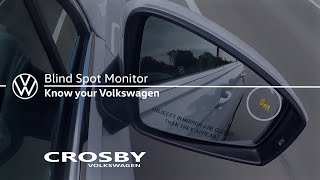
- Software glitch in a control module (Common) — The fault often lies in the module's software rather than hardware. Volkswagen issued Technical Service Bulletins (TSBs) for a U104500 code on 2018-2019 models related to the blind spot detection system, which requires a dealer-performed software update.
- Damaged wiring, loose connectors, or water intrusion (Common) — The communication network relies on miles of wiring. A frayed wire, a loose connector, or water intrusion from a clogged sunroof drain corrodes delicate network pins and interrupts signals. This is a frequent issue on Chrysler vehicles at the 'star connector' splice pack.
- Failed control module or switch assembly (Common) — The button panel itself or another computer in the car can fail internally. This causes it to send corrupted data, no data at all, or short out the entire communication line.
- Low battery voltage or charging system issues (Less Common) — Vehicle communication networks are highly sensitive to voltage. A weak or improperly connected battery causes modules to power up incorrectly or drop offline during operation, generating network codes.
- Incorrect or unregistered immobilizer key (Uncommon) — On Dodge and Chrysler vehicles, using a faulty or improperly programmed key triggers a U1045 code. The body control module fails to authenticate the key's signal, logging a communication error against the immobilizer system.
- Aftermarket accessory interference (Uncommon) — Improperly installed aftermarket devices like remote starters or dash cams interfere with the CAN bus network. These devices introduce electrical noise or draw unexpected power, disrupting communication between factory modules.
Symptoms

- Engine stalls while driving — This is a critical safety symptom on GM vehicles. The engine shuts off unexpectedly, resulting in a loss of power steering and power brakes, increasing crash risk.
- Engine cranks but will not start — If the module that lost communication is essential for engine operation (like the ignition switch or immobilizer), the vehicle cranks but fails to start.
- Unexpected or erratic system function — A system operates randomly, such as the fan speed changing on its own or the radio scanning through stations. This occurs when the computer believes a button is stuck down.
- Check Engine Light or specific system warning lamps illuminate (also visible on scanner) — The Malfunction Indicator Lamp (MIL) turns on. Depending on the affected system, you will also see ABS, Traction Control, Airbag, or specific text warnings like 'Service Blind Spot System'.
- Buttons on radio, climate control, or steering wheel do not work (also visible on scanner) — You cannot adjust the volume, change the temperature, or use cruise control because the buttons are unresponsive or work intermittently.
Diagnostic Flowchart
Tap your situation to follow the diagnostic path that matches what you're seeing on this code.
Common Fixes & Costs
- Cleaning sticky buttons — Parts: $0-$15, Labor: $0, ~0.2 hr book time (DIY)
- Replacing a faulty ignition switch (GM) — Parts: $40-$70, Labor: $120-$250, ~1.2 hr book time (Intermediate)
- Dealer software/firmware update (VW) — Parts: $0, Labor: $150-$300, ~1.5 hr book time (Professional)
- Replacing a faulty switch panel or button assembly — Parts: $100-$500, Labor: $100-$200, ~1.0 hr book time (Intermediate)
- Repairing a damaged wire or connector — Parts: $5-$20, Labor: $150-$450, ~2.5 hr book time (Professional)
- Replacing a faulty control module — Parts: $200-$700, Labor: $150-$500, ~2.0 hr book time (Professional)
- Professional Diagnosis — Parts: $0, Labor: $120-$250, ~1.5 hr book time (Professional)
Used vs. New Parts: Buying Guide
When a used part is worth it: For simple switch assemblies or modules from low-mileage vehicles scrapped for non-electrical reasons, a used part offers significant savings. It is a viable option for older vehicles where a new part's cost is a large fraction of the car's value.
Donor-vehicle mileage cap: roughly under 80000 miles for the part to have meaningful remaining life.
Donor quality checklist:
- Verify the exact part number, including any software revision codes, matches your original part.
- Purchase from a reputable recycler that offers a warranty (90 days is a good minimum).
- Inspect photos for corrosion on pins or damage to the housing.
- Avoid parts from flood-damaged or fire-damaged vehicles.
Decision logic:
- If The part is a simple, non-programmable switch assembly and the new price is over $200 → A used part from a reputable seller is a reasonable choice.
- If The part is a complex control module (e.g., Blind Spot, Body Control) that requires VIN programming → Favor new or professionally remanufactured. The cost of programming a used module, with no guarantee of success, negates the savings.
- If The vehicle is over 10 years old and budget is the primary concern → A used part is acceptable, but understand the risk of premature failure and potential for repeat labor costs.
Warranty tradeoff: Used parts typically come with a 30-90 day parts-only warranty. New aftermarket parts often have a 1-year to limited lifetime warranty. New OEM parts carry a 1-2 year warranty, but require dealer installation.
Worst-case if a used part fails: $300-$800 if a used module fails after installation, requiring repeat labor for removal, diagnosis, and installation of another part.
What Happens If You Wait — Timeline
- 0-2 weeks: Intermittent fault. A warning light flashes briefly and disappears. A 'ghost' U1045 code is stored. No noticeable performance impact. (MPG impact: 0%% · Added cost: $0)
- 2 weeks - 3 months: Fault becomes persistent. A warning light stays on. A non-critical function stops working. For a GM ignition switch, intermittent stalling begins, posing a severe safety risk. (MPG impact: 0-1%% · Added cost: $0 - $250 (Towing))
- 3-6 months: The fault is permanent. The affected system is always inoperative. An internal short in a module starts causing voltage fluctuations on the network, leading to other modules logging communication codes. (MPG impact: 1-3%% · Added cost: $250 - $800 (Cost of initial diagnosis and potential misdiagnosis))
- 6+ months: Cascading failure. An untreated network short causes electrical stress and premature failure of other healthy modules. A no-start condition becomes permanent. (MPG impact: 5-10% (if affecting engine/transmission modules)% · Added cost: $1000 - $2500+ (Towing plus replacement and programming of multiple control modules))
Cost of Not Fixing It
- Immediate: Loss of non-critical functions like radio or cruise control buttons. Annoying but not damaging. (Added cost: $0)
- Days to Weeks: Loss of safety features like blind spot monitoring, increasing crash risk. On GM vehicles, intermittent stalling occurs, creating a severe safety hazard and potentially leaving you stranded. (Added cost: $200+ (Towing costs))
- Months: A fault causing a no-start condition becomes permanent, requiring a tow. A module with an internal short causes voltage fluctuations that damage other sensitive electronics on the same network over time. (Added cost: $500 - $2000+ (Towing plus potential damage to other modules))
Diagnosis Steps

- Scan for All Codes and Document Freeze Frame Data
Use an OBD-II scanner to confirm U1045 is present. Scan all vehicle modules (Engine, Body, Chassis, Network) for other codes, as U1045 is often a secondary code. Document the freeze frame data to see vehicle conditions when the code set.
Tools: OBD-II Scanner (Beginner) - Perform a Thorough Visual and Tactile Inspection
Look closely at all button panels on the steering wheel and center console for sticky residue. Press every button to ensure it moves freely and springs back. Clean sticky buttons with electronic-safe wipes.
Tools: Flashlight, interior cleaning wipes, microfiber cloth (Beginner) - Check Fuses for Related Systems
Consult the owner's manual to locate fuse boxes. Inspect all fuses related to the malfunctioning components. A single blown fuse takes a module offline, causing other modules to log a communication fault.
Tools: Fuse puller or needle-nose pliers (Beginner) - Analyze Live Data with an Advanced Scanner
Access the module reporting the fault and monitor the status of suspected inputs (e.g., 'Cruise Control Set Switch'). Press and release the button while watching the data stream. If it stays stuck on 'On', you confirmed a fault in the switch or wiring.
Tools: Advanced OBD-II scanner with live data (Intermediate) - Inspect Wiring Harnesses and Connectors
Visually inspect wiring harnesses for obvious damage in areas prone to chafing like under the dash and around the steering column. Disconnect connectors for affected modules to check for bent pins, corrosion, or water intrusion.
Tools: Flashlight, trim removal tools (Intermediate) - PRO TIP: Perform a Voltage Drop Test
To find high resistance in a circuit (e.g., a failing GM ignition switch), connect the multimeter's positive lead to the battery's positive terminal and the negative lead to the power feed wire at the suspect component. Activate the circuit. A reading greater than 0.5 volts indicates excessive resistance.
Tools: Digital Multimeter, wiring diagram (Advanced) - PRO TIP: Test the Network with a Multimeter
At the OBD-II port, measure resistance between Pin 6 (CAN High) and Pin 14 (CAN Low). A healthy network reads approximately 60 ohms. A reading of 120 ohms indicates a missing terminating resistor or broken wire. A reading near 0 ohms indicates a short circuit.
Tools: Digital Multimeter, vehicle-specific wiring diagram (Advanced) - PRO TIP: Back-Probe the Suspect Switch or Sensor
Identify the signal wire for the suspected component. With the component connected and key on, back-probe the connector. Measure voltage on the signal wire as you operate the button. A distinct voltage change confirms the switch functions electrically.
Tools: Digital Multimeter with back-probe pins, wiring diagram (Advanced) - Isolate Network Modules at the Splice Pack
If the entire network is down, locate the vehicle's splice pack ('star connector'). Disconnect modules from this junction one by one. When communication restores, the last module disconnected is the one shorting out the network.
Tools: Trim removal tools, vehicle-specific wiring diagram (Advanced)
When This Code Triggers (Freeze-Frame Conditions)
- Engine Coolant Temp: 40-122°F (5-50°C) (During startup self-test; a module fails its initial check-in.)
- RPM: 0 or 750 (Key-On Engine-Off or immediately after starting; a critical module (like immobilizer) fails to report.)
- Engine Load: 20-50% (Steady state driving; a module intermittently drops off the network due to vibration or voltage issues.)
- Vehicle Speed: 40-65 mph (Highway cruising; a module required for a speed-dependent system (like blind spot monitoring or cruise control) stops communicating.)
Related Codes
- U0001 — Indicates a severe fault that brought down the entire primary network. Diagnosing the specific U1045 first often reveals the root cause of the U0001.
- P0568 — On Jeep models, a faulty cruise control switch triggers U1045 (network loss) and P0568 (direct electrical fault). Having both strongly indicates the switch or its wiring is the problem.
- P0513 — On Dodge/Ram vehicles, U1045 with P0513 specifies a failure to authenticate the immobilizer key. This points directly to a bad key fob or antenna ring.
- B-prefix codes (e.g., B1435) — Body codes identify the specific component at fault (e.g., 'Center Console Switch #3 Circuit High'), confirming the location of the network error reported by U1045.
Climate & Environmental Factors
- High Humidity / Moisture: Accelerates corrosion on wiring connectors and module pins, increasing resistance and causing intermittent communication dropouts.
- Extreme Cold: Reduces battery efficiency and makes wire insulation brittle. A struggling battery provides unstable voltage, causing modules to drop offline.
- Extreme Heat: Causes electronics inside control modules to fail prematurely and softens plastic wire insulation, making it susceptible to chafing and shorts.
How to Talk to a Mechanic About This Code
Say this: "I have a U1045 network communication code and need a diagnostic appointment. I am experiencing [describe symptoms, e.g., 'intermittent radio buttons' or 'a blind spot error']. Please check for TSBs and investigate simpler causes like switches and wiring before recommending a module replacement."
This signals you are an informed consumer. It directs the technician toward a logical, cost-effective diagnostic process, focusing on common failures first rather than defaulting to an expensive module replacement.
Avoid saying:
- 'My check engine light is on, can you just fix it?'
- 'Do whatever you think is needed.'
- 'I don't know anything about cars, please help.'
Questions to ask before authorizing the repair:
- Did you find any Technical Service Bulletins (TSBs) for this code on my vehicle?
- Can you show me the faulty part or the damaged wiring?
- Is the recommended fix a wiring repair, a simple part like a switch, a software update, or a full module replacement?
- If a module needs to be replaced, does it require programming, and is that cost included in your estimate?
- What is the warranty on this specific repair, covering both parts and labor?
Where to Take It: Dealer vs Independent vs Chain
- Dealer:
Best for: Vehicles under warranty or with a relevant safety recall., Manufacturer-specific software updates that are the known fix (e.g., 2018-2019 VW blind spot module)., Extremely complex, brand-specific network issues requiring factory diagnostic tools.
Downsides: Highest labor rates ($150-$250+/hour)., Often defaults to replacing an entire assembly rather than attempting a nuanced wiring repair. (Typical cost: +50% vs. baseline) - Independent Shop:
Best fit for most out-of-warranty U1045 issues, provided you choose a reputable shop with strong electrical diagnostic capabilities. For known software-fix issues, the dealer is the necessary choice.
Best for: Out-of-warranty vehicles where cost is a factor., Diagnosing common U1045 causes like faulty ignition switches, sticky buttons, or wiring issues., Getting a second opinion on a costly dealer recommendation.
Downsides: Quality varies widely; you must choose a shop specializing in automotive electrical systems., Lacks access to the latest manufacturer-only software updates. (Typical cost: +0% vs. baseline) - Chain Shop:
AVOID for U1045 diagnosis. A network communication fault is a complex electrical issue outside the scope of most chain shops.
Best for: Simple, unrelated maintenance like oil changes or tires.
Downsides: Technicians lack specialized training and equipment for complex network diagnostics., Business model pressures technicians toward simple, high-turnover jobs. (Typical cost: -10% vs. baseline)
When to Walk Away From the Repair
If the estimated repair cost exceeds 50% of the car's current private-party value, sell or trade in the vehicle instead of repairing it.
- Car worth $4000, fix is $2200: Walk away. The repair cost is over 50% of the car's value. It is not a sound financial decision.
- Car worth $12000, fix is $1800: Fix it. The repair cost is well below the threshold and restores full function and value to the vehicle.
- Car worth $3000, fix is $800: Borderline, but likely worth fixing. The cost is significant relative to the car's value, but low enough to make sense if the car is otherwise reliable.
What Scan Tool You Need for This Code
Minimum: A scanner that reads manufacturer-specific codes (B-codes, U-codes) from ALL vehicle modules (ABS, Airbag, Body, etc.) and provides a live data stream.
A basic $20 code reader only checks for generic engine (P-prefix) codes. It cannot see the U1045 code if it is stored in the Body Control Module or ABS. Without reading all modules and seeing live data, you are completely blind to the actual problem.
Budget: BlueDriver Pro Scan Tool (~$100) — Reads and clears enhanced codes for most major brands. Its app provides live data graphing to see if a button press registers and offers repair reports based on a database of fixes.
Mid-range: Innova 5610 (~$350) — Offers full-system diagnostics and bidirectional controls. This allows a user to command a module to perform a self-test or activate a component, which is a powerful diagnostic step.
Professional: Autel MaxiCOM MK808S (~$450) — Provides full bidirectional control, comprehensive all-system diagnostics, and advanced functions like module coding. This dealer-level capability allows you to diagnose the faulty module and program the replacement.
Rent vs buy: Most auto parts store loaner tools are basic code readers and are NOT sufficient for this code. If this is a one-time issue, pay for a professional diagnosis. Buy a scanner in the $100+ range only if you plan to perform your own diagnostics regularly.
How to Clear the Code After You Fix It
- Ensure the underlying fault is repaired (e.g., button cleaned, switch replaced).
- Use an OBD-II scan tool to clear all DTCs from all modules.
- Disconnecting the battery for 30 minutes clears codes but is not recommended as it resets adaptive memory.
- Perform a complete drive cycle to allow readiness monitors to run.
Drive cycle (~20 minutes): A generic drive cycle includes a cold start, a 3-minute idle, 10 minutes of mixed city driving, and 5 minutes of steady 55-60 mph highway driving. This allows the vehicle's computers to run internal self-tests.
Readiness monitors affected: This code does not directly relate to a specific emissions readiness monitor, but clearing it resets all monitors to 'Not Complete'., Monitors like Catalyst, EVAP, and O2 Sensor need to run again before passing an emissions test.
Before emissions retest: drive at least 50 miles to fully set monitors.
Watch out for:
- Clearing the code without fixing the root cause results in the code returning almost immediately.
- Failure to complete a proper drive cycle leaves readiness monitors incomplete, causing an automatic failure of an emissions test.
Will This Fail Emissions / State Inspection?
Yes — this code typically fails an OBD-II emissions inspection.
- California: An illuminated Check Engine Light from a U1045 code is an automatic Smog Check failure. After repair, a full drive cycle must be completed to set the readiness monitors before a retest.
- New York: The NYS vehicle safety/emissions inspection includes an OBD-II scan. Any code that turns on the Check Engine Light, including U1045, results in a failed inspection.
- Texas: In the 17 counties requiring emissions testing, an active U1045 code with the MIL illuminated causes the vehicle to fail the OBD portion of the inspection.
Most Commonly Affected Vehicles
- Volkswagen Tiguan, Golf, Atlas (2018-2019) — Extremely prone to a U104500 code caused by a software glitch in the blind spot detection module. Symptoms include a 'Service Blind Spot' warning. A dealer software update is the required fix, per TSB 96-18-08.
- General Motors (GM) Chevrolet Trailblazer, Envoy, Rainier (2002-2009) — A common fault is a failing ignition switch that cuts power to the data bus, causing a no-start or engine stall. Replacing the switch and performing the 30-minute Passlock relearn procedure is the standard fix.
- Hyundai Elantra, Sonata, Santa Fe (2011-2017) — Frequently sets a U1045 code defined as 'Sticking Key on Central Control Panel'. This points directly to a stuck button on the radio or HVAC controls, often due to a beverage spill. Cleaning is the first step.
- Chrysler/Dodge/Jeep Pacifica, Grand Caravan, Cherokee, Compass (2017-2023) — Sets a U1045-00 for a LIN Bus error, affecting steering wheel controls. The issue traces to a poor connection at a network splice pack ('star connector') or a faulty switch clockspring.
- Dodge/Ram Ram 1500, Durango (2014-2018) — Appears for 'Immobilizer Key Collation NG', meaning a faulty or unregistered key was used. Look for accompanying code P0513 (Incorrect Immobilizer Key).
- Jeep Cherokee, Compass, Wrangler (2019-2023) — Relates to 'Invalid Data for Traction Motor' or issues with the cruise control 'Set' switch signal. Often paired with code P0568, which strongly points to a faulty cruise control switch.
- Subaru Outback, Forester, Crosstrek (2015-2020) — Indicates a communication failure with the Blind Spot Detection or Steering Angle Sensor modules. Triggered by a failed SAS calibration after steering or suspension work.
- BMW 1, 3, & 5 Series (2006-2018) — Displays network communication faults caused by a bad ground for the Electric Power Steering rack or an internal short in one module that brings down the entire CAN bus.
Manufacturer-Specific Notes
- Volkswagen/Audi: A U104500 code is commonly caused by a software issue in the blind spot monitoring system. The fix is a dealer software update (TSB 96-18-08), not a parts replacement.
- General Motors (Chevy/GMC/Cadillac): When a core component like the ignition switch fails, it cuts power to other modules, which then log U1045. The primary fault lies with the ignition switch, not the modules logging the code.
- Chrysler/Dodge/Jeep/Ram: U1045 indicates a communication breakdown on the LIN bus, pointing to a faulty steering wheel clockspring or a bad connection at a 'star connector' junction block.
- Ford: Points to 'Invalid or Missing Data for Traction Motor' on the SCP J1850 network, indicating an issue with the traction motor control module or its wiring on hybrid/electric models.
Real Owner Stories
2004 Chevrolet Trailblazer with 100k+ miles
ABS and brake lights were on, and the AC blower only worked on high. The vehicle intermittently stalled. Scan showed U1041 and U1045.
What they tried:
- Technician initially suspected separate issues with the ABS module and blower resistor.
- Noticed multiple seemingly unrelated electrical problems occurring simultaneously.
- Wiggling the ignition switch caused symptoms to appear and disappear.
Outcome: Replaced the ignition switch. This restored stable power to the data bus, resolving all communication codes and fixing the ABS and blower issues.
Lesson: On older GM vehicles, when multiple unrelated electrical systems fail at once and you see 'U' codes, the ignition switch is a top suspect for causing a voltage drop to the entire network.
2019 Volkswagen Tiguan
The 'Blind Spot Monitor Error' message appeared on the dash. Sometimes it fixed itself overnight, but the problem became more frequent.
What they tried:
- Owners tried cleaning the bumper sensors, providing a temporary fix if they were dirty.
- Dealer was consulted and confirmed a known software issue.
Outcome: The official fix was a dealer-performed software update for the blind spot detection module as per VW TSB 96-18-08. This resolved the U104500 code without replacing parts.
Lesson: Do not replace expensive modules before checking for TSBs. For this specific VW issue, a software update is the correct and necessary repair.
2011-2017 Hyundai Elantra/Sonata
Check Engine Light on with code U1045, defined as 'Sticking Key on Central Control Panel'. Buttons on the radio or climate control felt sticky and were slow to respond.
What they tried:
- Owner used an electronics-safe wipe to clean around the affected buttons.
- Gently worked the button while cleaning to dissolve the sticky residue from spilled soda.
Outcome: A thorough cleaning of the button assembly resolved the issue. The button regained normal movement, and the U1045 code cleared and did not return.
Lesson: For a Hyundai with a U1045 code, the simplest and most common fix is physically cleaning sticky buttons. Always try this inexpensive first step before considering a costly switch replacement.
How to Prevent This Code From Triggering
- Keep liquids away from console and steering wheel buttons (Daily habit) — Spilled drinks are a primary cause of sticky buttons, which leads to a U1045 'Sticking Key' fault on many vehicles like Hyundai.
- Perform regular battery and terminal maintenance (Every 6 months) — Control modules require stable voltage to communicate. A weak battery or corroded terminals cause voltage drops that make modules randomly drop off the network.
- Inspect visible wiring harnesses for chafing or damage (Annually or during other service) — Vibration causes wiring insulation to rub through on sharp metal edges, leading to shorts in the CAN bus wires.
- Use dielectric grease on connectors in harsh environments (When replacing a sensor or working on wiring) — Applying dielectric grease to the seals of electrical connectors exposed to moisture prevents water intrusion and corrosion, which are common causes of communication errors.
- Ensure professional installation of aftermarket electronics (As needed) — Improperly installed remote starters or stereos introduce electrical noise that disrupts the CAN bus. A professional installer integrates devices without interfering with factory networks.
Frequently Asked Questions
Can a bad battery cause a U1045 code?
Yes, absolutely. Low system voltage from a weak battery causes communication glitches between modules. Ensure your battery is fully charged and passes a load test before starting complex diagnostics.
My buttons feel sticky. Could that really be the problem?
Yes, this is a leading cause on makes like Hyundai. A button that fails to spring back sends a continuous signal interpreted as a network fault. Clean the area thoroughly with electronics-safe cleaner as a first step.
The dealer wants to do a software update for a U1045 code. Is this a real fix?
Yes, for certain vehicles it is the only fix. On 2018-2019 VW models, a known software bug in the blind spot module causes this code. A dealer software reflash is the specific repair outlined in TSB 96-18-08.
Can U1045 affect the transmission?
Yes. If communication between the Powertrain Control Module and Transmission Control Module fails, it causes harsh shifting or triggers 'limp mode'. On some Ram trucks, U1045 directly relates to a faulty transmission range sensor.
I replaced the module that had the U1045 code, but the problem is still there. Why?
The module setting the code is usually the victim, not the culprit. It simply reports it did not receive an expected signal from another module. The actual fault lies with the sending module, the wiring, or a power-cutting component like an ignition switch.
What is a LIN bus?
A Local Interconnect Network (LIN) is a low-cost sub-network connecting less critical components like window switches and climate panels. It is slower and uses fewer wires than the main CAN bus. A failure on this sub-network frequently triggers a U1045 code.
What is a 'star connector' or splice pack?
A star connector, or splice pack, is a central hub where multiple network wires join. A poor connection or corrosion inside this single part disables multiple vehicle systems at once. It is a highly common failure point for network codes.
Is it safe to clear the U1045 code?
You can safely clear the code with a scanner. If it returns immediately, you have a hard fault requiring repair. If it stays off, monitor the vehicle closely, as network faults often start as intermittent glitches.
Key Takeaways
- Code U1045 indicates a manufacturer-specific network communication error, ranging from a harmless sticky radio button to a critical engine stalling hazard.
- Before replacing expensive modules, spend $10 on electronics-safe cleaner to unstick center console buttons, which resolves the code on most Hyundai models.
- On 2002-2009 GM SUVs, a U1045 code accompanied by engine stalling requires an immediate $150-$300 ignition switch replacement to prevent a dangerous loss of power steering.
- For 2018-2019 Volkswagen models displaying a 'Service Blind Spot' warning, do not replace hardware; the required fix is a dealer-performed software update outlined in TSB 96-18-08.
Helpful Videos
Shop the Parts Behind U1045
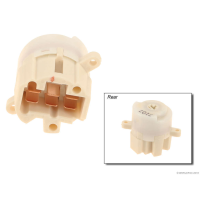
Below are the parts most often responsible for code U1045, ranked by how frequently each one is the actual culprit (per the diagnosis above). Tap any to see what we have for your vehicle.

The information in this article is provided for general reference and educational purposes only. Vehicle specifications, procedures, and part compatibility can vary by production date, trim level, and region. Always consult your vehicle's factory service manual and verify part numbers before purchasing or performing repairs. Safety-critical components such as airbags, seat belts, and braking systems should be installed by a qualified professional.
- 🧭 Diagnostic Flowchart
- 🎬 Helpful Videos
- 🛍️ Shop This Part
- What Does U1045 Mean?
- Can I Drive With U1045?
- Common Causes
- Symptoms
- Common Fixes & Costs
- Used vs. New Parts: Buying Guide
- What Happens If You Wait — Timeline
- Cost of Not Fixing It
- Diagnosis Steps
- When This Code Triggers (Freeze-Frame Conditions)
- Related Codes
- Climate & Environmental Factors
- How to Talk to a Mechanic About This Code
- Where to Take It: Dealer vs Independent vs Chain
- When to Walk Away From the Repair
- What Scan Tool You Need for This Code
- How to Clear the Code After You Fix It
- Will This Fail Emissions / State Inspection?
- Most Commonly Affected Vehicles
- Manufacturer-Specific Notes
- Real Owner Stories
- 2004 Chevrolet Trailblazer with 100k+ miles
- 2019 Volkswagen Tiguan
- 2011-2017 Hyundai Elantra/Sonata
- How to Prevent This Code From Triggering
- Frequently Asked Questions
- Can a bad battery cause a U1045 code?
- My buttons feel sticky. Could that really be the problem?
- The dealer wants to do a software update for a U1045 code. Is this a real fix?
- Can U1045 affect the transmission?
- I replaced the module that had the U1045 code, but the problem is still there. Why?
- What is a LIN bus?
- What is a 'star connector' or splice pack?
- Is it safe to clear the U1045 code?
- Key Takeaways
- 🎟️ Get 5% Off