

OBD-II Code U1046: Lost Communication with ABS / Traction Control
What U1046 means, why it triggers, and how to fix it
- Code U1046 indicates the Powertrain Control Module (PCM) lost CAN bus communication with the Anti-lock Brake System (ABS) module.
- Always test the 12V power supply and ground wires at the ABS module connector before spending $800+ on a replacement module.
- Driving is possible, but standard hydraulic brakes lack ABS and traction control, increasing stopping distances by up to 20% on wet roads.
- Sending your original ABS module to a specialist for a $150-$500 internal repair avoids the $150+ dealership programming fee required for new modules.
- On 2019-2021 GM trucks, U1046 paired with code P25A2 is a known software bug fixed by a 1-hour dealership update (TSB 20-NA-171).
What Does U1046 Mean?
U1046 means the main computer lost its CAN bus connection to the Anti-lock Brake System (ABS) and Traction Control System (TCS) module. When the ABS/TCS module signal drops, this code stores and dashboard warning lights illuminate.
Technical definition: U1046 translates to 'Lost Communication With Anti-Lock Brake System (ABS) Control Module'. It indicates the Powertrain Control Module (PCM) is not receiving expected data signals from the ABS module. This manufacturer-specific code appears primarily on older GM and Ford vehicles; newer cars use the standardized U0121 code for the exact same fault.
🎬 Watch: A quick breakdown of the U0121 and U1046 communication fault.Can I Drive With U1046?
Yes, But With Caution. Yes, but with extreme caution and for short distances only. Standard hydraulic brakes function normally, but the Anti-lock Braking System (ABS) and Traction/Stability Control are disabled. Wheels lock up during hard braking, significantly increasing stopping distances and causing a loss of steering control. Driving disabled also causes accelerated, uneven tire wear. Repair the vehicle immediately.
Common Causes
- Damaged or Corroded Wiring/Connectors (Very Common) — CAN bus wires and connectors degrade from moisture, road salt, or vibrations. A single broken wire or corroded pin in the ABS module harness is the most frequent cause of communication loss.
- Poor Power or Ground Connection to ABS Module (Common) — The ABS module requires a stable power and ground connection. A loose ground strap or blown power supply fuse forces the module offline.
- Faulty ABS Control Module (Common) — Internal components like solder joints, microcontrollers, or the power regulator fail, stopping network signals or shorting the entire communication bus.
- Low Battery Voltage or Charging System Fault (Less Common) — Control modules require stable voltage (above 11V). A weak battery or failing alternator causes modules to drop off the network intermittently.
- Faulty Terminating Resistor (Less Common) — The CAN bus relies on two 120-ohm terminating resistors. If one fails, total network resistance shifts from 60 ohms to 120 ohms, disrupting all communication.
- Faulty Gateway or Other Control Module (Rare) — Another network module (like the instrument cluster or gateway) fails and broadcasts junk data, crashing the network. This triggers multiple 'U' codes across different systems.
- Control Module Software/Firmware Glitch (Rare) — Module software bugs disrupt communication. Manufacturers release software updates (TSBs) to patch these specific logic errors.
- Interference from Aftermarket Electronics (Rare) — Poorly installed accessories (remote starters, alarms, cheap LED bulbs) introduce electrical noise onto the CAN bus, blocking module communication.
Symptoms
- ABS Warning Light On — Illuminates immediately when the system detects a critical fault.
- Traction Control/Stability Control Light On — Illuminates alongside the ABS light since the systems share the same module.
- Wheels Lock Up Under Hard Braking — Brakes lock during emergency stops, causing skids and loss of steering control.
- Dead or Erratic Speedometer — The instrument cluster relies on ABS wheel speed sensors for vehicle speed data. An offline ABS module kills the speedometer.
- Check Engine Light On — The PCM triggers the MIL (often with code P25A2) because it cannot reach a critical safety system.
- Stiff Brake Pedal — Loss of ABS communication disables the hydraulic brake booster on certain vehicles, requiring significantly more pedal effort.
Diagnostic Flowchart
Tap your situation to follow the diagnostic path that matches what you're seeing on this code.
Common Fixes & Costs
- Repair Damaged Wiring or Connectors — Parts: $10-$50, Labor: $150-$600, ~1.5 hr book time (Intermediate)
- Clean or Repair ABS Module Ground Connection — Parts: $5, Labor: $100-$200, ~1 hr book time (DIY)
- Repair/Remanufacture Original ABS Module — Parts: $150-$500, Labor: $150-$300, ~1.5 hr book time (Intermediate)
- Replace Faulty ABS Control Module
— Parts: $800-$2,200, Labor: $150-$300, ~1.5 hr book time
(Professional)
2004-2008 Ford F-150: OEM ['7L3Z-2C219-A', '8L3Z-2C219-A', '7L3Z-2C065-AA'] (Alt: {"brand": "Cardone", "part_number": "12-10211"}, {"brand": "Dorman", "part_number": "599-770"})
2011-2017 Hyundai/Kia (Sonata/Optima): OEM ['58920-3Q500', '58920-3Q600', '58920-3S400'] (Alt: {"brand": "Bosch", "part_number": "0265951747"}, {"brand": "Mando", "part_number": "EX589203Q500"}) - Update Control Module Software — Parts: $0, Labor: $100-$250, ~1 hr book time (Professional)
- Replace Faulty TIPM (Chrysler/Dodge/Jeep)
— Parts: $300-$800, Labor: $100-$250, ~0.8 hr book time
(Intermediate)
2012 Dodge Grand Caravan: OEM ['68105507', '68244884AA'] (Alt: {"brand": "Dorman", "part_number": "599-937"}, {"brand": "Cardone", "part_number": "73-7700"})
DIY vs Professional
- Repair Damaged Wiring or Connectors — Beginner: False
Tools: Multimeter, wire strippers, crimping tool, heat gun, solder, heat shrink tubing. - Clean or Repair ABS Module Ground Connection — Beginner: True
Tools: Socket set, wire brush, sandpaper, dielectric grease. - Repair/Remanufacture Original ABS Module — Beginner: True
Tools: Basic hand tools to remove the module. - Replace Faulty ABS Control Module — Beginner: False
Tools: Socket set, wrenches, advanced OBD-II scan tool capable of programming. - Replace Faulty TIPM (Chrysler/Dodge/Jeep) — Beginner: False
Tools: Socket set, trim removal tools, scan tool.
Used vs. New Parts: Buying Guide
When a used part is worth it: A used ABS module is a budget-friendly option for older, high-mileage vehicles where a new part's cost is prohibitive. Ensure you purchase from a reputable seller with a warranty.
Donor-vehicle mileage cap: roughly under 100000 miles for the part to have meaningful remaining life.
Donor quality checklist:
- Verify the OEM part number on your old module matches the donor part exactly.
- Purchase from a reputable auto recycler that offers a 30-90 day warranty.
- Inspect photos for corrosion, cracks, or damaged connector pins.
- A used module requires VIN programming by a qualified shop to work in your vehicle.
Decision logic:
- If The original module can be repaired/rebuilt by a specialist service → Choose repair. It is cost-effective and avoids VIN programming issues.
- If Vehicle is newer and the budget allows → Buy a new OEM part. It offers the longest lifespan and a factory warranty.
- If Vehicle is older, budget is tight, and you have access to a shop that can program used modules → A used module is a viable option.
Warranty tradeoff: Used parts typically have a 30-90 day warranty. Remanufactured parts come with a 1-year to lifetime warranty. New OEM parts carry a 1-2 year warranty.
Worst-case if a used part fails: $300-$600 if a used part is faulty or cannot be programmed, covering repeat labor costs.
What Happens If You Wait — Timeline
- Immediate: ABS and Traction Control warning lights illuminate. Safety systems are fully disabled. Standard hydraulic braking remains functional. (MPG impact: 0%% · Added cost: $0)
- 0-3 months: Increased risk of skidding in emergency stops. If the speedometer is inoperative, there is a risk of speeding tickets. Hard braking causes flat spots on tires. (MPG impact: 0%% · Added cost: $50 - $500)
- 1-6 months: A failing ABS module develops a parasitic draw, causing the battery to die repeatedly and requiring a replacement. (MPG impact: 0%% · Added cost: $150 - $350)
- 6+ months / Worst-Case: Sustained high risk of an accident. For specific models under recall (e.g., Hyundai/Kia), an internally shorted ABS module poses a significant fire risk. (MPG impact: 0%% · Added cost: $20,000+)
Cost of Not Fixing It
- Immediate: Loss of ABS and Traction/Stability Control. Increased risk of wheel lock-up and skidding in emergency braking or slippery conditions. (Added cost: Potential insurance deductible or total loss of vehicle.)
- 0-3 months: Accelerated and uneven tire wear due to wheel lock-ups during hard braking. Risk of speeding tickets if the speedometer is inoperative. (Added cost: $50 - $500)
- 3+ months: A faulty ABS module causes a parasitic battery drain, leading to a no-start condition. Shorted modules pose a fire risk. (Added cost: $150 - $3000+)
Diagnosis Steps
- Check the Battery and Fuses
Verify battery voltage (12.4-12.6V off, 13.7-14.7V running). Inspect all ABS, EBCM, and TCS fuses in interior and under-hood boxes. Replace blown fuses.
Tools: Multimeter, Fuse Puller (Beginner) - Visual Inspection of Wiring and Grounds
Inspect the ABS module wiring harness (usually on the hydraulic pump). Look for chafed wires, melted insulation, or corroded connector pins. Clean and tighten the main chassis ground wire.
Tools: Flashlight, Socket Set, Wire Brush (Beginner) - Scan for All Codes in All Modules
Use a full-system OBD-II scanner. If U0121 or U1046 appears in multiple modules, they cannot hear the ABS module. A flood of 'U' codes indicates a network-wide crash, not an isolated ABS failure.
Tools: Advanced OBD-II Scanner (Intermediate) - Check for Power and Ground at the ABS Module Connector
Disconnect the ABS module. Use a multimeter to verify battery voltage (>12V) on power pins and continuity to ground (<0.5 ohms) on ground pins. Missing power or ground is frequently misdiagnosed as a dead module.
Tools: Multimeter, Back-probes, Vehicle Wiring Diagram (Intermediate) - Check CAN Bus Network Resistance
Disconnect the battery. Measure resistance between CAN High (Pin 6) and CAN Low (Pin 14) at the OBD-II port. A healthy network reads 60 ohms. 120 ohms means an open circuit; near 0 ohms means a short.
Tools: Multimeter (Advanced) - Isolate the Faulty Module (Module Disconnect Method)
If network resistance is near 0 ohms, unplug modules one by one starting with the ABS. When resistance returns to 60 ohms, the last unplugged module contains the internal short.
Tools: Multimeter, Advanced OBD-II Scanner (Advanced) - PRO TIP: Isolate Using a Splice Pack / Breakout Box
On GM/Ford vehicles, locate the central CAN 'splice pack'. Remove the shorting comb to isolate each module's communication wire. Reconnect modules one by one until the network crashes to instantly identify the culprit.
Tools: Trim Removal Tools, Multimeter (Professional) - PRO TIP: Oscilloscope Network Analysis
Use a lab scope at the OBD-II port. CAN High (Pin 6) toggles 2.5V-3.5V; CAN Low (Pin 14) toggles 2.5V-1.5V. Distorted or flat-lined waveforms confirm shorts, opens, or electrical interference.
Tools: Automotive Oscilloscope, Back-probes (Professional)
When This Code Triggers (Freeze-Frame Conditions)
- Vehicle Speed: 35-60 mph (The code sets during steady-state driving when modules are actively communicating.)
- Engine RPM: 1500-2500 RPM (Typical engine speed during highway cruise or light acceleration.)
- Battery Voltage: 13.5-14.5V (Code is logged while the engine is running and the charging system is active.)
- Engine Coolant Temp: 180-210°F (Occurs when the vehicle is at normal operating temperature.)
Related Codes
- U0121 — This is the standardized SAE code for 'Lost Communication with ABS Control Module'. It means the exact same thing as U1046. The diagnostic procedure is identical for both codes.
- P25A2 — This code means 'Brake System Control Module Requested MIL Illumination'. It is an informational code set by the PCM because the ABS module asked it to. Scan the ABS module to find the true fault code.
- U0100 — This code means 'Lost Communication with ECM/PCM'. If U1046 appears with U0100 and many other 'U' codes, it points to a network-wide failure, not just an isolated ABS problem.
- C0035 - C0050 — These are codes for specific wheel speed sensor (WSS) circuits. A C-code points to a sensor, while a U-code points to the module's network connection. Always diagnose network 'U' codes before chasing sensor 'C' codes.
Climate & Environmental Factors
- Road Salt / High Humidity: Salt and moisture act as a corrosive electrolyte, accelerating the corrosion of wiring, connector pins, and module ground points. Saltwater penetrates wire looms, causing high resistance or short circuits.
- Extreme Cold: Cold temperatures cause brittle plastic insulation on wires to crack, exposing copper. It also exacerbates weak solder joints inside control modules, causing the module to fail only when cold.
- Vibration and Heat Cycles: Engine vibration and heat cycles cause physical stress on wiring harnesses, leading to chafing. Internally, these cycles crack solder joints on the ABS module's circuit board.
How to Talk to a Mechanic About This Code
Say this: "My car has the ABS and Traction Control lights on, and a scanner showed code U1046, 'Lost Communication with ABS module.' I'd like to authorize one hour of diagnostic time to start. Please begin by checking for power, ground, and network integrity at the ABS module connector before assuming the module itself has failed."
This signals that you understand U1046 is a complex electrical issue, not a simple parts-swap. It directs the technician to follow a logical diagnostic path, preventing a costly misdiagnosis of the expensive ABS module.
Avoid saying:
- 'My ABS light is on, can you fix it?' (too vague)
- 'I think I need a new ABS module.' (don't diagnose it for them)
- 'Just do whatever it takes to fix the light.' (invites unnecessary repairs)
Questions to ask before authorizing the repair:
- What specific tests did you perform to isolate the fault?
- Did you find proper voltage and a good ground at the module's connector?
- What was the resistance of the CAN bus network, and did you have to disconnect any modules to get a proper reading?
- If you are recommending a module replacement, is programming required, and is that cost included in your quote?
- Can you show me the damaged wire or corroded connector you found?
Where to Take It: Dealer vs Independent vs Chain
- Dealer:
Best for: Vehicles under warranty., Known software-related issues (like GM TSB 20-NA-171)., Complex module programming is required (common on Hyundai/Kia and European brands)., If an independent shop has failed to diagnose the issue.
Downsides: Highest labor rates and parts costs, often 40-70% more than independent shops., Defaults to expensive module replacement without thoroughly checking wiring. (Typical cost: +50% vs. baseline) - Independent Shop:
Best overall fit. A reputable independent shop with strong electrical diagnostic skills effectively diagnoses and repairs U1046 causes like wiring or grounds at a lower cost than a dealer.
Best for: Out-of-warranty vehicles where cost is a factor., Diagnosing common electrical faults like wiring, ground, or fuse issues., Shops with ASE-certified technicians specializing in diagnostics or electrical systems.
Downsides: Shop quality and diagnostic capability vary widely., Lacks the latest manufacturer-specific tools for software updates or programming. (Typical cost: +0% vs. baseline) - Chain Shop:
AVOID. Complex electrical diagnosis is not a strength of most chain shops. The risk of an incorrect and expensive repair is very high.
Best for: Simple, routine maintenance like oil changes and tire rotations.
Downsides: Technicians lack the specialized training and tools for complex network diagnostics., High potential for misdiagnosis, leading to unnecessary replacement of expensive parts. (Typical cost: -10% vs. baseline)
When to Walk Away From the Repair
If the total estimated repair cost for the U1046 fault exceeds 40-50% of your car's current private-party value, consider alternatives to repair.
- Car worth $3000, fix is $1600: Walk away. The repair cost is over 50% of the car's value. It is not economically sensible to proceed.
- Car worth $8000, fix is $1800: Fix it. The repair cost is less than 25% of the vehicle's value, preserving the car's safety features and resale value.
- Car worth $5000, fix is $2200: Borderline. At 44% of the car's value, get a second opinion. Explore the cost of a mail-in module repair service vs. full replacement before deciding.
What Scan Tool You Need for This Code
Minimum: A scanner that reads codes from ALL vehicle systems/modules, including the Anti-lock Brake System (ABS).
A basic $20 engine-only code reader cannot communicate with the ABS module. It will not see the U1046 code and is useless for this diagnosis.
Budget: Autel AutoLink AL619 / Foxwell NT630 Plus (~$90) — Reads and clears codes from the ABS, SRS, Engine, and Transmission modules. This is the minimum required to confirm the U1046 code is present in the ABS module.
Mid-range: XTOOL D7 / Launch CRP129X (~$350) — Offers full system diagnostics, live data graphing, and bidirectional controls. Bidirectional control allows you to command the ABS pump to cycle, useful for diagnostics and bleeding the brakes.
Professional: Autel MaxiCOM MK808S / Launch X431 Series (~$500-900) — Provides full bidirectional control, advanced special functions like module coding/programming (required for many replacements), and access to OEM-level diagnostics.
Rent vs buy: Most auto parts store loaner tools are basic engine code readers and will NOT work for this code. If you are a serious DIYer, buying a mid-range scanner is a worthwhile investment. For a one-time fix, pay the diagnostic fee at a qualified independent shop.
How to Clear the Code After You Fix It
- Reconnect the battery if it was disconnected for the repair.
- Use a compatible OBD-II scan tool to erase the U1046 fault code from the ABS module and any other related modules.
- Perform a drive cycle to allow the vehicle's onboard diagnostics to verify the repair and run its readiness monitors.
Drive cycle (~30 minutes): A generic drive cycle includes a cold start (sitting for 8+ hours), 2-3 minutes of idling, 10-15 minutes of steady highway driving (around 55 mph), followed by 10-15 minutes of stop-and-go city driving.
Readiness monitors affected: Comprehensive Component Monitor, Misfire Monitor
Before emissions retest: drive at least 50 miles to fully set monitors.
Watch out for:
- Disconnecting the battery clears the code from memory but does not fix the underlying issue.
- Clearing the codes resets all OBD-II readiness monitors to 'Not Ready', causing an automatic failure at an emissions testing station.
- If the root cause is not fixed, the code reappears almost immediately upon the next drive.
Will This Fail Emissions / State Inspection?
Yes — this code typically fails an OBD-II emissions inspection.
- California: An ABS light itself will not fail a smog check. However, if the U1046 code triggers the Check Engine Light, it is an automatic failure. All readiness monitors must be 'Ready' to pass.
- New York: If the Check Engine Light is on due to the U1046 code, the vehicle will fail the emissions inspection.
- Texas: An illuminated ABS light is not a cause for failure during the state safety inspection. The inspection focuses on the function of the standard service brakes.
Most Commonly Affected Vehicles
- Chevrolet / GMC Silverado / Sierra 1500 (2019-2021) — GM service bulletin 20-NA-171 fixes U1046 and P25A2 with a brake control module software update. No parts required.
- Ford F-150 (2004-2008) — Prone to wiring harness shorts. The Fuel Pump Driver Module (FPDM) above the spare tire is exposed to elements and causes network faults when it fails.
- Dodge / Chrysler / Jeep Grand Caravan, Wrangler, Nitro (2007-2014) — The Totally Integrated Power Module (TIPM) is a notorious failure point. A faulty TIPM causes a flood of communication codes and bizarre electrical issues.
- Nissan Titan / Armada (2004-2015) — The ABS actuator and control unit assembly fails internally, leading to U1046 and related 'U' codes.
- Hyundai / Kia Sonata / Elantra / Optima (2011-2017) — A major recall exists for fire risk due to the ABS module short-circuiting. Replacement modules MUST be 'variant coded' with a dealer-level scan tool.
- Volkswagen Jetta / Golf / Passat (2005-2010) — Caused by an internal failure of the ABS pump and module assembly (ATE MK60 unit), requiring replacement or specialized repair.
- Ford Escape Hybrid (2009-2012) — Known issues with the electronic brake vacuum pump and its associated module trigger a cascade of ABS communication errors.
- Chevrolet Trailblazer / Equinox (2005-2009) — The ABS module shorts out the entire Class 2 serial data communication network, causing multiple 'U' codes. Isolating the module is key.
Manufacturer-Specific Notes
- General Motors: On modern GM trucks, U1046 is fixed with a software update (TSB 20-NA-171). On older models (Trailblazer), the ABS module shorts the Class 2 communication bus. Technicians use the splice pack under the dash to isolate the bad module.
- Ford: Ford vehicles are sensitive to wiring issues. On 2004-2008 F-150s, the Fuel Pump Driver Module (FPDM) is a common failure causing network issues. Using the exact correct part number for replacement modules is critical.
- Chrysler/Dodge/Jeep: The Totally Integrated Power Module (TIPM) is the root of many electrical evils. If U1046 is accompanied by random electrical faults (fuel pump, wipers), the TIPM is the most likely cause.
- Hyundai/Kia: A major fire risk recall exists on many 2011-2017 models where the ABS module short circuits. Replacing an ABS module requires mandatory 'variant coding' with a dealer-level scan tool to match the VIN.
Real Owner Stories
2019 Chevrolet Silverado 1500 with 40k miles
Check Engine Light illuminated. Scanner showed codes U1046 and P25A2 with no other symptoms.
Outcome: The dealership confirmed the TSB applied and performed a software update on the brake control module. The repair was covered under warranty.
Lesson: Always check for Technical Service Bulletins (TSBs) for newer vehicles. A simple software update often fixes the issue, saving hundreds on parts.
2018 Ford F-150 with parasitic battery drain
Battery died after sitting for two days. Owner traced a 0.3A parasitic draw to the ABS module fuse.
Outcome: The root cause was a short circuit within the Electronic Parking Brake (EPB) switch on the dashboard. Replacing the EPB switch allowed the ABS module to sleep.
Lesson: A parasitic drain on a specific circuit doesn't guarantee that component is bad. Another module or switch can prevent the component from entering sleep mode.
2002 Fiat Stilo with 0.7 Amp parasitic drain
Battery died in less than two days. Owner isolated the drain to the ABS/ASR system fuse.
Outcome: Replacing the ABS module with a used part dropped the parasitic draw to a normal 0.015 Amps. The original module had an internal failure.
Lesson: An ABS module fails internally and causes a significant parasitic battery drain, even if the ABS light isn't always on.
How to Prevent This Code From Triggering
- Clean Chassis Ground Connections (Every 30,000 miles or during brake service) — Corrosion on main ground points increases electrical resistance, causing the module to malfunction. Cleaning the connection to bare metal ensures a stable ground.
- Apply Dielectric Grease to Connector Seals (Anytime a connector is unplugged for service) — Dielectric grease protects rubber seals from drying out and creates a barrier against moisture and road salt, preventing pin corrosion.
- Perform Annual Battery and Charging System Tests (Once per year, especially before winter) — Control modules require stable voltage. A weak battery or failing alternator provides inconsistent voltage, causing modules to drop off the network.
- Use Weatherproof Splices for Wiring Repairs (When repairing any damaged wiring) — Standard butt connectors allow moisture to enter the wire, causing corrosion. Adhesive-lined heat shrink tubing ensures a long-lasting, reliable repair.
- Regularly Wash Vehicle Undercarriage (Seasonally, especially in winter climates) — Washing away road salt prevents it from accumulating on the ABS module and wiring harnesses, significantly reducing corrosion rates.
Frequently Asked Questions
Can I fix a U1046 code myself?
Simple fixes like replacing blown fuses or cleaning battery terminals are DIY-friendly. Diagnosing the CAN bus network or replacing an ABS module requires advanced tools and VIN programming. Stop DIY and visit a shop if you lack a full-system scanner or multimeter.
How much does it cost to diagnose a U1046 code?
Most repair shops charge a diagnostic fee ranging from $125 to $250. This covers 1-2 hours of labor to test the CAN bus, power, and ground circuits to pinpoint the exact failure.
Why did my new ABS module not fix the U1046 code?
U1046 indicates a communication loss, not necessarily a dead module. The actual fault is often a broken wire, corroded ground, or blown fuse in the circuit leading to the module. Thoroughly test the wiring harness before replacing parts.
What's the difference between replacing and repairing an ABS module?
Replacing swaps the old unit for a new one, costing $800-$2,200+ and requiring dealer programming. Repairing involves sending your original module to a specialist for $150-$500 to fix internal solder joints. Repairing is cheaper and bypasses the need for VIN reprogramming.
Will my brakes still work with a U1046 code?
Standard hydraulic brakes function normally, but anti-lock (ABS) and traction control features are disabled. Wheels lock up during hard stops, so increase following distance and brake gently.
Can a bad wheel speed sensor cause a U1046 code?
No. A bad wheel speed sensor triggers a 'C' code (like C0035), not a 'U' network code. A sensor only causes a U1046 if its wiring severely shorts into the main CAN bus harness, which is exceptionally rare.
Why did my speedometer stop working when the ABS light came on?
The instrument cluster relies on ABS wheel speed sensors to calculate vehicle speed. When the ABS module drops off the network, it stops broadcasting speed data, killing the speedometer.
Key Takeaways
- Code U1046 indicates the Powertrain Control Module (PCM) lost CAN bus communication with the Anti-lock Brake System (ABS) module.
- Always test the 12V power supply and ground wires at the ABS module connector before spending $800+ on a replacement module.
- Driving is possible, but standard hydraulic brakes lack ABS and traction control, increasing stopping distances by up to 20% on wet roads.
- Sending your original ABS module to a specialist for a $150-$500 internal repair avoids the $150+ dealership programming fee required for new modules.
- On 2019-2021 GM trucks, U1046 paired with code P25A2 is a known software bug fixed by a 1-hour dealership update (TSB 20-NA-171).
Helpful Videos
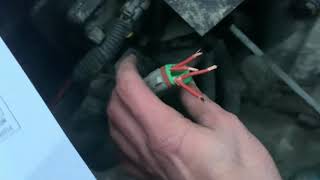
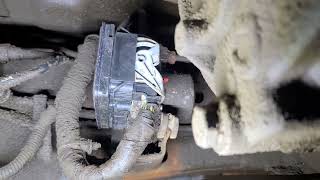
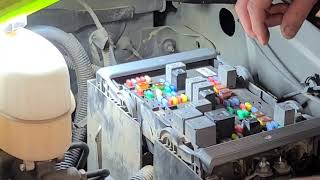
Shop the Parts Behind U1046
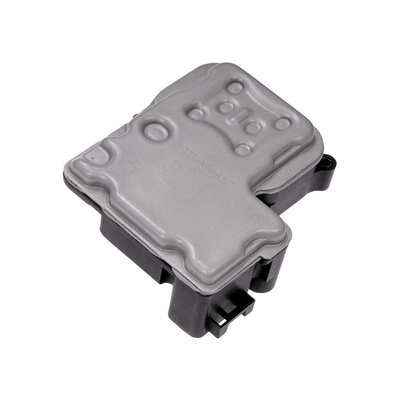
Below are the parts most often responsible for code U1046, ranked by how frequently each one is the actual culprit (per the diagnosis above). Tap any to see what we have for your vehicle.

The information in this article is provided for general reference and educational purposes only. Vehicle specifications, procedures, and part compatibility can vary by production date, trim level, and region. Always consult your vehicle's factory service manual and verify part numbers before purchasing or performing repairs. Safety-critical components such as airbags, seat belts, and braking systems should be installed by a qualified professional.
- 🧭 Diagnostic Flowchart
- 🎬 Helpful Videos
- 🛍️ Shop This Part
- What Does U1046 Mean?
- Can I Drive With U1046?
- Common Causes
- Symptoms
- Common Fixes & Costs
- DIY vs Professional
- Used vs. New Parts: Buying Guide
- What Happens If You Wait — Timeline
- Cost of Not Fixing It
- Diagnosis Steps
- When This Code Triggers (Freeze-Frame Conditions)
- Related Codes
- Climate & Environmental Factors
- How to Talk to a Mechanic About This Code
- Where to Take It: Dealer vs Independent vs Chain
- When to Walk Away From the Repair
- What Scan Tool You Need for This Code
- How to Clear the Code After You Fix It
- Will This Fail Emissions / State Inspection?
- Most Commonly Affected Vehicles
- Manufacturer-Specific Notes
- Real Owner Stories
- 2019 Chevrolet Silverado 1500 with 40k miles
- 2018 Ford F-150 with parasitic battery drain
- 2002 Fiat Stilo with 0.7 Amp parasitic drain
- How to Prevent This Code From Triggering
- Frequently Asked Questions
- Can I fix a U1046 code myself?
- How much does it cost to diagnose a U1046 code?
- Why did my new ABS module not fix the U1046 code?
- What's the difference between replacing and repairing an ABS module?
- Will my brakes still work with a U1046 code?
- Can a bad wheel speed sensor cause a U1046 code?
- Why did my speedometer stop working when the ABS light came on?
- Key Takeaways
- 🎟️ Get 5% Off