

OBD-II Code U1062: Loss of Class 2 Communication
What U1062 means, why it triggers, and how to fix it
- U1062 is a GM-specific code indicating a total breakdown on the single-wire 'Class 2' communication network.
- Inspect the SP205 splice pack under the driver's door sill first; water intrusion here causes over 50% of U1062 faults.
- Disconnect any aftermarket radios, alarms, or remote starters immediately to rule out a $0 fix before replacing expensive modules.
- Never replace a $700 Body Control Module (BCM) without first isolating the network using the splice pack comb removal method.
- Test the battery and alternator; voltage dropping below 9.6V during cranking forces modules offline and triggers false U1062 codes.
What Does U1062 Mean?
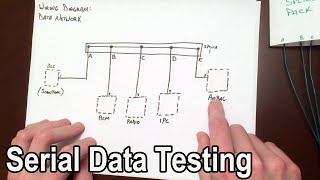
U1062 means your car's computers (modules) have stopped talking to each other. This code indicates a breakdown on the low-speed 'Class 2' serial data network, a single-wire system used primarily by General Motors to share information between the instrument cluster, radio, and BCM.
Technical definition: Loss of Serial Communications for Class 2 Devices. 🎬 Watch: Expert tips for diagnosing GM Class 2 network issues. This code sets when a control module fails to receive expected 'state of health' messages from another module on the Class 2 serial data bus within 2 seconds. The bus operates on a 0-7 volt square wave signal (J1850 VPW protocol) at 10.4 kbps.
Can I Drive With U1062?
Yes, But With Caution. You can drive the vehicle, but it is risky and unpredictable. Expect critical electrical systems to fail without warning, including gauges, exterior lighting, and climate controls. If the Body Control Module (BCM) loses communication, the anti-theft system activates, stalling the engine or preventing it from starting and leaving you stranded.
Common Causes
- Water Intrusion / Corrosion at Splice Packs (Very Common) — Water from clogged sunroof drains or windshield leaks seeps into central splice packs (e.g., SP205) located under the driver's door sill or kick panel. 🎬 See how water intrusion causes these communication problems. This causes comb connector corrosion, shorting the entire network.
- Damaged or Corroded Wiring (Very Common) — The single purple GM Class 2 data wire breaks, chafes, or shorts to ground/power. This occurs frequently in high-traffic areas like door jamb harnesses or firewall pass-throughs.
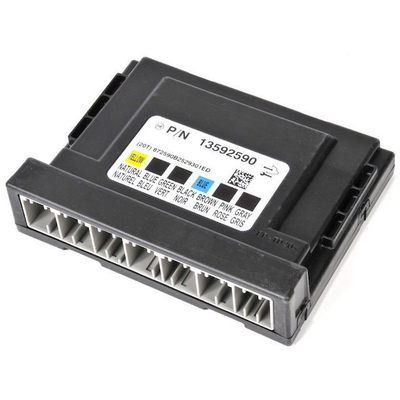
- Faulty Control Module (Common) — A module on the network (BCM, Instrument Cluster, Radio, or ABS) fails internally. It either stops communicating entirely or constantly sends junk data ('noise'), crashing the entire network.
- Improperly Installed Aftermarket Accessories (Common) — Incorrectly installed aftermarket alarms, remote starters, or stereos tap into the vehicle's data wire and cause network interference. Even accessories not directly tied to the data line cause voltage fluctuations that disrupt communication.
- Poor Ground Connection (Common) — Modules require a solid ground connection to communicate reliably. A loose or corroded ground strap for a key module (like the BCM or the ground point under the driver's seat) interrupts communication.
- Low or Unstable Battery Voltage (Less Common) — A failing battery or alternator drops system voltage below 9.6V during cranking. This forces modules offline intermittently, triggering a flurry of 'U' codes.
- Faulty Ignition Switch (Less Common) — A failing ignition switch causes intermittent power loss to modules as the key turns between 'Accessory' and 'Run'. This drops modules off the network.
- Blown Fuse or Loss of Power to a Module (Less Common) — A blown fuse or bad relay cuts power to a module, taking it offline. Other modules expecting to hear from it report a loss of communication.
Symptoms
- Intermittent or Dead Instrument Cluster — The speedometer, tachometer, and gauges drop to zero, freeze, or behave erratically while driving. The odometer display goes blank. 🎬 Watch this walkthrough for repairing a faulty GM instrument cluster.
- Radio and Climate Control Malfunctions — The radio turns off, displays an error, or freezes. The climate control system stops working or defaults to a single setting.
- Multiple Warning Lights — The dashboard illuminates with ABS, Airbag, Brake, or 'Service 4WD' lights because those modules cannot communicate their status.
- Body Electrical Failures — Power windows, door locks, interior chimes, and remote keyless entry stop working.
- No-Start or Crank-No-Start Condition — The Body Control Module (BCM) or immobilizer loses communication, preventing the engine from cranking and trapping the key in the ignition.
Diagnostic Flowchart
Tap your situation to follow the diagnostic path that matches what you're seeing on this code.
Common Fixes & Costs
- Cleaning or Replacing a Splice Pack — Parts: $10-$30, Labor: $150-$300, ~1.5 hr book time (Intermediate)
- Removing Faulty Aftermarket Electronics — Parts: $0, Labor: $100-$300, ~1.0 hr book time (DIY)
- Repairing Damaged Wiring or Ground — Parts: $10-$50, Labor: $250-$700, ~2.5 hr book time (Professional)
- Repairing or Replacing the Instrument Panel Cluster (IPC) — Parts: $150-$500, Labor: $100-$300, ~1.2 hr book time (Intermediate)
- Replacing the Body Control Module (BCM) — Parts: $200-$600, Labor: $150-$300, ~1.5 hr book time (Professional)
DIY vs Professional
- Cleaning or Replacing a Splice Pack 🟢 Beginner
Tools: Trim removal tools, socket set, wire cutters, butt connectors, crimpers, heat gun. - Removing Faulty Aftermarket Electronics 🟢 Beginner
Tools: Screwdrivers, trim removal tools, electrical tape. - Repairing Damaged Wiring or Ground 🟢 Beginner
Tools: Multimeter, wire strippers, crimpers, heat gun, wiring diagrams. - Repairing or Replacing the Instrument Panel Cluster (IPC) 🟢 Beginner
Tools: Socket set, trim removal tools. - Replacing the Body Control Module (BCM) 🟢 Beginner
Tools: Socket set, trim removal tools, GM-specific scan tool for programming.
Used vs. New Parts: Buying Guide
When a used part is worth it: For common failures like the Instrument Panel Cluster (IPC), a used or professionally repaired unit is a great value. For a Body Control Module (BCM), a used part only makes sense if you use a specialized cloning service to transfer all data from your original module.
Donor-vehicle mileage cap: roughly under 100000 miles for the part to have meaningful remaining life.
Donor quality checklist:
- Verify the donor vehicle was not involved in a flood or fire.
- Ensure the part number matches EXACTLY. A single digit difference means incompatibility.
- Buy from reputable sellers offering at least a 30-day warranty.
Decision logic:
- If The failed part is the Instrument Cluster (IPC) → Sending your original cluster for repair is the best option. A used, pre-programmed cluster is a good second choice.
- If The failed part is the Body Control Module (BCM) → Buy a new or remanufactured BCM and have it professionally programmed. Dealers will not reprogram a used module from another vehicle.
- If The part is a secondary module like a radio or door module → A used part from a reputable salvage yard is a cost-effective and low-risk repair.
Warranty tradeoff: Used parts have a 30-90 day warranty. Remanufactured parts offer a 1-year to lifetime warranty. New OEM parts have a 1-year warranty if installed by a dealer.
Worst-case if a used part fails: $300-$600 if a used module fails, including repeat diagnostic and labor charges.
What Happens If You Wait — Timeline
- 0-1 month: Intermittent, minor glitches appear. The radio cuts out for a second, a single gauge flickers, or the 'Service 4WD' light appears and vanishes. (MPG impact: 0%% · Added cost: $0)
- 1-4 months: Symptoms become frequent. The instrument cluster randomly dies and restarts while driving. A faulty module begins causing a slight parasitic drain on the battery. (MPG impact: 0%% · Added cost: $0-$150 in diagnostic fees, though the problem is hard to find if not currently active.)
- 4-8 months: A hard fault develops. The vehicle fails to start intermittently. The parasitic draw from a non-sleeping module drains the battery overnight, requiring jump-starts and causing permanent battery damage. (MPG impact: 0%% · Added cost: $150-$300 for a prematurely destroyed battery, plus $200 towing costs.)
- 8+ months: The vehicle is unreliable and will not start. The entire communication network is down, preventing scan tool connection. Constant voltage fluctuations stress and destroy previously healthy modules. (MPG impact: 0%% · Added cost: $700-$2000+ for cascading failures of expensive modules (BCM, IPC, ABS) and significant diagnostic labor.)
Cost of Not Fixing It
- Immediate: Unpredictable electrical failures, including loss of speedometer, exterior lighting, or anti-theft system activation, leading to a no-start condition. (Added cost: $200+ for a tow if the vehicle becomes stranded.)
- Weeks to Months: A faulty module causes a parasitic drain, repeatedly killing the battery. Constant deep cycling permanently damages the battery. (Added cost: $150-$300 for a new battery.)
- Long-Term: Continued intermittent power and communication failures put stress on other electronic modules, causing them to fail prematurely. (Added cost: $500-$2000+ for additional module replacements (e.g., ABS, TCM).)
Diagnosis Steps
- Check Battery and Fuses
Ensure the battery is fully charged (12.4V+ with engine off) and the charging system is working (13.7-14.7V with engine running). Check all fuses related to the BCM, IPC, radio, HVAC, and ABS systems.
Tools: Multimeter, Fuse Puller (Beginner) - Disconnect Aftermarket Devices
If the vehicle has an aftermarket radio, remote start, or alarm system, disconnect it completely. Clear the codes and see if communication is restored.
Tools: Basic Hand Tools (Beginner) - Scan for All Module DTCs
Use a high-quality scan tool to communicate with all modules. Make a list of which modules report 'No Communication'. If many modules have 'U' codes, it indicates a network-wide problem rather than a single faulty module.
Tools: Advanced OBD-II Scan Tool (Beginner) - Visual Inspection of Wiring and Splice Packs
Check wiring harnesses near the BCM, the back of the radio, and door jambs. Inspect GM splice packs (like SP205) under door sill plates for green/white corrosion, pinched wires, or loose connectors.
Tools: Flashlight, Trim Removal Tools (Intermediate) - Isolate Modules at the Splice Pack
Locate the main Class 2 splice pack. Remove the plastic 'comb' connecting the data wires. With a scan tool connected, plug the data wire from the DLC and one other module back into the splice pack. Add modules one by one until communication fails. The last module added is the culprit.
Tools: Advanced OBD-II Scan Tool, Trim Removal Tools, Pick Tool (Advanced) - Check Data Line Voltage with a Multimeter
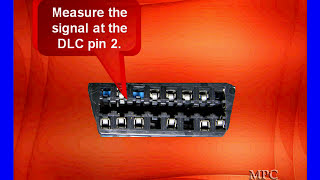
Probe the Class 2 data wire at the OBD-II port (Pin 2). A healthy line fluctuates between 0.5V and 4.5V. A constant 0V indicates a short to ground. A constant high voltage (5V or 12V) indicates a short to power, usually from an internally failed module.
Tools: Multimeter (Intermediate) - PRO TIP: Analyze the Data Signal with an Oscilloscope
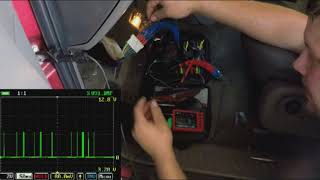
Connect an oscilloscope to Pin 2 of the DLC. A healthy GM Class 2 network shows a clean square wave toggling between 0V and 7V. A corrupted signal with noise or incorrect voltage levels points directly to a failing module or wiring issue.
Tools: Oscilloscope (Professional) - PRO TIP: Perform a Parasitic Draw Test
Connect a multimeter in series with the negative battery terminal. A reading above 50mA after all modules sleep (20-30 minutes) indicates a problem. Pull fuses for individual modules one by one until the draw drops to identify the faulty circuit.
Tools: Multimeter with 10A capability (Professional)
When This Code Triggers (Freeze-Frame Conditions)
- Module Voltage: 10.5-15V (The code sets during key-on or while driving when voltage is present.)
- Key Position: Accessory or Run (The fault becomes apparent when modules power up and attempt to communicate.)
- Data Bus Status: Inactive/Shorted (Freeze frame shows the Class 2 bus was inactive or at an invalid voltage (stuck high or low) when the code set.)
- Time Since Key-On: > 2 seconds (The code sets when a module fails to receive a required 'state of health' message within a 2-second timeout period.)
Related Codes
- U1000 — A generic code indicating a loss of communication, while U1062 is a more specific GM code. They appear together and point to the same underlying network failure.
- U0140 — Lost Communication With Body Control Module. If your scanner shows many modules reporting U1062 and a U0140, the BCM (or its power/ground) is the primary suspect.
- U0155 — Lost Communication With Instrument Panel Cluster (IPC). If communication restores to other modules after unplugging the instrument cluster, the cluster itself is the faulty component.
- U0101 — Lost Communication With TCM (Transmission Control Module). If the transmission module fails and disrupts the network, you will see this code alongside U1062.
Climate & Environmental Factors
- High Humidity / Water Leaks: Moisture is the primary catalyst for corrosion. In humid climates or on vehicles with known water leaks, the corrosion of splice packs, ground points, and connector pins accelerates rapidly, directly causing U1062 faults.
- Cold Climates / Road Salt: Saltwater is a powerful electrolyte that dramatically speeds up the corrosion of copper wiring and terminals. Salty mist coats the undercarriage and seeps into vulnerable connectors, leading to network failure.
How to Talk to a Mechanic About This Code
Say this: "I have a U1062 'Loss of Communication' code and the gauges die intermittently. I need a diagnostic appointment. Can you tell me about your experience with GM Class 2 network issues and what tools you use?"
This signals you have done research, describes symptoms instead of demanding a specific part, and qualifies the shop's ability to handle complex electrical diagnostics.
Avoid saying:
- 'My BCM is bad, how much to replace it?'
- 'My check engine light is on.'
- 'Just fix whatever's wrong.'
Questions to ask before authorizing the repair:
- What was the specific point of failure you found?
- How did you confirm this was the only failure point? Did you isolate the modules?
- If a module needs replacement, does it require programming and is that included in the quote?
- What is the warranty on the parts and the labor for this specific repair?
Where to Take It: Dealer vs Independent vs Chain
- Dealer:
A strong, safe choice if a module needs replacement and programming. They have the exact tools, but it is the most expensive option.
Best for: Complex, vehicle-specific electrical issues where factory tools are critical., When a new BCM requires programming to the VIN.
Downsides: Highest labor rates., May replace expensive modules rather than trace a difficult wiring fault. (Typical cost: +50% vs. baseline) - Independent Shop:
The best fit if you find an auto electric specialist. Avoid general repair shops that do not emphasize electrical work.
Best for: Out-of-warranty vehicles where cost is a major factor., Shops that specialize in electrical diagnostics.
Downsides: Quality and equipment vary wildly. You must vet the shop for advanced scan tools and network experience. (Typical cost: +0% vs. baseline) - Chain Shop:
AVOID. Their business model is not set up for the time-consuming diagnostic process required for U1062.
Best for: Simple, unrelated jobs like oil changes or tires.
Downsides: Technicians are not equipped or trained for complex network diagnostics., High pressure to sell parts leads to misdiagnosis. (Typical cost: -10% vs. baseline)
When to Walk Away From the Repair
If the total estimated repair cost exceeds 40-50% of the car's current private-party value, seriously consider not fixing it. For older, high-mileage cars, lower this threshold to 30-40%.
- Car worth $4000, fix is $2000: Walk away. The repair is 50% of the car's value. The money is better put toward a replacement vehicle.
- Car worth $12000, fix is $1800: Fix it. The repair cost is only 15% of the vehicle's value.
- Car worth $2500, fix is $1500: Walk away. The repair is 60% of the car's value.
What Scan Tool You Need for This Code
Minimum: A scanner that performs an 'All Module Scan' to read manufacturer-specific codes from the BCM, IPC, and ABS. A basic engine-only code reader is useless for U1062.
A $20 code reader only talks to the Engine Control Module (ECM). U1062 is a network problem involving many other modules. Without seeing which modules are offline, diagnosis is impossible.
Budget: THINKCAR THINKSCAN 689BT (~$90) — Reads codes from major systems like ABS, SRS, Engine, and Transmission. It is a significant step up from basic readers and points to the problematic system.
Mid-range: Innova 5610 or Foxwell NT510 Elite (~$350) — Offers bidirectional control, allowing you to command individual modules to test their function. You can try communicating with the radio or instrument cluster to isolate the faulty part.
Professional: Autel MaxiCOM MK808 / XTOOL D7 (~$450-600) — Provides full bidirectional control, all-module scanning, and live data streams from every module. Performs needed relearn procedures after a module is replaced.
Rent vs buy: You cannot rent a scanner with the bidirectional capabilities needed for this job. For a one-time complex electrical diagnosis, pay a professional diagnostic fee ($150-$250) at a qualified shop rather than buying a pro-level tool.
How to Clear the Code After You Fix It
- Reconnect the battery if it was disconnected.
- Use an OBD-II scan tool to clear all Diagnostic Trouble Codes (DTCs) from all modules.
- Perform the GM-specific drive cycle to allow readiness monitors to run.
Drive cycle (~20 minutes): Start from a cold start. Idle for 2-3 minutes with electrical loads on. Accelerate to 55 mph and hold for 3 minutes. Coast down to 20 mph without braking. Accelerate to 55-60 mph and hold for 5 minutes. Coast down again.
Readiness monitors affected: Clearing U-codes resets all emissions readiness monitors to 'incomplete'., The underlying issue (e.g., a faulty BCM) prevents other modules from completing their own readiness tests.
Before emissions retest: drive at least 50 miles to fully set monitors.
Watch out for:
- Disconnecting the battery clears the code but resets all readiness monitors, guaranteeing an immediate emissions test failure.
- The code returns immediately if the root cause (shorted wire, faulty module) is not repaired.
Will This Fail Emissions / State Inspection?
Yes — this code typically fails an OBD-II emissions inspection.
- California: An active U-code causes a smog check failure. After repair, clear all DTCs and complete a full drive cycle to set the monitors before re-testing.
- New York: A U1062 code causes an automatic failure of the NYS OBD-II inspection. Repair the fault and clear codes before re-testing.
- Texas: An active U-code prevents testing equipment from communicating with the vehicle, resulting in a failure. A drive cycle is needed after repairs to set readiness monitors.
Most Commonly Affected Vehicles
- Chevrolet Trailblazer / GMC Envoy (2002-2009) — Extremely common on this platform. Often caused by a faulty Driver Door Module (DDM), a corroded splice pack under the driver's sill plate, or a failing ignition switch.
- Chevrolet Silverado / GMC Sierra (2003-2007) — Instrument cluster and BCM failures are a well-documented cause. Corroded ground wires under the driver's side battery tray are also a known culprit.
- GMC Yukon / Chevrolet Tahoe (2007-2014) — Failures of the radio, ABS module, or BCM bring down the network. Water leaks from sunroof drains dripping onto the BCM are a known issue.
- Hummer H2 (2003-2007) — Shares the same GM Class 2 architecture and is susceptible to the same module and wiring failures, particularly with the instrument cluster and BCM.
- Cadillac CTS (2003-2007) — Communication codes like U1062 are frequently linked to an internal failure of the Engine Control Module (ECM), causing a no-start condition and trapping the key in the ignition.
- Saab 9-7X (2005-2009) — Based on the GMT360 platform, it suffers from identical Class 2 communication issues as the Trailblazer, often stemming from the ignition switch or door modules.
- Cadillac DeVille (2000-2005) — Experiences total Class 2 data circuit malfunctions resulting in a no-start condition. Diagnosis involves checking for shorts starting from the Data Link Connector (DLC).
- Chevrolet Avalanche (2003-2006) — Prone to BCM failures triggered by a dead battery, requiring reprogramming or replacement. Splice pack corrosion is also common.
Manufacturer-Specific Notes
- General Motors (GM): This code is almost exclusively found on GM vehicles from the 2000s and early 2010s. The use of splice packs as a central junction is a key diagnostic feature; finding and inspecting them is mandatory.
- General Motors (GM): GM issued Special Coverage Adjustment #07187C for faulty instrument clusters in many 2003-2005 trucks and SUVs. Sticking or inoperative gauges are a common symptom of a failing cluster that causes U1062.
- Saab & Isuzu: Models like the Saab 9-7X and Isuzu Ascender are re-badged GM products (GMT360 platform). Technicians must follow GM diagnostic procedures for U1062 on these vehicles.
- Cadillac: On the first-generation CTS, a U-series communication code pointing to the BCM is very often caused by a failed Engine Control Module (ECM), not the BCM itself.
Real Owner Stories
2004 Chevy Trailblazer, mileage unknown
Vehicle had a no-crank, no-start condition with the security light on. An advanced scan tool showed 'BCM Serial data is shorted to ground'.
Outcome: The final fix required correctly identifying and connecting the Class 2 serial data wire within the repaired harness. The diagnostic process involved isolating modules at the splice packs (SP205 and SP306) to find the communication breakdown.
Lesson: Splicing a cut harness is extremely difficult without a wiring diagram. A single crossed data wire grounds out the entire network, mimicking a failed BCM. Isolating modules at the splice pack is a mandatory diagnostic step.
2015 Chevy Silverado LT, mileage unknown
After the truck sat for two weeks and the battery died, a jump start resulted in the radio and driver display freezing and changing channels independently.
Outcome: Replacing the battery fixed the issue. Low or unstable voltage from a bad battery is a known cause of erratic behavior in modern GM electronics.
Lesson: Before diving into complex network diagnostics, start with the basics. A weak battery causes bizarre electrical symptoms that look exactly like module failures.
2003 Hummer H2 with 85,000 miles
Unrelated electrical issues appeared: alarm quit, passenger door controls failed, and the air suspension compressor stopped working. The owner suspected a failing BCM.
Outcome: A technician advised the passenger door module itself caused the alarm/door issues, not the BCM. A separate scan tool diagnosis was needed for the air suspension.
Lesson: Do not assume one module (like the BCM) controls everything. Specific functions are handled by local modules (like the Passenger Door Module). A full system scan reveals which modules are actually offline.
2007 Chevy Silverado with radio issues
The radio intermittently lost sound, but all other functions appeared normal. After a battery drain and recharge, the sound briefly returned before failing again.
Outcome: Forum members suggested an internal failure of the factory radio or amplifier. Swapping in a known-good used radio resolved the issue.
Lesson: A single faulty module, even the radio, causes intermittent network problems. Unplugging the suspect module is a key diagnostic step. If communication returns to all other modules, the unplugged module is the culprit.
How to Prevent This Code From Triggering
- Clean Sunroof Drains Annually (Once per year, or twice if parked under trees.) — Clogged sunroof drains cause water leaks that drip directly onto BCMs and splice packs in kick panels and under door sills, causing catastrophic corrosion. Use compressed air (under 30 PSI) to clear them.
- Apply Dielectric Grease to Key Connectors (Whenever a connector is disconnected for service.) — Applying a thin layer of non-conductive dielectric grease to connector seals creates a waterproof barrier, preventing moisture and oxygen from corroding the terminals.
- Regularly Clean Battery Terminals and Check Battery Health (Every 6 months or at every oil change.) — Corroded battery terminals cause unstable voltage and electrical noise, forcing sensitive electronic modules off the communication network.
- Wash Vehicle Undercarriage in Winter (Regularly during winter in salt-belt regions.) — Road salt is extremely corrosive to wiring, ground straps, and connectors. Washing the undercarriage removes salt buildup, preventing it from migrating into electrical components.
- Inspect Wiring in Door Jambs (Every 1-2 years.) — Wiring passing through the flexible rubber boot between the door and the car body flexes constantly and breaks over time. A broken Class 2 data wire in the driver's door harness is a frequent cause of U1062.
Frequently Asked Questions
What are common mistakes when diagnosing U1062?
The biggest mistake is replacing an expensive module like the BCM without proper diagnosis. Always rule out basics like battery voltage, blown fuses, and aftermarket accessories first. Use an oscilloscope, not just a multimeter, to accurately read the data line's health.
My scanner can't connect to the car at all. Is this related to U1062?
Yes. The OBD-II port's communication pin (Pin 2) is on the same Class 2 network. If the data wire is shorted to ground or power, it blocks your scan tool from connecting.
What is a GM Splice Pack and where is it?
A splice pack is a plastic connector housing that joins multiple wires of the same circuit together. They are typically located in the driver's side kick panel, under the door sill plate, or behind the glove box.
Can a bad radio cause code U1062?
Absolutely. The factory radio is a module on the network. If it fails internally, it shorts out the data line and causes a U1062 code, taking other systems down with it.
Is it expensive to fix code U1062?
It varies widely. A corroded splice pack repair costs $150-$300. However, if a major computer like the Body Control Module needs replacement, the total cost easily exceeds $700.
Can I fix U1062 myself?
A DIYer can handle basics like checking fuses, testing the battery, and disconnecting aftermarket parts. However, accurately diagnosing a faulty module or tracing a network short requires professional tools and schematics.
Will disconnecting the battery reset code U1062?
Disconnecting the battery temporarily clears the code. However, if there is a hard fault like a broken wire or failed module, the code returns immediately once the vehicle restarts.
Key Takeaways
- U1062 is a GM-specific code indicating a total breakdown on the single-wire 'Class 2' communication network.
- Inspect the SP205 splice pack under the driver's door sill first; water intrusion here causes over 50% of U1062 faults.
- Disconnect any aftermarket radios, alarms, or remote starters immediately to rule out a $0 fix before replacing expensive modules.
- Never replace a $700 Body Control Module (BCM) without first isolating the network using the splice pack comb removal method.
- Test the battery and alternator; voltage dropping below 9.6V during cranking forces modules offline and triggers false U1062 codes.
Helpful Videos
Shop the Parts Behind U1062
Below are the parts most often responsible for code U1062, ranked by how frequently each one is the actual culprit (per the diagnosis above). Tap any to see what we have for your vehicle.


The information in this article is provided for general reference and educational purposes only. Vehicle specifications, procedures, and part compatibility can vary by production date, trim level, and region. Always consult your vehicle's factory service manual and verify part numbers before purchasing or performing repairs. Safety-critical components such as airbags, seat belts, and braking systems should be installed by a qualified professional.
- 🧭 Diagnostic Flowchart
- 🎬 Helpful Videos
- 🛍️ Shop This Part
- What Does U1062 Mean?
- Can I Drive With U1062?
- Common Causes
- Symptoms
- Common Fixes & Costs
- DIY vs Professional
- Used vs. New Parts: Buying Guide
- What Happens If You Wait — Timeline
- Cost of Not Fixing It
- Diagnosis Steps
- When This Code Triggers (Freeze-Frame Conditions)
- Related Codes
- Climate & Environmental Factors
- How to Talk to a Mechanic About This Code
- Where to Take It: Dealer vs Independent vs Chain
- When to Walk Away From the Repair
- What Scan Tool You Need for This Code
- How to Clear the Code After You Fix It
- Will This Fail Emissions / State Inspection?
- Most Commonly Affected Vehicles
- Manufacturer-Specific Notes
- Real Owner Stories
- 2004 Chevy Trailblazer, mileage unknown
- 2015 Chevy Silverado LT, mileage unknown
- 2003 Hummer H2 with 85,000 miles
- 2007 Chevy Silverado with radio issues
- How to Prevent This Code From Triggering
- Frequently Asked Questions
- What are common mistakes when diagnosing U1062?
- My scanner can't connect to the car at all. Is this related to U1062?
- What is a GM Splice Pack and where is it?
- Can a bad radio cause code U1062?
- Is it expensive to fix code U1062?
- Can I fix U1062 myself?
- Will disconnecting the battery reset code U1062?
- Key Takeaways
- 🎟️ Get 5% Off