

OBD-II Code U1070: Invalid or Missing Engine Data on SCP (J1850) Network
The Ultimate Guide to Understanding, Diagnosing, and Fixing U1070
- U1070 indicates a J1850 network failure where modules cannot receive engine data from the PCM, primarily affecting pre-2008 vehicles.
- Always test the battery first; voltage dropping below 9.6V during cranking guarantees module communication failures.
- Never replace the module storing the U1070 code; it is the victim missing the data, not the root cause.
- A 0-ohm reading across OBD-II pins 2 and 10 confirms a dead short, requiring you to unplug modules one by one until resistance returns to 60 ohms.
What Does U1070 Mean?
Code U1070 means a control module (like the ABS or transmission controller) is not receiving critical data messages from the main engine computer (PCM). This communication failure occurs on the SCP (J1850) data bus, an older network standard used primarily in vehicles built before 2008.
Technical definition: SAE/OBD-II defines U1070 as "SCP (J1850) Invalid or Missing Data for Engine Sensors". A module on the Standard Corporate Protocol (J1850) data bus reports it is not receiving expected broadcast messages containing engine sensor data from the Powertrain Control Module (PCM).
Can I Drive With U1070?
Yes, But With Caution. You can drive the vehicle briefly, but extended use is unsafe. The vehicle often enters 'limp mode' with speed restricted to 30-40 mph and reduced engine power. Continued driving with an unstable network causes unpredictable stalling, erratic gauge behavior, and stresses other electronic modules. Limit driving strictly to reaching a repair facility.
Common Causes
- Low Battery Voltage (Very Common) — A weak battery causes significant voltage drops during startup. This prevents modules from initializing correctly, leading to an immediate cascade of communication codes, including U1070.
- Poor Ground Connections (Very Common) — Control modules require a clean, solid ground connection to the chassis to communicate. A loose, corroded, or broken ground strap for the engine or chassis interrupts the data signal and triggers this code.
- Wiring Harness or Connector Damage (Very Common) — The twisted-pair wires forming the J1850 network chafe, break, short together, or corrode. Additionally, pins inside electrical connectors for the PCM or BCM bend or corrode, preventing solid connections.
- Aftermarket Accessory Interference (Common) — Poorly installed aftermarket electronics (remote starters, alarms, or stereo systems) introduce electrical noise or short the communication bus, causing modules to stop talking to each other.
- Failing Intelligent Power Distribution Module (IPDM) on Nissans (Common) — On 2004-2012 Nissan models, a failing IPDM is a known cause of network collapse. The IPDM contains internal relays that fail, disrupting power and communication to other modules.
- Failing PCM or Receiving Module (Less Common) — The PCM (source of the data) or the receiving module (like the ABS controller) fails internally, losing the ability to broadcast or 'hear' messages on the network.
- Outdated Module Software (Chrysler/Jeep) (Rare) — On specific Chrysler and Jeep vehicles, outdated software in various control modules causes the Brake System Control Module (BSCM) to erroneously set a U1070 code.
Symptoms
- Check Engine Light On — The primary indicator that the onboard diagnostic system has detected a network fault.
- Loss of Power / Limp Mode — The vehicle enters a self-preservation mode with drastically reduced engine power and speed to prevent damage.
- Engine Stalling or No-Start — Modules controlling fuel and security functions act erratically without engine data, causing stalling or preventing the engine from starting.
- Transmission Shifting Issues — The Transmission Control Module (TCM) relies on engine data to shift correctly. Without it, shifts become harsh, delayed, or locked in a single gear.
- Erratic Gauge Behavior — The instrument cluster shows incorrect or fluctuating readings for the speedometer, tachometer, or temperature gauge.
- Other Warning Lights Illuminated — Anti-lock brake (ABS) and traction control lights illuminate because these safety systems lose critical engine data.
Diagnostic Flowchart
Tap your situation to follow the diagnostic path that matches what you're seeing on this code.
Common Fixes & Costs
- Cleaning or Replacing Ground Straps — Parts: $10-$50, Labor: $50-$150, ~0.8 hr book time (DIY)
- Repairing Damaged Wiring or Connectors — Parts: $10-$50, Labor: $150-$500, ~2.5 hr book time (Intermediate)
- Replacing a Failed Nissan IPDM
— Parts: $250-$400, Labor: $100-$200, ~0.5 hr book time
(DIY)
2004-2009 Nissan Titan / Armada: OEM 284B7-ZE00C, 284B6-ZE03C (Alt: Various remanufactured units available online.) - Updating Module Software (Dealership) — Parts: $0, Labor: $120-$240, ~1.2 hr book time (Professional)
- Replacing a Failed BCM or PCM
— Parts: $200-$600, Labor: $150-$350, ~1.5 hr book time
(Professional)
2003-2007 Chevrolet Silverado / GMC Sierra (BCM): OEM 15136224 (Alt: Dorman 502-007, Cardone)
Used vs. New Parts: Buying Guide
When a used part is worth it: Used parts are cost-effective for plug-and-play modules like a Nissan IPDM. For complex modules like a PCM or BCM, used parts only make sense if you have a confirmed plan for professional reprogramming.
Donor-vehicle mileage cap: roughly under 100000 miles for the part to have meaningful remaining life.
Donor quality checklist:
- Verify the part number matches exactly.
- Purchase from sellers offering tested modules with a warranty.
- Avoid parts from flood or fire-damaged vehicles.
Decision logic:
- If The part is a simple, non-programmed module like a Nissan IPDM. → Used is a good, budget-friendly choice.
- If The part is a PCM or BCM requiring VIN programming. → Buy a new or professionally remanufactured unit that includes programming services.
- If The vehicle is older (15+ years) and the budget is tight. → A used module is acceptable, but factor in reprogramming costs and failure risks.
Warranty tradeoff: Used parts have a 30-90 day warranty. Remanufactured modules carry a 1-year to lifetime warranty. OEM parts have a 1-year warranty if dealer-installed.
Worst-case if a used part fails: $300-800 if a used PCM/BCM fails, requiring repeat labor and programming fees.
What Happens If You Wait — Timeline
- 0-1 month: Code appears. Occasional flickering dash light or a single harsh shift. The issue is intermittent. (MPG impact: 0-2%% · Added cost: $0)
- 1-4 months: Symptoms increase. Intermittent stalling, warning lights flash, and gauges drop to zero. The wiring fault or bad ground is worsening. (MPG impact: 2-5%% · Added cost: $50-$150 in wasted fuel and towing costs.)
- 4-8 months: The fault becomes a hard failure. The vehicle enters 'limp mode' frequently or refuses to start. Constant voltage fluctuations stress other modules. (MPG impact: 5-15%% · Added cost: $400 - $1,200 as modules like the TCM or BCM risk internal failure.)
- 8+ months: Cascading failure. The initial short causes permanent damage to expensive control modules. Repair requires fixing the wiring and replacing computers. (MPG impact: 10-20%% · Added cost: $1,000 - $3,000+ for multiple module replacements.)
Cost of Not Fixing It
- 0-1 month: Intermittent stalling, harsh transmission shifting, and erratic gauge behavior create a significant safety risk. (Added cost: Negligible, but accident risk is high.)
- 1-6 months: Erratic shifting causes premature wear on transmission clutches and solenoids. The vehicle becomes unreliable and refuses to start. (Added cost: $500 - $2000 for transmission or starter repairs.)
- 6+ months: An ignored short circuit causes cascading failure of expensive electronic modules, such as the BCM, ABS module, or PCM. (Added cost: $800 - $3000+ for multiple module replacements.)
Diagnosis Steps
- Quantitative Battery and System Voltage Test
Verify the electrical foundation first. With the engine off, a healthy battery measures above 12.4V. During engine cranking, voltage must not drop below 9.6V. With the engine running, the alternator must maintain 13.7V to 14.7V. Correct any voltage issues before proceeding.
Tools: Digital Multimeter (Beginner) - Check for Other Trouble Codes
Scan all modules. Multiple 'U' codes (e.g., U1071, U1262) confirm a general network failure. Address any battery voltage codes (P0562) or primary PCM codes first.
Tools: OBD-II Scanner (Beginner) - Inspect and Clean All Major Ground Wires
Remove and clean the main ground straps: battery negative to chassis, engine block to chassis, and PCM grounds. Ensure they are bare metal, tight, and free of corrosion.
Tools: Wrench set, wire brush, sandpaper (Beginner) - Perform a Thorough Visual Inspection
Inspect the engine wiring harness for damage. Look for wires rubbing against metal, rodent damage, or green/white corrosion around connectors near the PCM, fuse box, and firewall.
Tools: Flashlight, Inspection Mirror (Beginner) - Test the J1850 Network Resistance (Key Off)
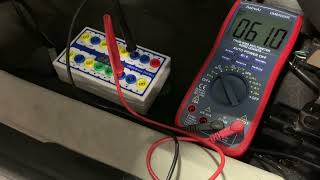
Disconnect the battery. At the OBD-II port, measure resistance between the J1850 bus pins. For Ford (PWM), measure between Pin 2 and Pin 10; a healthy bus reads ~60 ohms. A reading of ~120 ohms indicates an open circuit. A reading near 0 ohms indicates a short. For GM (VPW), measure between Pin 2 and ground; resistance must be in the mega-ohms.
Tools: Digital Multimeter, DLC Pinout Diagram (Advanced) - Isolate Control Modules
If resistance is 0 ohms (short circuit), unplug modules one by one (ABS, cluster, radio). Re-check bus resistance at the DLC after each. When resistance jumps back to 60 or 120 ohms, the last unplugged module is the source of the short.
Tools: Basic hand tools, wiring diagram (Advanced) - Advanced J1850 Bus Voltage Analysis
Key on, engine off. For Ford (PWM), check DC voltage at DLC Pins 2 and 10; both should fluctuate around 2.5V. For GM (VPW), check Pin 2; it idles near 0V and pulses to 7V. Lines stuck at 0V, 5V, 7V, or 12V indicate a short to ground, short to power, or a failed module.
Tools: Digital Multimeter (Advanced) - Analyze the J1850 Waveform with an Oscilloscope
Connect an oscilloscope to the DLC bus pins. Look for a clean square wave (0V to 5V for Ford, 0V to 7V for GM). Distorted waveforms, excessive noise, or a flatline point to shorts, interference, or a faulty module.
Tools: 2-Channel Oscilloscope, DLC Breakout Box (Professional) - Check for Manufacturer TSBs
Search for Technical Service Bulletins for your specific VIN. Software updates or known component failures (like the Nissan IPDM) often have documented factory fixes.
Tools: Internet access (Intermediate)
When This Code Triggers (Freeze-Frame Conditions)
- Vehicle Speed: 20-55 mph (Sets during steady-state driving or light acceleration when modules constantly expect data for transmission shifting and ABS.)
- Engine RPM: 1200-2500 RPM (Associated with normal driving ranges.)
- Engine Coolant Temp: 170-220°F (Occurs after the engine reaches normal operating temperature and enters closed-loop operation.)
- System Voltage: 13.5-14.5V (Occurs when the charging system runs normally; low voltage issues during cranking set different primary codes.)
Related Codes
- U1000 / U1262 — U1000 is a general communication failure code. U1262 is a Ford-specific bus fault code. U1070 is more specific, indicating the missing data is specifically from the engine.
- U1071, U1072, U1073 — Sibling codes to U1070 indicating specific missing engine data (e.g., U1071 for coolant data). Seeing them together confirms a network-wide problem, not a single sensor issue.
- U0100 — The modern equivalent for cars using the CAN bus network (2008+). U1070 applies strictly to the older J1850 network.
- U0107 — Indicates 'Lost Communication With Throttle Actuator Control Module' on the newer CAN network. It points to a completely different module and protocol.
Climate & Environmental Factors
- High Humidity / Salt Belt Regions: Road salt and high humidity dramatically accelerate corrosion. Saltwater attacks wiring insulation, connector pins, and chassis ground points, causing intermittent network failures.
- Extreme Cold: Cold temperatures make older plastic wiring insulation brittle and prone to cracking. Cold also reduces battery efficiency, causing low voltage during startup that triggers communication codes.
- Water Intrusion: Leaks from windshield seals or clogged sunroof drains saturate wiring harnesses and cabin control modules, leading to severe corrosion and network collapse.
How to Talk to a Mechanic About This Code
Say this: "I have a U1070 communication code. I understand this is a network issue, not a component failure. Please start by inspecting the main wiring harnesses and checking the primary engine and chassis grounds before testing any modules."
This prevents the shop from jumping to an expensive, incorrect conclusion like replacing the module that stored the code. It directs them to follow a logical diagnostic path.
Avoid saying:
- 'My ABS light is on, can you fix it?'
- 'Just replace the computer, I read online that's the problem.'
- 'My car is acting weird, please figure it out.'
Questions to ask before authorizing the repair:
- What were the results of the network resistance and voltage tests at the OBD-II port?
- Can you show me the damaged wire or the corroded ground that you found?
- How did you determine the original module failed and that the wiring is good?
- Does the quoted price include programming for the new module?
- What is the warranty on both the parts and the diagnostic labor?
Where to Take It: Dealer vs Independent vs Chain
- Dealer:
A strong, but expensive, choice. Best for warranty work or if an independent shop fails.
Best for: Vehicles under warranty, especially for software-related TSBs., Extremely complex electrical issues requiring proprietary wiring diagrams.
Downsides: Highest labor rates., Defaults to expensive module or harness replacement instead of targeted wiring repair. (Typical cost: +50% vs. baseline) - Independent Shop:
Best overall fit, provided you find a shop with proven electrical diagnostic skill.
Best for: Out-of-warranty vehicles., Shops specializing in electrical diagnostics (ASE certified in electrical systems).
Downsides: Quality varies widely. General mechanics lack network diagnosis skills., Lacks access to proprietary programming software. (Typical cost: +0% vs. baseline) - Chain Shop:
AVOID. This diagnostic work is outside their expertise.
Best for: Simple repairs like tires, brakes, and oil changes.
Downsides: Technicians are not trained for complex network diagnosis., High risk of misdiagnosis and unnecessary parts replacement. (Typical cost: -10% vs. baseline)
When to Walk Away From the Repair
If the total estimated repair cost exceeds 40-50% of your car's private-party value, consider selling or trading it in.
- Car worth $4000, fix is $2000: Borderline. The repair is 50% of the car's value. Get a second opinion.
- Car worth $12000, fix is $1800: Fix it. The repair cost is 15% of the vehicle's value.
- Car worth $2500, fix is $1500: Walk away. The repair is 60% of the car's value. It is not financially sensible.
What Scan Tool You Need for This Code
Minimum: A scanner that reads codes from ALL vehicle modules (ABS, BCM, TCM) and displays live data.
A basic $20 code reader only shows engine codes. It cannot see which other modules are offline, making network diagnosis impossible.
Budget: BlueDriver Pro (~$119) — Connects to a smartphone and performs a full system scan to show which modules report errors. Displays live data to see if streams drop out.
Mid-range: Foxwell NT510 Elite (~$180) — A handheld scanner offering deep, brand-specific diagnostics. Accesses all modules, graphs live data, and offers bi-directional controls.
Professional: Autel MaxiCOM MK808 / MK808BT (~$450-600) — A professional tablet scanner providing OE-level diagnostics. Shows a network topology map to visualize offline modules and offers extensive bi-directional controls.
Rent vs buy: For a one-time issue, borrow a capable scanner from AutoZone's Loan-A-Tool program. However, owning a scanner like BlueDriver is more convenient for repeated testing.
How to Clear the Code After You Fix It
- Reconnect the battery if disconnected during repair.
- Use an OBD-II scan tool to erase the Diagnostic Trouble Codes (DTCs).
- Perform a complete OBD-II drive cycle to run the system's readiness monitors.
Drive cycle (~20 minutes): A generic drive cycle includes a cold start, a 3-minute idle, 10 minutes of mixed city driving, followed by 5 minutes of steady highway speed at 55 mph. Shut the vehicle off and allow it to cool.
Readiness monitors affected: Comprehensive Component Monitor, Misfire Monitor
Before emissions retest: drive at least 50 miles to fully set monitors.
Watch out for:
- Disconnecting the battery clears the code but resets all readiness monitors, causing an immediate emissions test failure.
- The code returns immediately if the underlying electrical fault remains unfixed.
Will This Fail Emissions / State Inspection?
Yes — this code typically fails an OBD-II emissions inspection.
- California: An illuminated Check Engine Light results in an automatic failure. A full drive cycle must be completed after repairs before a retest.
- New York: A Check Engine Light automatically fails the emissions inspection. Clearing the code right before the test fails the vehicle due to unset readiness monitors.
- Texas: In the 17 counties requiring emissions testing, an illuminated Check Engine Light or a U1070 code is an automatic failure.
Most Commonly Affected Vehicles
- Ford F-150, Explorer, Mustang (1997-2004) — Wiring harness chafing near the firewall or battery tray is a common failure point. The instrument cluster is a terminating module; its failure brings down the network.
- Chevrolet / GMC Silverado, Sierra, Tahoe, Suburban (2003-2007) — Communication issues stem from the Body Control Module (BCM), corrosion in harnesses under the driver's sill plate, or a faulty ground strap from the firewall to the engine block.
- Nissan Titan, Armada, Frontier (2004-2012) — The root cause is almost always a failing Intelligent Power Distribution Module (IPDM) or poor grounds. Early 'white-housing' IPDMs are notoriously failure-prone.
- Dodge / Chrysler Grand Caravan, Town & Country (2001-2007) — Problems stem from the wiring harness near the Totally Integrated Power Module (TIPM) or corrosion on the BCM connectors.
- Jeep Grand Cherokee (WJ) (1999-2004) — Communication issues arise from wiring problems near the PCM, instrument cluster, or corrosion in connectors behind the driver and passenger kick panels.
- Jeep Grand Cherokee (WL) (2021-2023) — TSB S2108000149 identifies U1070 setting in the Brake System Control Module due to outdated software. The fix is a dealer software update.
- Paccar MX-11, MX-13 Engines (2010-2023) — In heavy-duty trucks, U1070 specifically means 'CAN communication - Message (AMB) out of range', highlighting how manufacturer-specific U-codes operate.
Manufacturer-Specific Notes
- Chrysler/Jeep/Dodge: TSB S2108000149 for the 2021+ Jeep Grand Cherokee states U1070 stores due to outdated software. The fix is a dealer update, typically covered under warranty.
- Ford: The J1850 network wiring chafes where it passes through the firewall. The instrument cluster and PCM are terminating resistors; a failure in either takes down the whole network.
- Nissan: Nissan TSB NTB10-066a explicitly states the control unit storing the communication code is NOT the cause of the problem. Do not replace the reporting module.
- GM (Chevrolet/GMC): A hard-to-reach ground strap from the firewall to the back of the engine block corrodes, causing intermittent network failures. The harness under the driver's door sill plate is also highly prone to moisture damage.
Real Owner Stories
2005 Chevy Silverado 1500 with 180K miles, intermittent stalling
Truck randomly stalled over bumps, with flickering dash lights and cycling door locks. Scanner showed U1070 and U0107.
Outcome: Found a broken ground wire on the back of the engine block connecting to the firewall. Repairing the wire and adding a redundant ground strap permanently fixed the issue for under $20.
Lesson: Intermittent electrical issues worsening over bumps are classic signs of a bad ground. Always check major ground points before replacing modules.
2006 Nissan Titan with 155K miles, crank-no-start
Vehicle cranked but wouldn't start. Scanner showed U1000 and U1070. The IPDM had the failure-prone white case.
Outcome: Purchased an updated black-cased IPDM online for $300. Replaced it in 15 minutes, and the truck started immediately.
Lesson: On 2004-2012 Nissan trucks, the original white IPDM causes network codes over 90% of the time. Researching vehicle-specific failures saves thousands.
2004 Ford F-150 with 210K miles, multiple warning lights
ABS, Brake, and Check Engine lights were on. Transmission shifted harshly. Scanner showed U1070 and U1262.
Outcome: Unplugged modules one by one. Disconnecting the rear taillight assembly returned resistance to 60 ohms. The taillight connector was full of green corrosion, shorting the network. Cleaning it fixed the issue.
Lesson: A 0-ohm reading confirms a short circuit. Unplugging modules isolates the fault. Corrosion in unexpected places brings down the entire network.
How to Prevent This Code From Triggering
- Inspect and Clean Battery Terminals and Ground Points (Every 6-12 months) — Corrosion creates resistance, causing voltage drops that trigger communication faults. Cleaning ensures a solid electrical foundation.
- Perform Regular Visual Inspection of Wiring Harnesses (Every oil change) — Catching chafed insulation or wires rubbing against hot metal early prevents short circuits. Secure loose wiring with zip ties.
- Apply Dielectric Grease to Critical Connectors (When servicing connectors) — Dielectric grease seals out moisture and prevents corrosion on connector pins exposed to the elements.
- Ensure Proper Installation of Aftermarket Electronics (During any new installation) — Improperly installed accessories tap into data bus wires and disrupt communication. Always use dedicated power sources.
- Protect Vehicle from Rodents (Ongoing) — Rodents chew soy-based wiring insulation, causing difficult-to-find shorts. Use rodent repellent tape or park in a secure garage.
Frequently Asked Questions
Can a weak battery cause a U1070 code?
Yes. A weak battery causes low voltage during startup (below 9.6V), disrupting module communication and triggering U1070. Always verify your battery tests above 12.4V at rest before diagnosing network faults.
What is the most common misdiagnosis for a U1070 code?
The most costly mistake is replacing the module that stored the U1070 code. The code simply means that specific module isn't hearing from the engine computer. The root cause is almost always wiring, a bad ground, or the sending module (PCM).
I installed a new radio/remote starter and now I have a U1070 code. Are they related?
Yes, they are highly likely related. Improperly installed aftermarket electronics introduce electrical noise or short the vehicle's data bus wiring. This brings down the network and causes communication codes like U1070.
Is it expensive to fix a U1070 code?
Costs range widely based on the root cause. A simple corroded ground wire costs under $100 to fix, while finding an intermittent short takes hours of diagnostic labor at $120-$200/hour. Replacing a major module like a PCM exceeds $800 including programming.
Will clearing the code make it go away?
Clearing the code turns off the light temporarily if the fault is intermittent. However, the code returns immediately once the vehicle runs its network diagnostics. You must fix the underlying electrical fault for a permanent solution.
What is the 'SCP (J1850)' network?
SCP (Standard Corporate Protocol), or J1850, is a communication network used in many Ford, Chrysler, and GM vehicles from the mid-1990s to 2008. It preceded the faster CAN bus used in modern cars. It operates using either Pulse Width Modulation (Ford) or Variable Pulse Width (GM).
My scanner can't communicate with the car at all. Is this related to U1070?
Yes. If the J1850 bus is completely shorted to power or ground, a scanner cannot communicate with any vehicle modules. This indicates a severe network-wide failure requiring immediate inspection of the OBD-II port wiring and power supplies.
Key Takeaways
- U1070 indicates a J1850 network failure where modules cannot receive engine data from the PCM, primarily affecting pre-2008 vehicles.
- Always test the battery first; voltage dropping below 9.6V during cranking guarantees module communication failures.
- Never replace the module storing the U1070 code; it is the victim missing the data, not the root cause.
- A 0-ohm reading across OBD-II pins 2 and 10 confirms a dead short, requiring you to unplug modules one by one until resistance returns to 60 ohms.
Helpful Videos


Shop the Parts Behind U1070
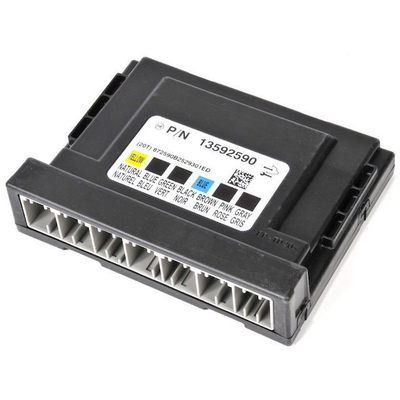
Below are the parts most often responsible for code U1070, ranked by how frequently each one is the actual culprit (per the diagnosis above). Tap any to see what we have for your vehicle.

The information in this article is provided for general reference and educational purposes only. Vehicle specifications, procedures, and part compatibility can vary by production date, trim level, and region. Always consult your vehicle's factory service manual and verify part numbers before purchasing or performing repairs. Safety-critical components such as airbags, seat belts, and braking systems should be installed by a qualified professional.
- 🧭 Diagnostic Flowchart
- 🎬 Helpful Videos
- 🛍️ Shop This Part
- What Does U1070 Mean?
- Can I Drive With U1070?
- Common Causes
- Symptoms
- Common Fixes & Costs
- Used vs. New Parts: Buying Guide
- What Happens If You Wait — Timeline
- Cost of Not Fixing It
- Diagnosis Steps
- When This Code Triggers (Freeze-Frame Conditions)
- Related Codes
- Climate & Environmental Factors
- How to Talk to a Mechanic About This Code
- Where to Take It: Dealer vs Independent vs Chain
- When to Walk Away From the Repair
- What Scan Tool You Need for This Code
- How to Clear the Code After You Fix It
- Will This Fail Emissions / State Inspection?
- Most Commonly Affected Vehicles
- Manufacturer-Specific Notes
- Real Owner Stories
- 2005 Chevy Silverado 1500 with 180K miles, intermittent stalling
- 2006 Nissan Titan with 155K miles, crank-no-start
- 2004 Ford F-150 with 210K miles, multiple warning lights
- How to Prevent This Code From Triggering
- Frequently Asked Questions
- Can a weak battery cause a U1070 code?
- What is the most common misdiagnosis for a U1070 code?
- I installed a new radio/remote starter and now I have a U1070 code. Are they related?
- Is it expensive to fix a U1070 code?
- Will clearing the code make it go away?
- What is the 'SCP (J1850)' network?
- My scanner can't communicate with the car at all. Is this related to U1070?
- Key Takeaways
- 🎟️ Get 5% Off