

OBD-II Code U1109: Lost Communication With Steering Wheel Controls
What U1109 means, why it triggers, and how to fix it
- Code U1109 indicates a severed LIN bus connection between the steering wheel controls and the main computer.
- A broken clockspring causes over 90% of U1109 codes, simultaneously disabling the driver's airbag and steering wheel buttons.
- Driving with U1109 is a major safety risk because the driver's airbag will not deploy in a frontal collision.
- Owners of 2007-2018 Jeep, Chrysler, and Dodge vehicles should check their VIN with a dealer for free clockspring replacement under extended warranty X68 or recall L02.
What Does U1109 Mean?

U1109 means a computer module lost its connection to the steering wheel controls. These components communicate over the LIN (Local Interconnect Network) bus, a sub-network of the main CAN bus. The main computer triggers this code when it receives no signal from the steering wheel for a specified period, usually 10 milliseconds.
Technical definition: Lost Communication With LIN Steering Wheel Controls. The Steering Control Module (SCM), Instrument Cluster, or another primary module has not received a valid signal from the steering wheel control switches via the Local Interconnect Network (LIN) bus for a specified period (10 milliseconds to 120 seconds).
Can I Drive With U1109?
No — Do Not Drive. Driving with code U1109 is a major safety risk. The fault, usually a broken clockspring, severs the electrical connection to the driver's airbag, meaning it will NOT deploy in a collision. While the vehicle remains mechanically drivable, you must repair it immediately to restore this critical safety system.
Common Causes

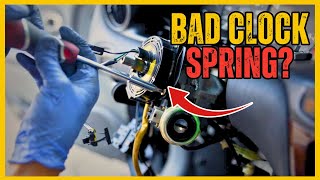
- Faulty Clockspring (Very Common) — The clockspring is a circular electrical connector behind the steering wheel that maintains connections while the wheel turns. Its internal ribbon cables break from wear, dust, and moisture, severing the connection. This is the primary cause, especially on Jeep, Dodge, and Chrysler models. 🎬 See this step-by-step clockspring replacement walkthrough
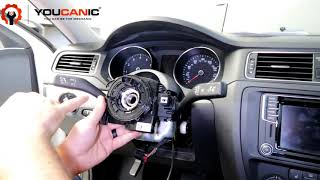
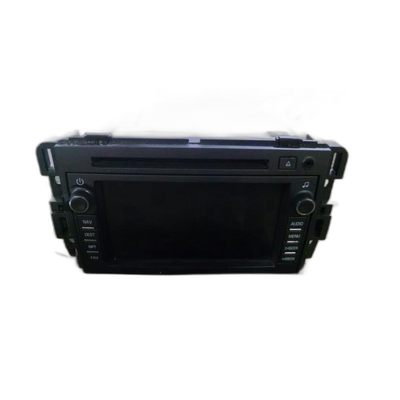
- Aftermarket Radio or Steering Wheel Installation (Common) — Installing an aftermarket radio or steering wheel often damages the delicate clockspring or associated wiring. Spinning the clockspring while disconnected breaks the internal ribbon cable, 🎬 Watch: How to correctly set a new clockspring and improper radio wiring disrupts the entire communication network.
- Damaged Wiring or Loose Connectors (Common) — The LIN bus wires get pinched, corroded, or disconnected. This occurs in the steering column, behind the radio, at major harness connectors, or where the harness rubs against the metal frame.
- Low or Unstable Battery Voltage (Less Common) — Control modules require steady voltage to communicate. A weak or dying battery causes random communication codes, including U1109. Always rule this out first by checking for related low-voltage codes like P0562.
- Failed Steering Wheel Switch (Less Common) — The steering wheel button assembly fails internally. A stuck button, liquid spill, or broken circuit board stops signal transmission.
- Failed Control Module or Gateway (Rare) — The instrument cluster, Steering Control Module (SCM), or Body Control Module (BCM) acts as the central hub for these signals. An internal failure in one of these modules interrupts communication and sets the code.
Symptoms

- Airbag and Warning Lights On — The Check Engine Light, Airbag warning light, and Electronic Stability Control (ESC) light illuminate, as the clockspring affects all these systems.
- Steering Wheel Buttons & Cruise Control Dead — Radio volume, track selection, phone buttons, and cruise control stop functioning entirely.
- Horn Dead (from steering wheel pad) — The horn fails when pressing the steering wheel center. If the horn still sounds using the key fob panic button, the horn itself works, isolating the fault to the steering column circuit.
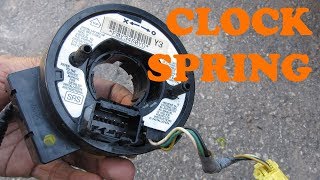
- Grinding Noise From Steering Column — A broken internal clockspring ribbon binds inside its housing, creating a distinct grinding, rubbing, or crunching sound when turning the steering wheel. 🎬 Watch: Common symptoms of a broken clockspring
Diagnostic Flowchart

Tap your situation to follow the diagnostic path that matches what you're seeing on this code.
Common Fixes & Costs
- Replace the Clockspring — Parts: $150-$450, Labor: $150-$350, ~1.5 hr book time (Professional)
- Correct Aftermarket Radio/Wiring Installation — Parts: $50-$150, Labor: $100-$200, ~1.5 hr book time (Intermediate)
- Replace Battery — Parts: $150-$250, Labor: $0-$50, ~0.5 hr book time (DIY)
- Replace Steering Wheel Switch Pack — Parts: $75-$200, Labor: $100-$200, ~1.0 hr book time (Intermediate)
- Repair Damaged Wiring or Connectors — Parts: $10-$50, Labor: $120-$360, ~2.0 hr book time (Intermediate)
- Replace Steering Column Control Module (SCCM) — Parts: $400-$800, Labor: $150-$300, ~1.5 hr book time (Professional)
Used vs. New Parts: Buying Guide
When a used part is worth it: Buying a used clockspring is strongly discouraged. It is a known wear-and-tear item with a critical safety function.
Donor-vehicle mileage cap: roughly under 20000 miles for the part to have meaningful remaining life.
Donor quality checklist:
- Source only from a very low-mileage vehicle wrecked for reasons unrelated to the front end.
- Ensure the part number matches exactly.
- Verify the used part has not been 'spun' while off the vehicle, which instantly destroys the internal ribbon cable.
Decision logic:
- If The part is for the driver's airbag circuit. → Always buy new from a reputable source. The safety risk is not worth the cost savings.
- If Vehicle has an extended warranty or recall for this part. → Get a new OEM part installed for free at the dealership.
- If Budget is extremely tight. → A new aftermarket part is significantly safer than a used one and cheaper than OEM.
Warranty tradeoff: Used parts carry a 30-90 day warranty. New aftermarket parts offer 1-year to limited lifetime warranties. New OEM parts have at least a 1-year warranty.
Worst-case if a used part fails: $200-500. If a used part fails, you pay labor twice and drive without a functional airbag.
What Happens If You Wait — Timeline
- 0-1 month: Code U1109 appears with an airbag light. Steering wheel buttons and horn fail. A rubbing noise occurs when turning the wheel. (MPG impact: 0%% · Added cost: $0)
- 1-3 months: The driver's airbag is definitively disabled. The vehicle automatically fails state safety inspections. (MPG impact: 0-1%% · Added cost: $50-$150 (failed inspection fees))
- 3-6 months: The non-functional airbag remains a severe safety risk. Lack of horn and controls causes daily frustration. (MPG impact: 0-1%% · Added cost: $150 (cumulative))
- 6+ months: Continued use with a broken ribbon increases the risk of shorting against other circuits, blowing fuses or damaging the Steering Control Module. (MPG impact: 0-1%% · Added cost: $250-$1000+)
Cost of Not Fixing It
- Immediate: Driver's airbag is disabled and will not deploy in a collision. Horn and steering wheel controls are dead. (Added cost: N/A)
- 0-6 months: Vehicle fails state safety inspections due to the airbag warning light. (Added cost: $50-$150 (failed inspection fees, potential tickets))
- 6+ months: Continued flexing of a broken internal clockspring ribbon shorts against other circuits, blowing fuses or damaging the connected control module. (Added cost: $10 - $800 (cost of new fuses up to a new control module))
Diagnosis Steps
- Scan for All Trouble Codes
Use an OBD-II scanner that reads codes from all modules (Body, Chassis, Network). Look for airbag (B-codes) or cruise control (P-codes). The combination of U1109 plus an airbag code guarantees a clockspring failure.
Tools: Advanced OBD-II Scanner (Beginner) - Check Battery Voltage
Ensure the battery is healthy. Voltage must be above 12.4 volts with the engine off and 13.7-14.7 volts running. Low voltage causes communication errors.
Tools: Multimeter (Beginner) - Test Horn Circuit via Key Fob
Press the panic button on your key fob. If the horn sounds, but pressing the steering wheel pad does nothing, the horn is functional. This isolates the fault to the steering column, highly indicating a bad clockspring.
Tools: Vehicle Key Fob (Beginner) - Test Steering Wheel Switches (Live Data)
Access the Body Control Module live data stream and press each steering wheel button. If the scanner shows the status changing from 'Released' to 'Pressed', the switch and LIN bus work, placing the problem further down the network.
Tools: Advanced OBD-II Scanner (Intermediate) - Visually Inspect Wiring and Connectors
Check harnesses around the steering column, behind the dashboard, and at the Body Control Module for rubbed, melted, or disconnected wires. Look for corrosion or pushed-out pins in connectors.
Tools: Flashlight, Trim removal tools (Intermediate) - Test LIN Bus Voltage at the Switch
Disconnect the steering wheel switch harness. Turn the ignition on. Measure the DC voltage of the LIN Bus wire. A healthy circuit reads above 5.0 volts (Chrysler spec). Low or absent voltage indicates a wiring or module problem.
Tools: Multimeter, Vehicle-specific wiring diagram (Advanced) - Test the Clockspring Circuit
Disconnect the battery and airbag. Check for continuity through each clockspring pin corresponding to the steering controls. Resistance must be under 5.0 Ohms. Turn the wheel slowly lock-to-lock; resistance spikes or Open Loop (OL) readings confirm a broken internal ribbon.
Tools: Multimeter, Vehicle-specific wiring diagram, Basic hand tools (Advanced)
When This Code Triggers (Freeze-Frame Conditions)
- Fault Code: U1109 (The primary code triggering the freeze frame.)
- System Voltage: 12.0-14.5V (Code sets on key-on or while driving; voltage is a key diagnostic parameter.)
- Vehicle Speed: 0 MPH (Often triggers at startup when modules initialize and communicate.)
- Button Status: Pressed/No Response (Logged at the exact moment a steering wheel button is pressed and no signal is received.)
Related Codes
- B1B02 — Driver Airbag Squib 1 Circuit Open. This code paired with U1109 guarantees a failed clockspring, as the same broken ribbon cable serves both circuits.
- C123F — Steering Angle Sensor Comparative Performance. The steering angle sensor integrates into the clockspring. A failed clockspring takes this sensor offline.
- P0581 / P0591 — Speed Control Switch Performance. These set alongside U1109 during a clockspring failure. If these appear alone while other buttons work, the cruise switch itself is bad.
- P0562 — System Voltage Low. Low voltage disrupts module communication. Diagnose and fix the battery/charging system first; resolving this often clears U1109.
Climate & Environmental Factors
- Dust and Debris: Dust infiltrates the clockspring housing, abrading the delicate ribbon cables and destroying electrical circuits. This is a primary failure cause for off-road vehicles like the Jeep Wrangler.
- Temperature Extremes: Extreme cold makes plastic ribbon cables brittle and prone to cracking during steering rotation. High heat degrades plastic and insulation over time.
- Humidity and Moisture: High humidity or cabin water leaks cause corrosion on clockspring connectors and module pins, creating high resistance and communication failures.
How to Talk to a Mechanic About This Code
Say this: "I have a U1109 code, an airbag light on, and my steering wheel controls and horn are dead. I suspect a clockspring failure. For Jeep/Chrysler/Dodge vehicles, add: 'Could you please check my VIN for coverage under the X68 extended warranty or any other service campaigns related to the clockspring before I bring it in?'"
This signals you are an informed customer, focuses the technician on the most probable cause, and prevents wasted diagnostic time. It proactively requests a check for a free warranty repair.
Avoid saying:
- 'My check engine light is on.' (Too vague, invites expensive diagnostics).
- 'Just fix whatever is wrong.' (Gives the shop a blank check).
- 'My airbag light is on.' (More specific, but adding the other symptoms pinpoints the issue).
Questions to ask before authorizing the repair:
- Did you confirm the U1109 code is paired with an airbag system code, like B1B02?
- Have you tested for continuity through the clockspring's circuits to confirm it's internally broken?
- Does the repair estimate include calibrating the steering angle sensor?
- What is the warranty on the new part and the labor?
Where to Take It: Dealer vs Independent vs Chain
- Dealer:
The mandatory first stop for any Jeep/Chrysler/Dodge vehicle to check for warranty coverage. For other makes, they are reliable but expensive.
Best for: Jeep, Chrysler, and Dodge vehicles, to check for clockspring extended warranties or recalls., Vehicles under original factory warranty., Complex electrical issues requiring manufacturer-specific diagnostic tools.
Downsides: Higher labor rates and parts costs if not covered by warranty. (Typical cost: +50% vs. baseline) - Independent Shop:
The best choice for most out-of-warranty vehicles. A competent independent technician handles this safely and more affordably than a dealer.
Best for: Out-of-warranty vehicles where the owner pays out-of-pocket., Building a long-term relationship with a trusted mechanic.
Downsides: Quality varies; ensure the shop is ASE-certified with SRS/airbag experience. (Typical cost: +0% vs. baseline) - Chain Shop:
AVOID. The safety-critical nature of the airbag system makes this repair inappropriate for a generalist chain shop.
Best for: Simple, high-volume jobs like oil changes and tires.
Downsides: Technician skill varies dramatically., Lack specialized tools for diagnosing network codes and safely handling airbag systems. (Typical cost: -10% vs. baseline)
When to Walk Away From the Repair
Because U1109 involves a critical safety system (the airbag), the threshold to walk away is much higher than for a cosmetic or minor mechanical issue.
- Car worth $4000, fix is $700: Fix it. The repair restores a critical safety feature, making the car safe to drive and sell.
- Car worth $12000, fix is $700: Fix it immediately. The cost is negligible compared to the car's value and the safety risk.
- Car worth $2500, fix is $700: Borderline, but strongly recommend fixing. Driving without an airbag is extremely dangerous. Unfixed, the car must be sold 'as-is' with full disclosure of the safety defect.
What Scan Tool You Need for This Code
Minimum: A scanner that reads and clears codes from the SRS (Airbag) and Body Control Modules, and supports live data viewing.
A basic $20 OBD-II reader only accesses the engine computer. It cannot see U1109 or the critical accompanying airbag codes.
Budget: BlueDriver Pro (~$99) — Reads and clears engine, ABS, and SRS/airbag codes. Displays live data from steering wheel button presses.
Mid-range: Foxwell NT510 Elite (~$179) — Provides all budget functions plus manufacturer-specific diagnostics. Includes Steering Angle Sensor (SAS) calibration, required after replacing a clockspring.
Professional: Autel MaxiCOM MK808 (~$450) — Offers full-system diagnostics, live data graphing, and all necessary service functions including SAS calibration.
Rent vs buy: Most auto parts store loaner tools are basic code readers that cannot access SRS/airbag modules. Buying a capable scanner is required for this diagnosis.
How to Clear the Code After You Fix It
- Reconnect the battery terminals.
- Use an OBD-II scan tool to perform the 'Clear All DTCs' function.
- Perform a drive cycle to allow the vehicle's computers to re-learn and confirm the fix.
- Perform a steering angle sensor calibration using the scan tool, required after clockspring replacement.
Drive cycle (~20 minutes): A general drive cycle involves a cold start, a few minutes of idling, mixed city driving, and a period of steady highway-speed driving.
Readiness monitors affected: This communication code does not directly affect emissions readiness monitors., However, clearing the code resets all monitors, requiring a drive cycle before passing an emissions test.
Before emissions retest: drive at least 50 miles to fully set monitors.
Watch out for:
- Disconnecting the battery does not clear the code from the SRS (airbag) module; a scan tool is required.
- The code returns immediately if the underlying fault remains unfixed.
- Forgetting to calibrate the steering angle sensor after replacing the clockspring triggers new error codes (C123F) and disables stability control.
Will This Fail Emissions / State Inspection?
Yes — this code typically fails an OBD-II emissions inspection.
- California: An illuminated Check Engine Light or Airbag warning light causes an automatic safety inspection failure.
- New York: A vehicle automatically fails the NYS inspection if the Check Engine or Airbag warning light is on.
- Texas: An illuminated Check Engine Light results in a failed OBD test. The airbag light causes a failure during the standard safety inspection.
Most Commonly Affected Vehicles
- Jeep Wrangler (JK) (2007-2018) — Extremely common due to a faulty clockspring design susceptible to dust. Jeep issued a 15-year extended warranty (X68) for 2011-2016 models. Earlier 2007-2010 models had similar issues covered by recalls (L02).
- Dodge Journey (2009-2020) — Frequently caused by failures in the clockspring or the wiring harness connected to it. Aftermarket radio installations are also a common cause.
- Chrysler Town & Country (2008-2016) — Often related to the clockspring or specifically the right-side steering wheel switch losing communication.
- Dodge Grand Caravan (2008-2020) — Shares the same platform and electrical components as the Chrysler Town & Country, leading to identical clockspring and switch failures.
- Dodge/Ram 1500 (2009-2014) — Appears with other communication codes, pointing to issues with the clockspring or associated steering wheel control wiring.
- Chevrolet Equinox, Cruze, Malibu (2010-2017) — Indicates a general loss of serial communication. A common cause is a corroded splice pack or damaged wiring harness, especially after an accident repair.
- Hyundai i30 / Elantra (2009-2012) — Relates to a failure in the Motor Driven Power Steering (MDPS) column itself, requiring a full column replacement.
- Kia Sorento, Optima (2011-2015) — Associated with a faulty Electronic Steering Column Lock (ESCL) or Smart Key module communication issues, preventing the car from starting.
Manufacturer-Specific Notes
- Jeep/Dodge/Chrysler: On the Jeep Wrangler, U1109 is almost exclusively a failed clockspring. Check with a dealer for the 15-year/unlimited mileage extended warranty (X68) or recall (L02) before paying for repairs.
- Mitsubishi: U1109 defines as 'ETACS-ECU Time-out'. This points to communication loss with the main body control module or wiper stalk, not just steering wheel buttons.
- Chevrolet/GM: U1109 indicates a wider high-speed CAN bus failure. The root cause is frequently a corroded splice pack (e.g., under the driver's door sill) taking multiple modules offline simultaneously.
- Ford: Points to a network gateway module failure or signal noise from improperly wired aftermarket accessories (remote starts, stereos) crashing the CAN bus.
Real Owner Stories
2013 Jeep Wrangler JK at 92K miles
Airbag light came on intermittently, cruise control stopped working, and the horn was dead. Heard a rubbing sound from the steering column.
What they tried:
- Considered DIY replacement to avoid a $175 dealer diagnostic fee.
- Researched online and found forums mentioning an extended warranty.
- Called a Jeep dealer with the VIN and confirmed coverage under the X68 warranty.
Outcome: The dealership replaced the clockspring and steering column shrouds at no cost. All symptoms resolved.
Lesson: For any 2011-2016 Jeep Wrangler with U1109, ALWAYS check for the X68 extended warranty with a dealer before paying for diagnosis or repairs.
2010 Dodge Journey after aftermarket radio install
After a DIY radio installation, the airbag light illuminated and steering wheel controls died, triggering U1109.
What they tried:
- Re-checked all wiring connections.
- Discovered the steering wheel was turned while disconnected, destroying the clockspring.
- Found the cheap universal wiring adapter did not interface with the LIN bus.
Outcome: Replaced the clockspring ($250) and purchased the correct PAC RP4-CH11 wiring harness adapter. Total cost exceeded expectations.
Lesson: Use high-quality, vehicle-specific wiring harnesses for aftermarket radios. Never rotate the steering wheel with the clockspring disconnected.
2012 Chevy Equinox with multiple random codes
Vehicle intermittently showed U1109, ABS light, and power steering warnings. Hard to start in wet weather.
What they tried:
- Mechanic suspected a faulty Body Control Module (BCM).
- Battery and alternator tested good.
- An electrical specialist traced the problem to a corroded splice pack under the driver's door sill plate.
Outcome: The corroded wiring harness and splice pack were replaced and sealed with dielectric grease. Codes did not return. Repair cost $400.
Lesson: On GM vehicles, U1109 paired with unrelated codes (ABS, power steering) indicates a wiring or splice pack issue in locations prone to water intrusion.
1998 Jeep TJ with U1109 symptoms
Airbag light stayed on and the horn stopped working simultaneously.
What they tried:
- Posted symptoms on a Jeep forum.
- Users identified a classic clockspring failure.
- Owner replaced the part themselves.
Outcome: The new clockspring fixed the airbag light and horn.
Lesson: A sudden airbag light paired with a dead horn is a textbook symptom of a failed clockspring across all makes and models.
How to Prevent This Code From Triggering
- Keep Cabin Clean in Dusty Environments (Regularly) — Dust infiltrates the steering column and clockspring housing, abrading the thin ribbon cable and causing failure. Regular cleaning reduces abrasive material.
- Apply Dielectric Grease to Connectors (When servicing related components) — Apply dielectric grease to the connector's weather seal to keep moisture out, preventing corrosion on delicate LIN bus pins.
- Maintain Battery Health (Annually) — Communication modules require stable voltage. A weak battery causes spurious communication codes like U1109.
- Secure Steering Wheel During Repairs (During any steering/dash work) — Never let the steering wheel spin freely when disconnected. This instantly snaps the internal ribbon cable. Secure the wheel in the centered position.
Frequently Asked Questions
Is it safe to drive with code U1109?
No. The faulty part causing U1109, usually the clockspring, disables the driver's airbag. It will not deploy in an accident.
Can I fix a U1109 code myself?
Replacing the clockspring requires removing the steering wheel and handling the explosive driver's airbag. Due to severe safety risks, leave this repair to a professional unless you are an experienced technician.
My Jeep has code U1109. What should I do first?
Call a Jeep dealership with your Vehicle Identification Number (VIN). Ask if your vehicle is covered under the X68 extended warranty or L02 recall for the clockspring. The repair is often completely free.
How much does it cost to diagnose a U1109 code?
Repair shops charge a diagnostic fee equal to one hour of labor. Expect to pay between $120 and $180 for a professional diagnosis.
My horn doesn't work from the steering wheel, but the panic alarm works. Is this related?
Yes. This confirms the horn itself functions perfectly. The problem is isolated to the steering column circuit, strongly indicating a broken clockspring.
What is a common misdiagnosis for U1109?
Replacing individual steering wheel switches when the clockspring is the actual culprit. If multiple unrelated buttons fail simultaneously with an airbag light, the shared clockspring connection is at fault.
I replaced the clockspring and the code is still there. Now what?
The problem lies elsewhere in the circuit. Meticulously check the wiring harness and connectors between the clockspring and the control module for opens or shorts. A defective new part or failed control module is also possible.
Key Takeaways
- Code U1109 indicates a severed LIN bus connection between the steering wheel controls and the main computer.
- A broken clockspring causes over 90% of U1109 codes, simultaneously disabling the driver's airbag and steering wheel buttons.
- Driving with U1109 is a major safety risk because the driver's airbag will not deploy in a frontal collision.
- Owners of 2007-2018 Jeep, Chrysler, and Dodge vehicles should check their VIN with a dealer for free clockspring replacement under extended warranty X68 or recall L02.
Helpful Videos
Shop the Parts Behind U1109
Below are the parts most often responsible for code U1109, ranked by how frequently each one is the actual culprit (per the diagnosis above). Tap any to see what we have for your vehicle.




The information in this article is provided for general reference and educational purposes only. Vehicle specifications, procedures, and part compatibility can vary by production date, trim level, and region. Always consult your vehicle's factory service manual and verify part numbers before purchasing or performing repairs. Safety-critical components such as airbags, seat belts, and braking systems should be installed by a qualified professional.
- 🧭 Diagnostic Flowchart
- 🎬 Helpful Videos
- 🛍️ Shop This Part
- What Does U1109 Mean?
- Can I Drive With U1109?
- Common Causes
- Symptoms
- Common Fixes & Costs
- Used vs. New Parts: Buying Guide
- What Happens If You Wait — Timeline
- Cost of Not Fixing It
- Diagnosis Steps
- When This Code Triggers (Freeze-Frame Conditions)
- Related Codes
- Climate & Environmental Factors
- How to Talk to a Mechanic About This Code
- Where to Take It: Dealer vs Independent vs Chain
- When to Walk Away From the Repair
- What Scan Tool You Need for This Code
- How to Clear the Code After You Fix It
- Will This Fail Emissions / State Inspection?
- Most Commonly Affected Vehicles
- Manufacturer-Specific Notes
- Real Owner Stories
- 2013 Jeep Wrangler JK at 92K miles
- 2010 Dodge Journey after aftermarket radio install
- 2012 Chevy Equinox with multiple random codes
- 1998 Jeep TJ with U1109 symptoms
- How to Prevent This Code From Triggering
- Frequently Asked Questions
- Is it safe to drive with code U1109?
- Can I fix a U1109 code myself?
- My Jeep has code U1109. What should I do first?
- How much does it cost to diagnose a U1109 code?
- My horn doesn't work from the steering wheel, but the panic alarm works. Is this related?
- What is a common misdiagnosis for U1109?
- I replaced the clockspring and the code is still there. Now what?
- Key Takeaways
- 🎟️ Get 5% Off