

U1111 on 2010-2012 Audi A4: Transmission Communication Fault Causes and Fixes
On a 2010-2012 Audi A4, code U1111 typically indicates a communication failure with the Transmission Control Module (TCM). The most common cause is a failing Mechatronic unit circuit board inside the 7-speed S-Tronic (DL501) transmission. This can often be fixed with a targeted repair kit instead of a full, expensive Mechatronic unit replacement.
- U1111 on a 2010-2012 Audi A4 means the transmission control module (TCM) is not communicating.
- The most likely cause is a failed internal circuit board inside the Mechatronic unit.
- Do not drive the vehicle, as it can behave unpredictably and is a safety risk.
- A specific Mechatronic repair kit (p/n 0B5398009F) is the most common fix and is much cheaper than replacing the entire unit.
- This is not a DIY-friendly repair and should be handled by a qualified shop specializing in European vehicles.
What's Unique About the 2010-2012 Audi A4
The B8 generation A4 (2010-2012) equipped with the 7-speed S-Tronic (DL501 / 0B5) dual-clutch transmission 🎬 Watch: Common failure points of the S-Tronic 7-speed gearbox is known for issues with its Mechatronic unit. The internal printed circuit boards and sensors are prone to failure, causing a host of communication and performance faults, including U1111. A key design aspect is that the Mechatronic's electronics and solenoids share an oil circuit with the clutches, meaning wear products from the clutches can contaminate the hydraulic fluid, accelerating wear on the sensitive valve body components. Fortunately, Audi has released repair kits that allow for the replacement of the faulty circuit board and/or solenoids without replacing the entire, very expensive Mechatronic unit.
Diagnostic Flowchart
Tap your situation to follow the diagnostic path that matches what you're seeing on this vehicle.
Symptoms You May Notice
- "Gearbox Malfunction: You can continue driving" message on the dashboard
- Transmission gets stuck in one gear (limp mode)
- Harsh, jerky, or clunking shifts, especially a bang when downshifting from 2nd to 1st.
- Inability to select reverse, or a delay/lurch when shifting from Drive to Reverse.
- Vehicle will not start and may report the transmission is not in Park.
- Flashing PRNDS indicator on the instrument cluster.
- Multiple warning lights on the instrument cluster, such as Check Engine and EPC.
- Hesitation or lurching in slow, stop-and-go traffic.
- Failure to engage drive or reverse, particularly when the transmission is hot.
- Replacing the entire transmission when only the Mechatronic repair kit is needed.
- Replacing the Transmission Control Module (Mechatronic) when the actual fault is a simple wiring or connector issue.
- Replacing the Mechatronic unit when the fault lies with the internal gear position sensor module.
Most Likely Causes
- Failing Mechatronic Unit Internal Circuit Board/Sensor 🔴 High Probability → Shop Transmission Valve Body The internal printed circuit boards of the DL501 Mechatronic unit are a known failure point, susceptible to heat, vibration, and contamination from clutch wear particles in the shared fluid circuit, leading to delamination, cracked solder joints, or sensor failure.
How to confirm: A professional scan tool (like VCDS) is needed to check for communication with the transmission module (J217 at address 02). If the module is unreachable or shows specific internal electrical fault codes (like P173C, P173F, P174A-C) alongside U1111, the internal board is the likely culprit.
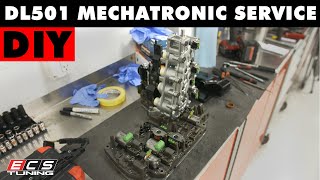
Typical fix: Install a Mechatronic repair kit. The most common kit (0B5398009F) replaces the two printed circuit boards. A more comprehensive kit (0B5398048D) also includes solenoids. 🎬 See this step-by-step walkthrough of the Mechatronic repair kit installation The transmission fluid and filters must be replaced at the same time, followed by a basic settings adaptation with a diagnostic tool.
Est. part cost: $300-$800 for the repair kit, depending on whether it includes solenoids. - Damaged Wiring Harness or Corroded Connector 🟡 Medium Probability The main round 16-pin transmission connector is located on the side of the gearbox, where it is exposed to road debris, moisture, and heat, which can lead to corrosion or physical damage over time. Other harness sections in the wheel wells are also known points of corrosion.
How to confirm: Visually inspect the main 16-pin connector at the transmission for any bent pins, corrosion, or fluid intrusion. Using a multimeter and the pinout diagram, check for 12V+ at pin 16 (Gray/Yellow wire) and good ground at pin 13 (Brown wire). Check for continuity on the CAN bus wires at pin 11 (Orange/Black) and pin 9 (Orange/Brown).
Typical fix: Clean the connector pins with a contact cleaner and a small brush, then apply dielectric grease. If the connector or wiring is damaged beyond cleaning, the affected section will need to be repaired with a wiring repair kit or the harness section replaced. The connector itself is part number 420973716.
Est. part cost: $50-$300 for connector repair parts or a harness pigtail. - Low or Incorrect Transmission Fluid ⚪ Low Probability → Shop Transmission Assembly The DL501 has two separate fluid circuits. Incorrect fluid type or a low fluid level in the Mechatronic/clutch circuit due to a leak can cause overheating, leading to erratic behavior and communication faults. Using non-OEM fluid with improper additives can also damage the circuit boards.
How to confirm: Check the transmission fluid level and condition according to the manufacturer's procedure. This must be done with the vehicle level and the fluid at a specific temperature (typically 35-45°C) using a scan tool to monitor it.
Typical fix: Perform a full transmission fluid and filter service using only the OEM-specified dual-clutch transmission fluid (G 052 529 A2). If the level was low, the source of the leak (e.g., pan gasket, connector sleeve) must be identified and repaired.
Est. part cost: $200-$350 for fluid and filters.
Rare But Worth Checking
- Failing Gateway Module: The gateway module (J533) is the central router for all CAN bus communication. While a failure is uncommon, if multiple control units are reporting communication faults simultaneously, or a scan tool cannot connect to the vehicle at all, the gateway should be investigated. It can be misdiagnosed as a single module failure.
- Low Battery Voltage: → Shop Vehicle Battery Modern German vehicles are highly sensitive to battery voltage. A weak or failing battery (testing below 12.2V at rest) can cause sporadic and widespread communication errors across various modules, including the TCM.
- Failing Gear Position Sensor Module: Deep inside the transmission is a gear sensor module that can also fail, causing symptoms like getting stuck in neutral and fault codes that can be misdiagnosed as a Mechatronic unit failure. This is a complex, transmission-out repair.
Diagnosis Steps
- Scan all vehicle modules with an Audi-specific diagnostic tool like VCDS or OBDeleven. Save the full fault code report. Look for faults that state 'Function Restricted due to Missing Message(s)'.
- Check for communication with the Transmission Control Module (address 02). If it does not respond, this confirms a major communication issue.
- Check the battery voltage and charging system. Ensure voltage is stable and above 12.4V with the engine off.
- Raise the vehicle securely on a lift or jack stands. Visually inspect the main 16-pin electrical connector on the side of the transmission for corrosion, damage, or fluid leaks.
- If the connector is okay, test power and ground at the TCM connector. Using a multimeter, confirm 12V+ on pin 16 (Gray/Yellow) and continuity to ground on pin 13 (Brown).
- If power and grounds are good, the fault is highly likely to be internal to the Mechatronic unit. Test the resistance of the internal solenoids if possible.
- At this point, the transmission pan must be removed to access the Mechatronic unit. Before reinstalling a repaired or new unit, it is critical to ensure the four shift forks inside the transmission are all set to their neutral (center) position to allow for proper engagement.
- After installation, perform a transmission fluid service and run the basic settings/adaptation procedure using a compatible scan tool. This must be done within a specific fluid temperature window 🎬 Watch: How to perform the VCDS transmission adaptation procedure (40-60°C is ideal).
Parts You'll Likely Need
- Mechatronic Repair Kit (PCBs only)
(OEM #0B5398009F)— This is the most common failure point for U1111 on S-Tronic transmissions. The kit contains the two replacement printed circuit boards that fail internally.
Trusted brands: Genuine Audi
OEM price range: $300-$600
Aftermarket price range: $250-$500 - Mechatronic Repair Kit (PCBs and Solenoids)
(OEM #0B5398048D)— A more comprehensive kit that includes the circuit boards as well as the clutch control and pressure control solenoids, which are also common failure points.
Trusted brands: Genuine Audi
OEM price range: $500-$800
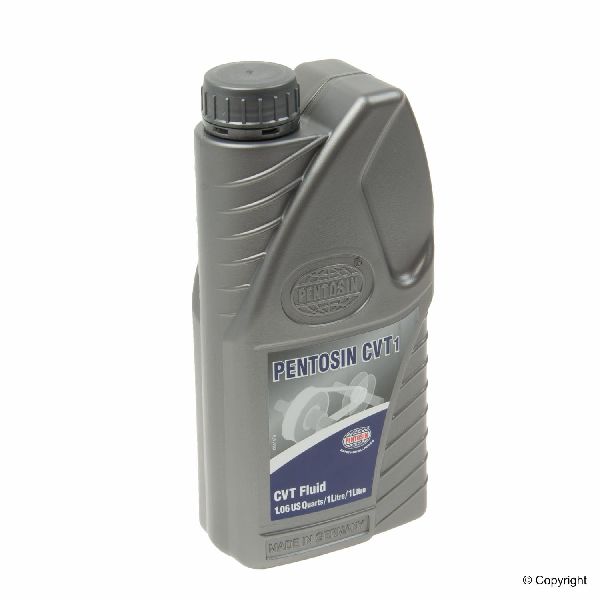
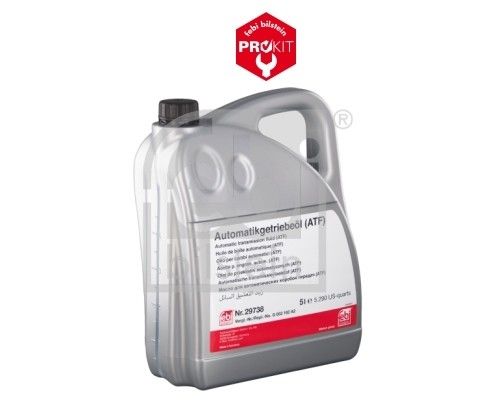
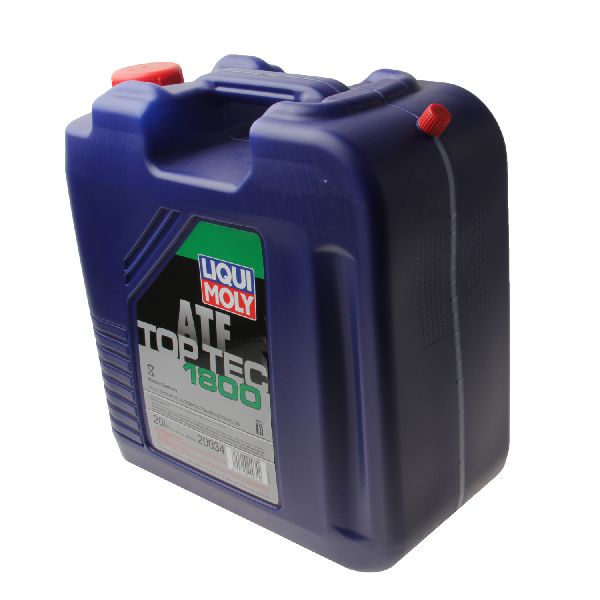
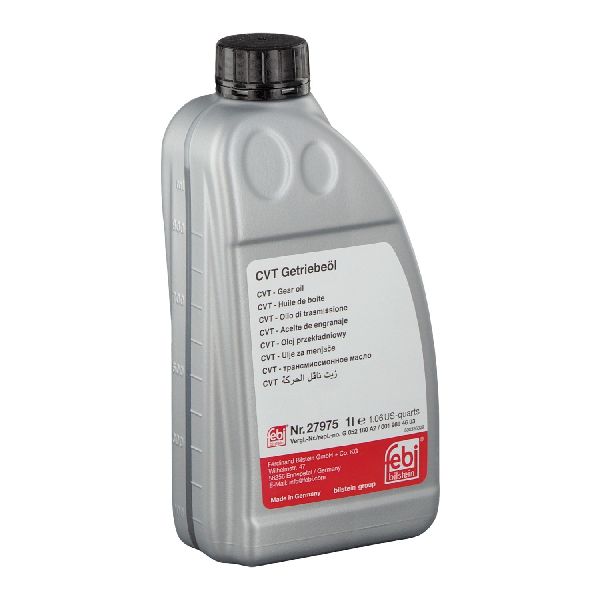
Aftermarket price range: $400-$700 - DSG/S-Tronic Transmission Fluid and Filter Kit — The fluid and filters must be replaced whenever the Mechatronic unit is serviced. The DL501 requires a specific fluid, G 052 529 A2.
Related Codes That Often Appear With This One
- U0101 — This is a generic code for 'Lost Communication With TCM', which is essentially the same fault as the manufacturer-specific U1111.
- P17D8 — This code, for 'Torque limitation because of clutch temperature', often points to an internal Mechatronic fault and can appear alongside communication errors.
- P0726 — An implausible RPM signal from the engine is another common companion code when the Mechatronic unit is failing.
- P1740 — Fault for 'Clutch Temperature Monitoring', indicating a potential overheating issue within the transmission that can be caused by or lead to Mechatronic problems.
- P174A, P174B, P174C — These codes indicate electrical faults in the pressure control valves within the Mechatronic unit, pointing directly to an internal failure.
Technical Service Bulletins (TSBs) & Recalls
- 37144620255354: Transmission faults stored (DTC P1703 or U1111)
Platform-Specific Known Issues
- The 7-speed S-Tronic (DL501/0B5) transmission in the B8 platform is known for Mechatronic failures that cause a variety of shifting and communication problems.
- An official Technical Service Bulletin (TSB #37144620255354) acknowledges transmission faults that include the U1111 code.
- Owner forums are filled with accounts of this failure, with many users successfully performing a DIY repair using one of the available kits to save thousands over a dealer replacement.
Mechanic-Grade Diagnostic Values
- Main TCM Connector (16-pin) Voltage/Ground — expected: 12V+ on Pin 16 (Gray/Yellow wire), Ground on Pin 13 (Brown wire), CAN High on Pin 11 (Orange/Black), CAN Low on Pin 9 (Orange/Brown).. Failure: Low or no voltage on Pin 16, or high resistance to ground on Pin 13 indicates a wiring or fuse issue, not an internal TCM fault.
- Mechatronic Clutch Oil Pressure Solenoids (N435, N439) Resistance — expected: Gen 1: ~16 Ohms @ 25°C. Gen 2: ~14.2 Ohms @ 25°C.. Failure: A reading that is significantly higher (open circuit) or lower (short) indicates a failed solenoid.
- Mechatronic VFS & Gear Actuator Solenoids (N433, N434, N436, N437, N438, N440) Resistance — expected: ~4.8 Ohms @ 25°C.. Failure: A reading that is significantly higher (open circuit) or lower (short) indicates a failed solenoid.
- Mechatronic Main Pressure & Cooling Solenoids (N471, N472) Resistance — expected: ~4.2 Ohms @ 25°C.. Failure: A reading that is significantly higher (open circuit) or lower (short) indicates a failed solenoid.
- Transmission Temperature Sensor (G509) Resistance — expected: ~1.13k Ohms at 30°C.. Failure: An open circuit or wildly different resistance value indicates a failed sensor, which can cause overheating and protection faults.
Hidden / Shadow Codes Worth Checking
- U1111 00 - Function Restricted due to Missing Message(s): This is not a separate code but the detailed description seen in a VCDS scan. It explicitly confirms that the U1111 fault is due to the TCM not broadcasting its status on the CAN bus, leading other modules to restrict their function. (see via VCDS or other Audi-specific diagnostic software.)
Scan Tool Commands That Help
- VCDS (VAG-COM): Basic Settings: Clutch Valve Calibration — This is a mandatory step after replacing the Mechatronic unit or repair kit. It calibrates the pressure delivery to the clutches.
- VCDS (VAG-COM): Basic Settings: Distance Sensor Calibration — This is a mandatory step after replacing the Mechatronic unit or repair kit. It calibrates the gear position sensors. Clunking noises are normal during this procedure.
- VCDS (VAG-COM): Basic Settings: Erase counter for start and stop processes — Performed before other calibrations to reset learned clutch adaptation values, allowing the system to find the new 'kiss point' of the clutches.
Wiring & Ground Locations
- TCM 16-Pin Connector — On the side of the DL501 transmission housing.. This is the primary connection for power, ground, and CAN bus communication to the Mechatronic unit. Corrosion or damage here is a common cause of U1111.
- G32 / G44 — Behind the driver's side kick panel.. These are major chassis ground points for various modules. A loose or corroded ground here can cause intermittent communication issues across the vehicle, including with the TCM.
- G11 / G26 — In the engine compartment, near the plenum/firewall area.. These are primary engine bay ground points. The TCM is listed as using one of these grounds, and corrosion here can directly interrupt its power supply.
Real Owner Repair Stories
- Reddit user Jackp237 (Audi B8.5 S4 (similar platform)) — Irregular clutch engagement.
✅ What actually fixed it The user did not replace any parts. They used a VCDS cable to re-provision the sensors and timing (perform a Basic Settings/Adaptation), which made the transmission shift smoothly again. - YouTube channel 'Vancity Audi' (2012 Audi S4) — After a circuit board replacement, the transmission was still grinding and shifting poorly, especially in low-speed situations.
❌ Tried (didn't work) A standard Mechatronic circuit board repair kit was installed but did not fully resolve the drivability issues.
✅ What actually fixed it The owner intentionally altered his driving style for a month to 'force' the transmission to re-adapt. This involved using manual mode in stop-and-go traffic to avoid the problematic 2-1 downshift and low-RPM jittering. Over time, this process allowed the TCM's adaptive learning to sort itself out, significantly improving the shifting behavior without further mechanical repair.
"I Checked Everything" — The Actual Cause
- For this electronic fault, the equivalent is 'wiring tests pass, but the fault persists'. A common scenario is a thermal failure where an internal component on the Mechatronic circuit board (like a solder joint or sensor) creates an open circuit only when the transmission fluid gets hot. The connection would test fine with a multimeter when the vehicle is cold, leading to a misdiagnosis. The fault only appears under specific operating temperatures.
OEM Part Supersession History
0B5398009A, 0B5398009B, 0B5398009C, 0B5398009D, 0B5398009E→0B5398009F— Progressive updates by the manufacturer to improve the reliability of the internal circuit boards and sensors in the repair kit.
Heads up: Always use the latest available part number (F revision or newer) to ensure you have the most durable version of the repair kit.
Model Year Variations Within This Range
- 2010-2012: When reinstalling a repaired Mechatronic unit, the gear selector yolks must be set to a specific depth. This measurement depends on the manufacturing date of the unit. For units with an ID number up to L31B1137, the measurement is 28mm. For units manufactured after that (from L31B1138 onwards), the measurement is 32mm. Using the wrong measurement will prevent the Mechatronic from engaging the shift forks correctly.
Helpful Videos

We Have This Part in Stock



The information in this article is provided for general reference and educational purposes only. Vehicle specifications, procedures, and part compatibility can vary by production date, trim level, and region. Always consult your vehicle's factory service manual and verify part numbers before purchasing or performing repairs. Safety-critical components such as airbags, seat belts, and braking systems should be installed by a qualified professional.
- Audi A4:
- 🧭 Diagnostic Flowchart
- 🎬 Helpful Videos
- 🛍️ Shop This Part
- What's Unique About the 2010-2012 Audi A4
- Symptoms You May Notice
- Most Likely Causes
- Rare But Worth Checking
- Diagnosis Steps
- Parts You'll Likely Need
- Related Codes That Often Appear With This One
- Technical Service Bulletins (TSBs) & Recalls
- Platform-Specific Known Issues
- Mechanic-Grade Diagnostic Values
- Hidden / Shadow Codes Worth Checking
- Scan Tool Commands That Help
- Wiring & Ground Locations
- Real Owner Repair Stories
- "I Checked Everything" — The Actual Cause
- OEM Part Supersession History
- Model Year Variations Within This Range
- 🎟️ Get 5% Off