

OBD-II Code U1122: Lost Communication With a Vehicle Module
What U1122 means, why it triggers, and how to fix it
- Always check your battery voltage first; a drop below 12.4V with the engine off is the leading cause of U1122 communication errors.
- Search for Technical Service Bulletins (TSBs) before replacing parts, as a 1-hour dealer software update fixes this code on many modern vehicles like the 2021-2022 Jeep Grand Cherokee.
- Do not replace a 'lost' module like the ABS controller without first verifying its power, ground, and CAN bus resistance measures exactly 60 ohms.
- If your battery dies overnight alongside a U1122 code, perform a parasitic draw test to find the faulty module pulling more than 75mA while the car is off.
What Does U1122 Mean?
U1122 is a network communication code indicating one of your car's computers (modules) has stopped talking to the others. When a module cannot send or receive messages on the vehicle's data network (like the CAN or LIN bus), this code triggers.
Technical definition: U1122 generally translates to 'Lost Communication' with a specific module or an 'Implausible Message' received over the data bus. For example, on Jeeps, it means 'Lost Communication With LIN ECU 2', while on Volkswagens, it indicates 'Databus: Implausible Message' (corrupt or nonsensical data).
Can I Drive With U1122?
Yes, But With Caution. Driving is possible, but critical safety systems like ABS and traction control are often disabled. This increases stopping distances by up to 30% in emergencies and causes a complete loss of steering control if front wheels lock on slippery surfaces. Diagnose the issue promptly to prevent accidents and avoid insurance liability.
Common Causes
- Low Battery Voltage or Bad Ground (Very Common) — Control modules require a stable voltage between 12.2V and 14.8V. A weak battery (below 12.4V engine-off), a failing alternator, or a corroded ground connection causes unpredictable communication errors across the network.
- Software Glitch in a Control Module (Very Common) — Modern vehicles frequently experience software bugs in modules like the Body Control Module (BCM). Manufacturers release Technical Service Bulletins (TSBs) with software updates to permanently resolve these specific communication errors.
- Damaged or Corroded Wiring/Connectors (Common) — The vehicle's data network relies on fragile wires. These wires break, corrode, or disconnect in areas exposed to movement or moisture, such as door jambs, under seats, or near the rear axle.
- Failing Control Module (Common) — The silent module itself is failing internally. The ABS controller and instrument cluster are common culprits 🎬 Watch: Diagnosing a Jeep Grand Cherokee transfer case control module. that die and stop broadcasting messages to the rest of the car.
- Aftermarket Accessory Interference (Common) — Poorly installed remote starters, alarms, or cheap devices plugged into the OBD-II port introduce electrical noise or draw improper voltage, crashing the CAN bus network.
- Water Intrusion (Less Common) — Water from a clogged sunroof drain or bad windshield seal pools under the carpet, corroding network connectors or shorting out floor-mounted control modules.
- Faulty Gateway Module (Rare) — The gateway module acts as a central router for all data traffic. Its failure causes widespread communication codes across multiple networks, including U1122.
Symptoms
- Warning Lights on Dash — The Check Engine Light, ABS light, Traction Control light, or other system-specific lights illuminate. Multiple warning lights often appear simultaneously in a 'Christmas tree' effect.
- Loss of Specific Functions — Depending on the offline module, you lose control of power windows, the radio, cruise control, or anti-lock brakes.
- Gauges Behaving Erratically — The speedometer, tachometer, or other instrument cluster gauges freeze, drop to zero intermittently, or stop working entirely.
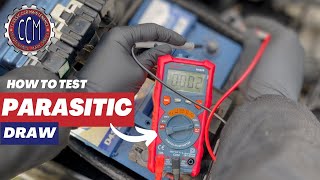
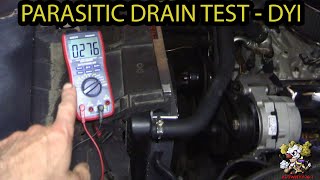
- Parasitic Battery Drain (also visible on scanner) — A faulty module fails to 'go to sleep' when the car turns off, causing a slow drain that kills the battery overnight. 🎬 Watch: The easiest way to perform a parasitic draw test. Normal drain is under 75mA; a bad module draws several hundred mA.
- No Obvious Symptoms (scan-tool only — no driver-felt sign) — The code is sometimes stored with no noticeable effect on drivability, especially if the communication loss is intermittent or involves a non-critical module (common on Audi Lane Change Assist systems).
Diagnostic Flowchart
Tap your situation to follow the diagnostic path that matches what you're seeing on this code.
Common Fixes & Costs
- Reprogramming a Control Module — Parts: $0, Labor: $150-$300, ~1.5 hr book time (Professional)
- Repairing Damaged Wiring or Connectors — Parts: $10-$50, Labor: $150-$500, ~3.0 hr book time (Intermediate)
- Replacing the ABS Control Module — Parts: $300-$1000, Labor: $150-$300, ~2.0 hr book time (Professional)
- Repairing or Replacing the Instrument Cluster — Parts: $150-$600 (repair) / $400-$1200 (replace), Labor: $100-$250, ~1.5 hr book time (DIY)
- Replacing the Trailer Brake Control Module (GM) — Parts: $30-$120, Labor: $50-$150, ~0.7 hr book time (DIY)
Used vs. New Parts: Buying Guide
When a used part is worth it: A used part from a reputable seller offers significant savings for common fixes like an ABS module or instrument cluster, especially on older, high-mileage vehicles.
Donor-vehicle mileage cap: roughly under 100000 miles for the part to have meaningful remaining life.
Donor quality checklist:
- Match the part number exactly. Do not rely on year/make/model alone.
- Purchase from a seller offering at least a 90-day warranty.
- Factor in the cost of professional programming (VIN-locking), which is required for most used electronic modules.
Decision logic:
- If The fix is a known software update (TSB) → Only a new programming service from a dealer/specialist works. Used parts are not applicable.
- If The part requires VIN programming (ABS modules, clusters, BCMs) → Factor in $100-$300 for programming. A 'repair and return' service for your original module is often cheaper as it requires no programming.
- If The part is a simple, non-programmed module (GM Trailer Brake Module) → A used part is a low-risk, cost-effective option.
Warranty tradeoff: Used parts typically have a 30-90 day warranty covering the part only. Remanufactured parts offer 1-year to lifetime warranties. New OEM parts carry a 1-2 year warranty when installed by a dealer.
Worst-case if a used part fails: $300-$800 if a used module is defective or cannot be programmed, requiring you to pay diagnostic and installation labor twice.
What Happens If You Wait — Timeline
- Immediate: Code is set. ABS, Traction Control, and other safety systems are disabled. Warning lights illuminate. (MPG impact: 0%% · Added cost: $0 (but high safety risk))
- 1-4 weeks: If the faulty module causes a parasitic draw, the battery struggles, leading to a no-start condition. Deep cycling shortens battery lifespan. (MPG impact: 0%% · Added cost: $180-$350 (for a new battery and potential tow service))
- 1-6 months: In an accident, an insurance company argues the driver knowingly operated a vehicle with a safety defect, complicating the claim. (MPG impact: 0%% · Added cost: Potentially thousands in denied claims or liability.)
- 6+ months: An intermittent open circuit worsens into a permanent short-to-ground, affecting more modules and complicating diagnosis. (MPG impact: 0%% · Added cost: $200-$500 (in additional diagnostic labor time))
Cost of Not Fixing It
- Immediate: Loss of safety features like Anti-lock Brakes (ABS) and Traction Control, increasing accident risk in emergency braking or slippery conditions. (Added cost: $0 (but high safety risk))
- 0-3 months: A faulty module fails to sleep properly, causing a parasitic battery drain that ruins a healthy battery. (Added cost: $150-$350 (for a new battery and potential tow))
- 3+ months: Continued driving with disabled safety systems creates insurance or legal liability in the event of an accident. (Added cost: Potentially thousands in liability or denied claims)
Diagnosis Steps
- Check for Technical Service Bulletins (TSBs)
Search online for TSBs related to code U1122 for your specific make, model, and year. A dealer software update is the most common and definitive fix for this code on modern vehicles.
Tools: Computer with internet access (Beginner) - Check the Battery and Charging System
Verify the battery is fully charged (above 12.4V with engine off) and terminals are tight. With the engine running, confirm the alternator charges at 13.5-14.5V. Low voltage is a primary trigger for U-codes.
Tools: Multimeter (Beginner) - Perform a Full System Scan
Use an advanced OBD-II scanner to read codes from all modules (ABS, BCM, TCM). Identify which modules report 'No Comm' or store U-codes. U1122 is often set by a healthy module reporting that a different module is missing.
Tools: Advanced OBD-II Scanner (Intermediate) - Inspect for Aftermarket Devices
Disconnect any aftermarket devices plugged into the OBD-II port (insurance trackers) or wired into the electrical system (remote starters). Clear the codes to see if the network interference stops.
Tools: Flashlight (Beginner) - Visually Inspect Wiring Harnesses
Inspect the wiring harness connected to the non-communicating module. Look for chafing, corrosion, or loose connections, paying special attention to door jambs, under-carpet areas, and the rear axle.
Tools: Flashlight, trim removal tools (Intermediate) - Check CAN Bus Resistance
With the battery disconnected, measure resistance at the OBD-II port (Pins 6 and 14). A healthy CAN bus reads exactly 60 ohms. A reading of 120 ohms indicates an open circuit or missing module; 0 ohms indicates a short.
Tools: Multimeter, vehicle-specific wiring diagram (Advanced) - Perform a Parasitic Draw Test
If the battery dies overnight, test for parasitic draw. With the vehicle asleep (wait 60 minutes), current draw must be under 75mA. Pull fuses one by one to isolate the circuit keeping the network awake.
Tools: Multimeter with 10A current loop capability (Advanced) - Isolate the Faulty Module
If network resistance is 0 or 120 ohms, disconnect modules one by one. If disconnecting a specific module returns the network resistance to 60 ohms, that module is internally shorted and requires replacement.
Tools: Multimeter, trim removal tools, wiring diagram (Professional) - Perform Pin-Drag Test on Connectors
Use terminal test probes to 'drag' through each pin socket in the suspect connector. Terminals with no tension cause intermittent communication loss and must be replaced.
Tools: Terminal test probe set, wiring diagram (Advanced) - Perform a CAN Bus Waveform Analysis
Connect a dual-channel oscilloscope to CAN High and CAN Low. A healthy bus shows a mirror-image square wave (CAN High rising to 3.5V, CAN Low falling to 1.5V). This definitively identifies electrical noise or shorts.
Tools: Automotive Oscilloscope, wiring diagram (Professional)
When This Code Triggers (Freeze-Frame Conditions)
- Module Voltage: 12.5-14.5V (Normal operating voltage. Low voltage (<12V) at the time of the fault points directly to battery or charging system issues.)
- Vehicle Speed: 0-70 mph (Occurs at any speed, but often sets during steady-state cruising when the system runs self-diagnostics.)
- Engine RPM: 0-3000 RPM (The fault logs with the engine off (Key On), at idle, or during normal driving.)
- Fault Priority: 6 (Communication faults are often assigned a lower priority, indicating they are non-critical for immediate engine operation but require attention.)
Related Codes
- U0001 — Indicates a general network-wide failure. If U1122 appears alongside U0001, the problem is in the network backbone (bad gateway or shorted main wiring) rather than a single module.
- U0121 — Logged when the ABS module goes offline. U1122 is often a secondary code set by other modules that can no longer hear from the ABS. Seeing both confirms the ABS circuit is the root cause.
- U0140 — Logged when the BCM goes offline. If the BCM is online but stores a U1122, the BCM is reporting that a different module is missing.
- U1123 — A companion code on brands like Jeep, pointing to a communication loss with a related module on the same network branch. Seeing them together confirms the fault is on a specific sub-network.
Climate & Environmental Factors
- High Humidity / Road Salt (Salt Belt): Accelerates corrosion of wiring harnesses and module pins in exposed areas like wheel wells. Corrosion increases resistance or causes an open circuit in the data bus wires.
- Extreme Cold: Causes weak batteries to drop below the minimum voltage required by control modules, triggering communication codes on startup. It also makes wire insulation brittle and prone to cracking.
How to Talk to a Mechanic About This Code
Say this: "I have a U1122 communication code and my ABS light is on. I verified my battery voltage is 12.6V. I need a diagnostic to test the CAN bus network resistance and inspect the wiring near the ABS module before assuming the module itself is bad."
This directs the shop to perform a logical diagnostic process (checking the network before condemning an expensive part) and prevents them from simply replacing the most expensive component.
Avoid saying:
- 'My check engine light is on, can you fix it?'
- 'The car is acting weird, just figure it out.'
- 'I think the ABS computer is broken, can you replace it?'
Questions to ask before authorizing the repair:
- What were the results of the CAN bus resistance test?
- Did you find a broken wire, a bad ground, or a faulty connector?
- If you are recommending a module replacement, can you show me the power, ground, and network signal tests that prove the module is the point of failure?
- Does the replacement module require programming and is that included in the quote?
Where to Take It: Dealer vs Independent vs Chain
- Dealer:
Best fit if you suspect a software update is needed or if the vehicle is under warranty. They have the specific tools required for module programming.
Best for: Vehicles under warranty, Cases where a known TSB requires a software update (e.g., Jeep, Audi).
Downsides: Highest labor rates, May replace an entire module or harness rather than perform a detailed wiring repair. (Typical cost: +50% vs. baseline) - Independent Shop:
A strong choice for most U1122 scenarios, especially for common wiring issues or module replacement on older cars. Ensure they specialize in electrical diagnostics.
Best for: Out-of-warranty vehicles where the cause is likely a wiring or common module failure., Shops that specialize in electrical diagnostics.
Downsides: May not have the latest manufacturer-specific programming tools for all brands., Diagnostic skill varies greatly; look for ASE-certified technicians. (Typical cost: +0% vs. baseline) - Chain Shop:
AVOID for U1122 diagnosis. This code requires electrical and network diagnostic expertise not typically found at chain repair shops.
Best for: Simple, unrelated maintenance like oil changes or tires.
Downsides: Not equipped for complex network diagnostics., Technicians lack specialized training for U-series codes, leading to misdiagnosis. (Typical cost: -10% vs. baseline)
When to Walk Away From the Repair
If the estimated repair cost for the U1122 fault exceeds 40-50% of your car's private-party value, sell or trade it in.
- Car worth $5000, fix is $2200: Borderline. The repair is almost half the car's value. Get a second opinion before proceeding.
- Car worth $15000, fix is $1500: Fix it. The repair cost is a small fraction of the vehicle's value and restores critical safety systems.
- Car worth $3000, fix is $1800: Walk away. The repair cost is over 50% of the car's value. It's not a sound financial decision.
What Scan Tool You Need for This Code
Minimum: A scanner that reads manufacturer-specific 'U' (network) codes from all modules, not just the engine computer. It must see which modules are online.
A basic $20 code reader cannot scan the ABS, BCM, or other modules where this code originates, making it useless for this diagnosis.
Budget: BlueDriver Pro (~$100) — Performs a full system scan to read U-codes from modules like ABS and BCM. Views live data to check module voltage.
Mid-range: Foxwell NT510 Elite / THINKCAR Thinkscan 689BT (~$150-250) — Offers full system diagnostics and bidirectional controls to command modules to perform self-tests, confirming if a module is truly offline.
Professional: Autel MaxiCOM MK808 / Launch X431 Series (~$500-1200) — Provides full bidirectional control and advanced functions like module coding and programming, necessary after replacing an ABS controller.
Rent vs buy: Renting a scanner from a parts store is a good first step to confirm the code. However, if you plan to diagnose the issue yourself, buying a capable scanner is a worthwhile investment.
How to Clear the Code After You Fix It
- Reconnect the battery if disconnected during repair.
- Use a compatible OBD-II scan tool to clear DTCs from all modules.
- Perform a complete drive cycle to allow onboard diagnostics to run and confirm the fix.
Drive cycle (~30 minutes): Start the engine from a cold start (sitting over 8 hours). Idle for 2-3 minutes. Drive a mix of city and highway speeds (steady 55-60 mph for 5-10 minutes). Allow the vehicle to cool down completely.
Readiness monitors affected: Comprehensive Component Monitor, Emissions-related monitors if the Check Engine Light was illuminated.
Before emissions retest: drive at least 50 miles to fully set monitors.
Watch out for:
- Clearing the code without fixing the root cause results in the code returning immediately.
- Disconnecting the battery clears codes but resets all readiness monitors, causing an automatic emissions test failure until a full drive cycle completes.
Will This Fail Emissions / State Inspection?
Yes — this code typically fails an OBD-II emissions inspection.
- California: An illuminated Check Engine Light results in an automatic smog check failure. All OBD readiness monitors must be set to 'Ready'.
- New York: Any diagnostic trouble code that commands the Malfunction Indicator Lamp (MIL) on, including U1122, is cause for failure.
- Texas: In emissions-testing counties, an active Check Engine Light is an automatic failure, regardless of recent safety inspection law changes.
Most Commonly Affected Vehicles
- Jeep Grand Cherokee (WL) (2021-2022) — Prone to U1122 due to a software bug in the Body Control Module (BCM). Fixed by a dealer software update per TSB 08-050-22 REV. B.
- Chevrolet / GMC Silverado, Tahoe, Suburban (2007-2013) — U1122 appears related to the factory Trailer Brake Control Module (TBCM). Often caused by corrosion in the 7-pin trailer connector or the TBCM itself.
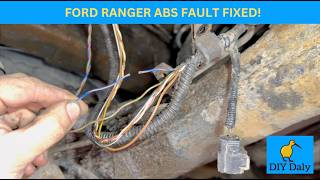
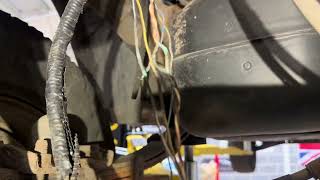
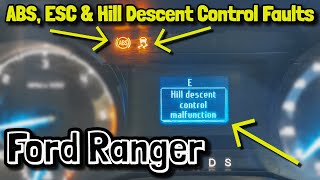
- Ford Ranger / Everest (2015-2023) — Frequently experiences communication faults related to the ABS module. The most common cause is a broken orange/white or orange/blue wire in the harness above the rear axle.
- Volkswagen Jetta, Golf, Caddy (2012-2019) — Sets a U1122 'Implausible Message' code related to the ABS or Engine control module. Causes range from a blown ABS fuse to incorrect software coding.
- Audi Q3 (2019-2023) — A known software bug causes a U1122 'Implausible Message' code in the Lane Change Assist module. TSB 96-21-69 states this code stores with no functional defects and requires no repair.
- Honda Accord, Pilot (2009-2023) — A U-code points to a loss of communication with the VSA (ABS) module, caused by a software flaw requiring an update, a bad module, or wiring issues.
- Hino 338 / 500 Series (2012-2024) — U1122 points to a communication failure with the EGR actuator system. Diagnosis involves checking the actuator relay and CAN circuit voltage.
- Mitsubishi Lancer, Outlander (2008-2015) — U1122 indicates the instrument cluster received failure information from the ABS or Traction Control ECU via the CAN bus. The primary fault lies within the ABS system.
Manufacturer-Specific Notes
- Jeep/Chrysler/Dodge: Frequently sets U1122 due to software issues in the Body Control Module (BCM) requiring a dealer-installed update (e.g., TSB 08-050-22 REV. B).
- Ford: Often points to a wiring issue for the ABS system, particularly a broken wire in the rear wheel speed sensor harness above the axle on trucks.
- Volkswagen/Audi: Defined as 'Implausible Message', meaning a module receives nonsensical data. TSB 96-21-69 advises ignoring this code on the 2019+ Audi Q3 if no symptoms are present.
- Mitsubishi: Typically set by the instrument cluster when it receives a fault message from the ABS module, making it a secondary code pointing toward a primary brake system problem.
- Hino: Points specifically to a 'Communication Blackout' with the EGR actuator, directing diagnosis to the actuator relay and its dedicated wiring.
Real Owner Stories
2021 Jeep Grand Cherokee (WL) with inoperative rear window switch
The rear left window and lock switches stopped working. A scan revealed code U1122: 'Lost Communication With LIN ECU 2'.
What they tried:
- Suspected a bad switch pack or a broken wire in the door jamb.
Outcome: A search revealed Jeep TSB 08-050-22 REV. B. The dealer performed a software update to the Body Control Module (BCM), resolving the problem under warranty.
Lesson: Always search for Technical Service Bulletins (TSBs) before replacing parts. A simple software update is a common fix that saves hundreds of dollars.
2016 Ford Ranger with ABS and Traction Control lights on
ABS and traction control warning lights appeared. A scanner pulled code U1122. The ABS was not working during a test on a gravel road.
What they tried:
- Checked the ABS fuse and visually inspected the ABS module connector for corrosion.
Outcome: Forum research pointed to a broken wire in the rear wheel speed sensor harness over the rear axle. The owner found and repaired a broken orange/white wire, permanently clearing the codes.
Lesson: U-codes are often caused by wiring faults. Check wiring harnesses in high-movement areas like the rear axle before condemning an expensive module.
2013 VW Jetta with multiple warning lights after buying a used ABS module
The owner installed a used ABS module to fix a failure. After installation, the ABS light remained, and U1122 'Implausible Message' appeared.
What they tried:
- Attempted to code the used module with a basic scan tool, then purchased a Ross-Tech VCDS tool.
Outcome: The module from a different model year could not be coded to the car's VIN. The owner had to buy the correct used module and pay a specialist for online coding, costing more than repairing the original module.
Lesson: Part numbers must match exactly. Used modules require special tools for VIN programming. A 'repair and return' service for your original module is often cheaper.
2012 Chevy Silverado with 'Service Trailer Brake System' message and dead battery
The truck displayed a 'Service Trailer Brake System' message, and the battery died after sitting for a few days. A scan showed code U1122.
What they tried:
- Replaced the battery, which died within a week. Performed a parasitic draw test.
Outcome: Pulling the Trailer Brake Control Module (TBCM) fuse dropped the 300mA draw to normal. Replacing the plug-and-play TBCM cleared the code and resolved the battery drain.
Lesson: A faulty module is a primary cause of parasitic battery drain. Isolating the circuit by pulling fuses definitively identifies the failed module.
How to Prevent This Code From Triggering
- Maintain Battery Health (Annually) — Low voltage triggers communication codes. Test your battery annually and replace it if it drops below 12.4V or is over 4-5 years old.
- Apply Dielectric Grease to Connectors (Whenever a connector is disconnected) — Dielectric grease seals electrical connectors from moisture and dirt, preventing corrosion on the pins in exposed areas.
- Check for Software Updates During Service (During routine dealer maintenance) — Manufacturers release software updates to fix communication bugs. Ask the dealer to check for BCM, PCM, or ABS updates for your VIN.
- Secure and Protect Wiring Harnesses (During other under-vehicle maintenance) — Visually inspect wiring harnesses for chafing or improper routing near hot exhaust. Secure loose harnesses to prevent physical damage.
Frequently Asked Questions
Can I fix a U1122 code myself?
Simple fixes like checking battery voltage and inspecting visible wiring are DIY-friendly. However, diagnosing network issues requires advanced scanners and wiring diagrams. Software updates must be performed by a dealer or qualified shop.
Will clearing the code fix the problem?
No. Clearing the code only turns off the warning light temporarily. The code returns on the next ignition cycle if the underlying communication fault remains.
What is a common misdiagnosis for U1122?
The most common mistake is immediately replacing the 'lost' module without verifying its power, ground, and network connections. A U1122 fault is often caused by a blown fuse, corroded ground, or broken CAN bus wire. Always test the basics before condemning a multi-hundred-dollar part.
Can a bad module cause my battery to die?
Yes. A faulty control module fails to enter its low-power 'sleep' mode when the car turns off. This creates a parasitic draw exceeding 75mA, draining a healthy battery in hours or days.
What does 'Implausible Message' mean on a VW or Audi?
It means a control module is receiving corrupt or nonsensical data from another module. This is often caused by a software bug. In some cases, manufacturers issue bulletins advising technicians to ignore the code if no other symptoms exist.
My scanner can't communicate with any modules. Is this related?
Yes. Total communication failure points to a problem with the main network backbone. This indicates a short-to-ground on the CAN bus wires at the OBD-II port, a bad ground, or a failed central gateway module.
Is U1122 related to my ABS light being on?
Yes. The ABS module is a critical node on the vehicle network. If it fails or its wiring breaks, it triggers a U1122 code in other modules and illuminates the ABS and traction control lights.
My mechanic wants to replace the whole wiring harness. Is that necessary?
Replacing a harness section is the most reliable repair for extensive damage from rodents or untraceable breaks. However, a skilled technician can often find and repair a single broken wire for significantly less money. Ask for a detailed explanation of why a targeted wire repair is impossible.
Key Takeaways
- Always check your battery voltage first; a drop below 12.4V with the engine off is the leading cause of U1122 communication errors.
- Search for Technical Service Bulletins (TSBs) before replacing parts, as a 1-hour dealer software update fixes this code on many modern vehicles like the 2021-2022 Jeep Grand Cherokee.
- Do not replace a 'lost' module like the ABS controller without first verifying its power, ground, and CAN bus resistance measures exactly 60 ohms.
- If your battery dies overnight alongside a U1122 code, perform a parasitic draw test to find the faulty module pulling more than 75mA while the car is off.
Helpful Videos

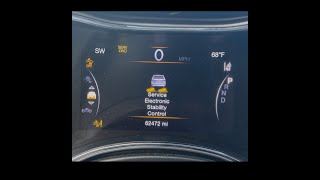
Shop the Parts Behind U1122
Below are the parts most often responsible for code U1122, ranked by how frequently each one is the actual culprit (per the diagnosis above). Tap any to see what we have for your vehicle.

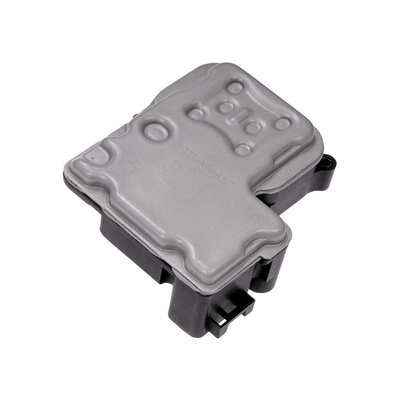
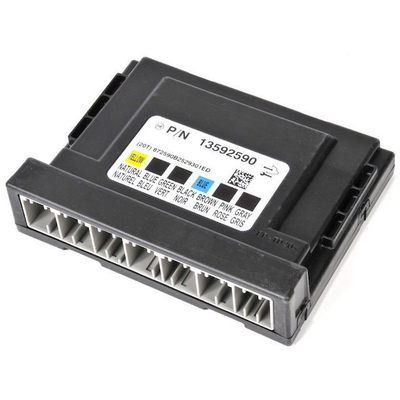



The information in this article is provided for general reference and educational purposes only. Vehicle specifications, procedures, and part compatibility can vary by production date, trim level, and region. Always consult your vehicle's factory service manual and verify part numbers before purchasing or performing repairs. Safety-critical components such as airbags, seat belts, and braking systems should be installed by a qualified professional.
- 🧭 Diagnostic Flowchart
- 🎬 Helpful Videos
- 🛍️ Shop This Part
- What Does U1122 Mean?
- Can I Drive With U1122?
- Common Causes
- Symptoms
- Common Fixes & Costs
- Used vs. New Parts: Buying Guide
- What Happens If You Wait — Timeline
- Cost of Not Fixing It
- Diagnosis Steps
- When This Code Triggers (Freeze-Frame Conditions)
- Related Codes
- Climate & Environmental Factors
- How to Talk to a Mechanic About This Code
- Where to Take It: Dealer vs Independent vs Chain
- When to Walk Away From the Repair
- What Scan Tool You Need for This Code
- How to Clear the Code After You Fix It
- Will This Fail Emissions / State Inspection?
- Most Commonly Affected Vehicles
- Manufacturer-Specific Notes
- Real Owner Stories
- 2021 Jeep Grand Cherokee (WL) with inoperative rear window switch
- 2016 Ford Ranger with ABS and Traction Control lights on
- 2013 VW Jetta with multiple warning lights after buying a used ABS module
- 2012 Chevy Silverado with 'Service Trailer Brake System' message and dead battery
- How to Prevent This Code From Triggering
- Frequently Asked Questions
- Can I fix a U1122 code myself?
- Will clearing the code fix the problem?
- What is a common misdiagnosis for U1122?
- Can a bad module cause my battery to die?
- What does 'Implausible Message' mean on a VW or Audi?
- My scanner can't communicate with any modules. Is this related?
- Is U1122 related to my ABS light being on?
- My mechanic wants to replace the whole wiring harness. Is that necessary?
- Key Takeaways
- 🎟️ Get 5% Off