

OBD-II Code U1125: A Comprehensive Guide to Network Communication Faults
What U1125 means, why it happens, and how to diagnose and fix it like a pro
- Always test your battery first; voltage drops below 12.4V are the leading cause of U1125 communication errors across all vehicle makes.
- Search for Technical Service Bulletins (TSBs) before buying parts, as a 1-hour dealer software update ($150-$250) fixes this code on many modern Jeeps and Subarus.
- Never replace the 'silent' module without first using a multimeter to verify it receives a steady 12V power supply and has less than 1 ohm of ground resistance.
- Use a full-system OBD-II scanner ($60+) to read all modules, because a basic $20 engine code reader cannot see the body or chassis faults triggering a U1125.
- Inspect wiring harnesses passing through door hinges or under seats, as chafed wires shorting to ground cause over 40% of physical network failures.
What Does U1125 Mean?
U1125 means one of your car's electronic control units (modules) has stopped communicating on the vehicle's network. The main computer expects the module to be active, but receives no signal. This network communication problem is like a person in a group chat suddenly going silent. The offline system controls anything from the air suspension to the passenger seat sensors.
Technical definition: The official SAE/OBD-II definition for U1125 is manufacturer-specific. It indicates a 'Lost Communication' fault on a sub-network, typically the CAN bus or Local Interconnect Network (LIN) bus. A primary control unit (like the Body Control Module) sets this code when it stops receiving signals from a required 'slave' module, such as a Ride Height Switch, Acceleration Sensor, or Occupant Detection System.
Can I Drive With U1125?
Yes, But With Caution. Yes, but limit driving to short trips to a repair shop. Critical safety systems like ABS, stability control, or airbags are often disabled. Driving without stability control or ABS significantly increases the risk of losing control or extending stopping distances during emergency maneuvers. You may also experience reduced engine power ('limp mode'), making highway driving dangerous.
Common Causes
- Low Battery Voltage or Poor Grounds (Very Common) — A weak battery (below 12.4V) or a corroded main ground connection causes unpredictable electrical noise and voltage drops, disrupting the sensitive communication network between modules. This is the leading cause of random U-codes.
- Software Glitch Requiring a Module Update (Very Common) — On modern vehicles (especially Jeep and Subaru), this code triggers due to a software bug in a master control module like the Body Control Module (BCM). Dealers resolve this by installing software updates via Technical Service Bulletins (TSBs).
- Wiring Harness or Connector Issues (Very Common) — Communication network wires (LIN or CAN bus) become damaged, corroded, or frayed. This occurs in areas exposed to weather, flexing (door hinges, seat harnesses), or rubbing against chassis components.
- Faulty or Failing 'Slave' Module (Common) — The silent module itself is broken. This involves internal failures of components like a yaw rate sensor, ride height switch, accelerator pedal sensor, or Occupant Detection System (ODS) module.
- Blown Fuse or Loss of Power to the Module (Less Common) — A module cannot communicate if its fuse blows or it loses power due to a broken wire. A single fuse powers multiple components, making diagnosis tricky.
- Incompatible Aftermarket or Incorrectly Coded Parts (Rare) — Installing aftermarket electronics (remote starter, stereo) or swapping factory components without proper programming triggers this code. The gateway module detects an unexpected part and logs an 'Additional Installations Detected' fault.
- Failing 'Master' Module or Gateway (Rare) — The 'master' module (BCM or Gateway) fails and falsely reports other modules as offline. This triggers a cascade of multiple communication codes simultaneously.
Symptoms
- Warning Lights on the Dashboard — You see specific system lights such as 'Service StabiliTrak', 'Service Air Suspension', ABS, Traction Control, or an Airbag warning light.
- Loss of Specific System Functions — The feature controlled by the silent module stops working. Air suspension won't adjust, stability control disables, or the passenger airbag deactivates.
- Reduced Engine Power ('Limp Mode') — If the fault relates to a powertrain sensor like the accelerator pedal, the main computer limits engine power to prevent damage, resulting in very slow acceleration.
- Unresponsive Buttons or Switches — Buttons on a switch pack, such as the ride height selector or steering wheel controls, become inoperative or lose backlighting.
- Erratic Instrument Cluster Behavior — Communication failures cause gauges to behave erratically, flicker, or the entire instrument cluster to intermittently shut down.
Diagnostic Flowchart
Tap your situation to follow the diagnostic path that matches what you're seeing on this code.
Common Fixes & Costs
- Replacing Battery or Corroded Ground Cable — Parts: $20-$250, Labor: $0-$100, ~0.5 hr book time (Beginner)
- Updating Module Software (Dealer Reflash) — Parts: $0, Labor: $150-$250 (dealer-only), ~1.0 hr book time (Professional)
- Repairing Damaged Wiring or Connectors — Parts: $10-$50, Labor: $150-$450, ~2.5 hr book time (Intermediate)
- Replacing a Faulty Sensor or Switch (e.g., APP Sensor) — Parts: $50-$200, Labor: $125-$250, ~1.0 hr book time (Intermediate)
- Replacing a Faulty Control Module (e.g., ODS, Radar Sensor) — Parts: $200-$1000+, Labor: $150-$300 (plus programming), ~1.5 hr book time (Professional)
DIY vs Professional
- Replacing Battery or Corroded Ground Cable 🟢 Beginner
Tools: Socket set, wire brush. - Updating Module Software 🟢 Beginner
Tools: Proprietary dealer software and hardware. - Repairing Damaged Wiring 🟢 Beginner
Tools: Multimeter, wire strippers, soldering iron, heat shrink tubing. - Replacing a Faulty Sensor or Switch 🟢 Beginner
Tools: Basic socket set, wrenches. - Replacing a Faulty Control Module 🟢 Beginner
Tools: Basic hand tools for removal, professional scan tools for calibration.
Used vs. New Parts: Buying Guide
When a used part is worth it: Used parts are cost-effective for simple, non-critical components like switches or ground cables. Avoid used parts for complex electronic modules or safety sensors.
Donor-vehicle mileage cap: roughly under 60000 miles for the part to have meaningful remaining life.
Donor quality checklist:
- Verify the donor vehicle's VIN to ensure exact part number compatibility.
- Avoid parts from vehicles in heavy road salt regions, as corrosion causes most failures.
- Ensure the donor vehicle was not scrapped due to electrical or flood damage.
Decision logic:
- If The part is an Accelerator Pedal Sensor (APP) or critical input sensor → Buy new OEM or high-quality aftermarket. Used sensors risk intermittent failure and throttle loss.
- If The part is an ADAS module (radar, camera) or SRS module (ODS) → Buy new OEM only. Used modules risk prior impact damage and often fail mandatory professional calibration.
- If The part is a simple switch or connector pigtail → A used part from a reputable salvage yard is a reasonable choice.
Warranty tradeoff: Used parts offer 30-90 day warranties covering only the part. New aftermarket parts offer 1-year to lifetime warranties. New OEM parts carry 1-2 year warranties.
Worst-case if a used part fails: $500-$1500 if a used safety-critical module fails, requiring repeat labor and professional calibration.
What Happens If You Wait — Timeline
- 0-1 month: Code sets and a system-specific warning light illuminates. The associated function is disabled. The vehicle is drivable but a safety or convenience feature is lost. (MPG impact: 0%% · Added cost: $0)
- 1-4 months: Driving without stability control or ABS increases accident risk. The vehicle automatically fails state OBD-II emissions or safety inspections. (MPG impact: 0%% · Added cost: $50-$200 (Inspection re-test fees))
- 4-12 months: If caused by a critical sensor (accelerator pedal), the vehicle unexpectedly enters 'limp mode' in traffic, reducing speed to 30-50 mph and dropping MPG. (MPG impact: 15-25% (if in limp mode)% · Added cost: $250+ (Wasted fuel, potential towing))
- 12+ months: Ignoring wiring corrosion allows it to spread, damaging connector pins. A persistent short on the data line damages the transceiver circuit inside a master control module. (MPG impact: 0-25% (depending on cause)% · Added cost: $1000-$2000+ (Fried master control module))
Cost of Not Fixing It
- Immediate: Loss of function for the specific system (e.g., air suspension won't adjust, stability control is disabled, passenger airbag is off). (Added cost: $0)
- 0-6 months: Failed state emissions or safety inspection. An active U-code illuminating the Check Engine or system warning light automatically fails the OBD-II test. (Added cost: $50-$200 (re-test fees, lost time))
- 6+ months: Increased safety risk and potential for being stranded. If the fault involves a critical sensor like the accelerator pedal, it causes complete throttle loss. (Added cost: $250+ (Towing and original repair costs))
Diagnosis Steps
- Check Battery Voltage and Grounds
Use a multimeter to verify the battery has at least 12.4 volts with the engine off and the alternator charges between 13.5 and 14.5 volts while running. Clean and tighten all main battery and chassis ground connections.
Tools: Multimeter, Socket Set, Wire Brush (Beginner) - Perform a Full Vehicle Code Scan
Use an advanced OBD-II scanner to read manufacturer-specific codes from ALL modules (BCM, ABS, SRS). Note which module reports the U1125 code (the 'master') and which module is not communicating (the 'slave').
Tools: Advanced OBD-II Scanner (Beginner) - Check for Technical Service Bulletins (TSBs)
Search online for TSBs related to your vehicle's make, model, year, and the U1125 code. The official fix is often a simple dealer software update, saving hundreds in diagnostic time.
Tools: Internet Access (Beginner) - Visually Inspect Wiring and Connectors
Locate the non-communicating module. Inspect its wiring harness for pinched wires, green corrosion in connectors, or rodent damage. Focus on harnesses passing through door hinges, under seats, or near exhaust components.
Tools: Flashlight, Inspection Mirror (Intermediate) - Test Power and Ground at the Faulty Module
Unplug the connector from the non-communicating module. Use a multimeter to confirm the module receives proper battery voltage (11-14V with key on) and has a solid ground connection (less than 1 ohm of resistance).
Tools: Multimeter, Vehicle-Specific Wiring Diagram (Advanced) - Test the CAN/LIN Bus Wires
For a two-wire CAN bus, disconnect the battery and measure resistance between the bus wires (DLC pins 6 and 14); it should read ~60 ohms. For a single-wire LIN bus, check for a short to ground or power. A healthy LIN wire shows fluctuating voltage (6-9V) with the key on.
Tools: Multimeter, Vehicle-Specific Wiring Diagram (Advanced) - ADVANCED: Test APP Sensor Voltage
If suspecting an Accelerator Pedal Position (APP) sensor, backprobe its connector with the key on. Confirm the 5V reference is present. Monitor signal wires while pressing the pedal; voltage must change smoothly without dropouts.
Tools: Multimeter with backprobe pins, Wiring Diagram (Advanced) - PRO TIP: Oscilloscope Waveform Analysis
Connect an oscilloscope to the LIN bus wire. A healthy waveform shows sharp, square-wave packets switching between 1V (dominant) and 10-12V (recessive). A flat line at 0V indicates a short to ground; a flat line at 12V indicates a short to power.
Tools: Oscilloscope (Professional) - PRO TIP: Isolate the Faulty Module
If multiple slave modules on the same LIN bus are offline, one faulty module pulls the network down. Monitor the LIN bus waveform and disconnect each slave module one by one. The waveform returns to normal when the faulty module is disconnected.
Tools: Oscilloscope, Wiring Diagram (Professional)
When This Code Triggers (Freeze-Frame Conditions)
- Vehicle State: Key On, Engine Off (Fault sets immediately upon startup as master modules poll the network for all slave modules.)
- Vehicle Speed: 0 mph or 35-55 mph (The fault logs at startup (0 mph) or during steady-state driving when a module fails its periodic check-in.)
- Battery Voltage: 11.8-12.4V (Engine Off) or 13.5-14.5V (Engine On) (Code triggers during or immediately after a low voltage event, such as a weak battery start, disrupting module communication.)
- Time Since Start: 0-30 seconds (The communication check triggering U1125 is one of the first self-tests the vehicle runs after ignition.)
Related Codes
- U0125 — 'Lost Communication With Multi-axis Acceleration Sensor Module.' U1125 is a generic code set by a master module; U0125 specifically indicates the ABS/ESC module lost contact. Having both points directly to the yaw sensor circuit.
- U0140 — 'Lost Communication With Body Control Module.' If the BCM is offline (U0140), many modules report they can't talk to it, setting U1125. If you only have U1125, the BCM works correctly but cannot hear a downstream module.
- P2138 — 'Throttle/Pedal Position Sensor Voltage Correlation.' This sensor failure causes the PCM to set a secondary U1125 code because it distrusts pedal data. P2138 confirms the pedal assembly is the root cause.
- U0126 — 'Lost Communication With Steering Angle Sensor Module.' Appears alongside U1125 when 'Service Stability Control' is on. Communication loss with the SAS disables the stability system.
Climate & Environmental Factors
- High Humidity / Coastal Regions: Salt-laden air accelerates corrosion of wiring, connectors, and battery terminals. This increases electrical resistance and causes intermittent communication failures.
- Cold Climates / Road Salt: Winter road salt coats under-chassis wiring harnesses, seeping into insulation cracks and corroding wires from the inside out. This leads to high resistance and network faults.
How to Talk to a Mechanic About This Code
Say this: "I have a U1125 communication code and I'd like to schedule a diagnostic. Please start by checking for any relevant TSBs for a software update. If no TSB applies, verify power, ground, and data signal integrity at the connector for the non-communicating module before recommending replacement."
This directs the technician to follow a logical diagnostic path (software -> wiring -> module). It prevents them from replacing an expensive module when the root cause is a simple wiring fault.
Avoid saying:
- 'Just fix whatever's wrong'
- 'My check engine light is on, can you look at it?' (too vague — invites upsell)
- 'Whatever you recommend'
Questions to ask before authorizing the repair:
- Did you find a Technical Service Bulletin (TSB) for this issue? Is the fix a software update?
- If recommending a module replacement, did you test for proper voltage, ground, and data signal at the module's connector?
- Does the new module require programming or calibration, and is that cost included in the estimate?
- If the problem is a wiring fault, can you show me the damaged section of the harness?
Where to Take It: Dealer vs Independent vs Chain
- Dealer:
Often the required choice. Many U1125 fixes are dealer-only software updates or require proprietary tools for module programming. Start here for newer Jeeps, Subarus, or Nissans.
Best for: Vehicles under warranty, Known software-related faults (common for Jeep, Subaru, Nissan), Replacing and programming/calibrating modules (ADAS, SRS, BCM)
Downsides: Highest labor rate, typically 1.5-2x an independent shop, Less willing to perform component-level wiring repairs (Typical cost: +50% vs. baseline) - Independent Shop:
A strong choice if the shop specializes in electrical diagnostics. Ask: 'Are you equipped to diagnose CAN/LIN bus faults and program modules for my vehicle?'
Best for: Out-of-warranty vehicles with known hardware causes (GM accelerator pedal), Diagnosing and repairing physical wiring issues
Downsides: Diagnostic equipment varies widely, May lack tools for software updates or programming newer modules (Typical cost: +0% vs. baseline) - Chain Shop:
AVOID. High risk of misdiagnosis and wasted money. Network diagnostics require specialized skills not found here.
Best for: Simple maintenance like oil changes or tire rotations
Downsides: Technician skill and tools are inadequate for complex network faults, High pressure to sell parts leads to replacing the wrong component (Typical cost: -10% vs. baseline)
When to Walk Away From the Repair
If the estimated repair cost exceeds 40-50% of the car's private-party value, seriously consider selling or trading it in.
- Car worth $4000, fix is $2200: Walk away. The repair is over 50% of the car's value.
- Car worth $15000, fix is $1800: Fix it. The repair is well below the threshold and cheaper than a replacement vehicle.
- Car worth $2500, fix is $1500: Walk away. A repair costing 60% of the car's value is a poor investment, as other failures are imminent.
What Scan Tool You Need for This Code
Minimum: A scanner that reads manufacturer-specific codes from ALL vehicle modules (ABS, SRS, BCM), not just the engine computer.
A cheap generic OBD-II reader only checks engine codes (P-codes). It cannot see a U1125 code stored in the Body Control Module or Gateway.
Budget: Autel AP200 / BlueDriver Pro (~$60-120) — These smartphone-based dongles provide a full system scan to read codes from all modules, identifying the specific offline module.
Mid-range: Foxwell NT510 Elite / Innova 5610 (~$150-380) — These handheld scanners offer full system diagnostics, bidirectional controls, and robust live data graphing to diagnose intermittent wiring issues.
Professional: Autel MaxiCOM MK808S / Launch X431 Series (~$450-600) — Provides full bidirectional control to actively test components and perform coding/programming. Essential for confirming if a module is truly faulty.
How to Clear the Code After You Fix It
- Fix the root cause of the fault (e.g., repair wiring, update software).
- Use a full-system OBD-II scan tool to clear the Diagnostic Trouble Code (DTC).
- Perform a complete drive cycle to allow readiness monitors to run self-tests.
Drive cycle (~30 minutes): A standard drive cycle includes: a cold start (engine off for 8+ hours), 3 minutes of idling with electrical loads on (A/C, rear defrost), 15 minutes of mixed city driving (25-45 mph with full stops), and 10 minutes of steady highway driving (55-60 mph).
Readiness monitors affected: Catalyst (CAT) monitor, Evaporative (EVAP) System monitor, Oxygen (O2) Sensor monitor, EGR (Exhaust Gas Recirculation) System monitor
Before emissions retest: drive at least 100 miles to fully set monitors.
Watch out for:
- Disconnecting the battery does not clear U-codes on modern vehicles and resets all readiness monitors to 'not ready'.
- The code returns instantly on the next key cycle if the underlying communication problem remains unfixed.
- EVAP monitors require specific fuel levels (1/4 to 3/4 tank) and ambient temperatures to run.
Will This Fail Emissions / State Inspection?
Yes — this code typically fails an OBD-II emissions inspection.
- California: An active U1125 code illuminating the MIL is an automatic failure. After repair, you must complete a drive cycle, as California allows only one incomplete readiness monitor.
- New York: An illuminated Check Engine light from a U1125 code results in an immediate OBD-II emissions inspection failure.
- Texas: In the 17 counties requiring emissions testing, a vehicle with a U1125 code fails the OBD-II scan. This requirement remains despite safety inspections ending in 2025.
Most Commonly Affected Vehicles
- Jeep Grand Cherokee, Wagoneer, Grand Wagoneer (2021-2023) — Extremely common due to a BCM software bug affecting air suspension communication. The fix is a dealer software update per TSB 08-153-22 REV A or 08-050-22 REV. B. Repair costs $150-$250 if out of warranty.
- Nissan / Infiniti Rogue, Altima, Sentra, Titan (2018-2024) — Often related to the ADAS front radar sensor, causing an 'Unavailable Front Radar Obstruction' warning. Causes include a dirty sensor, misaligned bracket, or faulty sensor. Refer to TSB NTB19-033D or NTB21-106B.
- Subaru Outback, Legacy, Forester (2009-2022) — Frequently linked to the Occupant Detection System (ODS). For 2020-2022 Outback/Legacy, safety recall WRA-24 addresses defective ODS sensors that short circuit and disable the passenger airbag.
- Chevrolet / GMC Silverado, Tahoe, Malibu, LaCrosse, Regal (2003-2018) — U1125 often relates to the Accelerator Pedal Position (APP) sensor, triggering 'Reduced Engine Power'. GM issued Special Coverage Adjustment N182188250 extending the APP sensor warranty to 10 years/150,000 miles on certain models.
- Volkswagen / Audi Various (Golf, Jetta, A4, etc.) (2000-2015) — The code translates to 'Additional Installations Detected'. This occurs when the gateway module detects an unprogrammed aftermarket part. The fix is correctly coding the gateway using VCDS.
- Dodge / Chrysler / Jeep Various (Ram, Nitro, etc.) (2007-2014) — Known for communication codes caused by chafed CAN bus wires in the engine bay or internal failures of the Totally Integrated Power Module (TIPM).
- Hyundai / Kia Various with ADAS (2018-2024) — The 'Check Forward Safety System' warning links to communication faults. The root cause is frequently a faulty front radar sensor, misaligned bracket, or software glitch.
- Ford / Peugeot / Citroen Various (2002-2012) — The code frequently points to an intermittent problem with the Throttle Position Sensor (TPS), Accelerator Pedal Position (APP) sensor, or associated wiring.
Manufacturer-Specific Notes
- Jeep / Chrysler (Stellantis): U1125 is frequently caused by a BCM software bug. Always check for a software update TSB (like 08-153-22 REV A) before replacing hardware for air suspension issues.
- Nissan / Infiniti: The 'Front Radar Obstruction' warning is highly sensitive. Thoroughly clean the Nissan emblem and bumper area before paying for diagnostics, as dirt or heavy rain triggers the fault.
- Volkswagen / Audi: The code definition is 'Additional Installations Detected'. The gateway computer found an unexpected module after an upgrade. Fix this by re-coding the gateway with diagnostic software, not replacing parts.
- General Motors (Chevrolet / GMC): U1125 strongly indicates a failing Accelerator Pedal Position (APP) sensor. Check for Special Coverage programs like N182188250 extending the warranty for this part.
- Subaru: On 2020-2022 Outback/Legacy models, this code relates to the passenger airbag system. Safety recall WRA-24 replaces faulty Occupant Detection System (ODS) sensors for free.
Real Owner Stories
2022 Jeep Grand Wagoneer with 15K miles
Vehicle displayed 'Service Active Damping System' message and U1125 code. The air suspension was stuck in a very low position.
What they tried:
- Owner checked fuses, which were all good.
- Took the vehicle to the dealership for diagnosis.
Outcome: The dealer identified TSB 08-153-22 REV A, requiring a Body Control Module (BCM) software update. The BCM was flashed, resolving the communication error under warranty in 2 hours.
Lesson: For modern, software-heavy vehicles, check TSBs first. A simple software update at the dealer is the most common fix for this specific issue.
2017 GMC Sierra at 85K miles
Check Engine Light illuminated with a 'Reduced Engine Power' warning. The truck had poor acceleration. Scan showed codes U1125 and P2138.
What they tried:
- Suspected a complex wiring issue due to the U-code.
- A shop quoted $300 for initial network diagnosis.
Outcome: Researching U1125 and P2138 pointed directly to a failed Accelerator Pedal Position (APP) sensor. The owner replaced the APP sensor assembly for $85, resolving both faults and restoring power.
Lesson: A communication code paired with a specific sensor performance code (P2138) identifies the root cause. The U-code is just a symptom of the failed pedal sensor.
2013 Volkswagen Golf with 110K miles
After installing an upgraded factory steering wheel, a persistent U1125 fault code appeared in the Gateway module, defined as 'Additional Installations Detected'.
What they tried:
- Cleared the code with a basic scanner, but it returned immediately.
- Checked all steering wheel connectors, which were seated correctly.
Outcome: Using VCDS, the owner updated the Gateway module's coding list to include the new steering wheel control module. After saving the new coding, the U1125 fault cleared permanently.
Lesson: On German brands, U-codes often mean the central computer detected an unprogrammed part. The fix is re-coding the vehicle's software, not replacing hardware.
How to Prevent This Code From Triggering
- Periodically clean battery terminals and main chassis ground connections. (Every 12 months or during oil change.) — Corrosion creates high resistance, causing voltage drops and electrical noise that disrupt sensitive module communication.
- Apply dielectric grease to the seals of important electrical connectors. (Whenever a connector is disconnected for service.) — Dielectric grease prevents moisture, salt, and dirt from entering connectors and corroding metal pins, a primary cause of communication failures.
- Ensure the vehicle's battery is securely fastened in its tray. (Check annually.) — A loose battery vibrates excessively, leading to internal plate damage or intermittent terminal connections, triggering network faults.
- Avoid frequent, very short trips; take a longer drive weekly. (Weekly habit.) — The alternator needs 20+ minutes of driving to fully recharge the battery. Short trips lead to an undercharged battery, causing startup communication glitches.
- Inspect visible wiring harnesses for signs of chafing or damage. (During routine maintenance.) — Catching a wire rubbing against metal before it wears through insulation prevents short circuits that trigger U1125 codes.
Frequently Asked Questions
What does OBD-II code U1125 mean in simple terms?
It means one of your car's electronic modules, like the air suspension or stability control, has stopped communicating with the rest of the car's computer network.
Why is U1125 so often misdiagnosed?
Mechanics mistakenly replace the 'silent' module without full diagnosis. The root cause is usually damaged wiring, a bad ground, or a software glitch in a different control unit.
Can I clear a U1125 code myself?
You can clear it with a scanner, but the code returns immediately upon the next ignition cycle if the communication fault remains. Clearing the code does not fix the problem.
Is it safe to drive my car with a U1125 code?
It is safe for short trips to a repair shop. However, critical safety systems like stability control or ABS are disabled, and engine power may be reduced.
Can a bad battery cause a U1125 code?
Yes. A weak battery causes low or unstable voltage, creating unpredictable communication errors between modules. Always test the battery and charging system first.
What is a LIN bus and how does it cause this fault?
A LIN bus is a single-wire network used for low-speed components like window switches and sensors. U1125 sets when this wire breaks, shorts to ground, or a faulty module stops communication.
Why did the U1125 code come back after I replaced the sensor?
The problem was likely a wiring issue or software glitch, not the sensor itself. Alternatively, the new module requires dealer-level programming to communicate correctly.
Key Takeaways
- Always test your battery first; voltage drops below 12.4V are the leading cause of U1125 communication errors across all vehicle makes.
- Search for Technical Service Bulletins (TSBs) before buying parts, as a 1-hour dealer software update ($150-$250) fixes this code on many modern Jeeps and Subarus.
- Never replace the 'silent' module without first using a multimeter to verify it receives a steady 12V power supply and has less than 1 ohm of ground resistance.
- Use a full-system OBD-II scanner ($60+) to read all modules, because a basic $20 engine code reader cannot see the body or chassis faults triggering a U1125.
- Inspect wiring harnesses passing through door hinges or under seats, as chafed wires shorting to ground cause over 40% of physical network failures.
Shop the Parts Behind U1125
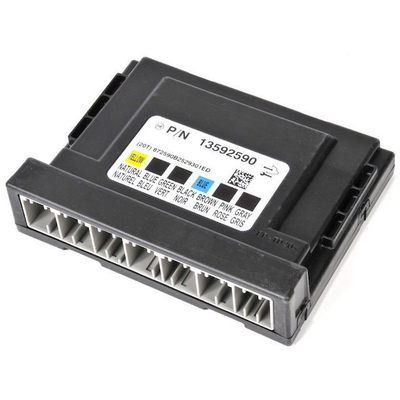
Below are the parts most often responsible for code U1125, ranked by how frequently each one is the actual culprit (per the diagnosis above). Tap any to see what we have for your vehicle.



The information in this article is provided for general reference and educational purposes only. Vehicle specifications, procedures, and part compatibility can vary by production date, trim level, and region. Always consult your vehicle's factory service manual and verify part numbers before purchasing or performing repairs. Safety-critical components such as airbags, seat belts, and braking systems should be installed by a qualified professional.
- 🧭 Diagnostic Flowchart
- 🛍️ Shop This Part
- What Does U1125 Mean?
- Can I Drive With U1125?
- Common Causes
- Symptoms
- Common Fixes & Costs
- DIY vs Professional
- Used vs. New Parts: Buying Guide
- What Happens If You Wait — Timeline
- Cost of Not Fixing It
- Diagnosis Steps
- When This Code Triggers (Freeze-Frame Conditions)
- Related Codes
- Climate & Environmental Factors
- How to Talk to a Mechanic About This Code
- Where to Take It: Dealer vs Independent vs Chain
- When to Walk Away From the Repair
- What Scan Tool You Need for This Code
- How to Clear the Code After You Fix It
- Will This Fail Emissions / State Inspection?
- Most Commonly Affected Vehicles
- Manufacturer-Specific Notes
- Real Owner Stories
- 2022 Jeep Grand Wagoneer with 15K miles
- 2017 GMC Sierra at 85K miles
- 2013 Volkswagen Golf with 110K miles
- How to Prevent This Code From Triggering
- Frequently Asked Questions
- What does OBD-II code U1125 mean in simple terms?
- Why is U1125 so often misdiagnosed?
- Can I clear a U1125 code myself?
- Is it safe to drive my car with a U1125 code?
- Can a bad battery cause a U1125 code?
- What is a LIN bus and how does it cause this fault?
- Why did the U1125 code come back after I replaced the sensor?
- Key Takeaways
- 🎟️ Get 5% Off