

U1141 on 2021 Dodge Challenger: Lost ESP Torque Request Fixes
This code means the Powertrain Control Module (PCM) lost communication with the stability control system. On the 2021 Challenger, this is frequently caused by a software glitch. The first and most common fix is to have a Dodge dealer update the PCM software as outlined in TSB 18-011-22 for vehicles built on or before October 14, 2021.
- For a 2021 Dodge Challenger, the first step for a U1141 code should be checking if TSB 18-011-22 applies to your vehicle.
- The most probable and cost-effective solution is a PCM software update performed by a Dodge dealer.
- This is a network communication code, meaning your ABS, traction control, and stability control are likely disabled.
- Do not immediately replace parts. Diagnosis is key, as the fault could be software, the ABS module, or wiring.
- Due to the complexity of CAN bus diagnostics and the need for potential module programming, this repair is best left to professional technicians.
What's Unique About the 2021-2021 Dodge CHALLENGER
For the 2021 Dodge Challenger, this code is very often linked to a specific Technical Service Bulletin (TSB 18-011-22). This TSB, which also applies to platform mates like the Chrysler 300, indicates that a software update for the Powertrain Control Module (PCM) is required to fix a host of communication-related DTCs, including U1141. This applies specifically to vehicles built on or before October 14, 2021, and suggests the problem is more likely a software anomaly rather than a physical part failure, which is a crucial distinction for this specific model year.
Diagnostic Flowchart
Tap your situation to follow the diagnostic path that matches what you're seeing on this vehicle.
Symptoms You May Notice
- Malfunction Indicator Lamp (MIL) or check engine light is on
- ABS warning light is on
- Traction Control System (TCS) or Electronic Stability Program (ESP) warning light is on
- Cruise control may not function
- In some cases, the transmission may enter a limp mode or fixed gear
- "Service ESC" or similar message on the instrument cluster
- Replacing the PCM without first attempting the software update.
- Replacing the ABS module before thoroughly testing the CAN bus wiring for opens, shorts, or high resistance.
- Replacing wheel speed sensors, which are unlikely to cause a communication code for the entire module. A bad wheel speed sensor typically sets a specific sensor circuit code.
Most Likely Causes
- Powertrain Control Module (PCM) Software Glitch 🔴 High Probability A specific TSB (#18-011-22) was issued by Dodge to address this code and many other communication codes via a software update for vehicles built on or before October 14, 2021. This is the most documented and widespread cause for this specific model year.
How to confirm: A Dodge dealer or a shop with a wiTECH scan tool can check the current PCM software calibration ID against the latest version available as specified in the TSB. The update is warranted if the vehicle was built before the specified date and exhibits the codes.
Typical fix: Reprogramming the PCM with the latest available software using the wiTECH diagnostic application. A battery charger must be connected to maintain stable voltage (13.2-13.5V) during the flash process.
Est. part cost: $0-$250 - Failing ABS/ESP Module 🟡 Medium Probability The ABS module is the source of the missing message. Internal failures, often due to heat and vibration, can prevent it from communicating correctly on the CAN bus.
How to confirm: Using an advanced scan tool to check for communication with the ABS module. If the module has proper power and ground but will not communicate, and the CAN wiring tests good, the module itself is likely faulty.
Typical fix: Replacing the ABS module and performing the necessary initialization and calibration procedure with a compatible scan tool. 🎬 Watch: Tips for replacing and calibrating the ABS module.
Est. part cost: $300-$800 - CAN Bus Wiring Issue ⚪ Low Probability Wiring harnesses can be subject to rubbing, corrosion, or damage. On some Dodge vehicles, owners have reported CAN bus issues from harnesses rubbing against hot components like coolant pipes or from water intrusion in connectors.
How to confirm: Visually inspecting the wiring harness between the PCM, ABS module, and the central gateway/star connector for damage. Perform resistance and voltage checks on the CAN bus circuits. A healthy CAN bus should have a total resistance of approximately 60 ohms between CAN High and CAN Low. 🎬 Watch: A quick and easy guide to CAN bus diagnostics.
Typical fix: Repairing the damaged section of the wiring harness or cleaning/securing a corroded connector.
Est. part cost: $10-$100 - Low Battery Voltage or Failing Battery ⚪ Low Probability → Shop Vehicle Battery
How to confirm: Test the battery voltage with the engine off (should be >12.4V) and with the engine running (should be 13.7V-14.7V). Load test the battery to confirm its health.
Typical fix: Charging or replacing the vehicle's battery.
Est. part cost: $150-$350
Diagnosis Steps
- Check for Technical Service Bulletins (TSBs). For a 2021 Challenger built on or before Oct 14, 2021, TSB 18-011-22 is the most important first step. Confirm if the PCM software has been updated.
- Using an advanced scan tool (like wiTECH), read DTCs from ALL modules. The presence of the other codes listed in TSB 18-011-22 strongly points to the software issue.
- Verify battery voltage and charging system health. Ensure voltage is stable and within specifications (>12.4V static, 13.7-14.7V running). A weak battery can cause numerous communication faults.
- If software is up to date, attempt to communicate directly with the ABS/ESP module using the scan tool. If you can't, proceed to physical checks.
- If communication is not possible, check for power and ground at the ABS module connector using a multimeter. Schematics will be required to identify the correct pins.
- Inspect the CAN bus wiring. The CAN bus is a twisted pair of wires. Check for visible damage, corrosion, or loose connections between the ABS module, the PCM, and the Star Connector/Gateway Module.
- Test the CAN bus integrity. With the battery disconnected, measure resistance between the CAN High and CAN Low pins at the OBD-II port (pins 6 and 14). A healthy bus should read ~60 Ohms. A reading of ~120 Ohms indicates an open circuit or a missing terminating resistor. A reading below 60 Ohms suggests a short circuit.
- If wiring and signals are good but the module won't communicate, the ABS module is the most likely failed component.
- If the ABS module communicates but the U1141 code persists after a software update, the issue may lie within the PCM, though this is less common than the module or wiring.
Parts You'll Likely Need
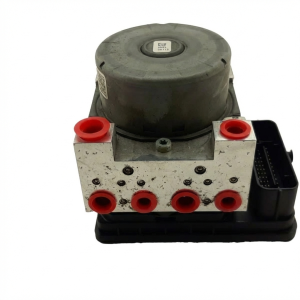
- ABS Control Module / ESP Module
(OEM #68399772AG (supercedes 68399772AF), 68258644AA)— This module is responsible for sending the torque request message. If it fails internally, it can no longer communicate, triggering the U1141 code. Part number can vary by specific vehicle options.
Trusted brands: Mopar
OEM price range: $350-$700
Aftermarket price range: $200-$600
Related Codes That Often Appear With This One
- U0121 — A generic code for 'Lost Communication With Anti-Lock Brake System (ABS) Control Module', which is a very similar fault.
- U110A — Lost Communication With SCM-CAN-C. Often set together as part of the software issue described in TSB 18-011-22.
- U1110 — Lost Vehicle Speed Message. Often set together as part of the software issue described in TSB 18-011-22.
- U1120 — Lost Wheel Distance Message. Often set together as part of the software issue described in TSB 18-011-22.
- U11BC — Lost Brake Switch Message. Often set together as part of the software issue described in TSB 18-011-22.
- C121C — Torque Request Signal Denied. This code indicates the PCM received the request from the ABS module but rejected it, often due to conflicting data or internal faults. It can appear alongside U1141 in complex diagnostic scenarios.
Technical Service Bulletins (TSBs) & Recalls
- 18-011-22: Flash: Powertrain Control Module (PCM) Updates. Addresses MIL illumination with numerous 'Lost Communication' DTCs, including U1141, on vehicles built on or before October 14, 2021. The fix is a PCM software reprogram.
Platform-Specific Known Issues
- TSB 18-011-22 specifically calls for a PCM software update on 2021 Challengers (built on or before Oct 14, 2021) to resolve U1141 and a long list of other communication codes. This is the most critical vehicle-specific issue for this code.
- The issue is not exclusive to the Challenger; the same TSB applies to the 2021 Chrysler 300 with the same build date and engine/transmission configuration, indicating a platform-wide software problem.
Mechanic-Grade Diagnostic Values
- CAN Bus Network Resistance — expected: ~60 Ohms. Failure: A reading of ~120 Ohms indicates a missing terminating resistor or an open circuit. A reading significantly below 60 Ohms (e.g., 0-45 Ohms) suggests a short between CAN lines or an extra terminating resistor.
- CAN Bus Voltage (Key On, Engine Off) — expected: CAN High (Pin 6): ~2.6V. CAN Low (Pin 14): ~2.4V.. Failure: Voltages that are stuck high (e.g., 5V or 12V), stuck low (0V), or equal to each other indicate a short to power, ground, or a short between the two lines.
- Module Flashing Battery Voltage — expected: 13.2V - 13.5V. Failure: Voltage dropping below 13.2V or climbing above 13.5V during a flash procedure can cause the flash to fail or corrupt the module.
Hidden / Shadow Codes Worth Checking
- C2206: Original VIN Mismatch / Missing. This code sets in the new ABS module after it has been replaced with a new or used unit. (see via This will be an active DTC read from the ABS module after physical replacement but before software initialization. It is visible with professional scan tools like Autel or wiTECH.)
Scan Tool Commands That Help
- wiTECH: Restore Vehicle Configuration — This function is used to synchronize a new or existing module with the vehicle's factory configuration. It's often required after replacing a major module like the ABS or PCM, or to correct software corruption that can cause communication codes.
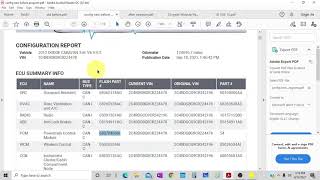
- wiTECH / compatible advanced scanner: ABS Initialization — This is a mandatory step after replacing the ABS module. It writes the vehicle's VIN to the new module and calibrates it, clearing codes like C2206 (VIN Mismatch). This is found under 'Miscellaneous Functions'.
- wiTECH: Flash/Reprogram Module — Used to apply software updates to a module, such as the PCM update specified in TSB 18-011-22 to fix the U1141 code.
Wiring & Ground Locations
- Star Connector / Gateway Connector — On the 2021 Challenger, the primary diagnostic Star Connector is located under the passenger side dashboard, beneath the glove box. It serves as a central hub for the various CAN bus networks.. This connector provides a single point to diagnose the entire network or isolate specific branches. Technicians can disconnect branches to see if a fault disappears, helping to locate a problematic module or wiring section without accessing each component individually.
- Security Gateway Module (SGM) — Located behind the main infotainment screen/radio. Access requires removing the large dash bezel surrounding the screen.. This module controls diagnostic access to the vehicle. For many advanced functions on 2018+ vehicles, a special bypass cable must be connected here to allow a non-dealer scan tool to perform bidirectional commands or clear certain codes.
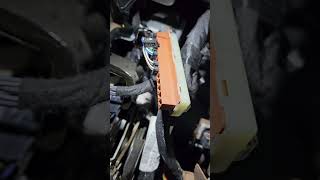
- ABS Module Connector — Connected directly to the ABS hydraulic control unit in the engine bay.. This is the main 38-pin connector for the module that is supposed to be sending the 'ESP Torque Request' message. It is a critical point for checking power, ground, and CAN signals directly at the module. In rare cases, the connector itself can suffer catastrophic failure from heat or electrical short.
- Common Harness Chafe Point — Check the wiring harness loom in the engine bay for areas where it might be resting against or tightly routed near hot metal components, such as coolant pipes.. On many Dodge/Chrysler vehicles, intermittent 'U' codes are not caused by a hard short or open, but by electrical interference induced into the CAN bus wires from heat and proximity to other components. This is often missed by standard resistance checks.
Real Owner Repair Stories
- Diablosport Forums user (2011 Jeep Grand Cherokee (similar FCA electronics)) — ABS light came on after attempting to change tire size with a tuner.
❌ Tried (didn't work) Clearing the code after performing a 'Restore Configuration' with the dealer wiTECH tool caused the ABS light and other codes to immediately return.
✅ What actually fixed it Performing the 'Restore Vehicle Configuration' with wiTECH and then leaving the DTC in a 'Stored' state without clearing it. The light went out and did not return. - EuroweRx YouTube Channel (2013 Dodge Ram (similar FCA electronics)) — ABS light and VIN configuration fault (C2206) after installing a used ABS module.
❌ Tried (didn't work) An Autel scan tool was unable to write the correct VIN to the used module.
✅ What actually fixed it Using the official wiTECH 2.0 software and running the 'ABS Initialization' routine under 'Miscellaneous Functions'. This successfully configured the used module to the truck, clearing the VIN mismatch fault. - Gage Fixes Everything YouTube Channel (2010 Dodge Challenger SE) — ESP, BAS, ABS, and Brake lights on with code C2200 (ABS Module Internal Failure).
❌ Tried (didn't work) Simply replacing the module without programming.
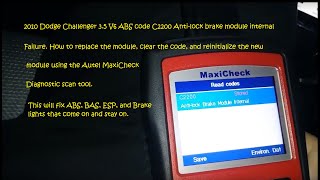
✅ What actually fixed it After replacing the physical ABS module, a C2206 'Original VIN Mismatch' code appeared. Using an Autel Maxicheck scanner, the 'ABS Initialization' function was performed, which successfully programmed the new module to the car and cleared all warning lights.
"I Checked Everything" — The Actual Cause
- On multiple Dodge/Chrysler/Jeep platforms, a cluster of intermittent communication ('U') codes, including those related to ABS and throttle control, have been traced back to the CAN bus wiring harness rubbing against a hot metal coolant pipe in the engine bay. Standard wiring tests for shorts or opens would come back clean. The root cause was electrical interference, not a direct wiring fault, and the fix was to physically move the harness away from the pipe and insulate it.
OEM Part Supersession History
68399772AA, 68399772AB, 68399772AC, 68399772AD, 68399772AE, 68399772AF→68399772AG— This long supersession history for the ABS Control Module indicates multiple hardware and/or internal software revisions by the manufacturer to improve reliability and correct underlying faults.
Heads up: While all parts in the chain are meant to be interchangeable, it is always best practice to use the latest available part number (68399772AG) to benefit from the most recent engineering improvements.
Model Year Variations Within This Range
- 2021: The primary variation within the 2021 model year is the build date. Vehicles built on or before October 14, 2021, are subject to TSB 18-011-22, which fixes code U1141 with a PCM software update. Vehicles built after this date should already have the updated software from the factory.
Helpful Videos
We Have This Part in Stock

The information in this article is provided for general reference and educational purposes only. Vehicle specifications, procedures, and part compatibility can vary by production date, trim level, and region. Always consult your vehicle's factory service manual and verify part numbers before purchasing or performing repairs. Safety-critical components such as airbags, seat belts, and braking systems should be installed by a qualified professional.
- Dodge CHALLENGER:
- 🧭 Diagnostic Flowchart
- 🎬 Helpful Videos
- 🛍️ Shop This Part
- What's Unique About the 2021-2021 Dodge CHALLENGER
- Symptoms You May Notice
- Most Likely Causes
- Diagnosis Steps
- Parts You'll Likely Need
- Related Codes That Often Appear With This One
- Technical Service Bulletins (TSBs) & Recalls
- Platform-Specific Known Issues
- Mechanic-Grade Diagnostic Values
- Hidden / Shadow Codes Worth Checking
- Scan Tool Commands That Help
- Wiring & Ground Locations
- Real Owner Repair Stories
- "I Checked Everything" — The Actual Cause
- OEM Part Supersession History
- Model Year Variations Within This Range
- 🎟️ Get 5% Off