

OBD-II Code U1153: Lost Communication Error
What U1153 means, why it triggers, and how to fix it
- U1153 is a manufacturer-specific network code indicating a control module stopped communicating, requiring an all-system OBD-II scanner to diagnose properly.
- On 2021 and newer Jeep models, U1153 disables the windshield wipers and requires a $150 to $250 dealer software update per TSB 08-050-22, not new parts.
- On 2004-2008 Cadillac and GM vehicles, this code causes a no-start condition due to a broken Engine Control Module (ECM) wire detailed in TSB #PIC5460B.
- Water intrusion from clogged sunroof drains destroys Body Control Modules (BCMs), turning a simple maintenance task into a $1,500+ module replacement.
What Does U1153 Mean?
U1153 is a manufacturer-specific network communication code indicating different vehicle computers (modules) are not talking to each other. Your car operates a network, and this code signals one specific module has gone silent. The exact module and root cause change significantly depending on your car's make and model.
Technical definition: The SAE/ISO definition is 'Lost Communication' on the vehicle's data bus network (CAN, LIN, Class 2). A control module expected to send a regular status message fails to do so for a specific period, causing other modules to report it as missing.
Can I Drive With U1153?
Yes, But With Caution. Driving is not recommended. On many GM vehicles, this code points to a critical wiring failure that causes the engine to stall without warning or fail to restart. On Stellantis vehicles, it disables the windshield wipers, making the vehicle unsafe in rain or snow. Limit driving to reaching a repair shop.
Common Causes
- Control Module Software Glitch (Very Common) — On modern Stellantis vehicles (Jeep, Chrysler), a software bug in the Body Control Module (BCM) causes it to lose connection to other modules, triggering the code.
- Damaged or Corroded Wiring Harness (Very Common) — On older GM models, communication network wires break, chafe against metal, or corrode at connectors. This creates an open circuit, cutting off a module and causing a no-start condition.
- Water Intrusion into a Control Module (Common) — Water from a leaking HVAC drain, clogged sunroof drain, or bad windshield seal seeps into the cabin and destroys the Body Control Module (BCM). Corrosion on the circuit board leads to widespread communication failures.
- Failing Battery or Poor Ground Connection (Common) — Vehicle communication networks require stable voltage. A weak battery, failing alternator, or loose main ground strap causes unpredictable data errors and communication dropouts between modules.
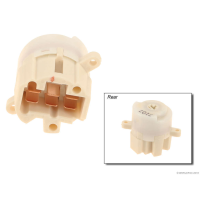
- Failing Ignition Switch (Common) — On specific GM vehicles, a worn-out ignition switch causes intermittent power loss to the data network and critical modules, mimicking a wiring fault and causing a no-crank condition.
- Improperly Installed Aftermarket Accessories (Common) — Aftermarket stereos, alarms, or remote starters interfere with the CAN bus network. Tapping a power wire into a data line introduces electrical noise that disrupts module communication.
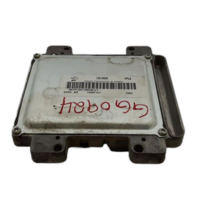
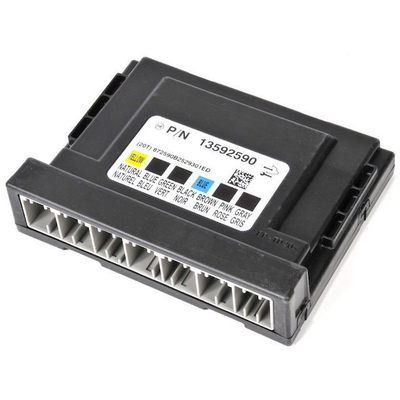
- Internal Control Module Failure (Rare) — A central computer like the BCM, ECM, or a specific peripheral module (like the climate control panel) fails internally due to hardware degradation, dropping off the network entirely.
Symptoms
- Windshield wipers do not work or work erratically — The wipers fail to turn on, get stuck on one speed, or the automatic rain-sensing feature fails. This is the primary symptom on affected Jeep models.
- Engine will not crank or start — The vehicle is completely dead when you turn the key, producing a single click or nothing at all. This is the primary symptom on affected GM vehicles.
- Multiple warning lights on the dashboard — The check engine light, traction control light, and other system warnings illuminate simultaneously as multiple modules report errors.
- Climate controls are inoperative — The HVAC panel goes dead with no lights, preventing control of the fan speed, temperature, or vents.
- Key stuck in ignition — After turning the car off, the ignition lock refuses to release the key because the necessary authorization signal from the engine computer is missing.
- Erratic behavior of interior/exterior lights — Headlights, taillights, or interior dome lights flicker, stay on, or fail to work due to a BCM communication loss.
Diagnostic Flowchart
Tap your situation to follow the diagnostic path that matches what you're seeing on this code.
Common Fixes & Costs
- Reprogramming the Body Control Module (BCM) — Parts: $0, Labor: $150-$250, ~1 hr book time (Professional)
- Repairing a Damaged Wire or Connector — Parts: $10-$50, Labor: $250-$1000, ~3 hr book time (Intermediate)
- Replacing a Faulty Control Module (BCM/ECM) — Parts: $300-$800, Labor: $150-$650, ~2 hr book time (Professional)
- Replacing a Failed Ignition Switch — Parts: $40-$200, Labor: $150-$350, ~1.5 hr book time (Intermediate)
Used vs. New Parts: Buying Guide
When a used part is worth it: A used control module (BCM/ECM) is a high-risk, budget-oriented choice only suitable for older, high-mileage vehicles where a new part is unavailable.
Donor-vehicle mileage cap: roughly under 100000 miles for the part to have meaningful remaining life.
Donor quality checklist:
- Part number must be an exact match.
- Verify the donor vehicle was not scrapped due to flood, fire, or electrical failure.
- Obtain the VIN from the donor vehicle for programming.
- Confirm the salvage yard's warranty policy (often 30-90 days).
Decision logic:
- If The fix is a known software update (e.g., Jeep TSB) → a used part is useless; the existing module needs reprogramming.
- If The vehicle is less than 10 years old and the part is available new → buy new. The risk of programming a used module outweighs the savings.
- If You cannot find a reputable shop willing to program a used module → buy new. Many shops refuse to install customer-supplied used electronics.
Warranty tradeoff: Used parts have a 30-90 day part-only warranty. New aftermarket parts carry a 1-year to limited lifetime warranty. New OEM parts have a 1-2 year warranty.
Worst-case if a used part fails: $500-$1500 if the used module is faulty or incompatible, including non-refundable programming attempts and repeat labor.
What Happens If You Wait — Timeline
- 0-1 Month: An intermittent fault begins. A single warning light appears, or a non-critical function fails occasionally. The code sets and clears on its own. (MPG impact: 0%% · Added cost: $0)
- 1-3 Months: The fault becomes frequent. The car fails to start 1 out of 10 times, or wipers fail for an entire trip. If caused by water, light corrosion begins on the BCM. (MPG impact: 0-1%% · Added cost: $150 to $500 (for a tow or simple module cleaning).)
- 3-6 Months: The issue becomes a hard fault. The car is reliably in a no-start condition, or wipers are permanently inoperative. Water-damaged BCMs are now severely corroded and destroyed. (MPG impact: N/A (vehicle undriveable)% · Added cost: $1,500 - $2,500 (to replace a destroyed BCM and repair corroded connectors).)
- 6+ Months: Cascading failure. A continuously shorted module destabilizes the entire communication network, sending incorrect voltages that damage previously healthy control modules. (MPG impact: N/A% · Added cost: $2,000 - $4,000+ (for diagnostics and replacement of multiple modules).)
Cost of Not Fixing It
- Immediate: Vehicle fails to start, or critical safety systems like windshield wipers fail, making the car unsafe to drive. (Added cost: $100-$300 for a tow.)
- 1-3 Months: If caused by a water leak, progressive corrosion damages the BCM and its connectors beyond repair, causing random electrical failures. (Added cost: $1500-$2500+ to replace a destroyed BCM and repair corroded connector pigtails.)
- 3+ Months: Intermittent network failures cause unpredictable stalling or damage to other control modules on the same network, leading to cascading failures. (Added cost: $2000-$4000+ for multi-module replacement and extensive diagnostic labor.)
Diagnosis Steps
- Check for Technical Service Bulletins (TSBs)
Search online for your vehicle's make, model, year, and code U1153. Manufacturers frequently release TSBs for known software glitches or wiring problems that cause this code, providing a direct path to the fix.
Tools: Smartphone or computer with internet access (Beginner) - Perform a Full Vehicle Scan
Use a high-quality OBD-II scanner to read manufacturer-specific codes from all modules (BCM, ABS, SRS). Note all 'U' codes; they appear in groups and point to a single root cause, like a BCM software bug or network failure.
Tools: All-system OBD-II scanner (Beginner) - Test the Battery and Check Grounds
Ensure your battery is fully charged (12.6V+) and passes a load test. Inspect the main battery terminals and primary body/engine ground straps for tightness and corrosion. Clean or tighten as needed.
Tools: Multimeter, wire brush, wrench set (Beginner) - Inspect for Water Intrusion
Check for dampness, water stains, or corrosion around key control modules. The BCM is often in the passenger footwell or under the dash. Look for clogged HVAC or sunroof drains causing the leak.
Tools: Flashlight (Intermediate) - Inspect the Relevant Wiring Harness
Based on TSBs or the specific code definition for your car, locate the affected module and carefully inspect its wiring harness. Look for chafing, melting, corrosion, or rodent damage.
Tools: Flashlight (Intermediate) - Check for Power and Ground at the Module
Using a multimeter and a vehicle-specific wiring diagram, verify proper voltage and ground at the connector of the module losing communication. A module cannot communicate without power.
Tools: Multimeter, vehicle-specific wiring diagram (Advanced) - Measure CAN Bus Resistance
Disconnect the battery. Measure resistance between CAN High (Pin 6) and CAN Low (Pin 14) on the OBD-II port. A healthy network reads ~60 Ohms. 120 Ohms indicates an open circuit; near 0 Ohms indicates a short.
Tools: Multimeter (Advanced) - Check Network Voltage and Waveform
With the battery reconnected and key on, check voltages. High-speed CAN_H is ~2.6-3.5V and CAN_L is ~1.5-2.4V. A stuck voltage or incorrect waveform points to a wiring short or faulty module.
Tools: Multimeter, oscilloscope (recommended) (Advanced) - Isolate the Faulty Module via Live Data
Using a professional scan tool, monitor live data PIDs for network status. Unplug modules one by one; when the faulty module is disconnected, the network stabilizes and other modules resume talking.
Tools: Professional bi-directional scan tool, wiring diagrams (Advanced)
When This Code Triggers (Freeze-Frame Conditions)
- Network Status: Module Not Communicating (During key-on self-test or continuous monitoring)
- Module Voltage: < 9V or unstable (Occurs if the battery is weak or there is a poor ground connection)
- RPM / Vehicle Speed: Any (The fault sets at 0 RPM (key-on, engine-off) or during driving if the fault is intermittent)
- Time Since Code Set: < 1 second (The code sets within seconds of a module failing to transmit its status message)
Related Codes
- U0100 — Generic code for 'Lost Communication With ECM/PCM.' On GM vehicles where U1153 is triggered by an ECM wiring issue, U0100 confirms the ECM is offline.
- U1207 — On Jeeps, 'Lost Communication With Terrain Switch Bank Module' is part of a cluster of codes triggered by the same BCM software bug as U1153.
- U1191 — Another common companion code on Jeeps, 'Lost Communication with Switch Bank Module 2.' It is resolved by the same BCM dealer reflash.
- U114F — Code for 'Lost Communication with LIN Overhead Console' frequently appears with U1153 on Jeeps, confirming a widespread communication issue originating from the BCM.
- U0140 — Generic code for 'Lost Communication with Body Control Module'. Stored in other modules when the BCM itself fails from water damage or internal faults.
Climate & Environmental Factors
- High Humidity / Coastal Regions: Salt-laden air and high humidity dramatically accelerate corrosion on wiring, connectors, and module circuit boards, causing intermittent connections and open circuits.
- Cold Climates / Winter: At 0°F (-18°C), a battery loses up to 60% of its strength. This lower voltage is insufficient to reliably power all control modules, leading to network communication dropouts during startup.
- Road Salt (De-icing): Corrosive road salt and brine splash onto underbody wiring harnesses, seeping past seals and causing wires and connector pins to corrode and break.
How to Talk to a Mechanic About This Code
Say this: "I have a U1153 communication code. On my [Jeep/Cadillac], this often points to a [BCM software TSB/broken ECM wire]. Can you check for open TSBs or recalls for my VIN before starting a full diagnostic?"
This directs the technician to high-probability causes first, preventing costly wiring traces and avoiding misdiagnosis (like replacing a good wiper motor when the BCM needs an update).
Avoid saying:
- 'My check engine light is on.' (Too vague, invites expensive diagnostics).
- 'My wipers/starter don't work, just replace it.' (Invites replacing parts that aren't the root cause).
- 'Just fix whatever is wrong.' (Gives a blank check for unauthorized repairs).
Questions to ask before authorizing the repair:
- For a Jeep: Did you confirm TSB 08-050-22 or 08-153-22 applies and that a BCM reflash is the correct fix?
- For a GM no-start: Can you show me the broken wire or corrosion on the ECM harness?
- For a water leak: Can you show me the evidence of water intrusion on the BCM?
- If recommending a module replacement, is programming required and included in the quote?
- Will you provide a written, itemized estimate with a clear warranty before I approve the work?
Where to Take It: Dealer vs Independent vs Chain
- Dealer:
Often the best choice for software updates on Stellantis vehicles or recall work on Fords. For out-of-warranty wiring issues, they are reliable but expensive.
Best for: Vehicles under warranty., Known software-related issues (e.g., Jeep BCM updates)., Recalls (e.g., Ford Mustang water leak)., Complex programming of new security-related modules.
Downsides: Highest labor rates (often 1.5-2x independent shops)., Required to follow strict, sometimes expensive manufacturer procedures. (Typical cost: +50% vs. baseline) - Independent Shop:
A good choice ONLY if they specialize in electrical diagnostics and possess OEM-level scan tools. General mechanics struggle with this code.
Best for: Out-of-warranty vehicles needing wiring harness repairs., Diagnosing common issues like water leaks or bad grounds., Owners looking for a better cost-to-repair ratio.
Downsides: Quality varies wildly; must vet the shop carefully., May lack subscription-based tools to perform software flashes. (Typical cost: +0% vs. baseline) - Chain Shop:
AVOID. These shops are not equipped to handle network communication faults. High risk of paying for unnecessary parts.
Best for: Simple jobs like oil changes, tires, and batteries.
Downsides: Technicians are not trained for complex network diagnostics., High pressure to sell parts leads to misdiagnosis., Lack advanced diagnostic equipment required for U-codes. (Typical cost: -10% vs. baseline)
When to Walk Away From the Repair
If the estimated repair cost exceeds 40-50% of the car's private-party value, seriously consider selling or trading in the vehicle.
- Car worth $3000, fix is $1800: Walk away. The repair is 60% of the car's value. It's not worth the investment.
- Car worth $25000, fix is $250: Fix it. A $250 software update on a high-value vehicle is an easy decision.
- Car worth $6000, fix is $1200: Borderline. The repair is 20% of the car's value. Worth fixing if the car is otherwise reliable.
What Scan Tool You Need for This Code
Minimum: A scanner that reads manufacturer-specific codes from ALL vehicle modules (BCM, ABS, SRS), not just the engine.
A cheap engine-only reader will not see the U1153 code or will only see a generic U0100. The root cause is often in the BCM, requiring an all-system scanner.
Budget: BlueDriver Pro (~$120) — Connects via Bluetooth to read codes from all modules, including the BCM. This is the minimum needed to see the full picture.
Mid-range: Autel MaxiCOM MK808S / Foxwell NT809 (~$350-400) — Offers full system diagnostics and limited bi-directional controls to command specific modules, helping confirm a diagnosis before buying parts.
Professional: Autel MaxiSys MS906 Pro / Launch X431 Series (~$1200+) — Provides full bi-directional control, module programming, and ECU coding required for replacing and configuring new control modules.
Rent vs buy: AutoZone's Loan-A-Tool program offers basic readers not suitable for U1153. Buying a capable scanner like BlueDriver is a better investment. Renting is not viable for this code.
How to Clear the Code After You Fix It
- Fix the underlying cause (e.g., repair wire, update software, replace module)
- Reconnect the battery if it was disconnected for the repair
- Use an OBD-II scan tool to clear all diagnostic trouble codes from all modules
Drive cycle (~30 minutes): A drive cycle resets emissions readiness monitors, not the U-code itself. Cold start (sit for 8+ hours), idle for 2-3 minutes with A/C on, drive 15 minutes in mixed traffic, hold 55 mph for 5 minutes, then coast down to 20 mph without braking.
Readiness monitors affected: Catalyst Monitor, Evaporative System Monitor, Oxygen Sensor Monitor
Before emissions retest: drive at least 100 miles to fully set monitors.
Watch out for:
- Clearing the code with a scanner will not fix the problem; the code returns immediately if the fault exists.
- Disconnecting the battery clears codes but resets emissions readiness monitors, causing an automatic emissions test failure until a drive cycle is completed.
Will This Fail Emissions / State Inspection?
Yes — this code typically fails an OBD-II emissions inspection.
- California: An active U1153 code illuminating the Check Engine Light causes an automatic failure. After repair, readiness monitors must be 'Ready', requiring 100+ miles of driving.
- New York: The NYS DMV inspection includes an OBD-II scan. Any active code turning on the Malfunction Indicator Lamp (MIL) is a failure.
- Texas: In counties requiring emissions testing, an illuminated Check Engine Light from a U-code results in a failed inspection.
Most Commonly Affected Vehicles
- Jeep Grand Cherokee (WL) / Grand Cherokee 4XE (2021-2022) — A software glitch in the BCM causes lost communication with the wiper module. TSB 08-050-22 REV B requires a dealer software update.
- Jeep Wagoneer / Grand Wagoneer (2022) — Shares the same platform and BCM software issue as the Grand Cherokee, leading to wiper communication loss. Fixed by TSB 08-153-22 Rev. A.
- Cadillac SRX / CTS (2004-2008) — Prone to a wiring fault in the power or data line to the Engine Control Module (ECM), causing a no-start condition per TSB #PIC5460B.
- Chevrolet / Buick / Pontiac Various (e.g., Grand Prix, Regal, LaCrosse) (2004-2008) — On GM vehicles using the Class 2 data bus, U1153 specifically indicates 'Lost Communication With Climate Control Panel', causing the HVAC system to be inoperative.
- Ford F-Series Super Duty (2017-2022) — Owners report recurring BCM failures due to water intrusion in the passenger-side footwell area, leading to multiple communication codes.
- Ford Mustang (2024-2025) — Recall NHTSA 25V546 addresses improperly sealed body seams under the cowl that allow water to leak into the BCM, causing communication loss and lighting failures.
Manufacturer-Specific Notes
- Stellantis (Jeep, Chrysler, Dodge): For many 2021+ models, U1153 specifically means 'Lost Communication With Windshield Wiper Smart Module' and is almost always caused by a software bug requiring a dealer BCM update.
- General Motors (Cadillac, GMC, Buick): On mid-2000s vehicles, U1153 indicates a no-start due to a broken wire to the ECM (TSB #PIC5460B) or lost communication with the climate control panel.
- Ford: U1153 frequently appears with other U-codes when the BCM fails due to water intrusion from clogged drains or improperly sealed body seams (e.g., 2024-2025 Mustang recall).
- All Brands (Aftermarket Issue): A U1153 code is easily induced by improper installation of aftermarket electronics. Tapping a data wire for power corrupts the entire network.
Real Owner Stories
2022 Jeep Grand Cherokee with 15K miles
Windshield wipers suddenly stopped working. A scan revealed U1153 and a cluster of other communication codes.
What they tried:
- Considered replacing the wiper motor or switch.
- Discovered TSB 08-050-22 REV B for a known software glitch.
Outcome: The dealership reprogrammed the Body Control Module (BCM) under warranty. The code cleared, and wipers functioned correctly. Total cost: $0.
Lesson: For modern Stellantis vehicles, check for TSBs related to BCM software updates before replacing hardware. U1153 is often a 'ghost code' caused by a software bug.
2006 Cadillac SRX with 110K miles
Vehicle would not crank, and the key was stuck in the ignition. Multiple communication codes, including U1153 and U0100, were stored.
What they tried:
- Suspected a dead battery or bad starter.
- Found GM TSB #PIC5460B and inspected the wiring harness near the Engine Control Module (ECM).
Outcome: Discovered a broken wire in the harness leading to the ECM. Repaired the wire for a few dollars. The vehicle started immediately.
Lesson: On older GM vehicles, a no-start condition with U1153 strongly points to a wiring fault near the ECM. Inspect the harness thoroughly before replacing expensive parts.
2017 Ford F-150 with 76K miles
Experienced bizarre electrical issues: random alarms, flashing hazard lights, and a self-opening tailgate. Owner noticed a water leak dripping onto the driver's side floor mat.
What they tried:
- Dealership misdiagnosed and replaced an intrusion sensor for $600.
- Owner insisted the problem was related to the water leak.
Outcome: A technician found severe water corrosion on the BCM and connectors. The BCM and wiring were replaced for $1,300, and the leak was sealed.
Lesson: Unexplained, widespread electrical phantom problems are a classic symptom of a water-damaged BCM. Address cabin water leaks immediately to prevent catastrophic module damage.
How to Prevent This Code From Triggering
- Regularly clean drainage pathways (Every 6 months (Spring and Fall)) — Leaves and debris clog sunroof drains and the cowl area, causing water to overflow directly onto the BCM or fuse box, leading to corrosion.
- Inspect and maintain battery connections (Every oil change) — Clean, tight battery terminals and ground straps ensure stable voltage. Loose grounds are a primary source of intermittent communication faults.
- Test battery health annually (Once per year (especially before winter)) — Modern cars require stable voltage for all modules to communicate properly during startup. Testing prevents a failing battery from causing electronic chaos.
- Inspect door and window seals (Once per year) — Aged or cracked rubber seals allow water to enter the vehicle, increasing the risk of damage to modules and wiring harnesses inside doors or under the carpet.
Frequently Asked Questions
I replaced the wiper motor on my Jeep, but code U1153 came back. What went wrong?
The code only tells you which module went silent, not why. A software bug in the main Body Control Module (BCM) stops it from listening to the perfectly healthy wiper module. The actual fix is a software update for the BCM.
My scanner shows a P1153 code, not U1153. Is that the same thing?
No. 'U' codes indicate a network communication failure, while 'P' codes indicate a powertrain fault. A P1153 code refers to a problem with an oxygen (O2) or air-fuel ratio sensor, requiring a completely different repair.
Can a bad battery cause code U1153?
Yes. Communication networks require stable voltage to function. A weak battery causes voltage drops that lead to data corruption and temporary loss of communication between modules.
Why are there so many other 'U' codes along with U1153?
This happens when a primary 'master' module, like the BCM or ECM, goes offline. All the 'slave' modules that report to it lose communication simultaneously, causing each to log a fault code.
Can I fix a U1153 code myself?
A skilled DIYer can repair a broken wire, replace a bad battery, or seal a visible water leak. However, software glitches require a dealer, and replacing modules requires professional programming tools.
Why did my car not start and show a U1153 code?
On GM vehicles, this happens when the Engine Control Module (ECM) loses communication due to a wiring fault. Without ECM signals, the security system won't authorize the engine to crank.
How much does it cost to fix code U1153?
A dealer software update costs $150-$250. A wiring repair ranges from $250-$1,000 depending on the break's location. Replacing a water-damaged BCM exceeds $1,500.
Where is the Body Control Module (BCM) located?
It is almost always inside the passenger cabin. Common locations include behind the glove box, in the passenger-side kick panel, or integrated into the under-dash fuse box.
Will clearing the code make it go away?
No. The code returns as soon as the modules try to communicate again and fail due to the underlying physical or software fault.
Key Takeaways
- U1153 is a manufacturer-specific network code indicating a control module stopped communicating, requiring an all-system OBD-II scanner to diagnose properly.
- On 2021 and newer Jeep models, U1153 disables the windshield wipers and requires a $150 to $250 dealer software update per TSB 08-050-22, not new parts.
- On 2004-2008 Cadillac and GM vehicles, this code causes a no-start condition due to a broken Engine Control Module (ECM) wire detailed in TSB #PIC5460B.
- Water intrusion from clogged sunroof drains destroys Body Control Modules (BCMs), turning a simple maintenance task into a $1,500+ module replacement.
Shop the Parts Behind U1153
Below are the parts most often responsible for code U1153, ranked by how frequently each one is the actual culprit (per the diagnosis above). Tap any to see what we have for your vehicle.



The information in this article is provided for general reference and educational purposes only. Vehicle specifications, procedures, and part compatibility can vary by production date, trim level, and region. Always consult your vehicle's factory service manual and verify part numbers before purchasing or performing repairs. Safety-critical components such as airbags, seat belts, and braking systems should be installed by a qualified professional.
- 🧭 Diagnostic Flowchart
- 🛍️ Shop This Part
- What Does U1153 Mean?
- Can I Drive With U1153?
- Common Causes
- Symptoms
- Common Fixes & Costs
- Used vs. New Parts: Buying Guide
- What Happens If You Wait — Timeline
- Cost of Not Fixing It
- Diagnosis Steps
- When This Code Triggers (Freeze-Frame Conditions)
- Related Codes
- Climate & Environmental Factors
- How to Talk to a Mechanic About This Code
- Where to Take It: Dealer vs Independent vs Chain
- When to Walk Away From the Repair
- What Scan Tool You Need for This Code
- How to Clear the Code After You Fix It
- Will This Fail Emissions / State Inspection?
- Most Commonly Affected Vehicles
- Manufacturer-Specific Notes
- Real Owner Stories
- 2022 Jeep Grand Cherokee with 15K miles
- 2006 Cadillac SRX with 110K miles
- 2017 Ford F-150 with 76K miles
- How to Prevent This Code From Triggering
- Frequently Asked Questions
- I replaced the wiper motor on my Jeep, but code U1153 came back. What went wrong?
- My scanner shows a P1153 code, not U1153. Is that the same thing?
- Can a bad battery cause code U1153?
- Why are there so many other 'U' codes along with U1153?
- Can I fix a U1153 code myself?
- Why did my car not start and show a U1153 code?
- How much does it cost to fix code U1153?
- Where is the Body Control Module (BCM) located?
- Will clearing the code make it go away?
- Key Takeaways
- 🎟️ Get 5% Off