

OBD-II Code U1176: A Comprehensive Guide to Network Communication Failures
What U1176 means across different manufacturers, and how to diagnose and fix it like a pro
- Code U1176 has completely different meanings across brands: it signals a security module failure on GM vehicles, an immobilizer fault on VWs, and an O2 sensor failure on Dodge/Jeep.
- Always test the battery first; a voltage drop below 9.6V during engine cranking is the number one cause of U1176 communication codes.
- Inspect the flexible rubber wiring boot in the driver's door jamb on GM vehicles, as broken wires here cause over 80% of U1176 and U1160 codes.
- Never replace a $300+ Body Control Module (BCM) without first verifying it has a solid 12V power supply and a clean chassis ground.
- For Dodge and Jeep owners, U1176 requires replacing a faulty oxygen sensor ($150-$350) to prevent permanent catalytic converter damage.
What Does U1176 Mean?
U1176 is a manufacturer-specific code with drastically different meanings based on the brand. For General Motors (GM), it signifies 'Lost Communication with Remote Function Actuation (RFA) Module', meaning the key fob and security system are offline, causing a no-start condition. For Volkswagen or BMW, it points to key-related immobilizer issues. For Dodge/Jeep, it indicates an oxygen sensor performance problem.
Technical definition: The SAE/OBD-II definition for a U-code indicates a fault in the vehicle's network communication systems. U1176 is defined by the manufacturer. Common definitions include 'Lost Communication with Remote Function Actuation (RFA) Module' (GM), 'Lost Communication with Gear Shift Control Module "A"' (Toyota), 'HO2S Performance' (Dodge/Jeep), and the equivalent code 01176 'Key: Signal too Low' (Volkswagen/Audi).
Can I Drive With U1176?
Yes, But With Caution. You can drive the vehicle, but face a high risk of being stranded. On GM and VW vehicles, this code relates to the security system and causes a sudden no-start condition. On Dodge/Jeep vehicles, driving long-term with this O2 sensor fault causes catalytic converter damage, a repair costing upwards of $1,500.
Common Causes
- Low Battery Voltage During Cranking (Very Common) — If battery voltage drops below 9.6V during engine crank, sensitive electronic modules temporarily shut down and fail to log onto the network, triggering a flood of U-codes. This is the primary cause of communication errors.
- Broken Door Jamb Wiring (Common) — Wires break inside the flexible accordion boot between the driver's door and the car body due to repeated opening and closing. This interrupts data flow to door modules and the RFA system, especially on GM vehicles.
- Corroded Ground Connections (Common) — Control modules require a solid ground connection to the chassis. A loose or corroded ground strap causes intermittent communication failures and hard-to-diagnose electrical dropouts.
- Blown Module Fuses (Less Common) — A blown fuse providing power to the Body Control Module (BCM) or Remote Function Actuation (RFA) module prevents it from turning on and communicating with the network.
- Faulty Ignition Switch (Less Common) — A failing ignition switch causes intermittent power loss to control modules during startup, leading to a cascade of communication codes as modules randomly drop off the network.
- Faulty Control Module (BCM/RFA) (Less Common) — Internal module failure occurs, but is rare. Suspect a failed Body Control Module or RFA module only after proving all wiring, power, and ground connections are flawless.
- Aftermarket Accessory Interference (Less Common) — Improperly installed remote starters, alarms, or stereo systems introduce electrical noise or draw excessive power, crashing the vehicle's factory data bus.
Symptoms
- Engine Will Not Start or Crank — The vehicle's security system fails to receive the proper signal from the key or RFA module, disabling the starter as an anti-theft measure. Turning the key results in dashboard lights but no engine crank.
- Key Fob / Remote Entry Not Working — Key fob buttons fail to lock, unlock, or remote start the vehicle because the module receiving the radio frequency signal is offline.
- Power Windows, Locks, or Mirrors Inoperative — Door module functions stop working. This typically starts on the driver's side due to wiring fatigue in the door jamb.
- Warning Lights on Dash — Messages like 'Service Vehicle Soon' or 'Security' appear, alongside illuminated ABS and Traction Control lights.
- Inability to Program Key Fobs or TPMS Sensors (scan-tool only — no driver-felt sign) — With the RFA module offline, programming a new key fob or syncing a Tire Pressure Monitoring System sensor fails completely.
Diagnostic Flowchart
Tap your situation to follow the diagnostic path that matches what you're seeing on this code.
Common Fixes & Costs
- Replace Battery — Parts: $150-$250, Labor: $0-$50, ~0.5 hr book time (Beginner)
- Wiring Harness Repair (Door Jamb) — Parts: $10-$50, Labor: $150-$400, ~2.0 hr book time (Professional)
- Replace Oxygen (O2) Sensor (Dodge/Jeep) — Parts: $50-$150, Labor: $100-$200, ~0.8 hr book time (Intermediate)
- Replace/Reprogram Key (VW/Audi/BMW) — Parts: $175-$300, Labor: $165-$225, ~1.0 hr book time (Professional)
- Replace Remote Function Actuation (RFA) Module — Parts: $250-$400, Labor: $100-$200, ~1.2 hr book time (Professional)
- Replace Body Control Module (BCM) — Parts: $300-$600, Labor: $150-$250, ~1.5 hr book time (Professional)
- Professional Electrical Diagnosis — Parts: $0, Labor: $150-$250, ~1.5 hr book time (Professional)
DIY vs Professional
- Battery Replacement / Fuse Check / Ground Cleaning — Beginner: Yes
Tools: Wrench set, socket set, wire brush, multimeter. - Wiring Harness Repair (Door Jamb) — Beginner: No
Tools: Soldering iron, heat shrink tubing, wire strippers, multimeter, trim removal tools. - Oxygen (O2) Sensor Replacement — Beginner: Yes
Tools: O2 sensor socket, ratchet, penetrating oil, anti-seize lubricant. - Control Module Replacement (BCM, RFA) — Beginner: No
Tools: Socket set, J2534 pass-thru device, laptop, manufacturer diagnostic subscription.
Used vs. New Parts: Buying Guide
When a used part is worth it: Used control modules (BCM/RFA) from reputable dismantlers are cost-effective for older vehicles. Always buy O2 sensors new.
Donor-vehicle mileage cap: roughly under 100000 miles for the part to have meaningful remaining life.
Donor quality checklist:
- Match the part number exactly. Superseded numbers may not be compatible.
- Ensure the seller offers a warranty or return policy for DOA parts.
- Avoid parts from flood-damaged or rust belt vehicles.
Decision logic:
- If The part is an O2 sensor → Buy new. Savings on a used sensor are not worth the risk of poor performance.
- If The part is a BCM or control module for a vehicle over 10 years old → Buy used, but factor in the cost of professional programming to your vehicle's VIN.
- If The part is a wiring harness → Buy new. Used harnesses suffer from the same fatigue and corrosion issues.
Warranty tradeoff: Used parts carry a 30-90 day warranty. New aftermarket parts offer 1-year to lifetime warranties. Dealer-installed OEM parts include a repair warranty.
Worst-case if a used part fails: $300-$600 if a used electronic module fails, requiring repeat labor and programming.
What Happens If You Wait — Timeline
- 0-2 months (Dodge/Jeep O2 Sensor Fault): Check Engine Light is on with code U1176. The ECU uses default fuel trim values, assuming a rich condition. No other symptoms are apparent. (MPG impact: 5-10%% · Added cost: $20-80 in wasted fuel)
- 2-6 months (Dodge/Jeep O2 Sensor Fault): Fuel economy worsens. The catalytic converter is subjected to an overly rich exhaust mixture, causing its internal temperature to rise dangerously. (MPG impact: 10-15%% · Added cost: $500-1200 (Catalyst substrate begins to degrade))
- 6+ months (Dodge/Jeep O2 Sensor Fault): The catalytic converter substrate melts and collapses, creating an exhaust restriction. The engine misfires and fails to accelerate. A P0420 code appears. (MPG impact: 15-25%% · Added cost: $1000-3000 (Full catalytic converter replacement required))
- Immediate to ongoing (GM/VW Communication Fault): The primary symptom is an intermittent no-start condition. The frequency of failure increases over time as the underlying electrical fault worsens. (MPG impact: 0%% · Added cost: $100-300 per incident for towing)
Cost of Not Fixing It
- Immediate: For GM/VW/BMW, the primary risk is a sudden no-start condition that leaves you stranded due to anti-theft system lockout. (Added cost: $100-$300 (for a tow))
- 1-6 months (Dodge/Jeep O2 Sensor Fault): Continued driving with a faulty O2 sensor causes the catalytic converter to overheat and fail from an overly rich exhaust mixture. (Added cost: $1000-$3000 (for catalytic converter replacement))
- Ongoing: Intermittent electrical issues like non-working windows, locks, and key fobs become permanent as wiring corrosion worsens. (Added cost: Negligible until final failure)
Diagnosis Steps
- Check Battery Cranking Voltage
Connect a multimeter to the battery terminals and monitor voltage while an assistant cranks the engine. A healthy 12V system must not drop below 9.6V during cranking. Drops below this threshold cause modules to shut down and set communication codes.
Tools: Multimeter with Min/Max function (Beginner) - Inspect Door Jamb Wiring
Pull back the flexible rubber accordion boot between the driver's door and the car body. Inspect carefully for broken wires, chafing, or corrosion on the connector pins. This is the most common physical failure point for GM U-codes.
Tools: Flashlight, Trim Removal Tools (Intermediate) - Inspect Module Fuses
Check the cabin and under-hood fuse boxes for blown fuses related to the Body Control Module (BCM), Remote Function Actuation (RFA), and door modules. Replace any blown fuses and retest.
Tools: Fuse Puller, Replacement Fuses (Beginner) - Clean Main Ground Connections
Locate the main battery, engine, and chassis ground points. Unbolt the connections, clean the contact surfaces with a wire brush until shiny, and re-tighten securely. Visual inspections are insufficient for finding high-resistance grounds.
Tools: Wrench/Socket Set, Wire Brush (Intermediate) - Scan All Vehicle Modules
Use an advanced OBD-II scanner to communicate with all modules (BCM, ABS, RFA), not just the engine computer. Identify exactly which modules report 'Loss of Communication' to pinpoint the offline unit.
Tools: Advanced Bi-Directional Scan Tool (Advanced) - Test Module Power and Ground
If a specific module (like the GM RFA) is offline, backprobe its connector to verify it receives 11.5V-14.5V power and has near 0 Ω continuity to chassis ground. This proves whether the module is dead or simply lacks power.
Tools: Multimeter, Wiring Diagram, Backprobe Kit (Professional) - Check CAN Bus Resistance
Disconnect the battery. Measure resistance between Pin 6 (CAN-H) and Pin 14 (CAN-L) on the OBD-II port. A healthy network reads 60 Ω. A reading of 120 Ω means a terminating resistor (usually in the ECM or BCM) is offline. Near 0 Ω indicates a short.
Tools: High-Quality Multimeter (Advanced) - Check CAN Bus Voltage and Scope Pattern
With ignition on, measure voltage at the OBD-II port. CAN-H (Pin 6) should be ~2.6V and CAN-L (Pin 14) ~2.4V. For definitive proof, use an oscilloscope to verify a clean square waveform, checking for distorted or missing data signals.
Tools: Multimeter, Automotive Oscilloscope (Professional) - Analyze VW Immobilizer Live Data (Code 01176)
For VW/Audi vehicles, use VCDS to access the Immobilizer control module. Check the Measuring Value Blocks (MVB) for key transponder status to distinguish between a bad key, a faulty reader coil, or a wiring issue.
Tools: VCDS (VAG-COM) or equivalent scanner (Advanced) - Analyze Dodge O2 Sensor Live Data (U1176)
For Dodge/Jeep vehicles, use a scan tool to graph the specific O2 sensor's voltage. A healthy sensor switches rapidly between 100mV and 900mV. A lazy, slow waveform confirms the sensor has failed and requires replacement.
Tools: Advanced Scan Tool with Live Data Graphing (Professional)
When This Code Triggers (Freeze-Frame Conditions)
- Dodge: HO2S Slow Response: N/A (Sets when the ECM detects accumulated mass air flow exceeds 20 grams during the O2 sensor's transition from rich (450mV) to lean (150mV).)
- GM: System Voltage: 10-18V (Sets during engine crank if system voltage drops significantly, causing modules to reboot.)
- Toyota: System Voltage: > 10.5V (Sets if communication with the Gear Shift Control Module is lost for 1.6 seconds while ignition is on and voltage is normal.)
- General Condition: Ignition On / Engine Cranking (Logged during the system-wide module check at key-on or during the voltage drop of engine startup.)
Related Codes
- U1160 — Appears with U1176 in GM vehicles, indicating 'Loss of Communication with Driver Door Control Module'. If both codes are present alongside window/lock symptoms, the fault is definitively in the door wiring.
- U1064 — Indicates 'Loss of Communication with Body Control Module'. If present with U1176, the BCM itself is offline. If only U1176 is present, the BCM is working but cannot reach the RFA module.
- U1000 — A general 'Class 2 Data Link Malfunction'. U1000 indicates a network-wide failure (e.g., a shorted wire affecting all modules), whereas U1176 indicates a single module dropped off a functioning network.
- B0605 — Indicates 'Receiver Internal Memory Malfunction'. B0605 means the RFA module is communicating but has an internal failure. U1176 means it is not communicating at all.
Climate & Environmental Factors
- High Humidity / Coastal Regions: Salt-laden air accelerates corrosion on electrical connectors, ground points, and module pins, increasing resistance and causing communication loss.
- Winter Conditions / Road Salt: Road salt splashes onto underbody wiring, leading to severe corrosion over time. This is a primary contributor to electrical faults in rust belt regions.
- Cold Temperatures: Cold weather reduces battery efficiency and cranking amperage. This guarantees low voltage drops during startup, triggering a flood of communication codes.
How to Talk to a Mechanic About This Code
Say this: "{'for_gm_vw_communication_fault': "I have a no-start issue and my scanner shows code U1176, indicating a loss of communication. Please start by load-testing the battery, checking grounds, and inspecting the driver's door wiring before quoting a module replacement.", 'for_dodge_jeep_o2_sensor_fault': "My check engine light is on with code U1176 for O2 sensor performance. I'd like a diagnosis that includes graphing the sensor's live data to check its response time before replacing any parts."}"
This language proves you understand the diagnostic process. It prevents shops from immediately replacing expensive modules without checking the basic wiring and power supplies first.
Avoid saying:
- 'My check engine light is on, just fix it.' (Invites a shop to run up the bill).
- 'I think it's the BCM, can you replace it?' (Never suggest a specific, expensive repair).
- 'Do whatever you think is best.' (Gives up all control over the cost).
Questions to ask before authorizing the repair:
- Can you show me the voltage drop at the battery or the resistance reading on the ground wire?
- If recommending a module replacement, what specific tests confirmed the module itself failed?
- For a Dodge/Jeep, can I see the live data graph showing the O2 sensor is 'lazy'?
- Will this repair be covered by a warranty, and what are the terms?
- Can you provide me with the old parts when the repair is complete?
Where to Take It: Dealer vs Independent vs Chain
- Dealer:
Recommended for VW/Audi immobilizer variants if a specialized independent shop is unavailable, due to proprietary software requirements.
Best for: Vehicles under powertrain or emissions warranty., Complex VW/Audi immobilizer programming., Recalls and manufacturer service campaigns.
Downsides: Significantly higher labor rates than independent shops., Tendency to replace entire assemblies rather than repairing wiring. (Typical cost: +50% vs. baseline) - Independent Shop:
The best choice for Dodge (O2 sensor) and GM (wiring/battery) variants. A good indie solves this more cost-effectively than a dealer.
Best for: Out-of-warranty vehicles., Diagnosing electrical faults like bad grounds or broken door wiring., Brand-specialist indies offering dealer-level expertise at lower costs.
Downsides: Diagnostic skill for network issues varies widely; vet the shop's reputation., May lack expensive tools for module programming. (Typical cost: +0% vs. baseline) - Chain Shop:
AVOID. They are highly likely to misdiagnose the root cause of a communication fault, leading to wasted money.
Best for: Routine maintenance like oil changes and batteries.
Downsides: Technicians lack training for complex electrical diagnosis., High pressure to upsell and replace parts without thorough diagnosis. (Typical cost: -10% vs. baseline)
When to Walk Away From the Repair
If the estimated repair cost exceeds 40-50% of the car's private-party value, seriously consider selling or trading in the vehicle instead of repairing it.
- Car worth $3000, fix is $1800: Walk away. The repair cost is over 50% of the car's value. It's not a sound investment.
- Car worth $15000, fix is $900: Fix it. The repair cost is well under the threshold and is a reasonable investment.
- Car worth $5000, fix is $2200: Borderline. Get a second opinion. If the car has other known issues, walk away.
What Scan Tool You Need for This Code
Minimum: A scanner that reads codes from ALL vehicle modules (BCM, ABS, SRS), not just the engine computer. For Dodge, it must have live data graphing.
A basic $20 code reader only checks the engine computer and will not see a U1176 communication code. You will be completely blind to the root cause.
Professional: Autel MaxiCOM MK808BT or XTOOL D7 (~$350-500) — Professional-level tablets with full bidirectional controls. They allow you to command modules directly and access manufacturer-specific data for definitive diagnosis.
Rent vs buy: For a one-time fix, borrow an advanced scanner from AutoZone's free loaner tool program. If you do regular maintenance, buying a midrange scanner is a worthwhile investment.
How to Clear the Code After You Fix It
- Reconnect battery if disconnected for repair.
- Use an OBD-II scan tool to clear all Diagnostic Trouble Codes (DTCs).
- Perform the manufacturer-specific drive cycle to allow readiness monitors to run.
Drive cycle (~30 minutes): A general drive cycle involves a cold start, a few minutes of idling, mixed city driving, and several minutes of steady highway-speed driving (55 mph). The Dodge O2 sensor monitor requires holding a steady speed above 25 mph for 2 minutes.
Readiness monitors affected: Catalyst monitor, O2 sensor monitor, O2 sensor heater monitor
Before emissions retest: drive at least 100 miles to fully set monitors.
Watch out for:
- Disconnecting the battery clears codes but resets emissions monitors to 'incomplete', causing an automatic emissions test failure.
- The code returns immediately if the root cause (broken wire, bad ground) is not fixed.
- EVAP monitors have strict run criteria (fuel level between 15-85%) and take days to set.
Will This Fail Emissions / State Inspection?
Yes — this code typically fails an OBD-II emissions inspection.
- California: An active Check Engine Light results in an automatic failure. A specific drive cycle must be completed to set readiness monitors before re-testing.
- New York: The NYS DMV emissions inspection includes an OBD-II scan. An active U1176 code causes an automatic failure.
- Texas: In the 17 counties requiring emissions testing, an active DTC like U1176 results in a failed inspection.
Most Commonly Affected Vehicles
- Chevrolet Corvette (C5) (1997-2004) — Extremely common. Points to issues with the driver's door module (DDM) or RFA module. The primary culprit is broken wires inside the rubber accordion door jamb harness.
- Volkswagen Golf, Jetta, Bora (1999-2006) — Uses equivalent code 01176 for 'Key: Signal too Low'. Indicates failure of the immobilizer reader coil around the ignition switch or a faulty transponder chip in the key.
- Dodge / Jeep Journey, Various (2009-2019) — U1176 is repurposed to indicate an oxygen sensor fault ('HO2S Slow Response'). This requires a completely different diagnosis path focused on the exhaust system.
- Cadillac DeVille (2000-2005) — Uses the GM Class 2 data system and experiences identical 'Loss of Communication' codes caused by batteries, wiring, and grounds.
- Subaru Various (2015-2022) — Indicates 'Lost Communication With Side Obstacle Detection Control Module Left', pointing to a blind spot monitoring system failure.
- BMW Various (E90, E60) (2006-2013) — Relates to a failure of the Car Access System (CAS) module, the central hub for the immobilizer. Repair requires sending the CAS, DME, and key to a specialist.
- Hummer H2, H3 (2003-2010) — Logs U1176 for 'Loss of Communication with RFA Module', requiring the same diagnostic procedure as Chevrolet vehicles.
Manufacturer-Specific Notes
- General Motors (Chevrolet, Cadillac): Frequently caused by a weak battery or broken wires in the driver's door jamb harness. Intermittent U-codes with an 'H' (History) status are normal and should be ignored unless a specific symptom is present.
- Dodge / Jeep / Chrysler: U1176 indicates an oxygen (O2) sensor performance issue, completely unrelated to network communication. Diagnosis focuses entirely on engine fuel trims and exhaust components.
- Toyota: Points specifically to a loss of communication with the gear shift control module. Diagnosis requires checking the CAN system and ensuring battery voltage remains above 10.5V.
- Volkswagen / Audi: Uses code 01176 for 'Key: Signal too Low'. This is an immobilizer issue where the reader coil fails to read the key's transponder chip. A revised, longer wiring harness for the reader coil often fixes older models.
Real Owner Stories
C5 Corvette with intermittent no-start
Owner experienced an intermittent no-start where dash lights worked, but the engine wouldn't crank. The issue resolved after letting the car sit.
What they tried:
- Replaced the battery, but the problem persisted with codes U1176, U1064, U1160.
- Checked battery connections and ground points.
- Charged the new battery overnight on a slow charger.
Outcome: A full, slow charge of the new battery resolved the problem. The new battery was insufficiently charged off the shelf, causing voltage drops during cranking.
Lesson: Never assume a new battery is fully charged. Always load test and fully charge it before suspecting complex module failures.
2016 Dodge Journey with recurring O2 sensor codes
Check engine light illuminated. A mechanic diagnosed a bad O2 sensor and catalytic converter based on U1176.
What they tried:
- Replaced both O2 sensors and the catalytic converter.
- Parts were replaced again under warranty when the light returned.
- Switched to OEM Mopar sensors.
Outcome: Using non-OEM sensors caused persistent problems. Switching to genuine Mopar sensors permanently resolved the code.
Lesson: For Dodge/Jeep O2 sensor codes, aftermarket sensors frequently cause compatibility issues. Insist on OEM Mopar or NTK sensors.
2002 VW Bora (Jetta) with code 01176 'Key: Signal too Low'
Vehicle would not start and displayed the immobilizer warning light with code 01176.
What they tried:
- Checked the remote key fob battery.
- Attempted to use a spare key.
- Diagnosed the immobilizer reader coil and wiring.
Outcome: The problem was traced to an internal electronic failure within the instrument cluster, preventing it from reading the key's transponder signal.
Lesson: Start with the easiest fixes: try a spare key. If that fails, inspect the reader coil before suspecting the instrument cluster.
C5 Corvette with multiple 'U' codes and a dead BCM
Car would not start and showed codes U1160 and U1176. Battery voltage was a healthy 14V.
What they tried:
- Checked battery voltage.
- Researched RFA and DDM modules.
- Took the car to a dealership.
Outcome: The dealership diagnosed a burnt-out Body Control Module (BCM). The repair cost $700. The loss of communication codes were symptoms of the BCM being offline.
Lesson: If the battery is confirmed good and you have 'NO COMM' messages for major modules, the BCM itself is the primary suspect.
How to Prevent This Code From Triggering
- Clean and protect battery terminals and chassis grounds (Every 12 months) — Corrosion creates electrical resistance, causing voltage drops and communication failures. Cleaning with a wire brush and applying dielectric grease prevents this.
- Use a battery tender for stored vehicles (Anytime the vehicle sits for more than 2 weeks) — Modern cars have parasitic draws that drain batteries. A weak battery is the #1 cause of communication codes. A tender prevents low-voltage glitches during startup.
- Lubricate the driver's door wiring harness boot (Every 2 years) — Applying silicone conditioner keeps the rubber boot flexible, reducing stress and chafing on the wires inside, preventing U1176 and U1160 codes.
- Address engine misfires immediately (Dodge/Jeep) (Ongoing) — Misfires dump raw fuel into the exhaust, rapidly destroying the O2 sensor and the expensive catalytic converter.
Frequently Asked Questions
Can I fix U1176 myself by disconnecting the battery?
Disconnecting the battery for 30 minutes resets the modules and clears the code temporarily if caused by a low-voltage glitch. However, if a broken wire or failing module exists, the code returns immediately.
Why did my car not start because of this code?
The main computer (BCM) cannot communicate with the security module (RFA) that reads your key. Without confirming the correct key, the BCM disables the starter as a theft deterrent.
What's the most common misdiagnosis for U1176?
The most common mistake is immediately replacing an expensive control module like the BCM or RFA. The actual cause is almost always a weak battery, a corroded ground wire, or broken wires in the driver's door jamb. Always rule out power and ground issues first.
My scanner shows U1176 H. What does the 'H' mean and should I worry?
The 'H' stands for History, meaning the fault occurred previously but is not currently active. On GM vehicles, intermittent communication codes set during normal operation or momentary voltage drops. Clear the code and ignore it unless symptoms appear.
Is U1176 a serious problem?
The severity is moderate. While it won't cause immediate engine damage, the primary symptom is a sudden no-start condition that leaves you stranded without warning.
The code came back after I replaced the battery. What's next?
If a fully charged battery doesn't solve the issue, inspect the wiring harness in the driver's door jamb for broken wires. Next, clean all main chassis ground connections.
What does 'Loss of Communication' actually mean?
Your car contains multiple computers (modules) that constantly share data over a network. 'Loss of Communication' means one module stopped transmitting, and the others are reporting it missing. This is usually due to the module losing power or ground.
Can a bad key cause a U1176 code?
Yes, on Volkswagen, Audi, and BMW vehicles, the equivalent code (01176) directly points to a failed key transponder or reader coil. On GM vehicles, the key itself is rarely the culprit.
Key Takeaways
- Code U1176 has completely different meanings across brands: it signals a security module failure on GM vehicles, an immobilizer fault on VWs, and an O2 sensor failure on Dodge/Jeep.
- Always test the battery first; a voltage drop below 9.6V during engine cranking is the number one cause of U1176 communication codes.
- Inspect the flexible rubber wiring boot in the driver's door jamb on GM vehicles, as broken wires here cause over 80% of U1176 and U1160 codes.
- Never replace a $300+ Body Control Module (BCM) without first verifying it has a solid 12V power supply and a clean chassis ground.
- For Dodge and Jeep owners, U1176 requires replacing a faulty oxygen sensor ($150-$350) to prevent permanent catalytic converter damage.
Shop the Parts Behind U1176
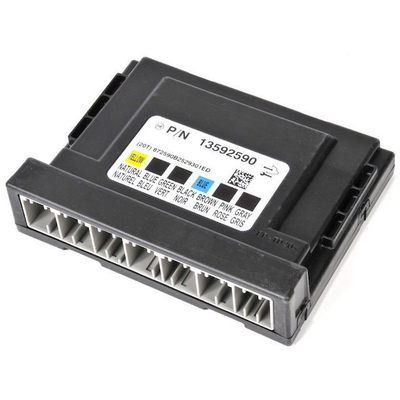
Below are the parts most often responsible for code U1176, ranked by how frequently each one is the actual culprit (per the diagnosis above). Tap any to see what we have for your vehicle.



The information in this article is provided for general reference and educational purposes only. Vehicle specifications, procedures, and part compatibility can vary by production date, trim level, and region. Always consult your vehicle's factory service manual and verify part numbers before purchasing or performing repairs. Safety-critical components such as airbags, seat belts, and braking systems should be installed by a qualified professional.
- 🧭 Diagnostic Flowchart
- 🛍️ Shop This Part
- What Does U1176 Mean?
- Can I Drive With U1176?
- Common Causes
- Symptoms
- Common Fixes & Costs
- DIY vs Professional
- Used vs. New Parts: Buying Guide
- What Happens If You Wait — Timeline
- Cost of Not Fixing It
- Diagnosis Steps
- When This Code Triggers (Freeze-Frame Conditions)
- Related Codes
- Climate & Environmental Factors
- How to Talk to a Mechanic About This Code
- Where to Take It: Dealer vs Independent vs Chain
- When to Walk Away From the Repair
- What Scan Tool You Need for This Code
- How to Clear the Code After You Fix It
- Will This Fail Emissions / State Inspection?
- Most Commonly Affected Vehicles
- Manufacturer-Specific Notes
- Real Owner Stories
- C5 Corvette with intermittent no-start
- 2016 Dodge Journey with recurring O2 sensor codes
- 2002 VW Bora (Jetta) with code 01176 'Key: Signal too Low'
- C5 Corvette with multiple 'U' codes and a dead BCM
- How to Prevent This Code From Triggering
- Frequently Asked Questions
- Can I fix U1176 myself by disconnecting the battery?
- Why did my car not start because of this code?
- What's the most common misdiagnosis for U1176?
- My scanner shows U1176 H. What does the 'H' mean and should I worry?
- Is U1176 a serious problem?
- The code came back after I replaced the battery. What's next?
- What does 'Loss of Communication' actually mean?
- Can a bad key cause a U1176 code?
- Key Takeaways
- 🎟️ Get 5% Off