

OBD-II Code U1186: Lost Communication with a Vehicle Module
What U1186 means, why it triggers, and how to fix it
- Code U1186 indicates a specific computer module has dropped off the vehicle's CAN bus network, requiring an advanced scanner to identify the exact offline component.
- Basic $20 code readers cannot diagnose U1186; you must use a bi-directional scanner to read the manufacturer-specific definition and pinpoint the silent module.
- Always test the battery and inspect the module's dedicated fuse before spending $300+ on replacement parts or complex wiring diagnostics.
- A dead battery paired with a U1186 code almost always points to a parasitic drain exceeding 85mA from a module failing to enter sleep mode.
- Replacing a central module like a BCM or Gateway costs $600 to $1,500 and strictly requires dealer-level software programming to match your vehicle's VIN.
What Does U1186 Mean?
Your car's computers, or 'modules,' communicate over a network called the CAN bus. Code U1186 means one of these modules suddenly went silent and stopped responding. The code itself does not name the silent module; the definition changes based on your car's make and model, pointing to the specific disconnected part.
Technical definition: The SAE/ISO definition for U1186 is manufacturer-specific, indicating a communication failure on the vehicle's network (CAN bus, LIN bus). Common definitions include Lost Communication With Adaptive Cruise Control Module (Chrysler/Jeep), Lost Communication With Audio Amplifier 'A' (General Motors), and SCP Invalid or Missing Data (Ford).
Can I Drive With U1186?
Yes, But With Caution. You can drive, but you will lose functions tied to the offline module, such as your radio, cruise control, or blind-spot monitoring. If the Anti-lock Braking System (ABS) module is offline, you retain normal braking but lose ABS and traction control, significantly increasing skid risk in emergencies. If accompanied by U0100 (Lost Communication with ECM/PCM), do not drive, as stalling or a no-start condition is imminent.
Common Causes
- Wiring and Connector Problems (Very Common) — Wires sustain damage from chafing, rodents, or corrosion. Connectors become loose or waterlogged, breaking the communication link. Corrosion is highly prevalent in humid or salt-belt regions.
- Low Battery Voltage or Parasitic Drain (Very Common) — Modern cars require precise battery voltage. A weak battery, or a malfunctioning module failing to enter 'sleep mode' (drawing over 85mA), drops voltage below operating thresholds. This prevents modules from initializing on startup, triggering U-codes.
- Improperly Installed Aftermarket Accessories (Very Common) — Aftermarket remote starters, alarms, or audio systems tapped directly into the CAN bus disrupt network traffic. Improper installation causes parasitic drains and immediate communication errors.
- Blown Fuse for the Affected Module (Common) — Each module relies on a dedicated fuse. If this fuse blows, the module loses power and drops off the network. This is the simplest, most frequently overlooked cause.
- Failed or Failing Module (Common) — The module itself (e.g., audio amplifier, cruise control module) fails internally due to age, water intrusion, or electronic degradation.
- Software Glitches or Need for an Update (Common) — Modules occasionally get stuck in logic loops or run outdated software. Reprogramming or 'flashing' the module with the latest manufacturer software resolves this.
- Faulty Gateway Module (Less Common) — A central 'gateway' module manages traffic between networks. Gateway failure severs communication with multiple modules simultaneously, generating numerous U-codes.
- Physical Damage to Module from Impact (Rare) — Collisions physically jar or crush modules, severing internal connections and causing immediate communication loss.
Symptoms
- Loss of a Specific Function — If the code targets the audio amplifier, the stereo produces no sound. If it targets the cruise control module, cruise control is disabled.
- Dead Battery — A module failing to enter sleep mode creates a parasitic draw that drains the battery overnight. This is frequently the first noticed symptom.
- No Sound from Turn Signal 'Click' or Chimes — Modern vehicles route turn signal clicks and warning chimes through the audio amplifier. If the amplifier goes offline, these sounds disappear entirely. 🎬 Watch: Troubleshooting a Chevy Malibu with no audio or chimes.
- Warning Lights on the Dashboard — The Check Engine light illuminates, often accompanied by specific warning lights for the failed system (ABS, airbag, blind spot monitoring).
- Erratic Electrical Behavior — Because systems share data, a single module failure causes cascading errors, such as wipers activating autonomously or power windows failing.
Diagnostic Flowchart
Tap your situation to follow the diagnostic path that matches what you're seeing on this code.
Common Fixes & Costs
- Replacing a Failed Module (e.g., Audio Amplifier, ACC Module)
— Parts: $200-$900+, Labor: $150-$350, ~1.0-2.0 hr book time
(Professional)
Chevrolet Malibu (2016-2018): OEM
GMC/Chevy Trucks/SUVs (2017-2020): OEM
Ram 1500 (2019-2022): OEM - Repairing Damaged Wiring or Connectors — Parts: $10-$50, Labor: $150-$600, ~1.0-4.0 hr book time (Intermediate)
- Reprogramming a Module with Updated Software — Parts: $0, Labor: $150-$450, ~1.0-2.0 hr book time (Professional)
- Removing or Re-installing Aftermarket Accessories — Parts: $0, Labor: $100-$300, ~1.0-2.0 hr book time (Intermediate)
- Replacing a Failed Central Module (e.g., BCM, Gateway)
— Parts: $400-$1,200+, Labor: $200-$400, ~1.5-2.5 hr book time
(Professional)
GMC/Chevy Trucks/SUVs (2017-2020): OEM
Used vs. New Parts: Buying Guide
When a used part is worth it: For common, non-critical modules like audio amplifiers, a used part from a reputable seller offers 50-80% savings. It is highly practical for vehicles over 10 years old.
Donor-vehicle mileage cap: roughly under 100000 miles for the part to have meaningful remaining life.
Donor quality checklist:
- Match the part number exactly; a single digit difference guarantees incompatibility.
- Visually inspect pins for green corrosion and casings for water damage.
- Purchase from sellers offering a 30-90 day warranty or return policy.
- For ABS modules, use a professional remanufacturing service rather than a junkyard pull.
Decision logic:
- If The part requires programming (BCM, ECM, Gateway) → Buy new or use a specialist who clones module data. Used modules locked to a donor VIN will not function.
- If The vehicle is over 10 years old and the new part exceeds $800 → A used or remanufactured part is the most logical financial decision.
- If The part is a simple, plug-and-play module (e.g., basic audio amplifiers) → Used is a low-risk, high-reward way to save money.
Warranty tradeoff: Salvage yard parts are sold 'as-is' or with 30-day warranties. Remanufactured modules offer 1-year or lifetime warranties. New OEM parts carry 1-2 year warranties when dealer-installed.
Worst-case if a used part fails: $300-$800 for repeat labor and replacement if a used part arrives dead.
What Happens If You Wait — Timeline
- Immediate: Code sets, MIL illuminates. Intermittent faults reset after restarting. Hard faults cause immediate, permanent loss of module function (e.g., no radio sound). (MPG impact: 0%% · Added cost: $0)
- 1-4 Weeks: Intermittent faults become frequent. If caused by a parasitic drain, you experience slow cranking or a dead battery requiring a jump start. (MPG impact: 0%% · Added cost: $0-$20 (cost of a jump start))
- 1-3 Months: Persistent parasitic drains damage the battery through repeated deep-cycling, requiring replacement. Unchecked water leaks spread corrosion to adjacent wires. (MPG impact: 0%% · Added cost: $200-$500 (cost of new battery and alternator strain))
- 3+ Months: Root causes create cascading failures. Corrosion damages the main wiring harness. Persistent short circuits cause internal damage to other sensitive electronics, escalating repair complexity. (MPG impact: 0%% · Added cost: $800-$2500+ (cost of multiple modules or harness repair))
Cost of Not Fixing It
- Immediate: Loss of function from the specific module (e.g., no audio, no cruise control). If the ABS module is offline, emergency braking safety is compromised. (Added cost: Negligible, but safety risk is high.)
- 1-3 months: If the fault stems from a parasitic drain, it repeatedly kills the battery. Constant deep-cycling destroys the battery and strains the alternator. (Added cost: $200-$500 for a new battery.)
- 3+ months: Ignoring communication issues with safety systems leads to accidents. Persistent electrical shorts damage other connected modules on the network. (Added cost: $1500+ for multi-module replacement or accident repairs.)
Diagnosis Steps
- Identify the Specific Module with an Advanced Scanner
Use a high-quality OBD-II scanner capable of reading manufacturer-specific codes and viewing network topology. The scanner report provides the full U1186 definition (e.g., 'Lost Communication with Audio Amplifier'), identifying the exact offline module.
Tools: Advanced OBD-II Scanner (Beginner) - Check the Battery and Grounds
Use a multimeter to verify battery voltage is above 12.4V with the engine off, and between 13.2V and 14.8V while running. Inspect main battery ground connections to the chassis and engine; poor grounds cause widespread electrical failures.
Tools: Multimeter (Intermediate) - Check for Technical Service Bulletins (TSBs)
Search for TSBs for your specific year, make, and model. Manufacturers frequently release bulletins for known U1186 triggers, often resolvable with a simple software update.
Tools: Online TSB Database Access (Beginner) - Check the Fuses
Locate the fuse for the offline module using your owner's manual. Pull the fuse and visually inspect it. If blown, replace it with a fuse of the exact same amperage.
Tools: Owner's Manual, Fuse Puller or Pliers (Beginner) - Perform a Visual Inspection
Locate the offline module. Inspect for damaged wiring, loose connectors, or water intrusion. On the 2016-2018 Chevy Malibu, check for water leaking from the high-mount brake light directly onto the audio amplifier.
Tools: Flashlight, Trim Removal Tools (Intermediate) - Perform a Parasitic Draw Test
If the battery dies overnight, disconnect the negative terminal and connect a multimeter in series (set to Amps). Wait up to an hour for modules to sleep. If the draw exceeds 85mA, pull fuses one by one until the draw drops, identifying the faulty circuit.
Tools: Multimeter with Amp setting (Advanced) - Check for Power and Ground at the Module Connector
Unplug the affected module's connector. Use a multimeter and wiring diagram to verify 12V+ power and a solid ground (less than 0.1 ohms to the negative battery terminal). Missing power or ground indicates a wiring fault, not a bad module.
Tools: Multimeter, Vehicle-Specific Wiring Diagram (Advanced) - Perform a CAN Bus Resistance Test
Disconnect the battery. Set a multimeter to Ohms (Ω). Measure resistance between OBD-II Pin 6 (CAN High) and Pin 14 (CAN Low). A healthy high-speed CAN bus reads exactly 60 Ohms. 120 Ohms means a terminating resistor is offline; 0 Ohms means the CAN wires are shorted together.
Tools: Multimeter, OBD-II Pinout Diagram (Advanced) - Check CAN Bus Voltages with a Multimeter
With ignition ON and engine OFF, measure static voltage from Pin 6 (CAN High) to chassis ground (should be ~2.6V-2.7V). Measure Pin 14 (CAN Low) to ground (should be ~2.3V-2.4V). Identical voltages indicate shorted wires; 0V indicates a short to ground.
Tools: Multimeter, OBD-II Pinout Diagram (Advanced) - Test the Communication Network Wires with an Oscilloscope
With the key on, use an oscilloscope to view data signals on the CAN High and CAN Low wires. A healthy signal shows sharp, square waves. This visually confirms if network lines are open, shorted, or corrupted by noise.
Tools: Oscilloscope, Wiring Diagram (Professional)
When This Code Triggers (Freeze-Frame Conditions)
- Vehicle Speed: 0 mph (at startup) or 35-55 mph (Code sets during the initial network check at key-on, or when a function like cruise control is activated at speed.)
- RPM: 0 (Key On, Engine Off) or 1500-2500 (Modules must report their status when the ignition turns on before the engine starts. Faults also log during steady-state driving.)
- Battery Voltage: 11.8V - 12.5V (at startup) or 13.2V - 14.8V (engine running) (Low voltage during startup prevents modules from initializing correctly, triggering communication codes.)
- Engine Coolant Temp: Ambient Temperature (cold start) or 180-200°F (warmed up) (Cold starts in low ambient temperatures expose underlying battery weaknesses that trigger U-codes.)
Related Codes
- U0184 — Lost Communication with Radio. Often appears with U0186. If the radio display is blank, the issue starts with the radio (U0184). If the display works but lacks sound, the amplifier is the culprit (U0186).
- U0140 — Lost Communication with Body Control Module (BCM). The BCM is a central hub. If U0140 appears alongside U1186, the primary failure is the BCM or its power supply. Diagnose U0140 first.
- U0100 — Lost Communication with ECM/PCM. A critical code affecting powertrain operation. If paired with U1186, it indicates widespread network failure. A faulty ECM causes other modules to lose communication.
- B101D — Hardware Internal Failure. Stored inside a module detecting an internal fault. Other modules then log U1186 because they cannot communicate with the failing module. Finding B101D confirms the module requires replacement.
Climate & Environmental Factors
- High Humidity / Heavy Rain: Water infiltrates modules, connectors, and fuse boxes, causing short circuits and corrosion. The Chevy Malibu's third brake light leak directly shorts out the audio amplifier.
- Road Salt (Winter Climates): Salt spray corrodes wiring, connector pins, and module casings, especially for underbody components like blind spot sensors. Corrosion creates high resistance, severing communication.
- Extreme Cold: Low temperatures reduce battery cranking power and voltage. Voltage-sensitive modules fail to initialize during cold startups, triggering temporary communication codes.
How to Talk to a Mechanic About This Code
Say this: "I have a U1186 code, and my scanner indicates it's a 'Lost Communication with [specific module]'. I need a diagnostic service from a technician experienced with CAN bus issues. I'd like you to confirm the cause of the communication loss—whether it's wiring, a connector, a software issue, or the module itself—before quoting a module replacement."
Demonstrates you understand the code indicates a network problem, preventing shops from immediately quoting an expensive module replacement without proper electrical diagnosis.
Avoid saying:
- 'My check engine light is on, can you just fix it?'
- 'The code says the radio is bad, how much to replace it?'
- 'Just do whatever you think is best.'
Questions to ask before authorizing the repair:
- Did you confirm the specific manufacturer definition for the U1186 code on my vehicle?
- What were the results of the power, ground, and network resistance tests at the module's connector?
- If you recommend a module replacement, how did you rule out a wiring or connector problem?
- Is there a Technical Service Bulletin (TSB) for this issue suggesting a software update?
- Does the proposed repair require programming or calibration to work?
- What is the warranty on the parts and labor for this specific repair?
Where to Take It: Dealer vs Independent vs Chain
- Dealer:
A strong choice if the issue is a known TSB requiring a software flash or if the vehicle is under warranty. Reliable but expensive for out-of-warranty diagnostics.
Best for: Vehicles under warranty or with a known recall/TSB., Complex issues requiring manufacturer-specific software updates or programming., Very new models where independent shops lack service information access.
Downsides: Higher labor rates and parts costs., May follow a rigid 'replace-the-assembly' diagnostic path rather than repairing a single wire. (Typical cost: +40% vs. baseline) - Independent Shop:
Excellent choice, provided the shop is a vetted electrical specialist. Good diagnosticians solve network issues more efficiently and affordably than dealers.
Best for: Out-of-warranty vehicles where cost is a factor., Shops specializing in electrical and diagnostic work., Getting a second opinion on a costly dealer quote.
Downsides: Quality varies greatly; requires finding a shop with strong electrical skills and proper tools., May lack access to the latest manufacturer software or programming tools. (Typical cost: +0% vs. baseline) - Chain Shop:
AVOID. Complex electrical diagnosis is outside the scope of chain repair shops. The likelihood of an incorrect and costly repair is very high.
Best for: Simple, high-volume jobs like tires, brakes, and oil changes.
Downsides: Technicians are not trained or equipped for complex network diagnostics., High risk of misdiagnosis, leading to unnecessary part replacements. (Typical cost: -10% vs. baseline)
When to Walk Away From the Repair
If the estimated repair cost exceeds 50% of the car's private-party market value, seriously consider selling or trading in the vehicle instead of repairing it.
- Car worth $5000, fix is $2200: Borderline. The repair cost approaches the walk-away threshold. Get a second opinion before authorizing the repair.
- Car worth $15000, fix is $1800: Fix it. The repair cost is well below the vehicle's value and makes economic sense.
- Car worth $3000, fix is $1900: Walk away. The repair cost is a significant portion of the car's value. It is not a sound investment.
What Scan Tool You Need for This Code
Minimum: A scanner capable of reading manufacturer-specific 'U' codes (network faults) alongside B (Body), C (Chassis), and P (Powertrain) codes.
A basic $20 code reader only shows a generic U1186 code. It cannot identify which specific module is offline, making diagnosis impossible and leading to wasted money on guesses.
Budget: BlueDriver Pro Scan Tool (~$100) — Connects to a smartphone app and reads enhanced, manufacturer-specific codes for systems like ABS and Airbag, essential for identifying the specific U-code definition.
Mid-range: Foxwell NT710 (~$250) — Offers full-system diagnostics and bi-directional control, allowing you to send commands to modules to test their function and confirm if a module is truly dead.
Professional: Autel MaxiCOM MK808 / MaxiSYS MS909 (~$500-1500+) — Provides professional-level functions including network topology mapping. Visually shows all modules on the CAN bus, highlighting offline units and dramatically speeding up diagnosis.
Rent vs buy: You can get the specific code definition for free using a loaner tool from an auto parts store. For actual diagnosis (live data, testing), you must buy a scanner with manufacturer-specific capabilities.
How to Clear the Code After You Fix It
- Fix the underlying hardware, wiring fault, or software issue.
- Reconnect the battery if disconnected during repair.
- Use an advanced OBD-II scan tool to clear the U1186 code and related DTCs from all modules.
- Perform a complete drive cycle to run the vehicle's readiness monitors.
Drive cycle (~30 minutes): A generic drive cycle requires a cold start (vehicle sits for 8+ hours), 2-3 minutes of idling, 10-15 minutes of steady highway driving at 55 mph, and 10-15 minutes of stop-and-go city driving.
Readiness monitors affected: Comprehensive Component Monitor, Catalyst Monitor, Oxygen Sensor Monitor
Before emissions retest: drive at least 100 miles to fully set monitors.
Watch out for:
- Clearing the code without fixing the root cause guarantees the code returns immediately.
- Testing for emissions immediately after clearing codes results in a 'Not Ready' failure.
- Basic code readers cannot fully clear manufacturer-specific codes from non-powertrain modules.
Will This Fail Emissions / State Inspection?
Yes — this code typically fails an OBD-II emissions inspection.
- California: An active Check Engine Light triggers an automatic smog check failure. A full drive cycle must set readiness monitors before re-testing.
- New York: Vehicles fail the annual safety/emissions inspection if the Check Engine Light is illuminated.
- Texas: In emissions-testing counties, an illuminated Check Engine Light is an automatic failure. You must drive 50-100 miles after clearing codes before re-inspection.
Most Commonly Affected Vehicles
- Chevrolet / GMC Malibu, Silverado, Tahoe (2015-2020) — Prone to U0186 (Lost Communication with Audio Amplifier). On the Malibu, water leaks from the third brake light onto the trunk amplifier. On trucks, TSBs point to connector issues at the Serial Data Gateway Module (SDGM).
- Chrysler / Dodge / Jeep / Ram Various (Pacifica, Ram 1500, etc.) (2018-2022) — Sets U1186 for 'Lost Communication With Adaptive Cruise Control Module.' A Powertrain Control Module (PCM) software update resolves this and related communication codes.
- Ford Various (1996-2010) — Older vehicles using the SCP (J1850) network set U1186 for 'Invalid or Missing Data.' This indicates a general network fault requiring full bus integrity checks.
- Subaru Outback, Forester, Crosstrek (2015-2019) — Experiences communication failures with Blind Spot Detection (BSD) modules. Water intrusion into rear bumper radar sensors causes module failure, requiring replacement and calibration.
- Volkswagen ID.4 (2023-2024) — Experiences reduced power and electrical errors. Per VW TSB 19-23-01, twisted high-voltage coolant hoses restrict flow, causing system shutdowns and communication DTCs.
- Honda Accord, CR-V (2016-2020) — Experiences intermittent communication loss with the gauge control module or BCM. Traced to a faulty CAN bus gateway or poor terminal connections at network splice points.
- Mazda RX-8, Mazda3 (2004-2011) — Sets a similar code, C1186, for the DSC (Dynamic Stability Control) module. Caused by internal failure of the ABS/DSC module, requiring rebuild or replacement.
- Various Makes Any with Aftermarket Electronics (1996-2024) — Improperly installed aftermarket remote starters, alarms, or audio systems interfere with the CAN bus data stream or cause parasitic drains, triggering U1186.
Manufacturer-Specific Notes
- General Motors: On 2017-2020 trucks/SUVs, multi-module communication loss is caused by poor pin connections at the Serial Data Gateway Module (SDGM). TSBs #PIT5586G and #20-NA-212 instruct checking X1/X2 connectors before replacing modules.
- Chrysler/Stellantis: U1186 related to the Adaptive Cruise Control module is frequently part of a communication code cluster fixed by a PCM software update, detailed in TSB #18-011-22.
- Ford: On older SCP (J1850) networks, U1186 indicates a general data error. Diagnosis requires checking network voltage levels at the diagnostic port to verify the network rests correctly.
- Subaru: Failed blind spot monitoring sensors cause mirror warning lights to stay illuminated. Failure stems from water entering the rear bumper sensor, often covered by extended warranties.
- Volkswagen: On 2023-2024 ID.4 models, TSB 19-23-01 links kinked high-voltage coolant hoses to widespread electrical faults and communication DTCs due to overheating components.
Real Owner Stories
2020 Chevy Malibu - No Sound, Then a Dead Battery
Owner's screen froze and restarted, after which all audio—radio, turn signal clicks, and warning chimes—disappeared. The next morning, the car was completely dead and wouldn't start.
Outcome: The dealership diagnosed a failed radio control unit (amplifier). The faulty module caused a parasitic drain that killed the battery overnight. The module was replaced under warranty, resolving both the sound issue and the dead battery.
Lesson: The loss of all vehicle sounds points directly to the audio amplifier. Faulty modules cause parasitic drains; if your battery dies soon after losing audio, the two events are directly related.
2021 Dodge Challenger - 'ACC/FCW Unavailable' Message
The 'ACC/FCW Unavailable Service Required' message appeared on the dash, disabling adaptive cruise control. The code read was U1186 - Lost Communication with Adaptive Cruise Control Module.
Outcome: The dealer found TSB #18-011-22, addressing a cluster of communication codes on this model. Reprogramming the Powertrain Control Module (PCM) with updated software resolved the code without replacing parts.
Lesson: Always check for TSBs before authorizing expensive repairs. A software update is a common, inexpensive fix ($150-$450) compared to module replacement ($1000+).
Ram 1500 - A Network-Wide Ghost Hunt
Owner experienced intermittent 'ACC/FCW Unavailable' messages. The dealer initially ordered a new ACC module.
Outcome: Troubleshooting revealed the ABS module was sending bad signals, interfering with PCM commands. Replacing the faulty ABS module, not the ACC module, fixed the problem.
Lesson: When multiple 'U' codes are present, the module named in your primary code may be a victim, not the cause. A fault in a critical module like the ABS disrupts the entire network.
How to Prevent This Code From Triggering
- Keep Battery Terminals Clean (Every 6 months) — Corrosion on battery posts increases resistance, lowering system voltage under load. Modules fail to initialize on startup during low voltage events, triggering communication codes.
- Apply Dielectric Grease to Connectors (When replacing a part or working on wiring) — Applying a non-conductive layer of dielectric grease inside connectors seals out moisture and oxygen, preventing pin corrosion that causes high resistance and communication loss.
- Proactively Replace an Aging Battery (Every 4-5 years) — A battery's ability to hold stable voltage degrades with age. Replacing it prevents intermittent communication faults caused by voltage drops during startup.
- Check and Clear Water Drains (Annually, especially in the fall) — Clogged sunroof, cowl, and A/C drains cause water to overflow into the cabin, damaging sensitive electronics like the BCM located in footwells.
- Use Professional Installation for Aftermarket Electronics (Every time an accessory is added) — Improperly tapping into vehicle wiring causes CAN bus faults. Professionals use interface harnesses that prevent network interference and parasitic drains.
Frequently Asked Questions
Can I fix a U1186 code by disconnecting the battery?
Sometimes, yes. If the issue is a temporary software glitch in a module, disconnecting the battery for 15-20 minutes acts as a 'hard reboot' and restores communication. However, if the code returns, you have a hard fault requiring proper diagnosis.
Why did my radio stop working and my turn signals go silent?
This is a classic symptom of code U0186 (or generic U1186) in many GM vehicles. The car's amplifier module plays the radio sound, turn signal clicks, and warning chimes. When it loses communication, all these functions go silent simultaneously.
What are common misdiagnosis mistakes with U1186?
The most common mistake is immediately replacing the module named in the code definition. The actual cause is often a bad wire, a poor ground connection, or interference from a poorly installed aftermarket device. Always verify power and ground to the module first.
My turn signals flash on the dash, but don't make a clicking sound. Is this related to U1186?
Yes, this is a highly likely symptom. In most modern cars, the turn signal 'click' is a sound file played through the audio amplifier. If the amplifier loses power or communication, the sound disappears even though exterior lights flash.
Is it expensive to fix a U1186 code?
Repair costs range from $150 for a simple wiring fix or software update to over $1,500 for a critical module replacement. The final price depends heavily on which specific module failed and whether it requires dealer programming.
Can a bad module cause a parasitic drain and kill my battery?
Yes. If a module fails to enter its low-power 'sleep mode' when the car is off, it continuously draws current and drains the battery. A normal draw is under 85mA; a faulty module draws much more, causing low voltage that triggers U-codes on startup.
What is a CAN bus and how do you test it?
The Controller Area Network (CAN) bus is a two-wire network allowing all vehicle modules to communicate. You can test its basic health by disconnecting the battery and measuring resistance between pins 6 and 14 of the OBD-II port. A healthy network shows exactly 60 ohms.
My scanner shows U1186 but doesn't say which module is offline. What now?
This means you are using a basic code reader incapable of reading manufacturer-specific sub-codes. You need an advanced, professional-level scan tool to access the specific module definitions. Without knowing which module failed, diagnosis is impossible.
Key Takeaways
- Code U1186 indicates a specific computer module has dropped off the vehicle's CAN bus network, requiring an advanced scanner to identify the exact offline component.
- Basic $20 code readers cannot diagnose U1186; you must use a bi-directional scanner to read the manufacturer-specific definition and pinpoint the silent module.
- Always test the battery and inspect the module's dedicated fuse before spending $300+ on replacement parts or complex wiring diagnostics.
- A dead battery paired with a U1186 code almost always points to a parasitic drain exceeding 85mA from a module failing to enter sleep mode.
- Replacing a central module like a BCM or Gateway costs $600 to $1,500 and strictly requires dealer-level software programming to match your vehicle's VIN.
Helpful Videos

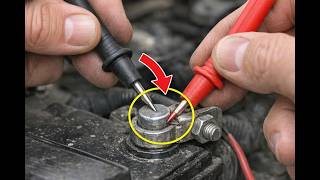
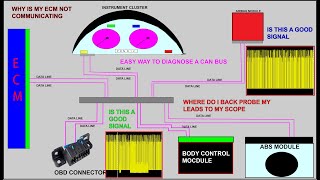
![How To Test CAN BUS With A Multimeter [CAN Bus Resistance Check] Mechanic Mindset](https://img.youtube.com/vi/JPE42HSJxAk/mqdefault.jpg)
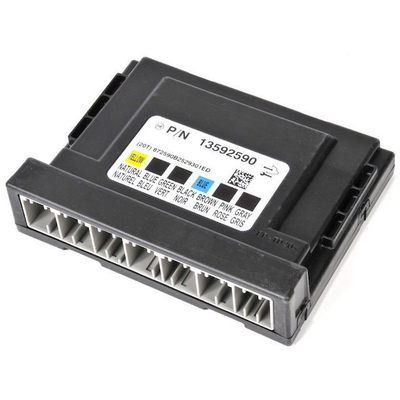
Shop the Parts Behind U1186
Below are the parts most often responsible for code U1186, ranked by how frequently each one is the actual culprit (per the diagnosis above). Tap any to see what we have for your vehicle.





The information in this article is provided for general reference and educational purposes only. Vehicle specifications, procedures, and part compatibility can vary by production date, trim level, and region. Always consult your vehicle's factory service manual and verify part numbers before purchasing or performing repairs. Safety-critical components such as airbags, seat belts, and braking systems should be installed by a qualified professional.
- 🧭 Diagnostic Flowchart
- 🎬 Helpful Videos
- 🛍️ Shop This Part
- What Does U1186 Mean?
- Can I Drive With U1186?
- Common Causes
- Symptoms
- Common Fixes & Costs
- Used vs. New Parts: Buying Guide
- What Happens If You Wait — Timeline
- Cost of Not Fixing It
- Diagnosis Steps
- When This Code Triggers (Freeze-Frame Conditions)
- Related Codes
- Climate & Environmental Factors
- How to Talk to a Mechanic About This Code
- Where to Take It: Dealer vs Independent vs Chain
- When to Walk Away From the Repair
- What Scan Tool You Need for This Code
- How to Clear the Code After You Fix It
- Will This Fail Emissions / State Inspection?
- Most Commonly Affected Vehicles
- Manufacturer-Specific Notes
- Real Owner Stories
- 2020 Chevy Malibu - No Sound, Then a Dead Battery
- 2021 Dodge Challenger - 'ACC/FCW Unavailable' Message
- Ram 1500 - A Network-Wide Ghost Hunt
- How to Prevent This Code From Triggering
- Frequently Asked Questions
- Can I fix a U1186 code by disconnecting the battery?
- Why did my radio stop working and my turn signals go silent?
- What are common misdiagnosis mistakes with U1186?
- My turn signals flash on the dash, but don't make a clicking sound. Is this related to U1186?
- Is it expensive to fix a U1186 code?
- Can a bad module cause a parasitic drain and kill my battery?
- What is a CAN bus and how do you test it?
- My scanner shows U1186 but doesn't say which module is offline. What now?
- Key Takeaways
- 🎟️ Get 5% Off