

OBD-II Code U1199: Manufacturer-Specific Communication Fault
The Ultimate Guide to U1199: What it means for JLR, Ford, Mitsubishi, and Jeep. Causes, symptoms, and pro-level fixes.
- U1199 is a manufacturer-specific code: on Jaguar/Land Rover it means a telematics failure, on Jeep/Dodge it indicates a faulty hood switch, and on Mitsubishi it flags an unprogrammed module.
- For JLR vehicles, replace the $40 internal TCU backup battery (part LR089861) before paying $1,000+ for a full module replacement.
- Pre-2018 JLR vehicles with this code often suffer from the 3G network shutdown, requiring an $800-$1,200 4G hardware upgrade to restore SOS functions and stop parasitic battery drain.
- On Jeep and Dodge models, a U1199 code disables remote start and is usually fixed by replacing the $50 plunger-style hood ajar switch or cleaning its corroded connector.
What Does U1199 Mean?
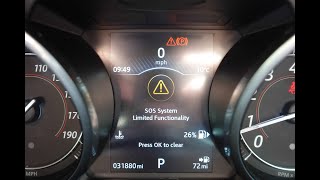
U1199 is a manufacturer-specific network communication code with drastically different definitions based on the vehicle brand. On Jaguar and Land Rover (JLR) models, the main computer received invalid data from the Telematic Control Module (TCU), triggering an 'SOS System Limited Functionality' warning. On Jeep/Dodge, it flags a hood switch error, and on Mitsubishi, it indicates a missing VIN in a newly installed module.
Technical definition: The official definition of U1199 varies by manufacturer. Jaguar/Land Rover: 'Invalid Data Received From Telematic Control Module (TCU)'. Jeep/Chrysler/Dodge: 'Lost Hood Ajar Switch Voltage Message' or 'Internal Control Module EEPROM Error'. Mitsubishi: 'Chassis No. not programmed'. Ford: 'SCP (J1850) Invalid or Missing Data for External Access (Doors)'.
Can I Drive With U1199?
Yes, But With Caution. Yes, you can continue to drive. Code U1199 indicates a fault in a secondary system and does not affect engine performance, braking, or steering. However, on Jaguar and Land Rover vehicles, your automatic SOS emergency call system is disabled. On Jeep or Dodge models, it disables the remote start feature until repaired.
Common Causes
- Failed internal battery in the Telematic Control Module (TCU) [JLR] (Very Common) — The TCU has a small, rechargeable lithium-ion battery designed to send an emergency signal if the main car battery disconnects in an accident. This battery has a 5-8 year lifespan. When it fails to hold a charge, the TCU sends invalid data, triggering the code.
- Cellular Network (3G) Sunset [JLR] (Very Common) — Telematics systems in vehicles manufactured before 2018 relied on 3G cellular networks. As carriers shut down these networks globally, the TCU permanently loses connection to manufacturer servers, reporting invalid data and triggering a persistent U1199 code.
- Faulty Hood Ajar Switch or Wiring [Jeep/Dodge] (Common) — On Jeep, Dodge, and Chrysler vehicles, U1199 points to a problem with the hood latch sensor circuit. The plunger-style switch or its wiring corrodes or misaligns, sending an incorrect 'hood open' signal over the network.
- Incorrect Module Programming / VIN Mismatch [Mitsubishi] (Common) — On Mitsubishi vehicles, this code sets if a module (like the Electronic Power Steering or SRS Airbag unit) is replaced but not programmed with the vehicle's unique Vehicle Identification Number (VIN). The network sees the unprogrammed module as a source of invalid data.
- Weak or dying main 12V vehicle battery (Common) — When the main vehicle battery voltage drops, the battery management system prioritizes essential systems and cuts power for recharging the smaller TCU battery. This starves the TCU for power, leading to communication faults.
- Damaged wiring or corroded connectors (Less Common) — The wiring harness leading to the TCU, its roof-mounted antenna, or door modules (Ford) can become pinched or corroded from moisture, interrupting the communication signal.
- Faulty Telematic Control Module (TCU) (Rare) — Complete electronic failure of the TCU is far less common than its internal battery failing. Always replace the internal battery on JLR vehicles before condemning the entire module.
Symptoms
- 'SOS System Limited Functionality' warning message — Appears on the instrument cluster of JLR vehicles every time the car is started. The overhead SOS button may also flash red.
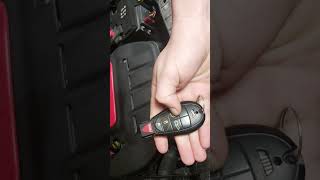
- Remote Start Inoperable — On vehicles where U1199 relates to the hood ajar switch (Jeep/Dodge), the remote start system is disabled as a safety precaution. 🎬 Watch: Quick fix for Dodge remote start and hood sensors.
- Parasitic battery drain — The main 12V battery dies if left sitting for several days, caused by a faulty 3G TCU constantly trying to establish a cellular connection.
- Remote features fail — Smartphone app functions like remote start, lock/unlock, or vehicle status checks fail to connect to the vehicle.
- Check Engine Light or Airbag Light — This network fault triggers the main Check Engine Light, or specific system indicators like an Airbag light on Mitsubishi models after a module replacement.
Diagnostic Flowchart
Tap your situation to follow the diagnostic path that matches what you're seeing on this code.
Common Fixes & Costs
- Replace the TCU internal backup battery (JLR) — Parts: $40-$60, Labor: $150-$200, ~1.5 hr book time (DIY)
- Replace Hood Ajar Switch (Jeep/Dodge) — Parts: $50-$80, Labor: $75-$100, ~0.5 hr book time (DIY)
- Module Programming (VIN writing) (Mitsubishi) — Parts: $0, Labor: $150-$250, ~1.0 hr book time (Professional)
- Replace the main 12V vehicle battery — Parts: $200-$300, Labor: $50-$100, ~0.7 hr book time (DIY)
- Upgrade TCU to 4G/LTE model (JLR 3G Sunset) — Parts: $800-$1200, Labor: $200-$300, ~2.5 hr book time (Professional)
- Repair damaged wiring or connector — Parts: $10-$50, Labor: $150-$300, ~2.0 hr book time (Intermediate)
Used vs. New Parts: Buying Guide
When a used part is worth it: For a JLR Telematics Control Module (TCU), buying used NEVER makes sense. For a simple mechanical part like a Jeep hood ajar switch, a used part from a low-mileage vehicle is a reasonable option.
Donor-vehicle mileage cap: roughly under 60000 miles for the part to have meaningful remaining life.
Donor quality checklist:
- For a JLR TCU: Do not buy used. It is VIN-locked to the donor car and cannot be reprogrammed.
- For a Hood Switch: Visually inspect for corrosion on the connector pins and ensure the plunger mechanism moves freely.
- For any module: Always match the part number exactly.
Decision logic:
- If The part is a JLR Telematics Control Module (TCU) → Buy a new, genuine OEM part. A used one will not work.
- If The part is a TCU backup battery → Buy new. It is a consumable item with a limited shelf life.
- If The part is a simple mechanical switch (e.g., hood switch) and the new OEM part is expensive → A tested, used part from a reputable salvage yard is an acceptable low-cost alternative.
Warranty tradeoff: Used parts from salvage yards typically have a 30-90 day warranty. New aftermarket parts carry a 1-year to limited-lifetime warranty. New OEM parts have a 1-2 year warranty.
Worst-case if a used part fails: $300-$1500. If you buy a used JLR TCU, you pay for the part and labor, only to find it cannot be programmed. You then pay for a new part and a second installation.
What Happens If You Wait — Timeline
- 0-1 month: Code sets, 'SOS System Limited Functionality' (JLR) or 'Remote Start Disabled' (Jeep) message appears. No impact on drivability. (MPG impact: 0%% · Added cost: $0)
- 1-3 months: A faulty JLR TCU causes a parasitic drain (100-200mA) as it fails to enter sleep mode. The main 12V battery struggles to start the car if left sitting for more than 4-5 days. (MPG impact: 0%% · Added cost: $0-$50 (for a jump start))
- 3-6 months: Constant parasitic drain repeatedly deep-cycles the main 12V battery, causing sulfation and permanent damage. No-start conditions become frequent. (MPG impact: 0%% · Added cost: $200 - $300 (premature replacement of the main 12V battery))
- 6+ months: Continued neglect leads to a chronically weak electrical system. The damaged main battery strains the alternator, and other voltage-sensitive modules set communication fault codes. (MPG impact: 0-5% (due to poor electrical system health)% · Added cost: $600 - $1500+ (new 12V battery, diagnostic time, and potential alternator strain))
Cost of Not Fixing It
- Immediate: Loss of critical safety or convenience features. On JLR, the automatic SOS emergency call system is disabled. On Jeep/Dodge, remote start is inoperable. (Added cost: Incalculable (in case of an accident where SOS is needed).)
- 1-3 months: Parasitic drain from a faulty TCU repeatedly discharges the main 12V battery, causing no-start conditions and requiring jump starts. (Added cost: $0 - $50 (for a jump start service).)
- 3+ months: Repeatedly deep-cycling the main 12V battery causes permanent damage, requiring premature replacement and straining the alternator. (Added cost: $200 - $300 (for a new 12V battery and installation).)
Diagnosis Steps
- Read Fault Codes with an Advanced Scan Tool
Use an OBD-II scanner that reads manufacturer-specific 'U' (network) codes. Confirm U1199 is present and note its specific definition for your vehicle. Look for U3000-49 in a JLR, which points directly to an internal TCU battery failure.
Tools: Advanced OBD-II Scanner (Beginner) - Check the Main Vehicle Battery Voltage
Use a multimeter to check the main 12V battery. A healthy battery has a resting voltage of 12.4V to 12.6V. A resting voltage below 12.4V suggests the battery is discharged and is the root cause of the communication fault.
Tools: Multimeter (Beginner) - Live Data PID Analysis (JLR)
Using a JLR-compatible scan tool, monitor the 'TCU Backup Battery Voltage' live data. A healthy battery reads above 3.9V. If below 3.9V, run the engine for 60 minutes to recharge it. If voltage does not rise, the internal battery has failed.
Tools: JLR-specific Scan Tool (Advanced) - Hood Ajar Switch Circuit Test (Jeep/Dodge)
Disconnect the hood ajar switch electrical connector. With the hood open, a multimeter set to ohms should read open circuit (OL). Depressing the switch plunger should show continuity (near 0 ohms). If it fails, replace the switch.
Tools: Multimeter, Trim removal tools (Intermediate) - Inspect the Suspect Component and Wiring
Locate the TCU (JLR) or the hood ajar plunger switch (Jeep/Dodge). Inspect connectors for green/white corrosion, pinched wires, or loose connections.
Tools: Flashlight, Trim removal tools (Intermediate) - Replace the Internal TCU Battery (JLR)
Remove the TCU, open its case, disconnect the old internal battery, and install the new one. Order a replacement battery using the part number printed on the old one (commonly LR089861).
Tools: Screwdriver/Torx driver, Small pry tool (Intermediate) - Reset the SOS System (JLR)
After replacing the TCU battery, start the car. Press and hold the overhead SOS button for 10-15 seconds until it flashes slowly. Turn the car off and on again to clear the warning message.
Tools: Vehicle's SOS Button (Beginner) - Program the Module VIN (Mitsubishi)
If U1199 appears after a module replacement, use a professional scanner with programming capabilities to copy the car's VIN into the new EPS or SRS module.
Tools: Professional OBD-II Scanner with Programming Function (Professional) - Perform CAN Bus Integrity Test
Disconnect the battery. Measure resistance between CAN High (Pin 6) and CAN Low (Pin 14) at the OBD-II port. A healthy network reads 60 ohms. 120 ohms indicates a missing termination resistor or broken circuit.
Tools: Multimeter (Advanced)
When This Code Triggers (Freeze-Frame Conditions)
- Fault Trigger: Ignition ON (The code sets immediately upon vehicle startup when modules perform their initial network self-check.)
- Battery Voltage: 11.8V - 14.5V (Triggers on low voltage during cranking or is present at normal charging voltage; module communication is highly sensitive to voltage.)
- RPM: 0 or 600-800 (Fault is logged before the engine starts (Key On, Engine Off) or at idle immediately after starting.)
- Vehicle Speed: 0 mph (As a startup communication fault, it triggers when the vehicle is stationary.)
Related Codes
- U3000-49 — 'Control Module - Internal Electronic Failure'. Appears with U1199 in JLR vehicles. U3000 is the TCU's self-diagnosis of an internal fault (its own battery). If present, it strongly isolates the fault to the TCU.
- U0141 — 'Lost Communication With Front Control Module'. On Jeep/Dodge vehicles, if U0141 is present alongside U1199, the PCM has lost all communication with the module. U0141 is the primary fault; diagnose it first.
- P0631 — 'VIN Not Programmed or Incompatible - TCM'. Closely related to the Mitsubishi definition of U1199, pointing to a VIN mismatch issue in the Transmission Control Module.
- P152E — 'Engine Hood Switch 2 Circuit High'. A specific code on newer Jeep models pointing directly to a fault in the secondary hood switch circuit, causing identical symptoms to U1199.
- U0073 — 'Control Module Communication Bus 'A' Off'. A general network failure. Diagnose the main CAN bus network integrity before investigating any individual module.
Climate & Environmental Factors
- Cold Weather: Cold temperatures reduce the efficiency of chemical batteries. A weak main 12V battery fails to start the car in the cold, and its low voltage state prevents the TCU backup battery from charging, triggering U1199.
- High Humidity / Water Ingress: Moisture penetrates exposed connectors in the engine bay. Corrosion on the Jeep/Dodge hood ajar switch terminals is a primary cause of failure, leading to an incorrect signal and the U1199 code.
- Extreme Heat: High heat accelerates internal degradation, permanently reducing battery capacity. Both the main 12V battery and the smaller TCU battery have shorter service lives in hot climates.
How to Talk to a Mechanic About This Code
Say this: "I have a U1199 fault code. On my JLR, it's causing an 'SOS System Limited' warning; can you quote me to diagnose the TCU battery voltage before replacing the whole module? / On my Jeep, it disabled remote start; can you inspect the hood ajar switch and connector? / On my Mitsubishi, it appeared after a module replacement; can you perform VIN programming?"
This language signals that you researched the common causes of U1199 for your specific vehicle. It directs the technician toward the cheapest repair first, preventing an immediate upsell to an expensive module replacement, a full latch assembly, or a new part when only programming is needed.
Avoid saying:
- 'My check engine light is on, can you look at it?'
- 'The car is acting weird, just fix whatever is wrong.'
- 'I'll go with whatever you recommend.'
Questions to ask before authorizing the repair:
- For JLR: Did you measure the TCU backup battery voltage? If recommending a full TCU replacement, is it due to the 3G sunset or just the battery?
- For Jeep: Did you test the hood ajar switch for continuity and check its connector for corrosion, or are you replacing the entire latch?
- For Mitsubishi: Can you confirm that VIN writing is the required procedure and your scan tool can perform it?
- What is the warranty on the recommended part and your labor?
Where to Take It: Dealer vs Independent vs Chain
- Dealer:
Recommended for warranty claims or mandatory hardware upgrades. For out-of-warranty battery or switch faults, proceed with caution as you will be quoted the most expensive repair.
Best for: Vehicles under warranty, Confirmed 3G-to-4G TCU hardware upgrades on JLR models, Complex module programming (VIN writing) if an independent shop is unavailable
Downsides: Highest labor rates, Likely to recommend replacing the entire TCU module on a JLR for a simple battery fault, Less likely to suggest cost-saving measures like cleaning a connector (Typical cost: +50% vs. baseline) - Independent Shop:
Best fit for common U1199 repairs. A good independent shop specializing in your vehicle's brand resolves this cost-effectively.
Best for: Out-of-warranty JLR TCU battery replacements, Jeep/Dodge hood ajar switch diagnosis and replacement, Diagnosing wiring and connector issues
Downsides: Quality and equipment vary greatly; you must vet the shop, May not have the latest tools for module programming on all brands (Typical cost: +0% vs. baseline) - Chain Shop:
AVOID. This is a network communication fault requiring specialized knowledge and tools. A chain shop is not equipped to handle this diagnosis.
Best for: Replacing the main 12V vehicle battery
Downsides: Technicians lack brand-specific knowledge for this code, Lack advanced diagnostic tools needed to read TCU live data or program modules, High risk of misdiagnosis (Typical cost: -10% vs. baseline)
When to Walk Away From the Repair
If the estimated repair cost exceeds 50% of the car's private-party value, seriously consider selling or trading it in rather than repairing it.
- Car worth $8000, fix is $1200: Fix it. A $1200 repair for a JLR 4G TCU upgrade is significant, but well below the 50% threshold and restores a key safety feature.
- Car worth $15000, fix is $150: Fix it. A $150 repair for a Jeep hood switch is a minor cost to restore functionality.
- Car worth $3000, fix is $1700: Walk away. The repair cost is over 50% of the car's value. It is not financially sensible to proceed.
What Scan Tool You Need for This Code
Minimum: A scanner that reads manufacturer-specific 'U' (network) codes and displays their specific definitions. For JLR diagnosis, the ability to read live data from the TCU is required.
A basic $20 code reader only reads generic 'P' codes or shows 'U1199' with no definition. You cannot diagnose this fault without knowing the manufacturer's definition and accessing the specific module's live data.
Budget: BlueDriver Pro Scan Tool (~$100) — Connects to a smartphone app and reads manufacturer-specific codes (including U-codes) for most brands, providing the crucial definition needed for diagnosis.
Mid-range: Foxwell NT510 Elite / NT530 (~$180) — Provides dealer-level diagnostics, including reading the TCU backup battery voltage on a JLR, testing the hood switch on a Jeep, and performing service functions.
Professional: Autel MaxiCOM MK808S (~$500) — A professional-level tablet scanner with full bidirectional control capable of performing the 'VIN writing' procedure required for Mitsubishi module replacement.
Rent vs buy: Buy. Renting a basic scanner from an auto parts store is insufficient for a full diagnosis. A mid-range tool like the Foxwell NT510 Elite pays for itself by allowing you to perform a DIY battery or switch replacement.
How to Clear the Code After You Fix It
- Reconnect the main 12V battery if disconnected.
- Use an OBD-II scan tool to perform a 'Clear All DTCs' command.
- For JLR, perform the SOS button reset (press and hold for 10-15 seconds).
- Perform the specific drive cycle required for your vehicle to confirm the fix and run readiness monitors.
Drive cycle (~30 minutes): 1) Cold start (coolant temp below 122°F/50°C). 2) Idle for 2-3 minutes. 3) Drive 10-15 minutes in mixed city traffic. 4) Drive 10 minutes at a steady highway speed (55-60 mph). 5) Safely coast to a lower speed without braking. 6) Let the vehicle idle for 2-3 minutes before shutting down.
Readiness monitors affected: Comprehensive Component Monitor, Catalyst Monitor, Oxygen (O2) Sensor Monitor
Before emissions retest: drive at least 100 miles to fully set monitors.
Watch out for:
- The code returns instantly if the root cause (e.g., dead TCU battery, faulty switch) is not fixed.
- Disconnecting the main battery does not clear this code permanently and resets all readiness monitors, guaranteeing an emissions test failure.
- Not driving long enough after a repair leaves readiness monitors as 'Not Ready', causing a failed smog check.
Will This Fail Emissions / State Inspection?
Yes — this code typically fails an OBD-II emissions inspection.
- California: An active Check Engine Light from a U-code is an automatic failure. If the fault prevents readiness monitors from completing, the test results in a failure.
- New York: NYS vehicle inspection includes an OBD-II scan. Any code that illuminates the Malfunction Indicator Lamp causes an automatic failure.
- Texas: In counties requiring an emissions test, an illuminated Check Engine Light is an automatic fail. After repair, you must complete a drive cycle to reset readiness monitors.
Most Commonly Affected Vehicles
- Jaguar F-Pace (2017-2022) — Extremely common for the 'SOS System Limited Functionality' warning. Models before 2018 are susceptible to the 3G network shutdown issue.
- Land Rover Discovery and Discovery Sport (2017-2022) — Frequently experience U1199 due to TCU backup battery failure. Pre-2018 models require a 4G TCU upgrade to restore functionality.
- Range Rover Evoque, Velar, Sport (2016-2022) — The entire Range Rover lineup using the InControl telematics system is prone to this fault.
- Jaguar XE / XF (2017-2022) — Susceptible to the same telematics battery failure and 3G sunset issues.
- Mitsubishi Outlander, Eclipse Cross (2011-2019) — Code relates to the VIN not being programmed into the Electronic Power Steering (EPS) or SRS Airbag module after replacement.
- Jeep Grand Cherokee, Cherokee, Compass (2014-2023) — U1199 typically means 'Lost Hood Ajar Switch Voltage Message'. TSB 08-096-23 addresses a faulty hood switch on 2022-23 Compass models.
- Dodge / Ram Durango, Ram Trucks (2009-2023) — U1199 typically means 'Lost Hood Ajar Switch Voltage Message' received from the Front Control Module (FCM).
- Ford Various models using J1850 protocol (1998-2007) — U1199 is defined as 'SCP (J1850) Invalid or Missing Data for External Access (Doors)', related to the older communication network.
Manufacturer-Specific Notes
- Jaguar / Land Rover: The 'SOS System Limited Functionality' message is overwhelmingly caused by the internal TCU battery failing or the 3G network shutdown. For pre-2018 models affected by the 3G sunset, the only fix is an $800+ upgrade to a 4G/LTE TCU.
- Jeep / Chrysler / Dodge: U1199 means 'Lost Hood Ajar Switch Voltage Message'. The issue is frequently a small, secondary plunger switch or its wiring exposed to the elements, not the main latch assembly.
- Mitsubishi: U1199 means 'Chassis No. not programmed'. This code flags that a replaced module (EPS or SRS) has not been programmed with the car's VIN. It is a programming issue, not a hardware failure.
- Ford: On older Ford vehicles using the Standard Corporate Protocol (SCP J1850), U1199 points to a fault in the network communication related to door modules, locks, or window switches.
Real Owner Stories
2017 Jaguar F-Pace with 'SOS System Limited Functionality'
Owner saw the 'SOS System Limited Functionality' warning at every startup. The dealer quoted over $1,200 to replace the entire Telematics Control Module (TCU).
What they tried:
- Tried clearing the code with a basic OBD-II scanner, but it returned immediately.
- Declined the $1,200 dealer repair.
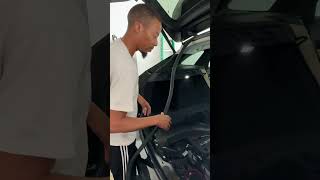
Outcome: The owner located the TCU in the rear trunk area, opened the module, and replaced the small internal lithium-ion battery (part LR089861) for $40. After performing a system reset by holding the SOS button, the warning message disappeared permanently.
Lesson: On JLR vehicles, the U1199 code is overwhelmingly caused by the failure of the inexpensive internal TCU battery. Always attempt a $40 battery replacement before agreeing to a $1,200 module replacement.
2019 Jeep Grand Cherokee with Remote Start Not Working
Remote start stopped working. The horn honked once, but the engine wouldn't start. An advanced scan revealed code U1199: 'Lost Hood Ajar Switch Voltage Message'.
What they tried:
- Checked that the hood was fully closed.
- A mechanic suggested replacing the entire hood latch assembly for $300.
Outcome: The owner inspected the small, secondary plunger-style hood ajar switch and found a corroded connector. After cleaning the contacts with electrical cleaner, the U1199 code cleared and remote start was restored for under $10.
Lesson: For Jeep/Dodge vehicles, U1199 is often a simple wiring or sensor issue. Inspect and clean the inexpensive, exposed secondary plunger switch before replacing the entire latch assembly.
2018 Mitsubishi Outlander with Airbag Light after Repair
After a collision repair, a body shop installed a used SRS (Airbag) control module. The airbag warning light remained on with code U1199: 'Chassis No. not programmed'.
What they tried:
- The body shop tried to clear the code, but it was a hard fault.
- Considered ordering a brand new module from the dealer.
Outcome: A specialized automotive electronics shop used a professional scan tool to perform a 'VIN Writing' procedure, overwriting the donor car's VIN with the Outlander's correct VIN. The code cleared immediately for a $150 programming fee.
Lesson: On Mitsubishi vehicles, U1199 indicates a VIN mismatch. Replacing a module with a used part always triggers this code until it is electronically programmed with the car's original VIN.
How to Prevent This Code From Triggering
- Maintain Main 12V Battery Health (Monthly Check / Every 3-5 Years Replacement) — A weak 12V battery causes the battery management system to stop charging auxiliary batteries (like the TCU), triggering U1199. Regularly check voltage and replace the battery every 3-5 years.
- Use a Battery Tender/Maintainer (If vehicle sits for more than 1-2 weeks) — A battery maintainer counteracts normal parasitic draw during inactivity, keeping the main battery fully charged and ensuring systems like the TCU get power.
- Regularly Drive the Vehicle (At least 30-45 minutes weekly) — Short trips do not fully recharge the battery. Regular, longer drives allow the alternator to top off the main battery, ensuring the TCU backup battery stays charged.
- Clean and Protect Electrical Connectors (During other routine maintenance) — Periodically inspect and clean exposed connectors in the engine bay (like the Jeep hood switch) with electrical contact cleaner and apply dielectric grease to prevent corrosion.
- Proactively Replace TCU Battery (JLR) (Every 5-7 years) — The internal TCU battery has a predictable lifespan of 5-8 years. Proactively replacing the $40 battery prevents the 'SOS Limited' warning from appearing.
Frequently Asked Questions
Can I just ignore the 'SOS System Limited Functionality' warning?
Yes, it won't stop the car from driving. However, your automatic crash notification and emergency SOS call button are disabled. In a serious accident, your vehicle cannot automatically call for help.
Will clearing the code with a scanner make it go away?
No. U1199 is a 'hard fault' caused by a hardware or persistent communication problem. Clearing the code only hides the warning until the next time the car's modules perform a self-check upon startup.
My car is a 2017 model and the dealer says the SOS system can't be fixed because of the 3G network shutdown. Is this true?
Yes, telematics systems in cars made before 2018 relied on 3G cellular networks that are now permanently shut down. Replacing the battery or module with an identical part will not restore the connection. You must purchase a hardware upgrade to a 4G/LTE-compatible telematics module to fix the error.
Why did the U1199 code appear right after my main car battery died?
When the main 12V battery drops to a critical level, the battery management system stops charging the small TCU backup battery to conserve power. After installing a new main battery, the TCU's internal battery remains depleted. This causes it to fail its self-test and trigger the U1199 code.
Can a bad hood sensor really disable my remote start?
Absolutely. Manufacturers prevent remote start from engaging if the hood is perceived to be open to protect anyone working in the engine bay. A faulty hood ajar switch sends a false 'open' signal, disabling remote start and the engine auto stop/start system.
The shop wants to replace the whole TCU module for over $1000. Is this necessary?
It is highly unlikely unless your vehicle requires the 3G-to-4G hardware upgrade. On most JLR models, the TCU module rarely fails; the culprit is almost always the small, $40 internal battery. Insist on replacing only the battery first, which resolves over 90% of battery-related faults.
What is the most common misdiagnosis for U1199?
The most common mistake is replacing an expensive control module without diagnosing the true, simpler cause. For JLR, it is replacing the TCU instead of its internal battery, and for Jeep, replacing the entire hood latch instead of the small plunger switch. Always diagnose battery health, wiring, and programming requirements before condemning a costly module.
Key Takeaways
- U1199 is a manufacturer-specific code: on Jaguar/Land Rover it means a telematics failure, on Jeep/Dodge it indicates a faulty hood switch, and on Mitsubishi it flags an unprogrammed module.
- For JLR vehicles, replace the $40 internal TCU backup battery (part LR089861) before paying $1,000+ for a full module replacement.
- Pre-2018 JLR vehicles with this code often suffer from the 3G network shutdown, requiring an $800-$1,200 4G hardware upgrade to restore SOS functions and stop parasitic battery drain.
- On Jeep and Dodge models, a U1199 code disables remote start and is usually fixed by replacing the $50 plunger-style hood ajar switch or cleaning its corroded connector.
Helpful Videos
Shop the Parts Behind U1199
Below are the parts most often responsible for code U1199, ranked by how frequently each one is the actual culprit (per the diagnosis above). Tap any to see what we have for your vehicle.


The information in this article is provided for general reference and educational purposes only. Vehicle specifications, procedures, and part compatibility can vary by production date, trim level, and region. Always consult your vehicle's factory service manual and verify part numbers before purchasing or performing repairs. Safety-critical components such as airbags, seat belts, and braking systems should be installed by a qualified professional.
- 🧭 Diagnostic Flowchart
- 🎬 Helpful Videos
- 🛍️ Shop This Part
- What Does U1199 Mean?
- Can I Drive With U1199?
- Common Causes
- Symptoms
- Common Fixes & Costs
- Used vs. New Parts: Buying Guide
- What Happens If You Wait — Timeline
- Cost of Not Fixing It
- Diagnosis Steps
- When This Code Triggers (Freeze-Frame Conditions)
- Related Codes
- Climate & Environmental Factors
- How to Talk to a Mechanic About This Code
- Where to Take It: Dealer vs Independent vs Chain
- When to Walk Away From the Repair
- What Scan Tool You Need for This Code
- How to Clear the Code After You Fix It
- Will This Fail Emissions / State Inspection?
- Most Commonly Affected Vehicles
- Manufacturer-Specific Notes
- Real Owner Stories
- 2017 Jaguar F-Pace with 'SOS System Limited Functionality'
- 2019 Jeep Grand Cherokee with Remote Start Not Working
- 2018 Mitsubishi Outlander with Airbag Light after Repair
- How to Prevent This Code From Triggering
- Frequently Asked Questions
- Can I just ignore the 'SOS System Limited Functionality' warning?
- Will clearing the code with a scanner make it go away?
- My car is a 2017 model and the dealer says the SOS system can't be fixed because of the 3G network shutdown. Is this true?
- Why did the U1199 code appear right after my main car battery died?
- Can a bad hood sensor really disable my remote start?
- The shop wants to replace the whole TCU module for over $1000. Is this necessary?
- What is the most common misdiagnosis for U1199?
- Key Takeaways
- 🎟️ Get 5% Off