

OBD-II Code U1202: Vehicle Communication Bus Malfunction
What U1202 means, why it triggers, and how to fix it
- Always test your battery first; a voltage drop below 12.2V during engine cranking is the number one cause of U1202 communication errors.
- Do not replace a control module costing $300 to $1,500 until a multimeter test confirms the CAN bus wiring has the correct 60-ohm resistance.
- Expect to see 3 or more unrelated dashboard warning lights (like ABS, Check Engine, and Traction Control) illuminate simultaneously when the data network crashes.
- Check for water intrusion immediately; a $20 leaking tail light seal or clogged sunroof drain frequently shorts out modules and triggers this code.
What Does U1202 Mean?
U1202 means one or more of your car's control modules have stopped communicating. Your vehicle relies on a data network (CAN bus) to share information between the engine, brakes, and dashboard. This code triggers when a module on that network goes completely silent for several seconds.
Technical definition: The SAE/ISO definition for U1202 varies by manufacturer but universally indicates a 'Loss of Communication' on the vehicle's data bus. Specific definitions include 'Loss of serial communications for class 2 devices' (GM) and 'CAN-HS BUS OFF' (Subaru), signifying a critical data network has shut down.
Can I Drive With U1202?
Yes, But With Caution. You can drive short distances, but do so cautiously. Critical safety systems like ABS, stability control, and power steering are often disabled. The vehicle becomes unpredictable, frequently entering a reduced-power 'limp mode', stalling, or dropping gauge readings to zero. Continued driving risks sudden power loss in traffic. Drive directly to a safe location or repair shop.
Common Causes
- Low battery voltage or a failing alternator. (Very Common) — Control modules require a stable voltage to function. A weak battery, failing alternator, or poor charging system connections cause modules to glitch and drop off the network, immediately setting this code.
- Damaged, corroded, or loose wiring and connectors. (Very Common) — Wires get damaged from rubbing against chassis components, heat, or moisture. Corroded or bent pins in connectors break the physical data connection between modules.
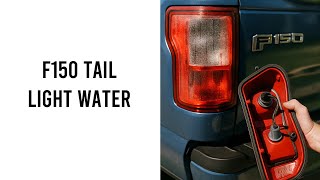
- Water intrusion shorting out a module. (Common) — Water from a cracked tail light housing, 🎬 See how water in a tail light causes communication codes. clogged sunroof drain, or bad windshield seal seeps into modules or connectors, causing corrosion and short circuits that crash the communication network.
- A single faulty control module. (Common) — One bad module sends out corrupt data that crashes the entire network, similar to a single infected computer taking down an office network. This stems from internal hardware failure or software corruption.
- Poor or corroded main ground straps. (Common) — A corroded engine-to-chassis or battery-to-chassis ground strap creates an unstable voltage supply for all modules, leading to widespread communication faults.
- Aftermarket accessories installed incorrectly. (Less Common) — Tapping into a CAN bus wire when installing a remote starter, alarm, or stereo interferes with data signals and causes immediate communication failure.
- Software glitches requiring a module reflash. (Less Common) — Flawed logic within a control module causes it to drop offline. Manufacturers release software updates (reflashes) via Technical Service Bulletins (TSBs) to patch these bugs.
- Broken or shorted CAN bus terminating resistor. (Rare) — The data network relies on a 120-ohm resistor at each end. If one fails or the circuit breaks, network signals become garbled and unreadable, causing total network failure.
Symptoms
- Multiple warning lights on the dashboard — The Check Engine, ABS, Traction Control, and other warning lights illuminate simultaneously because the modules cannot share operational data.
- Erratic gauge behavior — The speedometer, tachometer, or temperature gauges drop to zero or sweep back and forth randomly as the instrument cluster loses and regains communication.
- Engine stalls or enters 'limp mode' — The engine computer loses communication with the transmission or gas pedal, forcing it to run with severely reduced power to prevent mechanical damage.
- Vehicle won't start or cranks intermittently — If the security/immobilizer module cannot communicate with the engine computer, the vehicle disables the starter.
- Interior features stop working — Power windows, the radio, or climate controls stop functioning or act erratically.
Diagnostic Flowchart
Tap your situation to follow the diagnostic path that matches what you're seeing on this code.
Common Fixes & Costs
- Repairing a damaged wire or connector — Parts: $10 - $75, Labor: $200 - $600, ~2.5 hr book time (Intermediate)
- Replacing or cleaning a main ground strap — Parts: $20 - $100, Labor: $100 - $250, ~1.0 hr book time (Beginner)
- Replacing a faulty control module (BCM, ABS, etc.) — Parts: $300 - $1,500, Labor: $150 - $400, ~2.0 hr book time (Professional)
- Control module software update (reflash) — Parts: $0, Labor: $125 - $300, ~1.5 hr book time (Professional)
- Replacing a main wiring harness — Parts: $900 - $2,500, Labor: $1,200 - $3,000+, ~15.0 hr book time (Professional)
DIY vs Professional
- Replacing or cleaning a main ground strap 🟢 Beginner
Tools: Socket set, wire brush, contact cleaner. - Repairing a damaged wire or connector 🟢 Beginner
Tools: Wire strippers, crimpers, heat gun, multimeter, heat-shrink connectors. - Replacing a faulty control module 🟢 Beginner
Tools: Basic hand tools, advanced OBD-II scanner. - Control module software update (reflash) 🟢 Beginner
Tools: J2534 Pass-Thru device, stable power supply, manufacturer software subscription.
Used vs. New Parts: Buying Guide
When a used part is worth it: Used modules make sense for vehicles over 10 years old where new OEM parts are discontinued or cost-prohibitive, provided the module does not require complex immobilizer programming.
Donor-vehicle mileage cap: roughly under 100000 miles for the part to have meaningful remaining life.
Donor quality checklist:
- Match the part number exactly. A single digit difference guarantees incompatibility.
- Purchase from a supplier offering at least a 30-day warranty.
- Inspect the connector pins for green corrosion or signs of water damage.
- Verify the module is not VIN-locked by the manufacturer.
Decision logic:
- If The vehicle is less than 8 years old OR the part requires complex security programming → Buy new OEM. The risk of programming failure with a used part is too high.
- If A remanufactured module with a 1-year warranty is available → Buy remanufactured. It offers the best balance of cost savings and reliability.
- If The vehicle is over 10 years old AND the part is 'plug-and-play' → Buy a tested, warrantied used part to save money.
Warranty tradeoff: Used parts offer 30-90 day warranties covering only the part. New OEM or remanufactured parts offer 1-year to lifetime warranties.
Worst-case if a used part fails: $300-$800. If a used module is dead on arrival, you pay diagnostic and installation labor twice.
What Happens If You Wait — Timeline
- 0-4 weeks: MIL is on with U1202. Symptoms are intermittent, such as a radio glitch or a single warning light flashing briefly on startup due to a temporary voltage drop. (MPG impact: 0-2%% · Added cost: $0)
- 1-3 months: Symptoms become frequent. The vehicle occasionally stalls, enters 'limp mode', or multiple warning lights stay on. The unstable electrical environment stresses all connected modules. (MPG impact: 3-8%% · Added cost: $50-$150 (Wasted fuel and potential towing))
- 3-6 months: A no-start condition becomes highly likely. A secondary module on the network fails permanently due to repeated voltage spikes from the unstable network. (MPG impact: 5-15%% · Added cost: $400-$1500 (Towing, diagnostics, and secondary module replacement))
- 6+ months: Catastrophic failure. A shorted module back-feeds incorrect voltage, destroying the ECM or ABS controller. A corroded wiring harness fails completely. (MPG impact: 10-25%% · Added cost: $2000-$5000+ (Multiple module or full harness replacement))
Cost of Not Fixing It
- Immediate: Unpredictable vehicle behavior, including stalling in traffic, loss of power steering, or disabled ABS, creating a severe safety risk. (Added cost: 0)
- Weeks to Months: The vehicle enters a permanent no-start condition, leaving you stranded. Intermittent electrical shorts destroy previously healthy control modules. (Added cost: $200 - $800 (Towing and secondary module damage))
- Long-Term: Operating with incorrect data damages expensive mechanical components like the transmission or catalytic converter. (Added cost: $1500 - $4000+)
Diagnosis Steps
- Check the Battery and Charging System
Ensure the battery is fully charged (above 12.4 volts) and passes a load test. Check battery terminals for corrosion and tightness. With the engine running, verify the alternator charges at 13.5-14.5 volts. A weak power supply is the leading cause of communication codes.
Tools: Multimeter, Battery Tester (Beginner) - Scan All Modules for Codes
Use an advanced OBD-II scanner to poll all vehicle modules (ABS, BCM, TCM), not just the engine computer. Note all 'U' codes. If multiple modules report 'loss of communication' with one specific module, that module or its wiring is your primary suspect.
Tools: Advanced OBD-II Scanner (Beginner) - Perform a Thorough Visual Inspection
Check for damaged wiring harnesses, especially near hot exhaust components, sharp metal edges, or moving parts. Look for green or white corrosion in connectors. Inspect for water intrusion in the cabin, trunk, and around light assemblies.
Tools: Flashlight, Inspection Mirror (Beginner) - Inspect Grounds and OBD-II Port
Verify the main battery-to-chassis and engine-to-chassis ground straps are clean, tight, and free of corrosion. Inspect the diagnostic port for bent or pushed-out pins that prevent the scanner from communicating.
Tools: Flashlight, Basic Hand Tools (Intermediate) - Isolate Modules (The 'Unplug' Test)
If you suspect a single module is crashing the network, unplugging it restores communication between the remaining modules. Disconnect the suspect module, clear codes, and re-scan. If the other modules come back online, you found the faulty component or its connector.
Tools: Advanced OBD-II Scanner, Basic Hand Tools (Advanced) - Check CAN Bus Resistance
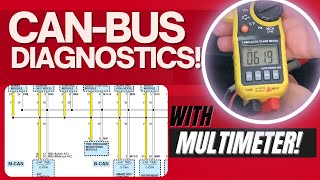
With the battery disconnected, measure the resistance between the CAN High and CAN Low pins at the OBD-II port (usually pins 6 and 14). A healthy network reads exactly 60 ohms. A reading of 120 ohms indicates an open circuit. A reading near 0 ohms means the wires are shorted together.
Tools: Multimeter (Advanced) - Check CAN Bus Voltages
With the key on and engine off, measure DC voltage. CAN High (Pin 6) to ground should sit at 2.5V and pulse up to 3.5V. CAN Low (Pin 14) to ground should sit at 2.5V and pulse down to 1.5V. If both lines are stuck at 2.5V, they are shorted together.
Tools: Multimeter (Advanced) - The 'Divide and Conquer' Wiring Test
If you have a 120-ohm reading (open circuit), find a connector halfway along the CAN bus circuit. Disconnect it and measure resistance on both sides. The side reading 120 ohms contains the break. Divide the faulty section in half repeatedly until you isolate the damage.
Tools: Multimeter, Wiring Diagrams (Professional) - The 'PicoScope' Network Health Check
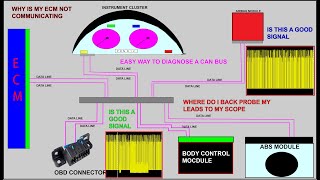
Use an oscilloscope to view the CAN bus signal directly at the OBD-II port. A healthy signal shows clean, mirrored square waves. Distortion, noise, or failure to switch definitively identifies shorts to power/ground or electrical interference.
Tools: Automotive Oscilloscope (Professional)
When This Code Triggers (Freeze-Frame Conditions)
- Control Module Voltage: 11.8-14.5V (A voltage reading below 12.0V when the fault occurred definitively points to a battery or charging system issue as the root cause.)
- Engine Coolant Temp: 180-200°F (82-93°C) (Faults occurring only when fully warmed up indicate a module or wiring harness failing under thermal expansion.)
- Vehicle Speed: 0-65 mph (If the code sets exclusively at 0 mph, it indicates an initialization failure at key-on or a problem with the immobilizer circuit.)
Related Codes
- U1201 — Often appears with U1202. On Subarus, U1201 is an intermittent 'CAN High Abnormal' warning, while U1202 is the final 'CAN High Bus Off' failure state.
- U0100 — A generic code specifically stating the Engine Control Module (ECM) has gone silent. If present with U1202, check the ECM's dedicated power and ground fuses first.
- U0073 — The generic SAE code for 'Control Module Communication Bus A Off'. U1202 is the manufacturer-specific equivalent providing a more precise definition.
- U1120, U1110 — Common on Chrysler/Dodge products, indicating a loss of communication with specific modules. Frequently points to a wiring harness issue or a fault with the Totally Integrated Power Module (TIPM).
Climate & Environmental Factors
- High Humidity / Rain: Moisture seeps into connectors and modules, causing corrosion on pins and circuit boards. This increases resistance and creates short circuits that disrupt data signals.
- Extreme Cold: Cold weather severely reduces battery efficiency. The resulting low voltage during engine cranking is the most common trigger for spurious communication codes across all makes.
- Salt Belt Regions (Winter): Road salt and brine accelerate the degradation of wiring, connectors, and chassis grounds, leading to a high incidence of electrical faults.
- High Heat: Sustained engine bay heat breaks down wire insulation, making it brittle and increasing the likelihood of a short circuit near exhaust components.
How to Talk to a Mechanic About This Code
Say this: "I have a U1202 communication code and multiple warning lights. I'd like to schedule a diagnostic appointment. Please start by load-testing the battery, checking the main grounds, and inspecting for obvious wiring damage before assuming a module has failed."
This signals you understand U1202 is often caused by simple electrical issues. It directs the shop to follow a logical diagnostic path and prevents them from immediately quoting a high-priced module replacement.
Avoid saying:
- 'My car is acting weird and all the lights are on.'
- 'I think I need a new computer, can you give me a price?'
- 'Just fix whatever is wrong, I need it back ASAP.'
Questions to ask before authorizing the repair:
- What specific point of failure did you find? Was it a wire, a connector, a ground, or a module?
- If recommending a module replacement, how did you prove the module itself is bad and not the wiring leading to it?
- Can you show me the damaged wire or the test results (e.g., resistance readings) that condemn the part?
- Does the repair require software programming, and is that cost included in the estimate?
Where to Take It: Dealer vs Independent vs Chain
- Dealer:
Best for: Vehicles under warranty, Known manufacturer-specific issues covered by a TSB, Complex module programming requiring proprietary software
Downsides: Highest labor rates., May default to expensive harness replacement instead of targeted wiring repair. (Typical cost: +50% vs. baseline) - Independent Shop:
Excellent fit, IF you choose an electrical specialist. They are better at finding and fixing the root cause (a single broken wire) than a dealer.
Best for: Out-of-warranty vehicles., Shops specializing in automotive electrical diagnostics., Getting a second opinion on a high-cost dealer quote.
Downsides: A general mechanic may lack the oscilloscope or experience required for complex network issues. (Typical cost: +0% vs. baseline) - Chain Shop:
AVOID for diagnostics. Do not authorize them to diagnose the U1202 code itself; they will likely misdiagnose it as a failed module.
Best for: Battery testing and replacement only.
Downsides: Technicians are not equipped for in-depth network diagnostics., High pressure to sell parts leads to misdiagnosis. (Typical cost: -10% vs. baseline)
When to Walk Away From the Repair
If the estimated repair cost for the U1202 fault exceeds 50% of your car's current private-party market value, seriously consider not fixing it.
- Car worth $4000, fix is $2500: Walk away. The repair cost is over 60% of the car's value. The car is economically totaled.
- Car worth $15000, fix is $1800: Fix it. The repair is only 12% of the vehicle's value.
- Car worth $6000, fix is $2800: Borderline. At 47% of the car's value, get a second opinion from an independent electrical specialist. A cheaper wiring fix might be possible.
What Scan Tool You Need for This Code
Minimum: A 'full-system' scanner that communicates with all modules (ABS, BCM, TCM), not just the engine computer.
A cheap $20 code reader only talks to the Engine Control Module. It cannot see the rest of the network. U1202 requires a tool that polls all modules to see which one is offline.
Budget: BlueDriver Bluetooth Pro (~$100) — Pairs with your smartphone to perform a full system scan. It shows exactly which modules are reporting communication loss.
Mid-range: Autel MaxiCOM MK808S / Foxwell NT809 (~$350-450) — Tablet-style scanners offering comprehensive diagnostics, live data from all modules, and bidirectional controls to test components.
Professional: Autel MK906BT / Launch X431 Series (~$500-1200) — Offers full bidirectional control and ECU coding. If you replace a module, these tools perform the necessary VIN programming.
Rent vs buy: Auto parts store free scanners are useless for U1202. For a one-time complex issue, renting a pro-level tool online for a week is a cost-effective alternative to buying.
How to Clear the Code After You Fix It
- Ensure the underlying wiring fault or module failure is fully repaired.
- Reconnect all components and the battery.
- Use a full-system OBD-II scan tool to erase DTCs from every module on the network.
- Perform the manufacturer's specific drive cycle to reset readiness monitors.
Drive cycle (~20 minutes): Start the engine cold (below 122°F). Idle for 3 minutes. Drive in stop-and-go city traffic for 10 minutes. Merge onto a highway and maintain a steady 55-60 mph for 10 minutes. This forces all modules to verify stable communication.
Readiness monitors affected: U1202 blocks multiple emissions monitors (Catalyst, EVAP, O2 Sensor) from running., These monitors remain 'Not Ready' until network communication is fully restored and a drive cycle completes.
Before emissions retest: drive at least 50 miles to fully set monitors.
Watch out for:
- Clearing the code without fixing the root cause guarantees it will return immediately.
- Using a basic $20 code reader only clears the engine computer, leaving the U1202 code active in the ABS or Body Control modules.
- Disconnecting the battery clears the code but resets all emissions monitors to 'Not Ready', causing an automatic emissions test failure.
Will This Fail Emissions / State Inspection?
Yes — this code typically fails an OBD-II emissions inspection.
- California: An active U1202 code is an automatic failure. The Check Engine Light will be on, and readiness monitors cannot set until the communication issue is resolved.
- New York: Any 'U' series code that illuminates the Malfunction Indicator Lamp (MIL) results in an immediate OBD-II inspection failure.
- Texas: In emissions-testing counties, an active U1202 code fails the OBD portion of the inspection. This requirement remains active despite the 2025 elimination of general safety inspections.
Most Commonly Affected Vehicles
- Ford F-150 (2015-2020) — Highly prone to water leaking into the rear tail light assemblies, shorting the Side Object Detection (SOD) module. This single failure takes down the entire medium-speed CAN network.
- Subaru Forester, Outback, Impreza (2008-2018) — Extremely sensitive to low battery voltage. A weak battery causes communication glitches and sets U1201/U1202 codes. Always perform a battery load test first.
- Dodge / Chrysler / Jeep Charger, Cherokee, Pacifica (2007-2019) — Known for wiring harness routing issues. The twisted CAN bus wires rub against hot A/C lines or engine components, causing a direct short that crashes the network.
- General Motors Trailblazer, Silverado, Tahoe (2002-2009) — Uses a GM Class 2 data bus. A single module (like the radio or HVAC) failing pulls the entire network down. Diagnosis requires isolating circuits at a central splice pack.
- Nissan Altima, Rogue, Sentra (2010-Present) — A U1202 code specifically points to a loss of communication with the AV (Audio/Video) control unit. Improper aftermarket radio installation immediately triggers this code.
- Volkswagen Passat, Golf (2015-2020) — Known for CAN bus wiring chafing against metal chassis parts under the dashboard, causing a short circuit.
Manufacturer-Specific Notes
- Subaru: Defines U1202 as 'CAN-HS BUS OFF'. These codes are almost always triggered by a weak battery. Test the charging system before starting complex wiring diagnostics.
- Ford: Multiple 'U' codes are famously caused by water entering the tail light assembly and corroding the blind spot module. Check tail light seals before replacing interior modules.
- Chrysler/Dodge/Jeep: Wiring harnesses are frequently routed too close to hot engine components, causing shorts. Thoroughly inspect the harness for chafing before condemning the expensive TIPM.
- General Motors: Refers to this as a 'Class 2' communication issue. Diagnosis centers on a 'splice pack' where all module communication wires meet. Unplugging modules from this comb connector isolates the short.
Real Owner Stories
2017 Subaru Outback with 75K miles - The Simple Fix
After a week of sub-freezing temperatures, the dashboard lit up with ABS, Check Engine, and EyeSight warning lights. The car started but felt sluggish.
Outcome: The 5-year-old battery failed the load test. A new battery was installed for $220. All codes cleared and did not return. The weak battery could not provide stable voltage to the modules during a cold start.
Lesson: On voltage-sensitive vehicles, always test the battery and charging system first when multiple communication codes appear. It saves hundreds in diagnostic fees.
2016 Ford F-150 with 110K miles - The Misdiagnosis Story
A 'Blind Spot System Fault' message appeared intermittently after heavy rain, followed by erratic radio and window controls.
Outcome: An electrical specialist identified a known Ford issue (TSB 19-2323). Water leaked through a bad tail light seal, corroding the Side Object Detection module connector. This single short crashed the entire network. The fix involved a $20 seal, cleaning the connector, and dielectric grease. Total cost: $250.
Lesson: Never accept an expensive module diagnosis without checking Technical Service Bulletins (TSBs). A known issue like a water leak is often the true root cause.
2009 Dodge Charger with 140K miles - The Elusive Wiring Problem
The car intermittently refused to start, flashing the security light and dropping all gauges to zero. U1202 was present alongside dozens of other codes.
Outcome: A dealership technician traced the CAN bus wiring harness and found it routed too close to a metal A/C line. Years of vibration rubbed through the wire insulation, causing an intermittent short. The technician repaired and rerouted the wires for $550 in labor.
Lesson: Intermittent wiring faults perfectly mimic failed modules. If a module replacement fails to fix the issue, the problem is in the wiring harness.
How to Prevent This Code From Triggering
- Perform an annual battery and charging system test (Once per year (especially before winter)) — Identifies a failing battery before it causes voltage drops that trigger network communication codes.
- Apply dielectric grease to exposed connectors (During any repair or every 2-3 years in harsh climates) — Seals out moisture and road salt, preventing the pin corrosion that causes high resistance and signal loss.
- Clean sunroof drains and cowl vents (Twice per year (spring and fall)) — Prevents rainwater from overflowing into the cabin and dripping onto fuse boxes or Body Control Modules.
- Use waterproof heat-shrink connectors for exterior wiring repairs (Whenever making a wiring repair) — Creates a waterproof seal that prevents corrosion from wicking into the wire and causing future failures.
Frequently Asked Questions
Can a bad battery cause a U1202 code?
Yes. Control modules are highly sensitive to voltage drops. A weak battery or failing alternator causes modules to malfunction and stop communicating, immediately setting a U1202 code.
What are common mistakes when diagnosing a U1202 code?
The biggest mistake is replacing expensive modules without testing the wiring first. A chafed wire or loose ground perfectly mimics a failed computer. Always verify battery health, fuses, and ground connections before buying parts.
My scanner shows U1202 but there are no symptoms. What should I do?
This is likely a 'history' code from a temporary voltage drop during a cold start. Record the freeze-frame data, clear the code, and drive normally. If the code returns, you have an active fault requiring diagnosis.
The shop quoted a very expensive module replacement. Could it be something else?
Yes, a simple wiring problem is frequently misdiagnosed as a failed module. Since wiring or connection issues are the most common cause, they must be ruled out first. Get a second opinion from a shop specializing in automotive electrical diagnostics.
I installed a new radio and now I have a U1202 code. What happened?
You likely tapped into a CAN data wire by mistake during installation. On many vehicles, the radio is an active network module, and improper wiring immediately crashes the bus. Disconnect the new radio to see if the code clears.
Is it expensive to fix a U1202 code?
Repair costs range from $150 for a simple ground cleaning to over $2,500 for a major wiring harness replacement. Most repairs fall between $200 and $600 for diagnosing and fixing a broken wire. The diagnostic labor usually costs more than the parts.
Can I fix U1202 myself?
You can easily test the battery, inspect fuses, and look for obvious wire damage yourself. However, pinpointing the exact network failure requires an advanced scanner and a multimeter. If basic checks pass, hand the diagnosis over to a professional.
What does 'Bus Off' mean?
'Bus Off' means a specific module detected too many network errors and automatically disconnected itself to prevent further disruption. This is a severe fault state indicating a major wiring short or internal module failure. It requires immediate electrical diagnosis.
Key Takeaways
- Always test your battery first; a voltage drop below 12.2V during engine cranking is the number one cause of U1202 communication errors.
- Do not replace a control module costing $300 to $1,500 until a multimeter test confirms the CAN bus wiring has the correct 60-ohm resistance.
- Expect to see 3 or more unrelated dashboard warning lights (like ABS, Check Engine, and Traction Control) illuminate simultaneously when the data network crashes.
- Check for water intrusion immediately; a $20 leaking tail light seal or clogged sunroof drain frequently shorts out modules and triggers this code.
Helpful Videos
Shop the Parts Behind U1202
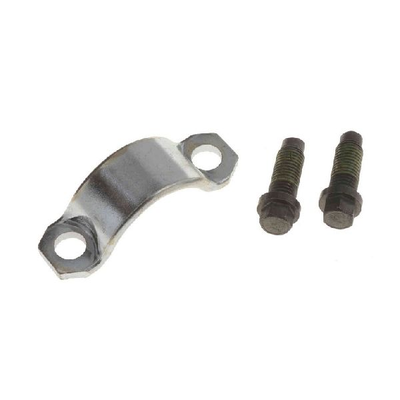
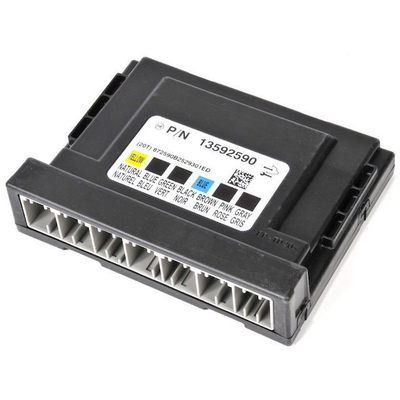
Below are the parts most often responsible for code U1202, ranked by how frequently each one is the actual culprit (per the diagnosis above). Tap any to see what we have for your vehicle.


The information in this article is provided for general reference and educational purposes only. Vehicle specifications, procedures, and part compatibility can vary by production date, trim level, and region. Always consult your vehicle's factory service manual and verify part numbers before purchasing or performing repairs. Safety-critical components such as airbags, seat belts, and braking systems should be installed by a qualified professional.
- 🧭 Diagnostic Flowchart
- 🎬 Helpful Videos
- 🛍️ Shop This Part
- What Does U1202 Mean?
- Can I Drive With U1202?
- Common Causes
- Symptoms
- Common Fixes & Costs
- DIY vs Professional
- Used vs. New Parts: Buying Guide
- What Happens If You Wait — Timeline
- Cost of Not Fixing It
- Diagnosis Steps
- When This Code Triggers (Freeze-Frame Conditions)
- Related Codes
- Climate & Environmental Factors
- How to Talk to a Mechanic About This Code
- Where to Take It: Dealer vs Independent vs Chain
- When to Walk Away From the Repair
- What Scan Tool You Need for This Code
- How to Clear the Code After You Fix It
- Will This Fail Emissions / State Inspection?
- Most Commonly Affected Vehicles
- Manufacturer-Specific Notes
- Real Owner Stories
- 2017 Subaru Outback with 75K miles - The Simple Fix
- 2016 Ford F-150 with 110K miles - The Misdiagnosis Story
- 2009 Dodge Charger with 140K miles - The Elusive Wiring Problem
- How to Prevent This Code From Triggering
- Frequently Asked Questions
- Can a bad battery cause a U1202 code?
- What are common mistakes when diagnosing a U1202 code?
- My scanner shows U1202 but there are no symptoms. What should I do?
- The shop quoted a very expensive module replacement. Could it be something else?
- I installed a new radio and now I have a U1202 code. What happened?
- Is it expensive to fix a U1202 code?
- Can I fix U1202 myself?
- What does 'Bus Off' mean?
- Key Takeaways
- 🎟️ Get 5% Off