

OBD-II Code U1204: Vehicle Communication Network Error
What U1204 means, why it triggers, and how to fix it
- Code U1204 indicates a CAN bus communication failure, most frequently pointing to a faulty Steering Angle Sensor or clock spring on Mitsubishi and Ford vehicles.
- Always test the 12V battery first; a voltage drop below 12.4V disrupts network communication and triggers false U-codes across multiple modules.
- Do not drive with an active U1204 code, as it disables critical safety systems like ABS and Electronic Stability Control, increasing emergency stopping distances by up to 30%.
- Diagnose U1204 by reading all module codes with a bidirectional scanner; a companion U0121 code isolates the fault directly to the ABS module.
- Expect to pay between $250 and $700 to replace a faulty clock spring or steering angle sensor, which includes the mandatory zero-point calibration.
What Does U1204 Mean?
U1204 is a network trouble code indicating that one of the vehicle's control modules is failing to communicate correctly with the rest of the network. Modern vehicles use a Controller Area Network (CAN) bus to share data between systems like the engine, brakes, and airbags. A U1204 code means there is a physical interruption or corrupted data in this conversation. The specific meaning varies by manufacturer, but it frequently points to a failure in the steering angle sensor, hybrid control system, or stability control modules.
Technical definition: The official SAE/OBD-II definition for U1204 is a generic network communication code, specified by manufacturers for unique subsystems. Common definitions include 'SCP (J1850) Invalid or Missing Data for Steering Column,' 'Steering Wheel Sensor Communication Error,' or 'IMA-CAN Malfunction (PCM-MCM).' This indicates that a specific module has sent invalid data, triggered a message counter error, or stopped broadcasting data entirely over the vehicle's CAN bus.
Can I Drive With U1204?
No, recommended Driving is not recommended. You are operating the vehicle without critical safety nets like stability control and ABS, which increases stopping distances by up to 30% in emergency braking and dramatically raises the risk of losing control in a sudden maneuver. For hybrid models, the risk includes sudden shutdown in traffic, creating a severe collision hazard. If the code is due to a secondary air pump issue on a Subaru, continued driving prevents passing an emissions test. Limit driving to a direct, low-speed trip to a repair facility.
Common Causes
- Damaged, corroded, or loose wiring and connectors. (Very Common) — Wiring and connectors are the most frequent failure points. Vibration, moisture, or physical damage breaks the connection, interrupting communication and triggering the code.
- Low battery voltage or bad ground connection. (Common) — Control modules require a stable voltage of at least 12.4V to communicate properly. A weak 12V battery or a corroded ground wire causes unpredictable communication errors across the network, even on electric vehicles.
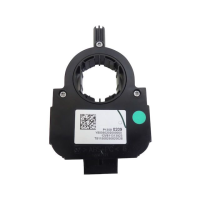
- Faulty Steering Angle Sensor (SAS). (Common) — This sensor tells the car's computers how the steering wheel is turned, which is essential for stability control and ABS. If it fails, it sends bad data or no data, causing this code on many vehicles, particularly Mitsubishi models.
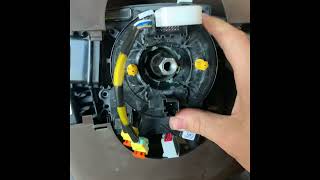
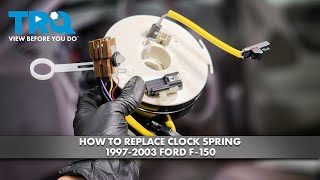
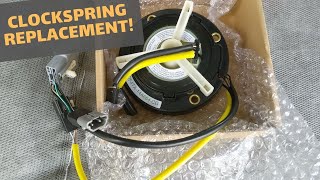
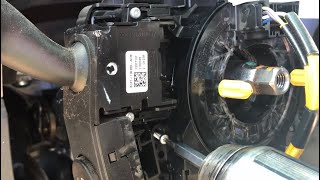
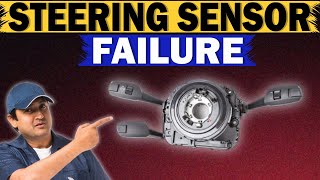
- Faulty Clock Spring. (Common) — The clock spring is a coiled wire inside the steering column that maintains electrical connections for the airbag, horn, and steering wheel controls while turning. A broken clock spring interrupts the signal from the steering angle sensor, a frequent issue on Ford trucks. 🎬 See this step-by-step guide to replacing a Ford clock spring
- Failed Secondary Air Injection Pump or Valve. (Common On Specific Makes) — On turbocharged Subaru models, a seized air pump or a stuck valve in the secondary air injection system is a primary cause. The system fails its self-test on cold starts, logging a communication fault.
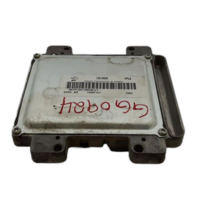
- Failing control module (PCM, ABS, BCM, PIM, etc.). (Less Common) — The computer module itself fails internally. This includes the main Powertrain Control Module (PCM), the Anti-lock Brake System (ABS) module, or a hybrid system's Power Inverter Module (PIM).
- Aftermarket device interference. (Uncommon) — Poorly installed aftermarket accessories, such as remote starters or alarms, interfere with the CAN bus network. These devices introduce electrical noise or draw unexpected power, disrupting module communication.
- Software or configuration mismatch. (Uncommon) — If a control module is replaced with an incorrect part or lacks proper programming for the specific vehicle, it causes communication conflicts on the network.
Symptoms
- Check Engine Light is on — An illuminated Malfunction Indicator Lamp (MIL) or Check Engine Light on the dashboard is the primary indicator.
- ABS and/or Traction/Stability Control warning lights are on — Because this code often involves steering or brake modules, the warning lights for the Anti-lock Braking System (ABS) or Electronic Stability Control (ESC) illuminate simultaneously.
- Loss of safety features — Features that rely on module communication, such as stability control, traction control, pre-collision assist, or adaptive cruise control, are disabled.
- Vehicle enters 'limp mode' or won't start — In severe cases, especially in hybrid vehicles, the car loses power, enters a reduced-performance 'limp mode', or refuses to start entirely.
- Warning messages on dash display — Specific warnings like 'Service Hybrid System,' 'Pre-Collision Assist Not Available,' or 'Electric drive not working correctly' accompany the code.
Diagnostic Flowchart
Tap your situation to follow the diagnostic path that matches what you're seeing on this code.
Common Fixes & Costs
- Repairing or replacing a damaged wiring harness or connector. — Parts: $10-$50, Labor: $150-$500, ~2.5 hr book time (Intermediate)
- Replacing the Steering Angle Sensor (SAS) and performing calibration. — Parts: $150-$400, Labor: $150-$300, ~1.5 hr book time (Intermediate)
- Replacing the Clock Spring. — Parts: $100-$300, Labor: $150-$300, ~1.2 hr book time (Intermediate)
- Replacing a seized secondary air pump or stuck valve (Subaru). — Parts: $300-$800, Labor: $200-$400, ~2.5 hr book time (Intermediate)
- Replacing a failed control module (PCM, ABS, PIM, etc.) and programming it. — Parts: $800-$1,500, Labor: $150-$300, ~2 hr book time (Professional)
DIY vs Professional
- Wiring Harness Repair — Beginner: No
Tools: Multimeter, wire strippers, soldering iron/crimp connectors, heat shrink tubing, wiring diagrams. - Steering Angle Sensor Replacement — Beginner: No
Tools: Basic hand tools, trim removal tools, torque wrench, advanced OBD-II scan tool for calibration. - Clock Spring Replacement — Beginner: No
Tools: Socket set, torque wrench, steering wheel puller, trim removal tools, screwdriver set. - Control Module Replacement — Beginner: No
Tools: Basic hand tools, J-2534 Pass-Thru device, dedicated laptop, stable power supply/battery maintainer, OEM software subscription.
Used vs. New Parts: Buying Guide
When a used part is worth it: For electronic parts like a Steering Angle Sensor or Clock Spring, a used OEM part from a low-mileage vehicle (under 80k miles) that was wrecked is a good value. It is often higher quality than a cheap aftermarket alternative. Avoid parts from flood-damaged or high-mileage vehicles.
Donor-vehicle mileage cap: roughly under 80000 miles for the part to have meaningful remaining life.
Donor quality checklist:
- Verify the donor vehicle's mileage and ensure it was not scrapped for an electrical or related system failure.
- Match the OEM part number exactly. Superseded or similar-looking parts fail to communicate with your vehicle's software.
- For clock springs, ensure the used part comes with a locking tab in place to prevent it from being damaged during shipping and installation.
Decision logic:
- If The part is a clock spring or related to the airbag system → Favor new OEM. The safety risk is too high to gamble on a used part of unknown history.
- If Vehicle is over 150K miles and the budget is very tight → A used OEM Steering Angle Sensor is acceptable, but understand it has a limited remaining lifespan.
- If A new OEM part is available for less than 50% more than a used part → Buy the new OEM part for the longer warranty and guaranteed compatibility.
Warranty tradeoff: Used parts from salvage yards typically come with a 30-90 day warranty, which only covers part replacement, not labor. New aftermarket parts often have a 1-year to limited lifetime warranty. New OEM parts carry a 1-2 year warranty when installed by a dealer.
Worst-case if a used part fails: $300-$600 if a used electronic part fails after the short warranty period, requiring you to pay for a second part and repeat the labor costs.
What Happens If You Wait — Timeline
- 0-2 Weeks: MIL is on, and safety systems like ABS and Stability Control are disabled. The car drives normally, but the risk of losing control in an emergency is significantly higher. On hybrids, intermittent 'Service Hybrid System' warnings appear. (MPG impact: 0-1%% · Added cost: $0)
- 1-3 Months: If caused by a faulty clock spring, the driver's airbag becomes non-functional. On a Subaru, the secondary air system failure begins to affect the catalytic converter during cold starts. On a hybrid, the vehicle starts entering 'limp mode' or refuses to start intermittently. (MPG impact: 1-5%% · Added cost: $50 in wasted fuel)
- 3-9 Months: Damage becomes more severe. On a Subaru, the catalytic converter becomes permanently clogged from lack of protection, leading to significant power loss. On a hybrid, ignoring communication faults causes stress on the high-voltage battery or Power Inverter Module (PIM), leading to more costly component failure. (MPG impact: 5-15%% · Added cost: $1200-$2500 (catalytic converter replacement) or $2000+ (hybrid component damage))
- 9+ Months: Catastrophic failure is likely. A failing hybrid system shuts down completely while driving, creating a severe safety hazard. The high-voltage battery or PIM fails entirely, resulting in a repair bill that exceeds the vehicle's value. A completely clogged catalytic converter causes engine backpressure and damages internal engine components. (MPG impact: 15-25%% · Added cost: $2000-$7000+)
Cost of Not Fixing It
- Immediate: Disabled safety systems, including ABS and Electronic Stability Control (ESC). This significantly increases the risk of losing control in an emergency maneuver or on slippery surfaces. (Added cost: N/A)
- 0-3 Months: If caused by a faulty clock spring, the driver's airbag fails to deploy in a collision. Continued driving causes further damage to the delicate clock spring ribbon, disabling the horn and steering wheel controls. (Added cost: $0)
- 3-12+ Months: On Subaru models with a failed secondary air pump, ignoring the code leads to the catalytic converter becoming clogged or overheating, as it lacks protection during cold starts. This requires an expensive converter replacement. (Added cost: $1200-$2500)
- Ongoing: On hybrid models (Honda, Chrysler), a communication fault leads to sudden vehicle shutdown, creating a severe safety hazard. Ignoring it causes damage to the expensive high-voltage battery or inverter/converter. (Added cost: $2000-$7000+)
Diagnosis Steps
- Read All Trouble Codes from All Modules
Use an advanced OBD-II scanner capable of accessing all vehicle modules. The U1204 code is a symptom; other stored codes provide the biggest clue to finding the root cause, such as U0121 pointing to the ABS system.
Tools: Advanced OBD-II Scan Tool (Beginner) - Check Battery and Grounds
Use a multimeter to verify the 12V battery voltage is above 12.4 volts with the engine off and over 13.5 volts when running. Inspect the main battery terminals and ground cable to the chassis, ensuring they are clean and tight.
Tools: Digital Multimeter, Basic hand tools (Beginner) - Perform a Thorough Visual Inspection
Carefully inspect the wiring harnesses and connectors related to the system implicated by other codes. Look for obvious signs of damage, corrosion, unplugged connectors, or chafing, specifically checking splice packs under the driver's side carpet on GM trucks.
Tools: Flashlight, Trim removal tools (Beginner) - Pro Tip: Perform a 'Wiggle Test'
With the scan tool connected and displaying live data from the suspected module, gently wiggle the connectors and wiring harness. If the data stream cuts out or the code reappears, you have located an intermittent loose connection.
Tools: Advanced OBD-II Scan Tool (Intermediate) - Test the CAN Bus Network Resistance
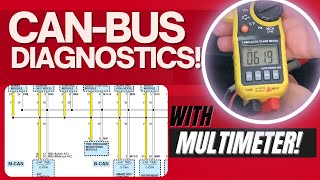
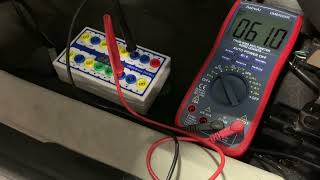
With the battery disconnected, use a multimeter to measure the resistance between the CAN High (Pin 6) and CAN Low (Pin 14) terminals at the OBD-II port. A healthy network reads exactly 60 ohms; a reading of 120 ohms indicates a terminating resistor or its module is offline.
Tools: Digital Multimeter (Intermediate) - Analyze Steering Angle Sensor Live Data
Connect an advanced scan tool and view the live data PID for the Steering Angle Sensor. With the steering wheel perfectly straight, the sensor must read 0°. Turn the wheel lock-to-lock; an erratic reading or dropouts indicates a faulty sensor or wiring.
Tools: Advanced OBD-II Scan Tool (Intermediate) - Isolate the Faulty Module
If the CAN bus resistance is 120 ohms, determine which module is offline. Using a wiring diagram, disconnect one module at a time from the bus and re-check the resistance at the OBD-II port until it returns to 60 ohms.
Tools: Advanced Scan Tool, Wiring Diagram, Hand tools (Advanced) - Analyze the CAN Bus Signal with an Oscilloscope
Connect an oscilloscope to CAN High (Pin 6) and CAN Low (Pin 14). A healthy high-speed CAN bus waveform shows two clean, mirroring square waves; look for distorted signals, noise, or incorrect voltage levels indicating a physical layer problem.
Tools: Oscilloscope, Vehicle-specific wiring diagram (Advanced) - Perform Zero-Point Calibration
If the Steering Angle Sensor or clock spring is replaced, perform a zero-point calibration with an advanced scan tool. Skipping this step causes the U1204 code to return and leaves stability control disabled.
Tools: Advanced OBD-II Scan Tool (Intermediate)
When This Code Triggers (Freeze-Frame Conditions)
- Engine Coolant Temp: 180-210°F (The fault often appears when the vehicle is fully warmed up and operating in closed-loop fuel control.)
- RPM: 1200-2500 (Network errors frequently occur under steady-state cruising conditions, not typically during hard acceleration or idle.)
- Vehicle Speed: 30-60 mph (The code is often logged during city or highway driving as modules are actively communicating.)
- System Voltage: 13.5-14.5V (The error is most likely to be valid when system voltage is normal. If voltage is low (e.g., <12.4V), the U-code is a symptom of an electrical issue, not a primary network fault.)
Related Codes
- U0100 — This code means 'Lost Communication With ECM/PCM.' It frequently appears with U1204 because if the main engine computer goes offline, many other modules report a communication loss.
- C1241 — This code indicates low or high battery voltage was supplied to the brake ECU. It triggers U1204 because unstable power disrupts network communication.
- U0121 — This code means 'Lost Communication With Anti-Lock Brake System (ABS) Control Module.' It is seen with U1204 when the fault lies in the ABS module or its wiring.
- P0410 — On Subaru models, this code for 'Secondary Air Injection System Malfunction' is a major clue. It appears with U1204 because when the air pump or its valves fail their self-test, the ECU logs both a system performance code (P0410) and a communication code (U1204).
Climate & Environmental Factors
- High Humidity / Coastal Regions: Moisture in the air, especially salty coastal air, significantly accelerates corrosion on wiring, connectors, and splice packs located under carpets or near the vehicle's exterior. This corrosion increases resistance or causes short circuits in the CAN bus wiring, leading to intermittent communication failures.
- Water Intrusion: Leaks from clogged sunroof drains, bad window seals, or damaged weatherstripping allow water to pool near critical wiring harnesses and modules. On many GM trucks, this leads to corrosion of the main splice pack under the driver's side sill plate, a common cause of network codes.
How to Talk to a Mechanic About This Code
Say this: "I have a U1204 network communication code and I'd like to schedule a diagnostic. I know this is a complex electrical issue. Please start by performing a full-system scan to check for any other codes in modules like the ABS, steering, or body controller. I'd like to authorize one hour of diagnostic time to identify a clear testing path."
This signals that you understand U1204 is a network fault, not a simple part failure. It directs the technician to follow a logical process (scan all modules) rather than guessing, and it sets a clear budget for the initial investigation, preventing surprise diagnostic bills.
Avoid saying:
- 'My check engine light is on, can you look at it?'
- 'I think I need a new steering sensor.'
- 'Just fix whatever is wrong and call me when it's done.'
Questions to ask before authorizing the repair:
- What other trouble codes did you find, and in which modules?
- What were the results of the CAN bus resistance and voltage tests?
- Based on the codes and tests, what is your primary suspect and what is the next test to confirm it?
- If a module needs to be replaced, is programming required and included in the quote?
- What is the warranty on this specific repair, including both parts and labor?
Where to Take It: Dealer vs Independent vs Chain
- Dealer:
Recommended for in-warranty vehicles or if a well-vetted independent diagnostic specialist is not available.
Best for: Vehicles under warranty or with open recalls (e.g., Chrysler Pacifica Hybrid)., Complex, manufacturer-specific issues that require proprietary software (e.g., Honda IMA system, Mitsubishi ASTC)., Repairs requiring module programming, as they have guaranteed access to the latest software.
Downsides: Highest labor rates, typically $150-$250 per hour., Defaults to replacing an entire assembly when a smaller component or wiring repair suffices. (Typical cost: +50% vs. baseline) - Independent Shop:
Best fit for most out-of-warranty scenarios, provided you choose a shop that invests in modern diagnostic tools and training.
Best for: Out-of-warranty vehicles where cost is a factor., Diagnosing common U1204 causes like wiring faults, steering angle sensors, or clock springs., Shops with an ASE L1 certified technician who specializes in electrical and network diagnostics.
Downsides: Shop quality and diagnostic equipment vary widely; vetting is crucial., Lacks access to the very latest manufacturer software for module programming on brand-new models. (Typical cost: +0% vs. baseline) - Chain Shop:
AVOID for diagnosing a U1204 code. Their tools and training are inadequate for complex electrical faults.
Best for: Checking battery health and replacement, which is always a first step.
Downsides: Technicians are not equipped or trained for complex network diagnostics., High risk of misdiagnosis, leading to unnecessary replacement of expensive parts., Business model is not optimized for time-consuming electrical troubleshooting. (Typical cost: -10% vs. baseline)
When to Walk Away From the Repair
If the total estimated repair cost for the U1204 fault exceeds 50% of your car's current private-party value, it's time to seriously consider selling or trading it in.
- Car worth $5000, fix is $2800: Walk away. The repair cost is over 50% of the car's value. The risk of other age-related failures is high.
- Car worth $15000, fix is $850: Fix it. The repair cost is a small fraction of the vehicle's value and restores critical safety functions.
- Car worth $3000, fix is $1600: Walk away. The repair cost is more than half the car's value, making it a poor financial investment.
What Scan Tool You Need for This Code
Minimum: A scanner that reads and clears codes from ALL vehicle modules (ABS, SRS, BCM, etc.), not just the engine computer (PCM). It must also display live sensor data.
A basic $20 code reader only sees the engine computer and misses the critical codes stored in other modules (like the ABS or steering module) that are the key to diagnosing U1204. You will be flying blind.
Budget: BlueDriver Pro (~$100) — Reads trouble codes from all modules on many vehicles (check compatibility), providing the essential first step of seeing which system is reporting the fault. Also provides live data graphing.
Mid-range: Foxwell NT510 Elite / Autel MaxiCOM MK808 (~$150-500) — This is the recommended level for DIY. These tools have full all-module scanning plus bidirectional controls and special functions. Crucially, they perform the 'Steering Angle Sensor Zero-Point Calibration' required after replacing the sensor or clock spring.
Professional: Autel MaxiSys MS906 Pro / Launch X431 Series (~$1200+) — Provides all OEM-level functions, including advanced coding and programming for replacing control modules. Some models include oscilloscope functions for deep-level CAN bus waveform analysis. This is professional-grade equipment.
How to Clear the Code After You Fix It
- Ensure all repairs are complete and connectors are secure.
- Reconnect the 12V battery if it was disconnected.
- Use a professional-grade OBD-II scan tool to perform a 'Clear All Codes' command from all modules.
- Perform any required relearn or calibration procedures (e.g., Steering Angle Sensor zero-point calibration).
- Complete a full OBD-II drive cycle to allow readiness monitors to run.
Drive cycle (~20 minutes): A generic drive cycle includes a cold start, a few minutes of idling, followed by mixed city driving (stops, starts, varied speeds), and concluding with 5-10 minutes of steady-speed highway driving (55-60 mph). The vehicle must then cool down completely.
Readiness monitors affected: Comprehensive Component Monitor (CCM), CAN System Readiness
Before emissions retest: drive at least 100 miles to fully set monitors.
Watch out for:
- Simply disconnecting the battery will not clear the code from all modules and resets all readiness monitors to 'Not Ready,' guaranteeing an emissions test failure.
- The code returns immediately if the underlying physical or software fault has not been corrected.
- Forgetting to perform a required calibration (like for a new steering angle sensor) causes the code to come back.
Will This Fail Emissions / State Inspection?
Yes — this code typically fails an OBD-II emissions inspection.
- California: An active U1204 code with the Check Engine Light on is an automatic failure. After repair, the vehicle must complete a full drive cycle to set all required readiness monitors before it can be re-tested.
- New York: The NYS DMV inspection includes an OBD-II scan. Any diagnostic trouble code that illuminates the Malfunction Indicator Lamp (Check Engine Light), including a U1204, results in an immediate inspection failure.
- Texas: In counties requiring emissions testing, an illuminated Check Engine Light from a U1204 code is an automatic fail. Additionally, clearing the code right before the test fails the vehicle due to readiness monitors being 'Not Ready'.
Most Commonly Affected Vehicles
- Honda Civic Hybrid / Insight / Clarity (2003-2018) — On these models, U1204 frequently indicates an 'IMA-CAN Malfunction,' a communication failure between the PCM and the hybrid system's Motor Control Module (MCM) or Battery Control Module. Early models (2003-2005) were prone to MCM failure, while later models require software updates.
- Chrysler Pacifica Hybrid (2017-2023) — This code is associated with a recall for internal transmission wiring connectors shorting out, causing engine shutdown. Some repairs are covered under extended warranty.
- Mitsubishi Outlander / Lancer (2006-2014) — For Mitsubishi, U1204 is commonly defined as a 'Steering wheel sensor communication error.' Diagnosis starts with the CAN bus itself, but the fault often lies with the SAS (OEM PN 8651A084) or its wiring. A specific M.U.T.-III scan tool is recommended for diagnosis.
- Ford F-150 (2009-2014) — On many Fords, the code relates to 'Invalid or Missing Data for Steering Column,' caused by a faulty clock spring (OEM PN GL3Z-14A664-A) or a failure in the steering column control module. This is also linked to issues with the Electric Power Assist Steering (EPAS) system.
- GMC / Chevrolet Various Trucks and SUVs (2007-2014) — On many GM vehicles, this code points to a Class 2 serial data communication failure. A common cause is corrosion in the main wiring splice pack (e.g., SP205) located under the driver's side sill plate or carpet, due to water intrusion.
- Nissan Murano / Rogue / Various (2007-2024) — On various Nissan models, U1204 points to a fault with the AV (Audio/Visual) communication line, causing the center display and parking aids to malfunction. It is also related to GPS or sonar sensor communication.
- Subaru WRX / STI / Forester / Legacy (2006-2014) — In turbocharged Subaru models, U-codes are related to the secondary air injection system. A seized air pump (OEM PN 14828AA060) or faulty valve causes communication codes like U1204 and P0410 to be logged. Check for extended warranty coverage under TSB 09-73-20R.
- Volkswagen ID.3 / ID.4 (2020-2024) — In VW's electric vehicles, a U-code accompanies warnings like 'Electric drive not working correctly.' This points to a software glitch or a problem with a high-voltage battery module. A failing 12V battery is also a frequent cause.
Manufacturer-Specific Notes
- Honda: The code almost always points to a communication problem on the Integrated Motor Assist (IMA) network, involving the Powertrain Control Module (PCM), Motor Control Module (MCM), or the Battery Control Module.
- Chrysler: On Pacifica Hybrids (2017-2021), this code is a precursor to a serious battery issue. Recall Z11 (NHTSA 22V-077) and subsequent recalls (72B/73B) address a fire risk from the high-voltage battery. Owners are advised not to charge the vehicle and to park outside until the final repair is performed.
- Mitsubishi: The code is very specific to the steering angle sensor's communication with the Active Stability and Traction Control (ASTC) computer. The primary suspect is the sensor itself or its wiring, but always check the CAN bus health first.
- Ford: The issue is commonly traced to the steering column, involving the clock spring, steering angle sensor, or the module that controls them. Look for TSBs related to 'Pre-Collision Assist Not Available' as this system relies on the same sensors.
Real Owner Stories
2007 Subaru WRX with ~80k miles
Check Engine Light came on, along with a flashing cruise control light and disabled traction control. OBD-II scan revealed codes for the secondary air pump system.
What they tried:
- Mechanic diagnosed a failed secondary air pump.
- Owner considered replacing the pump for over $1000 or installing a cheaper delete kit.
- Contacted Subaru of America (SOA) after reading about similar issues in forums.
Outcome: SOA agreed to cover the entire $1000+ repair cost as a one-time 'good faith' gesture, even though the vehicle was out of the standard warranty. The pump was replaced by the dealer at no cost to the owner.
Lesson: For known, widespread issues on specific models (like the Subaru secondary air pump), always contact the manufacturer's corporate office. They offer financial assistance or a full goodwill repair to maintain customer loyalty, especially if it's a known component failure.
2016 Ford F-150
All steering wheel controls (radio, phone, cruise control) stopped working simultaneously. The dealer quoted $435 for diagnosis and potential clock spring replacement.
What they tried:
- Owner self-diagnosed a faulty clock spring based on symptoms.
- Purchased an OEM clock spring online for $107 and replaced it themselves in about 30 minutes.
- The new clock spring did not fix the issue, and in fact, more steering wheel buttons stopped working.
Outcome: The owner discovered that the problem was not the clock spring itself, but the entire Steering Column Control Module housing, which the clock spring is a part of. The initial DIY replacement of only the clock spring was unsuccessful.
Lesson: On modern vehicles, a single part like a clock spring is integrated into a larger control module assembly. Misdiagnosing the specific failed component leads to wasted money and time. If replacing a part doesn't work, research if it's part of a larger, single-replacement unit.
2018 Honda Clarity with ~58k miles
Check Engine Light appeared, with codes U1204 (Battery Control Module communication loss) and U0100 (PCM communication loss). No noticeable driving issues.
What they tried:
- Owner read the codes at an auto parts store.
- Made an appointment with the dealer for a diagnosis.
- Before the appointment, after 4-5 short trips with the car being turned off and on, the Check Engine Light cleared itself.
Outcome: The owner suspects an intermittent loose wire or a temporary glitch in the communication network. Another owner of the same model reported an identical experience where the codes cleared on their own and did not return for over two months.
Lesson: Intermittent U-codes are sometimes temporary 'flukes' caused by a momentary voltage drop or network hiccup. If the code appears without any symptoms and then clears on its own, it does not indicate a hard failure. Monitor the vehicle, but immediate, expensive repairs are not necessary unless the code returns consistently.
2007 Mitsubishi Outlander
After a steering rack repair and wheel alignment, the 'ASC OFF' and 'Service Required' lights came on, with code U1204 for a steering wheel sensor communication error.
What they tried:
- A shop attempted to recalibrate the sensor, but it failed.
- The owner disassembled the steering column to inspect the sensor and clock spring.
- They found that the steering angle sensor itself was faulty.
Outcome: The owner replaced the steering angle sensor. After replacement, a proper zero-point calibration was required using a scan tool to make the system recognize the new sensor's straight-ahead position and clear the codes.
Lesson: If a U1204 code appears after a steering, suspension, or alignment repair, the first step is to attempt a Steering Angle Sensor (SAS) recalibration. If calibration fails or the code returns, the sensor itself is the likely culprit. Replacement of the SAS always requires a final calibration step with an advanced scan tool.
How to Prevent This Code From Triggering
- Test the 12V battery annually (Once per year) — A weak battery provides unstable voltage, a primary cause of random communication faults between modules. Annual testing catches a failing battery before it disrupts the network.
- Apply dielectric grease to critical connectors (During any related repair) — Applying a thin layer of dielectric grease to the seals of connectors for exposed modules (like ABS or hybrid components) prevents moisture intrusion and corrosion, which causes short circuits or high resistance on the CAN bus.
- Keep sunroof drains and cowl drains clear (Twice per year (spring/fall)) — Clogged drains cause water to leak into the vehicle's cabin, dripping directly onto fuse boxes, splice packs, and control modules located under the carpet or behind the dashboard, leading to corrosion and network failure.
- Ensure aftermarket accessories are professionally installed (At time of installation) — Improperly tapping into CAN bus wires for devices like remote starters or alarms introduces electrical noise and interference, disrupting communication. Professional installation ensures these devices are isolated and powered correctly.
Frequently Asked Questions
Can a bad battery cause code U1204?
Yes, absolutely. A weak or failing 12-volt battery causes low voltage issues that disrupt communication between modules, leading to a U1204 code. Always check the battery's health and charging system operation early in your diagnosis.
Is it safe to drive with a U1204 code?
It is not recommended. While the car drives fine, important safety systems like ABS and stability control are disabled. In hybrid vehicles, the car shuts down or enters a low-power mode without warning.
How much does it cost to fix a U1204 code?
The cost varies widely based on the root cause. A simple wiring repair costs $150-$500, while replacing a steering angle sensor ranges from $300 to $700. Replacing a major control module like the PCM or a hybrid inverter exceeds $1,500.
Can I fix code U1204 myself?
Simple fixes like checking fuses or cleaning battery terminals are DIY-friendly. Diagnosing the network with a multimeter and isolating modules requires specialized knowledge. Replacing and programming modules is strictly a job for a professional technician.
What is the difference between a U-code and a P-code?
P-codes (Powertrain) relate to the engine, transmission, and emissions systems. U-codes (Network) relate to the communication wiring and protocols that allow all the vehicle's computer modules to share information. A U-code indicates a data problem, not necessarily a mechanical one.
My car has U1204 and U0100, where do I start?
When you have U0100 ('Lost Communication with PCM') alongside U1204, the problem is centered on the Powertrain Control Module (PCM). Start by checking all power and ground connections to the PCM. If those are good, the PCM itself has failed.
Can a bad clock spring cause other issues besides a U1204 code?
Yes. A failing clock spring typically causes the airbag warning light to illuminate, and features located on the steering wheel, like the horn, radio controls, and cruise control buttons, stop working.
How do I perform a CAN bus resistance test?
Disconnect the 12V battery and set your multimeter to Ohms. Touch the probes to Pin 6 and Pin 14 of the OBD-II port. A healthy network reads 60 Ohms, while 120 Ohms indicates a module or wiring issue.
Key Takeaways
- Code U1204 indicates a CAN bus communication failure, most frequently pointing to a faulty Steering Angle Sensor or clock spring on Mitsubishi and Ford vehicles.
- Always test the 12V battery first; a voltage drop below 12.4V disrupts network communication and triggers false U-codes across multiple modules.
- Do not drive with an active U1204 code, as it disables critical safety systems like ABS and Electronic Stability Control, increasing emergency stopping distances by up to 30%.
- Diagnose U1204 by reading all module codes with a bidirectional scanner; a companion U0121 code isolates the fault directly to the ABS module.
- Expect to pay between $250 and $700 to replace a faulty clock spring or steering angle sensor, which includes the mandatory zero-point calibration.
Helpful Videos
![How To Test CAN BUS With A Multimeter [CAN Bus Resistance Check] Mechanic Mindset](https://img.youtube.com/vi/JPE42HSJxAk/mqdefault.jpg)


Shop the Parts Behind U1204
Below are the parts most often responsible for code U1204, ranked by how frequently each one is the actual culprit (per the diagnosis above). Tap any to see what we have for your vehicle.



The information in this article is provided for general reference and educational purposes only. Vehicle specifications, procedures, and part compatibility can vary by production date, trim level, and region. Always consult your vehicle's factory service manual and verify part numbers before purchasing or performing repairs. Safety-critical components such as airbags, seat belts, and braking systems should be installed by a qualified professional.
- 🧭 Diagnostic Flowchart
- 🎬 Helpful Videos
- 🛍️ Shop This Part
- What Does U1204 Mean?
- Can I Drive With U1204?
- Common Causes
- Symptoms
- Common Fixes & Costs
- DIY vs Professional
- Used vs. New Parts: Buying Guide
- What Happens If You Wait — Timeline
- Cost of Not Fixing It
- Diagnosis Steps
- When This Code Triggers (Freeze-Frame Conditions)
- Related Codes
- Climate & Environmental Factors
- How to Talk to a Mechanic About This Code
- Where to Take It: Dealer vs Independent vs Chain
- When to Walk Away From the Repair
- What Scan Tool You Need for This Code
- How to Clear the Code After You Fix It
- Will This Fail Emissions / State Inspection?
- Most Commonly Affected Vehicles
- Manufacturer-Specific Notes
- Real Owner Stories
- 2007 Subaru WRX with ~80k miles
- 2016 Ford F-150
- 2018 Honda Clarity with ~58k miles
- 2007 Mitsubishi Outlander
- How to Prevent This Code From Triggering
- Frequently Asked Questions
- Can a bad battery cause code U1204?
- Is it safe to drive with a U1204 code?
- How much does it cost to fix a U1204 code?
- Can I fix code U1204 myself?
- What is the difference between a U-code and a P-code?
- My car has U1204 and U0100, where do I start?
- Can a bad clock spring cause other issues besides a U1204 code?
- How do I perform a CAN bus resistance test?
- Key Takeaways
- 🎟️ Get 5% Off