

OBD-II Code U1205: Vehicle Communication Network Error
What U1205 means, why it triggers, and how to fix it
- Code U1205 flags a total communication breakdown on your vehicle's Controller Area Network (CAN) bus, preventing computers from sharing data.
- Do not drive with an active U1205 code; it disables critical safety systems like Anti-lock Brakes (ABS) and Electronic Stability Control (ESC), increasing crash risk.
- Test your 12V battery and fuses first, as voltage drops below 12.4V are the leading cause of false network communication errors.
- Diagnosing a U1205 requires a full-system OBD-II scanner to identify offline modules, followed by multimeter tests on pins 6 and 14 of the diagnostic port.
- Expect repair costs to range from $150 for a simple wiring repair to over $1,500 if a major component like the ABS module requires replacement.
What Does U1205 Mean?
Code U1205 indicates the computers (modules) in your car cannot talk to each other. Your vehicle relies on an internal network called the Controller Area Network (CAN) bus. 🎬 Watch: A simple introduction to how the CAN bus works. This code flags a communication breakdown on that network, preventing different systems from sharing the real-time data required to function.
Technical definition: U1205 is a generic network fault code indicating a communication failure on the vehicle's Controller Area Network (CAN) bus. It signifies that a module on the network has stopped sending data, or is receiving invalid or missing data from another essential module. On specific manufacturers, it translates to 'SCP (J1850) Invalid or Missing Data for Steering Column'.
Can I Drive With U1205?
No — Do Not Drive. Do not drive with this code. A U1205 code indicates a total failure in the vehicle's communication network, disabling critical safety systems like Anti-lock Brakes (ABS), Electronic Stability Program (ESP), and power steering. Driving without these systems significantly increases crash risk during emergency maneuvers.
Common Causes
- Low or Failing 12V Battery (Very Common) — A weak battery providing insufficient or unstable voltage to the vehicle's electronic modules is the leading cause of false communication errors and cascading fault codes.
- Damaged or Corroded Wiring and Connectors (Very Common) — The twisted-pair wires of the CAN network suffer damage from vibration, moisture, or physical impact. Water intrusion from leaking heater cores or aggressive interior detailing forces water into sensitive connectors, causing corrosion. Even a single backed-out pin takes down the entire network.
- Poor Ground Connections (Common) — All modules on the CAN network must share the exact same ground reference. A corroded, loose, or painted-over ground connection creates a voltage offset between modules, distorting communication signals and causing bus errors.
- Faulty Control Module or Gateway (Common) — A computer on the network (like the ABS module, Powertrain Control Module, or Central Gateway) fails internally. A faulty module stops communicating entirely or floods the network with corrupt data, causing a total communication breakdown.
- Faulty or Misaligned Sensor (Less Common) — A failing sensor, such as a wheel speed or steering angle sensor, sends erratic data that floods the network. This also occurs if sensors are misaligned after suspension work or wheel alignments, requiring recalibration with a scan tool.
- Control Module Software Issues (Less Common) — Outdated or corrupted software within a control module creates communication conflicts. A software update from the manufacturer resolves the issue.
- Electromagnetic Interference (Rare) — Poorly installed high-power aftermarket electronics, like a remote starter or audio amplifier, create electrical noise that interferes with the sensitive CAN bus network, corrupting signals.
Symptoms
- Multiple Warning Lights — The Check Engine, ABS, and Traction/Stability Control (ESP/ASR) lights illuminate simultaneously. You also see warnings for braking, steering, or hybrid systems.
- Loss of System Functions — Features like anti-lock brakes, stability control, power steering, air conditioning, or the radio stop working entirely or operate intermittently.
- Erratic Instrument Cluster — Gauges like the speedometer or tachometer drop to zero, flicker, or display incorrect readings. Warning messages appear and disappear randomly.
- No-Start or Stalling — The vehicle cranks but fails to start, or does not crank at all because the security module cannot communicate with the engine computer. The engine stalls while driving if communication drops between critical modules.
- No Communication with Scan Tool (scan-tool only — no driver-felt sign) — An OBD-II scanner fails to communicate with any or most of the vehicle's control modules. This happens when the gateway module is offline or a bus fault blocks the scanner connection.
Diagnostic Flowchart
Tap your situation to follow the diagnostic path that matches what you're seeing on this code.
Common Fixes & Costs
- Replacing the 12V Battery — Parts: $150 - $300, Labor: $50 - $100, ~0.5 hr book time (DIY)
- Repairing Damaged Wiring or Connectors — Parts: $10 - $50, Labor: $150 - $500, ~2 hr book time (Professional)
- Replacing a Faulty Wheel Speed Sensor — Parts: $50 - $150, Labor: $100 - $200, ~1 hr book time (DIY)
- Replacing a Faulty ABS Module — Parts: $300 - $1,200, Labor: $150 - $400, ~1.5 hr book time (Professional)
- Replacing the Central Gateway Module (CGW) — Parts: $300 - $900, Labor: $200 - $500, ~2.5 hr book time (Professional)
- Replacing Hybrid Battery Pack — Parts: $2,500 - $4,500, Labor: $400 - $1,000, ~4 hr book time (Professional)
DIY vs Professional
- Replacing the 12V Battery 🟢 Beginner
Tools: Wrench set, terminal cleaner brush. - Replacing a Faulty Wheel Speed Sensor 🟢 Beginner
Tools: Jack and jack stands, socket/wrench set, Torx bits, wire brush. - Repairing Damaged Wiring 🟢 Beginner
Tools: Soldering iron, wire strippers, heat gun, multimeter, wiring diagrams. - Replacing a Faulty ABS Module 🟢 Beginner
Tools: Professional scan tool, flare nut wrenches, torque wrench, brake fluid. - Replacing the Central Gateway Module 🟢 Beginner
Tools: Dealer-level scan tool for programming/coding, trim removal tools.
Used vs. New Parts: Buying Guide
When a used part is worth it: For an expensive, out-of-warranty failure like an ABS or Gateway module, a used part from a reputable auto recycler saves 50-80% off the new price. This is ideal for older, high-mileage vehicles.
Donor-vehicle mileage cap: roughly under 100000 miles for the part to have meaningful remaining life.
Donor quality checklist:
- Purchase from a professional dismantler that tests parts and offers a 30-90 day warranty.
- Verify the donor vehicle was not scrapped due to flood or fire damage.
- Match the OEM part number exactly. Different part numbers for modules exist based on options and are not interchangeable.
- Visually inspect the part for corrosion on pins or physical damage.
Decision logic:
- If The vehicle is less than 5 years old or has low mileage → Buy a new OEM or remanufactured part to ensure longevity and get a longer warranty.
- If The vehicle is over 10 years old and budget is the primary concern → A tested used module is an acceptable risk, provided it has a warranty.
- If The part requires complex VIN programming → Factor in the cost of programming. A new part installed by a dealer is often simpler.
Warranty tradeoff: Used parts typically offer a 30-90 day functional warranty. Remanufactured parts come with a 1-year to lifetime warranty. New OEM parts carry a 1-2 year warranty if installed by a dealer.
Worst-case if a used part fails: $300-800 if a used module is dead on arrival, requiring repeat labor costs plus the price of another replacement part.
What Happens If You Wait — Timeline
- 0-2 weeks: Code is set, MIL is on, and multiple warning lights (ABS, ESP) illuminate. Safety systems are disabled. Vehicle operates normally otherwise, or has intermittent gauge flickering. (MPG impact: 0%% · Added cost: $0)
- 2 weeks - 3 months: The risk of being stranded increases. The vehicle intermittently fails to start or stalls while driving if the gateway or engine control module loses communication. (MPG impact: 0%% · Added cost: $100 - $300 (Potential tow))
- 3-6 months: A persistent fault caused by an unstable module affects other modules. A module flooding the network with bad data stresses transceivers in healthy modules. (MPG impact: 0%% · Added cost: $500 - $1500 (Risk of secondary module failure))
- 6+ months: Catastrophic network failure occurs. A short-to-power fault causes thermal damage to a wiring harness or destroys an expensive module like the ECU. (MPG impact: 0%% · Added cost: $1500 - $4000+ (Cascading module failure and harness replacement))
Cost of Not Fixing It
- Immediate: Critical safety systems like ABS and Electronic Stability Control (ESC) are disabled. This significantly increases the risk of losing control and crashing during an emergency stop. (Added cost: Potential for accident, injury, and invalidation of insurance coverage.)
- Days to Weeks: The vehicle fails to start or stalls unexpectedly if communication drops between the engine control unit and security modules, leaving you stranded. (Added cost: $100 - $300 for a tow.)
- Weeks to Months: Driving with a persistent network fault causes further electronic damage. Unstable voltages or data signals from a failing module stress other modules on the same network, leading to cascading failures. (Added cost: $500 - $2500+ if a secondary module like the ECU or BCM is damaged.)
Diagnosis Steps
- Check the 12V Battery and Fuses
Test the battery's state of charge and load capacity. A healthy battery reads above 12.4V at rest and maintains above 10V during cranking. Check all fuses related to the control modules (ABS, BCM, ECU), as a single blown fuse takes a module offline and disrupts the network.
Tools: Multimeter, Battery Load Tester, Fuse Puller (Beginner) - Scan All Vehicle Modules
Use a professional-grade OBD-II scanner to communicate with all modules (ABS, BCM, TCM), not just the engine computer. Generate a network topology list. Identify which modules are NOT responding ('no communication') to isolate the problem area.
Tools: Advanced OBD-II Scanner (Beginner) - Perform a Thorough Visual Inspection
Inspect the wiring harnesses connecting the modules, especially around the ABS module, under the dashboard, and along frame rails. Look for chafing, green corrosion, water damage, or loose connectors. Check harness connectors behind trim panels for backed-out pins.
Tools: Flashlight, Inspection Mirror, Trim Removal Tools (Intermediate) - Test the CAN Bus Termination Resistors
With the battery disconnected, measure the resistance between CAN High (Pin 6) and CAN Low (Pin 14) at the OBD-II port. A healthy network reads approximately 60 ohms. A reading of 120 ohms means one resistor is faulty or there is an open circuit. A reading near 0 ohms indicates a short between the CAN wires.
Tools: Multimeter, Vehicle-Specific Wiring Diagram (Advanced) - Check CAN Bus Voltages (Static)
With the ignition ON (engine off), check the DC voltage of the CAN lines relative to chassis ground. High-speed CAN High (Pin 6) reads ~2.6V, and CAN Low (Pin 14) reads ~2.4V. The sum equals ~5V. 0V suggests an open or short-to-ground; 12V indicates a short-to-power.
Tools: Multimeter (Advanced) - Check for Shorts to Power or Ground
With the battery disconnected, measure resistance between CAN High and chassis ground, and CAN Low and chassis ground. It must read 'OL' (open loop). A low reading indicates a short to ground. Check for shorts to power by measuring resistance between the CAN lines and the B+ terminal.
Tools: Multimeter, Vehicle-Specific Wiring Diagram (Advanced) - Isolate Control Modules
If the bus resistance is 0 ohms or a specific module is crashing the network, disconnect modules one by one and re-test. If resistance returns to 60 ohms or communication is restored, the last disconnected module is the faulty component.
Tools: Advanced OBD-II Scanner, Vehicle-Specific Wiring Diagram, Basic Hand Tools (Advanced) - Oscilloscope Waveform Analysis
Connect an oscilloscope to CAN High and CAN Low. A healthy high-speed CAN bus shows a crisp, mirror-image square wave. CAN High switches between ~2.5V and ~3.5V, while CAN Low switches between ~2.5V and ~1.5V. Distorted or noisy waveforms reveal interference or faulty transceivers that multimeters miss.
Tools: Automotive Oscilloscope, Probes (Professional)
When This Code Triggers (Freeze-Frame Conditions)
- Vehicle Speed: 0 mph (at startup) or 35-60 mph (while driving) (The fault is detected immediately upon ignition-on as modules fail their initial network check-in, or occurs intermittently while driving.)
- System Voltage: < 11.8V or > 15V (Triggered during engine crank if the battery is weak, or if a failing alternator causes voltage spikes that disrupt module communication.)
- Ambient Temperature: < 40°F (5°C) (On certain Volkswagen/Audi models, a cold-soaked gateway module fails to initialize properly, setting the code on the first start of the day.)
- Time Since Engine Start: 0-5 seconds (Set almost immediately after the key turns to 'ON', as the gateway module attempts to establish communication and detects missing nodes.)
Related Codes
- U0100 — Lost Communication With ECM/PCM. If your scanner talks to the ABS and BCM but they log a U0100, the fault is specific to the engine computer. If you cannot communicate with ANY module, the problem is a network-wide fault like U1205.
- U0121 — Lost Communication With Anti-Lock Brake System (ABS). If only the ABS module is unresponsive, the fault is specific to the ABS module (U0121). If multiple modules are offline, it's a network fault (U1205) likely caused by the ABS module crashing the bus.
- U0110 — Lost Communication With Drive Motor Control Module. Frequently seen on Honda and Toyota hybrids alongside U1205 when communication between the hybrid battery and motor controllers fails.
- U1213 — Invalid Data Received from ABS/ESP Control Module. Common on Peugeot/Citroën vehicles alongside U1205. Indicates data sent by the stability control module is incorrect, pointing to a faulty steering angle or wheel speed sensor.
Climate & Environmental Factors
- Cold Weather: Low temperatures exacerbate micro-fractures in electronic solder joints, particularly in the gateway module on Volkswagen/Audi models, causing them to fail and disrupt network communication until the cabin warms up.
- High Humidity & Road Salt: Salt spray acts as a powerful electrolyte, accelerating corrosion on wiring harnesses, connectors, and ground points located on the frame rails. This corrosion increases resistance and corrupts delicate network signals.
How to Talk to a Mechanic About This Code
Say this: "I have a U1205 network communication code and multiple warning lights on. I'd like to schedule a diagnostic appointment. Please start by checking the CAN bus basics—network resistance, voltages, and a full module status scan—before assuming a major component failed."
This signals you understand U1205 is a complex electrical fault, directing the technician to perform a systematic diagnosis instead of unnecessarily replacing expensive modules.
Avoid saying:
- 'Just fix my check engine light.'
- 'My ABS and traction control lights are on, can you fix it?'
- 'I think the ABS module is bad, can you give me a price to replace it?'
Questions to ask before authorizing the repair:
- What were the results of the CAN bus resistance and voltage tests?
- Which specific module or part of the wiring harness did you isolate as the cause of the fault?
- Can you show me the damaged wiring or explain why the module is being condemned?
- Does the replacement module require programming, and is that included in the quote?
- What is the warranty on both the parts and the labor for this repair?
Where to Take It: Dealer vs Independent vs Chain
- Dealer:
Recommended for complex vehicles or if an independent specialist is unavailable. They have guaranteed access to correct wiring diagrams and software.
Best for: Vehicles under warranty., Complex, brand-specific network issues (common in German brands like BMW, Mercedes, Audi)., Repairs requiring proprietary software for module programming and coding.
Downsides: Highest labor rates and parts costs., Defaults to replacing an entire module when a wiring repair suffices. (Typical cost: +50% vs. baseline) - Independent Shop:
Best overall fit, IF you find a shop specializing in diagnostics and electrical systems. Their willingness to perform circuit-level repairs is much cheaper than the dealer's 'replace-only' approach.
Best for: Out-of-warranty vehicles where cost is a major factor., Shops specializing in automotive electrical diagnostics (look for ASE L1 certification).
Downsides: Quality varies widely; a general mechanic lacks the specific tools for network diagnosis., Lacks access to the latest dealer-level software for programming new modules. (Typical cost: +0% vs. baseline) - Chain Shop:
AVOID. This fault is far outside the scope of chain repair shops and results in a poor outcome.
Best for: Simple, unrelated maintenance like oil changes or tire rotations.
Downsides: Technicians are not equipped or trained for complex network diagnostics., High risk of misdiagnosis, leading to unnecessary and expensive parts replacement. (Typical cost: -10% vs. baseline)
When to Walk Away From the Repair
If the estimated repair cost exceeds 40-50% of the car's current private-party value, seriously consider selling or trading in the vehicle instead of repairing it.
- Car worth $4000, fix is $2200: Walk away. The repair cost is over 50% of the car's value. It's not an economic choice.
- Car worth $15000, fix is $2200: Fix it. The repair cost is less than 15% of the vehicle's value and restores critical safety functions.
- Car worth $6000, fix is $450: Fix it. A wiring or sensor repair at this price is a clear-cut decision.
What Scan Tool You Need for This Code
Minimum: A scanner that performs a 'full system scan' to see which modules are online and which are not communicating. A basic engine-only code reader is insufficient.
A $20 code reader only talks to the engine computer. A U1205 fault is a network problem involving systems like ABS, airbags, and the instrument cluster. You must see the status of the entire network.
Budget: BlueDriver Pro Scan Tool (~$100) — Reads and clears enhanced codes from systems like ABS, Airbag, and Transmission for major brands. This allows you to see which modules log communication faults.
Mid-range: Foxwell NT510 Elite (~$150) — Offers full-system diagnostics and bidirectional control, allowing you to command modules to test their function. You actively communicate with specific modules to see if they respond.
Professional: Autel MaxiCOM MK808S (~$450) — Provides full-system, bidirectional diagnostics across a huge range of vehicles. Accesses live data from all modules, pinpointing which one sends bad data or has gone offline.
Rent vs buy: For a one-time U1205 diagnosis, paying a professional shop for one hour of diagnostic time is more cost-effective than buying a pro-level scanner. Buy a scanner only if you perform your own diagnostics regularly.
How to Clear the Code After You Fix It
- Fix the underlying physical fault (repair wiring, replace module).
- Reconnect the 12V battery if disconnected.
- Use an OBD-II scan tool to clear the U1205 code from ALL modules.
- Perform a complete drive cycle to allow readiness monitors to run.
Drive cycle (~30 minutes): Perform a cold start, idle for 3 minutes, drive in stop-and-go traffic for 10 minutes, then maintain a steady 55-60 mph on the highway for 10 minutes. Coast down and idle before shutting off.
Readiness monitors affected: Comprehensive Component Monitor, Misfire Monitor
Before emissions retest: drive at least 50 miles to fully set monitors.
Watch out for:
- Clearing the code without fixing the root cause results in the code returning immediately.
- Disconnecting the battery resets all emissions readiness monitors, guaranteeing an emissions test failure until a full drive cycle is completed.
- A newly installed module requires VIN programming with a specific tool before it communicates and allows the code to clear.
Will This Fail Emissions / State Inspection?
Yes — this code typically fails an OBD-II emissions inspection.
- California: An illuminated Check Engine Light results in an automatic failure. After repairs, all readiness monitors must be set to 'Ready', requiring extensive driving before a re-test.
- New York: An active U1205 code with the Malfunction Indicator Lamp (MIL) on is an automatic failure during the OBD-II scan.
- Texas: An active DTC commanding the MIL on causes an OBD-II inspection failure. After repair, 2001 and newer vehicles are allowed one 'Not Ready' monitor.
Most Commonly Affected Vehicles
- Honda Civic Hybrid (2006-2011) — Appears as an 'IMA-CAN Malfunction' with U0110. A failed IPU cooling fan blows the 10A IMA fuse in the under-hood fuse box, cutting communication between the battery and motor modules.
- Peugeot / Citroën C4, C5, 308, 508 (2005-2017) — Caused by an invalid signal from the steering angle sensor integrated into the 'COM2000' switch unit. Often triggered by a misaligned steering wheel after an alignment.
- BMW / Mini 3 Series, 5 Series, X3, X5, Cooper (2004-2019) — A common culprit is a faulty or miscalibrated steering angle sensor (SAS), requiring recalibration with diagnostic software after an alignment or battery replacement.
- Mercedes-Benz C-Class, E-Class, S-Class, GLC, GLE (2006-2021) — Points to a general CAN bus failure. Common sources include the ABS/ESP module, a faulty Central Gateway (CGW), or water intrusion in the wiring.
- Toyota Prius (2004-2022) — Appears with U0110 and U0100, indicating communication failure between the Hybrid ECU and Inverter. Frequently caused by a weak 12V auxiliary battery rather than a hybrid component failure.
- Ford Focus, Mondeo, Kuga (2007-2019) — Prone to general CAN bus communication errors from wiring faults. On the 2012 Focus, electrical issues cause power steering failure warnings alongside communication codes.
- Volkswagen / Audi Golf, Passat, A3, A4 (2005-2020) — The gateway module is a known failure point triggered by cold weather. A failing gateway prevents communication with all modules, mimicking an immobilizer issue.
- Chevrolet / GMC Silverado, Sierra (2007-2014) — Related to corrosion in the wiring harness running along the driver's side frame rail, which is heavily exposed to road salt and moisture.
- Subaru Impreza, Outback, Forester (2018-2024) — Subaru documented communication loss codes caused by a single pin backing out of a harness connector behind the A-pillar trim, disabling the EyeSight system.
Manufacturer-Specific Notes
- Peugeot / Citroën: U1205 points specifically to an invalid signal from the steering angle sensor. The fault triggers simply by having the steering wheel off-center after a wheel alignment. Recalibration is the mandatory first step before replacing parts.
- Honda (Hybrid): Indicates an 'IMA-CAN Malfunction'. A known cause is a failed IPU (hybrid system) cooling fan, which blows the 10A IMA fuse in the under-hood fuse box and cuts communication.
- Volkswagen / Audi: The gateway module, located above the throttle pedal, is highly sensitive to cold weather. Technicians temporarily restore function by warming the module with a heat gun, confirming it as the point of failure.
- Subaru: A known issue involves a pin backing out of a harness connector behind the right-side A-pillar trim, causing an open circuit on the CAN line and disabling major systems like EyeSight.
- General: No widespread recalls exist specifically for code U1205. However, related components (like specific ABS modules) may be covered under extended warranty programs. Always check your VIN with a dealer.
Real Owner Stories
2007 Honda Civic Hybrid with U1205 & U0110
IMA and 12V battery lights came on. The issue was intermittent and appeared in cold weather.
Outcome: The owner inspected the IPU cooling fan and found it failed, blowing the 10A IMA fuse and causing communication loss.
Lesson: On Honda Hybrids with U1205/U0110, always check the 10A IMA fuse and inspect the IPU cooling fan before assuming a catastrophic hybrid battery failure.
Citroen C5 with ABS/ESP Fault and U1205
ABS/ESP warning lights appeared after starting the car and turning the steering wheel. The steering felt stiff.
Outcome: The exact symptoms were caused by a leaking heater radiator under the dashboard. Coolant dripped onto a ground wire, causing the communication fault.
Lesson: Don't overlook seemingly unrelated issues. A water leak from a heater core or clogged sunroof drain is often the root cause of complex electronic problems.
2009 VW Jetta with intermittent no-start and U1205
Vehicle intermittently failed to start, with no communication possible via a scan tool. The problem was frequent in cold winter weather.
Outcome: The fault was traced to the Central Gateway Module (CGW). A technician used a heat gun to gently warm the module, immediately restoring communication and allowing the car to start.
Lesson: For VW/Audi vehicles, if a U1205 code appears with a total communication loss in cold weather, the Central Gateway Module is the primary suspect. A 'heat gun test' is a quick diagnostic step.
How to Prevent This Code From Triggering
- Periodically clean and protect electrical connectors. (Every 1-2 years, or after driving in harsh conditions.) — Applying a thin layer of dielectric grease to critical connectors seals out moisture and oxygen, preventing the corrosion that causes high resistance and communication faults.
- Maintain battery health and clean terminals. (Annually.) — A weak 12V battery is a primary cause of electronic module misbehavior. Cleaning terminals and ensuring a full charge prevents voltage sags that disrupt the CAN network.
- Inspect and secure wiring harnesses. (During any under-hood or under-vehicle service.) — Physical damage causes CAN faults. Ensure harnesses are properly secured, not rubbing against sharp edges, and away from high heat sources.
- Keep water drains clear. (Annually, especially in the fall.) — Clogged sunroof or cowl drains cause water to leak inside the vehicle directly onto sensitive electronics like body control modules, leading to network failure.
Frequently Asked Questions
What are the most common misdiagnoses for code U1205?
A common mistake is replacing an expensive control module, like the ABS unit or ECU, without checking the basics. Many cases are resolved by fixing a corroded ground wire, a bent connector pin, a blown fuse, or a weak 12V battery. Always perform a full electrical baseline check before condemning a module.
Can a bad 12V battery really cause code U1205?
Yes. Modern vehicles are extremely sensitive to voltage drops. A weak battery provides unstable power, causing electronic modules to behave erratically and fail to communicate, triggering U1205.
Can a bad ground cause CAN bus problems?
Yes. A poor ground connection is a significant cause of CAN bus errors. If one module's ground is weak or corroded, it creates a voltage offset that corrupts communication signals for the entire network.
What are the symptoms of a bad gateway module?
Symptoms include multiple unrelated warning lights appearing at once, loss of interior functions, engine stalling, and a complete inability for a scan tool to communicate with any vehicle system.
Is it safe to drive my car with a U1205 code?
No. This code means critical safety systems like ABS and stability control are offline, which is extremely dangerous during emergency braking or swerving.
How much does it cost to fix code U1205?
A simple wiring repair costs $150 to $500. Replacing a major control module like an ABS unit or Central Gateway costs $800 to over $2,500 at a dealership.
Can a software update fix a U1205 code?
Yes. Corrupted or outdated software in a control module leads to communication conflicts on the network. If no physical fault is found in the wiring, checking for software updates with a dealer-level tool is the next step.
Key Takeaways
- Code U1205 flags a total communication breakdown on your vehicle's Controller Area Network (CAN) bus, preventing computers from sharing data.
- Do not drive with an active U1205 code; it disables critical safety systems like Anti-lock Brakes (ABS) and Electronic Stability Control (ESC), increasing crash risk.
- Test your 12V battery and fuses first, as voltage drops below 12.4V are the leading cause of false network communication errors.
- Diagnosing a U1205 requires a full-system OBD-II scanner to identify offline modules, followed by multimeter tests on pins 6 and 14 of the diagnostic port.
- Expect repair costs to range from $150 for a simple wiring repair to over $1,500 if a major component like the ABS module requires replacement.
Helpful Videos
![CAN Bus Explained - A Simple Intro [v2.0 | 2021] 🌟](https://img.youtube.com/vi/oYps7vT708E/mqdefault.jpg)
![How To Test CAN BUS With A Multimeter [CAN Bus Resistance Check] Mechanic Mindset](https://img.youtube.com/vi/JPE42HSJxAk/mqdefault.jpg)
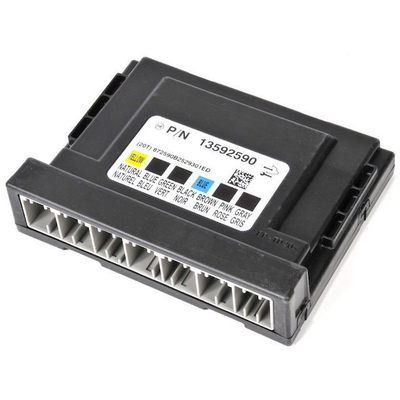
Shop the Parts Behind U1205
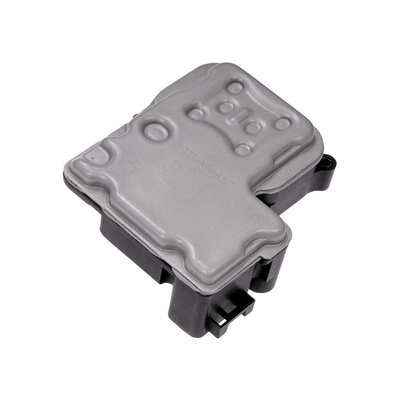
Below are the parts most often responsible for code U1205, ranked by how frequently each one is the actual culprit (per the diagnosis above). Tap any to see what we have for your vehicle.



The information in this article is provided for general reference and educational purposes only. Vehicle specifications, procedures, and part compatibility can vary by production date, trim level, and region. Always consult your vehicle's factory service manual and verify part numbers before purchasing or performing repairs. Safety-critical components such as airbags, seat belts, and braking systems should be installed by a qualified professional.
- 🧭 Diagnostic Flowchart
- 🎬 Helpful Videos
- 🛍️ Shop This Part
- What Does U1205 Mean?
- Can I Drive With U1205?
- Common Causes
- Symptoms
- Common Fixes & Costs
- DIY vs Professional
- Used vs. New Parts: Buying Guide
- What Happens If You Wait — Timeline
- Cost of Not Fixing It
- Diagnosis Steps
- When This Code Triggers (Freeze-Frame Conditions)
- Related Codes
- Climate & Environmental Factors
- How to Talk to a Mechanic About This Code
- Where to Take It: Dealer vs Independent vs Chain
- When to Walk Away From the Repair
- What Scan Tool You Need for This Code
- How to Clear the Code After You Fix It
- Will This Fail Emissions / State Inspection?
- Most Commonly Affected Vehicles
- Manufacturer-Specific Notes
- Real Owner Stories
- 2007 Honda Civic Hybrid with U1205 & U0110
- Citroen C5 with ABS/ESP Fault and U1205
- 2009 VW Jetta with intermittent no-start and U1205
- How to Prevent This Code From Triggering
- Frequently Asked Questions
- What are the most common misdiagnoses for code U1205?
- Can a bad 12V battery really cause code U1205?
- Can a bad ground cause CAN bus problems?
- What are the symptoms of a bad gateway module?
- Is it safe to drive my car with a U1205 code?
- How much does it cost to fix code U1205?
- Can a software update fix a U1205 code?
- Key Takeaways
- 🎟️ Get 5% Off