

OBD-II Code U1211: In-depth Guide to Vehicle Communication Network Malfunctions
The Ultimate Resource for Diagnosing and Fixing U1211 Network Faults
- Code U1211 disables critical safety systems like ABS and Electronic Stability Control, increasing your stopping distance and crash risk.
- Test your battery first, as voltage drops below 12.4V are the leading cause of U1211 codes and phantom warning lights.
- Never replace an ABS module without first verifying a 60-ohm resistance reading across CAN High (Pin 6) and CAN Low (Pin 14) at the OBD-II port.
- Save $500 to $2,000 by using a mail-in repair service to rebuild your original ABS module instead of buying a new unit that requires dealer programming.
What Does U1211 Mean?
U1211 is a network trouble code indicating a communication failure between your car's control modules over the Controller Area Network (CAN) bus. A specific module is sending invalid data or has gone offline, disrupting the system. Think of it as a crashed device on a computer network flooding the system with junk data.
Technical definition: The SAE/ISO definition for U1211 points to a data communication problem, such as 'SCP (J1850) Invalid or Missing Data for Restraints' or 'ENG Parity/Toggle Bit Error'. It frequently appears alongside U0121 (Lost Communication With Anti-Lock Brake System Module), and the diagnostic process is nearly identical.
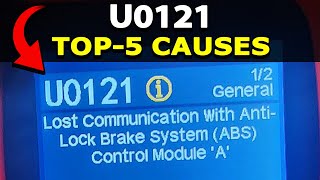
🎬 See this breakdown of the U0121 ABS communication codeCan I Drive With U1211?
No — Do Not Drive. Do not drive. A U1211 code signifies critical safety systems—primarily Anti-lock Brakes (ABS) and Electronic Stability Control (ESC)—are offline. Base hydraulic brakes function, but you lose anti-lock capability, causing wheel lock-up, increased stopping distances, and loss of steering control in panic stops. Intermittent network faults also cause unpredictable behavior, including sudden gauge cluster failure or engine stalling.
Common Causes
- Weak or Failing Battery (Very Common) — Control modules require a stable voltage (above 12.2V) to operate. A weak, dying, or improperly connected battery is the leading cause of network communication errors, triggering a cascade of U-codes.
- Blown Control Module Fuse (Common) — A blown fuse cuts power to a module (like the ABS, ECM, or BCM), preventing communication and triggering a U1211 code from other modules that no longer hear it. Always check fuses first.
- Faulty ABS Control Module (Common) — The ABS module itself is a frequent failure point. Internal solder joints crack from years of heat and vibration, or the module shorts out internally. This is highly documented on specific GM and Jaguar models.
- Corroded or Damaged CAN Bus Wiring (Common) — Corrosion on the ABS module connector, main battery terminals, or critical chassis grounds interrupts the signal. Additionally, rodents chewing wires or chafing against the engine block causes short or open circuits in the CAN lines.
- Gateway Module or Splice Pack Failure (Less Common) — Some vehicle architectures use a central Gateway Module (or the Instrument Cluster) to route communications. A failure here cuts off entire network sections. Factory splice packs where multiple CAN wires join also corrode and fail.
- Interference from Aftermarket Electronics (Less Common) — Poorly installed aftermarket equipment like remote starters, alarms, or stereos introduces electromagnetic interference (EMI) or is incorrectly spliced into the CAN bus, disrupting communication.
- Software or Firmware Glitches (Rare) — A software bug within a control module causes the fault. Manufacturers issue Technical Service Bulletins (TSBs) with software updates to resolve these glitches, a known issue on Mazda Telematics units.
- Faulty Terminating Resistor (Rare) — The CAN bus network uses two 120-ohm resistors at each end to absorb signals. If one resistor (often inside the ECM) fails, it disrupts the entire network's communication ability.
Symptoms
- ABS and Stability Control Lights Illuminated — The most immediate symptom. Safety systems depend on the ABS module for wheel speed data; when communication is lost, these systems disable and illuminate their warning lights.
- Check Engine Light On — The Engine Control Module (ECM) stores a U-code and activates the Check Engine Light when it loses communication with a critical module.
- Brakes Lock Up Under Hard Braking — With the ABS system offline, wheels lock and skid during a panic stop, increasing stopping distance and resulting in a loss of steering control.
- Speedometer Malfunction — The instrument cluster receives the vehicle speed signal from the ABS module. A communication loss causes the speedometer to drop to zero or behave erratically.
- Erratic Behavior of Other Systems — In wider network failures, you will see seemingly unrelated issues like a blank radio display, random warning messages, or all gauges dropping to zero simultaneously.
- No-Start Condition — If the communication breakdown involves the Powertrain Control Module (PCM), Body Control Module (BCM), and the immobilizer, the vehicle fails to start.
Diagnostic Flowchart
Tap your situation to follow the diagnostic path that matches what you're seeing on this code.
Common Fixes & Costs
- Replace Vehicle Battery — Parts: $180-$300, Labor: $0-$100, ~0.8 hr book time (DIY)
- Replace Blown Fuse — Parts: $1-$10, Labor: $0-$50, ~0.2 hr book time (DIY)
- Repair/Rebuild ABS Control Module — Parts: $150-$400, Labor: $150-$300, ~2 hr book time (Professional)
- Replace ABS Control Module — Parts: $600-$2500, Labor: $200-$500, ~2.5 hr book time (Professional)
- Repair Damaged Wiring or Connector — Parts: $20-$100, Labor: $250-$800, ~3.5 hr book time (Professional)
DIY vs Professional
- Replace Vehicle Battery 🟢 Beginner
Tools: Wrench set, terminal brush, memory saver. - Replace Blown Fuse 🟢 Beginner
Tools: Fuse puller or small pliers. - Repair Damaged Wiring or Connector 🟢 Beginner
Tools: Soldering iron, wire strippers, heat shrink, multimeter, wiring diagrams. - Replace ABS Control Module 🟢 Beginner
Tools: Socket set, flare nut wrenches, scan tool with programming capabilities.
Used vs. New Parts: Buying Guide
When a used part is worth it: A used ABS module from a low-mileage donor vehicle is a cost-effective option for older vehicles where new parts are expensive. Rebuilding your original module is a better choice as it avoids programming issues.
Donor-vehicle mileage cap: roughly under 100000 miles for the part to have meaningful remaining life.
Donor quality checklist:
- Verify the part number on the module is an exact match.
- Source from a reputable seller offering a 30-90 day warranty.
- Avoid parts from vehicles with flood or fire damage.
Decision logic:
- If A reputable mail-in repair service is available for your specific module → Choose repair. It is the most reliable and cost-effective option as it requires no reprogramming.
- If The vehicle is over 10 years old and the budget is tight → A used part is viable, but requires VIN programming.
- If The part is for a newer vehicle and safety is the top priority → Buy a new OEM part from a dealer or a high-quality remanufactured unit.
Warranty tradeoff: Used parts typically have a 30-90 day warranty. Remanufactured parts come with a 1-year to lifetime warranty. New OEM parts carry a 1-2 year warranty.
Worst-case if a used part fails: $300-$800 if a used part is dead on arrival, covering repeat labor and programming fees.
What Happens If You Wait — Timeline
- First Occurrence - 1 month: An intermittent fault appears. Warning lights come on but disappear after restarting the car. The code U1211 is stored. Safety systems are offline only when the lights are on. (MPG impact: 0%% · Added cost: $0)
- 1-4 months: The intermittent fault becomes persistent. Warning lights stay on for entire drive cycles. A parasitic battery drain begins if a faulty module fails to enter 'sleep' mode, leading to a dead battery. (MPG impact: 0%% · Added cost: $150-$300 (for new battery and towing fees).)
- 4-8 months: The fault becomes permanent. ABS and stability control systems are permanently disabled, creating a constant safety hazard. A module flooding the network with bad data causes other systems to malfunction unpredictably. (MPG impact: 0-5%% · Added cost: $200-$600 (Increased diagnostic labor time as multiple false symptoms mislead technicians).)
- 8+ months: Catastrophic network failure occurs. A module with an internal short fails completely, taking down the entire CAN bus (triggering code U0073). This leads to a no-start condition or engine stalling while driving. (MPG impact: N/A% · Added cost: $1000-$3000+ (Extensive diagnostic labor at $150-$200/hr and high risk of an accident).)
Cost of Not Fixing It
- Immediate: Loss of ABS and stability control. Your vehicle's wheels lock during a panic stop, increasing stopping distance and causing a loss of steering control. (Added cost: Potential cost of an accident.)
- 1-3 months: An intermittent fault becomes permanent. A failing module degrades further, causing a no-start condition or stalling while driving if the fault spreads to the PCM network. (Added cost: $200-$500 in additional diagnostic time or towing fees.)
- 3+ months: A module shorting internally causes battery drain, leading to a dead battery. A constantly running ABS pump motor burns itself out. (Added cost: $150-$350 for a new battery, $500-$1500 for a new ABS pump assembly.)
Diagnosis Steps
- Check Battery Voltage & Terminals
Use a multimeter to test the battery. A healthy, resting battery reads at least 12.6 volts. A reading below 12.4V indicates a discharged battery. With the engine running, charging voltage must be between 13.7 and 14.7 volts. Clean any corrosion from terminals and tighten connections.
Tools: Multimeter, Battery Terminal Brush (Beginner) - Inspect All Related Fuses
Consult your owner's manual for fuse box diagrams. Locate and visually inspect every fuse related to the ABS, Engine Control Module (ECM), and Body Control Module (BCM) in both the engine bay and cabin.
Tools: Owner's Manual, Fuse Puller (Beginner) - Perform a Full System Network Scan
Use an advanced OBD-II scanner capable of communicating with all modules. Request a full network code report. Note which modules are 'Not Responding'. A single U0121 points to the ABS system, while multiple U-codes suggest a network-wide problem.
Tools: Advanced OBD-II Scanner (Intermediate) - Visually Inspect Wiring and Connectors
Locate the non-communicating module. Unplug its main electrical connector and meticulously inspect for green/white corrosion, bent pins, or water intrusion. Follow the wiring harness, looking for chafing, melting, or rodent damage.
Tools: Flashlight, Mirror, Socket Set (Intermediate) - Test the CAN Bus Resistance
Disconnect the negative battery terminal and wait for modules to power down. Measure resistance between Pin 6 (CAN High) and Pin 14 (CAN Low) at the OBD-II port. A healthy network reads 60 ohms. 120 ohms indicates an open circuit; near 0 ohms indicates a short circuit.
Tools: Multimeter, OBD-II Breakout Box (optional) (Advanced) - Check for Power and Ground at the Module
Using a wiring diagram, identify the power and ground pins on the offline module's connector. With the key on, verify battery voltage at the power pins. Measure the voltage drop between the negative battery post and the ground pin; it must be less than 0.1 volts (100mV).
Tools: Multimeter, Vehicle-Specific Wiring Diagram (Advanced) - Pro Tip: Perform a 'Wiggle Test'
With the vehicle running and your scan tool monitoring network status, gently wiggle the wiring harness and connector for the suspect module. If the module comes back online during the test, you have found the location of the poor connection.
Tools: Advanced OBD-II Scanner (Professional) - Pro Tip: Analyze the CAN Bus Waveform
Connect a dual-channel oscilloscope to CAN High (Pin 6) and CAN Low (Pin 14). A healthy signal is a clean, square wave pattern. A distorted signal indicates interference or a failing module. A flat line at 2.5V indicates a powered but non-communicating module.
Tools: Dual-Channel Oscilloscope, OBD-II Breakout Box (Professional) - Advanced: Isolate the Terminating Resistors
If the resistance test reads 120 ohms, identify the two modules containing the terminating resistors (often ECM and Instrument Cluster). Disconnect one module and re-test resistance. If the reading goes to an open circuit (OL), the fault is in the other terminating module's circuit.
Tools: Multimeter, Vehicle-Specific Wiring Diagram (Advanced)
When This Code Triggers (Freeze-Frame Conditions)
- Engine Coolant Temp: 175-210°F (Fully warmed up. The fault appears after the vehicle runs for several minutes.)
- RPM: 0 or 1200-2500 (The code triggers immediately upon startup (Key On, Engine Off) or during steady-state cruise.)
- Vehicle Speed: 0 mph or 35-65 mph (Triggers either when stationary or at a constant highway speed, indicating the fault is electrical, not mechanical.)
- Battery Voltage: 11.8-12.5V or 13.5-14.5V (Triggers if system voltage drops before starting, or if the charging system is stable but a module loses its specific power feed.)
Related Codes
- U0121 — The standardized SAE code for 'Lost Communication With Anti-Lock Brake System Module'. U1211 is a manufacturer-specific code for the same problem. Diagnostics are identical.
- U0073 — 'Control Module Communications Bus OFF.' Indicates the entire CAN bus network is down. If seen with U1211, the problem is network-wide, not isolated to one module.
- U0100 — 'Lost Communication with ECM/PCM.' Indicates a wider network problem. Diagnostic priority shifts to finding shared power sources, grounds, and main network junctions.
- U3000 — 'Control Module Internal Malfunction'. On Mazda vehicles, a U3000:04 code in the Telematics Communication Unit triggers a generic network malfunction message and causes a U1211 in other modules.
Climate & Environmental Factors
- High Humidity / Water Intrusion: Water accelerates corrosion on connectors and ground points. Direct water leaks saturate wiring harnesses and cause catastrophic network failure.
- Cold Weather: Low temperatures reduce a battery's cranking power. A battery dropping below the minimum voltage during a cold start triggers communication codes. Cold also makes wire insulation brittle.
- Road Salt (Salt Belt Regions): Salt spray attacks chassis grounds, wiring harnesses exposed under the vehicle, and ABS module connectors located near the wheels.
How to Talk to a Mechanic About This Code
Say this: "I have a U1211 network communication code and multiple warning lights on. I have confirmed the battery is healthy and the fuses are good. I need to schedule a diagnostic with a technician experienced with CAN bus and electrical issues."
This signals you are an informed customer, prevents the shop from starting with unnecessary basic checks, and directs them toward complex diagnostics. It avoids a 'parts cannon' approach.
Avoid saying:
- 'Just fix whatever's wrong'
- 'My check engine light is on, can you look at it?'
- 'Whatever you recommend is fine'
Questions to ask before authorizing the repair:
- What were the results of the CAN bus resistance test at the OBD-II port?
- Which specific modules were not communicating on the network scan?
- Before replacing the module, did you verify it has proper power and ground at the connector?
- Can you show me the damaged wiring or the test results that condemn the module?
- If a new module is needed, is programming required and is that cost included in your estimate?
Where to Take It: Dealer vs Independent vs Chain
- Dealer:
A safe but expensive option. Best for warranty work or known software-related TSBs.
Best for: Vehicles under warranty, Known manufacturer-specific issues covered by a TSB, Complex repairs requiring module programming
Downsides: Highest labor rates, ranging from $150 to $250 per hour., Defaults to expensive module replacement over targeted wiring repair. (Typical cost: +50% vs. baseline) - Independent Shop:
Best fit, IF you find a top-tier independent shop that specializes in diagnostics. Ask if they are comfortable diagnosing CAN bus network failures.
Best for: Out-of-warranty vehicles where cost is a factor., Shops specializing in automotive electronics., Diagnosing wiring, ground, or connector faults.
Downsides: Quality varies dramatically. Must find a shop with proven electrical diagnostic skills and equipment. (Typical cost: +0% vs. baseline) - Chain Shop:
AVOID for diagnosing a U1211 code. Their business model is not set up for complex electrical troubleshooting.
Best for: Selling you a new battery or replacing a fuse.
Downsides: Technicians lack specialized training and advanced equipment for network diagnostics., High risk of misdiagnosis, leading to unnecessary replacement of expensive parts. (Typical cost: -10% vs. baseline)
When to Walk Away From the Repair
If the estimated repair cost exceeds 40-50% of the car's Kelley Blue Book (KBB) private-party value, seriously consider selling the car as-is.
- Car worth $4000, fix is $2200: Walk away. The repair cost is over 50% of the vehicle's value.
- Car worth $15000, fix is $1800: Fix it. The repair cost is well below the threshold and restores critical safety functions.
- Car worth $3000, fix is $400: Fix it. A $400 repair (e.g., rebuilding the ABS module) is a good investment to keep a functional vehicle on the road.
What Scan Tool You Need for This Code
Minimum: An 'All-System' or '4-System' (Engine, ABS, SRS, Transmission) scanner. A basic code reader is not sufficient.
A cheap code reader only communicates with the Engine Control Module (ECM). It cannot see that the ABS module is offline. You need a tool that performs a full network scan.
Budget: BlueDriver Pro or Autel AutoLink AL619 (~$100) — Reads and clears codes from the ABS system, confirming whether the ABS module is the source of the 'U' code.
Mid-range: Innova 5610 or XTOOL D7 (~$350) — Provides full bidirectional control. Allows you to actively test components, like commanding the ABS pump to turn on, and shows live data streams.
Professional: Autel MaxiCOM MK808BT or Launch X431 Series (~$500-1200) — Offers full bidirectional control, topology mapping to visualize the network status, and ECU coding functions.
Rent vs buy: Auto parts store rental programs offer basic code readers for free, which are insufficient for this code. You must buy a capable scanner or pay for a professional diagnosis.
How to Clear the Code After You Fix It
- Reconnect the negative battery terminal.
- Use a professional OBD-II scan tool to clear all Diagnostic Trouble Codes (DTCs) from all modules.
- Perform a complete drive cycle to allow all system readiness monitors to run.
Drive cycle (~30 minutes): A generic drive cycle includes a cold start (vehicle sits for 8+ hours), 2-3 minutes of idling, 10-15 minutes of mixed city/highway driving, and several stop-and-go situations before shutting down.
Readiness monitors affected: Comprehensive Component Monitor, Misfire Monitor
Before emissions retest: drive at least 100 miles to fully set monitors.
Watch out for:
- Disconnecting the battery clears codes but resets all readiness monitors to 'Not Ready', guaranteeing an emissions test failure.
- The U1211 code returns immediately if the underlying electrical fault is not properly repaired.
- Using a basic code reader fails to clear the code from the BCM or Instrument Cluster, causing the light to reappear.
Will This Fail Emissions / State Inspection?
Yes — this code typically fails an OBD-II emissions inspection.
- California: A U1211 code causes an automatic failure of the smog check. The Check Engine Light must be off and all readiness monitors set to 'Ready'.
- New York: The NYS DMV inspection includes an OBD-II scan. An active U1211 code results in an automatic failure.
- Texas: In counties requiring an emissions test, an illuminated Check Engine Light from a U1211 code is an automatic failure. Drive 50-100 miles after repair to reset readiness monitors.
Most Commonly Affected Vehicles
- Jaguar XF (2009-2013) — Notorious for internal solder joint failure on the ABS module circuit board, causing intermittent communication loss. Repair of the original module is highly recommended.
- General Motors Silverado, Sierra, Tahoe, Yukon (2007-2014) — Prone to GMLAN network failures caused by corrosion in splice pack connectors under the driver-side door sill plate and faulty grounds (TSB PIT5405C).
- Chevrolet Equinox (2010-2017) — Water intrusion is a major issue. TSB PI1090B points to poor sealing in roof ditch seams, allowing water to soak the carpet and corrode wiring splices.
- Ford F-150 (2015-2020) — Issues are traced to the Gateway Module (GWM), Battery Management System (BMS) connectors, or corroded wiring harnesses near the rear of the truck.
- Ford Escape (2013-2019) — The instrument cluster acts as the gateway module; an internal failure of the cluster itself is often the root cause of network codes.
- Subaru Outback, Legacy (2015-2019) — An intermittent U1211 is caused by a faulty electrical connector on the electronic parking brake actuator. Subaru TSB 06-87-22R provides an updated connector kit.
- Honda City, Jazz, Amaze (2008-2014) — U1211 typically points directly to a fault in the ABS module's communication circuit or an internal failure of the ABS module itself.
- Mazda CX-5, CX-50, Mazda3 (2021-2022) — The 'In-vehicle network malfunction' warning is a software glitch in the Telematics Communication Unit (TCU) occurring after the connected service contract expires. The fix is a dealer software update.
Manufacturer-Specific Notes
- General Motors: GMLAN network issues cause bizarre symptoms like the radio display going blank or the engine stalling. Diagnosis must include checking specific ground locations (G218) and splice pack connectors under door sill plates.
- Ford: A loss of communication results in dashes (----) appearing on the instrument cluster for the odometer. The Instrument Panel Cluster (IPC) acts as a gateway, and its failure causes widespread network codes.
- Jaguar: The ABS module is a common failure point due to cracked internal solder joints. Independent specialists repair the original module for a fraction of the cost of a new one, avoiding dealership reprogramming.
- Mazda: The 'In-vehicle network malfunction' message is caused by the Telematics Communication Unit (TCU), not the main CAN bus. The fix is a software update performed by a dealer.
Real Owner Stories
2011 Jaguar XF with intermittent ABS/DSC/Brake lights
Owner experienced a cascade of warning lights and a 'DSC Not Available' message in hot weather. The speedometer occasionally failed. Faults were intermittent, disappearing after restarting.
What they tried:
- Checked battery and alternator; both tested fine.
- Mechanic suspected a faulty wheel speed sensor but found no sensor-specific codes.
- Researched forums pointing to a common ABS control module failure.
Outcome: Owner removed the ABS control module and sent it to a mail-in repair service. The service repaired cracked solder joints for $250. After reinstalling the original module, all codes cleared permanently.
Lesson: On vehicles with known module failures, repairing the original module is the most cost-effective solution, avoiding expensive dealership programming required for a new part.
2018 Ford F-150 with a battery drain and U1211 codes
The truck's battery died if parked for two days. A parasitic draw test showed a 0.3A to 4A draw traced to the ABS module fuse.
What they tried:
- Replaced the ABS module with a used part, but the battery drain persisted.
- Opened the original ABS module but found no visible damage.
- Scanned the network for other modules keeping the ABS module 'awake'.
Outcome: The root cause was a short circuit inside the electronic parking brake (EPB) switch on the dashboard. This faulty switch constantly sent signals, preventing the ABS module from entering sleep mode. Replacing the EPB switch resolved the drain and codes.
Lesson: A module causing a battery drain is not always internally faulty. It is often kept awake by another malfunctioning component on the network.
2022 Mazda CX-5 with 'In-Vehicle Network Malfunction' message
After the 3-year Mazda Connected Services trial expired, a persistent 'In-vehicle network malfunction' warning appeared, accompanied by a U1211 code.
What they tried:
- Checked battery and fuses, which were good.
- Independent mechanic suggested a complex CAN bus wiring diagnosis.
- Owner researched Mazda-specific forums and found identical complaints.
Outcome: The issue was a documented software glitch in the Telematics Communication Unit (TCU). The owner took the vehicle to a Mazda dealer, who performed a software update on the TCU, permanently fixing the problem under a service bulletin.
Lesson: Always search for manufacturer-specific Technical Service Bulletins (TSBs). A widespread software glitch saves hundreds of dollars in unnecessary diagnostic labor.
How to Prevent This Code From Triggering
- Perform regular battery maintenance (Every 6 months) — Low voltage is a primary cause of communication errors. Keep battery terminals clean of corrosion using a wire brush and baking soda solution. Ensure connections are tight.
- Clean and protect major ground connections (Every 2-3 years) — Corroded chassis grounds create high resistance, starving modules of a stable reference voltage. Disconnect main ground straps, clean contact points to bare metal, and re-secure tightly.
- Apply dielectric grease to critical connectors (When a connector is disconnected for service) — Dielectric grease is a non-conductive sealant that keeps moisture and salt out of electrical connectors, preventing corrosion that causes open or shorted circuits.
- Ensure regular vehicle use (Weekly) — Letting a vehicle sit allows the battery to self-discharge. Driving the car for at least 30 minutes once a week helps maintain battery charge and health.
Frequently Asked Questions
What is the first thing to check for a U1211 code?
Always start with the simplest and most common cause: the battery. Ensure it is fully charged (at least 12.6V) and that the terminals are clean and tight. A weak or failing battery is the number one cause of network communication codes.
Does a bad battery really cause all these warning lights?
Yes. Control modules are highly sensitive to voltage drops. A weak battery provides unstable power, causing modules to drop off the network and triggering a cascade of warning lights.
Is it safe to drive with the ABS light on?
No. While your regular hydraulic brakes still work, the anti-lock function is disabled. Your wheels will lock up and skid during an emergency stop, significantly increasing your crash risk.
The code disappeared after I restarted the car. Am I okay?
No, the problem is not fixed. Intermittent faults caused by loose connections, corroding grounds, or temperature-sensitive modules will return. Diagnose it before it becomes a permanent, dangerous failure.
My mechanic wants to replace the ABS module. Is that the right fix?
Not necessarily. Simpler electrical issues like the battery, fuses, grounds, and wiring are more common causes. Insist on a thorough electrical diagnosis before authorizing an expensive module replacement.
Does a U1211 code cause a no-start condition?
Yes. If the Engine Control Module (ECM) cannot communicate with the Body Control Module (BCM) or immobilizer, the anti-theft system engages and prevents the engine from starting.
Why did the U1211 code appear after my Mazda's connected services expired?
This is a known software bug in the Telematics Communication Unit (TCU), not a true network failure. When the service subscription ends, the TCU malfunctions and triggers the code. The fix requires a software update from a Mazda dealer.
What is the difference between repairing and replacing an ABS module?
Replacing requires an expensive new part ($600-$2500+) and dealer programming. Repairing involves sending your original module to a specialist to fix internal faults for $150-$300. Repairing is cheaper and requires no reprogramming.
Key Takeaways
- Code U1211 disables critical safety systems like ABS and Electronic Stability Control, increasing your stopping distance and crash risk.
- Test your battery first, as voltage drops below 12.4V are the leading cause of U1211 codes and phantom warning lights.
- Never replace an ABS module without first verifying a 60-ohm resistance reading across CAN High (Pin 6) and CAN Low (Pin 14) at the OBD-II port.
- Save $500 to $2,000 by using a mail-in repair service to rebuild your original ABS module instead of buying a new unit that requires dealer programming.
Helpful Videos

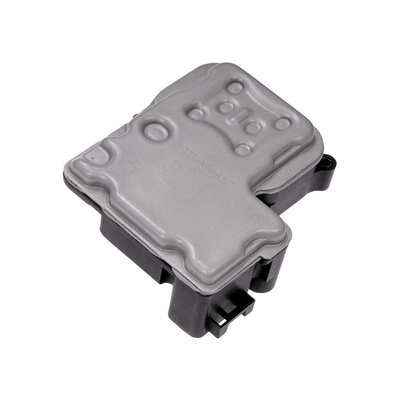
Shop the Parts Behind U1211
Below are the parts most often responsible for code U1211, ranked by how frequently each one is the actual culprit (per the diagnosis above). Tap any to see what we have for your vehicle.



The information in this article is provided for general reference and educational purposes only. Vehicle specifications, procedures, and part compatibility can vary by production date, trim level, and region. Always consult your vehicle's factory service manual and verify part numbers before purchasing or performing repairs. Safety-critical components such as airbags, seat belts, and braking systems should be installed by a qualified professional.
- 🧭 Diagnostic Flowchart
- 🎬 Helpful Videos
- 🛍️ Shop This Part
- What Does U1211 Mean?
- Can I Drive With U1211?
- Common Causes
- Symptoms
- Common Fixes & Costs
- DIY vs Professional
- Used vs. New Parts: Buying Guide
- What Happens If You Wait — Timeline
- Cost of Not Fixing It
- Diagnosis Steps
- When This Code Triggers (Freeze-Frame Conditions)
- Related Codes
- Climate & Environmental Factors
- How to Talk to a Mechanic About This Code
- Where to Take It: Dealer vs Independent vs Chain
- When to Walk Away From the Repair
- What Scan Tool You Need for This Code
- How to Clear the Code After You Fix It
- Will This Fail Emissions / State Inspection?
- Most Commonly Affected Vehicles
- Manufacturer-Specific Notes
- Real Owner Stories
- 2011 Jaguar XF with intermittent ABS/DSC/Brake lights
- 2018 Ford F-150 with a battery drain and U1211 codes
- 2022 Mazda CX-5 with 'In-Vehicle Network Malfunction' message
- How to Prevent This Code From Triggering
- Frequently Asked Questions
- What is the first thing to check for a U1211 code?
- Does a bad battery really cause all these warning lights?
- Is it safe to drive with the ABS light on?
- The code disappeared after I restarted the car. Am I okay?
- My mechanic wants to replace the ABS module. Is that the right fix?
- Does a U1211 code cause a no-start condition?
- Why did the U1211 code appear after my Mazda's connected services expired?
- What is the difference between repairing and replacing an ABS module?
- Key Takeaways
- 🎟️ Get 5% Off