

OBD-II Code U1220: Vehicle Communication Network Malfunction
What U1220 means, why it triggers, and how to fix it
- Code U1220 indicates a communication breakdown on the vehicle's CAN bus network, meaning modules cannot share data.
- Always test the battery first; a voltage drop below 9.6V during cranking is the #1 cause of false U1220 network codes.
- For 2014-2015 Jeep Cherokees, U1220 is almost always a software bug requiring a 1-hour dealer flash (TSB 08-076-15), not a hardware replacement.
- Never replace a $500+ control module without first verifying the 60-ohm CAN bus resistance and checking for blown 10-amp interior fuses.
What Does U1220 Mean?
U1220 is a manufacturer-specific network trouble code indicating a communication failure between vehicle control modules. Unlike 'P' codes (engine), 'U' codes point to a breakdown in the car's internal data network, usually the Controller Area Network (CAN) bus.
Technical definition: The formal SAE/ISO definition is a manufacturer-controlled network code. The exact meaning depends on the brand. For example, on a 2014-2015 Jeep Cherokee, it means 'Lost Steering Lock Request Message'. On GMC trucks, it indicates 'Lost communication between Class 2 electronic devices'. On Ford models, it relates to 'Invalid or Missing Data for Interior Lamp Outage'.
Can I Drive With U1220?
No — Do Not Drive. Do not drive. The fault causes an intermittent or complete no-start condition without warning, leaving you stranded. In severe cases, it triggers a sudden loss of headlights, brake lights, or engine power while driving, creating a significant safety hazard. Continued driving with an unstable network damages sensitive electronic modules, escalating repair costs.
Common Causes
- Control Module Software Glitch (Very Common) — A software bug within a control module, typically the Body Control Module (BCM), causes communication errors. This is the primary cause on 2014-2015 Jeep Cherokees, requiring a dealer software update.
- Low or Unstable Battery Voltage (Common) — A weak battery causes system voltage to drop below 9.6V during startup. This low voltage disrupts module communication and triggers a flood of false 'U' codes.
- Damaged Wiring or Poor Grounds (Common) — Corroded ground wires or chafed CAN bus wires physically disrupt the network. Exposed frame grounds on trucks or rodent-damaged harnesses are frequent culprits.
- Blown Power Fuse (Less Common) — A blown fuse powering a major module (like the BCM or instrument cluster) cuts off its ability to communicate. On some Nissans, a blown 10A interior light fuse disables the entire network.
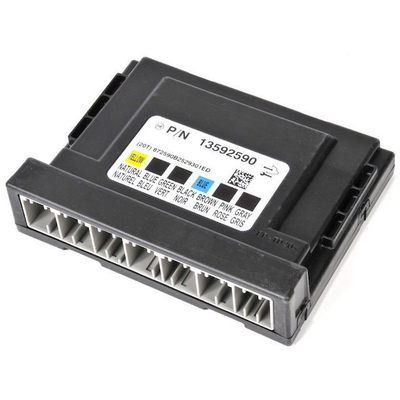
- Faulty Control Module (Less Common) — A module fails internally due to water intrusion or a short circuit, taking down the network. This includes the BCM, PCM, or Chrysler's Totally Integrated Power Module (TIPM).
- Aftermarket Accessory Interference (Rare) — Improperly installed remote starters, alarms, or plug-in OBD-II dongles introduce electrical noise or draw excessive power, causing communication dropouts.
Symptoms
- Intermittent or Complete No-Start Condition — The engine cranks but does not start, or fails to crank entirely, because critical security messages are lost.
- Multiple Warning Lights on Dashboard — The check engine, ABS, and traction control lights illuminate simultaneously as modules lose contact with each other.
- Malfunctioning Interior Electronics & Displays — Gauges behave erratically, the cluster goes dark, or features like power windows, radio, and HVAC fail to operate.
- Complete Electrical System Shutdown — The entire electrical system shuts down at once, causing a total loss of lights and power features, common with failing Chrysler TIPMs.
Diagnostic Flowchart
Tap your situation to follow the diagnostic path that matches what you're seeing on this code.
Common Fixes & Costs
- Control Module Software Update — Parts: $0, Labor: $150-$250, ~1.0 hr book time (Professional)
- Replace Battery — Parts: $150-$300, Labor: $0-$50, ~0.5 hr book time (DIY)
- Repair Damaged Wiring or Ground — Parts: $10-$50, Labor: $150-$500, ~2.5 hr book time (Intermediate)
- Replace Body Control Module (BCM) — Parts: $300-$800, Labor: $150-$400, ~2.0 hr book time (Professional)
- Replace/Repair TIPM (Dodge/Chrysler/Jeep) — Parts: $250-$700, Labor: $100-$250, ~1.5 hr book time (Professional)
Used vs. New Parts: Buying Guide
When a used part is worth it: For purely electronic modules like a BCM or TIPM, a used part only makes sense if it's from a reputable seller who guarantees the part is tested and provides the exact VIN of the donor car.
Donor-vehicle mileage cap: roughly under 100000 miles for the part to have meaningful remaining life.
Donor quality checklist:
- Part number must match EXACTLY, including any suffix letters.
- Verify the donor vehicle did not have flood or fire damage.
- Ask for a warranty. Reputable sellers offer at least a 30-90 day guarantee.
Decision logic:
- If The fix is a known software issue (like the 2014-15 Jeep Cherokee) → Do not buy any part. A new or used module will have the same problem until it is updated.
- If The vehicle is common and the part is under $500 new → Buy a new or remanufactured part. The cost savings of a used part are not worth the high risk of programming headaches.
- If The part is over $1000 new and the vehicle is over 10 years old → A used part from a guaranteed source or a professional repair service for your existing module becomes a viable option.
Warranty tradeoff: Used parts typically have a 30-90 day part-only warranty. New aftermarket parts offer 1 year to lifetime warranties. OEM parts have a 1-2 year warranty.
Worst-case if a used part fails: $400-$800. This is the cost of paying for programming and installation labor on a used module that turns out to be defective.
What Happens If You Wait — Timeline
- 0-1 month: Intermittent warning lights appear on the dash, often clearing on their own. You notice an occasional glitch with the radio or power windows. (Added cost: $0)
- 1-3 months: Warning lights become more frequent and stay on longer. The vehicle experiences an intermittent no-start condition that resolves after a few key cycles. Remote start fails to work. (Added cost: $150-$300 (Potential cost for towing and an emergency diagnostic fee).)
- 3-6 months: The vehicle experiences a hard no-start or stalls while driving. There is a sudden, complete loss of critical systems like headlights or wipers. Unstable network voltage electrically stresses other control modules. (Added cost: $500-$2000 (The cost to replace a secondary module like the PCM or ABS damaged by the persistent electrical fault).)
- 6+ months: A persistent short circuit on the CAN bus generates enough heat to cause thermal damage. Wiring insulation melts, and connectors or sections of the main wiring harness are destroyed. (Added cost: $2000-$4000 (The cost for extensive, high-labor harness replacement).)
Cost of Not Fixing It
- Immediate: Intermittent no-start condition, leaving you stranded. Sudden loss of headlights or brake lights while driving, creating a severe safety risk. (Added cost: $150-$300 (Towing and emergency diagnostic fees))
- 1-3 Months: Continued electrical stress and unstable voltage causes premature failure of other sensitive electronic modules. (Added cost: $500-$2000 (Cost to replace an additional module damaged by the initial fault))
- 3+ Months: A persistent short circuit on the CAN bus leads to thermal damage (melting) of wiring harnesses or module connectors. (Added cost: $1000-$3000 (Extensive wiring harness repair or replacement))
Diagnosis Steps
- Check for Technical Service Bulletins (TSBs)
Search online for TSBs related to code U1220 for your specific VIN. Manufacturers frequently release software updates to fix this exact code, saving hours of diagnostic time.
Tools: Internet Access, Vehicle VIN (Beginner) - Scan All Modules for Codes
Use an advanced OBD-II scanner to read codes from all modules (BCM, ABS, TCM). A flood of communication codes points to a central power or ground issue, rather than a single failed module.
Tools: Advanced OBD-II Scanner (Beginner) - Check the Battery and Charging System
Measure battery voltage; it must be at least 12.4V resting. Perform a load test to ensure voltage stays above 9.6V during cranking. Verify the alternator outputs 13.5V to 14.5V with the engine running.
Tools: Multimeter, Battery Load Tester (Beginner) - Inspect Fuses
Check all fuses related to the BCM, PCM, and instrument cluster. Pay special attention to interior 'room lamp' fuses, which disable the network if blown on certain makes like Nissan.
Tools: Owner's Manual, Fuse Puller, Multimeter (Beginner) - Inspect Wiring Harnesses and Grounds
Visually inspect harnesses connected to the BCM and PCM for chafing or rodent damage. Verify major ground points on the frame and engine block are tight and rust-free.
Tools: Flashlight, Socket Set, Wire Brush (Intermediate) - Test CAN Bus Network Resistance
With the battery disconnected, measure resistance between CAN High (Pin 6) and CAN Low (Pin 14) at the OBD-II port. A healthy network reads exactly 60 Ohms. 120 Ohms indicates an open circuit; 0 Ohms indicates a short.
Tools: Multimeter, OBD-II Pinout Diagram (Advanced) - Isolate the Faulty Module
If CAN resistance is 0 Ohms or 120 Ohms, unplug modules one by one. When resistance returns to 60 Ohms, the last unplugged module is the culprit causing the network failure.
Tools: Multimeter, Module Location Diagrams (Advanced) - Analyze CAN Bus Waveform
Connect an oscilloscope to Pins 6 and 14. A healthy CAN bus shows a mirror-image waveform idling at 2.5V. A flat line indicates a dead or shorted bus.
Tools: 2-Channel Automotive Oscilloscope, OBD-II Breakout Box (Professional)
When This Code Triggers (Freeze-Frame Conditions)
- Vehicle State: Key-On or Cranking (Network codes are often set during the initial module 'handshake' process immediately after turning the key.)
- Battery Voltage: 9.5V - 11.5V (The code frequently triggers when system voltage sags during engine cranking, indicating a weak battery.)
- Time After Key-On: 0-2 seconds (The fault is detected quickly, as modules are expected to report their status on the network instantly.)
Related Codes
- U0100 — Lost Communication With ECM/PCM. If you have U0100 and many other 'U' codes, the PCM or its power/ground is the likely suspect. If you only have U1220, another module is having a specific problem communicating.
- U0140 — Lost Communication With Body Control Module (BCM). U0140 means the BCM is completely offline. U1220 means the BCM is online but sending invalid or corrupted data.
- U0122 — Lost Communication With Vehicle Dynamics Control Module. Points to a communication failure with the stability control module. If seen alongside U1220, the fault lies within the ABS/VSC system wiring.
- U1120 — Lost Wheel Distance Message. When seen with U1220 on Chrysler vehicles, it strongly suggests a CAN bus wiring or termination issue, as multiple different messages are being lost.
Climate & Environmental Factors
- Road Salt & High Humidity: Saltwater acts as an electrolyte that dramatically accelerates the corrosion of wiring harnesses and ground points. This corrosion increases resistance on the CAN bus, disrupting communication.
- Extreme Cold: Cold temperatures lower a battery's effective cranking amperage, causing voltage to drop significantly during startup. This sudden voltage sag disrupts module communication.
How to Talk to a Mechanic About This Code
Say this: "I have a U1220 network communication code and would like to schedule a diagnostic appointment. I'd like you to start by checking for any Technical Service Bulletins, verifying the battery and charging system are healthy, and checking the main module grounds before moving on to more complex wiring or module diagnosis."
This signals you've done research and directs the technician to check the most common and least expensive causes first. It prevents them from immediately quoting an expensive module replacement without performing foundational checks.
Avoid saying:
- 'Just fix whatever's wrong'
- 'My check engine light is on, can you look at it?' (too vague — invites upsell)
- 'Whatever you recommend'
Questions to ask before authorizing the repair:
- Did you find any Technical Service Bulletins for this code on my vehicle?
- What were the results of the battery load test and the CAN bus resistance test?
- If you are recommending a module replacement, what specific tests did you perform to condemn the original module and rule out a wiring or connection issue?
- Can you provide a printout of all codes found in all modules?
Where to Take It: Dealer vs Independent vs Chain
- Dealer:
Often the best choice. Required for software-based fixes and highly recommended for complex, in-warranty vehicles to ensure the correct proprietary diagnostic tools are used.
Best for: Vehicles known to have software-related TSBs for U1220 (e.g., 2014-15 Jeep Cherokee)., Vehicles still under factory or extended warranty., Complex diagnostics on newer or European vehicles where proprietary tools are essential.
Downsides: Highest labor rates, typically $150-$250+ per hour., May default to expensive module replacement instead of creative wiring repairs. (Typical cost: +50% vs. baseline) - Independent Shop:
A good fit, but only if you vet the shop. Ask if they are experienced with CAN bus diagnostics and have access to professional wiring diagram services. Not suitable for software-related fixes.
Best for: Out-of-warranty vehicles where the cause is likely a common issue like a bad battery, alternator, or ground wire., Shops that specialize in electrical diagnostics and have ASE-certified technicians.
Downsides: Quality and diagnostic capabilities vary dramatically; a general mechanic lacks the tools (e.g., oscilloscope) for deep network diagnosis., Cannot perform manufacturer-specific software updates. (Typical cost: +0% vs. baseline) - Chain Shop:
AVOID for diagnosis. Only use them for a simple part replacement (like a battery) after the root cause has been definitively identified by a more qualified diagnostic technician.
Best for: Simple, unambiguous fixes like a battery replacement if that has been confirmed as the cause.
Downsides: Technicians are generally not trained or equipped for complex network/electrical diagnosis., High pressure to sell parts leads to misdiagnosis (e.g., selling an alternator when the battery is the real issue). (Typical cost: -10% vs. baseline)
When to Walk Away From the Repair
If the estimated repair cost exceeds 40-50% of the car's Kelley Blue Book (KBB) private-party value, you should seriously consider selling the car as-is or trading it in rather than repairing it.
- Car worth $4000, fix is $2000: Borderline. This represents 50% of the car's value. Get a second opinion before authorizing, as a wiring or module replacement is a major investment on an older vehicle.
- Car worth $15000, fix is $1500: Fix it. The repair cost is only 10% of the vehicle's value and is well below the threshold.
- Car worth $3000, fix is $1800: Walk away. The repair cost is 60% of the car's value. It is not economical to proceed. List the vehicle for sale as a 'mechanic special' or consider scrapping it.
What Scan Tool You Need for This Code
Minimum: A scanner that can read manufacturer-specific codes from ALL vehicle modules (BCM, ABS, SRS, TCM, etc.), not just the engine computer (PCM).
A basic $20 code reader only checks for generic engine ('P') codes. A U1220 fault is often stored in the Body Control Module (BCM) or another computer, and a basic reader will not see it or any other crucial codes, making diagnosis impossible.
Budget: BlueDriver Pro Scan Tool (~$100) — Connects to a smartphone app and performs a full system scan, reading and clearing codes from modules like the BCM, ABS, and Airbag. It provides freeze-frame data and live data graphing, essential for diagnosing network issues.
Mid-range: Foxwell NT510 Elite (~$159) — A powerful handheld scanner that offers full-system diagnostics and bidirectional controls. This allows you to command specific modules or actuators to test their function, a significant step up for pinpointing a faulty component on the network.
Professional: Autel MaxiCOM MK808S (~$450) — A professional-grade tablet scanner with extensive bidirectional controls, 28+ service functions, and wide vehicle coverage. It provides dealer-level diagnostic capabilities for deep-diving into network issues and performing system initializations after a module replacement.
Rent vs buy: Rent only if you can confirm the tool is capable of an all-system scan. The free 'loaner' tools from auto parts stores are often basic code readers insufficient for U1220. If you plan to do any serious DIY work, buying a capable scanner like the BlueDriver is a worthwhile investment.
How to Clear the Code After You Fix It
- Ensure the battery is fully charged and connected.
- Use a professional-grade OBD-II scan tool to clear the code from ALL modules, not just the PCM.
- Perform multiple key cycles (On for 30 seconds, then Off for 30 seconds) three to five times to allow modules to re-establish communication.
Drive cycle (~20 minutes): Start the engine and let it idle for 2-3 minutes. Drive for 15-20 minutes with a mix of city and highway speeds to confirm the communication fault does not re-occur.
Readiness monitors affected: Not directly. 'U' codes do not affect emissions readiness monitors. However, if the battery was disconnected during repair, all monitors will reset.
Before emissions retest: drive at least 50 miles to fully set monitors.
Watch out for:
- Using a basic code reader that only clears PCM codes, leaving the U1220 active in the BCM.
- Not addressing the root cause (e.g., a bad ground), causing the code to return immediately.
- Clearing the code without recording freeze frame data, erasing valuable diagnostic clues.
Will This Fail Emissions / State Inspection?
Yes — this code typically fails an OBD-II emissions inspection.
- California: An illuminated Check Engine Light results in an automatic failure of the smog check's OBD-II inspection portion.
- New York: The NYS Vehicle Inspection Program requires the Malfunction Indicator Lamp (MIL) to be off. A U1220 code is an automatic failure.
- Texas: In the 17 Texas counties that require emissions testing, an active U1220 code with the Check Engine Light on causes an OBD failure.
Most Commonly Affected Vehicles
- Jeep Cherokee (KL) (2014-2015) — Extremely prone to U1220 due to a well-documented BCM software glitch. The fix is a dealer-installed software update outlined in TSB 08-076-15. Do not replace the BCM.
- Ford F-150 (2017-2020) — Logs U1220 due to a transmission wiring harness that is improperly routed, causing chafing against the transmission housing. Addressed in Special Service Message (SSM) 48563.
- Chevrolet / GMC Silverado, Sierra, Tahoe, Yukon (2007-2014) — U1220 points to a loss of communication on the GMLAN data bus. Common causes include corroded ground connections under the driver's side frame rail or a faulty ABS module.
- Nissan Altima (2007-2018) — A very common cause is a blown 10A fuse for the interior lights ('room lamp'), which disables the instrument cluster and generates communication codes.
- Dodge/Chrysler/Jeep Various (Durango, Grand Cherokee, Ram) (2007-2014) — Experiences network codes due to internal failure of the Totally Integrated Power Module (TIPM). Symptoms are widespread, from fuel pump issues to erratic lights.
- Volkswagen / Audi Jetta, Golf, A4 (2005-2015) — U1220 appears due to issues with the CAN Gateway module or wiring problems near the dashboard. Diagnosis requires a VW/Audi specific scan tool like VCDS.
- BMW 3-Series (E90/E92) (2006-2013) — U-codes are often triggered by failing wheel speed sensors, causing a cascade of DSC/ABS communication faults, or a faulty Junction Box Electronics (JBE) module.
- Subaru Outback, Ascent (2019-2024) — Network codes are triggered by erratic window regulator operation causing electrical noise. TSB 07-189-21R addresses this specific issue.
Manufacturer-Specific Notes
- Jeep/Chrysler/Dodge: For 2014-2015 Jeep Cherokees, U1220 is almost always caused by a BCM software bug requiring a dealer flash. On 2007-2014 models, suspect the TIPM for widespread electrical issues.
- GMC/Chevrolet: Points to a failure on the 'Class 2 Serial Data' or GMLAN network. Diagnosis involves checking the driver's side frame ground and the main fuse block for corrosion.
- Ford: Definitions are highly specific, like 'Invalid or Missing Data for Interior Lamp Outage'. On F-150s, look for SSM 48563 regarding a chafed transmission harness.
- Nissan: A very common real-world cause on Altimas is a blown 10A 'room lamp' fuse that takes out the instrument cluster and triggers the code.
- Honda: Honda uses U1220 to refer to issues with specific circuits rather than general network communication, such as a DC-DC converter communication loss on hybrid models.
Real Owner Stories
2015 Jeep Cherokee with Intermittent No-Start
Owner of a 2015 Jeep Cherokee experienced an intermittent no-start and a dashboard full of warning lights. A local shop scanned the U1220 code and recommended replacing the Body Control Module (BCM) for over $1,000.
What they tried:
- The shop quoted a BCM replacement.
- Owner searched online forums and found Jeep Technical Service Bulletin (TSB) 08-076-15.
- Took the vehicle to a Jeep dealership and specifically requested the TSB software flash.
Outcome: The dealership updated the BCM software in about one hour. The total cost was $210 for labor. The U1220 code was resolved, and the no-start issue did not return.
Lesson: For specific vehicles like the 2014-2015 Jeep Cherokee, always check for TSBs related to U1220 before replacing expensive modules. A software bug is the most common cause, and a dealer flash is a much cheaper fix.
2012 Nissan Altima with Dead Instrument Cluster
A 2012 Altima owner found their interior lights, power seats, and entire instrument cluster were dead. The car would start, but no gauges worked, and the check engine light was on with code U1220.
What they tried:
- Owner initially suspected a major electrical failure or a bad BCM.
- Checked online Nissan forums and found multiple owners describing the exact same symptoms.
- Following forum advice, they located the interior fuse box.
Outcome: The owner found a blown 10-Amp fuse labeled 'ROOM LAMP'. Replacing this single fuse immediately restored function to the instrument cluster and all other dead electronics. The U1220 code was cleared and did not return.
Lesson: On many Nissan models, the 'room lamp' fuse powers more than just the interior lights; it's tied into the BCM and instrument cluster network. If you have widespread interior electrical failures, always check this specific fuse first.
2018 Ford F-150 with Multiple Warning Lights and Shifting Issues
Owner of a 2018 F-150 reported the auto start/stop feature stopped working, multiple warning lights came on, and the transmission was shifting erratically. Codes included U1220, U0140, and U0101.
What they tried:
- A scan pointed to a general communication failure across multiple modules.
- Owner found Ford's Special Service Message (SSM) 48563, which described these exact symptoms.
- Performed a visual inspection of the wiring harnesses as directed by the SSM.
Outcome: They discovered the transmission wiring harness was rubbing against a sharp edge on the transmission housing, causing several wires to chafe and short together. Repairing the damaged wires and securing the harness resolved all symptoms and codes.
Lesson: When multiple, seemingly unrelated U-codes appear, suspect a problem with a central wiring harness rather than multiple module failures. Check for manufacturer TSBs or SSMs that point to known wiring chafe points.
How to Prevent This Code From Triggering
- Perform Regular Battery Terminal Cleaning (Every 12 months or at every oil change) — Corrosion on battery terminals increases resistance and causes low voltage conditions during startup. Cleaning terminals ensures a solid connection and prevents voltage drops that trigger network communication codes.
- Apply Dielectric Grease to Exposed Connectors (When servicing or replacing components) — Dielectric grease is a non-conductive, waterproof sealant. Applying a thin layer to the seals of connectors prevents moisture and road salt from causing corrosion on the pins, preventing high-resistance faults on the CAN bus.
- Implement Rodent Deterrents (As needed, depending on parking environment) — Rodents are drawn to the soy-based insulation on modern wiring. Chewed wires are a primary cause of shorts on the CAN bus. Using peppermint oil sprays or capsaicin-infused tape deters rodents from nesting.
- Secure Loose Wiring Harnesses (During any under-hood inspection) — Vibration causes unsecured wiring harnesses to rub against sharp metal edges. This chafing wears through the insulation and causes a short circuit. Use zip ties to secure any loose harnesses.
Frequently Asked Questions
Can I fix a U1220 code myself?
Simple fixes like replacing a weak battery or a blown fuse are DIY-friendly. However, if the cause is a software glitch or a failed module, you need professional diagnostic tools. Stop DIYing and consult a shop if basic power and ground checks pass.
What is the most common misdiagnosis for U1220?
The most common mistake is immediately replacing an expensive control module like the BCM. Technicians must always verify battery health, check fuses, and look for TSBs first. A simple software update or a $1 fuse often fixes the issue.
My scanner can't connect or shows no codes, but my dash is lit up. Could it still be U1220?
Yes. The problem causing the U1220 code often affects the OBD-II port's power supply. Check for a blown fuse shared with the cigarette lighter or interior lamps. A network-wide short also brings down scan tool communication.
How much does it cost to fix a U1220 code?
Costs range from $1 for a blown fuse to $250 for a dealer software update. Replacing a battery costs $150-$300. If a major module like a BCM requires replacement and programming, expect bills between $500 and $1,200.
Will clearing the code make it go away?
Clearing the code turns off the warning lights temporarily, but the code returns immediately if the underlying hardware or software fault remains. It only stays off if the code was triggered by a one-time event, like a jump-start.
Why did so many warning lights turn on at once?
Modern vehicles rely on the CAN bus network to share data between systems like ABS, traction control, and the engine. When one module stops communicating, all dependent systems report an error. This triggers a cascade of warning lights simultaneously.
What's the difference between a 'U' code and a 'P' code?
'P' codes (Powertrain) indicate a mechanical or sensor problem with the engine or transmission. 'U' codes (Network) indicate a communication failure between the vehicle's computers. A 'P' code means a part is broken; a 'U' code means the data isn't transmitting.
What is a terminating resistor and why does it matter?
A CAN bus network uses two 120-Ohm resistors at its physical ends to absorb data signals and prevent communication-corrupting echoes. Measuring the resistance between the two CAN wires should yield 60 Ohms. Any other reading confirms a physical wiring or module fault.
Key Takeaways
- Code U1220 indicates a communication breakdown on the vehicle's CAN bus network, meaning modules cannot share data.
- Always test the battery first; a voltage drop below 9.6V during cranking is the #1 cause of false U1220 network codes.
- For 2014-2015 Jeep Cherokees, U1220 is almost always a software bug requiring a 1-hour dealer flash (TSB 08-076-15), not a hardware replacement.
- Never replace a $500+ control module without first verifying the 60-ohm CAN bus resistance and checking for blown 10-amp interior fuses.
Shop the Parts Behind U1220
Below are the parts most often responsible for code U1220, ranked by how frequently each one is the actual culprit (per the diagnosis above). Tap any to see what we have for your vehicle.



The information in this article is provided for general reference and educational purposes only. Vehicle specifications, procedures, and part compatibility can vary by production date, trim level, and region. Always consult your vehicle's factory service manual and verify part numbers before purchasing or performing repairs. Safety-critical components such as airbags, seat belts, and braking systems should be installed by a qualified professional.
- 🧭 Diagnostic Flowchart
- 🛍️ Shop This Part
- What Does U1220 Mean?
- Can I Drive With U1220?
- Common Causes
- Symptoms
- Common Fixes & Costs
- Used vs. New Parts: Buying Guide
- What Happens If You Wait — Timeline
- Cost of Not Fixing It
- Diagnosis Steps
- When This Code Triggers (Freeze-Frame Conditions)
- Related Codes
- Climate & Environmental Factors
- How to Talk to a Mechanic About This Code
- Where to Take It: Dealer vs Independent vs Chain
- When to Walk Away From the Repair
- What Scan Tool You Need for This Code
- How to Clear the Code After You Fix It
- Will This Fail Emissions / State Inspection?
- Most Commonly Affected Vehicles
- Manufacturer-Specific Notes
- Real Owner Stories
- 2015 Jeep Cherokee with Intermittent No-Start
- 2012 Nissan Altima with Dead Instrument Cluster
- 2018 Ford F-150 with Multiple Warning Lights and Shifting Issues
- How to Prevent This Code From Triggering
- Frequently Asked Questions
- Can I fix a U1220 code myself?
- What is the most common misdiagnosis for U1220?
- My scanner can't connect or shows no codes, but my dash is lit up. Could it still be U1220?
- How much does it cost to fix a U1220 code?
- Will clearing the code make it go away?
- Why did so many warning lights turn on at once?
- What's the difference between a 'U' code and a 'P' code?
- What is a terminating resistor and why does it matter?
- Key Takeaways
- 🎟️ Get 5% Off