

Ultimate Guide to OBD-II Code U1261: Data Communication Network Failure
What U1261 means, why it triggers, and the definitive guide to fixing it
What Does U1261 Mean?
U1261 is a network trouble code indicating the car's computers (modules) are failing to communicate. One or more modules detected a critical fault on the vehicle's data bus, the car's internal internet. This communication breakdown prevents systems from sharing essential information, triggering widespread electronic failures.
Technical definition: The most common formal definition, particularly for Ford and Jaguar vehicles, is 'SCP (J1850) Single Ended (-) Circuit Failure'. This points to a fault on the negative wire of the Standard Corporate Protocol (SCP) data network, a communication bus used extensively before the widespread adoption of the modern CAN bus.
Can I Drive With U1261?
Yes, But With Caution. You can drive short distances to a repair facility, but do so with extreme caution. Critical systems like ABS and traction control are disabled, significantly increasing stopping distances. Gauges provide false information, and the vehicle risks stalling or failing to restart.
Common Causes
- Weak or Failing Battery (Very Common) — Vehicle networks are extremely sensitive to voltage. A battery that drops below 12.4V during startup causes communication glitches that trigger U1261, even if it has enough power to crank the engine.
- Damaged Wiring or Water Ingress (Common) — Data bus wires run throughout the vehicle. Frayed wires, rodent damage, or water leaking into the cabin (from bad seals or clogged sunroof drains) saturate connectors, creating high resistance and blocking network signals.
- Faulty Instrument Cluster or Gateway Module (Common) — The instrument cluster or Body Control Module (BCM) acts as the central router for network traffic. Cracked solder joints or internal failures in these hubs disrupt communication for the entire network.
- Failing Alternator (Excessive AC Ripple) (Less Common) — A failing alternator with a bad diode produces excessive AC ripple (electrical noise) on the DC electrical system. This 'dirty' power corrupts the low-voltage data signals traveling on the network.
- Faulty Network Node (ABS or Door Module) (Less Common) — Any individual module on the network can fail internally. A failed module stops responding or broadcasts corrupted data, confusing the network and causing a general communication fault.
- Improperly Installed Aftermarket Accessories (Less Common) — Aftermarket alarms, remote starters, or stereos improperly tapped into the vehicle's data bus wiring introduce electrical noise or create shorts, immediately crashing the network.
Symptoms
- Multiple Warning Lights — The Check Engine light, 'Engine Failsafe Mode', 'Traction Control Unavailable', and ABS lights illuminate simultaneously.
- Erratic or Dead Gauges — The speedometer, tachometer, temperature, and fuel gauges behave erratically, get stuck, or drop to zero while driving.
- No-Start or Intermittent Start — The vehicle cranks but fails to start because the engine computer cannot receive the required security handshake from the immobilizer over the network.
- Malfunctioning Body Electronics — Power door locks, power seat memory, interior lighting, and the radio stop working or behave unpredictably.
- Cruise Control Inoperative — The cruise control system disables itself because it cannot receive required wheel speed data from the ABS module.
Diagnostic Flowchart
Tap your situation to follow the diagnostic path that matches what you're seeing on this code.
Common Fixes & Costs
- Replace Battery — Parts: $150-$350, Labor: $50-$100, ~0.5 hr book time (DIY)
- Repair Damaged Wiring or Connector — Parts: $10-$50, Labor: $200-$800+, ~3 hr book time (Professional)
- Repair or Replace Instrument Cluster
— Parts: $200-$800, Labor: $150-$300, ~1.5 hr book time
(Intermediate)
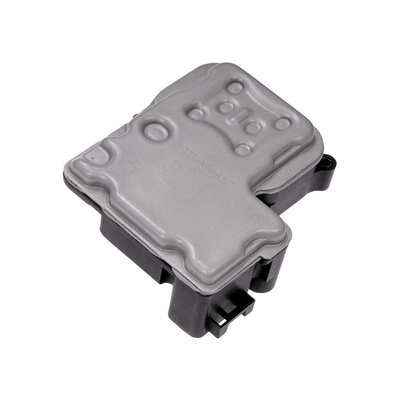
Ford Mustang (1999-2004): OEM ['XR3Z-10849-EB', 'XR3Z-10849-GB'] (Alt: {"brand": "Dorman (Remanufactured)", "part_number": "599-631"}) - Replace ABS Module
— Parts: $400-$1500, Labor: $150-$300, ~2 hr book time
(Professional)
Jaguar XK8 / XKR (X100): OEM ['LNF2210AB', 'LNC2210BD'] (Alt: {"brand": "ATE (OEM Supplier)", "part_number": "LNC2210BD"})
DIY vs Professional
- Replace Battery — Beginner: True
Tools: Socket/wrench set. - Repair or Replace Instrument Cluster — Beginner: False
Tools: Trim removal tools, Torx/Phillips screwdrivers, advanced scan tool. - Replace ABS Module — Beginner: False
Tools: Flare nut wrenches, brake bleeding equipment, advanced scan tool. - Repair Damaged Wiring — Beginner: False
Tools: Digital multimeter, wiring diagrams, wire strippers, soldering iron, heat shrink.
Used vs. New Parts: Buying Guide
When a used part is worth it: A used module makes sense for older vehicles (>150k miles) where a new OEM part exceeds the car's value, provided the owner accepts the risk of a shorter lifespan and programming challenges.
Donor-vehicle mileage cap: roughly under 80000 miles for the part to have meaningful remaining life.
Donor quality checklist:
- Match the OEM part number EXACTLY. A single letter difference means incompatibility.
- Inspect connectors for corrosion, bent pins, or heat damage.
- Obtain the donor vehicle's VIN to verify compatibility.
- Avoid parts from flood-damaged vehicles.
Decision logic:
- If The fix is a known wear item (e.g., cracked solder joints in an instrument cluster) → Favor a professional remanufacturing service over a used part to ensure known weak points are corrected.
- If The part requires VIN programming → Confirm your mechanic has the tools to program a used part before buying it. Dealerships often refuse to program used parts.
- If The vehicle is less than 10 years old → Buy a new OEM or high-quality remanufactured part for the warranty and peace of mind.
Warranty tradeoff: Salvage yard parts offer a 30-90 day exchange-only warranty. New or professionally remanufactured parts include a 1-year to lifetime warranty.
Worst-case if a used part fails: $500-$1500 if a used module is faulty or incompatible, covering the non-refundable part cost and double labor charges.
What Happens If You Wait — Timeline
- 0-1 month: Intermittent faults appear. ABS/Traction lights flash on startup but disappear. Gauges flicker. The U1261 code is stored as 'history'. (MPG impact: 0%% · Added cost: $0)
- 1-3 months: Symptoms become frequent. The car occasionally cranks but does not start. A parasitic draw weakens the battery. The U1261 code becomes 'active'. (MPG impact: 0-2%% · Added cost: $50-$150 (Cost of a tow for a no-start condition))
- 3-6 months: A hard failure occurs. The instrument cluster goes completely dead, or the car refuses to start. The persistent parasitic draw ruins the battery. (MPG impact: N/A (Vehicle undrivable)% · Added cost: $150-$350 (Cost of a new battery))
- 6+ months: Cascading failure begins. An ignored failing alternator with high AC ripple damages other sensitive electronic modules like the BCM or ABS module. (MPG impact: N/A% · Added cost: $1000-$3000 (Cost of replacing multiple damaged modules))
Cost of Not Fixing It
- 0-1 month: Intermittent no-start conditions leave you stranded. Disabled safety systems like ABS and traction control increase the risk of an accident. (Added cost: $100-$300 (Tow truck service and diagnostic fee))
- 1-6 months: A persistent parasitic draw from a faulty module ruins a new battery by repeatedly deep-cycling it, shortening its lifespan significantly. (Added cost: $150-$350 (Cost of a replacement battery))
- 6+ months: Underlying electrical issues like a failing alternator producing excessive AC ripple permanently damage other sensitive electronic modules. (Added cost: $1000-$3000 (Replacement of multiple modules like the ECU, BCM, or TCM))
Diagnosis Steps
- Test the Battery and Charging System First
Fully charge and load test the battery. A healthy battery reads above 12.5 volts at rest and maintains voltage under load. With the engine running, verify the alternator charges at 13.5-14.5 volts.
Tools: Digital Multimeter, Battery Load Tester (Beginner) - Perform a Full System 'Network' Scan
Use an advanced OBD-II scanner to read codes from all modules (ABS, BCM, IPC). Note exactly which modules report 'no communication' and which store the U1261 code to map the network failure.
Tools: Advanced Bi-Directional OBD-II Scanner (Intermediate) - Visual Inspection of Wiring and Connectors
Inspect wiring harnesses around the instrument cluster, ABS module, A-pillar kick panels, and under the driver's seat. Look for chafed wires, rodent damage, green corrosion on pins, or damp carpets indicating water intrusion.
Tools: Flashlight, Inspection Mirror, Trim Removal Tools (Intermediate) - Isolate Modules on the Network
Disconnect the electrical connector of a suspected faulty module (e.g., the ABS module). Clear the codes and rescan. If communication with the rest of the network is restored, the disconnected module is the culprit.
Tools: Basic Hand Tools, Advanced OBD-II Scanner (Advanced) - Check Network Resistance
With the battery disconnected, measure the resistance of the data bus at the OBD-II port. A typical CAN bus measures 60 Ohms between pins 6 and 14. A reading of 120 Ohms means a terminating resistor is offline; near 0 Ohms indicates a short.
Tools: Digital Multimeter, OBD-II Port Pinout Diagram (Advanced) - Perform a Parasitic Draw Test
With the vehicle off and doors closed, wait 45 minutes for modules to 'sleep'. Measure amperage draw in series with the negative battery cable. A draw above 85mA indicates a module is staying awake and corrupting the network. Pull fuses to isolate it.
Tools: Digital Multimeter with 10A fused capability or Amp Clamp (Advanced) - Test for AC Ripple Voltage
Set a multimeter to AC Volts. With the engine running and headlights on, connect leads to the battery terminals. A reading over 500mV (0.5V AC) confirms a failing alternator diode is introducing network-crashing electrical noise.
Tools: Digital Multimeter with AC Volts function (Advanced) - Analyze Network Signals with an Oscilloscope
Connect probes to the data bus wires. A healthy CAN bus shows clean mirror-image square waves switching between ~2.5V and ~3.5V (High) and ~2.5V and ~1.5V (Low). Distorted or flatlined waveforms confirm hardware failure.
Tools: Automotive Oscilloscope, Probes, Wiring Diagrams (Professional) - Test Wiring Integrity
Test individual data wires for continuity and shorts to power or ground from one module connector to another. This requires vehicle-specific wiring diagrams to trace the exact path of the network harness.
Tools: Digital Multimeter, Vehicle-Specific Wiring Diagrams (Professional)
When This Code Triggers (Freeze-Frame Conditions)
- Battery Voltage: 11.5 - 12.1V (During engine crank or when high-load accessories are activated)
- RPM: 0 (Key On, Engine Off (KOEO) self-test)
- Vehicle Speed: 0 mph (Fault logged immediately upon startup)
- Module Status: No Communication (The primary gateway module (e.g., Instrument Cluster) fails to receive a signal from a critical node like the ABS module.)
Related Codes
- U1260 — The companion code for 'SCP Single Ended (+) Circuit Failure'. U1260 and U1261 appearing together indicate a general failure on the SCP network.
- U0155 — Means 'Lost Communication With Instrument Panel Cluster'. If present with U1261, it confirms the instrument cluster is the source of the network failure.
- P1797 — A CAN bus communication failure between the TCM and ECM. Its presence indicates widespread electronic issues stemming from a failing battery or water intrusion.
- U-Series Codes (e.g., U1000, U1040) — A flood of U-codes from multiple modules points to a network-wide failure (bad gateway, wiring short) rather than a single faulty part.
Climate & Environmental Factors
- High Humidity: Accelerates corrosion of connector pins and circuit boards. Moisture ingress causes short circuits and high resistance, leading to permanent network failures.
- Cold Weather: Reduces battery efficiency. A marginal battery drops below the required voltage threshold during a cold start, immediately triggering U1261.
- Extreme Heat: Accelerates the degradation of electronic components and solder joints within modules like the instrument cluster, causing heat-related communication dropouts.
How to Talk to a Mechanic About This Code
Say this: "I have a U1261 network communication code and multiple electronic issues. Please start by testing the battery and charging system, and then perform a full network scan to see exactly which modules are offline before doing anything else."
This directs the technician to follow a logical diagnostic path, preventing them from immediately quoting an expensive module replacement without proof.
Avoid saying:
- 'My car is acting crazy, just fix it.'
- 'My check engine light is on, can you look at it?'
- 'I think it needs a new computer, how much is that?'
Questions to ask before authorizing the repair:
- Can you show me the results of the full network scan? Which modules were not communicating?
- Was the battery and alternator tested, and what were the results (resting voltage, load test, AC ripple)?
- What is your diagnostic plan to isolate the fault from here, and what is the estimated cost?
- Will you contact me with the specific findings and a firm repair estimate before replacing any parts?
Where to Take It: Dealer vs Independent vs Chain
- Dealer:
A strong, but expensive, choice. Best for warranty work or if an independent electrical specialist cannot solve the problem.
Best for: Vehicles under warranty., Complex issues requiring proprietary software to program a new gateway module., When independent shops cannot solve a rare failure pattern.
Downsides: Labor rates are 40-50% higher than independent shops., Dealers default to replacing entire assemblies rather than repairing smaller components. (Typical cost: +40% vs. baseline) - Independent Shop:
Best fit for most cases. A reputable independent shop specializing in electrical systems combines deep diagnostic experience with reasonable labor rates.
Best for: Out-of-warranty vehicles where cost is a major factor., Shops specializing in electrical diagnostics or your specific vehicle brand.
Downsides: Quality varies widely; ASE certification in electrical systems is crucial., May lack the expensive manufacturer-specific tools for programming brand new models. (Typical cost: +0% vs. baseline) - Chain Shop:
AVOID for diagnosis. They are not equipped to handle the complex wiring and module diagnostics required for a U1261 code.
Best for: Simple battery replacement (if no programming is needed).
Downsides: Technicians lack the specialized training and oscilloscopes needed for complex network faults., High potential for misdiagnosis and being sold unnecessary parts. (Typical cost: -10% vs. baseline)
When to Walk Away From the Repair
If the estimated repair cost for the U1261 fault exceeds 40-50% of your car's private-party value, seriously consider selling or trading it in.
- Car worth $4000, fix is $2200: Walk away. The repair cost is over 50% of the car's value.
- Car worth $12000, fix is $1800: Fix it. The repair cost is only 15% of the vehicle's value.
- Car worth $2500, fix is $800: Borderline. At 32% of the car's value, it's worth fixing if the car has no other major deferred maintenance.
What Scan Tool You Need for This Code
Minimum: A scanner that performs a full, all-system network scan to see which modules are online. A basic code reader is insufficient.
A cheap code reader only checks the engine module. It cannot tell you if the ABS module or Instrument Cluster is completely offline, which is the critical first step for U1261.
Rent vs buy: Buying a mid-range scanner is cheaper than a single dealership diagnostic fee. Do not rent a basic parts-store scanner, as it will not provide network-level information.
How to Clear the Code After You Fix It
- Reconnect the battery if disconnected during repair.
- Use an OBD-II scan tool to erase the Diagnostic Trouble Codes (DTCs).
- Perform a complete OBD-II drive cycle to run the system's readiness monitors.
Drive cycle (~30 minutes): A drive cycle includes a cold start (vehicle sits for 8+ hours), 2-3 minutes of idling, 10-15 minutes of mixed city and highway driving at steady speeds around 55 mph, and a cool-down period.
Readiness monitors affected: Catalyst Monitor, Evaporative System Monitor, Oxygen (O2) Sensor Monitor, O2 Sensor Heater Monitor
Before emissions retest: drive at least 100 miles to fully set monitors.
Watch out for:
- Disconnecting the battery clears the code but resets all readiness monitors, causing an automatic emissions failure.
- The code returns immediately if the underlying hard fault (broken wire, faulty module) is not repaired.
- Failing to follow the manufacturer's specific drive cycle prevents monitors from setting to 'Ready'.
Will This Fail Emissions / State Inspection?
Yes — this code typically fails an OBD-II emissions inspection.
- California: An illuminated Check Engine Light is an automatic failure. All required readiness monitors must be in a 'Ready' state to pass.
- New York: An illuminated Check Engine light is an automatic failure of the OBD-II emissions inspection.
- Texas: In the 17 counties requiring emissions testing, an illuminated Check Engine Light causes an automatic failure.
Most Commonly Affected Vehicles
- Jaguar XK8 / XKR (X100) (1997-2006) — Extremely common. Almost always caused by a weak battery, a faulty instrument cluster acting as the gateway, or a failed ABS module.
- Jaguar XJ8 / XJR (X308) (1997-2003) — Electronics are notoriously sensitive to battery voltage. A battery reading below 12.4V at rest triggers U1261 and 'Failsafe' modes.
- Ford Mustang (1999-2004) — Uses the Ford SCP network. U1261 points to a failing instrument cluster with cracked solder joints or a wiring issue near the A-pillar.
- Ford F-150 (1999-2003) — Prone to instrument cluster failures that disrupt the SCP data bus, accompanied by erratic gauges.
- BMW 3-Series / 4-Series (F30/F32) (2011-2020) — U1261 means 'Lost communication with Heat Management Module'. Frequently appears after coolant system repairs if the connector is damaged.
- Honda Fit / Jazz / Civic (2007-2014) — Indicates a CAN bus malfunction. If U1405 is also present, Honda service data advises diagnosing U1261 first.
- Nissan Rogue (2008-2015) — A general communication error between ECUs. Requires a full network scan to pinpoint the offline module.
- Mercury Various (1996-2005) — On some Mercury vehicles, U1261 means 'Intake Air Temperature Sensor High Input', a sensor circuit fault completely unrelated to network issues.
Manufacturer-Specific Notes
- Jaguar / Ford: U1261 refers to the SCP (J1850) data bus. A weak battery is the primary suspect and must be professionally load-tested, even if the car starts.
- Mercury: U1261 has a completely unrelated definition: 'Intake Air Temperature Sensor High Input'. This is a sensor circuit fault requiring a totally different diagnostic approach.
- Ford (Diesel): Identifies U1261 as 'Glow Plug No. 1 Circuit Malfunction'. This is specific to the glow plug system and is unrelated to network issues.
- Honda: Service information indicates that if DTC U1261 is stored alongside DTC U1405, U1261 must be diagnosed and resolved first.
Real Owner Stories
2001 Jaguar XJR at 110K miles - The Easy Fix
Owner experienced 'Engine Failsafe Mode' and 'Traction Not Available' warnings with code U1261. The car sat for up to two weeks between short trips.
What they tried:
- Initially suspected a major electronic failure.
- Measured battery voltage at rest and found it below 12.1V, despite the car starting fine.
Outcome: The owner fully recharged the battery overnight. After reconnecting, the faults did not return. The charging system was confirmed working at 14.2V.
Lesson: On voltage-sensitive cars, a weak battery is the prime suspect for U1261. Low resting voltage causes widespread electronic faults. Always load test the battery first.
2006 Ford Mustang GT - Misdiagnosis with Aftermarket Parts
The instrument cluster went haywire: gauges dropped to zero, warning lights illuminated, and A/C stopped. The dealer diagnosed a failed instrument cluster.
What they tried:
- The dealer replaced the instrument cluster, temporarily fixing the issue.
- Months later, the problem returned. The owner discovered an aftermarket auxiliary audio adapter was the actual cause.
Outcome: Disconnecting the aftermarket audio adapter and performing a battery reset resolved all symptoms permanently.
Lesson: Improperly shielded aftermarket electronics interfere with the data network. Disconnect non-factory devices before replacing expensive modules.
2018 Honda CR-V - Modern CAN Bus Failure
Vehicle presented with nearly every warning light illuminated. A full scan revealed 13 modules reporting communication errors.
What they tried:
- A technician performed a full system scan to identify offline modules.
- Cleared all codes and rescanned to identify 'hard' faults.
Outcome: The issue was traced to a physical break in the CAN bus network, preventing safety systems from communicating. The fix required professional wiring repair.
Lesson: A dashboard full of warning lights points to a network-wide failure. A full system scan is essential to map the network topology and find the break.
How to Prevent This Code From Triggering
- Maintain Battery Health and Connections (Every 6 months) — Low voltage is a primary cause of network codes. Clean battery terminals, ensure tight connections, and use a battery tender if the vehicle is stored.
- Keep Water Out (Annually, before rainy season) — Clear debris from sunroof drains and cowl vents to prevent water from leaking into the cabin and corroding network connectors.
- Secure the Battery (During every oil change) — A loose battery vibrates excessively, causing internal plate damage and voltage drops that disrupt module communication.
- Use Caution with Aftermarket Electronics (During installation) — Improperly installed accessories tap into data lines, introducing electrical noise. Use high-quality harness adapters to avoid splicing factory wiring.
Frequently Asked Questions
What are the most common misdiagnosis mistakes for U1261?
The biggest mistake is immediately replacing an expensive module without confirming the root cause. The problem is often a cheaper component like a weak battery or a single corroded wire. The second major pitfall is not knowing the code's specific definition for your vehicle's make and model.
My battery is new and starts the car fine, could it still be the cause?
Yes, absolutely. A battery with enough cranking amps to start the engine often fails to provide the stable 12.4+ volts required by sensitive electronic modules. A momentary voltage drop during startup causes modules to lose communication and set a U1261 code.
Can a bad alternator cause a U1261 code?
Yes. A failing alternator with a bad voltage regulator or faulty diode introduces AC ripple onto the electrical system. This electrical noise disrupts sensitive data signals, triggering U1261 if the ripple exceeds 0.5V AC.
What is a 'Gateway Module'?
A gateway module acts as a central router for your car's multiple data networks (like CAN and SCP). It translates and passes messages between these different networks. When it fails, entire systems stop communicating simultaneously.
What does 'SCP (J1850)' mean?
SCP stands for Standard Corporate Protocol, a vehicle communication network standard used primarily by Ford, Jaguar, and Mazda before the modern CAN bus. It serves as the internal internet allowing different computers in the car to communicate.
My scanner won't communicate with any module. What should I do?
No communication with any module indicates a complete network crash. This is typically caused by a short-to-ground in the main data bus wiring, a failed gateway module, or a blown fuse for the OBD-II port itself. Start by checking the Data Link Connector fuses.
Will the U1261 code clear itself?
If the fault was a temporary low-voltage glitch, the code becomes a 'history' code and warning lights turn off after the battery is charged and the vehicle completes several drive cycles. However, a hard fault like a broken wire keeps the code 'active' and it returns immediately after clearing.
Shop the Parts Behind U1261
Below are the parts most often responsible for code U1261, ranked by how frequently each one is the actual culprit (per the diagnosis above). Tap any to see what we have for your vehicle.



The information in this article is provided for general reference and educational purposes only. Vehicle specifications, procedures, and part compatibility can vary by production date, trim level, and region. Always consult your vehicle's factory service manual and verify part numbers before purchasing or performing repairs. Safety-critical components such as airbags, seat belts, and braking systems should be installed by a qualified professional.
- 🧭 Diagnostic Flowchart
- 🛍️ Shop This Part
- What Does U1261 Mean?
- Can I Drive With U1261?
- Common Causes
- Symptoms
- Common Fixes & Costs
- DIY vs Professional
- Used vs. New Parts: Buying Guide
- What Happens If You Wait — Timeline
- Cost of Not Fixing It
- Diagnosis Steps
- When This Code Triggers (Freeze-Frame Conditions)
- Related Codes
- Climate & Environmental Factors
- How to Talk to a Mechanic About This Code
- Where to Take It: Dealer vs Independent vs Chain
- When to Walk Away From the Repair
- What Scan Tool You Need for This Code
- How to Clear the Code After You Fix It
- Will This Fail Emissions / State Inspection?
- Most Commonly Affected Vehicles
- Manufacturer-Specific Notes
- Real Owner Stories
- 2001 Jaguar XJR at 110K miles - The Easy Fix
- 2006 Ford Mustang GT - Misdiagnosis with Aftermarket Parts
- 2018 Honda CR-V - Modern CAN Bus Failure
- How to Prevent This Code From Triggering
- Frequently Asked Questions
- What are the most common misdiagnosis mistakes for U1261?
- My battery is new and starts the car fine, could it still be the cause?
- Can a bad alternator cause a U1261 code?
- What is a 'Gateway Module'?
- What does 'SCP (J1850)' mean?
- My scanner won't communicate with any module. What should I do?
- Will the U1261 code clear itself?
- 🎟️ Get 5% Off