

OBD-II Code U1281: Lost Communication With a Control Module
The Definitive Guide to What U1281 Means, Why It Triggers, and How to Fix It
- Code U1281 is a Honda/Acura-specific network error indicating a module stopped communicating on the 33.33 kbps B-CAN (Body) network.
- For 2018-2020 Honda Accords and Insights, a known BCM software glitch causes this code and requires a $150-$250 dealer software update (TSB 20-039).
- A weak battery dropping below 12.0V during startup is the most common hardware cause, forcing modules offline and triggering communication faults.
- Accurate diagnosis requires a bi-directional scanner capable of reading manufacturer-specific codes to pinpoint exactly which of the 10+ body modules failed.
- Never replace a $400+ Body Control Module without first verifying its power, ground, and network wiring integrity using a multimeter.
What Does U1281 Mean?
U1281 is a manufacturer-specific network error code used primarily by Honda and Acura. It signifies a specific electronic control module stopped communicating on the vehicle's internal network. Your car uses a Controller Area Network (CAN bus) to manage everything from the engine to the power windows. Code U1281 means one of these computers went silent, and other modules logged its absence.
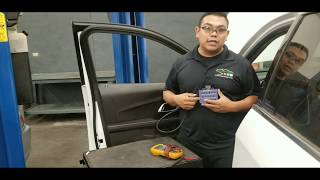
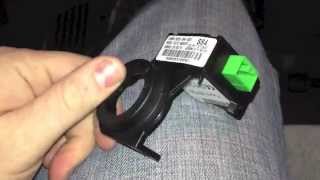
Technical definition: U1281 indicates a 'Lost Communication' error on the vehicle's Controller Area Network (CAN) bus, specifically the slower Body-CAN (B-CAN). 🎬 Watch: Understanding Honda's unique B-CAN network design and diagnostics. For Honda/Acura, its meaning is highly specific and requires an advanced scan tool to pinpoint. Examples include 'Gauge Control Module Lost Communication With MICU' or 'Blind Spot Information Radar Unit Communication Error'. The core issue is a communication breakdown between peripheral modules and the central body computer (MICU/BCM).
Can I Drive With U1281?
Yes, But With Caution. Driving is possible but carries unpredictable risks. Depending on the failed module, you lose automatic headlights, rain-sensing wipers, blind-spot monitoring, or instrument cluster gauges. If the immobilizer module fails, the vehicle will not restart after being shut off. Limit driving to a short, essential trip directly to a repair facility to avoid being stranded.
Common Causes
- BCM Software Glitch (Honda TSB 20-039) (Very Common) — A software flaw in the Body Control Module (BCM) causes intermittent B-CAN communication loss. Honda issued Service Bulletin 20-039 for 2018-2020 Accord and 2019-2020 Insight models to address this exact issue, which sets U1281 alongside other network codes.
- Low or Unstable Battery Voltage (Very Common) — Control modules require a stable voltage above 12.0V to operate. A weak battery, failing alternator, or corroded battery terminal causes modules to malfunction, reset, or drop offline during engine cranking.
- Damaged or Corroded Wiring/Connectors (Common) — CAN bus network wires run throughout the vehicle. They suffer damage from rodents chewing soy-based insulation, physical impact, or water intrusion causing corrosion near windshields, sunroofs, and footwells.
- Blown Control Module Fuse (Common) — Each control module receives power through specific fuses. A blown fuse instantly cuts power, taking the module offline and forcing other computers to report a loss of communication.
- Faulty Peripheral Control Module (Less Common) — The specific offline module failed internally due to component degradation, heat, or vibration. Common culprits include the Instrument Cluster, Rain/Light Sensor, or Blind Spot Information (BSI) radar units.
- Faulty Body Control Module (BCM/MICU) (Rare) — The central body computer itself failed. Because it acts as the hub for the B-CAN network, a failing BCM causes widespread communication loss across dozens of peripheral systems.
- Aftermarket Electronics Interference (Rare) — Improperly installed remote starters, alarms, or audio equipment tapped into CAN bus wires introduce electrical noise or data corruption, disrupting communication between factory modules.
Symptoms
- Multiple Warning Lights on Dashboard — The Check Engine Light, ABS, Traction Control, and VSA lights illuminate simultaneously as modules controlling these functions lose communication.
- Malfunction of Body Electrical Features — You lose control of automatic headlights, rain-sensing wipers, power windows, keyless entry, or the blind spot monitoring system.
- Instrument Cluster Inoperative or Erratic — Gauges drop to zero, freeze, or behave erratically. The entire cluster display goes dark if it loses communication with the main network.
- Vehicle Will Not Start — The vehicle's security system prevents the engine from starting if the Immobilizer Control Unit or Keyless Access module loses communication with the BCM.
- No Noticeable Symptoms (scan-tool only — no driver-felt sign) — Intermittent faults or known software glitches (like the 2018 Honda Odyssey wireless charger issue) store a U1281 'history' code without triggering active symptoms.
Diagnostic Flowchart
Tap your situation to follow the diagnostic path that matches what you're seeing on this code.
Common Fixes & Costs
- Updating Body Control Module (BCM) Software — Parts: $0, Labor: $150-$250, ~1.0 hr book time (Professional)
- Replacing a Dead or Weak Battery — Parts: $150-$300, Labor: $25-$75, ~0.5 hr book time (DIY)
- Repairing Damaged Wiring Harness — Parts: $10-$50, Labor: $250-$800, ~3.0 hr book time (Professional)
- Replacing a Faulty Peripheral Module (e.g., Rain Sensor, BSI Radar)
— Parts: $250-$700, Labor: $100-$300, ~1.5 hr book time
(Intermediate)
2012-2017 Honda Odyssey (Rain/Light Sensor): OEM ['33136-TK8-A01']
2023-2025 Honda Accord (BSI Radar): OEM ['8S411-30A-A02', '8S411-30A-A11'] - Replacing a Faulty Body Control Module (BCM/MICU)
— Parts: $400-$800, Labor: $200-$400, ~2.0 hr book time
(Professional)
2018-2020 Honda Accord: OEM ['38809-TVA-AC2', '38809-TVA-AD2'] (Alt: Cardone (Remanufactured))
Used vs. New Parts: Buying Guide
When a used part is worth it: A used Body Control Module (BCM) makes sense if the vehicle is over 8 years old, the budget is tight, and you have a qualified shop for programming. It offers significant savings over a new OEM part.
Donor-vehicle mileage cap: roughly under 100000 miles for the part to have meaningful remaining life.
Donor quality checklist:
- Match the part number EXACTLY. A single digit difference means incompatibility with your vehicle's features.
- Inspect the part for water damage, corrosion on the pins, or physical case damage.
- Purchase from a reputable seller offering a 30-90 day warranty and return policy.
Decision logic:
- If The fix is a known software update per a TSB → Neither; pay the dealer for the software flash only.
- If Vehicle is under warranty or less than 5 years old → Buy new OEM. The risk of programming issues or premature failure of a used part outweighs the savings.
- If Vehicle is over 10 years old and the new part is over $600 → A used part from a low-mileage donor is a reasonable choice, factoring in professional programming costs.
Warranty tradeoff: Used parts typically have a 30-90 day warranty covering only the part. New aftermarket parts offer 1-year warranties. New OEM parts carry a 1-year/12,000-mile warranty.
Worst-case if a used part fails: $300-$600 if the used BCM fails, requiring repeat labor for removal, installation, and programming of another unit.
What Happens If You Wait — Timeline
- 0-1 month: Intermittent fault. Code U1281 is stored, but symptoms are rare. The code clears and does not return for weeks. (MPG impact: 0%% · Added cost: $0)
- 1-3 months: Persistent fault. Symptoms become frequent. Rain-sensing wipers fail in every storm, or the vehicle becomes difficult to start if the immobilizer is affected. (MPG impact: 0%% · Added cost: $150-$300 in potential towing costs if stranded.)
- 3-6 months: Cascading network failure. The root cause develops a parasitic draw, draining the battery when the car is off. (MPG impact: 0%% · Added cost: $150-$400 for a new battery destroyed by the parasitic draw.)
- 6+ months: Compounded hardware damage. Continuously charging a dead battery puts excessive strain on the alternator, leading to premature failure. (MPG impact: 0%% · Added cost: $500-$1200 for a new battery AND alternator replacement.)
Cost of Not Fixing It
- Immediate: Risk of being stranded. If the immobilizer module is the cause, the vehicle will not restart after being shut off. (Added cost: $150-$300 for towing.)
- 0-3 months: Loss of critical safety features. Automatic headlights, rain-sensing wipers, or blind-spot monitors fail unpredictably. Continued network instability causes other modules to log codes. (Added cost: $100-$250 in added diagnostic time.)
- 3+ months: Progressive electrical failure. A failing BCM develops a parasitic battery drain, ruining the battery and damaging the alternator from repeated deep cycling. (Added cost: $500-$1200 for a new battery and alternator replacement.)
Diagnosis Steps
- Check for TSBs and Verify Battery Health
Search for Technical Service Bulletins (TSBs) for your exact year, make, and model. Next, use a multimeter to verify the battery has a static charge above 12.4V. Start the engine and confirm alternator output is between 13.5V and 14.5V. Clean any terminal corrosion.
Tools: Google Search, Multimeter, Wire Brush (Beginner) - Perform a Full System Scan
Use a bi-directional OBD-II scanner to read manufacturer-specific codes from ALL modules. Note which specific modules report 'Not Responding'. If ten modules report lost communication with the instrument cluster, the cluster itself is the culprit.
Tools: Bi-Directional OBD-II Scanner (Beginner) - Check Fuses for Offline Modules
Locate and inspect all fuses related to the BCM/MICU and any specific module reported as not communicating. Replace any blown fuses and re-scan the system.
Tools: Fuse Puller, Vehicle Fuse Diagram, Multimeter (Beginner) - Perform a Thorough Visual Inspection
Inspect wiring harnesses in the engine bay, under the dashboard, and near the BCM (usually in the footwell). Look for chewed wires, chafing against metal, and water stains indicating a leak.
Tools: Flashlight, Inspection Mirror (Beginner) - Check CAN Bus Resistance at the DLC
Disconnect the negative battery terminal. At the OBD-II port, measure resistance between Pin 6 (CAN High) and Pin 14 (CAN Low). A healthy network reads 60 ohms. A 120-ohm reading indicates an open circuit; 0 ohms indicates a short circuit.
Tools: Multimeter, OBD-II Port Pinout Diagram (Intermediate) - Test Module Power and Ground at the Connector
Once you identify a suspect module, use a wiring diagram to test for proper power and ground directly at its electrical connector. A broken wire or corroded ground point prevents the module from powering on, triggering U1281.
Tools: Multimeter, Vehicle-Specific Wiring Diagrams (Advanced) - Isolate the Faulty Module (Node-by-Node)
Disconnect individual modules from the CAN network one by one, re-checking the bus resistance at the DLC after each. If disconnecting a specific module causes a 120-ohm reading to return to 60 ohms, you isolated the open circuit.
Tools: Multimeter, Wiring Diagrams, Trim Removal Tools (Professional) - [PRO TIP] Check CAN Bus Voltage
Reconnect the battery and turn the ignition ON. Measure DC voltage between Pin 6 (CAN-H) and ground (Pin 4). It should be 2.6V to 3.0V. Measure between Pin 14 (CAN-L) and ground. It should be 2.0V to 2.4V. Deviations indicate shorts to power or ground.
Tools: Multimeter, Back-probe Pins (Advanced) - [PRO TIP] Use an Oscilloscope for Signal Analysis
Connect an oscilloscope to CAN-H (Pin 6) and CAN-L (Pin 14). A healthy signal is a series of clean, square waves mirroring each other. Distorted waveforms or noise pinpoint interference that a multimeter misses.
Tools: Automotive Oscilloscope, Breakout Leads (Professional)
When This Code Triggers (Freeze-Frame Conditions)
- Vehicle State: Ignition ON (The fault is detected shortly after the vehicle turns on, as all modules perform a network check-in.)
- Battery Voltage: 11.5V - 12.5V (Logged during or immediately after engine cranking, especially if a weak battery causes voltage to drop significantly.)
- Time Since Start: 1 - 10 seconds (Sets when a module fails to respond to network communication requests within seconds of the ignition turning ON.)
- Vehicle Speed: 0 mph (As a network initialization fault, it occurs before the vehicle is in motion.)
Related Codes
- U0140 — A generic code for 'Lost Communication With Body Control Module'. U1281 is the Honda-specific version of this problem. An advanced scanner reveals U1281 to identify the exact offline module.
- U1280 — Another Honda-specific communication code seen alongside U1281, particularly in cases related to the BCM software glitch covered by TSB 20-039.
- U0155 — Means 'Lost Communication With Instrument Panel Cluster'. On Hondas, U1281 is often the specific code for this fault. If both appear, the Instrument Cluster is the primary suspect.
- U0073 — Means 'Control Module Communication Bus A Off'. Indicates a total failure of the CAN bus network. U1281 usually points to a single module's failure on an otherwise functional network.
Climate & Environmental Factors
- High Humidity / Heavy Rain: Water intrusion is a primary cause of U1281. Moisture seeps into connectors, fuse boxes, or control modules through failing windshield or sunroof seals, causing short circuits.
- Road Salt (Winter Climates): Salty brine splashes onto underbody wiring harnesses and connectors. This highly corrosive solution accelerates wire degradation, leading to open circuits that disrupt CAN communication.
- Extreme Cold: Low temperatures make wire insulation brittle and prone to cracking. Cold also increases the internal resistance of an aging battery, causing voltage drops that knock modules offline during startup.
- Extreme Heat: High ambient temperatures accelerate the degradation of electronic components within control modules. Heat also softens wire insulation, making it susceptible to chafing.
How to Talk to a Mechanic About This Code
Say this: "I have a Honda with a U1281 communication code and multiple electrical symptoms. Please perform a full system scan to identify which specific module is offline and check for relevant TSBs, especially for BCM software updates. Before quoting a module replacement, verify its power and ground connections are good."
This signals you understand U1281 is a complex network issue. It directs the technician toward a logical diagnostic process (scan, TSB check, wiring test) and prevents premature replacement of the expensive BCM.
Avoid saying:
- 'My check engine light is on, can you look at it?'
- 'I think the main computer is bad.'
- 'Just fix whatever is wrong and send me the bill.'
Questions to ask before authorizing the repair:
- Which specific module did the full system scan show as 'not communicating'?
- Did you find any Technical Service Bulletins (TSBs) for my VIN related to this code?
- What tests did you perform to confirm the module has good power, ground, and no wiring issues?
- Is the proposed repair a software update, a wiring fix, or a part replacement?
- Can you provide a written estimate with a full breakdown of parts and labor costs?
Where to Take It: Dealer vs Independent vs Chain
- Dealer:
Safest option. They have the Honda Diagnostic System (HDS) required for definitive diagnosis and software flashing. Start here if your car has a known TSB.
Best for: Vehicles under warranty, Cases where a known TSB points to a software update (e.g., 2018-2020 Accords), Complex, intermittent electrical issues requiring factory knowledge
Downsides: Highest labor and parts costs, May replace modules rather than trace difficult wiring faults (Typical cost: +50% vs. baseline) - Independent Shop:
Excellent choice if it's a specialist. Ask if they have a manufacturer-level scan tool capable of reading U1281 to identify the specific offline module.
Best for: Out-of-warranty vehicles with a clear, non-software fault (e.g., rodent-damaged wiring), Owners looking for better value on parts and labor
Downsides: Quality varies wildly. Must be a shop specializing in Honda/Acura or advanced electrical diagnostics., May lack the latest OEM tools for software updates. (Typical cost: +0% vs. baseline) - Chain Shop:
AVOID for diagnosis. They lack specialized tools. They can replace a weak battery, but cannot properly diagnose the U1281 code.
Best for: Simple jobs like battery replacement.
Downsides: Technicians lack training for complex network diagnostics., High risk of misdiagnosis and unnecessary parts sales. (Typical cost: -10% vs. baseline)
When to Walk Away From the Repair
If the total estimated repair cost exceeds 50% of your car's private-party market value, consider selling or trading it in as-is.
- Car worth $3500, fix is $1800: Walk away. The repair cost is over 50% of the car's value. The risk of other age-related failures is high.
- Car worth $15000, fix is $1200: Fix it. The repair cost is 8% of the vehicle's value and restores key safety features.
- Car worth $8000, fix is $450: Fix it. A sub-$500 repair on an $8,000 car is a clear-cut decision to maintain functionality.
What Scan Tool You Need for This Code
Minimum: A scanner that reads manufacturer-specific codes (U1xxx, Bxxxx, Cxxxx) from ALL vehicle modules, including the BCM and Instrument Cluster.
A basic $20 OBD-II reader only scans the powertrain for generic 'P0' codes. It cannot see the U1281 code in the body modules, nor tell you WHICH module lost communication.
Budget: BlueDriver Pro Scan Tool (~$99) — Reads and clears enhanced codes for Honda/Acura. It confirms the U1281 code exists, but may not provide the specific module-to-module communication error message.
Mid-range: Foxwell NT510 Elite for Honda (~$180) — Provides dealer-level diagnostics for Honda/Acura, showing the specific U1281 definition (e.g., 'Lost communication with Rain Sensor'). Reads live data to confirm module power.
Professional: Autel MaxiCOM MK808 / MK808BT (~$500) — Provides full bi-directional control to command modules. Performs advanced functions like key programming and module coding after a replacement.
Rent vs buy: DO NOT rent a scanner from a parts store; their loaner tools are basic readers. For a one-time diagnosis, a $150 diagnostic fee at a qualified shop is cheaper than buying a capable scanner.
How to Clear the Code After You Fix It
- Reconnect the battery if disconnected for repair.
- Use a compatible OBD-II scan tool to clear all Diagnostic Trouble Codes (DTCs) from all modules.
- Turn the ignition to the OFF (LOCK) position, then turn it ON and wait 10 seconds for systems to re-initialize.
- Perform the manufacturer-specific drive cycle to allow readiness monitors to complete self-tests.
Drive cycle (~45 minutes): Start from a cold soak (engine off for 6+ hours). Idle for 20 seconds. Rev to 2000 RPM for 3 minutes. Idle for 20 seconds. Drive at a steady 50-60 mph for 20 minutes without cruise control. Perform city driving for 10 minutes with coasting. Let the vehicle sit with the engine off for 30 minutes.
Readiness monitors affected: Comprehensive Component Monitor, Misfire Monitor
Before emissions retest: drive at least 50 miles to fully set monitors.
Watch out for:
- Clearing the code without fixing the root cause results in the code returning immediately.
- Failing to allow a complete cold soak before the drive cycle prevents certain monitors from running.
- Taking an emissions test immediately after clearing codes results in a 'Not Ready' failure.
Will This Fail Emissions / State Inspection?
Yes — this code typically fails an OBD-II emissions inspection.
- California: An illuminated Check Engine Light results in an automatic failure. A specific drive cycle must be performed to set all readiness monitors before a re-test.
- New York: A U-code triggering the Check Engine Light causes an automatic failure. For 2001+ vehicles, only one readiness monitor is allowed to be 'Not Ready'.
- Texas: In emissions-testing counties, an illuminated Check Engine Light is an automatic failure. Drive 50-100 miles after clearing codes to set readiness monitors before re-inspection.
Most Commonly Affected Vehicles
- Honda Accord (2018-2020) — Subject to Honda Service Bulletin 20-039. A BCM software glitch causes intermittent B-CAN communication loss, setting U1281. The fix is a software update.
- Honda Insight (2019-2020) — Included in Honda Service Bulletin 20-039 for the BCM software flaw that causes loss of B-CAN communication.
- Honda Odyssey (2011-2017) — Frequently logs U1281 when the immobilizer-keyless entry control unit loses communication with the MICU, resulting in a no-start condition.
- Honda Odyssey (2018-2019) — The wireless charger control unit falsely sets a U1281 code without any actual communication fault present (TSB A17080G).
- Honda Accord (2012-2017) — U1281 commonly points to a loss of communication with the Rain/Light sensor, Auto High-Beam unit, or the Gauge Control Module.
- Honda Accord (2023-2025) — Often triggered by the Blind Spot Information (BSI) radar units losing their communication link to the BCM.
- Honda Pilot (2016-2022) — Intermittent U1281 codes trace back to the keyless access module or related wiring, often accompanied by U0199.
- Acura MDX (2018-2020) — Logs U1281 along with U0199 and U1291, leading to symptoms like the vehicle shifting to neutral on its own.
Manufacturer-Specific Notes
- Honda/Acura: The meaning of U1281 is extremely specific to the offline module. Without a Honda-specific scanner (like the HDS), a technician cannot know if the fault lies with the rain sensor, immobilizer, or gauge cluster.
- Honda/Acura: Honda uses a slower, single-wire Body-CAN (B-CAN) network running at 33.33 kbps for convenience items. U1281 is almost always a B-CAN fault. The single-wire design makes it highly susceptible to complete failure from a single open circuit.
- Honda/Acura: Honda issued multiple TSBs for false or software-induced U1281 codes. TSB A17080G (2018 Odyssey) notes false triggers from the wireless charger, and TSB 20-039 (2018-20 Accord) requires a BCM software update.
- General: A 'U' code with a '1' as the second digit (e.g., U1xxx) is a manufacturer-specific code. Other manufacturers use their own proprietary U1xxx codes for similar faults, which is why U1281 is heavily concentrated on Honda/Acura.
Real Owner Stories
2018 Honda Accord with 45,000 miles
Owner experienced multiple random warning lights (LKAS, ACC, Brake System) flashing on the dashboard. The car drove normally.
What they tried:
- Ignored the issue, hoping it was a temporary glitch.
- An independent mechanic scanned codes U1281, U1280, and U128D.
- The mechanic quoted over $1,000 for a BCM replacement.
Outcome: The owner found Honda TSB 20-039 online. A Honda dealership updated the BCM software for one hour of labor ($180), permanently fixing the problem.
Lesson: Always check for Technical Service Bulletins (TSBs) before agreeing to expensive module replacements. A $180 software update saves you from a $1,000 unnecessary repair.
2015 Honda Odyssey with 110,000 miles
The vehicle would not start, the key fob was not detected, and the dashboard was dead.
What they tried:
- A shop installed a new battery for $250, but the no-start condition remained.
- The shop quoted $1,200 to replace and program the BCM (MICU).
Outcome: A Honda specialist found U1281: 'Immobilizer-Keyless Control Unit Lost Communication With MICU'. They traced the wiring to a corroded ground wire under the kick panel. Cleaning and securing the ground cost $220. The original BCM was fine.
Lesson: A 'no communication' code often points to a wiring or ground issue. Never replace a BCM without verifying its power, ground, and network connections.
2016 Acura MDX with 80,000 miles
Rain-sensing wipers and auto headlights stopped working. A U1281 code was stored without dashboard warning lights.
What they tried:
- Replaced wiper blades and checked the wiper fuse.
- A local shop used a basic scanner showing only 'U1281' and could not diagnose it.
Outcome: An Acura dealership used the Honda Diagnostic System (HDS) to specify 'Rain Light Sensor Unit Lost Communication With MICU'. The internally failed sensor was replaced and calibrated for $450.
Lesson: A manufacturer-specific scanner is essential for U1281. Paying for a proper diagnosis prevents wasting money on incorrect parts.
How to Prevent This Code From Triggering
- Maintain Battery Health (Every 6 months) — Low voltage is a top cause of communication codes. Clean battery terminals, ensure tight connections, and verify the battery holds a charge above 12.4V to prevent modules from dropping offline.
- Protect Wiring from Rodents (As needed, especially if parking outdoors) — Rodents chew soy-based wire insulation, causing shorts in the CAN bus. Use peppermint oil, ultrasonic repellents, or capsaicin-laced tape on engine bay harnesses.
- Clear Water Drains (Annually (before rainy season)) — Clogged sunroof and cowl drains cause water to overflow onto the BCM or fuse box. Use compressed air to clear debris from drain tubes, preventing catastrophic water damage.
- Inspect and Secure Ground Connections (During other maintenance) — A loose ground wire provides an unstable reference for control modules, leading to communication errors. Visually inspect main ground straps for tightness and lack of corrosion.
- Be Cautious with Aftermarket Electronics (During installation) — Improperly tapping into CAN bus wires for alarms introduces electrical noise. Ensure aftermarket devices are installed by professionals who understand CAN bus architecture.
Frequently Asked Questions
Can I fix a U1281 code myself?
Simple fixes like replacing a blown fuse or a weak battery are DIY-friendly. However, reliably diagnosing the network requires a bi-directional scanner and wiring diagrams. Complex wiring repairs or module programming must be left to professionals.
How much does it cost to diagnose a U1281 code?
Most auto repair shops charge a diagnostic fee ranging from $125 to $250. This covers the first hour of troubleshooting to pinpoint the exact cause of the communication failure. The final repair cost varies dramatically based on the findings.
Will clearing the code fix the problem?
Clearing the code temporarily turns off the warning lights. If the underlying problem (broken wire, faulty module, software bug) still exists, the code returns immediately.
My scanner shows U1281 but there are no symptoms. What should I do?
This happens with intermittent faults or known software glitches, like the 2018 Honda Odyssey wireless charger issue. Clear the code and see if it returns. If it returns without symptoms, search for TSBs for your vehicle before authorizing diagnostics.
Could changing my key fob battery cause a U1281 code?
It is highly unlikely to be the direct cause. If U1281 relates to the immobilizer system, a fob battery change might cause a temporary synchronization issue. The actual fault is usually in the vehicle's receiver module or wiring.
What is the difference between F-CAN and B-CAN on a Honda?
F-CAN is a high-speed (500 kbps) two-wire network for critical powertrain and safety systems. B-CAN is a slower (33.33 kbps) single-wire network for body features like lights and windows. U1281 is almost always a fault on the B-CAN network.
What are common misdiagnosis mistakes for U1281?
The biggest mistake is replacing a module without verifying its power, ground, and wiring integrity. Another common error is ignoring TSBs, which often reveal a simple software update as the fix. Using a cheap generic scanner leads to vague and incorrect diagnoses.
Is an Acura more expensive to repair for a U1281 code than a Honda?
Yes, Acura parts and dealership labor rates are typically higher. However, the underlying diagnostic process and many components are identical. An independent Honda/Acura specialist performs the repair for less than a dealership.
Key Takeaways
- Code U1281 is a Honda/Acura-specific network error indicating a module stopped communicating on the 33.33 kbps B-CAN (Body) network.
- For 2018-2020 Honda Accords and Insights, a known BCM software glitch causes this code and requires a $150-$250 dealer software update (TSB 20-039).
- A weak battery dropping below 12.0V during startup is the most common hardware cause, forcing modules offline and triggering communication faults.
- Accurate diagnosis requires a bi-directional scanner capable of reading manufacturer-specific codes to pinpoint exactly which of the 10+ body modules failed.
- Never replace a $400+ Body Control Module without first verifying its power, ground, and network wiring integrity using a multimeter.
Helpful Videos

Shop the Parts Behind U1281
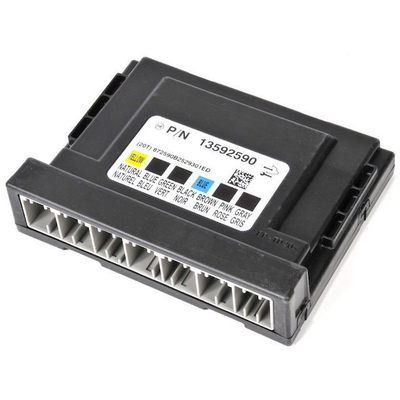
Below are the parts most often responsible for code U1281, ranked by how frequently each one is the actual culprit (per the diagnosis above). Tap any to see what we have for your vehicle.


The information in this article is provided for general reference and educational purposes only. Vehicle specifications, procedures, and part compatibility can vary by production date, trim level, and region. Always consult your vehicle's factory service manual and verify part numbers before purchasing or performing repairs. Safety-critical components such as airbags, seat belts, and braking systems should be installed by a qualified professional.
- 🧭 Diagnostic Flowchart
- 🎬 Helpful Videos
- 🛍️ Shop This Part
- What Does U1281 Mean?
- Can I Drive With U1281?
- Common Causes
- Symptoms
- Common Fixes & Costs
- Used vs. New Parts: Buying Guide
- What Happens If You Wait — Timeline
- Cost of Not Fixing It
- Diagnosis Steps
- When This Code Triggers (Freeze-Frame Conditions)
- Related Codes
- Climate & Environmental Factors
- How to Talk to a Mechanic About This Code
- Where to Take It: Dealer vs Independent vs Chain
- When to Walk Away From the Repair
- What Scan Tool You Need for This Code
- How to Clear the Code After You Fix It
- Will This Fail Emissions / State Inspection?
- Most Commonly Affected Vehicles
- Manufacturer-Specific Notes
- Real Owner Stories
- 2018 Honda Accord with 45,000 miles
- 2015 Honda Odyssey with 110,000 miles
- 2016 Acura MDX with 80,000 miles
- How to Prevent This Code From Triggering
- Frequently Asked Questions
- Can I fix a U1281 code myself?
- How much does it cost to diagnose a U1281 code?
- Will clearing the code fix the problem?
- My scanner shows U1281 but there are no symptoms. What should I do?
- Could changing my key fob battery cause a U1281 code?
- What is the difference between F-CAN and B-CAN on a Honda?
- What are common misdiagnosis mistakes for U1281?
- Is an Acura more expensive to repair for a U1281 code than a Honda?
- Key Takeaways
- 🎟️ Get 5% Off