

OBD-II Code U1291: Lost Communication With Relay Control Module
What U1291 means, why it triggers, and how to fix it
- Code U1291 indicates a communication failure between the Body Control Module (BCM) and the relay control module, most frequently affecting 2018-2020 Honda and Acura vehicles.
- A known BCM software glitch triggers this code on 2018-2020 Honda Accords and Insights, requiring a free dealer software update under Service Bulletin 20-039.
- Driving with U1291 is highly dangerous and illegal, as it immediately disables critical safety systems including turn signals, hazard lights, and the rearview camera.
- Always verify your VIN against manufacturer Technical Service Bulletins (TSBs) before authorizing repairs, as the fix is often a free software update rather than a $1,000 module replacement.
- Test the battery and charging system before replacing any modules; voltage drops below 12.4V frequently cause false U1291 communication errors.
What Does U1291 Mean?

Code U1291 indicates the Body Control Module (BCM) lost communication with the relay control module. These modules communicate over a data network called the CAN bus to operate essential electronic features like lights, locks, and cameras. When this link breaks, the BCM triggers U1291 and the associated electrical functions stop working.
Technical definition: The SAE J2012 standard designates U1xxx codes as manufacturer-specific. For Honda and Acura, U1291 is defined as 'BCM Lost Communication with Relay Control Module'. This indicates a communication failure on the B-CAN (Body-Controller Area Network) bus between the Body Control Module and the integrated relay control module.
Can I Drive With U1291?
No — Do Not Drive. Do not drive the vehicle. This code indicates a failure of critical safety systems, including turn signals and hazard lights. Operating a vehicle without functional turn signals is illegal in all 50 states and dramatically increases the risk of a collision. The vehicle must be repaired immediately.
Common Causes

- Body Control Module (BCM) Software Glitch (Very Common) — On 2018-2020 Honda and Acura models, a software error within the BCM is the primary cause. A setting mismatch forces the BCM to drop off the network, triggering the code. This requires a manufacturer software update.
- Weak Battery or Failing Alternator (Common) — Control modules require a stable 12.0 to 14.8 volts to operate. A weak battery or a failing alternator causes voltage drops and electrical noise, disrupting CAN bus communication and triggering false U1291 codes.
- Damaged or Corroded Wiring/Connectors (Common) — The CAN bus network relies on intact wiring. Frayed wires, short circuits, or corroded connector pins interrupt the communication signal between modules. This is frequently caused by vibrations, rodent damage, or moisture.
- Water Intrusion and Fuse Box Corrosion (Common) — Underhood fuse boxes, particularly on Chevrolet and GMC trucks, are susceptible to water intrusion. This corrodes fuse terminals and relay pins, severing power and communication to the BCM.
- Faulty Body Control Module (BCM) (Less Common) — The BCM itself fails internally due to water damage, internal shorts, or cracked solder joints, preventing it from communicating with the network.
- Defective Relay Control Module / Fuse Box (Less Common) — The relay control module, often integrated into the under-dash fuse box (MICU on Hondas), fails internally and stops sending or receiving signals from the BCM.
- Aftermarket Device Interference (Rare) — Incorrectly installed aftermarket remote starters, alarms, or lighting systems tap into the CAN bus network, introducing electrical noise that disrupts module communication.
Symptoms

- Turn Signals and Hazard Lights Not Working — Turn signals and hazard lights fail to operate when activated. This is the most immediate and dangerous symptom.
- Rearview Camera Inoperative — The backup camera display remains black or fails to activate when shifting into reverse.
- Flashing Driver-Assist Warning Lights — Indicators for Adaptive Cruise Control (ACC) and Lane Keeping Assist System (LKAS) flash on the instrument cluster due to missing BCM data.
- Power Door Locks and Trunk Release Malfunction — The remote key fob and interior switches fail to lock or unlock the doors and open the trunk.
- Intermittent Electrical Failures — Interior lights, wipers, or the instrument cluster flicker or fail randomly.
Diagnostic Flowchart

Tap your situation to follow the diagnostic path that matches what you're seeing on this code.
Common Fixes & Costs
- Body Control Module (BCM) Software Update — Parts: $0, Labor: $150-$300 (often free under recall), ~1.5 hr book time (Professional)
- Battery Replacement — Parts: $150-$350, Labor: $50-$100, ~0.5 hr book time (DIY)
- Wiring Harness Repair — Parts: $10-$50, Labor: $250-$1500, ~2.5 hr book time (Professional)
- Body Control Module (BCM) Replacement — Parts: $400-$900, Labor: $250-$500, ~2.5 hr book time (Professional)
- Fuse Box / Relay Module Replacement — Parts: $300-$900, Labor: $200-$500, ~2.0 hr book time (Professional)
Used vs. New Parts: Buying Guide
When a used part is worth it: Buy a used BCM only for out-of-warranty vehicles to cut part costs by 50%. You must still pay a shop to program the used module to your VIN.
Donor-vehicle mileage cap: roughly under 100000 miles for the part to have meaningful remaining life.
Donor quality checklist:
- Verify the part number on the used module is an EXACT match to the original.
- Inspect the part for water damage, corrosion on the pins, or physical case damage.
- Ensure the donor vehicle was not involved in a flood.
Decision logic:
- If The fix is a software update under a recall → Always use the dealer; the cost is $0.
- If Vehicle is under warranty or the new part is under $400 → Buy new for the longer warranty and guaranteed compatibility.
- If Vehicle is over 100K miles and budget is tight → Buy a used BCM, but budget $150-$300 for mandatory dealer programming.
Warranty tradeoff: Used parts carry a 30-90 day parts-only warranty. New OEM parts installed by a dealer carry a 1-year/12,000-mile warranty on parts and labor.
Worst-case if a used part fails: $300-$600 if a used BCM is faulty or cannot be programmed, requiring repeat labor and a second part purchase.
What Happens If You Wait — Timeline
- Immediate: Code U1291 sets. Critical safety systems like turn signals and rearview camera fail. The vehicle is unsafe and illegal to operate. (MPG impact: 0%% · Added cost: $0 (but high risk of collision/citation))
- 1-4 weeks: If the root cause is a failing BCM, a parasitic drain develops. The battery weakens, leading to slower engine cranking. (MPG impact: 0-1%% · Added cost: $0-$50 (potential for jump start service))
- 1-3 months: The parasitic drain completely drains the battery overnight. Repeated deep cycling shortens battery lifespan. (MPG impact: 0-1%% · Added cost: $250-$500 (cost of a tow and new battery))
- 3+ months: Operating with an unstable electrical system puts stress on other electronic modules, causing cascading failures. (MPG impact: 0-2%% · Added cost: $500-$2500+ (cost of replacing additional damaged modules))
Cost of Not Fixing It
- Immediate: Operating a vehicle without turn signals is illegal and dramatically increases collision risk. (Added cost: Traffic citations and liability in a collision.)
- 1-3 months: A persistent network fault causes a parasitic drain that kills the battery, leaving you stranded. (Added cost: $200-$500 for a tow and new battery.)
- 3+ months: Continued operation with an unstable electrical system damages other sensitive electronic modules. (Added cost: $500-$2000+ for additional module replacements.)
Diagnosis Steps
- Check for Recalls and Service Bulletins (TSBs)
Check your VIN for manufacturer recalls or TSBs. Honda Service Bulletin 20-039 fixes this exact issue on 2018-2020 models with a free software update. Do this before paying for any diagnostics.
Tools: Internet access, Vehicle Identification Number (VIN) (Beginner) - Inspect and Test the Battery & Charging System
Test the battery voltage with a multimeter; it must be above 12.4 volts with the engine off. Start the engine and test again; voltage must be between 13.5 and 14.8 volts. Replace the battery or alternator if voltage falls outside this range.
Tools: Multimeter, Wrench set, Terminal cleaning brush (Beginner) - Read All Trouble Codes from All Modules
Use an advanced OBD-II scanner to read codes from the BCM, PCM, and ABS. Codes like U1280, U1281, and U128D appearing alongside U1291 confirm a wider network problem.
Tools: Bi-directional OBD-II Scanner (Beginner) - Perform a Hard Reset
Disconnect the negative battery terminal for 30 minutes. Touch the disconnected negative cable to the positive terminal for 15 seconds to drain residual power, clearing temporary software glitches. Reconnect and check if U1291 returns.
Tools: Wrench to disconnect battery terminal (Beginner) - Visually Inspect Wiring and Connectors
Inspect wiring harnesses around the under-dash fuse box (BCM/MICU area) and underhood fuse box. Look for pinched wires, rodent damage, or corroded connectors. Unplug and reseat connectors to the BCM.
Tools: Flashlight, Inspection mirror (Intermediate) - Test the CAN Bus Network Resistance
Disconnect the battery. Use a multimeter to measure resistance between the CAN-High and CAN-Low pins at the OBD-II port. A reading of 60 ohms indicates intact wiring. A reading of 120 ohms indicates an open circuit, while 0 ohms indicates a short circuit.
Tools: Multimeter with fine-point probes, Vehicle-specific wiring diagram (Advanced) - [PRO TIP] Perform a Voltage Drop Test on Power and Ground Wires
With the ignition on, use a multimeter in DC Volts mode. Place the positive lead on the battery positive post and the negative lead on the power-in pin at the module's connector. A reading above 0.5 volts indicates a power feed problem. Repeat for the ground side; a reading above 0.2 volts indicates a poor ground.
Tools: Multimeter, Back-probe kit, Vehicle-specific wiring diagram (Advanced) - [PRO TIP] Isolate the Faulty Module
If network resistance is incorrect, disconnect modules on the B-CAN network one by one until the resistance returns to 60 ohms. The module that restores normal resistance when unplugged is the source of the short.
Tools: Multimeter, Trim removal tools, Vehicle-specific wiring diagram (Advanced) - [PRO TIP] Analyze CAN Bus with an Oscilloscope
Connect a two-channel oscilloscope to the CAN-High and CAN-Low lines. A healthy bus shows two mirror-image square wave patterns. A flat line or noisy pattern pinpoints shorts or open circuits that a multimeter cannot detect.
Tools: 2-Channel Automotive Oscilloscope, Probes (Professional)
When This Code Triggers (Freeze-Frame Conditions)
- System Voltage: 11.5-12.5V (During engine start-up, a voltage dip triggers the code.)
- System Voltage: 13.5-14.8V (While driving, unstable alternator voltage sets the code.)
- Vehicle Speed: 0 mph (Fault occurs at key-on, before the vehicle moves.)
Related Codes
- U1280 — Indicates a 'B-CAN Communication Bus Line Error'. This is a severe, network-wide fault. U1291 means one module can't hear another; U1280 means the entire network is dead.
- U1281 — Indicates 'Lost Communication with MICU'. Seeing this alongside U1291 strongly confirms a B-CAN network problem centered around the BCM.
- U128D — Indicates 'Lost Communication with Gauge Control Module'. Its presence alongside U1291 points to a problem with the BCM itself or its main network connection.
- U0029 — A generic code for 'Vehicle Communication Bus A Performance'. Seeing U0029 alongside U1291 suggests a fundamental issue like a faulty alternator or bad battery.
Climate & Environmental Factors
- High Humidity / Salt Air: Accelerates corrosion on fuse box terminals, connector pins, and ground points, directly causing communication codes like U1291.
- Water Intrusion: Leaks from clogged sunroof drains or bad windshield seals drip directly onto the BCM or under-dash fuse box, causing short circuits and permanent module damage.
How to Talk to a Mechanic About This Code
Say this: "I have code U1291 and my turn signals and backup camera are out. Please authorize one hour of diagnostic time to check for TSBs and test the CAN bus wiring before quoting any part replacements."
This directs the technician to follow a logical diagnostic path, starting with the cheapest fixes (like a software update TSB), rather than immediately quoting an expensive module replacement.
Avoid saying:
- 'My check engine light is on, just fix it.'
- 'I think I need a new BCM, can you give me a price?'
- 'Do whatever you think is necessary.'
Questions to ask before authorizing the repair:
- Did you check for manufacturer TSBs or recalls related to code U1291 for my VIN?
- If you are recommending a BCM replacement, can you show me the test results that prove the wiring is good?
- Does the new module require programming, and is the cost included in this estimate?
- What is the warranty on both the part and the labor?
Where to Take It: Dealer vs Independent vs Chain
- Dealer:
Best first choice, especially for affected Honda/Acura models. They have access to required software updates which are often the correct and cheapest fix.
Best for: Vehicles under warranty., Honda/Acura models (2018-2020) with a known software glitch fixed by a free TSB., Repairs requiring proprietary software updates or module programming.
Downsides: Highest labor rates., May default to module replacement instead of in-depth wiring diagnostics. (Typical cost: +50% vs. baseline) - Independent Shop:
A good second option if you trust the shop's diagnostic capabilities. Vet them by asking if they are comfortable with CAN bus network diagnosis.
Best for: Out-of-warranty vehicles where the cause is likely a wiring or battery issue., Shops that specialize in electrical and diagnostic work.
Downsides: Must be a well-equipped shop with experience in CAN bus diagnostics., May not have access to the latest manufacturer-specific software updates. (Typical cost: +0% vs. baseline) - Chain Shop:
AVOID for diagnosing the U1291 code itself. Only use them if you have already confirmed the problem is a simple battery failure.
Best for: Simple fixes like a battery test or replacement.
Downsides: Technicians are generally not trained for complex network diagnostics., High risk of misdiagnosis, leading to unnecessary part replacements. (Typical cost: -10% vs. baseline)
When to Walk Away From the Repair
If the estimated repair cost exceeds 40-50% of the car's private-party value, consider selling or trading in the vehicle.
- Car worth $3500, fix is $1400: Walk away. The repair cost is 40% of the car's value, and other age-related issues are likely.
- Car worth $18000, fix is $350: Fix it. The cost is for a dealer software update and is a very small fraction of the vehicle's value.
- Car worth $6000, fix is $2500: Walk away. The repair requires a new BCM and programming, approaching 42% of the car's value.
What Scan Tool You Need for This Code
Minimum: A scanner that reads manufacturer-specific 'U' codes from all vehicle modules, including the Body Control Module (BCM).
A basic $20 code reader only checks for generic engine codes. It cannot communicate with the BCM and will not see the U1291 code.
Budget: BlueDriver Pro (~$100) — Connects to a smartphone app and performs an 'enhanced scan' to read and clear codes from modules like the BCM.
Mid-range: Foxwell NT510 Elite / Autel MaxiAP AP200 (~$150) — Offers full system diagnostics and bi-directional controls to see live data from the BCM and command functions for testing.
Professional: Autel MaxiCOM MK808 / Launch X431 Series (~$500-1200) — Provides full bi-directional control and advanced service functions, including BCM programming and relearn procedures.
Rent vs buy: Auto parts stores rent scanners for free, but you MUST ensure their rental tool is an advanced model capable of reading BCM codes.
How to Clear the Code After You Fix It
- Ensure the underlying issue (software, wiring, battery) is fixed.
- Reconnect the battery if disconnected.
- Use an OBD-II scan tool to clear U1291 and related network codes.
- Perform the manufacturer-specific drive cycle to reset readiness monitors.
Drive cycle (~30 minutes): Start with a cold engine (off for 8 hours). Idle for 3 minutes. Drive at a steady 55 mph for 10 minutes. Coast down without braking for 10 seconds. Drive in mixed city/highway conditions for 15 minutes.
Readiness monitors affected: Comprehensive Component Monitor, Catalyst (CAT) Monitor, Evaporative (EVAP) System Monitor, Oxygen (O2) Sensor Monitor
Before emissions retest: drive at least 100 miles to fully set monitors.
Watch out for:
- Disconnecting the battery clears the code but resets emissions monitors, guaranteeing an emissions test failure until you complete a full drive cycle.
- The code returns immediately upon startup if the root cause was not repaired.
- The EVAP monitor will not run unless the fuel tank is between 1/4 and 3/4 full.
Will This Fail Emissions / State Inspection?
Yes — this code typically fails an OBD-II emissions inspection.
- California: An illuminated check engine light and a 'U' series code results in an automatic smog check failure. You must complete a full drive cycle after repair.
- New York: Any active diagnostic trouble code that illuminates the malfunction indicator lamp, including U1291, is grounds for immediate failure.
- Texas: An active U1291 code causes OBD inspection failure. Clearing the code right before the test results in failure due to 'Not Ready' monitors.
Most Commonly Affected Vehicles

- Honda Accord / Accord Hybrid (2018-2020) — A known BCM software glitch is the primary cause. Addressed by Honda Service Bulletin 20-039 with a free software update.
- Honda Insight (2019-2020) — Affected by the same BCM software issue as the Accord, covered by Honda Service Bulletin 20-039.
- Honda Odyssey (2018-2019) — Early 2018 models falsely set U1291-00 during pre-delivery inspection due to a removed shipping fuse (TSB A17050D). Clear the code; if it stays off, no repair is needed.
- Acura TLX (2018-2020) — Susceptible to BCM software issues resolved with a dealer software update.
- Acura RDX (2019-2020) — Experiences CAN bus communication errors related to BCM software requiring system updates.
- Ford F-150 (2011-2020) — BCM failures and loose connectors are common. After battery replacement, the Battery Monitoring System (BMS) must be reset to prevent electrical faults.
- Chevrolet / GMC Silverado, Sierra (2007-2013) — Experiences U-codes due to corrosion in the underhood fuse block from water intrusion, disrupting network communication.
Manufacturer-Specific Notes
- Honda / Acura: Honda Service Bulletin 20-039 addresses a noncompliance recall for 2018-2020 Accord/Insight models. A BCM software mismatch causes U1291 and a loss of turn signals. The fix is a free dealer software update.
- Ford: On 2011+ models, the Battery Management System (BMS) must be reset after a new battery is installed. If not reset, the BCM shuts down electrical systems to 'save power', causing communication codes.
- General Motors (GM): After replacing the BCM, a 30-minute 'Security Relearn' procedure is required to resynchronize the anti-theft system. Failure to do this results in a no-start condition.
Real Owner Stories
2019 Honda Accord, symptoms appeared intermittently
Owner experienced random failures of turn signals, backup camera, and door locks. Multiple warning lights (ACC, LKAS) flashed on the dash.
Outcome: The dealer identified Honda Service Bulletin 20-039. The fix was a BCM software update, performed free of charge under the noncompliance recall.
Lesson: For 2018-2020 Honda/Acura models, always check for TSB 20-039 before any other diagnostic step.
2011 Chevy Silverado with 150K miles, multiple weird electrical issues
Truck experienced bizarre electrical problems, including flickering lights and network communication codes. Issues worsened after heavy rain.
Outcome: The root cause was water intrusion into the underhood fuse block from a failed cowl seal. Replacing the fuse block and sealing the leak resolved all issues.
Lesson: On GM trucks, inspect the underhood fuse box for water damage and corrosion before replacing expensive modules.
2003 Chevrolet Suburban with parasitic battery drain
The battery died if left sitting for a few days. A parasitic draw test found a 3-amp draw that dropped to 0.04 amps when the BCM fuse was pulled.
Outcome: Diagnosis pointed to the BCM failing to shut down correctly, causing a significant parasitic draw.
Lesson: A persistent parasitic battery drain isolated to the BCM fuse strongly indicates the BCM is faulty or kept awake by a bad sensor.
How to Prevent This Code From Triggering
- Keep Battery Terminals Clean and Tight (Every 6 months) — Corrosion on battery terminals creates resistance, leading to voltage drops and unstable power for control modules.
- Inspect and Clear Cowl and Sunroof Drains (Annually) — Clogged drains cause rainwater to leak into the cabin or engine bay, dripping onto fuse boxes and causing short circuits.
- Test Battery Health Annually (Annually (after 3 years of service)) — A weak battery providing unstable voltage is a leading cause of intermittent communication faults.
- Ensure Proper Ground Connections (During any major service) — Modules require a solid ground. Loose or rusty ground points create a floating ground, causing unpredictable communication errors.
- Use Dielectric Grease on Connectors (When performing any electrical repair) — Applying dielectric grease to electrical connectors prevents moisture intrusion and corrosion.
Frequently Asked Questions
Why did my turn signals and backup camera stop working when code U1291 appeared?
Your turn signals and camera are controlled by modules communicating over a network. U1291 means that network failed, preventing the BCM's commands from reaching the relay module.
Is it safe to drive with code U1291?
No. Driving without functioning turn signals or hazard lights is a severe safety risk and is illegal in all 50 states.
Can a bad battery really cause a U1291 code?
Yes. Vehicle computer modules are highly sensitive to low voltage. A weak battery causes communication dropouts, leading to network codes like U1291.
Can I just reset the BCM to fix this?
Disconnecting the battery clears temporary glitches, but the code returns quickly if caused by a software bug or wiring fault. On GM vehicles, a reset may trigger a mandatory 30-minute security relearn procedure.
What is the most common misdiagnosis for U1291?
The most common mistake is replacing the BCM without checking for a software update. On Honda and Acura models, a free software reflash usually fixes the issue.
Why do warning lights for ACC and LKAS come on with a U1291 code?
Safety systems like Adaptive Cruise Control rely on data from the BCM. When communication is lost, these systems shut down as a precaution and trigger warning lights.
How much does it cost to fix code U1291?
Costs range from $0 for a recall software update to $1,400+ for a full BCM replacement. A standard diagnostic fee is $100-$200, while a new battery costs $200-$450. Always check for free dealer software updates before paying for hardware repairs.
Key Takeaways
- Code U1291 indicates a communication failure between the Body Control Module (BCM) and the relay control module, most frequently affecting 2018-2020 Honda and Acura vehicles.
- A known BCM software glitch triggers this code on 2018-2020 Honda Accords and Insights, requiring a free dealer software update under Service Bulletin 20-039.
- Driving with U1291 is highly dangerous and illegal, as it immediately disables critical safety systems including turn signals, hazard lights, and the rearview camera.
- Always verify your VIN against manufacturer Technical Service Bulletins (TSBs) before authorizing repairs, as the fix is often a free software update rather than a $1,000 module replacement.
- Test the battery and charging system before replacing any modules; voltage drops below 12.4V frequently cause false U1291 communication errors.
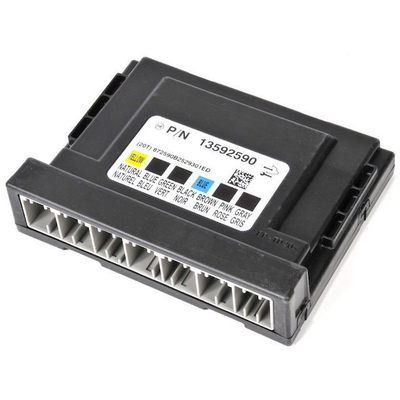
Shop the Parts Behind U1291
Below are the parts most often responsible for code U1291, ranked by how frequently each one is the actual culprit (per the diagnosis above). Tap any to see what we have for your vehicle.



The information in this article is provided for general reference and educational purposes only. Vehicle specifications, procedures, and part compatibility can vary by production date, trim level, and region. Always consult your vehicle's factory service manual and verify part numbers before purchasing or performing repairs. Safety-critical components such as airbags, seat belts, and braking systems should be installed by a qualified professional.
- 🧭 Diagnostic Flowchart
- 🛍️ Shop This Part
- What Does U1291 Mean?
- Can I Drive With U1291?
- Common Causes
- Symptoms
- Common Fixes & Costs
- Used vs. New Parts: Buying Guide
- What Happens If You Wait — Timeline
- Cost of Not Fixing It
- Diagnosis Steps
- When This Code Triggers (Freeze-Frame Conditions)
- Related Codes
- Climate & Environmental Factors
- How to Talk to a Mechanic About This Code
- Where to Take It: Dealer vs Independent vs Chain
- When to Walk Away From the Repair
- What Scan Tool You Need for This Code
- How to Clear the Code After You Fix It
- Will This Fail Emissions / State Inspection?
- Most Commonly Affected Vehicles
- Manufacturer-Specific Notes
- Real Owner Stories
- 2019 Honda Accord, symptoms appeared intermittently
- 2011 Chevy Silverado with 150K miles, multiple weird electrical issues
- 2003 Chevrolet Suburban with parasitic battery drain
- How to Prevent This Code From Triggering
- Frequently Asked Questions
- Why did my turn signals and backup camera stop working when code U1291 appeared?
- Is it safe to drive with code U1291?
- Can a bad battery really cause a U1291 code?
- Can I just reset the BCM to fix this?
- What is the most common misdiagnosis for U1291?
- Why do warning lights for ACC and LKAS come on with a U1291 code?
- How much does it cost to fix code U1291?
- Key Takeaways
- 🎟️ Get 5% Off