

OBD-II Code U1341: Vehicle Speed Data Communication Error
What U1341 means, why it triggers, and how to fix it
- 1. U1341 indicates a lost vehicle speed signal on the communication network, disabling ABS, traction control, and causing harsh transmission shifts.
- 2. For 2021-2022 Kia Niro and Hyundai Ioniq PHEVs, a known software bug causes this code; fix it with a free dealer software update under TSB ELE324 or 24-EV-001H.
- 3. Do not blindly replace the Vehicle Speed Sensor (VSS); verify the sensor is dead by using a scan tool to compare live speed data between the ABS module and PCM.
- 4. Diagnose network wiring faults by testing the OBD-II port pins with a multimeter; a healthy J1850 SCP network reads exactly 120 ohms of resistance.
What Does U1341 Mean?
U1341 is a network trouble code indicating a critical computer module is not receiving the vehicle speed signal. Your car's computers (engine, brakes, instrument cluster) constantly communicate over a network, and this code triggers when the speed data message is lost or unreadable.
Technical definition: SCP (J1850) Invalid or Missing Data for Function Read Vehicle Speed. This indicates a communication failure on the Standard Corporate Protocol (SCP) network. The code triggers when a module expecting vehicle speed data on the network receives nothing.
Can I Drive With U1341?
Yes, But With Caution. Yes, but you must address it promptly. Driving is possible but introduces immediate risks: your speedometer is likely inoperative, leading to unintentional speeding. More critically, the lack of a speed signal disables the ABS and traction control systems and causes harsh, unpredictable transmission shifting. Prolonged driving causes excessive wear on internal transmission components. Drive only short distances to a repair shop.
Common Causes
- Software Glitch in Control Module (Very Common) — On 2021-2022 Kia and Hyundai plug-in hybrids, a known software bug causes this code during charging. The fix is a software update from the dealer covered by a Technical Service Bulletin (TSB).
- Damaged Wiring, Grounds, or Corroded Connectors (Common) — Vibrations, moisture, or rodents damage the wires forming the communication network. A corroded pin in a module connector (especially the ABS module or PCM) or a loose central grounding point blocks the signal.
- Failed Vehicle Speed Sensor (VSS) (Common) — The sensor generating the vehicle speed signal (located on the transmission or a wheel hub) fails and stops sending data for the other modules to read.
- Failing Control Module or Gateway (Less Common) — An internal fault within the Powertrain Control Module (PCM), Anti-lock Brake System (ABS) module, or the network gateway prevents it from sending or receiving the speed signal correctly.
- Low Battery Voltage (Uncommon) — A weak battery causes unpredictable electronic glitches and communication errors between modules as they power up. A resting voltage below 12.3V triggers network dropouts.
- Aftermarket Device Interference (Uncommon) — Poorly installed aftermarket accessories like remote starters, alarms, or tracking devices interfere with the vehicle's communication network, causing data loss.
Symptoms
- Check Engine Light is On — The primary indicator that a network communication fault has been logged.
- Inaccurate or Dead Speedometer — The speedometer stays stuck at zero, jumps erratically, or displays the wrong speed.
- ABS and Traction Control Lights are On — These systems require wheel speed data to function. A loss of this data instantly disables them and triggers dashboard warning lights.
- Harsh Transmission Shifting — The automatic transmission uses the speed signal to time gear changes. Without it, shifts become rough, delayed, and unpredictable.
- Inoperative Cruise Control — Cruise control requires a steady vehicle speed signal and disables itself immediately if the signal drops.
Diagnostic Flowchart
Tap your situation to follow the diagnostic path that matches what you're seeing on this code.
Common Fixes & Costs
- Control Module Software Update — Parts: $0, Labor: $150 - $200, ~1.0 hr book time (Professional)
- Repair Damaged Wiring or Connectors — Parts: $10 - $50, Labor: $200 - $600, ~2.5 hr book time (Intermediate)
- Replace Vehicle Speed Sensor (VSS)
— Parts: $25 - $100, Labor: $100 - $150, ~0.8 hr book time
(DIY)
2003-2006 Ford Expedition: OEM Motorcraft DY1123 (Alt: Standard Motor Products SC305)
2017-2022 Kia Niro: OEM Kia 96630-G5000 (Front) - Replace ABS Control Module — Parts: $800 - $1,500, Labor: $150 - $300, ~1.5 hr book time (Professional)
Used vs. New Parts: Buying Guide
When a used part is worth it: For expensive electronic modules (ABS, PCM), a used part from a reputable salvage yard saves $500-$1,000. This is ideal for vehicles over 10 years old where new parts exceed the car's value.
Donor-vehicle mileage cap: roughly under 100000 miles for the part to have meaningful remaining life.
Donor quality checklist:
- Match the part number exactly; incompatible modules will not communicate.
- Purchase from a seller offering a minimum 30-day warranty.
- Avoid parts from flood-damaged vehicles due to hidden internal corrosion.
Decision logic:
- If The fix is a software update → You must go to a dealer; used parts cannot solve this.
- If The part is a Vehicle Speed Sensor → Buy new. The $30 savings isn't worth the risk of early failure.
- If The part is an ABS module and the vehicle is older → Buy a tested, warrantied used part.
- If The module requires VIN programming → Factor in $150-$250 for professional programming on top of the used part cost.
Warranty tradeoff: Used parts carry a 30-90 day functional warranty. New OEM parts have a 1-2 year warranty but cost 3x to 5x more.
Worst-case if a used part fails: $400 if a used module fails, requiring a second part and repeated programming labor.
What Happens If You Wait — Timeline
- 0-2 weeks: Check Engine Light illuminates. Speedometer dies. ABS and Traction Control disable. Transmission shifts feel slightly harsh. (MPG impact: 0-2%% · Added cost: $0)
- 2 weeks - 3 months: Transmission shifting becomes consistently harsh. The PCM uses default high-pressure 'limp mode' shifts because it lacks speed data. (MPG impact: 5-10%% · Added cost: $50 - $150 in wasted fuel.)
- 3-6 months: Sustained harsh shifting causes accelerated wear on internal transmission components. Shift solenoids begin to fail from the stress. (MPG impact: 10-15%% · Added cost: $300 - $800 for shift solenoid replacement.)
- 6+ months: Catastrophic transmission damage occurs. Constant high-pressure shifts destroy clutch packs or the valve body, leaving the vehicle undrivable. (MPG impact: 15-25%+% · Added cost: $3,000 - $5,000 for a transmission rebuild.)
Cost of Not Fixing It
- Immediate: Disabled ABS and Traction Control systems increase the risk of skidding in emergencies. An inaccurate speedometer leads to speeding tickets. (Added cost: 0)
- 0-3 months: Harsh shifting causes premature wear on transmission clutches and solenoids, leading to drivability issues and decreased fuel economy. (Added cost: $300 - $800 for shift solenoid replacement.)
- 6+ months: Severe, prolonged stress from incorrect shift commands destroys the transmission, requiring a complete rebuild. (Added cost: $3,000 - $5,000)
Diagnosis Steps
- Check for Technical Service Bulletins (TSBs)
Search for TSBs for your specific vehicle and 'U1341'. For 2021-2022 Kia Niro and Hyundai Ioniq PHEVs, TSBs ELE324 and 24-EV-001H mandate a software update to resolve this exact code.
Tools: Computer or smartphone with internet access (Beginner) - Verify Battery and Ground Health
Ensure the battery is fully charged (above 12.4V resting) and terminals are tight. Locate the main engine-to-chassis ground strap and clean any corrosion, as poor grounds disrupt network signals.
Tools: Multimeter, battery terminal cleaner, socket set (Beginner) - Analyze Live Data PIDs
Use an advanced scanner to view the live 'Vehicle Speed' data from the PCM, ABS module, and Instrument Cluster simultaneously while driving. If the ABS module shows correct speed but the PCM shows 0 mph, the sensor is fine; the communication wire between them is broken.
Tools: Advanced OBD-II Scanner (Intermediate) - Perform a Visual Wiring Inspection
Inspect wiring harnesses connected to the ABS control module, PCM, and transmission. Look for chafing, melting, rodent damage, or green corrosion inside connectors, especially where harnesses pass through the firewall.
Tools: Flashlight, inspection mirror (Intermediate) - Test Network Integrity
Disconnect the battery. Use a multimeter to measure resistance between the two SCP network wires (pins 2 and 10 on the OBD-II port for J1850 PWM). You must see exactly 120 ohms (or 60 ohms for dual-resistor setups). 0 ohms is a short; OL is a broken wire.
Tools: Digital Multimeter, vehicle-specific wiring diagram (Advanced) - Scope the Network Signal
Back-probe the network wires at a module connector with an oscilloscope. A healthy J1850 SCP network shows a square wave switching between 0V and +7V. A flatline or distorted wave proves a wiring short or a dead module pulling the network down.
Tools: Oscilloscope, wiring diagram, back-probe pins (Advanced) - Isolate Faulty Modules
If network tests fail, disconnect modules one by one from the bus and re-test resistance/signal after each. When the faulty module is unplugged, the network readings instantly return to normal.
Tools: Socket set, trim removal tools, multimeter (Advanced)
When This Code Triggers (Freeze-Frame Conditions)
- Vehicle Speed: > 0 mph (The fault logs when a module expects a speed signal because the vehicle is in motion but receives none.)
- Engine RPM: 1500-3000 RPM (Occurs during steady-state driving or acceleration, rarely at idle.)
- System Voltage: 12.5-14.5V (If voltage is normal, the issue is isolated to the network or sensor. If voltage is below 12V, the battery/alternator is the root cause.)
Related Codes
- P0500 — The generic code for 'Vehicle Speed Sensor Malfunction.' P0500 points to a dead sensor, while U1341 points to a failure communicating that data across the network.
- U1262 — Indicates a 'SCP Communication Bus Fault'. Seeing U1262 alongside U1341 proves a physical wiring problem (short/open) is crashing the entire network, not just the speed signal.
- U0121 — Means 'Lost Communication With ABS Control Module.' Since the ABS module generates the speed signal, U0121 frequently accompanies U1341 on newer vehicles.
Climate & Environmental Factors
- High Humidity and Road Salt: Moisture and de-icing salts seep into connectors and wire insulation, causing corrosion that blocks network signals. This is the leading cause of wiring-related U1341 codes in coastal or snowy regions.
- Extreme Cold: Causes plastic connectors and wire insulation to become brittle and crack, creating entry points for moisture. It also drops battery voltage, triggering communication errors during startup.
How to Talk to a Mechanic About This Code
Say this: "I have a U1341 communication code, and my speedometer and ABS light are acting up. Please start by checking for TSBs or software updates, then inspect the network wiring between the ABS module and PCM. I want to avoid replacing the speed sensor unless live data proves it's dead."
This proves you understand U1341 is a communication fault, not a simple sensor failure. It directs the technician toward a logical diagnostic path (TSB -> Wiring -> Module) and prevents the common misdiagnosis of unnecessarily replacing the VSS.
Avoid saying:
- 'Just fix whatever's wrong'
- 'My check engine light is on, can you look at it?'
- 'I think I need a new speed sensor.'
Questions to ask before authorizing the repair:
- Did you find any Technical Service Bulletins for this code on my vehicle?
- Which module was not receiving the speed signal according to the live data?
- If you recommend a module replacement, how did you rule out a wiring or connector problem?
- Can you provide a written estimate breaking down parts and labor?
Where to Take It: Dealer vs Independent vs Chain
- Dealer:
Best fit for TSB-related software fixes and in-warranty repairs. Their access to proprietary software is mandatory for module updates.
Best for: 2021-2022 Kia/Hyundai PHEVs needing a software update, Vehicles under warranty, Complex electrical faults requiring brand-specific tools
Downsides: Highest labor rates ($150-$250/hr), May recommend expensive module replacement over tedious wiring repairs (Typical cost: +40% vs. baseline) - Independent Shop:
Excellent fit if you choose a shop equipped with an oscilloscope and experience in network 'U' codes.
Best for: Out-of-warranty vehicles, Diagnosing and repairing wiring or connector issues, Older vehicles with known U1341 patterns (Jaguar, Ford)
Downsides: Diagnostic skill varies; ensure the shop specializes in electrical diagnostics. (Typical cost: +0% vs. baseline) - Chain Shop:
AVOID. Their business model is optimized for high-volume mechanical repairs, not complex network troubleshooting.
Best for: Not recommended for initial diagnosis of this code.
Downsides: Technicians lack advanced training for network diagnostics., High likelihood of misdiagnosing the issue as a simple VSS failure. (Typical cost: -15% vs. baseline)
When to Walk Away From the Repair
If the estimated repair cost exceeds 50% of the car's private-party value, seriously consider selling the car as-is.
- Car worth $20000, fix is $200: Fix it. A software update or minor wiring repair is a negligible cost relative to vehicle value.
- Car worth $5000, fix is $800: Fix it. An $800 wiring repair is well below the threshold and restores critical safety features.
- Car worth $3000, fix is $1800: Walk away. A $1,800 module replacement exceeds 50% of the vehicle's value.
What Scan Tool You Need for This Code
Minimum: A scanner that reads live data from multiple vehicle systems, specifically the Engine (PCM), ABS, and Transmission (TCM) modules.
A basic $20 code reader only tells you U1341 exists. It cannot show live vehicle speed data from different modules. Without seeing if the ABS module has a speed reading while the PCM does not, you are diagnosing blind.
Budget: BlueDriver Pro Scan Tool (~$100) — Connects via Bluetooth to read codes from the ABS, transmission, and engine modules. It graphs live data, allowing you to compare vehicle speed readings across modules to pinpoint the communication breakdown.
Mid-range: Foxwell NT510 Elite (~$150) — A handheld unit offering full system diagnostics. It provides faster, more robust access to live data streams without relying on a smartphone app.
Professional: Autel MaxiCOM MK808BT (~$500) — Offers OE-level diagnostics with bidirectional control. It quickly scans all modules, displays live data from multiple sources simultaneously, and performs advanced service functions.
Rent vs buy: For a one-time check, use a free loaner tool from an auto parts store. If you plan to do your own diagnostics regularly, buying the BlueDriver or Foxwell is a mandatory investment for network codes.
How to Clear the Code After You Fix It
- Reconnect the battery if disconnected during repair.
- Use an OBD-II scan tool to clear the U1341 fault code.
- Perform a complete drive cycle to verify the speedometer works and readiness monitors run.
Drive cycle (~30 minutes): Cold soak the vehicle for 8 hours. Start and idle for 3 minutes. Drive for 15 minutes in a mix of stop-and-go city traffic and steady 55 mph highway cruising. Allow the vehicle to cool down.
Readiness monitors affected: Comprehensive Component Monitor, Catalyst Monitor, Oxygen Sensor Monitor
Before emissions retest: drive at least 50 miles to fully set monitors.
Watch out for:
- Disconnecting the battery clears the code but resets all emissions monitors to 'Not Ready', causing an automatic emissions test failure.
- The code returns immediately upon driving if the underlying network fault is not repaired.
Will This Fail Emissions / State Inspection?
Yes — this code typically fails an OBD-II emissions inspection.
- California: Any 'U' code illuminating the Check Engine Light is an automatic smog check failure. The vehicle must complete a drive cycle after repair before re-testing.
- New York: An active Check Engine Light fails the NYS inspection. Clearing the code right before the test fails the vehicle for 'Not Ready' monitors.
- Texas: In emissions-testing counties, an active DTC fails the OBD-II test. The vehicle also fails if readiness monitors are incomplete after a recent code clear.
Most Commonly Affected Vehicles
- Kia Niro PHEV (2021-2022) — Prone to a software glitch triggering U1341 during charging. Dealer TSB ELE324 provides a free software update.
- Hyundai Ioniq Plug-in Hybrid (2021-2022) — Shares the software issue with the Kia Niro. TSB 24-EV-001H provides the ECU update fix.
- Ford Expedition, Navigator (2003-2006) — On models with air suspension, U1341 means 'Air Suspension Reservoir Fill Obstructed'—completely unrelated to vehicle speed.
- Jaguar X-Type, S-Type (2001-2008) — U1341 indicates a missing speed signal. Diagnosis usually reveals corroded network wiring at the ABS module.
- Fiat Various (2000-2010) — Registered when the SCP network loses speed data, disabling ABS and the speedometer. Often points to a faulty ABS module.
- Chevrolet / GM Various (1996-2005) — Older GM vehicles using the J1850 protocol log this code for speed data faults, often tracing back to a failing instrument cluster acting as a gateway.
- Lincoln Town Car, Aviator (2003-2005) — U1341 can indicate a 'Brake Fluid Level Circuit High' fault, pointing to a sensor issue in the brake fluid reservoir, not vehicle speed.
- Mercury Grand Marquis (1998-2002) — U1341 may refer to an 'Ignition Coil Cylinder 3' fault. Always use a manufacturer-specific scanner to verify the definition.
Manufacturer-Specific Notes
- Hyundai / Kia: For 2021-2022 PHEV models, this code is almost exclusively a software bug occurring when the engine computer pings the sleeping brake module during charging. The fix is a free TSB software update.
- Ford Motor Company (Ford, Lincoln, Mercury): The definition of U1341 varies wildly. It means 'Invalid Vehicle Speed Data' on some models, 'Air Suspension Fault' on Expeditions, or 'Ignition Coil Fault' on Mercurys. You must use a Ford-specific scan tool to get the correct definition.
- Jaguar: On early 2000s models, the primary failure point is the wiring connector at the ABS module, which sits in the engine bay exposed to extreme heat and moisture.
Real Owner Stories
2022 Kia Niro PHEV with U1341 after charging
The 'Check Hybrid System' light illuminated after routine overnight charging. The car drove normally but the light stayed on.
What they tried:
- Read the codes and found U1341.
- Searched online and discovered TSB ELE324.
Outcome: The owner contacted the dealer, mentioned the TSB, and received a free ECM software update under warranty. The code never returned.
Lesson: For 2021-2022 Kia/Hyundai PHEVs, always check for TSBs first. A known software bug is the most common cause, and the fix is free.
2002 Jaguar X-Type with misdiagnosed VSS
The owner experienced an intermittent speedometer failure, harsh shifting, and code U1341.
What they tried:
- A general repair shop replaced the Vehicle Speed Sensor (VSS). The code returned the next day.
- Took the car to an electrical specialist.
Outcome: The specialist found green corrosion inside the main connector at the ABS control module. Cleaning the pins and applying dielectric grease restored the network connection permanently.
Lesson: U1341 is a communication code, not a sensor code. Check and clean module connectors before replacing expensive parts.
2018 Ford Expedition with multiple system failures
The dashboard lit up with warnings for Hill Start Assist, Advance Trac, and Pre-Collision Assist. Power steering also failed.
What they tried:
- Tested the battery, which was healthy.
- A full system scan revealed U0415 (Invalid Data from ABS Module), a modern equivalent of U1341.
Outcome: A mechanic confirmed the rear left wheel hub assembly was failing, destroying the integrated wheel speed sensor. Replacing the hub assembly restored all functions.
Lesson: A single faulty wheel speed sensor causes a cascade of failures in seemingly unrelated systems because they all rely on that speed data.
How to Prevent This Code From Triggering
- Apply Dielectric Grease to Critical Connectors (During any related repair) — Applying non-conductive dielectric grease to the seals of ABS and PCM connectors keeps moisture out, preventing the corrosion that causes network dropouts.
- Perform Regular Battery Health Checks (Every 6 months) — Control modules are highly sensitive to low voltage. Ensuring your resting voltage is above 12.4V prevents random communication faults during startup.
- Inspect Wiring Harnesses for Damage (During every oil change) — Visually checking harnesses near hot exhaust or moving suspension parts catches chafing or melting before it breaks a network wire.
Frequently Asked Questions
Is U1341 a serious code?
Yes, it is moderately serious. It disables your ABS and traction control, and causes incorrect speedometer readings and harsh shifting. Address it promptly to maintain vehicle safety and prevent transmission damage.
My mechanic replaced the VSS, but the code came back. What now?
This is a common misdiagnosis. If a new VSS doesn't fix it, the problem is in the communication network wiring or a software glitch. The next step is testing the network lines with a multimeter or oscilloscope.
Can a new stereo or remote starter cause code U1341?
Yes. Aftermarket electronics improperly tapped into the vehicle's wiring interfere with sensitive communication networks. If the code appeared shortly after installation, disconnect the accessory to see if the code clears.
My car is a 2022 Kia Niro PHEV and I got code U1341. What should I do?
Contact your Kia dealership and mention Technical Service Bulletin (TSB) ELE324. Your car needs a free software update to fix a known bug that triggers this code after charging.
Can I fix code U1341 myself?
You can handle simple fixes like cleaning battery terminals, inspecting wires for obvious damage, or replacing an accessible speed sensor. However, diagnosing network wiring or replacing a control module requires advanced skills and professional tools.
What does SCP (J1850) mean?
SCP (Standard Corporate Protocol) is a communication language used by vehicle modules before the modern CAN bus was adopted. J1850 is the engineering standard defining this protocol.
Will clearing the code fix the problem?
No. Clearing the code only erases the dashboard light temporarily. The code returns as soon as the computer runs its self-test and detects the communication failure again.
Can a bad ground cause code U1341?
Yes. A poor ground connection causes a voltage drop, disrupting a module's ability to communicate on the network and triggering U-codes.
Key Takeaways
- 1. U1341 indicates a lost vehicle speed signal on the communication network, disabling ABS, traction control, and causing harsh transmission shifts.
- 2. For 2021-2022 Kia Niro and Hyundai Ioniq PHEVs, a known software bug causes this code; fix it with a free dealer software update under TSB ELE324 or 24-EV-001H.
- 3. Do not blindly replace the Vehicle Speed Sensor (VSS); verify the sensor is dead by using a scan tool to compare live speed data between the ABS module and PCM.
- 4. Diagnose network wiring faults by testing the OBD-II port pins with a multimeter; a healthy J1850 SCP network reads exactly 120 ohms of resistance.
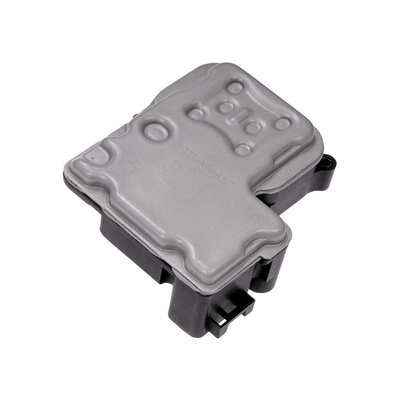
Shop the Parts Behind U1341
Below are the parts most often responsible for code U1341, ranked by how frequently each one is the actual culprit (per the diagnosis above). Tap any to see what we have for your vehicle.


The information in this article is provided for general reference and educational purposes only. Vehicle specifications, procedures, and part compatibility can vary by production date, trim level, and region. Always consult your vehicle's factory service manual and verify part numbers before purchasing or performing repairs. Safety-critical components such as airbags, seat belts, and braking systems should be installed by a qualified professional.
- 🧭 Diagnostic Flowchart
- 🛍️ Shop This Part
- What Does U1341 Mean?
- Can I Drive With U1341?
- Common Causes
- Symptoms
- Common Fixes & Costs
- Used vs. New Parts: Buying Guide
- What Happens If You Wait — Timeline
- Cost of Not Fixing It
- Diagnosis Steps
- When This Code Triggers (Freeze-Frame Conditions)
- Related Codes
- Climate & Environmental Factors
- How to Talk to a Mechanic About This Code
- Where to Take It: Dealer vs Independent vs Chain
- When to Walk Away From the Repair
- What Scan Tool You Need for This Code
- How to Clear the Code After You Fix It
- Will This Fail Emissions / State Inspection?
- Most Commonly Affected Vehicles
- Manufacturer-Specific Notes
- Real Owner Stories
- 2022 Kia Niro PHEV with U1341 after charging
- 2002 Jaguar X-Type with misdiagnosed VSS
- 2018 Ford Expedition with multiple system failures
- How to Prevent This Code From Triggering
- Frequently Asked Questions
- Is U1341 a serious code?
- My mechanic replaced the VSS, but the code came back. What now?
- Can a new stereo or remote starter cause code U1341?
- My car is a 2022 Kia Niro PHEV and I got code U1341. What should I do?
- Can I fix code U1341 myself?
- What does SCP (J1850) mean?
- Will clearing the code fix the problem?
- Can a bad ground cause code U1341?
- Key Takeaways
- 🎟️ Get 5% Off