

OBD-II Code U1403: Implausible Fuel Level Signal
The Ultimate 2026 Guide to Diagnosing and Fixing U1403
- Never replace the fuel pump for a U1403 code; it is a network communication error, not a mechanical fuel system failure.
- Focus your diagnosis on the Totally Integrated Power Module (TIPM) or instrument cluster, which cause over 80% of U1403 codes in Chrysler, Dodge, Jeep, and Ram vehicles.
- Scan all vehicle modules and fix root-cause communication codes like U0141 (Lost Communication with TIPM) before attempting to clear U1403.
- Verify CAN bus health by measuring exactly 60 ohms of resistance between OBD-II pins 6 and 14 before spending $500+ on replacement modules.
- Ignore fuel system diagnostics entirely if you drive a Honda; U1403 indicates an F-CAN communication failure between the transmission and ABS modules.
What Does U1403 Mean?
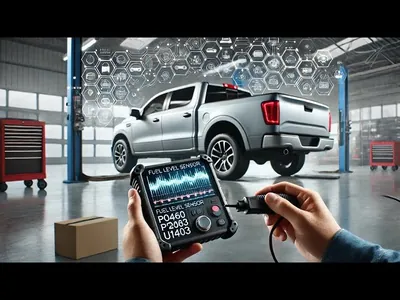
U1403 is a network communication code, not a fuel sensor fault. It means the Powertrain Control Module (PCM) is receiving corrupt or nonsensical fuel level data from another module on the Controller Area Network (CAN bus). The PCM sets this code because the data is illogical, even if the dashboard fuel gauge appears to work correctly.
Technical definition: The SAE/OBD-II definition is "U1403: Implausible Fuel Level Signal Received". The PCM received an invalid fuel level message over the CAN bus. On Chrysler-family vehicles, the instrument cluster sends this signal over the CAN B bus to the TIPM/FCM, which relays it to the PCM over the CAN C bus. A failure anywhere in this chain sets the code.
Can I Drive With U1403?
Yes, But With Caution. Yes, but driving is strongly discouraged due to unpredictability and safety risks. The fuel gauge is unreliable, potentially leaving you stranded. More critically, this code indicates a failing TIPM or instrument cluster, which causes sudden engine stalling, complete electronic shutdown, or erratic wiper and horn behavior. Driving with this fault risks a dangerous no-start or stall condition at any time.
Common Causes

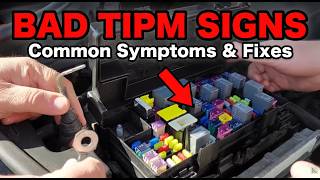
- Faulty Totally Integrated Power Module (TIPM) or Front Control Module (FCM) (Very Common) — The TIPM (a combined fuse box and computer) is the central hub for vehicle electronics and a notorious failure point. Internal corrosion or processor faults frequently cause communication errors, including the corruption of the fuel level signal. On Chrysler, Dodge, and Jeep vehicles, this is the number one culprit. 🎬 Watch: How to spot signs of a faulty TIPM and replacement options.
- Failing Instrument Cluster (CCN) (Very Common) — The instrument cluster (Cabin Compartment Node) reads the fuel level from the in-tank sensor. A failure on the cluster's internal circuit board, such as a cold solder joint, causes it to broadcast a bad signal or stop communicating entirely, triggering U1403.
- Damaged or Improperly Routed CAN Bus Wiring (Common) — The CAN bus relies on a pair of twisted wires. A loose connector pin, corroded terminal, or a wire chafing against a hot engine component disrupts communication. This corrupts the fuel level message as it travels between the cluster, TIPM, and PCM.
- Low Battery Voltage or Poor Ground Connections (Common) — Modern vehicles require stable voltage. A weak battery, failing alternator, or a corroded main ground connection causes unpredictable communication errors between modules. Always verify battery health and clean major ground points before replacing expensive modules.
- Aftermarket Electronics Interference (Less Common) — Poorly installed aftermarket components like remote starters, alarms, or stereo systems introduce electrical noise onto the CAN bus network. Remnants of old, improperly removed wiring in retired police vehicles are a known source of these data collisions.
- Software/Firmware Glitches (Less Common) — A software glitch within a module occasionally triggers this code. A hard reset (disconnecting the battery) resolves temporary issues, but the module sometimes requires a firmware update or re-flash from a dealership.
- Faulty Powertrain Control Module (PCM) (Rare) — While the PCM reports the problem, it is rarely the source. An internal fault prevents it from correctly interpreting an otherwise good signal from other modules. Consider this only after exhausting all other diagnostic paths.
Symptoms

- Widespread Electrical Malfunctions (Dashboard Chaos) — Because this is a communication issue tied to the TIPM or cluster, you will often see bizarre electrical problems. Wipers or the horn activate on their own, A/C cuts out, dashboard lights flicker, or power windows fail.
- Vehicle Will Not Start — The communication breakdown prevents the engine from starting. The engine cranks but does not fire because the PCM isn't receiving the necessary data from the TIPM to enable the fuel pump or ignition systems.
- Inaccurate, Fluctuating, or Dead Fuel Gauge — The fuel needle drops to empty, jumps around randomly, gets stuck, or does not move at all. This is frequently present alongside U1403.
- Parasitic Battery Drain — A faulty module (like the cluster or TIPM) fails to 'go to sleep' when the car is off, causing a continuous power draw that drains the battery overnight.
- Check Engine Light is On — The Malfunction Indicator Lamp (MIL) illuminates. Occasionally, the code is stored as active in the PCM without turning on the dash light, which still causes an emissions test failure.
- Inability to Pass Emissions Test — Even if the car runs perfectly, an active U1403 trouble code causes an automatic failure during an OBD-II smog check.
Diagnostic Flowchart
Tap your situation to follow the diagnostic path that matches what you're seeing on this code.
Common Fixes & Costs
- Replace the Totally Integrated Power Module (TIPM)
— Parts: $350-$700 for a remanufactured/exchange unit., Labor: $150-$300, including configuration or programming., ~1.5 hr book time
(Intermediate)
2008 Dodge Charger/Chrysler 300: OEM 04692170 (suffixes like AF, AG, AH are interchangeable) (Alt: Dorman 599-915)
2006-2009 Dodge Ram: OEM 4692115AI (and similar variants) (Alt: Dorman 599-900, 599-931) - Repair or Replace the Instrument Cluster (CCN)
— Parts: $150-$300 for a mail-in repair service, or $500-$900 for a replacement unit., Labor: $100-$250 for removal and reinstallation., ~1.0 hr book time
(Intermediate)
2009 Dodge Ram 1500: OEM 68057649AA (mask/lens), full cluster P/Ns vary greatly. (Alt: Mail-in repair services (e.g., Circuit Board Medics, UpFix).) - Clean or Repair Main Ground Connections — Parts: $5-$15 for a wire brush and dielectric grease., Labor: $50-$150, as grounds are often in hard-to-reach locations., ~0.8 hr book time (Beginner)
- Repair Damaged CAN Bus Wiring — Parts: $10-$50 for wire, solder, heat shrink, and connectors., Labor: $250-$800+. Locating the specific point of failure is extremely labor-intensive., ~4.5 hr book time (Professional)
- Replace the Powertrain Control Module (PCM)
— Parts: $400-$1000 for a remanufactured and programmed unit., Labor: $100-$200 for installation and final programming/VIN write., ~1.2 hr book time
(Professional)
2007 Chrysler 300 (5.7L): OEM 05094811AE, 05187842 (Alt: N/A (Remanufactured OEM is the standard))
Used vs. New Parts: Buying Guide
When a used part is worth it: For a TIPM or Instrument Cluster, a used part makes sense if the vehicle is older (10+ years), the budget is tight, and you find a part from the exact same year/model with a matching part number. However, remanufactured units from a reputable specialist are a better balance of cost and reliability.
Donor-vehicle mileage cap: roughly under 100000 miles for the part to have meaningful remaining life.
Donor quality checklist:
- Match the OEM part number EXACTLY. Superseded or different numbers are not interchangeable without programming.
- Verify the donor vehicle's options (e.g., fog lights, security system) match your own, as these are configured in the TIPM.
- Avoid parts from flood-damaged or high-corrosion areas.
Decision logic:
- If The part is a TIPM or Instrument Cluster → Favor a remanufactured unit or mail-in repair service over a junkyard part. These services fix known failure points and include a warranty.
- If A used part is the only option → Be prepared for it to require dealer programming to work with your vehicle's VIN and options.
- If The vehicle is newer and still has significant value → A new or professionally remanufactured part is the wisest investment to ensure reliability and avoid repeat labor costs.
Warranty tradeoff: Used/junkyard parts typically offer a 30-90 day warranty. Remanufactured units from specialists come with a 1-year or lifetime warranty. New OEM parts carry a 1-2 year warranty if installed by a dealer.
Worst-case if a used part fails: $300 - $700 if a used electronic module fails after install — this includes repeat labor, towing, and the cost of another part.
What Happens If You Wait — Timeline
- 0-1 month: Code U1403 is stored, possibly with the Check Engine Light on. The fuel gauge may be erratic. The car drives normally. The code returns immediately if cleared. (MPG impact: 0%% · Added cost: $0)
- 1-4 months: Intermittent electrical 'gremlins' begin. Wipers activate once, the horn beeps, or dashboard lights flicker randomly. A parasitic drain starts, weakening the battery overnight. (MPG impact: 0%% · Added cost: $150 - $300 (Cost of a new battery if the parasitic drain kills the old one))
- 4-8 months: Symptoms become frequent and severe. The vehicle randomly stalls while driving or refuses to start (crank-no-start). 'Dashboard chaos' with multiple systems failing at once becomes common. The car is unsafe. (MPG impact: N/A (Vehicle is unreliable)% · Added cost: $200 - $700 (Towing fees plus the potential for a burned-out fuel pump if the TIPM relay sticks on))
- 8+ months: Cascading failure risk increases. Continued communication dropouts and voltage spikes from the failing module stress and damage other expensive electronics on the CAN network, such as the PCM or ABS module. (MPG impact: N/A (Vehicle is likely disabled)% · Added cost: $1000 - $3000+ (Cost of replacing the original failed module plus additional modules damaged by electrical instability))
Cost of Not Fixing It
- Immediate: Vehicle stalls while driving or fails to start, creating a significant safety hazard. Widespread, unpredictable electrical failures (horn, wipers, lights) occur at any time. (Added cost: $0 - $500+ (Towing and diagnostic fees if stranded))
- 1-6 months: A faulty TIPM leaves the fuel pump running continuously, burning it out. A faulty module causes a parasitic drain, destroying the battery. (Added cost: $300 - $1000 (Cost of a new fuel pump and/or battery plus labor))
- 6+ months: Continued electrical surges and communication dropouts from a failing module stress and damage other expensive electronic modules on the CAN network, leading to a cascade of failures. (Added cost: $1000 - $3000+ (Replacement of multiple electronic modules like the PCM or ABS controller))
Diagnosis Steps

- Scan ALL Modules for Other Codes
This is the most critical first step. U1403 is a symptom of a larger network failure. Use a full-system scanner to check every module. Codes like U0019 (CAN B Bus), U0141 (Lost Communication with TIPM), or U0155 (Lost Communication with Instrument Cluster) reveal the root cause. Fix these primary faults first.
Tools: OBD-II Scanner (full-system capable) (Beginner) - Inspect Battery, Terminals, and Grounds
Ensure the battery is fully charged (above 12.4V) and terminals are pristine. Locate the main engine-to-chassis and battery-to-chassis ground straps. Disconnect them and use a wire brush to clean the contact points until they are shiny metal.
Tools: Digital Multimeter, socket set, wire brush (Beginner) - Perform a Detailed Visual Inspection of Wiring
Look for obvious damage to wiring harnesses around the TIPM, under the dash near the instrument cluster, and in the engine bay. Pay close attention to harnesses resting on hot engine components, which chafe and short out.
Tools: Flashlight, inspection mirror (Beginner) - Perform a Hard Reset
Disconnect both battery terminals and hold the positive and negative cable ends together for 60 seconds. This drains residual power from all modules, forcing a complete reboot. Reconnect the battery (positive first, negative last) and see if the code returns.
Tools: Wrench or socket for battery terminals (Intermediate) - Test CAN Bus Network Resistance
With the battery disconnected, use a multimeter to measure the resistance between Pin 6 (CAN High) and Pin 14 (CAN Low) on the OBD-II port. A healthy network reads exactly 60 ohms. A reading of 120 ohms indicates a broken wire or a failed terminating module. A reading near 0 ohms indicates a short between the two CAN wires.
Tools: Digital Multimeter (Intermediate) - [PRO TIP] Check CAN Bus Voltages (Key On)
With the battery connected and the ignition ON (engine off), check voltages at the OBD-II port. Connect the black lead to chassis ground (Pin 4 or 5). CAN High (Pin 6) must read approximately 2.6V. CAN Low (Pin 14) must read approximately 2.4V. Readings of 0V or 12V confirm a short to ground or power.
Tools: Digital Multimeter (Advanced) - [ADVANCED] Check Live Data PIDs
Using a bidirectional scanner, monitor PIDs related to fuel level and module communication status. Compare the 'Fuel Level Input' PID read by the instrument cluster to the 'Fuel Level' PID received by the PCM. A discrepancy, or a PID showing 'Invalid', confirms the communication breakdown.
Tools: Advanced Bidirectional Scan Tool, Vehicle Service Manual (Advanced) - [ADVANCED] Rule Out Fuel System Hard Faults
Test the fuel level sender resistance at the tank; for most Chrysler/Dodge models, it is ~73 Ohms empty and ~10 Ohms full. Check fuel pressure at the rail with the key on, engine off (KOEO). If these values are correct, the problem is definitively in the communication network.
Tools: Digital Multimeter, Fuel Pressure Gauge, Vehicle-specific wiring diagram (Advanced) - Isolate the Faulty Module
Disconnect modules one by one from the CAN bus while monitoring network resistance. If your bus resistance is 120 ohms, disconnect the instrument cluster. If the resistance goes to an open circuit (OL), you found the module with the other terminating resistor. This requires a wiring diagram to locate all connectors.
Tools: Digital Multimeter, trim removal tools, vehicle-specific wiring diagram (Professional) - [PRO TIP] Visualize the CAN Signal with an Oscilloscope
Connect an oscilloscope to Pins 6 and 14. A healthy CAN bus shows a 'mirror image' digital waveform. CAN High switches between 2.5V and 3.5V; CAN Low switches between 2.5V and 1.5V. A noisy or distorted pattern points to interference or a module pulling the network down.
Tools: Automotive Oscilloscope (Professional)
When This Code Triggers (Freeze-Frame Conditions)
- Engine Run Time: > 3 seconds (The code is set very quickly after the engine starts and the modules begin communicating.)
- Battery Voltage: 9-16 Volts (The system must operate within its normal voltage range; a stable voltage is required for the diagnostic test to run.)
- Engine Coolant Temp: > 180°F (82°C) (The fault is monitored continuously but is most consistently flagged once the vehicle reaches normal operating temperature.)
- Vehicle Speed: Any (The fault is not dependent on vehicle speed and sets while idling or driving at highway speeds.)
Related Codes
- U1411 — This code, for "Implausible Fuel Volume Signal," is the twin to U1403 and they almost always appear together. They point to the exact same communication network problem and require identical diagnosis.
- U0141 — Means "Lost Communication With IPM (FCM/TIPM)." It directly points to a failure of the TIPM to communicate. If present with U1403, the TIPM is the source of the problem and must be your primary focus.
- U0155 — Means "Lost Communication With Instrument Panel Cluster (IPC) Control Module." If you see this code, the instrument cluster is the root of the problem, failing to send the fuel level message onto the network.
- P0463 — Means "Fuel Level Sensor 'A' Circuit High." It indicates a direct electrical fault with the fuel level sending unit in the tank. U1403 is a network error about the data, whereas P0463 is a problem with the sensor creating that data.
Climate & Environmental Factors
- Humidity and Moisture: High humidity, water ingress from a bad seal, or exposure to road salt causes corrosion on the internal multi-layer circuit board of the TIPM. This corrosion creates unintended electrical paths, leading to communication errors.
- Extreme Cold/Heat Cycles: Temperature extremes and repeated cycling cause microscopic cracks in solder joints on circuit boards, particularly within the instrument cluster. This 'cold solder joint' creates an intermittent open circuit, stopping the fuel level signal broadcast.
How to Talk to a Mechanic About This Code
Say this: "I have a U1403 code on my vehicle and I suspect a CAN bus communication issue, possibly with the TIPM or instrument cluster. I need a diagnostic that includes checking all vehicle modules for other 'U' codes and testing the CAN network's integrity. Please do not assume it is a fuel pump issue."
This signals you understand U1403 is a network fault and steers the shop away from the most common misdiagnosis (replacing the fuel pump). It directs them toward a proper electrical diagnosis, saving time and money.
Avoid saying:
- 'My fuel gauge is acting weird.'
- 'I have a fuel level code, can you fix it?'
- 'Just fix whatever's wrong, my check engine light is on.'
Questions to ask before authorizing the repair:
- Did you find any other communication codes, like U0141 or U0155, in the other modules?
- What were the CAN bus resistance and voltage readings at the OBD-II port?
- Before replacing the TIPM or Cluster, did you verify its power and ground connections are clean and secure?
- Is the replacement module new, used, or remanufactured, and does the estimate include programming it to my vehicle's VIN?
Where to Take It: Dealer vs Independent vs Chain
- Dealer:
A good option if the vehicle is under warranty or if a specialized independent shop cannot solve the problem. They have direct access to factory wiring diagrams and TSBs.
Best for: Vehicles still under warranty, Complex, manufacturer-specific electrical issues where proprietary tools (like wiTECH for Chrysler) are required as a last resort.
Downsides: Highest labor rates, often 1.5-2x an independent shop., Defaults to expensive module replacement instead of wiring repair. (Typical cost: +50% vs. baseline) - Independent Shop:
Best fit, but only if the shop has a strong reputation for electrical and network diagnostics. Ask them if they are experienced with Chrysler CAN bus and TIPM issues before booking.
Best for: Out-of-warranty vehicles where cost is a major factor., Shops that specialize in automotive electrical diagnostics.
Downsides: Quality and expertise vary widely. A general mechanic is ill-equipped for network diagnosis., Lacks access to the most up-to-date manufacturer-specific information. (Typical cost: +0% vs. baseline) - Chain Shop:
AVOID. These shops are not equipped for the specialized diagnostic work required for 'U' codes and will likely recommend incorrect and expensive repairs.
Best for: Simple, routine maintenance like oil changes, tires, and brakes.
Downsides: Technicians are not trained for complex network diagnostics., High risk of misdiagnosis, leading to unnecessary replacement of the fuel pump. (Typical cost: -10% vs. baseline)
When to Walk Away From the Repair
If the estimated repair cost exceeds 40-50% of the car's private-party value (check Kelley Blue Book or Edmunds), seriously consider selling or trading it in.
- Car worth $4000, fix is $2000: Walk away. The repair cost is 50% of the car's value. It's not a sound investment.
- Car worth $12000, fix is $1500: Fix it. The repair is only about 13% of the vehicle's value and is a worthwhile investment.
- Car worth $2500, fix is $1500: Walk away. The repair cost is 60% of the car's value. You are better off putting that money toward a replacement vehicle.
What Scan Tool You Need for This Code
Minimum: A scanner that reads ALL vehicle system modules (Engine, ABS, Airbag, TIPM, Cluster, etc.). A basic engine-only code reader is insufficient.
A $20 reader only queries the engine computer (PCM) and sees U1403. It will NOT see the root-cause codes like U0141 (bad TIPM) or U0155 (bad cluster) stored in other modules. Without this information, you are guessing.
Budget: BlueDriver Pro or TopDon TopScan (~$90) — These Bluetooth dongles use a smartphone app to read codes from all major systems on most domestic brands. This is the minimum needed to find related 'U' codes.
Mid-range: Foxwell NT510 Elite (with Chrysler software) or Innova 5610 (~$180) — Offers full-system diagnostics plus bidirectional controls. This allows you to actively test components, such as commanding the fuel pump on/off to test the TIPM relay, which is invaluable for diagnosing U1403.
Professional: Autel MaxiCOM MK808 or Launch X431 (~$450-900) — Provides professional-level, full bidirectional control of all modules, advanced live data graphing, and module coding/programming functions. This is as close to a dealer tool as a DIYer can get.
Rent vs buy: Auto parts stores typically only lend basic engine code readers for free. These are NOT sufficient for U1403. To properly diagnose this code, you must buy a full-system scanner or take the vehicle to a qualified shop.
How to Clear the Code After You Fix It
- Reconnect battery (if disconnected for repair)
- Use a quality OBD-II scan tool to erase the U1403 code from the PCM
- Perform a complete Chrysler-specific drive cycle to run all readiness monitors
Drive cycle (~20 minutes): Start with a cold engine. Idle for 5 minutes to enter closed loop. Drive at a steady speed between 40-60 mph for 8 minutes. Stop and idle for 3 minutes. Drive at a speed above 20 mph for 2 minutes. Turn the ignition off and leave it off for 10 minutes.
Readiness monitors affected: Catalyst Monitor, Evaporative System Monitor, Oxygen Sensor Monitor
Before emissions retest: drive at least 50 miles to fully set monitors.
Watch out for:
- Disconnecting the battery does not clear the code from the PCM's permanent memory and does not reset readiness monitors.
- The code returns instantly if the root cause (bad module or wiring) is not fixed.
- Not having the fuel tank between 15% and 85% full prevents the EVAP monitor from running.
Will This Fail Emissions / State Inspection?
Yes — this code typically fails an OBD-II emissions inspection.
- California: An active 'U' code like U1403 causes an automatic test failure. After repair, a full drive cycle must be completed to set all readiness monitors before a re-test.
- New York: The NYVIP3 inspection includes an OBD-II scan. The presence of this code results in a failed inspection. Even if the MIL is off, the stored code is enough to fail.
- Texas: In the 17 counties requiring emissions testing, an active U1403 code causes the vehicle to fail the OBD portion of the inspection.
Most Commonly Affected Vehicles
- Dodge Charger / Magnum (2005-2010) — Extremely common due to the shared LX platform architecture. The 2005-2007 models used a separate Front Control Module (FCM) on the fuse box, while later models integrated it into the TIPM. Both designs are prone to this fault.
- Chrysler 300 (2005-2010) — Electronically identical to the Charger/Magnum, suffering from the same high rate of FCM/TIPM and instrument cluster communication failures.
- Dodge Ram 1500/2500/3500 (2006-2012) — Very susceptible to this code. On 2006-2009 models, the issue is often a faulty instrument cluster. For 2009-2012 models, the TIPM itself becomes the frequent cause of the communication loss.
- Jeep Grand Cherokee (2005-2010) — TIPM and instrument cluster communication problems are a known issue on the WK platform, frequently triggering U1403 along with other electrical gremlins.
- Jeep Commander (2006-2010) — Shares its electronics with the Grand Cherokee (WK/XK platform) and is equally prone to this fault, originating from the FCM/TIPM or cluster.
- Dodge Durango (2004-2011) — The second-generation Durango (2004-2009) and early third-generation (2011) are known for TIPM failures. The 2011 model was part of a recall for defective TIPMs.
- Chrysler Town & Country / Dodge Grand Caravan (2008-2016) — These minivans are notorious for TIPM-related electrical issues. U1403 appears along with symptoms like sliding doors malfunctioning, horn blaring, or a no-start condition.
- Jeep Compass / Patriot (2007-2017) — These models suffer from CAN bus communication faults originating from the TIPM or instrument cluster, setting U1403 along with a host of other 'U' codes.
- Honda Various Models (e.g., Civic, Accord, Odyssey, Fit/Jazz) (2006-2015+) — CRITICAL NOTE: On Honda vehicles, U1403 means 'F-CAN Malfunction (TCM Received Invalid Data from ABS/VSA Modulator-Control Unit)'. This points to a communication issue between the transmission and brake control modules, not the fuel system.
Manufacturer-Specific Notes
- Chrysler/Dodge/Jeep/Ram (Stellantis): This code is overwhelmingly specific to these brands. The fault path involves the Instrument Cluster sending a fuel level message to the TIPM, which relays it to the PCM. A failure at any point triggers the code. Dealership technicians rely on internal STAR Case documents to diagnose these complex network issues.
- Honda: On Honda platforms, U1403 indicates an 'F-CAN Malfunction,' typically between the transmission (TCM) and the ABS/VSA module. It has absolutely nothing to do with the fuel system.
- Ford/GM/Toyota: This specific code, U1403, is not used by these manufacturers for fuel level issues. If you see U1403 on one of these brands, it is an error with the scan tool's definition software.
Real Owner Stories
2008 Dodge Charger (Retired Police Vehicle) with U1403/U1411
Car failed smog test due to codes U1403 and U1411. The instrument cluster flickered on and off, and the key fob stopped working. The car still ran, and the battery/alternator tested fine.
Outcome: Diagnosis pointed to a faulty Instrument Cluster (CCN) as the culprit, rather than the PCM or TIPM, because the cluster itself visibly malfunctioned. The fix was replacing the cluster.
Lesson: When U1403 is paired with visible instrument cluster problems (flickering, dead gauges), the cluster itself is the most probable cause. Remnants of old police equipment wiring also cause these issues in decommissioned vehicles.
2007 Jeep Grand Cherokee with 'Dashboard Chaos'
The dashboard flashed all warning lights, and all gauges swept up and down. The A/C lost power. Codes U1403 and U1411 were present.
Outcome: Moving the wiring harness back into its designated holder and off the engine block immediately turned off the check engine light and resolved the dashboard flickering and A/C issues.
Lesson: An easy and free first check is visually inspecting engine bay wiring harnesses. A harness resting on a heat source or sharp edge causes a short, leading to widespread communication codes.
2005 Chrysler 300 with persistent U1403 but a working fuel gauge
The car had a U1403 code that returned instantly after being cleared, preventing an emissions test pass. The fuel gauge, range-to-empty, and all other cluster functions worked perfectly.
Outcome: The problem was confirmed to be a communication breakdown between the cluster, FCM, and PCM. The fix required advanced diagnostics to test the CAN bus wiring and module replacement.
Lesson: U1403 exists even when the fuel gauge appears to work. This confirms the code is about the data message being lost between modules, not the primary sensor input. When basic checks fail, the fault is in a module or the CAN wiring.
How to Prevent This Code From Triggering
- Clean Battery Terminals and Main Grounds Annually (Once per year) — Corrosion on terminals and ground points increases resistance, causing voltage drops that disrupt sensitive module communications. Cleaning to bare metal and applying dielectric grease prevents this.
- Inspect Engine Bay Wiring Harness Routing (During every oil change) — Plastic clips that secure wiring harnesses become brittle and break over time. A quick visual check ensures harnesses are not resting on hot or vibrating parts, preventing chafing that leads to CAN bus shorts.
- Address Water Leaks Immediately (As needed) — Water leaking into the cabin from a bad windshield seal or clogged sunroof drain drips onto the fuse box (TIPM) or other modules under the dash, causing corrosion and eventual failure.
- Use a Battery Tender for Long-Term Storage (If vehicle sits for more than 2-3 weeks) — Maintains a stable charge and prevents deep battery discharge. Low voltage during startup is a common trigger for spurious communication fault codes across the entire vehicle network.
- Be Cautious with Aftermarket Electronics (During installation) — Improperly tapping into CAN bus wires for accessories like remote starters or stereos introduces electrical noise or creates data collisions, leading to codes like U1403. Ensure professional installation.
Frequently Asked Questions
Can I fix code U1403 myself?
DIY is possible for basic steps like checking fuses, cleaning battery terminals, and visually inspecting wires. Replacing a pre-programmed TIPM is an intermediate task. Accurately diagnosing the CAN bus or replacing the PCM requires professional tools and experience.
Will clearing the code fix the problem?
No. U1403 indicates a persistent hardware or network fault. The code returns almost immediately after being cleared if the underlying communication issue remains unresolved.
Can U1403 cause a no-start condition?
Yes. If the TIPM causes the fault, it fails to power the fuel pump relay or communicate properly with the PCM. This results in a crank-no-start situation, which is a very common symptom of a failing TIPM.
My fuel gauge works fine, so why do I have a fuel level code?
The dashboard gauge works because it receives a direct signal, but the specific data message broadcast to the engine computer (PCM) is lost or corrupted. The PCM sets the code because it lacks the valid message required for crucial calculations like emissions monitoring. This confirms the issue is a network error, not a sensor failure.
What is the most common misdiagnosis for U1403?
The most common and costly mistake is replacing the fuel pump assembly. Technicians see 'fuel level' in the code description and incorrectly assume the in-tank sensor failed. U1403 is a network communication code, not a sensor circuit code like P0463.
What is a TIPM and why does it fail?
The Totally Integrated Power Module (TIPM) is the main fuse box and electronics control center in many Chrysler, Dodge, and Jeep vehicles. It contains internal, non-serviceable relays and processors. They fail due to heat cycles, vibration, and internal corrosion, leading to bizarre electrical problems.
What is a STAR Case document?
A STAR (Service Technical Assistance Resource) Case is an internal record used by Stellantis dealership technicians. When encountering a difficult problem, technicians create a case to get support from factory engineers. These documents capture past experiences with similar issues to speed up diagnosis.
Key Takeaways
- Never replace the fuel pump for a U1403 code; it is a network communication error, not a mechanical fuel system failure.
- Focus your diagnosis on the Totally Integrated Power Module (TIPM) or instrument cluster, which cause over 80% of U1403 codes in Chrysler, Dodge, Jeep, and Ram vehicles.
- Scan all vehicle modules and fix root-cause communication codes like U0141 (Lost Communication with TIPM) before attempting to clear U1403.
- Verify CAN bus health by measuring exactly 60 ohms of resistance between OBD-II pins 6 and 14 before spending $500+ on replacement modules.
- Ignore fuel system diagnostics entirely if you drive a Honda; U1403 indicates an F-CAN communication failure between the transmission and ABS modules.
Helpful Videos

Shop the Parts Behind U1403
Below are the parts most often responsible for code U1403, ranked by how frequently each one is the actual culprit (per the diagnosis above). Tap any to see what we have for your vehicle.



The information in this article is provided for general reference and educational purposes only. Vehicle specifications, procedures, and part compatibility can vary by production date, trim level, and region. Always consult your vehicle's factory service manual and verify part numbers before purchasing or performing repairs. Safety-critical components such as airbags, seat belts, and braking systems should be installed by a qualified professional.
- 🧭 Diagnostic Flowchart
- 🎬 Helpful Videos
- 🛍️ Shop This Part
- What Does U1403 Mean?
- Can I Drive With U1403?
- Common Causes
- Symptoms
- Common Fixes & Costs
- Used vs. New Parts: Buying Guide
- What Happens If You Wait — Timeline
- Cost of Not Fixing It
- Diagnosis Steps
- When This Code Triggers (Freeze-Frame Conditions)
- Related Codes
- Climate & Environmental Factors
- How to Talk to a Mechanic About This Code
- Where to Take It: Dealer vs Independent vs Chain
- When to Walk Away From the Repair
- What Scan Tool You Need for This Code
- How to Clear the Code After You Fix It
- Will This Fail Emissions / State Inspection?
- Most Commonly Affected Vehicles
- Manufacturer-Specific Notes
- Real Owner Stories
- 2008 Dodge Charger (Retired Police Vehicle) with U1403/U1411
- 2007 Jeep Grand Cherokee with 'Dashboard Chaos'
- 2005 Chrysler 300 with persistent U1403 but a working fuel gauge
- How to Prevent This Code From Triggering
- Frequently Asked Questions
- Can I fix code U1403 myself?
- Will clearing the code fix the problem?
- Can U1403 cause a no-start condition?
- My fuel gauge works fine, so why do I have a fuel level code?
- What is the most common misdiagnosis for U1403?
- What is a TIPM and why does it fail?
- What is a STAR Case document?
- Key Takeaways
- 🎟️ Get 5% Off