

Ultimate Guide to OBD-II Code U1413: Implausible Data Signal Received
Expert-Sourced Causes, Diagnosis, and Fixes for U1413
- Scan all vehicle modules to find the root cause, as U1413 is a network communication error rather than a specific part failure.
- Check wheel speed sensors first; a single $50 faulty sensor sending erratic data is the most common trigger for this code.
- Inspect the Totally Integrated Power Module (TIPM) on 2005-2013 Dodge, Chrysler, and Jeep vehicles, as it is a notorious failure point.
- Do not drive the vehicle at highway speeds, because U1413 completely disables the Anti-lock Braking System (ABS) and Electronic Stability Control (ESC).
What Does U1413 Mean?
U1413 is a network communication code indicating that a critical control module, such as the Powertrain Control Module (PCM), received an illogical data signal from another module. One computer on your car's network is broadcasting gibberish. The vehicle's internal network, the Controller Area Network (CAN bus), is a data highway for wheel speed, odometer readings, and fuel levels. When a message becomes corrupted, code U1413 triggers, illuminating warning lights and disabling safety systems.
Technical definition: The Society of Automotive Engineers (SAE) J2012 standard defines U-codes as Network Communication faults. For U1413, the definition universally points to an 'Implausible Data Signal Received.' On Dodge, Ram, and Chrysler vehicles, it is specifically defined as 'Implausible Odometer Signal Received,' indicating a communication breakdown between the Instrument Cluster, the Totally Integrated Power Module (TIPM), and the PCM. On Jeeps, it often relates to ABS pump motor voltage being out of range.
Can I Drive With U1413?
Yes, But With Caution. Driving is mechanically possible but strictly limited to a short trip to a repair shop. This code signifies a critical communication failure that disables the Anti-lock Braking System (ABS) and Electronic Stability Control (ESC). Without ABS, wheels lock during hard braking, increasing stopping distances and causing steering loss on wet or gravel surfaces. If the vehicle enters 'limp mode,' speed is restricted to 30-50 mph, making highway driving dangerous. Ignoring the issue leads to further module damage, though immediate catastrophic engine failure is unlikely.
Common Causes
- Faulty Wheel Speed Sensor or Wiring (Very Common) — A failing wheel speed sensor is the primary cause. It sends erratic data to the ABS module, which broadcasts this bad data across the CAN network. Other modules flag this nonsensical speed reading as implausible. The sensor's wiring is highly susceptible to damage from road debris or stretching during suspension travel.
- CAN Bus Wiring Harness Damage (Very Common) — The CAN bus uses a twisted pair of wires. Chafed, corroded, or shorted wires corrupt the signals. This occurs where the harness rubs against metal brackets, the engine block, or is exposed to exhaust heat.
- Defective Totally Integrated Power Module (TIPM) (Common) — On Chrysler, Dodge, and Jeep vehicles, the TIPM (central gateway and fuse box) is a notorious failure point. Internal corrosion or relay failure disrupts network communication and generates multiple 'U' codes.
- Failing ABS Control Module (Common) — The ABS module is the central hub for braking data. Internal failures, often from cracked solder joints or bad grounds, cause it to broadcast corrupted data or stop communicating entirely.
- Poor Module Ground Connections (Common) — Modules require a clean chassis ground. Loose or corroded ground straps introduce electrical noise and voltage fluctuations, causing modules to send faulty data or reset intermittently.
- Low or Fluctuating Battery Voltage (Less Common) — A weak battery or failing alternator drops system voltage below the 9-10 volt operational threshold. This causes unpredictable behavior and corrupt data packets.
- Failing Instrument Panel Cluster (IPC) (Less Common) — On vehicles where U1413 means 'Implausible Odometer Signal,' the instrument cluster itself is the source. An internal fault corrupts the odometer data it sends to other modules.
- Aftermarket Accessory Interference (Less Common) — Poorly installed remote starters, alarms, or audio systems introduce electrical interference. Tapping incorrectly into the CAN bus wiring disrupts communication between factory modules.
Symptoms
- ABS, Traction Control, and Brake Warning Lights On — When network data from the ABS module is deemed unreliable, the vehicle disables these safety systems as a precaution.
- Erratic or Inoperative Instrument Cluster — The speedometer drops to zero, gauges sweep randomly, or the cluster flickers. This occurs when the cluster or its incoming data is faulty.
- Vehicle Enters 'Limp Mode' — The vehicle experiences a sudden loss of power, limiting acceleration and preventing upshifts. This protects the drivetrain when critical speed data is missing.
- Check Engine Light (MIL) Illuminated — The Powertrain Control Module (PCM) activates the MIL because it lacks the reliable data required to operate the engine efficiently.
- Unrelated Electrical Gremlins — A network fault causes bizarre issues like brake lights staying on, power windows failing, or the horn chirping incorrectly.
Diagnostic Flowchart
Tap your situation to follow the diagnostic path that matches what you're seeing on this code.
Common Fixes & Costs
- Replace Faulty Wheel Speed Sensor — Parts: $25-$110, Labor: $100-$200, ~1.2 hr book time (Beginner)
- Repair Damaged CAN Bus Wiring — Parts: $20-$60, Labor: $200-$600, ~3 hr book time (Professional)
- Replace Totally Integrated Power Module (TIPM) — Parts: $500-$1500, Labor: $150-$300, ~1.5 hr book time (Professional)
- Replace Failing ABS Module — Parts: $300-$1200, Labor: $150-$400, ~2 hr book time (Professional)
- Update/Reflash Control Module Software — Parts: $0, Labor: $125-$250, ~1 hr book time (Professional)
Used vs. New Parts: Buying Guide
When a used part is worth it: For electronic modules like an ABS module or TIPM, a used or remanufactured part offers significant savings over a new OEM part ($1000+). Used parts are viable if the vehicle is older and the budget is tight. For a simple wheel speed sensor, buy new aftermarket.
Donor-vehicle mileage cap: roughly under 100000 miles for the part to have meaningful remaining life.
Donor quality checklist:
- Verify the part number matches exactly; modules are specific to VIN ranges.
- Purchase from a reputable salvage yard offering at least a 90-day warranty.
- Confirm the donor vehicle was not scrapped for an electrical or flood issue.
- Avoid parts with corrosion around the electrical connectors.
Decision logic:
- If The part is a simple sensor (e.g., wheel speed sensor) → buy new aftermarket; reliability is good and cost is low.
- If The part is an expensive electronic module (ABS, TIPM) requiring programming → consider a remanufactured unit with a warranty or a used unit if you have access to professional programming tools.
- If The vehicle is less than 5 years old or has low mileage → favor a new OEM part to ensure longevity, especially for critical safety components.
Warranty tradeoff: Used parts typically come with a 30-90 day warranty covering the part only. New aftermarket parts offer 1-year to limited lifetime warranties. New OEM parts carry a 12-month warranty but require dealer installation.
Worst-case if a used part fails: $400-800. If a used module fails, you pay for labor a second time, plus the cost of another module and programming fee.
What Happens If You Wait — Timeline
- 0-1 Month: Intermittent ABS/Traction control lights appear during specific conditions (hitting a bump, heavy rain). Symptoms disappear after an ignition cycle. (MPG impact: 0%% · Added cost: $0)
- 1-3 Months: Warning lights become persistent. ABS and Stability Control are permanently disabled. The speedometer acts erratically. Wiring shorts degrade further with vibration. (MPG impact: 0-5%% · Added cost: $0 - $150)
- 3-6 Months: The vehicle enters 'limp mode' frequently, severely limiting speed. Unaddressed voltage issues cause thermal stress on control module circuits. (MPG impact: 10-20%% · Added cost: $200 - $800)
- 6+ Months: Complete network failure occurs, leading to a no-start condition. A shorted module damages other modules on the CAN bus, requiring multiple expensive computer replacements. (MPG impact: N/A% · Added cost: $1500 - $4000+)
Cost of Not Fixing It
- Immediate: Disabled ABS and Electronic Stability Control (ESC) systems, leading to a significantly increased risk of losing vehicle control during hard braking. (Added cost: N/A)
- 0-3 Months: If the vehicle is in 'limp mode,' continued driving causes excessive transmission wear. Intermittent faults cause unpredictable electrical behavior, such as engine stalling. (Added cost: $0 - $500)
- 3+ Months: A persistent network issue caused by a failing module leads to a no-start condition. A minor wiring short worsens, permanently damaging expensive control units. (Added cost: $500 - $3000+)
Diagnosis Steps
- Comprehensive Code Scan
Perform a full vehicle scan using an advanced scanner capable of accessing all modules (ABS, TIPM, BCM). U1413 is often a secondary code. Look for primary C-codes in the ABS module (indicating a specific wheel speed sensor) or other U-codes indicating communication loss.
Tools: Advanced OBD-II Scanner (Beginner) - Verify Battery Health and System Voltage
Check the battery's state of charge. A healthy battery reads above 12.4 volts with the engine off. Start the engine and verify the alternator charges between 13.7 and 14.7 volts. Modules require a minimum of 10 volts to operate reliably.
Tools: Digital Multimeter, Battery Tester (Beginner) - Live Data PID Analysis
Using a scan tool, monitor the live data PIDs for all four wheel speed sensors while driving slowly in a straight line. All sensors must read within 1-2 MPH of each other. A sensor reading 0 or fluctuating erratically pinpoints a faulty sensor or damaged tone ring.
Tools: Advanced OBD-II Scanner (Advanced) - Visually Inspect Wiring Harnesses
Inspect the wiring harness leading to the ABS module and all four wheel speed sensors. Look for chafing, melting near exhaust components, or rodent damage. Ensure the twisted pair of CAN bus wires remains tightly twisted to cancel interference.
Tools: Flashlight, Inspection Mirror (Intermediate) - Inspect All Grounds and Fuses
Physically check the main battery ground, chassis grounds, and engine-to-body ground straps for corrosion or looseness. Use a wiring diagram to locate and clean the specific ground points for the ABS module and PCM.
Tools: Socket Set, Wire Brush, Vehicle-Specific Wiring Diagram (Intermediate) - Test CAN Bus Resistance
With the battery disconnected, measure resistance between Pin 6 (CAN High) and Pin 14 (CAN Low) at the OBD-II port. A healthy network reads 60 Ohms. A reading of 120 Ohms means a terminating resistor is offline. A reading near 0 Ohms indicates a short circuit.
Tools: Digital Multimeter (Advanced) - Wheel Speed Sensor Signal Test
Connect a multimeter set to AC Volts to the wheel speed sensor connector pins. Spin the wheel by hand at one revolution per second. You must see a small AC voltage (100-350mV) that increases with speed. No voltage means the sensor or tone ring is dead.
Tools: Multimeter, Jack and Jack Stands (Advanced) - Isolate the Faulty Module
If CAN bus resistance is near 0 Ohms, isolate the short by disconnecting modules one by one with the battery disconnected. Unplug a suspect module (e.g., ABS), then re-measure resistance. If resistance jumps to 60 Ohms, that specific module has an internal short.
Tools: Basic Hand Tools, Multimeter (Professional) - CAN Bus Signal Waveform Analysis
Probe CAN High (Pin 6) and CAN Low (Pin 14) with a dual-channel oscilloscope. A healthy CAN bus shows a mirror-image digital waveform. Look for distorted signals, a line stuck high/low, or noise interference to pinpoint a wiring short or corrupting module.
Tools: Automotive Oscilloscope, OBD-II Breakout Box (Professional)
When This Code Triggers (Freeze-Frame Conditions)
- Engine Coolant Temp: 170-210°F (The engine has reached normal operating temperature.)
- RPM: 1500-2500 (The fault appears during steady-state cruising, not typically at idle.)
- Vehicle Speed: 40-65 mph (The code sets at constant highway speeds when modules expect consistent data from wheel speed sensors.)
- System Voltage: 13.5-14.5V (The code sets while the charging system is active, though the initial fault may trigger during a low voltage startup event.)
Related Codes
- U0121 — 'Lost Communication With Anti-Lock Brake System Module.' U0121 means the ABS module is completely offline. U1413 means the module is online but sending invalid data. Having both points to intermittent power/ground issues at the ABS module.
- U1412 — 'Implausible Vehicle Speed Signal.' A more specific version of U1413. The problem is almost certainly related to the wheel speed sensors, the ABS module, or the wiring between them.
- U1403 — 'Implausible Fuel Level Signal.' Common on Chrysler products alongside U1413. Seeing both suggests a broader network problem (wiring, TIPM, or cluster) rather than two separate sensor issues.
- C2200 — 'ABS Module Internal.' This is a chassis code stored within the ABS module. C2200 is the root cause, while U1413 is the symptom seen by other modules. The ABS module requires replacement.
Climate & Environmental Factors
- Cold Climates / Road Salt: Road salt accelerates corrosion on critical ground points, module connectors (especially the low-mounted ABS module), and within the TIPM. This increases resistance, causing voltage drops and data corruption.
- High Humidity: Moisture penetrates non-sealed connectors or fuse boxes over time. This leads to microscopic corrosion on CAN bus pins, causing intermittent signal degradation.
How to Talk to a Mechanic About This Code
Say this: "I have a U1413 network communication code, and my ABS and traction control lights are on. I'd like to schedule a diagnostic appointment. Can you check for related codes in the ABS module and inspect the CAN bus wiring before recommending module replacements?"
This directs the shop to perform a thorough diagnosis of common, cheaper failure points (wiring, sensors) before suggesting an expensive module replacement, protecting you from a 'parts cannon' approach.
Avoid saying:
- 'My check engine light is on.' (Too vague, invites an expensive diagnostic path)
- 'Just replace the ABS sensor.' (You might be wrong and pay for an unnecessary part)
- 'Fix whatever is wrong, I don't care about the cost.' (Removes incentive to be cost-conscious)
Questions to ask before authorizing the repair:
- What was the result of the CAN bus resistance test?
- Did you find any other codes in the ABS, TIPM, or instrument cluster modules?
- Can you show me the damaged wiring or explain the data pointing to the faulty module?
- If a module needs replacement, does it require programming and is that included in the quote?
- What is the warranty on both parts and labor?
Where to Take It: Dealer vs Independent vs Chain
- Dealer:
Best for: Vehicles under warranty, Cases where a Technical Service Bulletin (TSB) requires a software reflash, Complex module programming (TIPM, PCM)
Downsides: Highest labor rates, May replace an expensive module rather than perform a lengthy wiring trace (Typical cost: +50% vs. baseline) - Independent Shop:
Best fit for initial diagnosis. A good independent diagnostician traces wiring faults and prevents unnecessary spending. They sublet module programming to a dealer if required.
Best for: Out-of-warranty vehicles, Diagnosing common failure points like wheel speed sensors and wiring issues, Shops with strong electrical diagnostic reputations
Downsides: May lack manufacturer-specific tools to program new modules. (Typical cost: +0% vs. baseline) - Chain Shop:
AVOID for diagnosis. Only use if you have diagnosed a bad wheel speed sensor yourself and need it installed.
Best for: Simple repairs like replacing a single, identified faulty wheel speed sensor.
Downsides: Not equipped for complex network diagnostics, High pressure to sell parts leads to misdiagnosis (Typical cost: -10% vs. baseline)
When to Walk Away From the Repair
If the estimated repair cost for the U1413 code exceeds 50% of your car's private-party value, consider selling or trading it in.
- Car worth $5000, fix is $2500: Borderline. Get a second opinion. A wiring repair is cheaper, but a module replacement is not worth it.
- Car worth $15000, fix is $1200: Fix it. The repair cost is well below the threshold and restores critical safety systems.
- Car worth $3000, fix is $2000: Walk away. The repair cost is a significant percentage of the car's value.
What Scan Tool You Need for This Code
Minimum: A scanner that reads codes from ALL vehicle modules (Engine, ABS, BCM, TIPM) and views live data streams.
A basic $20 code reader only pulls codes from the engine computer. U1413 is a network code, and the root cause is often stored in the ABS module, which basic readers cannot see.
Budget: BlueDriver Pro (~$100) — Connects to your smartphone via Bluetooth. Reads codes from all modules and graphs live data, allowing you to watch wheel speed sensor readings in real-time.
Mid-range: Innova 5610 (~$330) — A handheld unit offering full system scanning, live data, and bidirectional controls like ABS bleeding procedures.
Professional: Autel MaxiCOM MK808 / Launch X431 CRP919XBT (~$450-800) — Professional tools offering full bidirectional control and module programming. Essential if the fix requires replacing a TIPM or ABS module.
Rent vs buy: Auto parts stores offer free loaner tools, but they may not read ABS codes. Buying a tool like the BlueDriver is a worthwhile investment for network codes.
How to Clear the Code After You Fix It
- Perform the repair with the battery disconnected.
- Reconnect the battery.
- Use an OBD-II scan tool to clear all Diagnostic Trouble Codes (DTCs) from all modules.
- Perform a complete drive cycle to allow readiness monitors to run.
Drive cycle (~30 minutes): A generic drive cycle includes a cold start, a 3-minute idle, 15 minutes of mixed city/highway driving at steady speeds around 55 mph, and several deceleration periods without braking.
Readiness monitors affected: Catalyst Monitor, Evaporative System Monitor, Oxygen Sensor Monitor
Before emissions retest: drive at least 100 miles to fully set monitors.
Watch out for:
- Disconnecting the battery clears the code but resets all readiness monitors to 'Not Ready', causing an automatic emissions failure.
- The code returns immediately if the underlying electrical fault is not repaired.
- Some manufacturers have specific drive cycle requirements that must be followed exactly.
Will This Fail Emissions / State Inspection?
Yes — this code typically fails an OBD-II emissions inspection.
- California: An illuminated Check Engine Light results in an automatic smog test failure. After repairs, all readiness monitors must be 'Complete,' requiring up to 100 miles of driving.
- New York: An active U1413 code with the Check Engine Light on is an automatic failure. Readiness monitors must be set to pass.
- Texas: In counties requiring emissions testing, an illuminated Check Engine Light is an automatic failure. You may pass with one readiness monitor 'Not Ready'.
Most Commonly Affected Vehicles
- Dodge Ram 1500/2500/3500 (2006-2013) — Extremely common. Defined as 'Implausible Odometer Signal'. Suspect the TIPM, instrument cluster, or the wiring harness near the C121 and C122 connectors. 2006 models are known for Front Control Module (FCM) failures.
- Jeep Grand Cherokee (2005-2013) — Frequently caused by a failed wheel speed sensor or wiring. For 2011-2013 models, a faulty fuel pump relay inside the TIPM-7 was subject to recall 15V-115, causing widespread electrical faults.
- Chrysler/Dodge 300, Charger, Magnum (2005-2010) — Often a companion to U1403 (Implausible Fuel Level Signal). This combination strongly points to a network breakdown between the instrument cluster and TIPM, or issues related to ignition switch recall 14V-373.
- Dodge Dakota / Durango (2004-2007) — Typically 'Implausible Odometer Signal' due to a communication failure between the cluster, FCM, and PCM. The FCM is a common failure point.
- Jeep Renegade (2019-2021) — A known software bug in the Body Control Module (BCM) causes U1413-09. Technical Service Bulletin (TSB) 08-028-21 requires a software reflash at the dealership.
- Ford F-Series, Ranger, Fiesta (2011-2019) — Do not confuse network code U1413 with body code B1413, which is a common Ford airbag system code for a 'Driver Frontal Restraint Sensor Circuit' fault.
- BMW 1, 3, 5 Series (E8x, E9x, E6x) (2005-2015) — Symptoms of network failure are often caused by a single faulty rear wheel speed sensor or a corroded ABS reluctor ring on the axle sending implausible data.
- Hyundai i20, Creta, Verna (2015-2021) — Often appears with U0121 (Lost Communication with ABS Module). Check the main connector at the ABS module for corrosion or pushed-out pins.
Manufacturer-Specific Notes
- Dodge/Ram: The definition is almost always 'Implausible Odometer Signal Received.' The diagnostic path leads to the Front Control Module (FCM) or instrument cluster. 2008-2010 models were part of NHTSA recall 14V-373 for a faulty Wireless Ignition Node (WIN) causing communication faults.
- Jeep: Definitions vary. On a 2019 Renegade, TSB 08-028-21 points to a BCM software bug. For 2012-2013 Grand Cherokees, NHTSA recall 15V-115 addresses a failing fuel pump relay inside the TIPM causing stalling and electrical faults.
- Chrysler: On LX platform cars (300, Charger), this code paired with U1403 is a classic sign of a CAN bus wiring issue between the instrument cluster and the TIPM, or an internal TIPM failure.
- Ford: Distinguish network code U1413 from body code B1413. Scanners display them similarly, but B1413 is an airbag system fault and completely unrelated.
Real Owner Stories
2012 Ram 1500 with 115K miles
ABS and Traction Control lights came on intermittently, speedometer dropped to zero while driving. U1413 and U1412 codes present.
What they tried:
- Suspected the notorious TIPM, but started with the cheapest cause.
- Used a scan tool to watch live wheel speed data while driving.
- Noticed the left rear wheel speed sensor reading dropped out randomly.
Outcome: Replaced the left rear wheel speed sensor ($45 part). The 30-minute job resolved all codes permanently.
Lesson: Don't immediately assume an expensive module has failed. A cheap sensor sending bad data mimics a much larger problem.
2008 Chrysler 300 with 140K miles
Car went into limp mode. ABS, ESP/BAS, and Check Engine lights on. Speedometer dead. Scanned U1413, U0121, and multiple communication codes.
What they tried:
- Replaced a wheel speed sensor based on a forum suggestion (did not fix).
- A shop diagnosed a bad ABS module and quoted $1,200.
- Sought a second opinion from an electrical diagnostician.
Outcome: The second technician performed a CAN bus resistance test and found 0 ohms (a dead short). He traced the problem to a CAN bus wiring harness rubbed through on a metal bracket. A 2-hour wiring repair ($250) fixed the issue.
Lesson: Misdiagnosis is common. Avoid shops that replace expensive modules without performing basic electrical checks like a CAN resistance test.
2011 Jeep Grand Cherokee with 95K miles
Vehicle randomly stalled while driving. ABS light on and code U1413 stored.
What they tried:
- Replaced the battery.
- Cleaned all visible ground connections.
- A mechanic suggested replacing the ABS module.
Outcome: The owner discovered NHTSA recall 15V-115 for a faulty fuel pump relay inside the TIPM-7 module. The dealer installed the external relay kit for free, resolving all codes and stalling issues.
Lesson: Always check for active recalls and Technical Service Bulletins (TSBs). A known manufacturing defect is often the root cause of network codes.
How to Prevent This Code From Triggering
- Clean major chassis and engine ground points (Every 30,000 miles or 2 years) — Corrosion on ground straps increases resistance, causing voltage instability. Clean, tight grounds are essential for stable network communication.
- Apply dielectric grease to critical connectors (Anytime a connector is disconnected for service) — Dielectric grease seals out moisture and oxygen, preventing pin corrosion inside connectors exposed to the elements.
- Inspect and secure wiring harnesses (During every oil change) — Chafing is a primary cause of CAN bus shorts. Secure harnesses away from sharp metal edges, hot exhaust, or moving suspension parts.
- Perform regular battery health checks (Annually) — A weak battery provides inconsistent voltage, causing control modules to behave erratically and send corrupt data.
Frequently Asked Questions
What does the 'U' in U1413 stand for?
The 'U' stands for 'Network.' This signifies the fault lies within the vehicle's data communication systems connecting electronic control modules, rather than a specific mechanical component.
Can I just replace the ABS module to fix U1413?
This is a common and expensive mistake. The fault is more frequently a $50 wheel speed sensor or a simple wiring issue. Always perform a full diagnosis to rule out common causes before replacing a costly module.
Can a bad battery cause a U1413 code?
Absolutely. A weak battery provides unstable voltage, causing electronic modules to malfunction, send corrupt data, or reset unexpectedly. Always test the battery and alternator first.
What is the difference between U1413 and U0121?
U0121 means 'Lost Communication With ABS Module,' implying the module is completely offline. U1413 means 'Implausible Data Signal Received,' implying the module is online but sending nonsensical data.
Why did my speedometer stop working with this code?
The speedometer gets its data from the vehicle speed signal, calculated by the ABS module based on wheel speed sensors. When this data becomes corrupt, the instrument cluster cannot display a reliable speed.
My scanner shows B1413 on my Ford, is that the same thing?
No, they are entirely different codes. U1413 is a network communication error. On Ford vehicles, B1413 is a Body Control Module code indicating a fault in the airbag system.
Do I need a dealer to fix a U1413 code?
Not always. An independent shop can fix wiring issues, grounds, or replace sensors. However, if the fix requires replacing and programming a module (like a TIPM or ABS module), a dealership or specialized shop is necessary.
What does 'CAN bus' mean?
CAN stands for Controller Area Network. It is the robust, two-wire communication highway that all your car's computer modules use to talk to each other.
Key Takeaways
- Scan all vehicle modules to find the root cause, as U1413 is a network communication error rather than a specific part failure.
- Check wheel speed sensors first; a single $50 faulty sensor sending erratic data is the most common trigger for this code.
- Inspect the Totally Integrated Power Module (TIPM) on 2005-2013 Dodge, Chrysler, and Jeep vehicles, as it is a notorious failure point.
- Do not drive the vehicle at highway speeds, because U1413 completely disables the Anti-lock Braking System (ABS) and Electronic Stability Control (ESC).
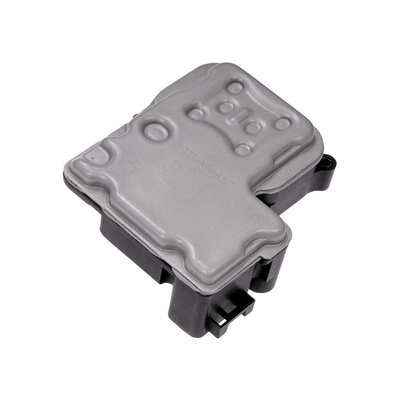
Shop the Parts Behind U1413
Below are the parts most often responsible for code U1413, ranked by how frequently each one is the actual culprit (per the diagnosis above). Tap any to see what we have for your vehicle.



The information in this article is provided for general reference and educational purposes only. Vehicle specifications, procedures, and part compatibility can vary by production date, trim level, and region. Always consult your vehicle's factory service manual and verify part numbers before purchasing or performing repairs. Safety-critical components such as airbags, seat belts, and braking systems should be installed by a qualified professional.
- 🧭 Diagnostic Flowchart
- 🛍️ Shop This Part
- What Does U1413 Mean?
- Can I Drive With U1413?
- Common Causes
- Symptoms
- Common Fixes & Costs
- Used vs. New Parts: Buying Guide
- What Happens If You Wait — Timeline
- Cost of Not Fixing It
- Diagnosis Steps
- When This Code Triggers (Freeze-Frame Conditions)
- Related Codes
- Climate & Environmental Factors
- How to Talk to a Mechanic About This Code
- Where to Take It: Dealer vs Independent vs Chain
- When to Walk Away From the Repair
- What Scan Tool You Need for This Code
- How to Clear the Code After You Fix It
- Will This Fail Emissions / State Inspection?
- Most Commonly Affected Vehicles
- Manufacturer-Specific Notes
- Real Owner Stories
- 2012 Ram 1500 with 115K miles
- 2008 Chrysler 300 with 140K miles
- 2011 Jeep Grand Cherokee with 95K miles
- How to Prevent This Code From Triggering
- Frequently Asked Questions
- What does the 'U' in U1413 stand for?
- Can I just replace the ABS module to fix U1413?
- Can a bad battery cause a U1413 code?
- What is the difference between U1413 and U0121?
- Why did my speedometer stop working with this code?
- My scanner shows B1413 on my Ford, is that the same thing?
- Do I need a dealer to fix a U1413 code?
- What does 'CAN bus' mean?
- Key Takeaways
- 🎟️ Get 5% Off