

OBD-II Code U1417: Implausible Left Wheel Speed Signal
The Ultimate 2026 Guide to Diagnosing and Fixing U1417
- Code U1417 is a Chrysler/Dodge/Jeep-specific fault that instantly disables your ABS and traction control due to an illogical left wheel speed signal.
- Over 80% of U1417 codes stem from a dead wheel speed sensor, severed wiring near the wheel well, or a failing wheel hub bearing.
- You must use an ABS-capable scan tool to pull sub-codes (like C102A) to determine whether the front or rear left sensor is at fault before buying parts.
- Never replace the $600+ ABS control module until you have physically verified the 5-volt reference signal and ground at the wheel sensor connector.
- Driving with U1417 increases emergency braking distances by up to 20% on wet roads; limit driving to shop visits only.
What Does U1417 Mean?
Code U1417 means the Powertrain Control Module (PCM) received an illogical left wheel speed signal. The Anti-lock Brake System (ABS) module constantly compares the rotational speed of all four wheels. When the left wheel's data is erratic, missing, or mismatched, the ABS module flags a fault over the CAN C bus, logging U1417 and instantly deactivating critical safety systems.
Technical definition: Implausible Left Wheel Distance Signal Received. This manufacturer-specific code (primarily Dodge, Chrysler, Jeep) indicates the PCM detected an erratic, inaccurate, or corrupt wheel speed signal from the left side. The control modules conclude the wheel is rotating at a physically impossible speed compared to the others, indicating a hardware or circuit fault.
Can I Drive With U1417?
Yes, But With Caution. Yes, but limit driving to reaching a repair shop. Your ABS, traction control, and stability control are disabled, increasing braking distance by 20% or more on slippery surfaces. The vehicle also exhibits erratic shifting or pulls to one side during braking, making highway driving unsafe.
Common Causes
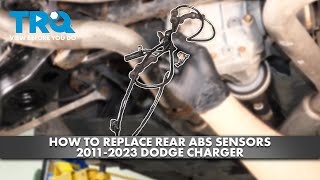
- Defective Left Wheel Speed Sensor (Very Common) — Internal failure from heat cycles, moisture intrusion, or age destroys the sensor. This is the most frequent cause of code U1417. 🎬 See this step-by-step Jeep Wrangler speed sensor replacement guide.
- Damaged Wiring or Connectors (Common) — The exposed wiring harness frays, gets cut by road debris, or stretches from suspension travel. Corroded connectors or loose pins cause intermittent signal dropouts, especially over bumps.
- Failing Wheel Hub Bearing (Common) — A worn wheel bearing causes excessive hub wobble. This alters the critical air gap between the sensor and the tone ring, destroying the signal. This is highly common on 2005-2010 Jeep Grand Cherokees.
- Contaminated or Damaged Tone Ring (Less Common) — Metallic brake dust clogs the magnetic sensor head, or the toothed tone ring cracks and loses teeth, blocking the sensor from reading rotational speed.
- Mismatched or Incorrectly Inflated Tires (Less Common) — A significantly different tire size or low pressure on one wheel forces it to rotate at a different rate. The ABS module interprets this sustained difference as an implausible signal.
- Poor Quality Aftermarket Sensor (Rare) — Cheap aftermarket sensors fail to meet the precise voltage and resistance specifications required by the ABS module, causing the code to return immediately.
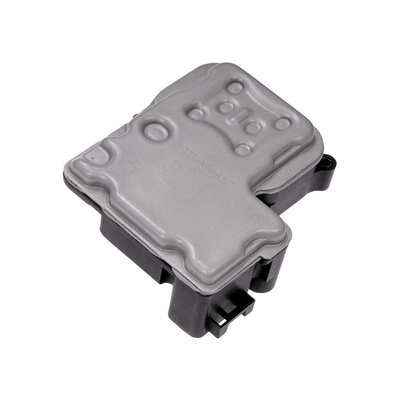
- Faulty ABS Control Module (Very Rare) — The ABS module itself fails. This is an expensive repair and is only considered after exhaustively ruling out the sensor, wiring, and hub.
Symptoms
- Dashboard Warning Lights Illuminated — The ABS, Electronic Stability Program (ESP), Brake Assist System (BAS), and traction control lights illuminate simultaneously.
- ABS and Traction Control Inoperative — Wheels lock up and skid during hard braking. Traction control fails to prevent wheel spin on slippery surfaces.
- Erratic Braking Behavior — The brake pedal pulsates under normal braking, or the vehicle pulls sharply to one side due to inconsistent brake force application.
- Erratic Speedometer or Shifting — The speedometer behaves erratically, or the automatic transmission shifts harshly because it relies on wheel speed data for shift logic.
- Cruise Control Disabled — The cruise control system deactivates automatically as a safety precaution.
- Erratic Wheel Speed Live Data (scan-tool only — no driver-felt sign) — On a scan tool, the affected wheel's speed reads differently than the others, drops to zero, or fluctuates wildly.
Diagnostic Flowchart
Tap your situation to follow the diagnostic path that matches what you're seeing on this code.
Common Fixes & Costs
- Replace Left Wheel Speed Sensor — Parts: $25-$80, Labor: $100-$200, ~1.2 hr book time (DIY)
- Repair Damaged Wiring or Connector — Parts: $10-$50, Labor: $125-$250, ~1.8 hr book time (Intermediate)
- Replace Wheel Hub Bearing Assembly — Parts: $150-$450, Labor: $200-$400, ~2.5 hr book time (Professional)
- Clean Sensor and Tone Ring — Parts: $5, Labor: $75-$150, ~0.8 hr book time (DIY)
- Replace ABS Control Module — Parts: $600-$1500, Labor: $150-$300, ~2.0 hr book time (Professional)
Used vs. New Parts: Buying Guide
When a used part is worth it: Buying a used wheel speed sensor is not recommended. The part is inexpensive new, and labor costs to replace a faulty used sensor exceed initial savings.
Donor-vehicle mileage cap: roughly under 40000 miles for the part to have meaningful remaining life.
Donor quality checklist:
- Only consider used if it's a genuine OEM part from a low-mileage collision vehicle.
- Avoid parts from the 'Rust Belt' due to corrosion risks.
- Ensure the part number matches exactly.
Decision logic:
- If The cost of a new OEM or high-quality aftermarket sensor is less than $100 → Always buy new. The risk of premature failure with a used part is not worth the savings.
- If The sensor is integrated into the wheel hub assembly → Always buy a new hub assembly. A used hub has unknown bearing wear and is a major safety risk.
- If The vehicle is very old and budget is the absolute top priority → A tested, used OEM sensor from a reputable salvage yard is a possibility, but accept the risk of a shorter lifespan.
Warranty tradeoff: Used parts typically have a 30-90 day warranty. Quality new aftermarket parts offer 1-year to limited lifetime warranties, while OEM parts offer 12-month warranties.
Worst-case if a used part fails: $200-$350 if a used sensor fails after installation, requiring repeat labor and a new part.
What Happens If You Wait — Timeline
- Immediate: Code sets and ABS/Traction Control lights illuminate. Cruise control disables. Primary hydraulic brakes function, but without anti-lock or stability assistance. (MPG impact: 0%% · Added cost: $0 (Safety Risk is High))
- 1 week - 2 months: If the signal is intermittent, the transmission shifts erratically or harshly, causing driver distraction and minor long-term wear on transmission components. (MPG impact: 0-2%% · Added cost: $0-$50 in potential wasted fuel or minor component stress.)
- 2-6 months (if caused by wheel bearing): Initial hum progresses to a loud grinding noise and steering wheel vibration. The bearing is actively destroying itself. (MPG impact: 1-3%% · Added cost: $350 - $700. The bearing fails completely and requires replacement.)
- 6+ months (if caused by wheel bearing): Complete failure of the ignored wheel bearing causes violent wheel wobble, damages the axle spindle, and risks the wheel detaching from the vehicle. (MPG impact: N/A% · Added cost: $1500 - $4000+. Cost includes hub bearing, spindle/knuckle, brake rotor, caliper, and accident-related damages.)
Cost of Not Fixing It
- Immediate: Loss of ABS, traction control, and stability control significantly increases the risk of a skid or loss of control in an emergency stop or on slippery surfaces. (Added cost: N/A (Safety Risk))
- 0-3 months: Erratic automatic transmission shifting causes driver distraction and contributes to increased wear on internal transmission components. (Added cost: $0 - $200 (Minor))
- 3+ months: If caused by a bad wheel bearing, continued driving leads to complete bearing failure, damaging the hub and spindle, and risking wheel separation. (Added cost: $500 - $1500+)
Diagnosis Steps
- Scan for Specific ABS Sub-Codes
Use an advanced OBD-II scanner capable of reading manufacturer-specific ABS codes. U1417 often appears with C102A (Left Rear) or C1020 (Left Front). Record all codes, clear them, and drive to see which return to pinpoint the exact wheel.
Tools: OBD-II Scanner (with ABS/CAN capability) (Beginner) - Analyze Live Wheel Speed Data
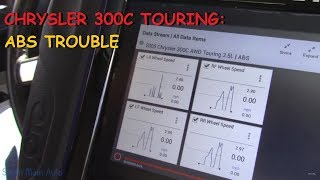
Using the scan tool, view the live data stream for all four wheel speed sensors. Drive the vehicle and watch the readouts. The faulty sensor shows a speed that is erratic, drops to zero, or differs significantly from the other three wheels.
Tools: OBD-II Scanner (with ABS live data) (Intermediate) - Visually Inspect Wiring, Sensor, and Tone Ring
Safely raise the vehicle. Meticulously inspect the wiring harness for chafing, melting, or corrosion from the sensor back to the main harness. Check the sensor head and tone ring for metallic debris or physical damage. Clean with brake cleaner if necessary.
Tools: Jack, jack stands, flashlight, brake cleaner, soft brush (Intermediate) - Check for Wheel Bearing Play
With the wheel off the ground, grasp it at 12 and 6 o'clock and rock it. Repeat at 9 and 3 o'clock. Any noticeable play, wobble, or grinding noise indicates a worn wheel bearing, which alters the sensor air gap and causes the code.
Tools: Jack, jack stands (Intermediate) - Test Sensor Resistance and Voltage
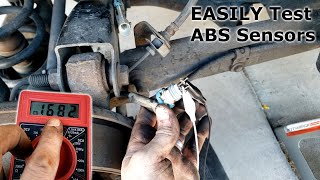
Disconnect the sensor. For passive (2-wire) sensors, measure resistance; it should be 800-2000 Ω and within 10% of the opposite side's sensor. 'OL' means open circuit. Switch to AC Volts and spin the wheel; it should generate 100-500mV. For active (3-wire) sensors, verify 5V/12V reference and ground at the harness connector with the ignition ON.
Tools: Digital multimeter, vehicle repair manual (Advanced) - Test Wiring Harness Continuity
If the sensor tests good, disconnect the harness from both the sensor and the ABS module. Use a multimeter to check for continuity on the signal and ground wires from end to end. 'OL' indicates a broken wire. Check for shorts to ground or power.
Tools: Digital multimeter, wiring diagram (Professional) - Swap Sensors Side-to-Side
If you lack advanced tools, swap the left sensor with the right sensor (if part numbers match). Clear codes and drive. If the code changes to the right side (U1418), the sensor is definitively bad. If U1417 remains, the issue is wiring or the bearing.
Tools: Basic hand tools (Intermediate)
When This Code Triggers (Freeze-Frame Conditions)
- Vehicle Speed: 30-60 mph (Sets during steady-state driving on a straight road, where the module easily compares all four wheel speeds and identifies a single outlier.)
- Engine RPM: 1500-2500 RPM (Corresponds to steady highway cruising speed with a constant throttle position.)
- Braking Status: Not Braking (The implausibility code triggers during normal driving when the signal drops out, not necessarily during a braking event.)
- Steering Angle: Near 0° (Straight) (Driving straight allows the module to assume all wheels rotate at identical speeds, making a faulty signal stand out.)
Related Codes
- U1418 — The direct sibling code for the opposite side. U1417 is 'Left Wheel,' U1418 is 'Right Wheel.' Swapping sensors side-to-side and seeing the code change confirms a bad sensor.
- C102A — Means 'Left Rear Wheel Speed Sensor Signal Erratic.' Seeing this alongside U1417 definitively pinpoints the problem to the left REAR wheel circuit.
- C1020 / C101F — Points to a specific electrical fault in the 'Left Front' (C1020) or 'Left Rear' (C101F) circuit. Suggests a hard failure like a broken wire or dead sensor rather than an intermittent issue.
- U0415 — 'Invalid Data Received From ABS Module.' Indicates a broader communication problem. Seeing both points toward a failing ABS module or CAN bus wiring issue rather than a wheel sensor.
Climate & Environmental Factors
- Road Salt / High Humidity (Rust Belt): Salt spray accelerates corrosion of wiring connectors and sensor pins. Water seeps into microscopic cracks in insulation, causing shorts or high resistance that trigger U1417.
- Extreme Cold: Wiring harnesses become stiff and brittle. Constant suspension movement causes aged wires to crack and break, creating an open circuit.
- Off-Roading / Rough Roads: Mud, water, and rock impacts directly damage exposed sensors and wiring. Extreme suspension articulation stretches and breaks wires on vehicles like the Jeep Wrangler.
How to Talk to a Mechanic About This Code
Say this: "I have an ABS light on and a U1417 code, indicating an implausible left wheel speed signal. I need a diagnostic to determine if the fault is front or rear, and whether it's the sensor, wiring, tone ring, or bearing. Please pull specific ABS codes like C102A and check live wheel speed data."
Signals you understand the diagnostic steps. Prevents a shop from guessing and replacing the wrong sensor, focusing their labor on pinpointing the true cause and saving you money.
Avoid saying:
- 'My ABS light is on, can you just fix it?'
- 'I think it's the front sensor, just replace that.'
- 'My friend said it's probably the ABS module.'
Questions to ask before authorizing the repair:
- What specific 'C' code pointed to the exact wheel?
- Did you inspect the wiring harness for damage and the wheel bearing for play?
- Can you show me the live data graph showing the faulty sensor dropping out?
- If it's a wiring issue, will you splice repair or replace a harness section?
- What is the warranty on parts and labor?
Where to Take It: Dealer vs Independent vs Chain
- Dealer:
A safe but expensive choice. Good for definitive diagnosis, but be wary of high-cost repair recommendations without a second opinion.
Best for: Vehicles still under warranty., Complex electrical issues or when a Technical Service Bulletin (TSB) applies., Suspected faulty control modules requiring programming.
Downsides: Highest labor rates, typically 1.5-2x more than independent shops., Defaults to expensive solutions like full harness replacement instead of targeted repairs. (Typical cost: +50% vs. baseline) - Independent Shop:
Best fit for most consumers. Provides the best balance of expertise and value for diagnosing and fixing U1417.
Best for: Out-of-warranty vehicles where cost is a factor., Most U1417 scenarios, from sensor replacement to wheel bearing jobs., Auto electric specialists for tricky wiring problems.
Downsides: Diagnostic capabilities vary. Vet shops based on reviews and ASE certifications. (Typical cost: +0% vs. baseline) - Chain Shop:
High risk for diagnosis. Only use if certain the fix is a simple sensor swap. Avoid for intermittent faults or suspected wiring/bearing issues.
Best for: Simple, confirmed part replacements if you diagnosed it yourself.
Downsides: Technician skill varies dramatically., Lacks advanced diagnostic tools for complex wiring or module issues., High pressure for upselling. (Typical cost: -10% vs. baseline)
When to Walk Away From the Repair
If the estimated repair cost exceeds 40-50% of the car's private-party value, seriously consider selling or trading in the vehicle.
- Car worth $4500, fix is $400: Fix it. This is a standard repair cost for an aging vehicle and well below the threshold.
- Car worth $4500, fix is $2000: Borderline. This repair (e.g., a failed ABS module) is nearly 50% of the car's value. Get a second opinion.
- Car worth $3000, fix is $4500: Walk away. The repair cost far exceeds the vehicle's value. Do not authorize this repair.
What Scan Tool You Need for This Code
Minimum: An OBD-II scanner with ABS/SRS system access and live data capability.
A basic $20 engine code reader cannot communicate with the ABS module. You cannot read specific 'C' codes identifying the wheel location or view live wheel speed data, leading to guessing and wasted money.
Professional: Autel MaxiCOM MK808Z (~$450) — A professional tablet scanner providing full-system diagnostics, extensive live data graphing, and fast ABS access. Essential for shops or serious DIYers working on multiple vehicles.
Rent vs buy: Free tool loaner programs at auto parts stores offer basic readers that CANNOT read ABS codes. You must purchase an ABS-capable scanner. The budget pick costs less than a single diagnostic hour at a dealership.
How to Clear the Code After You Fix It
- Use an OBD-II scan tool to clear the U1417 code and related 'C' codes from the ABS and Powertrain modules.
- Perform a short test drive including speeds above 20 mph to confirm warning lights remain off.
- If an emissions test is required, perform a full drive cycle to set readiness monitors.
Drive cycle (~20 minutes): A Chrysler/Jeep/Dodge drive cycle involves: 1) Cold start and warm up for 5 minutes. 2) Drive steadily between 40-60 mph for 8 minutes. 3) Stop and idle for 3 minutes. 4) Drive above 20 mph for 2 minutes. 5) Turn ignition off and sit for 10 minutes.
Readiness monitors affected: Catalyst monitor, O2 sensor monitor, EVAP system monitor
Before emissions retest: drive at least 50 miles to fully set monitors.
Watch out for:
- Disconnecting the battery does not reliably clear this code from the ABS module and resets all readiness monitors, guaranteeing an emissions failure.
- The code returns immediately if the underlying fault (bad sensor, wiring, bearing) was not correctly repaired.
Will This Fail Emissions / State Inspection?
Yes — this code typically fails an OBD-II emissions inspection.
- California: An illuminated ABS light alone does not fail a smog check. However, if U1417 triggers the main 'Check Engine' light, it is an automatic failure. You must complete a drive cycle after clearing codes.
- New York: The NYS inspection includes a check of the ABS light. An illuminated ABS light is a direct cause for safety inspection failure.
- Texas: An illuminated ABS light is NOT a cause for rejection in the safety inspection. However, if the code triggers the 'Check Engine' light in an emissions county, it fails the OBD-II portion.
Most Commonly Affected Vehicles
- Jeep Grand Cherokee (2005-2010) — Extremely common. The fault is frequently caused by a failed rear wheel bearing assembly containing the tone ring, rather than the sensor itself.
- Jeep Wrangler (JK/JKU) (2007-2018) — Frequently experiences this code due to sensor wiring getting damaged during off-roading or stretched from suspension lifts.
- Dodge Charger / Magnum (2006-2010) — Owners often report this code along with ABS/ESP lights. Confusion arises when determining front vs. rear without an advanced scan tool.
- Dodge Ram 1500/2500/3500 (2006-2011) — Service manuals emphasize checking for other active codes in the ABS module first before condemning any parts.
- Chrysler 300 (2005-2010) — Shares the Dodge Charger platform and electronics, making it prone to identical wheel speed sensor circuit failures.
Manufacturer-Specific Notes
- Chrysler/Dodge/Jeep: The generic U1417 code does not specify front or rear. An advanced scanner reading ABS live data or sub-codes is essential to avoid replacing the wrong sensor.
- Chrysler/Dodge/Jeep: FCA issued Technical Service Bulletins (e.g., 05-003-21) acknowledging water intrusion and oxidation cause sensor failures, highlighting a known sealing weakness.
- Mitsubishi: U1417 has a completely different definition (e.g., 'Variant coding value invalid') and is unrelated to the ABS system. Always verify definitions by make.
- Honda/Audi (Indirect TPMS): Vehicles using 'indirect' TPMS rely on wheel speed data to detect deflated tires. A U1417-type fault triggers both ABS and TPMS warning lights simultaneously.
Real Owner Stories
2010 Dodge Charger - Misdiagnosis Cost
ABS, ESP, and BAS lights illuminated with code U1417. Forums suggested replacing the front left sensor.
What they tried:
- Replaced the front left wheel speed sensor based on internet advice; this did not fix the problem.
- Visited a dealer who performed a proper scan, identifying the fault as the left REAR wheel (Code C102A).
Outcome: The owner swapped the new sensor to the rear, clearing the codes. The issue was resolved.
Lesson: U1417 does not specify front or rear. Never replace parts based on assumptions. An ABS-capable scanner is required to get the specific sub-code (like C102A) to avoid wasting money.
2008 Jeep Grand Cherokee - Hidden Mechanical Failure
ABS lights flashing erratically with code U1417. Lights cleared and returned randomly.
What they tried:
- Visually inspected the left rear speed sensor and tested resistance, which passed.
- Removed the brake rotor and discovered the tone ring had broken into pieces inside the wheel bearing assembly.
Outcome: Replaced the entire left rear wheel hub bearing assembly. The code cleared permanently.
Lesson: On many Jeeps, the tone ring is integrated into the wheel bearing. If the sensor and wiring check out, the bearing itself is the culprit, especially if accompanied by wheel wobble or grinding.
2019 Jeep Wrangler (JLU) - Dealership Upsell Avoided
Multiple dashboard lights on. Dealer diagnosed two shorted ABS wires.
What they tried:
- Dealership quoted $4,500 to replace the entire vehicle wiring harness.
Outcome: An independent mechanic located the specific damage in the harness and spliced in new wire sections with solder and heat shrink for under $500.
Lesson: Never agree to a full harness replacement for a localized wiring issue without a second opinion. Auto electric specialists repair specific harness sections for a fraction of the cost.
How to Prevent This Code From Triggering
- Apply Dielectric Grease to Connectors (Whenever a sensor is replaced or disconnected) — Seals out moisture and road salt from electrical pins, preventing the corrosion that causes intermittent signals.
- Secure and Inspect Wiring Harnesses (During every oil change or tire rotation) — Ensures wiring is secured in clips and not rubbing against suspension parts or tires, preventing chafed insulation and shorts.
- Use Waterproof Heat-Shrink Connectors for Repairs (When repairing any damaged wiring) — Creates a waterproof seal superior to electrical tape, preventing moisture from wicking into the wire and causing recurring corrosion.
- Address Wheel Bearing Noise Immediately (As needed) — A humming or grinding noise precedes bearing failure. Prompt replacement prevents U1417 and catastrophic wheel separation.
Frequently Asked Questions
I replaced the sensor but the U1417 code and ABS light are still on. What's next?
Verify you replaced the correct sensor (front vs. rear) using an ABS scanner. If correct, the problem lies upstream in the wiring harness or downstream at the tone ring. Inspect the wiring for hidden breaks and ensure the tone ring is clean and intact.
Does U1417 mean the front or rear wheel sensor is bad?
The generic U1417 code does not specify front or rear. You must use an ABS-capable scanner to read specific sub-codes (like C102A for left rear) or view live data to pinpoint the exact wheel.
My ABS and traction lights only come on when I hit a bump. What does that mean?
This indicates an intermittent electrical connection. The impact causes a frayed wire or a loose connector pin in the wheel speed sensor circuit to temporarily lose contact. Inspect the wiring harness and connectors for physical damage.
Can U1417 cause transmission problems?
Yes. The Transmission Control Module (TCM) uses wheel speed data to determine shift points, so an erratic signal causes harsh shifting or forces the transmission into limp mode.
What is the difference between code U1417 and U1418?
They indicate the exact same fault on opposite sides of the vehicle. U1417 is the left wheel, and U1418 is the right wheel.
Can I fix the U1417 code myself?
Replacing a wheel speed sensor is a straightforward DIY job requiring basic hand tools. However, accurately diagnosing whether the fault is the sensor, wiring, or bearing requires a multimeter and an ABS scanner. Misdiagnosis leads to wasting money on unnecessary parts.
Can a bad alignment or a new battery cause a U1417 code?
A bad alignment cannot cause this code because it is an electrical fault, not a mechanical angle issue. While a dying battery triggers random electrical codes, it rarely causes a specific wheel speed circuit code like U1417.
Key Takeaways
- Code U1417 is a Chrysler/Dodge/Jeep-specific fault that instantly disables your ABS and traction control due to an illogical left wheel speed signal.
- Over 80% of U1417 codes stem from a dead wheel speed sensor, severed wiring near the wheel well, or a failing wheel hub bearing.
- You must use an ABS-capable scan tool to pull sub-codes (like C102A) to determine whether the front or rear left sensor is at fault before buying parts.
- Never replace the $600+ ABS control module until you have physically verified the 5-volt reference signal and ground at the wheel sensor connector.
- Driving with U1417 increases emergency braking distances by up to 20% on wet roads; limit driving to shop visits only.
Helpful Videos
Shop the Parts Behind U1417
Below are the parts most often responsible for code U1417, ranked by how frequently each one is the actual culprit (per the diagnosis above). Tap any to see what we have for your vehicle.



The information in this article is provided for general reference and educational purposes only. Vehicle specifications, procedures, and part compatibility can vary by production date, trim level, and region. Always consult your vehicle's factory service manual and verify part numbers before purchasing or performing repairs. Safety-critical components such as airbags, seat belts, and braking systems should be installed by a qualified professional.
- 🧭 Diagnostic Flowchart
- 🎬 Helpful Videos
- 🛍️ Shop This Part
- What Does U1417 Mean?
- Can I Drive With U1417?
- Common Causes
- Symptoms
- Common Fixes & Costs
- Used vs. New Parts: Buying Guide
- What Happens If You Wait — Timeline
- Cost of Not Fixing It
- Diagnosis Steps
- When This Code Triggers (Freeze-Frame Conditions)
- Related Codes
- Climate & Environmental Factors
- How to Talk to a Mechanic About This Code
- Where to Take It: Dealer vs Independent vs Chain
- When to Walk Away From the Repair
- What Scan Tool You Need for This Code
- How to Clear the Code After You Fix It
- Will This Fail Emissions / State Inspection?
- Most Commonly Affected Vehicles
- Manufacturer-Specific Notes
- Real Owner Stories
- 2010 Dodge Charger - Misdiagnosis Cost
- 2008 Jeep Grand Cherokee - Hidden Mechanical Failure
- 2019 Jeep Wrangler (JLU) - Dealership Upsell Avoided
- How to Prevent This Code From Triggering
- Frequently Asked Questions
- I replaced the sensor but the U1417 code and ABS light are still on. What's next?
- Does U1417 mean the front or rear wheel sensor is bad?
- My ABS and traction lights only come on when I hit a bump. What does that mean?
- Can U1417 cause transmission problems?
- What is the difference between code U1417 and U1418?
- Can I fix the U1417 code myself?
- Can a bad alignment or a new battery cause a U1417 code?
- Key Takeaways
- 🎟️ Get 5% Off