

OBD-II Code U1421: Implausible Ignition Key-Off Time
What U1421 means, why it triggers, and how to fix it
- Code U1421 indicates a CAN bus communication glitch regarding ignition-off time, not a broken mechanical component.
- On 2007-2018 Chrysler, Dodge, Jeep, and Ram vehicles, a PCM software update (like TSB 18-037-16A) resolves this code in over 50% of cases.
- Always perform a dedicated load test on the battery—and test dual diesel batteries individually—before replacing any $500+ control modules.
- Disconnect all aftermarket remote starters, alarms, or performance tuners immediately, as improper CAN bus integration frequently triggers this code.
- Drive with caution; while the code itself won't stop the vehicle, an underlying Totally Integrated Power Module (TIPM) failure causes sudden engine stalling.
What Does U1421 Mean?
The U1421 code means the Engine Control Module (ECM) received an illogical signal regarding how long the ignition has been turned off. The Body Control Module (BCM) tracks this 'Ignition Off Time' (IOT) and broadcasts it over the CAN bus network. The ECM uses this timer to schedule self-tests, expecting certain sensors to cool down after sitting. If the timer's value is physically impossible (e.g., implying the key cycled faster than humanly possible), the computer flags the data as 'implausible' and triggers U1421.
Technical definition: Implausible Ignition Key Off Time Received. The ECM received an IOT value from the BCM that contradicts current operating conditions. On Chrysler/Ram vehicles, this sets when the difference between two IOT values across separate diagnostic cycles is less than 3 minutes for 5 consecutive checks. The system cross-references this data; if coolant temperature remains high but the IOT reports a long duration, the ECM flags the data as implausible.
Can I Drive With U1421?
Yes, But With Caution. The code indicates a communication error, not a mechanical failure, so the vehicle drives normally. However, ignoring it is dangerous. A failing Totally Integrated Power Module (TIPM)—a common cause on Chrysler-family vehicles—causes sudden engine stalling or an inability to restart. A weak battery, another frequent trigger, leaves you stranded without warning. Diagnose the issue within a week or 100 miles to prevent a dangerous failure.
Common Causes
- Outdated Control Module Software (Very Common) — The software in the Powertrain Control Module (PCM) contains bugs that make it overly sensitive to normal network latency. Manufacturers release software updates (flashes) to fix these logical errors. Numerous Technical Service Bulletins (TSBs), especially for Ram trucks, address this code exclusively via a reflash.
- Weak Battery or Corroded Terminals (Common) — A weak battery or poor terminal connections cause severe voltage drops during startup and shutdown. This corrupts data packets sent between modules, leading the ECM to receive an illogical 'key-off' time value. On diesel trucks with dual batteries, a single failing battery triggers this issue.
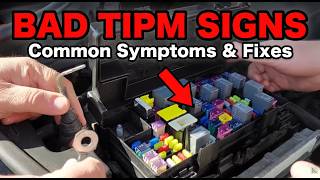
- Failing Totally Integrated Power Module (TIPM) (Common) — On Chrysler, Dodge, Jeep, and Ram vehicles, the TIPM acts as the central electrical hub. Internal circuit board failures or sticking relays cause a cascade of communication errors and bizarre electrical behavior, frequently triggering a U1421 code. 🎬 Watch: How to spot signs of a failing TIPM
- Aftermarket Accessories or Modifications (Common) — Improperly installed aftermarket electronics (remote starters, alarms, stereos, tuners) interfere with the CAN bus network, causing data corruption. Performance tuners on diesel trucks that modify ECM software trigger this code if not programmed perfectly.
- CAN Bus Network Wiring Fault (Less Common) — The vehicle's communication network wiring (CAN bus) is damaged. Chafing, corrosion, or a short circuit in the wiring harness disrupts the signals between the BCM and ECM.
- Faulty Ignition Switch (Less Common) — A worn ignition switch sends erratic signals or causes power interruptions during key-on and key-off cycles, disrupting the BCM's ability to accurately time the key-off state.
- Failing or Improperly Seated IOD Fuse (Rare) — The Ignition Off Draw (IOD) fuse provides constant power to modules to maintain their memory when the vehicle is off. If this fuse is loose or corroded, modules lose their memory, leading to implausible data on startup.
- Faulty Body Control Module (BCM) or Engine Control Module (ECM) (Rare) — The module sending the 'key-off time' signal (BCM) or the one receiving it (ECM) failed internally. This is a last resort diagnosis after exhaustively ruling out software, power, and wiring issues.
Symptoms
- Check Engine Light On (Often with No Drivability Issues) — The Malfunction Indicator Lamp (MIL) illuminates. In many cases, the driver notices no difference in performance, as the code sets in the background as a 'ghost' code.
- Remote Start Inoperative — Vehicles automatically disable the remote start feature when a network-related trouble code like U1421 is active.
- Intermittent Electrical Problems — If the root cause is a failing TIPM or poor battery connection, wipers or horns activate on their own, power windows fail, or headlights flicker.
- Hard Starting or No Start — In cases related to a faulty TIPM, the internal fuel pump relay fails to function correctly, leading to extended cranking or a complete crank-no-start condition.
- Erratic Gauge Cluster Behavior — Gauges sweep erratically, read incorrectly, or drop to zero intermittently as a result of data corruption on the CAN bus.
Diagnostic Flowchart
Tap your situation to follow the diagnostic path that matches what you're seeing on this code.
Common Fixes & Costs
- Reflash Control Module Software — Parts: $0, Labor: $150-$200, ~1 hr book time (Professional)
- Replace Battery — Parts: $150-$500, Labor: $50-$100, ~0.5 hr book time (DIY)
- Clean or Replace Battery Terminals — Parts: $5-$20, Labor: $0-$50, ~0.2 hr book time (DIY)
- Replace Totally Integrated Power Module (TIPM) — Parts: $800-$1200, Labor: $150-$300, ~1.5 hr book time (Professional)
- Repair Totally Integrated Power Module (TIPM) — Parts: $300-$700, Labor: $100-$200, ~1 hr book time (Professional)
- Repair CAN Bus Wiring — Parts: $10-$50, Labor: $200-$600, ~3 hr book time (Advanced)
Used vs. New Parts: Buying Guide
When a used part is worth it: A used TIPM is a budget-friendly option for an older, high-mileage vehicle (>120,000 miles) where the owner accepts a higher risk of premature failure to save on initial cost.
Donor-vehicle mileage cap: roughly under 80000 miles for the part to have meaningful remaining life.
Donor quality checklist:
- Part number must be an EXACT match, including the suffix letters. A TIPM from a vehicle with different options will not work correctly.
- Verify the donor vehicle was not scrapped due to electrical, flood, or fire damage.
- Ask about the warranty; most salvage yards offer a 30-90 day functional warranty.
Decision logic:
- If Vehicle is under 8 years old or has <100K miles → Buy a new OEM or professionally remanufactured unit. The reliability and warranty justify the cost.
- If Vehicle is >10 years old and budget is the primary concern → A used part is a viable option, but understand it has a significantly shorter lifespan.
- If A 'plug-and-play' remanufactured unit programmed to your VIN is available → This is the best balance of cost and reliability for DIY replacement, avoiding dealer programming fees.
Warranty tradeoff: Used parts typically have a 30-90 day warranty. New OEM and quality remanufactured units come with a 1-year or lifetime warranty, providing much greater peace of mind.
Worst-case if a used part fails: $400-$800 (Cost of a second replacement part plus repeat labor costs if the used part fails outside its short warranty window)
What Happens If You Wait — Timeline
- 0-1 month: Code U1421 appears, Check Engine Light is on. No other symptoms are noticeable. Remote start is disabled. (MPG impact: 0%% · Added cost: $0)
- 1-4 months: If caused by a failing TIPM, minor, intermittent electrical issues begin: flickering lights, random horn honks, or power locks acting strange. If caused by a weak battery, engine cranking slows in cold weather. (MPG impact: 0-2%% · Added cost: $150-$300 (Potential cost for a tow and emergency diagnosis if stranded by a dead battery or no-start from TIPM).)
- 4-12 months: TIPM failure becomes pronounced, with a high risk of the fuel pump relay failing, leading to a crank-no-start or sudden engine stalling. A chronically weak battery puts significant strain on the alternator. (MPG impact: 2-5%% · Added cost: $600-$1200 (Cost of an alternator replacement plus the original repair cost).)
- 12+ months: Persistent voltage instability from a bad TIPM or charging system causes stress and damage to other sensitive electronic modules (BCM, PCM). Electrical problems become constant. (MPG impact: 5-10%% · Added cost: $1500+ (Potential cost of replacing multiple electronic modules in addition to the original root cause).)
Cost of Not Fixing It
- 0-3 Months: Primary risk is being stranded due to a dead battery or a no-start condition from a failing TIPM. Intermittent electrical gremlins (wipers, horn, lights) appear, creating a nuisance and potential safety hazard. (Added cost: $100-$300 (Potential cost of a tow and emergency diagnosis))
- 3-12 Months: Increased risk of sudden engine stalling while driving if the TIPM fuel pump relay fails completely. A chronically weak battery puts extra strain on the alternator, leading to its premature failure. (Added cost: $500-$1000 (Cost of alternator replacement plus original repair))
- 12+ Months: Continued electrical instability from a faulty TIPM causes voltage spikes or communication errors that stress other electronic modules in the vehicle, leading to complex and expensive repairs. (Added cost: $1500+ (Potential for multiple module failures))
Diagnosis Steps
- Read Codes and Check for TSBs
Use an OBD-II scanner to confirm U1421 is present. Immediately search for Technical Service Bulletins (TSBs) for your specific VIN. A software update is the most common fix for this code on Chrysler/Ram vehicles.
Tools: OBD-II Scanner, Internet Access (Beginner) - Perform a Thorough Battery System Inspection
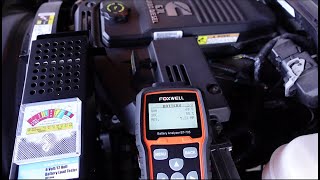
Ensure battery terminals are clean, tight, and free of corrosion. Use a digital battery tester to load-test the battery. On diesel trucks with dual batteries, disconnect them from each other and test each battery individually. Both must be healthy.
Tools: Wrench Set, Terminal Brush, Digital Multimeter, Digital Battery Tester (Beginner) - Inspect the IOD Fuse and TIPM Connections
Locate the Ignition Off Draw (IOD) fuse in the main fuse box (the TIPM on Chrysler products). Ensure it is fully seated and not blown. Visually inspect all large connectors on the TIPM for corrosion or water intrusion.
Tools: Owner's Manual, Fuse Puller or Pliers (Beginner) - Disconnect Aftermarket Devices
Check for non-factory electronics like remote starters, alarms, or audio equipment. Poorly integrated devices disrupt CAN bus communication. Disconnect them, clear the codes, and see if the problem resolves.
Tools: Basic Hand Tools (Intermediate) - Clear Codes and Perform a Drive Cycle
After performing initial checks, clear the code. Drive the vehicle for a few days, including several key-on/key-off cycles where the vehicle sits for at least 30 minutes between starts. If the code does not return, it was a temporary glitch.
Tools: OBD-II Scanner (Beginner) - Have the PCM/ECM Reflashed
If a TSB exists for a software update, take the vehicle to a dealership or a qualified shop with J2534 programming capabilities to have the module reflashed. This overwrites the old software with a patched version.
Tools: Professional Scan Tool with Programming Subscription (e.g., wiTECH) (Professional) - [PRO TIP] Test CAN Bus Voltage and Resistance
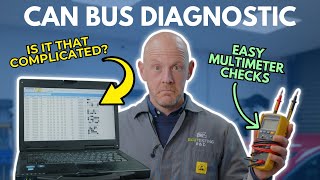
With the battery disconnected, measure resistance between CAN High (Pin 6) and CAN Low (Pin 14) at the OBD-II port; it should read 60 Ohms. Reconnect the battery, turn the key on, and measure voltage. CAN High should be ~2.5-3.5V and CAN Low ~1.5-2.5V. Deviations point to wiring shorts or failed modules.
Tools: Digital Multimeter, OBD-II Pinout Diagram (Advanced) - [PRO TIP] Analyze CAN Bus Waveform with an Oscilloscope
Connect an oscilloscope to the CAN High and Low lines. A healthy signal shows a clean, sharp square wave. Look for rounded-off waves (bad termination resistor) or noise/spikes (interference). This definitively diagnoses network integrity issues.
Tools: Oscilloscope, Back-probe Pins (Advanced) - Diagnose or Replace the TIPM/BCM/ECM
If all other steps fail on a Chrysler-family vehicle, the TIPM is the primary suspect. A technician must perform advanced bidirectional diagnostics to confirm the TIPM is at fault before recommending a $1,000+ replacement.
Tools: Advanced Scan Tool, Digital Multimeter, Wiring Diagrams (Professional)
When This Code Triggers (Freeze-Frame Conditions)
- Engine Coolant Temp (at shutdown): > 170°F / 77°C (Engine was fully warmed up before being turned off.)
- Engine Coolant Temp (at startup): < 150°F / 65°C (Engine has cooled significantly, indicating a 'cold soak'. The code sets when the ECU sees a large temperature drop but receives a short key-off time.)
- Battery Voltage: 11.8V - 12.5V (During key-on, before the engine starts. A low value here indicates a weak battery is the root cause.)
- Vehicle Speed: 0 mph (The fault logs during the key-on sequence, before the vehicle moves.)
Related Codes
- U0141 — Lost Communication With Body Control Module. U0141 means the ECM cannot communicate with the BCM at all (total signal loss). U1421 means the ECM receives data from the BCM, but the data is illogical. U0141 is a more severe communication failure.
- U0100 — Lost Communication with ECM/PCM. If you see this alongside U1421, it points to a severe network-wide problem. It means other modules cannot hear from the main engine computer, indicating a power/ground issue at the ECM or a major network short.
- P0562 — System Voltage Low. P0562 is the cause, and U1421 is the effect. If you see both codes, diagnose and fix the low voltage condition (P0562) first, as this almost certainly resolves the U1421 communication glitch.
- U110E — Lost Ambient Temperature Message. On Chrysler products, this code sets alongside U1421 due to the same software glitch. TSB 18-019-15 for 2015 Ram trucks notes a single PCM reflash fixes both codes simultaneously.
Climate & Environmental Factors
- Cold Weather: Cold temperatures significantly reduce a battery's effective cranking amperage. A weak battery only shows symptoms in the cold, causing low voltage during startup that corrupts CAN bus communication and triggers U1421.
- High Humidity / Water Intrusion: Moisture accelerates corrosion on battery terminals, ground connections, and within the TIPM if its seals are compromised. Corrosion creates unwanted resistance, leading to voltage drops and communication errors.
How to Talk to a Mechanic About This Code
Say this: "I have a U1421 code. I've already load-tested the battery and cleaned the terminals. I need to schedule a diagnostic to check for applicable software updates or TSBs before we explore hardware issues like the TIPM."
This proves you understand the diagnostic hierarchy. It forces the technician to check for the cheaper software fix first rather than immediately quoting a $1,200 TIPM replacement.
Avoid saying:
- 'My check engine light is on, can you fix it?'
- 'I think my computer is bad.'
- 'Just do whatever it takes to fix it.'
Questions to ask before authorizing the repair:
- Did you check for Technical Service Bulletins for my specific VIN?
- If a software update is needed, does this guarantee a fix or is there still a hardware risk?
- If you suspect the TIPM, what specific bidirectional tests did you run to condemn it?
- Can you provide a detailed breakdown of the parts and labor costs?
Where to Take It: Dealer vs Independent vs Chain
- Dealer:
Recommended, especially if a software update (reflash) is the most likely solution. Many TSBs point to this as the primary fix, which is done most reliably at a dealer.
Best for: Vehicles under warranty., Performing a software reflash, as they have direct access to the latest manufacturer software and proprietary tools like wiTECH., Complex electrical issues where factory-trained technicians and specific diagnostic equipment are beneficial.
Downsides: Higher labor rates, typically $150-$200 per hour., Quicker to replace an entire module (like the TIPM) rather than diagnose a simpler underlying cause. (Typical cost: +50% vs. baseline) - Independent Shop:
Good fit, but with a major caveat. An independent shop is excellent for battery testing and TIPM replacement. However, you must confirm they have the capability to perform a manufacturer-specific software reflash.
Best for: Out-of-warranty vehicles where the cause is likely a battery or connection issue., Diagnosing and replacing a TIPM, often at a lower labor cost than the dealer., Vehicles where you have a trusted mechanic with strong diagnostic skills.
Downsides: May not have the expensive, subscription-based tools to perform a PCM reflash., Quality and expertise vary significantly; choose a shop with ASE-certified technicians. (Typical cost: +0% vs. baseline) - Chain Shop:
Acceptable ONLY for a battery test or replacement. AVOID for diagnosing the U1421 code itself, as they are not equipped for the most common fixes.
Best for: Free or low-cost battery testing and replacement.
Downsides: Technicians lack specialized training for complex network diagnostics., Unlikely to have tools or expertise for software reflashing or in-depth TIPM diagnosis., High pressure to upsell unnecessary services. (Typical cost: -10% vs. baseline)
When to Walk Away From the Repair
If the estimated repair cost exceeds 50% of the car's private-party value, sell or trade in the vehicle.
- Car worth $5000, fix is $2500: Borderline. A $2,500 quote for U1421 means a dealer TIPM replacement. Get an independent shop quote or use a $300 mail-in repair service before walking away.
- Car worth $15000, fix is $1500: Fix it. The repair cost is 10% of the car's value, preserving your investment.
- Car worth $3000, fix is $1800: Walk away. The repair cost is 60% of the car's value, making it a poor financial decision.
What Scan Tool You Need for This Code
Minimum: A scanner that reads codes from all modules (Engine, BCM, ABS, etc.), not just basic engine codes.
A cheap $20 scanner only reads generic 'P' codes from the engine module. U1421 is a network 'U' code, and the root cause involves the Body Control Module (BCM) or TIPM. You need a tool that sees the whole network.
Budget: BlueDriver Pro (~$100) — Reads and clears codes from all modules, including the BCM. Provides freeze-frame data and live data graphing to monitor battery voltage, which is crucial for diagnosing this code.
Mid-range: Foxwell NT510 Elite for Chrysler (~$180) — Offers OE-level diagnostics for Chrysler/Dodge/Jeep. Includes bidirectional controls to perform active tests on components controlled by the TIPM, confirming if the module is faulty.
Professional: Autel MaxiCOM MK808S (~$450) — Full bidirectional control and access to all vehicle modules. Supports FCA Secure Gateway (SGW) access via an AutoAuth subscription, necessary to perform diagnostics on 2018+ Chrysler-family vehicles.
Rent vs buy: For a one-time check, auto parts stores read codes for free. However, since U1421 is intermittent, buying a tool like the BlueDriver Pro allows you to monitor the issue over time and verify a fix.
How to Clear the Code After You Fix It
- Reconnect battery if it was disconnected for repair.
- Use a quality OBD-II scan tool to erase the Diagnostic Trouble Codes from all modules.
- Perform a complete drive cycle to allow readiness monitors to run.
Drive cycle (~30 minutes): Start with a cold engine. Idle for 5 minutes to enter closed loop. Drive at a steady 40-60 mph for 8 minutes. Stop and idle for 3 minutes. Drive again above 25 mph for 2 minutes. Turn the vehicle off and let it sit for 10 minutes to run the O2 heater monitor.
Readiness monitors affected: Catalyst Monitor, Evaporative System Monitor, O2 Sensor Monitor
Before emissions retest: drive at least 100 miles to fully set monitors.
Watch out for:
- Simply disconnecting the battery does not clear the code from all modules and resets all readiness monitors to 'Not Ready'.
- The code returns within a few drive cycles if the underlying root cause (weak battery, faulty TIPM, software bug) was not corrected.
Will This Fail Emissions / State Inspection?
Yes — this code typically fails an OBD-II emissions inspection.
- California: Automatic failure. California's smog check requires the MIL to be off and all required readiness monitors to be complete.
- New York: Automatic failure. The NYS vehicle inspection includes an OBD-II scan, and any fault that illuminates the MIL fails the emissions portion.
- Texas: Automatic failure in applicable counties. In the 17 Texas counties requiring emissions testing, an illuminated Check Engine Light results in a failed inspection.
Most Commonly Affected Vehicles
- Ram 2500/3500 with Cummins Diesel (2007-2018) — Extremely common. Often resolved with a PCM reflash per TSBs like #18-037-16A. CRITICAL: The dual batteries must be disconnected from each other and load-tested separately. Replacing only one guarantees repeat failure.
- Dodge Grand Caravan (2008-2016) — Highly prone to TIPM failures. Symptoms include fuel pump, wiper, and power lock issues alongside the U1421 code. Cost-effective TIPM repair services are widely available.
- Jeep Grand Cherokee (2011-2018) — Complex electrical systems where TIPM and software issues are the main culprits. Subject to several recalls for the fuel pump relay inside the TIPM.
- Chrysler Town & Country (2008-2016) — Shares the same platform and electrical architecture (including the failure-prone TIPM) as the Dodge Grand Caravan. Diagnosis and repair follow the exact same path.
- Jeep Wrangler (JK) (2007-2017) — The TIPM in these models is a known weak point. A U1421 code is an early warning sign of an impending TIPM failure that eventually causes stalling or no-start conditions.
- Ford F-150 (2009-2020) — Less common, but appears due to BCM software glitches or issues with the Battery Management System (BMS). A failing BMS sensor causes voltage fluctuations that trigger network codes.
- Chevrolet Silverado (2007-2018) — Triggered by low battery voltage, poor ground connections (especially the main cab-to-frame ground), or a failing BCM. Often seen alongside other communication or voltage-related codes.
- Various Vehicles with Engine Swaps/Conversions (1996-Present) — Common in vehicles with non-original engines (e.g., a Cummins swapped into a Ford). The code appears if the aftermarket integration between the engine's ECM and the vehicle's BCM is incomplete.
Manufacturer-Specific Notes
- Chrysler/Dodge/Jeep/Ram: This code is famous in this family of vehicles. It is frequently caused by a software bug requiring a PCM reflash. The second most likely cause is a faulty Totally Integrated Power Module (TIPM). The TIPM was subject to multiple recalls (NHTSA 14V-530, 15V-115, 19V-813) for internal fuel pump relay failures.
- Jeep: CRITICAL DISTINCTION: On some Jeep models, U1421 has a different definition: 'CAN Time-out Yaw Rate & Lateral G Sensor'. This points to a problem with the ABS or stability control system, requiring a completely different diagnostic path.
- Nissan: CRITICAL DISTINCTION: On Nissan vehicles, the code P1421 (not U1421) exists and refers to 'Cold Start Control'. This is an emissions system function and is completely unrelated to the CAN bus communication error discussed here.
- Volkswagen: On VW vehicles, communication issues similar to U1421 manifest as different codes, such as U1121 (Data Bus Message Missing) or 01315 (Brake Control Module - No Signal/Communication). The root causes are identical (faulty modules, bad wiring, incorrect coding).
Real Owner Stories
2016 Ram 2500 Cummins at 6,000 miles
Check Engine Light came on with code U1421, but the truck ran perfectly fine with no other symptoms.
What they tried:
- Owner cleared the code, but it returned.
- Forum research pointed to a Technical Service Bulletin (TSB).
Outcome: Took the truck to the dealer. They confirmed TSB #18-037-16A applied and performed a PCM reflash. The code did not return. The repair was covered under warranty.
Lesson: For a low-mileage, late-model Chrysler/Ram product, a U1421 code with no symptoms is almost certainly a software bug. Check for TSBs before attempting any parts replacement.
2014 Dodge Grand Caravan at 100,000 miles
Vehicle had an intermittent no-crank or slow-crank condition. The AC blend door made noise and the defroster light flashed.
What they tried:
- Replaced the 4-year-old battery and cleaned terminals; no change.
- Swapped relays in the fuse box; no change.
- Checked ground connections, which tested fine.
- Swapped in a used TIPM from a 2012 model, which caused a security lockout and had to be removed.
Outcome: The owner ordered a professionally rebuilt TIPM. The combination of the U1421 code and multiple, unrelated electrical gremlins strongly pointed to internal TIPM failure.
Lesson: Intermittent and bizarre electrical issues on a Grand Caravan are classic signs of a failing TIPM. Swapping a used TIPM is risky and fails if part numbers are incompatible.
Dodge Ram with Cummins Engine
U1421 code appeared after the owner installed and later removed an aftermarket performance tuner.
What they tried:
- The owner searched for complex causes like module failures or wiring shorts.
Outcome: The owner discovered they forgot to reconnect a wire after removing the aftermarket parts. Plugging the connector back in immediately resolved the code.
Lesson: Always consider recent modifications. If the code appeared shortly after work was done, the cause is related. Double-check all connections and ensure removed aftermarket devices are fully disconnected.
How to Prevent This Code From Triggering
- Perform periodic battery and terminal cleaning (Every 6 months or during oil changes) — Corrosion on battery terminals increases electrical resistance, causing voltage drops and communication glitches. Cleaning with a wire brush ensures a solid connection.
- Test battery health annually after 3 years of service (Once per year) — A battery's ability to hold a charge degrades over time. An annual load test identifies a weak battery before it fails and causes electrical problems like U1421.
- Ensure all vehicle ground straps are clean and tight (During major service intervals (30,000 miles)) — A loose or corroded engine or chassis ground strap creates an unstable return path for electricity, causing erratic voltage and confusing electronic modules.
- Avoid frequent short trips (Daily habit) — Short drives (under 20 minutes) don't give the alternator enough time to fully recharge the battery from the energy used to start the engine, leading to a chronically undercharged state.
- Use a battery tender for long-term storage (If the vehicle sits for more than 2-3 weeks) — Prevents the battery from self-discharging to a point where its voltage is too low, which causes data loss in modules and triggers communication codes on the next startup.
Frequently Asked Questions
Can I fix a U1421 code myself?
You can perform basic checks: inspect battery terminals, test the battery, and check the IOD fuse. Replacing the TIPM is possible for a skilled DIYer, but carries risks if the wrong part is used. However, the most common fix is a software reflash, which requires a professional.
Will clearing the code make it go away?
Clearing the code temporarily turns off the light, but it returns if the root cause remains. Underlying problems like a software bug, weak battery, or failing TIPM guarantee the code's return.
What are common misdiagnosis mistakes for U1421?
The biggest mistake is replacing expensive modules like the ECM without ruling out simpler causes. Always test the battery system thoroughly, check for software TSBs, and inspect connections first. On Ram trucks, failing to load-test dual batteries individually guarantees repeat failures.
Why would a dealer charge a diagnostic fee if the meaning is known?
The code 'U1421' identifies the symptom (illogical data), not the root cause. A diagnostic fee ($120-$180) covers the technician's time to test the battery, check TSBs, and analyze the CAN bus network to pinpoint the exact failure.
How much does it cost to fix code U1421?
A software reflash is the cheapest professional fix, typically $150-$200. A new battery costs $200-$450, while dual diesel batteries exceed $500. Replacing a TIPM costs $950-$1,500, though mail-in repair services offer a $300-$700 alternative.
What's the difference between a TIPM repair and a TIPM bypass kit?
A TIPM bypass kit is a temporary patch that runs external wires to bypass a faulty internal fuel pump relay. A TIPM repair service is a permanent solution that involves desoldering and replacing all failure-prone relays on the circuit board with upgraded components.
Why did my U1421 code come back after a dealer reflash?
If the code returns after a software update, the problem is hardware-related. The most likely culprits are a weak battery that passed a basic voltage test but fails under load, or an early-stage hardware failure in the TIPM.
What is a TIPM?
TIPM stands for Totally Integrated Power Module. It serves as the main fuse box and electrical nerve center in Chrysler, Dodge, Jeep, and Ram vehicles. It contains internal circuit boards and relays that control nearly every electrical function, making it a frequent failure point.
Key Takeaways
- Code U1421 indicates a CAN bus communication glitch regarding ignition-off time, not a broken mechanical component.
- On 2007-2018 Chrysler, Dodge, Jeep, and Ram vehicles, a PCM software update (like TSB 18-037-16A) resolves this code in over 50% of cases.
- Always perform a dedicated load test on the battery—and test dual diesel batteries individually—before replacing any $500+ control modules.
- Disconnect all aftermarket remote starters, alarms, or performance tuners immediately, as improper CAN bus integration frequently triggers this code.
- Drive with caution; while the code itself won't stop the vehicle, an underlying Totally Integrated Power Module (TIPM) failure causes sudden engine stalling.
Helpful Videos
Shop the Parts Behind U1421
Below are the parts most often responsible for code U1421, ranked by how frequently each one is the actual culprit (per the diagnosis above). Tap any to see what we have for your vehicle.



The information in this article is provided for general reference and educational purposes only. Vehicle specifications, procedures, and part compatibility can vary by production date, trim level, and region. Always consult your vehicle's factory service manual and verify part numbers before purchasing or performing repairs. Safety-critical components such as airbags, seat belts, and braking systems should be installed by a qualified professional.
- 🧭 Diagnostic Flowchart
- 🎬 Helpful Videos
- 🛍️ Shop This Part
- What Does U1421 Mean?
- Can I Drive With U1421?
- Common Causes
- Symptoms
- Common Fixes & Costs
- Used vs. New Parts: Buying Guide
- What Happens If You Wait — Timeline
- Cost of Not Fixing It
- Diagnosis Steps
- When This Code Triggers (Freeze-Frame Conditions)
- Related Codes
- Climate & Environmental Factors
- How to Talk to a Mechanic About This Code
- Where to Take It: Dealer vs Independent vs Chain
- When to Walk Away From the Repair
- What Scan Tool You Need for This Code
- How to Clear the Code After You Fix It
- Will This Fail Emissions / State Inspection?
- Most Commonly Affected Vehicles
- Manufacturer-Specific Notes
- Real Owner Stories
- 2016 Ram 2500 Cummins at 6,000 miles
- 2014 Dodge Grand Caravan at 100,000 miles
- Dodge Ram with Cummins Engine
- How to Prevent This Code From Triggering
- Frequently Asked Questions
- Can I fix a U1421 code myself?
- Will clearing the code make it go away?
- What are common misdiagnosis mistakes for U1421?
- Why would a dealer charge a diagnostic fee if the meaning is known?
- How much does it cost to fix code U1421?
- What's the difference between a TIPM repair and a TIPM bypass kit?
- Why did my U1421 code come back after a dealer reflash?
- What is a TIPM?
- Key Takeaways
- 🎟️ Get 5% Off