

OBD-II Code U1424: Implausible Engine Torque Signal Received
The Ultimate 2026 Guide to Meaning, Causes, and Fixes
- Code U1424 is a software glitch in over 70% of Stellantis vehicles, requiring a PCM/TCM update rather than physical part replacement.
- Always diagnose and fix accompanying codes like P0335 (Crank Sensor) or P0300 (Misfire) first, as U1424 is usually a secondary symptom.
- Do not replace the transmission for a U1424 code; this is an electronic data conflict, not an internal mechanical failure.
- Check your battery and alternator output, as voltage drops below 12.4V frequently trigger false CAN bus communication errors.
What Does U1424 Mean?
Trouble code U1424 means a control module, usually the Transmission Control Module (TCM), received an illogical engine torque message from the Powertrain Control Module (PCM). The vehicle's computers constantly communicate over the CAN bus network; when the reported engine torque conflicts with sensor data like engine speed or throttle position, this code triggers. It is a data conflict error, not a mechanical transmission failure.
Technical definition: The SAE/OBD-II definition for U1424 is 'Implausible Engine Torque Signal Received'. This indicates a control module received a data signal from the PCM over the CAN bus network that fell outside its expected range or conflicted with other vehicle data. This is a communication error, almost always triggered as a secondary 'symptom' code pointing to an engine performance issue, faulty sensor, or outdated software.
Can I Drive With U1424?
Yes, But With Caution. You can drive, but it is strongly discouraged. The vehicle enters a reduced-power 'limp mode,' limiting speed to under 40 mph and shifting erratically, creating a severe safety risk in traffic. If an engine misfire caused the code, continuing to drive dumps unburnt fuel into the exhaust, destroying the catalytic converter and adding $1,500+ to your repair bill. Get it diagnosed immediately to prevent transmission damage.
Common Causes
- Outdated PCM/TCM Software (Very Common) — The most common cause on Chrysler, Dodge, Jeep, and Ram vehicles. The original factory software is overly sensitive and sets this code falsely. Manufacturers resolve this via Technical Service Bulletins (TSBs) requiring a software reflash.
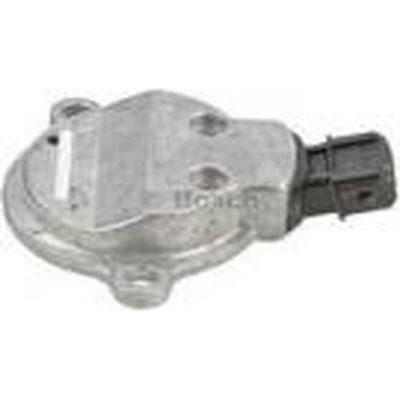
- Failing Crankshaft or Camshaft Position Sensor (Common) — The PCM relies on these sensors to calculate engine speed and position. A faulty sensor sending erratic data corrupts the torque calculation, triggering U1424 alongside codes like P0335 or P0340. 🎬 Watch: A quick fix for U1424 and camshaft sensor codes.
- Engine Misfires or Performance Issues (Common) — Misfires (code P0300) cause erratic crankshaft rotation. The PCM interprets this inconsistent speed as an implausible torque signal. The root cause is the misfire itself, usually bad spark plugs, ignition coils, or fuel injectors.
- Weak or Failing Battery / Alternator (Less Common) — Low voltage during startup or alternator spikes cause communication glitches between computer modules. This triggers 'U' (network) codes, including U1424, without any actual part failure.
- Failing Throttle Body or Position Sensor (Less Common) — The throttle position sensor measures gas pedal input. Erratic signals conflict with other data, corrupting the torque calculation and triggering the code.
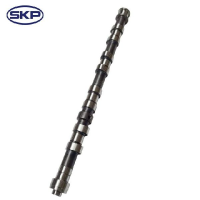
- Slipped Camshaft Tone Ring (Rare) — On 3.6L V6 engines, the reluctor wheel pressed onto the camshaft physically slips. This mechanical failure reports incorrect timing, triggering U1424 and P0018, requiring full camshaft replacement.
- Wiring Harness or Connector Issue (Rare) — Chafed wires, loose grounds, or corroded connectors on the CAN bus network corrupt the signal between the PCM and TCM.
Symptoms
- Check Engine Light is On — The Malfunction Indicator Lamp (MIL) illuminates on the dashboard.
- Vehicle Enters 'Limp Mode' — The vehicle severely reduces power and locks into a single gear (often 2nd or 3rd) to protect the engine and transmission.
- Harsh or Erratic Shifting — The transmission shifts poorly, slams into gear, or refuses to shift because it receives confusing torque information.
- Electronic Throttle Control (ETC) Light On — The 'red lightning bolt' warning light illuminates, indicating a problem with the electronic throttle system. 🎬 Watch: Troubleshooting the red lightning bolt and limp mode.
- Traction Control Light is On — The stability or traction control system disables itself because it relies on accurate engine torque data to function.
- Engine Stalling or Rough Idle — The engine stalls unexpectedly when coming to a stop or idles roughly.
- No-Crank or No-Start Condition (also visible on scanner) — In severe cases, the communication failure prevents the engine from cranking or starting.
Diagnostic Flowchart
Tap your situation to follow the diagnostic path that matches what you're seeing on this code.
Common Fixes & Costs
- PCM/TCM Software Update — Parts: $0, Labor: $150-$300, ~1.5 hr book time (Professional)
- Replace Camshaft Position Sensor
— Parts: $25-$60, Labor: $80-$150, ~0.8 hr book time
(DIY)
Jeep Grand Cherokee / Cherokee / Dodge Durango (3.6L/3.2L): OEM 5149141AF (Alt: {"brand": "Bosch", "part_number": "0232103052"}, {"brand": "Denso", "part_number": "196-4005"}) - Replace Crankshaft Position Sensor
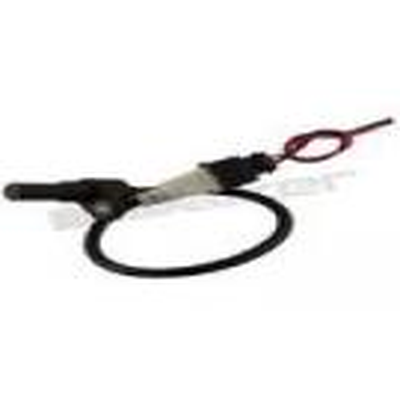
— Parts: $25-$75, Labor: $100-$200, ~1.2 hr book time
(Intermediate)
Jeep Grand Cherokee / Dodge Durango (3.6L): OEM 68079375AD (Alt: {"brand": "NTK", "part_number": "EH0392"}) - Replace Electronic Throttle Body
— Parts: $250-$400, Labor: $100-$200, ~0.9 hr book time
(Intermediate)
Jeep Grand Cherokee / Dodge Durango (3.6L): OEM 05184349AF (Alt: {"brand": "Dorman", "part_number": "977-794", "price_comparison": "$248"}) - Replace Camshaft Assembly
— Parts: $200-$500, Labor: $600-$1200, ~6.5 hr book time
(Professional)
Jeep/Dodge/Chrysler (3.6L Pentastar, Left Exhaust): OEM 5184377AG (Alt: {"brand": "Melling", "part_number": "MCL-2207"})
DIY vs Professional
- PCM/TCM Software Update 🟢 Beginner
Tools: Proprietary dealership scan tool (e.g., wiTECH), stable voltage power supply. - Replace Camshaft Position Sensor 🟢 Beginner
Tools: Basic hand tools (ratchet, 10mm socket, T30 Torx bit), pocket screwdriver. - Replace Crankshaft Position Sensor 🟢 Beginner
Tools: Socket set (10mm), ratchet, extensions, torque wrench. - Replace Electronic Throttle Body 🟢 Beginner
Tools: Socket set (8mm, 10mm), flathead screwdriver. - Replace Camshaft Assembly 🟢 Beginner
Tools: Extensive professional toolset, including timing chain tools, torque wrenches, and engine lifting equipment.
Used vs. New Parts: Buying Guide
When a used part is worth it: For electronic parts like a throttle body, a used OEM part from a low-mileage vehicle is a cost-effective alternative to a low-quality new aftermarket part.
Donor-vehicle mileage cap: roughly under 80000 miles for the part to have meaningful remaining life.
Donor quality checklist:
- Verify the part number matches exactly.
- Check for a warranty (typically 30-90 days from reputable sellers).
- Inspect for physical damage, corrosion, or signs of excessive wear.
Decision logic:
- If The part is a simple sensor (Cam/Crank) and the cost for a new OEM or high-quality aftermarket part is under $100 → Buy new for the longer warranty and reliability.
- If The part is a more complex assembly (Throttle Body) and the budget is tight → A used OEM part is a better choice than a cheap, new, no-name aftermarket part.
- If The vehicle has high mileage (>150k miles) and you're trying to minimize repair cost → A used part is an acceptable risk, but understand it has a limited remaining lifespan.
Warranty tradeoff: Used parts typically come with a 30-90 day warranty. New aftermarket parts offer warranties from 1 year to limited lifetime. New OEM parts usually have a 1-2 year warranty.
Worst-case if a used part fails: $200-$500 if a used electronic part fails shortly after installation, requiring you to pay for labor a second time plus the cost of another part.
What Happens If You Wait — Timeline
- 0-1 month: Check Engine Light is on. Vehicle occasionally hesitates or shifts harshly, but drives normally. The code appears intermittently. (MPG impact: 0-2%% · Added cost: $0)
- 1-3 months: Vehicle enters 'limp mode' frequently, limiting power and getting stuck in one gear. Stalling at stops occurs, putting severe stress on transmission clutches. (MPG impact: 5-15%% · Added cost: $50-$150)
- 3-6 months: If caused by a misfire, raw fuel continuously dumps into the exhaust, melting and clogging the catalytic converter's internal honeycomb structure. (MPG impact: 15-25%% · Added cost: $1,200-$2,500)
- 6+ months: Sustained operation with erratic torque signals causes premature failure of transmission clutch packs. A simple electronic fix becomes a major mechanical overhaul. (MPG impact: 10-20%% · Added cost: $3,500-$7,000+)
Cost of Not Fixing It
- 0-1 month: Erratic shifting, vehicle entering 'limp mode,' and potential stalling. This creates a significant safety risk and undue stress on transmission components. (Added cost: Negligible, but high safety risk.)
- 1-6 months: If the root cause is an engine misfire, unburnt fuel enters the exhaust and overheats the catalytic converter, leading to permanent damage. (Added cost: $1,000-$3,000)
- 6+ months: Sustained poor communication and erratic shifting causes excessive wear on transmission clutches and internal components, leading to premature transmission failure. (Added cost: $3,500-$7,000+)
Diagnosis Steps
- Scan for All Trouble Codes
Use an OBD-II scanner to read codes from all modules (Engine, Transmission, ABS, BCM). U1424 is a secondary code. Primary codes like P0335 (crank sensor) or P0300 (misfire) point to the root cause.
Tools: OBD-II Scanner (Advanced) (Beginner) - Diagnose Other Codes First
If codes like P0335, P0340, or P0300 are present, fix them immediately. U1424 is a symptom of these primary failures. Replacing a faulty camshaft sensor automatically clears the U1424 code.
Tools: OBD-II Scanner, Specific tools for the primary code (Intermediate) - Check for Technical Service Bulletins (TSBs)
Check ALLDATA or a dealer for TSBs related to U1424. A software update is the most frequent fix for Stellantis vehicles.
Tools: VIN, Phone or Computer (Beginner) - Test the Battery and Charging System
Perform a load test and verify alternator output is 13.2-14.5V. Low voltage causes false network codes. Clean the main engine and transmission ground connections.
Tools: Multimeter, Battery Load Tester, Basic Hand Tools (Beginner) - Inspect Wiring Harnesses
Visually inspect harnesses between the PCM and TCM for chafing, melting, or corrosion, especially where the harness rubs against the engine or passes through the firewall.
Tools: Flashlight, Mirror (Intermediate) - Test Sensor Voltages
Back-probe the Cam/Crank sensors. Verify a steady 5.0V reference, solid ground (< 3 Ohms), and clean signal wire. A Throttle Position Sensor should sweep smoothly from ~0.5V to ~4.5V.
Tools: Multimeter, Back-probe kit (Advanced) - Check CAN Bus Resistance
Disconnect the battery. Measure resistance between OBD-II Pin 6 and Pin 14. A healthy network reads 60 Ohms. 120 Ohms indicates an open circuit; 0 Ohms indicates a short.
Tools: Multimeter (Advanced) - Analyze Sensor Waveforms
Use a lab scope to view the crank/cam sensor patterns. Look for dropouts or glitches a multimeter misses. The square wave pattern must be clean and consistent.
Tools: Lab Scope / Oscilloscope (Professional) - Perform a PCM/TCM Software Update
If a TSB exists, a professional must reprogram the module using a stable 13.2-13.5V power supply. Stop DIY diagnostics here and take the vehicle to a properly equipped shop.
Tools: Professional Diagnostic Tool (e.g., wiTECH), Stable Power Supply (Professional)
When This Code Triggers (Freeze-Frame Conditions)
- Engine Coolant Temp: 180-210°F (Fully warmed up (closed loop operation).)
- RPM: 1300-2500 (Light acceleration or steady cruise.)
- Engine Load: 25-50% (During a gear shift or under light to moderate, steady throttle.)
- Vehicle Speed: 35-55 mph (Steady highway driving, often when the transmission is about to shift.)
Related Codes
- P1DD2 — Means 'Torque Request Signal From TCM Denied'. U1424 is the TCM complaining about bad data, while P1DD2 is the PCM denying the request. They appear together and point to the exact same root cause.
- P0335 / P0339 — Crankshaft Position Sensor circuit codes. A bad crank signal provides incorrect engine speed data, making the torque calculation implausible. P0335 is the primary fault; U1424 is the symptom.
- P0340 / P0344 — Camshaft Position Sensor codes. A fault here causes erratic engine timing, leading the PCM to calculate an incorrect torque value. Fix the cam sensor issue first.
- U0402 — Means 'Invalid Data Received From TCM'. U1424 is a specific complaint about the torque signal, whereas U0402 is a general communication fault. Both are fixed by the same software updates.
Climate & Environmental Factors
- High Humidity / Moisture: High humidity accelerates corrosion on electrical connectors and wiring. This corrosion increases resistance and corrupts data signals between modules, triggering communication codes like U1424.
- Cold Weather: Extreme cold causes a weak battery's voltage to drop significantly during startup. This low system voltage causes communication glitches between the PCM and TCM, leading to false U-codes.
- High Altitude: Altitude affects engine performance and air-fuel mixture, which, combined with a borderline sensor or sensitive software, contributes to an implausible torque calculation.
How to Talk to a Mechanic About This Code
Say this: "I have a check engine light and my scanner shows code U1424, and my vehicle is experiencing limp mode. I know this is common on my vehicle and is often caused by a software glitch or a failing sensor. I'd like to schedule a diagnostic to first check for any Technical Service Bulletins for a PCM or TCM software update. Please check for any other stored codes in all modules before recommending part replacements."
This signals you are an informed customer. It directs the technician to the most likely cause (software) and prevents them from starting with expensive, unnecessary diagnostics. Mentioning other modules shows you understand this is a network code.
Avoid saying:
- 'My check engine light is on, can you look at it?'
- 'My car is acting weird, I think it's the transmission.'
- 'Just fix whatever is wrong.'
Questions to ask before authorizing the repair:
- Did you check for TSBs, and is my PCM/TCM software the latest version?
- If you are recommending a part, what specific test confirmed its failure (e.g., sensor voltage reading, scope pattern, resistance test)?
- Are there any other trouble codes stored in the other modules, like the ABS or BCM?
- What is the warranty on this specific repair, including labor?
Where to Take It: Dealer vs Independent vs Chain
- Dealer:
Highly Recommended. The dealership is the best-equipped and most direct route to a fix, since the #1 cause is a software update only they can reliably perform.
Best for: Vehicles where a software update is the most likely fix (most Chrysler/Dodge/Jeep/Ram)., Vehicles still under powertrain or emissions warranty., Complex diagnostics where manufacturer-specific tools (like wiTECH) are required.
Downsides: Higher labor rates (1.5-2x vs. independent)., Less willing to install customer-supplied or used parts. (Typical cost: +50% vs. baseline) - Independent Shop:
Acceptable, with caution. A good choice if you've confirmed the cause is a sensor or wiring, or if the shop can prove they have the capability to flash Stellantis modules.
Best for: Out-of-warranty vehicles where the cause is a known sensor or wiring issue., Shops that specialize in your vehicle's brand and advertise having OEM-level diagnostic and programming tools.
Downsides: Many shops lack the expensive, subscription-based tools to perform PCM/TCM software updates on newer vehicles., Quality and diagnostic capability vary widely. (Typical cost: +0% vs. baseline) - Chain Shop:
Not Recommended. The diagnostic complexity and high probability of needing a software flash make chain shops a poor choice for this specific code.
Best for: Simple, unrelated maintenance like oil changes or tire rotations.
Downsides: Technicians lack experience with complex network codes., Do not have the tools to perform a software update., High pressure to sell parts leads to misdiagnosis (e.g., recommending a new transmission). (Typical cost: -10% vs. baseline)
When to Walk Away From the Repair
If the total estimated repair cost exceeds 50% of the car's current private-party value, seriously consider selling or trading in the vehicle instead of repairing it.
- Car worth $11500, fix is $250: Fix it. A simple software update is a tiny fraction of the car's value.
- Car worth $8000, fix is $1500: Fix it. A camshaft replacement is a significant repair, but it's still well below the 50% threshold.
- Car worth $3500, fix is $1800: Walk away. The repair cost is over 50% of the vehicle's value. It's not an economically sound repair.
What Scan Tool You Need for This Code
Minimum: A scanner that reads manufacturer-specific codes from all modules, including the Transmission Control Module (TCM) and ABS.
A basic $20 code reader only checks for generic engine codes ('P' codes) and will NOT see the 'U' code from the transmission module. You will have an incomplete and misleading diagnosis.
Budget: BlueDriver Pro (~$120) — Connects to your smartphone and reads codes from all modules (Engine, Transmission, ABS, Airbag) on Chrysler/Dodge/Jeep vehicles, which is essential for diagnosing U1424. It provides live data to monitor sensor performance.
Mid-range: Foxwell NT510 Elite (~$180) — A powerful handheld tool that offers full-system diagnostics and bi-directional controls (active tests) for a specific vehicle brand. This allows you to command components to work, helping isolate failures beyond just reading codes.
Professional: Autel MaxiCOM MK808 / MK808BT (~$450-600) — Provides OE-level diagnostics for all systems, extensive service functions (like relearns and calibrations), and bi-directional control. This is an entry-level professional tool that gives a DIYer almost everything a shop uses for diagnostics.
Rent vs buy: The free 'loan-a-tool' scanners at auto parts stores are basic code readers that cannot read transmission or network codes. For this specific code, you need a more capable scanner. Buying a tool like the BlueDriver is a worthwhile investment.
How to Clear the Code After You Fix It
- Reconnect battery if disconnected for repair
- Use an OBD-II scan tool to clear all diagnostic trouble codes
- Perform a complete drive cycle to allow readiness monitors to run.
Drive cycle (~30 minutes): Cold start the engine and let it idle for 5 minutes to enter closed loop. Drive at a steady speed between 40-60 mph for at least 8 minutes. Come to a stop and idle for 3 minutes. Drive again at speeds over 20 mph for 2 minutes. Turn the vehicle off and leave it off for 10 minutes.
Readiness monitors affected: Catalyst monitor, O2 sensor monitor, EVAP System Monitor, EGR System Monitor
Before emissions retest: drive at least 100 miles to fully set monitors.
Watch out for:
- Disconnecting the battery clears the code but resets all emissions readiness monitors, causing an automatic emissions test failure.
- The code returns quickly if the underlying root cause (e.g., bad sensor, outdated software) is not fixed.
Will This Fail Emissions / State Inspection?
Yes — this code typically fails an OBD-II emissions inspection.
- California: An illuminated Check Engine Light results in an automatic failure of the smog check. All readiness monitors must be set to 'Ready'; clearing the code requires a significant drive cycle before a retest is possible.
- New York: An illuminated Check Engine Light is an automatic failure of the NYS emissions inspection.
- Texas: In the 17 counties requiring emissions testing, an active Check Engine Light is an automatic failure. After a repair, you can only have one readiness monitor 'Not Ready' (two for model years 1996-2000) to pass.
Most Commonly Affected Vehicles
- Jeep Grand Cherokee (2015-2017) — Extremely prone to this code due to PCM/TCM software glitches. TSBs 18-095-15 and 18-049-20 call for a software update as the primary fix.
- Jeep Cherokee (2014-2017) — Commonly caused by outdated PCM software. TSBs 18-085-17 (3.2L) and 18-110-20 (2.4L) point to this as a 'false failure' corrected by a reflash.
- Dodge Durango (2014-2017) — Requires a PCM software update per TSB 18-024-17 Rev. C to resolve overly sensitive diagnostic parameters.
- Ram 1500 (2013-2017) — Indicates outdated PCM software. TSB 18-103-16 REV. B resolves U1424 with a PCM flash.
- Dodge Charger (2013-2017) — Requires a PCM software update per TSBs 18-073-20 and 18-062-17 to resolve overly sensitive diagnostic parameters.
- Chrysler 300 (2013-2017) — Indicates outdated PCM/TCM software. TSBs 21-010-17 and 18-073-20 update software and improve shifting performance.
- Chrysler 200 (2015-2016) — Software updates are the primary fix. TSBs 18-052-16 REV. A (3.6L) and 18-051-16 REV. B (2.4L) address U1424 by reprogramming the PCM.
- Jeep Renegade (2015-2017) — Caused by a software glitch requiring a PCM re-flash (TSB 18-081-19). On 2.4L models, it is a secondary code caused by excessive oil consumption.
Manufacturer-Specific Notes
- Chrysler/Dodge/Jeep/Ram (FCA/Stellantis): U1424 is overwhelmingly a software issue. The first diagnostic step must be checking for TSBs. Replacing parts before checking for a software update is an expensive mistake.
- Stellantis (3.6L Pentastar V6): A slipped camshaft tone ring is a known mechanical cause. This sets timing correlation codes (P0018) alongside U1424. Replacing the camshaft position sensor will not fix the problem; the entire camshaft assembly must be replaced.
- Stellantis (2.4L Tigershark I4): U1424 is a direct symptom of excessive oil consumption. Low oil levels lead to engine performance problems and misfires, causing the torque signal to become implausible.
- Ford, GM, Toyota, Nissan: This code is exceptionally rare outside of Stellantis vehicles. If you see this code on a non-Stellantis vehicle, it is a scanner misinterpretation or a highly unusual module failure.
Real Owner Stories
2016 Ram 1500 3.6L at 160K miles with intermittent limp mode
Vehicle randomly entered limp mode with check engine and traction control lights on. Codes P0365, U1424, and P1DD2 were present.
What they tried:
- Replaced one camshaft position sensor.
- Replaced the battery.
Outcome: The owner discovered the truck had two camshaft position sensors and the second one had failed. Replacing the second factory sensor resolved the issue.
Lesson: On V6/V8 engines, confirm which bank is failing if you have a cam sensor code. U1424 and P1DD2 are direct symptoms of a bad cam/crank sensor signal.
2014 Dodge Durango 3.6L with multiple codes after engine work
After replacing rocker arms and lifters, the vehicle entered limp mode throwing codes P0344, P06DD, U1424, and P1DD2.
What they tried:
- Replaced both camshaft sensors.
- Performed a hard reset on the computer.
Outcome: The issue persisted. The combination of cam and oil pressure codes on a 3.6L Pentastar points to a complex oiling or timing component issue, which impacts the VVT system and the torque signal.
Lesson: If U1424 appears with major engine codes after a repair, the root cause is mechanical. The engine's mechanical problem must be fixed first; the torque code is a downstream effect.
2015 Jeep Cherokee Latitude stalling after a dealership recall
Three weeks after a PCM/TCM software recall, the vehicle stalled at lights and set codes U1424 and U11E9.
What they tried:
- Took the vehicle to an independent mechanic for diagnosis, suspecting a faulty dealership software flash.
Outcome: The independent shop confirmed the flash process was corrupted. The dealership eventually corrected the software.
Lesson: If U1424 appears shortly after a software update, it indicates a botched flash process. Module software requires a stable 13.2-13.5V power supply during updates to prevent corruption.
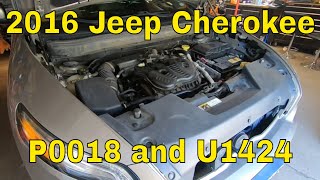
2016 Jeep Cherokee 3.2L with intermittent limp mode and codes P0018 and U1424
The vehicle occasionally went into limp mode with a timing correlation code (P0018) and the implausible torque code (U1424).
What they tried:
- Mechanic used timing tools to check the camshafts.
Outcome: The tone ring on the exhaust camshaft had slipped slightly, causing the sensor to send incorrect data. The fix required replacing the entire camshaft assembly.
Lesson: On 3.6L/3.2L Pentastar engines, a timing correlation code (P0018) with U1424 means the camshaft tone ring physically failed. Replacing the sensor will not work.
How to Prevent This Code From Triggering
- Keep Battery Terminals Clean and Tight (Every 6 months) — Corroded battery terminals cause voltage drops and electrical noise, disrupting communication between the PCM and TCM and leading to false network codes.
- Periodically Check for Software Updates (Annually) — For Stellantis vehicles, the #1 cause of U1424 is overly sensitive software. Checking for TSBs during routine service preemptively fixes the logic causing the false code.
- Inspect and Secure Wiring Harnesses (During oil changes) — Vibrations cause wiring harnesses to rub against the engine, leading to chafing and short circuits on the CAN bus network. Securing harnesses prevents physical damage.
- Address Engine Oil Leaks Promptly (As needed) — Oil leaking from valve covers seeps into sensor connectors, degrading the connection and causing the sensor to send faulty signals.
- Use a Quality Surge Protector for Jump Starts (When jump-starting) — Improper jump-starting creates voltage spikes that damage electronic modules. Using a surge-protected jump box protects the PCM and TCM from electrical overstress.
Frequently Asked Questions
Can I fix code U1424 myself?
It depends on the cause. Faulty sensors or weak batteries are DIY-friendly repairs. However, the most common fix is a software update requiring dealer-level tools.
What are the most common misdiagnoses for U1424?
The most expensive mistake is replacing the transmission or torque converter. This code indicates an electronic data problem, not internal mechanical failure. Another misdiagnosis is replacing cam sensors when the actual cause is a slipped camshaft tone ring.
Will clearing the code fix the problem?
No. Clearing the code only turns off the check engine light temporarily. The code returns as soon as the computer detects the implausible signal again.
Does U1424 mean I need a new transmission?
Almost never. This is a communication code about the data the transmission receives. Do not replace the transmission for this code without exhaustive electronic diagnosis.
How much does it cost to fix code U1424?
A dealership software update typically costs $150 to $300. Replacing a faulty sensor ranges from $125 to $400. If a misfire destroyed the catalytic converter, repairs escalate to $1,500 or more.
Why did this code appear after a different repair?
Disconnecting the battery during repairs causes temporary communication glitches that set this code. It also appears if a newly installed sensor is faulty or if wiring was disturbed.
What if U1424 is the only code stored?
If U1424 is the only code, the most likely cause is a software issue requiring a TSB check. If software is current, thoroughly test the battery, alternator, and wiring harnesses for voltage drops.
What is the difference between U1424 and P1DD2?
They are two sides of the same failed conversation. U1424 is the TCM complaining about weird data, while P1DD2 is the PCM denying the torque request. They appear together and point to the exact same root cause.
Key Takeaways
- Code U1424 is a software glitch in over 70% of Stellantis vehicles, requiring a PCM/TCM update rather than physical part replacement.
- Always diagnose and fix accompanying codes like P0335 (Crank Sensor) or P0300 (Misfire) first, as U1424 is usually a secondary symptom.
- Do not replace the transmission for a U1424 code; this is an electronic data conflict, not an internal mechanical failure.
- Check your battery and alternator output, as voltage drops below 12.4V frequently trigger false CAN bus communication errors.
Helpful Videos
Shop the Parts Behind U1424
Below are the parts most often responsible for code U1424, ranked by how frequently each one is the actual culprit (per the diagnosis above). Tap any to see what we have for your vehicle.




The information in this article is provided for general reference and educational purposes only. Vehicle specifications, procedures, and part compatibility can vary by production date, trim level, and region. Always consult your vehicle's factory service manual and verify part numbers before purchasing or performing repairs. Safety-critical components such as airbags, seat belts, and braking systems should be installed by a qualified professional.
- 🧭 Diagnostic Flowchart
- 🎬 Helpful Videos
- 🛍️ Shop This Part
- What Does U1424 Mean?
- Can I Drive With U1424?
- Common Causes
- Symptoms
- Common Fixes & Costs
- DIY vs Professional
- Used vs. New Parts: Buying Guide
- What Happens If You Wait — Timeline
- Cost of Not Fixing It
- Diagnosis Steps
- When This Code Triggers (Freeze-Frame Conditions)
- Related Codes
- Climate & Environmental Factors
- How to Talk to a Mechanic About This Code
- Where to Take It: Dealer vs Independent vs Chain
- When to Walk Away From the Repair
- What Scan Tool You Need for This Code
- How to Clear the Code After You Fix It
- Will This Fail Emissions / State Inspection?
- Most Commonly Affected Vehicles
- Manufacturer-Specific Notes
- Real Owner Stories
- 2016 Ram 1500 3.6L at 160K miles with intermittent limp mode
- 2014 Dodge Durango 3.6L with multiple codes after engine work
- 2015 Jeep Cherokee Latitude stalling after a dealership recall
- 2016 Jeep Cherokee 3.2L with intermittent limp mode and codes P0018 and U1424
- How to Prevent This Code From Triggering
- Frequently Asked Questions
- Can I fix code U1424 myself?
- What are the most common misdiagnoses for U1424?
- Will clearing the code fix the problem?
- Does U1424 mean I need a new transmission?
- How much does it cost to fix code U1424?
- Why did this code appear after a different repair?
- What if U1424 is the only code stored?
- What is the difference between U1424 and P1DD2?
- Key Takeaways
- 🎟️ Get 5% Off