

U1424 on 2007-2017 Jeep Patriot: Implausible Engine Torque Signal Fixes
Code U1424 on a Jeep Patriot means the Powertrain Control Module (PCM) is receiving illogical torque data. This is often a software issue fixed by a dealer update or a symptom of another problem like a dirty throttle body or a failing crankshaft sensor. Do not replace the transmission. Cleaning the throttle body is a common first step.
- U1424 is a communication error, not a transmission failure. Do not replace the transmission.
- The first and easiest step is to thoroughly clean the electronic throttle body.
- If cleaning doesn't work, check for TSBs regarding a PCM software update before replacing parts.
- Always check for other codes. U1424 is often a symptom of a failing crankshaft sensor (P0335) or a vacuum leak (P2173).
- If you have the 'lightning bolt' light and limp mode, the throttle body is the most likely culprit.
What's Unique About the 2007-2017 Jeep Patriot
On the Jeep Patriot and its platform mates (Dodge Caliber, Jeep Compass), this code is frequently a secondary fault triggered by a more common, underlying issue. While many modern Jeeps get this code from software glitches alone, the Patriot is also highly susceptible to a dirty or failing electronic throttle body, which can cause erratic performance that the TCM interprets as an implausible torque signal. The communication between the engine and the Jatco JF011E Continuously Variable Transmission (CVT), common in these vehicles, is sensitive, making this data conflict a frequent symptom when other parts start to fail.
Symptoms You May Notice
- Check Engine Light is on
- Electronic Throttle Control (ETC) 'lightning bolt' warning light is on
- Vehicle enters 'limp mode' with severely limited power and speed
- Harsh or erratic transmission shifting
- Vehicle may not accelerate past a certain speed, like 20 mph
- Stalling, sometimes without warning
- Engine RPMs fluctuate erratically
- Replacing the transmission. This code indicates an electronic data conflict, not a mechanical failure inside the transmission. The transmission is usually the victim of bad data, not the cause of it.
Most Likely Causes
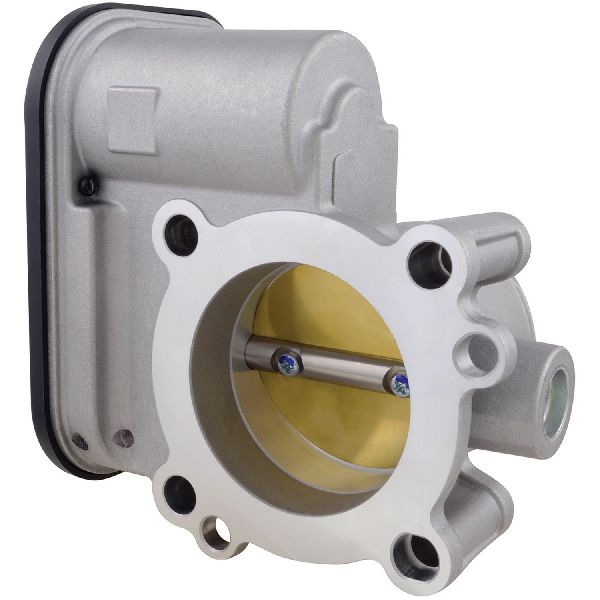
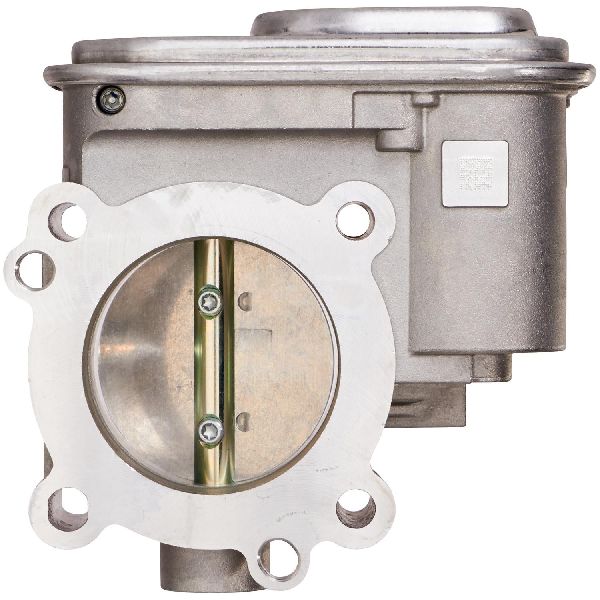
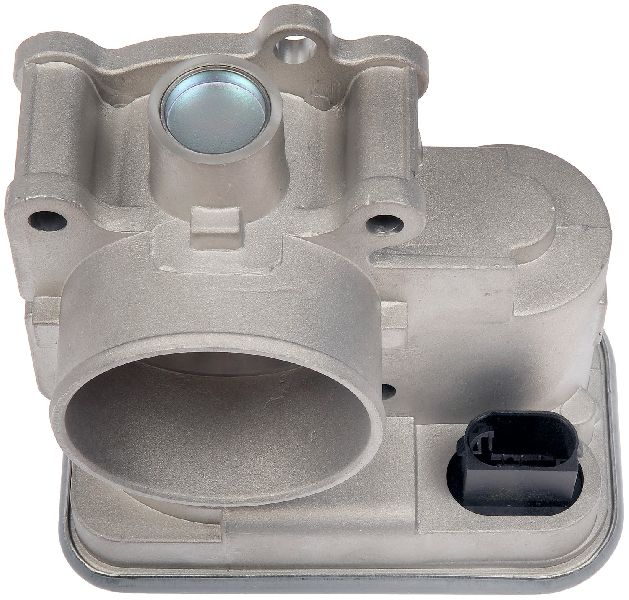
- Dirty or Failing Electronic Throttle Body 🔴 High Probability → Shop Fuel Injection Throttle Body Carbon and oil vapor deposits from the PCV system build up in the throttle body over time, causing the throttle plate to stick or respond slowly. This creates a mismatch between the expected and actual airflow, leading to an implausible torque calculation. The internal plastic gears are also a known failure point.
How to confirm: Remove the air intake duct and visually inspect the throttle plate and bore for a ring of black gunk. With the key on but the engine off, the throttle plate should flutter during a self-test; if it jitters, sticks, or doesn't move, it's faulty.
Typical fix: Start by cleaning the throttle body thoroughly with a dedicated throttle body cleaner and a soft brush/rag. If cleaning doesn't resolve the issue, the entire electronic throttle body assembly needs to be replaced. A throttle relearn procedure should be performed after cleaning or replacement.
Est. part cost: $5-$15 (cleaner), $70-$250 (throttle body) - Outdated Powertrain Control Module (PCM) Software 🟡 Medium Probability → Shop Engine Control Module (ECM) Like many Chrysler/Jeep products, the original factory software can be overly sensitive and flag minor data deviations as a major fault. Manufacturers release TSBs with software updates to correct this logic. TSBs like 18-081-19 and 21-006-17 REV. B directly list U1424 as a code addressed by a PCM flash.
How to confirm: A Jeep dealership or a professional shop with a subscription to OEM data (like a wiTECH scan tool) can check your vehicle's VIN for any open TSBs or available software updates related to PCM/TCM communication.
Typical fix: Reprogramming the PCM and/or TCM with the latest software. This is not a DIY repair.
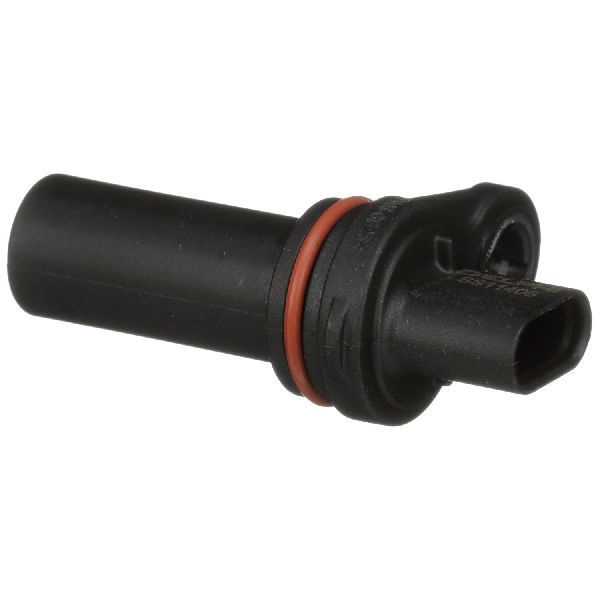
Est. part cost: $0 (if covered by warranty/recall), $100-$250 (shop labor for flashing) - Failing Crankshaft Position Sensor 🟡 Medium Probability → Shop Engine Crankshaft Position Sensor
How to confirm: This will almost always set a specific code like P0335 or P0339 alongside U1424. A failing sensor can produce a noisy signal or drop out entirely, which can be observed with an oscilloscope. Using an OEM Mopar sensor for replacement is highly recommended, as aftermarket sensors are known to fail prematurely or not work at all.
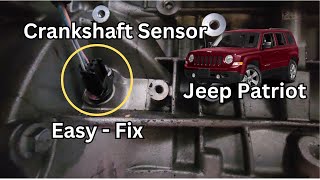
Typical fix: Replace the crankshaft position sensor. On the 2.0L/2.4L engine, it is located on the back of the engine block, below the exhaust manifold, and can often be accessed from underneath the vehicle.
Est. part cost: $30-$80 - Vacuum Leak ⚪ Low Probability A common source of vacuum leaks on the 2.4L engine is a failed intake manifold gasket. Unmetered air entering the engine will cause performance issues like a rough, fluctuating idle that can trigger the U1424 code.
How to confirm: A mechanic can perform a smoke test to find the source of the leak. A hissing sound from the engine bay at idle is also a key indicator. A fluctuating idle RPM at a stoplight is a common symptom reported by owners.
Typical fix: Replace the failed gasket or hose. The intake manifold gasket is a common failure point and often needs replacement to resolve persistent idle and performance issues.
Est. part cost: $20-$50 (gasket)
Rare But Worth Checking
- Weak Battery or Poor Ground Connection: Chrysler/Jeep electrical systems are sensitive to low voltage. Before diving into complex diagnostics, ensure the battery is healthy (load test it) and check that the main engine and chassis ground connections are clean and tight.
- Failing Transmission Control Module (TCM): → Shop Transmission Assembly While less common than other causes, a failing TCM can cause a variety of communication codes, including U1424. This is usually diagnosed after all other possibilities have been ruled out.
Diagnosis Steps
- Scan for all codes. Note any codes that accompany U1424, as it is often a secondary code. Prioritize diagnosing sensor-specific (P0335) or system-specific (P2173) codes first.
- Inspect and Clean the Throttle Body. Remove the air intake hose and check for heavy carbon buildup. Clean it thoroughly with appropriate throttle body cleaner. Do not use brake or carb cleaner, as it can damage the protective coating.
- Perform Throttle Position Relearn. After cleaning or replacing the throttle body, a relearn procedure is often necessary to sync the pedal and throttle body. A common method is to turn the key to the 'ON' position (without starting) for a few seconds, then off, and repeat.
- Check for TSBs. Contact a dealer or use a professional resource to check if a software update for the PCM or TCM is available for your VIN to address this code. TSBs 18-081-19 and 21-006-17 REV. B are known to address U1424.
- Test the Battery and Grounds. Load test the battery and inspect the main battery terminals, engine block ground strap, and chassis grounds for corrosion and tightness.
- Perform a Smoke Test. If a vacuum leak is suspected (especially with code P2173), a smoke test is the most effective way to locate the source, such as a bad intake manifold gasket.
- Diagnose Specific Sensors. If codes like P0335 are present, follow the specific diagnostic procedure for testing the crankshaft position sensor and its circuit. Use an OEM part for replacement.
Parts You'll Likely Need
- Electronic Throttle Body
(OEM #4891735AC (superseded by 4891735AD), 68420395AB)— If cleaning does not resolve the issue, the internal electronic sensors or motor may have failed, requiring full replacement. This is a very common fix for this code on the Patriot.
Trusted brands: Mopar, Standard Motor Products (SMP), Hitachi
OEM price range: $200-$300
Aftermarket price range: $70-$150 - Crankshaft Position Sensor
(OEM #5033307AE)— This sensor provides critical engine speed data. Its failure directly leads to torque calculation errors and is a common cause for U1424 when accompanied by a P0335 code.
Trusted brands: Mopar, Bosch, NGK/NTK, Delphi
OEM price range: $60-$100
Aftermarket price range: $25-$50
Related Codes That Often Appear With This One
- U1407 — Stands for 'Implausible Engine Torque Request Signal Received'. It's a closely related communication error often set at the same time as U1424.
- U1425 — Stands for 'Implausible Pedal Position Signal Received'. This points towards an issue with the throttle body or accelerator pedal, which are key inputs for the torque calculation.
- P0335 / P0339 — These codes indicate a fault in the crankshaft position sensor circuit. A bad signal from this sensor is a direct cause for the PCM miscalculating engine torque.
- P2173 — This code indicates a 'High Airflow/Vacuum Leak Detected'. A significant vacuum leak, often from the intake manifold gasket, can cause the engine to run erratically, triggering the U1424 code as a symptom.
Technical Service Bulletins (TSBs) & Recalls
- https://static.nhtsa.gov/odi/tsbs/2019/MC-10167949-9999.pdf (TSB 18-081-19)
- https://static.nhtsa.gov/odi/tsbs/2017/MC-10140027-9999.pdf (TSB 23-007-17 REV. B for subframe rust)
Platform-Specific Known Issues
- A recall (N52) was issued for some 2014 Patriots with the 2.4L engine due to potential loss of oil pressure from debris in the balance shaft bearings, which could lead to engine failure and related codes.
- A warranty extension (X69) was issued for 2008-2012 Patriots in salt-belt states for front and rear crossmember corrosion, which can cause vibrations and other issues, though not directly linked to U1424.
Mechanic-Grade Diagnostic Values
- Throttle Body Mounting Bolt Torque — expected: 80 inch-pounds. Failure: Improper torque can lead to vacuum leaks or damage to the throttle body housing.
Scan Tool Commands That Help
- wiTECH: Reprogram PCM / Flash ECU — This is the primary fix when TSBs indicate the U1424 code is caused by overly sensitive software logic. It updates the module with the latest manufacturer calibration.
- wiTECH: Learn ETC (Electronic Throttle Control) — This function is required after replacing the throttle body or reprogramming the PCM to recalibrate the throttle plate's fully open and closed positions, ensuring accurate response.
- wiTECH: Restore Vehicle Configuration — After flashing or replacing a module like the PCM, this function re-synchronizes it with the rest of the vehicle's network (CAN bus) to ensure all modules communicate correctly.
Wiring & Ground Locations
- Totally Integrated Power Module (TIPM) — Located in the left side of the engine compartment, it serves as the main fuse and relay center.. The TIPM is a central node for the CAN C and CAN B networks. An internal failure can corrupt data packets between the PCM and TCM, causing communication codes like U1424.
- Powertrain Control Module (PCM) — Located on the left side of the engine compartment.. The PCM calculates and sends the engine torque signal. This code is triggered when other modules find the PCM's signal implausible.
- Transmission Control Module (TCM) for CVT — Located within the body harness, below the left side of the instrument panel (inside the cabin).. The TCM is often the module that receives the implausible torque signal from the PCM and reports the U1424 fault.
- G110 — A primary ground point located on the right front engine compartment side frame.. A poor ground at this location can cause unstable voltage for various engine sensors and modules, leading to erratic data and communication faults.
- G301 — A body ground point located in the left side of the luggage compartment.. While less likely to be the primary cause, poor body grounds can introduce electrical noise into the CAN bus system, contributing to communication errors.
- CAN C & CAN B Bus — These are the data wiring networks that run throughout the vehicle, connecting all major control modules.. This is the network over which the 'implausible' signal is transmitted. Damage or chafing to these wires can directly cause this code.
Real Owner Repair Stories
- YouTube user 'Larry the Mechanic' (2014 Jeep Patriot 2.0L) — ETC 'thunderbolt' light, check engine light, limp mode (won't drive over a certain speed). Codes U1407, U1424, U1425 were present.
❌ Tried (didn't work) The owner noted that common advice suggested replacing the throttle body and reprogramming the computer.
✅ What actually fixed it The issue was resolved by simply cleaning the brown gunk and carbon deposits from the inside of the electronic throttle body with a soft brush and dedicated throttle body cleaner. After cleaning and clearing the codes, the car drove normally. - CarComplaints.com user report (2016 Jeep Patriot Latitude 2.4L at 50,000 miles) — Erratic driving, sudden loss of power, sputtering, incorrect shifting, and flashing ETC and traction control lights. The vehicle went into limp mode, limiting speed to 20 mph.
❌ Tried (didn't work) Having a mechanic check the code, which came back as 'unknown'.
✅ What actually fixed it The owner replaced the electronic throttle body themselves. The problem was fixed, and they noted the original part had something broken and rattling around inside it. - Reddit user in r/JeepPatriot (2014 Jeep Patriot) — Recurring throttle body related codes and limp mode.
❌ Tried (didn't work) Replacing the throttle body with a part from Amazon., Replacing the throttle body a second time with a part from eBay.
✅ What actually fixed it The actual root cause was discovered to be a cracked intake manifold gasket, which was causing a major vacuum leak.
"I Checked Everything" — The Actual Cause
- In one documented case, a vehicle owner replaced the throttle body twice to fix related codes without success. The actual cause was not the throttle body itself but a cracked intake manifold gasket causing a significant vacuum leak, which was tricking the system into setting throttle-related fault codes.
When the Usual Fixes Don't Work
- While a faulty or dirty throttle body is a very high probability cause, it is not guaranteed to be the root of the problem. One owner on a forum replaced their throttle body twice with aftermarket units, but the limp mode and codes persisted. The final, correct diagnosis was a cracked intake manifold gasket causing a severe vacuum leak, which the PCM interpreted as a throttle system fault. This highlights the importance of diagnosing any accompanying codes, such as P2173 (High Airflow/Vacuum Leak Detected), before replacing the throttle body.
OEM Part Supersession History
4891735AC→4891735AD— Standard part revision and update by the manufacturer.
Heads up: Part 4891735AD is a direct replacement for 4891735AC and fits a wide range of 2007-2017 models with the 1.8L, 2.0L, and 2.4L engines.
Model Year Variations Within This Range
- 2007-2017: The throttle body electrical connector may have changed from a double-row pin design to a single-row design during the production run. If replacing a throttle body with one from a different year (e.g., from a junkyard), you may need to splice in the matching harness connector pigtail for it to fit.
Diagnostic Flowchart
Other Known Issues on This Vehicle
Issues unrelated to this code that are worth knowing about as an owner of this generation:
- Premature CVT Failure 🔴 High — Common on pre-2014 models. Symptoms like whining, overheating, and loss of acceleration can appear at various mileages.
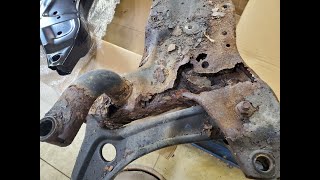
- Front and Rear Subframe Corrosion 🔴 High — Widespread, especially in the Rust Belt. Can lead to structural failure. A design flaw where the A/C drain drips on the frame accelerates rust on some models. (Ref: TSB #23-007-17 REV. B (Warranty Extension X69))
- Cabin Water Leaks 🟠 Medium — Very common. Clogged sunroof drains cause water to leak through the dome light. Leaks also occur at A-pillar and cowl seams. (Ref: STAR Case S1823000053 (Dealer guide for A-pillar leaks))
- Wireless Control Module (WCM) Failure 🟠 Medium — Can cause a no-start condition where the engine won't crank. The security light may also flash.
Used vs. New Parts: Buying Guide for This Vehicle
When a used part is the smart pick: A used OEM throttle body from a low-mileage wrecked vehicle can be a cost-effective alternative to a new aftermarket part. A junkyard is also the best source for obtaining a correct OEM wiring pigtail if the vehicle's original connector is damaged.
Donor-vehicle mileage cap: roughly under 75000 miles for the part to have meaningful remaining life.
What to inspect on the donor part:
- Check for a relatively clean throttle plate, suggesting the donor car was well-maintained.
- Ensure no physical damage, cracks, or corrosion on the housing and electrical connector.
- Ask for the donor vehicle's VIN to verify mileage and rule out a salvage title due to flood damage.
OEM-only on this vehicle (don't cheap out):
- Crankshaft Position Sensor. Forum consensus is overwhelmingly in favor of using only Mopar OEM sensors. Aftermarket crank sensors for this platform are notorious for failing prematurely, being dead-on-arrival, or causing persistent driveability issues even if they clear the initial code.
Aftermarket brands forum-validated for this vehicle:
- For Crankshaft Position Sensor (if OEM is unavailable): NTK (NGK) or Standard Motor Products (SMP), sold at NAPA as the Echlin line, are considered the most reliable alternatives.
- For Throttle Body: Dorman is a frequently mentioned aftermarket brand that is generally considered acceptable.
Brands owners have reported issues with on this vehicle:
- Avoid generic, no-name electronic throttle bodies and crankshaft sensors from online marketplaces like Amazon or eBay. While some users report success, many others experience immediate failure, incorrect performance, or a short service life. Be cautious of counterfeit parts sold as name-brands like NTK on these platforms.
Real Owner Stories
Aggregated from forums and TSBs cited above. Mileages and costs reflect what owners reported in those sources.
2014 Jeep Patriot 2.4L
Symptoms: Electronic Throttle Control 'lightning bolt' warning light came on while driving on the highway, followed by the vehicle entering limp mode.
What fixed it: The owner investigated throttle body cleaning versus replacement after the warning light appeared.
Source hint: Reddit r/JeepPatriot
Related OBD-II Codes
Frequently Asked Questions
Are there any Technical Service Bulletins for U1424 on my Jeep Patriot?
My 2014 Patriot with the 2.4L engine has U1424; is there a relevant recall?
Can I use any cleaner to fix the 'lightning bolt' light and U1424 on my Patriot?
Is the subframe rust on my 2010 Patriot related to the U1424 code?
What specific sensor is recommended if U1424 appears with a crankshaft code?
How do I perform a throttle relearn on my Patriot after cleaning the throttle body?
Helpful Videos

We Have This Part in Stock


The information in this article is provided for general reference and educational purposes only. Vehicle specifications, procedures, and part compatibility can vary by production date, trim level, and region. Always consult your vehicle's factory service manual and verify part numbers before purchasing or performing repairs. Safety-critical components such as airbags, seat belts, and braking systems should be installed by a qualified professional.
- Jeep Patriot:
- 🧭 Diagnostic Flowchart
- 🎬 Helpful Videos
- 🛍️ Shop This Part
- What's Unique About the 2007-2017 Jeep Patriot
- Symptoms You May Notice
- Most Likely Causes
- Rare But Worth Checking
- Diagnosis Steps
- Parts You'll Likely Need
- Related Codes That Often Appear With This One
- Technical Service Bulletins (TSBs) & Recalls
- Platform-Specific Known Issues
- Mechanic-Grade Diagnostic Values
- Scan Tool Commands That Help
- Wiring & Ground Locations
- Real Owner Repair Stories
- "I Checked Everything" — The Actual Cause
- When the Usual Fixes Don't Work
- OEM Part Supersession History
- Model Year Variations Within This Range
- Other Known Issues on This Vehicle
- Used vs. New Parts: Buying Guide for This Vehicle
- Real Owner Stories
- 2014 Jeep Patriot 2.4L
- Related OBD-II Codes
- Frequently Asked Questions
- 🎟️ Get 5% Off