

OBD-II Code U1433: Implausible Ignition Switch Status
What U1433 means, why it triggers, and how to fix it
- OBD-II code U1433 indicates a communication failure regarding the ignition switch status, most frequently causing a no-start condition or preventing the engine from shutting off.
- On 2013-2019 Ram trucks, a leaking third brake light gasket often destroys the Radio Frequency (RF) Hub, requiring a $400-$750 replacement and dealer programming.
- For 2017+ Subaru models, U1433 specifically flags invalid data from the EyeSight system, which requires a $125-$250 software update or a $2,000+ camera recalibration.
- Never replace expensive modules like the BCM or RF Hub without first load-testing the battery, as voltage drops below 12.0V during cranking frequently trigger false U1433 codes.
What Does U1433 Mean?
This trouble code means your car's computer received a nonsensical message from the ignition switch or a related control module. The computer cannot determine if the key is on, off, or in another position. The data regarding the ignition's status is illogical, causing starting problems and electrical network failures.
Technical definition: U1433 is a network code indicating an implausible signal regarding the ignition switch's status. Manufacturer definitions include 'Implausible Ignition Switch Status' (Stellantis), 'Invalid Data Received from EyeSight' (Subaru), 'TCM or ECM Torque Reduction Signal Circuit Malfunction' (Jeep U1433-23), and 'Internal Control Module Memory Check Sum Error' (Dodge U1433-24). All point to a data validity problem on the CAN bus.
Can I Drive With U1433?
Yes, But With Caution. You can drive, but it is a significant gamble. The vehicle frequently fails to restart once turned off, stranding you without warning. This necessitates a $100-$300 tow. In some cases, the engine fails to shut off, draining the battery or creating a security risk if left unattended.
Common Causes
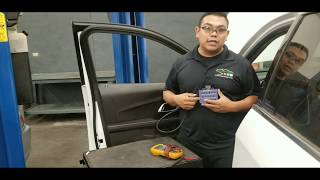
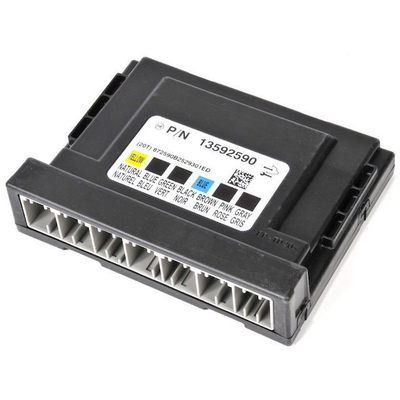
- Defective Radio Frequency Hub (RF Hub) (Very Common) — The RF Hub manages key fobs and the immobilizer system. When it fails, it sends incorrect ignition status data to the Body Control Module (BCM). This is the leading cause on Stellantis vehicles, frequently triggered by water intrusion from a leaking third brake light. 🎬 Watch: How to diagnose Ram ignition and RF Hub issues.
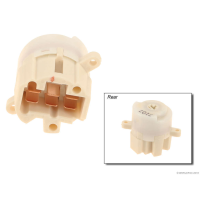
- Faulty Ignition Switch or Actuator Pin (Very Common) — Internal contacts wear out or the actuator pin breaks, preventing the switch from sending a clear signal about the key's position. This occurs frequently in high-mileage vehicles.
- Low or Unstable Battery Voltage (Common) — A weak battery drops below 12.0V during cranking, causing unpredictable behavior in electronic modules. This voltage drop triggers a cascade of false communication errors, including U1433.
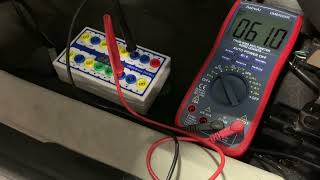
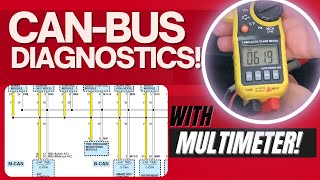
- Wiring and Connection Issues (Common) — Corroded, loose, or rodent-damaged wires between the ignition switch, RF Hub, and BCM interrupt or distort the CAN bus signal. 🎬 See how to test CAN bus resistance with a multimeter.
- Software/Firmware Glitch (Common) — Outdated software causes control modules to send or interpret data incorrectly. Dealers frequently release Technical Service Bulletins (TSBs) with software updates to resolve these specific communication dropouts.
- Faulty EyeSight Camera (Subaru) (Less Common) — On Subaru models, an internal failure of the EyeSight stereo camera assembly sends invalid data to the vehicle's network, triggering U1433 and disabling driver aids.
- Failing Body Control Module (BCM) (Less Common) — An internal failure in the BCM, such as a corroded circuit board or failed capacitor, causes it to misinterpret incoming ignition signals.
- Aftermarket Accessory Interference (Rare) — Incorrectly installed remote starters or alarms interfere with the CAN bus network, creating data conflicts that trigger the code.
Symptoms
- Engine will not crank or start — You turn the key or press the start button, and nothing happens, or you only hear a single click from the starter solenoid.
- Engine does not shut off — You press the stop button or turn the key to 'off', but the engine continues to run and the instrument cluster flickers.
- Intermittent electrical issues — The instrument cluster flickers, warning lights appear and disappear randomly, or accessories like the radio turn on and off.
- Key fob not detected — The vehicle fails to recognize the key fob, preventing passive entry and push-button start. A 'Service Keyless System' message appears.
- EyeSight and driver aids disabled (Subaru) — The EyeSight system, adaptive cruise control, and pre-collision braking disable entirely, accompanied by multiple dashboard warning lights.
- Implausible Ignition Status in Live Data (scan-tool only — no driver-felt sign) — The scan tool PID for ignition status (e.g., 'Run', 'Start', 'Off') contradicts the physical state of the ignition switch.
Diagnostic Flowchart
Tap your situation to follow the diagnostic path that matches what you're seeing on this code.
Common Fixes & Costs
- Replace Radio Frequency (RF) Hub — Parts: $300-$500, Labor: $150-$250, ~1.5 hr book time (Professional)
- Replace Ignition Switch — Parts: $75-$200, Labor: $150-$200, ~1.2 hr book time (Intermediate)
- Update Module Software — Parts: $0, Labor: $125-$250, ~1.5 hr book time (Professional)
- Repair Wiring or Connectors — Parts: $10-$50, Labor: $150-$400, ~2.0 hr book time (Intermediate)
- Replace/Recalibrate EyeSight Camera (Subaru) — Parts: $2000-$3500, Labor: $250-$500, ~2.5 hr book time (Professional)
- Replace and Program Body Control Module (BCM) — Parts: $650-$950, Labor: $150-$250, ~2.0 hr book time (Professional)
DIY vs Professional
- Replace Radio Frequency (RF) Hub — Beginner:
- Replace Ignition Switch — Beginner:
- Update Module Software — Beginner:
- Repair Wiring or Connectors — Beginner:
- Replace/Recalibrate EyeSight Camera (Subaru) — Beginner:
- Replace and Program Body Control Module (BCM) — Beginner:
Used vs. New Parts: Buying Guide
When a used part is worth it: Buying a used security module (RF Hub, BCM) is extremely risky and generally not recommended unless you have professional programming tools.
Donor-vehicle mileage cap: roughly under 50000 miles for the part to have meaningful remaining life.
Donor quality checklist:
- Verify the exact part number matches.
- Check the donor vehicle's VIN history.
- Avoid parts from vehicles with flood damage.
Decision logic:
- If The part is a security module like an RF Hub, BCM, or EyeSight Camera → Buy new or professionally refurbished. Used parts will not work without dealer-level programming.
- If The part is a simple component like an ignition switch → A used part is a reasonable option, but new aftermarket parts are inexpensive and carry warranties.
Warranty tradeoff: Salvage yard parts offer 30-day warranties at best. New OEM parts include 1-year warranties.
Worst-case if a used part fails: $500-$1000 (Cost of defective used module, failed programming fees, and repeat labor)
What Happens If You Wait — Timeline
- First Occurrence: Intermittent no-start occurs. Vehicle starts on the second try. Code U1433 is stored. (MPG impact: 0%% · Added cost: $0)
- Weeks to Months: No-start events increase. Dashboard warning lights flicker. Engine failing to shut off drains the battery. (MPG impact: 0%% · Added cost: $150-$250 (New battery))
- 2-6 months: Fault becomes permanent. Vehicle will not start. Key fob is not detected. (MPG impact: N/A% · Added cost: $300-$600 (Tows and diagnostics))
- 6+ months: Underlying short circuits damage other modules on the CAN bus, such as the BCM. (MPG impact: N/A% · Added cost: $1000-$2500+ (Multiple module replacements))
Cost of Not Fixing It
- Immediate: Vehicle fails to start, leaving you stranded. (Added cost: $100-$300 (Tow fee))
- 0-1 month: Engine fails to shut off, draining the battery completely. (Added cost: $150-$250 (New battery))
- 1-6 months: Vehicle becomes entirely unreliable for daily use, risking stalling in traffic. (Added cost: $200-$600 (Multiple tows))
Diagnosis Steps
- Check the Battery and Grounds
Ensure the battery is fully charged (at least 12.4 volts) and test it under load. Inspect the main chassis and module ground connections for corrosion. Low voltage is the most common cause of false electronic glitches.
Tools: Multimeter, battery load tester, battery terminal cleaner (Beginner) - Scan for All Codes in All Modules
Use an OBD-II scanner capable of reading manufacturer-specific codes from all modules (BCM, RFH, TCM, ABS). Document all 'U' (network) or 'B' (body) codes before clearing.
Tools: Advanced OBD-II Scanner (Beginner) - Inspect Fuses and Relays
Check all fuses related to the ignition system, BCM, and RF Hub. For 2013-2018 Ram trucks, verify fuse F52 in the under-hood fuse box.
Tools: Fuse puller, multimeter (Beginner) - Test the Ignition Switch
For vehicles with a physical key, turn the vehicle on and gently wiggle the key in the ignition. If the engine stalls or the instrument cluster flickers, the ignition switch is faulty.
Tools: None (Intermediate) - Inspect Wiring and Connectors
Visually inspect the wiring harnesses connected to the ignition switch, BCM, and RF Hub. Look for damage, corrosion, or water intrusion, especially near the rear window in Ram trucks.
Tools: Flashlight, trim removal tools (Intermediate) - Live Data PID Verification
Monitor the live data PID for 'Ignition Switch Status' from the BCM. The value must change logically as you operate the ignition. If it reads 'Off' when the key is in 'Run', the implausible data condition is confirmed.
Tools: Advanced OBD-II Scanner (Advanced) - Perform RF Hub Bypass Test (Stellantis)
Access the BCM and locate the ignition run/start signal wire. Using a fused jumper wire, apply 12V to this circuit while attempting to start the vehicle. If the engine cranks, the RF Hub is failing to send the start signal.
Tools: Power probe or fused jumper wire, wiring diagram (Advanced) - RF Hub Power and Ground Test
Disconnect the RF Hub harness. Use a 12V test light connected to ground to probe the 'Fused B(+)' circuit; it should illuminate brightly. Connect the test light to 12V and probe the 'Ground' circuit; it should also illuminate brightly.
Tools: 12V test light, wiring diagram (Advanced) - Inspect CAN Bus Junctions
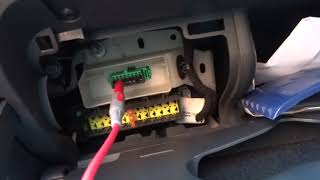
Measure resistance between Pin 6 (CAN-H) and Pin 14 (CAN-L) at the OBD-II port with the battery disconnected. A healthy network reads 60 ohms. Inspect CAN star-connectors (like those behind the glove box in Jeep JLs) for corrosion.
Tools: Multimeter, wiring diagram (Advanced) - Advanced Diagnostics
A professional technician uses an oscilloscope and advanced scan tool to monitor network traffic, check for TSB software updates, and pinpoint voltage drops in specific circuits.
Tools: Advanced scan tool, oscilloscope, wiring diagrams (Professional)
When This Code Triggers (Freeze-Frame Conditions)
- Event Trigger: Key On or Start Attempt (The fault logs the moment the ignition state changes and invalid data is detected.)
- Vehicle Speed: 0 mph (U1433 faults related to no-start conditions log when the vehicle is stationary.)
- Battery Voltage: 11.5V - 14.5V (A value below 12.0V in the freeze frame points to a weak battery as the root cause.)
- Module Status: Varies (Indicates which module reported the error or lost communication.)
Related Codes
- U0100 — Lost Communication with ECM/PCM. U1433 indicates implausible data, while U0100 indicates a total loss of communication. Diagnose U0100 first.
- U0141 — Lost Communication with Body Control Module. If present with U1433, the BCM's power, ground, or the module itself is the primary failure point.
- U0415 — Invalid Data Received From ABS Control Module. Appears with U1433 on Jeeps when the ABS module provides faulty data for stability control.
- B2205 — Ignition Switch Run/Start Circuit Error. Points directly to a physical fault in the ignition switch or its dedicated wiring, rather than a network issue.
Climate & Environmental Factors
- High Humidity: Accelerates corrosion on electrical connectors and ground points. This directly exacerbates the known Ram truck issue where water leaks from the third brake light onto the RF Hub.
- Extreme Cold: Drops marginal batteries below the 12.0V minimum required by control modules during a cold start, triggering false U1433 communication glitches.
How to Talk to a Mechanic About This Code
Say this: "I have a U1433 code and intermittent no-start issues. Please start by load-testing the battery, checking grounds, and looking for TSBs before quoting a module replacement. If it's a Ram truck, please check for water intrusion near the RF Hub."
Guides the technician toward a logical diagnostic path, ruling out simple issues (battery, software) before assuming an expensive module failed.
Avoid saying:
- 'My car won't start, can you fix it?'
- 'The check engine light is on, just do whatever it takes.'
- 'I think I need a new computer.'
Questions to ask before authorizing the repair:
- What were the results of the battery load test?
- Did you find any corroded wiring or blown fuses?
- What specific tests did you perform to condemn the RF Hub or BCM?
- Does the quoted price include the cost of programming the new module?
Where to Take It: Dealer vs Independent vs Chain
- Dealer:
Best for: Vehicles under warranty., Complex repairs requiring module programming (RF Hub, BCM, EyeSight)., Applying software updates from TSBs.
Downsides: Highest labor rates., Defaults to replacing entire assemblies rather than component-level repair. (Typical cost: +50% vs. baseline) - Independent Shop:
Recommended with caution. Great for initial diagnosis, but confirm they have OEM-level tools to program a new RF Hub or BCM before authorizing module replacement.
Best for: Out-of-warranty vehicles with clear-cut issues like a bad ignition switch., Owners looking for better diagnostic pricing.
Downsides: May lack the OEM tools to program a new security module. (Typical cost: +0% vs. baseline) - Chain Shop:
AVOID for diagnosis. They are not equipped to properly diagnose or repair the root cause of a U1433 code.
Best for: Battery testing and replacement.
Downsides: Technicians lack training for complex network diagnostics., Not equipped for module programming. (Typical cost: -10% vs. baseline)
When to Walk Away From the Repair
If the estimated repair cost exceeds 50% of the car's private-party market value, consider selling or trading it in.
- Car worth $25000, fix is $750: Fix it. The repair cost for an RF Hub replacement is well below the threshold.
- Car worth $6000, fix is $3500: Walk away. An EyeSight camera replacement on an older Subaru exceeds half the car's value.
- Car worth $4000, fix is $900: Borderline. If the rest of the car is in excellent shape, fix it. If it has other issues, sell it.
What Scan Tool You Need for This Code
Minimum: A scanner that reads manufacturer-specific codes (U-codes, B-codes) from all modules, including the BCM and RF Hub.
A basic $20 code reader only scans the engine computer for generic 'P' codes. It will not see U1433 or any related body codes.
Budget: BlueDriver Pro (~$90) — Reads codes from all modules, views freeze-frame data, and monitors live data to confirm the diagnosis.
Mid-range: Foxwell NT510 Elite (~$180) — Offers full-system diagnostics and bidirectional controls to actively test components.
Professional: Autel MaxiSys MS906 (~$1200) — Provides full bidirectional control and the ability to perform module programming for security components after replacement.
Rent vs buy: Buy a budget scanner for diagnosis. If the fix requires module replacement, take it to a shop with a professional-level tool, as programming is not DIY-friendly.
How to Clear the Code After You Fix It
- Reconnect battery if it was disconnected for the repair.
- Use a quality OBD-II scan tool to clear all fault codes from all modules.
- Perform a complete drive cycle to allow the vehicle's readiness monitors to run.
Drive cycle (~30 minutes): 1) Cold start (vehicle sat for 8+ hours). 2) Idle for 3 minutes. 3) 15 minutes of mixed city driving (25-45 mph). 4) 10 minutes of steady highway driving (55-60 mph). 5) 5-minute cool-down idle.
Readiness monitors affected: Catalyst monitor, EVAP monitor, Oxygen (O2) sensor monitor
Before emissions retest: drive at least 100 miles to fully set monitors.
Watch out for:
- Clearing the code without a drive cycle leaves emissions monitors 'incomplete', causing a failed smog test.
- The code returns immediately if the root electrical fault is not repaired.
Will This Fail Emissions / State Inspection?
Yes — this code typically fails an OBD-II emissions inspection.
- California: An active U1433 code is an automatic failure. All readiness monitors must be 'complete' to pass after repair.
- New York: Any code illuminating the Check Engine Light results in an immediate failure.
- Texas: An illuminated Check Engine Light causes failure in the 17 counties requiring emissions testing.
Most Commonly Affected Vehicles
- Ram 1500 (2013-2019) — Extremely prone to RF Hub failures caused by water leaking from the third brake light directly onto the module.
- Jeep Grand Cherokee (2014-2018) — Frequently experiences this code due to communication errors between the ignition switch and BCM.
- Subaru Forester, Crosstrek, Impreza, WRX (2017-2024) — U1433 translates to 'Invalid Data Received from EyeSight', pointing to a fault with the stereo camera or requiring a TSB software update.
- Dodge Charger, Durango (2006-2014) — Highly susceptible to broken ignition switch actuator pins.
- Ram TRX (2021-2023) — Prone to engine shut-off failures and instrument cluster flickering traced back to faulty grounds or weak batteries.
- Jeep Wrangler (JL) (2018-2023) — Experiences U1433 due to dual-battery system failures or corrosion in the CAN bus star-junction connectors behind the glove box.
- Chrysler Pacifica (2017-2022) — Suffers from the same RF Hub failure rates as other Stellantis vehicles, leading to no-start conditions.
Manufacturer-Specific Notes
- Stellantis (Chrysler, Dodge, Jeep, Ram): This code frequently points to a failed Radio Frequency (RF) Hub. In Ram trucks, a leaking third brake light drips water directly onto this module, destroying it.
- Subaru: U1433 almost always translates to 'Invalid Data Received from EyeSight'. Technicians must check for TSBs (like 07-225-24R) providing software updates before replacing the expensive camera.
- Jeep: U1433 often includes a suffix. U1433-23 indicates a 'TCM or ECM Torque Reduction Signal Circuit Malfunction', pointing to transmission/engine communication rather than the ignition switch.
- Dodge: Uses suffixes to specify the failure. U1433-24 points to an 'Internal Control Module Memory Check Sum Error', indicating an internal failure of a control unit.
Real Owner Stories
2018 Ram 1500 with intermittent no-start
Truck randomly failed to start. Key fobs did not unlock doors. Battery tested good.
What they tried:
- Disconnected and reconnected the battery.
- Tested the battery.
- Towed to the dealer.
Outcome: Dealer diagnosed a failed RF Hub with no sign of water intrusion. The RF Hub was replaced and programmed, resolving the issue.
Lesson: The RF Hub can fail internally without water damage. If key fobs fail and the battery is good, the RF Hub is the primary suspect.
2019 Subaru Forester with multiple dash lights
Check Engine, EyeSight, and RAB lights illuminated. Driver-assist features disabled.
What they tried:
- Mechanic scanned and reset codes, but they returned.
Outcome: U1433 pointed to an EyeSight system fault. The dealer applied a software update per a TSB, fixing the communication error.
Lesson: On modern Subarus, U1433 points to EyeSight. Check for TSBs before authorizing expensive camera replacements.
2021 Ram TRX that wouldn't shut off
Engine would not turn off after parking. Instrument cluster flickered, draining the battery.
What they tried:
- Checked fuses.
- Attempted jump-start.
- Scanned for codes, revealing U1433.
Outcome: The root cause was a failing battery causing widespread electronic chaos, mimicking a bad RF Hub.
Lesson: A weak battery mimics module failure. Thoroughly load-test the battery before replacing expensive components.
How to Prevent This Code From Triggering
- Reseal Third Brake Light Gasket (Ram Trucks) (Once, or upon any sign of headliner moisture.) — Prevents water from leaking directly onto the RF Hub module, avoiding a $700+ repair.
- Clean Battery Terminals and Check Grounds (Every 12 months.) — Prevents voltage drops during cranking that trigger false U1433 communication codes.
- Apply Dielectric Grease to Connectors (When servicing connectors.) — Seals out moisture, preventing pin corrosion that causes intermittent network faults.
- Implement Rodent Deterrents (Ongoing if parking outdoors.) — Prevents rodents from chewing soy-based wiring insulation, avoiding expensive harness repairs.
Frequently Asked Questions
What is an RF Hub and what does it do?
The Radio Frequency (RF) Hub controls keyless entry, push-button start, and the immobilizer system in Stellantis vehicles. When it fails, it cannot authorize the ignition, leading to a U1433 code and a no-start condition.
Can a leaking window cause the U1433 code?
Yes, specifically in 2013-2019 Ram trucks. A failed third brake light gasket allows water to drip directly onto the RF Hub located on the back cab wall. This causes corrosion and electronic failure, triggering the code.
I replaced the RF Hub/BCM and it still won't start. What did I miss?
These security modules require dealer-level programming to sync with your vehicle's VIN and immobilizer. A new RF Hub or BCM will not function out of the box. You must tow the vehicle to a shop equipped with the proper scan tool.
Why are so many other warning lights on with the U1433 code?
Systems like ABS and traction control rely on ignition status data to function. When U1433 sets, these modules lose critical data and trigger their own warning lights. This creates a 'Christmas tree' effect on your dashboard.
Can a bad key fob battery cause code U1433?
No. While a dead fob battery prevents the car from starting, it does not trigger a U1433 code. This code strictly relates to the vehicle's internal modules sending invalid network signals.
What are common misdiagnosis mistakes for code U1433?
The most common mistake is replacing the $700 BCM or RF Hub without load-testing the 12V battery first. Low voltage during cranking causes module communication to drop out, setting false U-codes. Always verify power, grounds, and fuses before condemning a module.
Do I have to go to the dealer to fix a U1433 code?
For module replacements (RF Hub, BCM, EyeSight), you generally need a dealer or a highly equipped independent shop to perform the required programming. Simple repairs like replacing a physical ignition switch or fixing a wire can be done by any competent mechanic.
Can I just clear the code and see if it comes back?
You can, but U1433 is a hard fault that typically returns immediately upon the next key cycle. Clearing the code does not fix the underlying hardware or software failure.
Key Takeaways
- OBD-II code U1433 indicates a communication failure regarding the ignition switch status, most frequently causing a no-start condition or preventing the engine from shutting off.
- On 2013-2019 Ram trucks, a leaking third brake light gasket often destroys the Radio Frequency (RF) Hub, requiring a $400-$750 replacement and dealer programming.
- For 2017+ Subaru models, U1433 specifically flags invalid data from the EyeSight system, which requires a $125-$250 software update or a $2,000+ camera recalibration.
- Never replace expensive modules like the BCM or RF Hub without first load-testing the battery, as voltage drops below 12.0V during cranking frequently trigger false U1433 codes.
Helpful Videos
Shop the Parts Behind U1433
Below are the parts most often responsible for code U1433, ranked by how frequently each one is the actual culprit (per the diagnosis above). Tap any to see what we have for your vehicle.

The information in this article is provided for general reference and educational purposes only. Vehicle specifications, procedures, and part compatibility can vary by production date, trim level, and region. Always consult your vehicle's factory service manual and verify part numbers before purchasing or performing repairs. Safety-critical components such as airbags, seat belts, and braking systems should be installed by a qualified professional.
- 🧭 Diagnostic Flowchart
- 🎬 Helpful Videos
- 🛍️ Shop This Part
- What Does U1433 Mean?
- Can I Drive With U1433?
- Common Causes
- Symptoms
- Common Fixes & Costs
- DIY vs Professional
- Used vs. New Parts: Buying Guide
- What Happens If You Wait — Timeline
- Cost of Not Fixing It
- Diagnosis Steps
- When This Code Triggers (Freeze-Frame Conditions)
- Related Codes
- Climate & Environmental Factors
- How to Talk to a Mechanic About This Code
- Where to Take It: Dealer vs Independent vs Chain
- When to Walk Away From the Repair
- What Scan Tool You Need for This Code
- How to Clear the Code After You Fix It
- Will This Fail Emissions / State Inspection?
- Most Commonly Affected Vehicles
- Manufacturer-Specific Notes
- Real Owner Stories
- 2018 Ram 1500 with intermittent no-start
- 2019 Subaru Forester with multiple dash lights
- 2021 Ram TRX that wouldn't shut off
- How to Prevent This Code From Triggering
- Frequently Asked Questions
- What is an RF Hub and what does it do?
- Can a leaking window cause the U1433 code?
- I replaced the RF Hub/BCM and it still won't start. What did I miss?
- Why are so many other warning lights on with the U1433 code?
- Can a bad key fob battery cause code U1433?
- What are common misdiagnosis mistakes for code U1433?
- Do I have to go to the dealer to fix a U1433 code?
- Can I just clear the code and see if it comes back?
- Key Takeaways
- 🎟️ Get 5% Off