

OBD-II Code U1440: Implausible Data from 4WD System
What U1440 means, why it triggers, and how to fix it
- Code U1440 disables your 4WD system and defaults to 2WD due to an implausible sensor signal, not a mechanical failure.
- On 2019-2022 Ram 1500s, a DTCM software glitch is the #1 cause, requiring a 1-hour dealer reflash outlined in TSB 08-083-20.
- Inspect the Front Axle Disconnect (FAD) actuator connector first, as spilled oil from routine maintenance frequently destroys this $150-$300 part.
- Never replace the transfer case position sensor or shift motor without first verifying your vehicle's DTCM software is fully up to date.
- A basic $20 OBD-II reader cannot diagnose this issue; you need an all-module scanner capable of reading C-codes and U-codes from the drivetrain computer.
What Does U1440 Mean?

Code U1440 indicates the Drivetrain Control Module (DTCM) received an implausible signal. A sensor is reporting the transfer case is in a gear ratio that is physically impossible for its current commanded state. This points to a communication error, software bug, or electronic fault rather than a mechanical failure.
Technical definition: The formal SAE/OBD-II definition is "Implausible Transfer Case Ratio High Received" or "Implausible/Missing Programmed Transfer Case Hi Ratio". The DTCM received a value outside the expected range or physically impossible for the current transfer case state. On some platforms, it sets if the expected transfer case message is missing for 10.5 seconds.
Can I Drive With U1440?
Yes, But With Caution. Yes, but the vehicle defaults to 2WD as a safety measure. Avoid off-roading or deep snow until repaired. Driving on dry pavement is generally safe, though intermittent system engagement causes unexpected driveline binding or clunks, adding severe stress to drivetrain components.
Common Causes

- Drivetrain Control Module (DTCM) Software Glitch (Very Common) — On Stellantis vehicles (Ram, Jeep, Dodge), this code is frequently triggered by a software bug. A 1-hour software update from the dealer, outlined in Technical Service Bulletins (TSBs), is the most common fix.
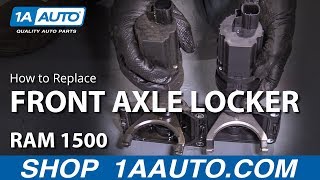
- Faulty Front Axle Disconnect (FAD) Actuator (Common) — This is the most common hardware failure. The actuator fails internally, or its electrical connector becomes contaminated with oil. On many Ram and Jeep models, it sits directly below the oil filter; spillage during oil changes saturates the connector and destroys the unit. 🎬 Watch: How to replace a damaged Front Axle Disconnect actuator.
- Poor Electrical Connection (Common) — Connectors at the DTCM (on the frame rail), the transfer case, or the FAD actuator become loose, corroded, or filled with water, disrupting communication. TSB 08-144-22 addresses improperly seated DTCM connectors on 2022 Ram 1500s.
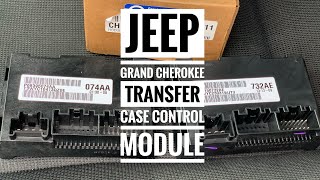
- Failed Drivetrain Control Module (DTCM/TCCM) (Less Common) — The module itself fails internally. On the Jeep Grand Cherokee (WK2), the DTCM is located under the driver's seat and is a known failure point that triggers a host of 4WD-related codes. 🎬 See how to replace the DTCM under the driver's seat.
- Damaged Wiring Harness (Less Common) — Wires leading to 4WD components suffer damage from road debris, improper repairs, or chafing against the frame. Soy-based wire insulation attracts rodents, who chew through the harnesses.
- Faulty Transfer Case Position Sensor (Rare) — The sensor reporting the transfer case gear fails, sending incorrect data. However, mechanics often mistakenly replace this part when the true cause is a software glitch or wiring issue.
- Aftermarket Modifications or Tuning (Rare) — Using aftermarket electronic devices that interface with the vehicle's computer (e.g., Tazer for Jeep/Ram) triggers communication codes like U1440, especially after changing tire size or gear ratio settings.
Symptoms

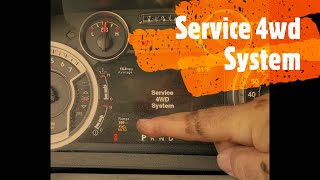
- "Service 4WD" Light — The most common and immediate symptom. A warning message appears on the instrument cluster.
- Unable to Shift 4WD Modes — The vehicle gets stuck in 2WD and ignores attempts to shift into 4-High or 4-Low.
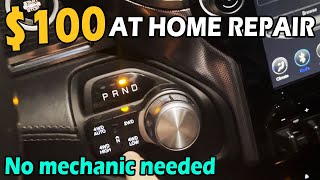
- Blinking 4WD Selector Lights — The lights on the 4WD selector switch (e.g., 4-Auto, 4-High) flash continuously instead of staying solid, 🎬 Watch this guide to fixing flashing 4WD selector lights. indicating a system fault.
- Driveline Clunks or Clicks — You hear or feel unusual clunks, bumps, or excessive clicking from the transfer case area, especially when on and off the throttle.
- Traction Control (ESC) Light On — Because the 4WD system is integral to stability control, a fault in one triggers a warning light for the other.
- Stored Fault Code (scan-tool only — no driver-felt sign) — The U1440 code is stored in the Drivetrain Control Module and requires an all-module OBD-II scanner to read.
Diagnostic Flowchart
Tap your situation to follow the diagnostic path that matches what you're seeing on this code.
Common Fixes & Costs
- DTCM Software Update (Reflash) — Parts: $0, Labor: $150-$250 (One hour of shop labor), ~1.0 hr book time (Professional)
- Replace Front Axle Disconnect (FAD) Actuator
— Parts: $80-$300, Labor: $100-$200, ~1.2 hr book time
(Intermediate)
Ram 1500 (2019+): OEM 68216944AA (Alt: Dorman 600-399, Standard Motor Products TCA-81)
Jeep Gladiator/Wrangler (JT/JL): OEM 68216944AA (Alt: Dorman 600-399) - Clean and Secure Electrical Connectors — Parts: $10-$20, Labor: $0-$150, ~0.5 hr book time (DIY)
- Replace Drivetrain Control Module (DTCM)
— Parts: $100-$400, Labor: $100-$250, ~0.8 hr book time
(Intermediate)
Jeep Grand Cherokee (WK2, 2018-2019): OEM 68330924AA, 68412634AE (Alt: Refurbished units from Auto Computer Performance) - Repair Damaged Wiring — Parts: $10-$50, Labor: $150-$600, ~2.5 hr book time (Professional)
DIY vs Professional
- DTCM Software Update (Reflash) 🟢 Beginner
Tools: Proprietary diagnostic and programming tool (e.g., wiTECH for Stellantis). - Replace Front Axle Disconnect (FAD) Actuator 🟢 Beginner
Tools: Basic socket set (12mm/13mm), ratchet, torque wrench, drain pan, safety glasses. - Clean and Secure Electrical Connectors 🟢 Beginner
Tools: Electrical contact cleaner, small brush, dielectric grease, flashlight. - Replace Drivetrain Control Module (DTCM) 🟢 Beginner
Tools: Basic socket set, trim removal tools. - Repair Damaged Wiring 🟢 Beginner
Tools: Wire strippers, crimpers, solder, heat shrink tubing, multimeter.
Used vs. New Parts: Buying Guide
When a used part is worth it: A used FAD actuator is a cost-effective option. A used DTCM makes sense if it is a confirmed plug-and-play unit (like on Jeep WK2s) and comes from a reputable seller with a warranty.
Donor-vehicle mileage cap: roughly under 75000 miles for the part to have meaningful remaining life.
Donor quality checklist:
- Verify the exact part number matches; superseded numbers are not compatible.
- Ensure the donor vehicle did not have electrical or water damage.
- Buy from sellers offering at least a 90-day warranty.
Decision logic:
- If The fix is a software reflash → Only a new software installation from a dealer is possible.
- If The failed part is the FAD actuator and the budget is tight → A new aftermarket or used OEM part offers significant savings.
- If The failed part is the DTCM and it requires programming → Buy new from the dealer. Used modules are often not reprogrammable.
- If The failed part is the DTCM and it is a known plug-and-play unit → A used module from a reputable source is an acceptable risk.
Warranty tradeoff: Used parts carry a 30-90 day warranty. New aftermarket parts offer 1-year to lifetime warranties. New OEM parts carry a 1-2 year warranty.
Worst-case if a used part fails: $300-$600 if a used part fails, requiring repeat labor and another replacement part.
What Happens If You Wait — Timeline
- 0-1 Month: The 'Service 4WD' light appears, and code U1440 is stored. The 4WD system defaults to 2WD. You hear occasional clicks or clunks. (MPG impact: 0%% · Added cost: $0)
- 1-6 Months: The system attempts to engage at random, causing driveline binding. This stresses U-joints, CV axles, and the transfer case chain during turns on dry pavement. (MPG impact: 0-1%% · Added cost: $50-$150 in diagnostic fees.)
- 6-18 Months: Accelerated wear leads to failure of a U-joint or CV axle. You notice vibrations or louder clunking noises. (MPG impact: 1-3%% · Added cost: $500 - $1,500 to replace a failed driveshaft, U-joints, or CV axle.)
- 18+ Months: Catastrophic failure. The internal chain in the transfer case stretches or breaks, or gears are destroyed from chronic binding stress. (MPG impact: N/A (vehicle may be disabled)% · Added cost: $2,500 - $5,000+ for a complete transfer case replacement.)
Cost of Not Fixing It
- Short-Term (0-3 Months): Loss of 4WD functionality. The vehicle defaults to 2WD, making it less capable in snow or mud. You experience intermittent clunks or binding. (Added cost: $0)
- Medium-Term (3-12 Months): Intermittent system engagement causes driveline binding, accelerating wear on U-joints, CV joints, and the transfer case chain, especially on dry pavement. (Added cost: $200 - $800 for replacing worn U-joints or CV axles.)
- Long-Term (12+ Months): Chronic driveline binding destroys internal transfer case components (chain or gears) and damages the front or rear differentials. (Added cost: $2,500 - $5,000+ for a transfer case replacement.)
Diagnosis Steps
- Check for Technical Service Bulletins (TSBs)
Search online for your vehicle's make, model, year, and "U1440 TSB". The most common cause for Ram and Jeep is a known software issue requiring a dealer reflash. Key TSBs for Ram are 08-067-21, 08-083-20, and 08-144-22.
Tools: Internet access, Vehicle VIN (Beginner) - Read All Trouble Codes from All Modules
Use an OBD-II scanner capable of reading codes from all modules (DTCM, ABS, BCM), not just the engine. Look for related codes like U0403, C1403, or C147B to pinpoint the problem.
Tools: OBD-II Scanner (all-module capable) (Beginner) - Inspect Electrical Connectors
Visually inspect connectors at the Front Axle Disconnect (under the oil filter), Transfer Case Shift Motor, and DTCM (driver's side frame rail or under driver's seat). Disconnect, clean with electrical contact cleaner, add dielectric grease, and reconnect securely.
Tools: Safety glasses, gloves, flashlight, electrical contact cleaner, dielectric grease (Intermediate) - Inspect Wiring Harnesses
Trace the wiring going to the transfer case and front axle. Look for chafing against the frame, melting near exhaust components, or evidence of rodents chewing on the soy-based insulation.
Tools: Flashlight, safety glasses (Intermediate) - Perform a Hard Reset
Disconnect the negative battery terminal for 30 minutes. This resets all vehicle modules and clears temporary 'logic lock' states. If the code returns immediately upon the next drive cycle, a persistent hard fault exists.
Tools: 10mm wrench (Beginner) - [PRO TIP] Test Front Axle Disconnect (FAD) Actuator Circuit
With the FAD unplugged, test for 12V power and ground at the harness. Back-probe the control wire; it reads ~10-12V in 2WD. Command a 4WD shift; voltage drops to near 0V. If power, ground, and command signals are present but the axle doesn't engage, the FAD actuator is faulty.
Tools: Multimeter, back-probe kit, advanced scan tool (optional) (Advanced) - [PRO TIP] Check CAN Bus Network Resistance
With the battery disconnected, measure resistance between CAN High and CAN Low pins at the OBD-II port (Pins 6 and 14). A healthy network reads 60 ohms. A reading of 120 ohms indicates an open circuit; significantly below 60 ohms indicates a short circuit.
Tools: Multimeter (Advanced) - [PRO TIP] Test Transfer Case Position Sensor Circuit
If code C1403 is present, disconnect the sensor and DTCM. Measure resistance between the signal circuit and ground; below 5.0 ohms indicates a short to ground. Measure resistance of the signal wire from sensor to module; above 5.0 ohms indicates an open circuit.
Tools: Multimeter, professional scan tool, wiring diagrams (Advanced) - Verify Software Version / Test Components
Check the DTCM software version against known TSBs using dealer-level tools (wiTECH). If software is current, test individual circuits and components based on the specific codes found.
Tools: Professional scan tool (wiTECH), multimeter (Professional)
When This Code Triggers (Freeze-Frame Conditions)
- Vehicle Speed: 30-60 mph (Sets during steady-state highway driving when the module expects consistent data.)
- Engine RPM: 1500-2500 RPM (Occurs under light to moderate engine load, not during heavy acceleration.)
- 4WD Mode: 2WD or 4-Auto (Logged when the commanded state conflicts with an implausible sensor reading.)
- System Voltage: 13.5-14.5 V (Sets when the battery and charging system are operating normally.)
Related Codes
- U0403 — Means 'Implausible Data Received From T-case'. Often set together with U1440 by the same software glitch. TSBs for Ram list both codes as resolved by the DTCM software update.
- C1403 — Points specifically to the 'Transfer Case Range Position Sensor'. TSBs state to perform the DTCM software update even if C1403 is present, as the glitch causes the module to misinterpret a good sensor signal.
- C147B — Specific to the Front Axle Disconnect (FAD) actuator. If paired with U1440, the FAD is almost certainly the failed hardware component, bypassing software concerns.
- U0102 — Means 'Lost Communication With Transfer Case Control Module'. A more severe fault than U1440, indicating the module has lost total power, ground, or is completely dead.
Climate & Environmental Factors
- Corrosion (Salt Belt Regions): Road salt and brine accelerate the degradation of electrical connectors and wiring for components mounted on the frame or axles, like the DTCM and FAD actuator. This corrosion destroys connections and triggers U1440.
- Humidity and Water Intrusion: High humidity or driving through deep water introduces moisture into electrical connectors. This moisture causes short circuits between pins and leads to corrosion, disrupting sensitive data signals.
- Extreme Cold: Extreme cold causes plastics and wiring insulation to become brittle, making them susceptible to cracking and vibration damage. It also alters the electrical resistance of circuits, causing intermittent faults.
How to Talk to a Mechanic About This Code
Say this: "I have a 'Service 4WD' light and my scanner is showing code U1440. I know on my [vehicle year/make/model] this is often related to a DTCM software TSB or the Front Axle Disconnect actuator. I'd like to schedule a diagnostic appointment to confirm the cause."
This signals you are an informed customer. It directs the technician to the most likely causes first, saving diagnostic time and preventing unnecessary part replacements.
Avoid saying:
- 'My 4-wheel drive is broken.'
- 'My 'Service 4WD' light is on, can you just fix it?'
- 'I think I need a new transfer case.'
Questions to ask before authorizing the repair:
- Did you check for Technical Service Bulletins related to code U1440 for my VIN?
- If the fix is a software update, can you confirm the current and new software part numbers?
- If you are recommending a part replacement, how did you rule out a software issue or a bad connection?
- Is this repair covered under my powertrain warranty or any other extended coverage?
Where to Take It: Dealer vs Independent vs Chain
- Dealer:
Best first stop for Ram/Jeep owners due to the high likelihood of a software-based TSB fix. If out of warranty, get the diagnosis here, but consider an independent shop for hardware replacement.
Best for: Vehicles under warranty., Cases where a software update (reflash) is the most likely fix, requiring proprietary tools (wiTECH)., Confirming TSB applicability for your specific VIN.
Downsides: Highest labor rates., Quick to replace parts rather than diagnose complex wiring issues. (Typical cost: +50% vs. baseline) - Independent Shop:
Excellent choice for hardware-related fixes like replacing the FAD actuator. If a software update is needed, they will send you to the dealer.
Best for: Out-of-warranty vehicles where the cause is a hardware failure (FAD actuator) or wiring issue., Cost-effective diagnosis if they have modern, all-module scan tools.
Downsides: Often lack proprietary tools to perform a DTCM software reflash., Quality varies; ensure the shop is experienced with modern 4WD systems. (Typical cost: +0% vs. baseline) - Chain Shop:
AVOID for diagnosing U1440. The risk of misdiagnosis and unnecessary parts replacement is very high.
Best for: Simple, unrelated maintenance like oil changes or tire rotations.
Downsides: Technicians lack specialized training for complex electronic drivetrain issues., High pressure to upsell leads to misdiagnosis., Lack tools for software updates or in-depth module diagnostics. (Typical cost: -10% vs. baseline)
When to Walk Away From the Repair
If the estimated repair cost for the U1440 fault exceeds 40-50% of your vehicle's current private-party value, consider your options.
- Car worth $30000, fix is $250: Fix it. A software update or simple part replacement is a minor cost relative to the vehicle's value.
- Car worth $15000, fix is $3500: Borderline. If the diagnosis points to a full transfer case replacement, get a second opinion and weigh the cost against trading the vehicle in.
- Car worth $8000, fix is $4000: Walk away. The repair cost is 50% of the vehicle's value, and it's not worth the investment on an older truck.
What Scan Tool You Need for This Code

Minimum: A scanner that reads manufacturer-specific codes (U-codes, C-codes) from the Drivetrain Control Module (DTCM), not just generic engine P-codes.
A basic $20 code reader will not see the U1440 code at all, as it is stored in the 4WD system's computer. You need a tool that scans all vehicle modules.
Budget: BlueDriver Pro (~$100) — Reads and clears enhanced codes (like U1440) from modules like the DTCM on Ford, GM, and Chrysler vehicles. Provides freeze-frame data.
Mid-range: Foxwell NT510 Elite / NT530 (~$180) — Provides OE-level diagnostics. Reads codes from all modules, views live sensor data from the 4WD system, and performs bi-directional controls to test actuators.
Professional: Autel MaxiCOM MK808S / Launch X431 Series (~$400-600) — Offers full bi-directional control to command components like the transfer case motor and FAD actuator directly. Accesses the FCA secure gateway for newer vehicles.
Rent vs buy: Buying a tool like the BlueDriver is a smart investment, as it allows you to read specific 4WD codes and clear them after a DIY repair like cleaning a connector.
How to Clear the Code After You Fix It
- Use an all-module OBD-II scan tool to clear DTCs from the DTCM and all other modules.
- Perform a complete drive cycle to allow readiness monitors to run self-tests.
- Re-scan the vehicle to confirm U1440 has not returned.
Drive cycle (~30 minutes): 1) Cold start (vehicle sits 8+ hours). 2) Idle 3 minutes. 3) Drive steady at 55 mph for 15 minutes. 4) Perform 15 minutes of stop-and-go city driving. 5) Cool down.
Readiness monitors affected: Comprehensive Component Monitor, Misfire Monitor
Before emissions retest: drive at least 100 miles to fully set monitors.
Watch out for:
- Clearing the code with a scanner does not fix the underlying issue; the code returns.
- Disconnecting the battery resets all readiness monitors, resulting in an automatic emissions test failure until a full drive cycle is completed.
- Failing to mix highway and city driving prevents monitors from becoming 'Ready'.
Will This Fail Emissions / State Inspection?
Yes — this code typically fails an OBD-II emissions inspection.
- California: An illuminated 'Service 4WD' or check engine light is an automatic failure. All readiness monitors must be 'Ready' before re-testing.
- New York: Automatic failure if the light is on. After clearing the code, a full drive cycle must be completed; the state allows only one 'Not Ready' monitor.
- Texas: An active U1440 code illuminating a warning light causes an automatic failure. Readiness monitors must be set to 'Ready' to pass.
Most Commonly Affected Vehicles
- Ram 1500 (2019-2022) — Extremely prone to this code due to a documented DTCM software glitch. TSBs 08-067-21 and 08-083-20 apply to 2019-2021 models built before Jan 12, 2021. TSB 08-144-22 addresses faulty DTCM connectors on 2022 models.
- Jeep Grand Cherokee (WK2) (2014-2021) — U1440 often appears with U0403 and points to a failed DTCM located under the driver's seat. It is a common failure item but is often a plug-and-play replacement.
- Jeep Gladiator (JT) (2020-2024) — Often traced back to wiring damage from rodents, module communication errors, or issues after using aftermarket tuners like a Tazer.
- Jeep Wrangler (JL) (2018-2024) — Shares the 4WD system with the Gladiator and Ram 1500, experiencing related codes pointing to FAD actuator, sensor, or connection issues.
- Dodge Ram 2500/3500 (2009-2024) — Service manuals define U1440 as "Implausible/Missing Programmed Transfer Case Hi Ratio", setting if the transfer case message is missing for 10.5 seconds.
- Chevrolet / GMC Colorado / Canyon / Sierra / Silverado (2015-2024) — Quirk: On GM trucks, similar symptoms are caused by code U0102 (Lost Communication with TCCM), pointing to a failed Transfer Case Control Module or poor grounds.
- Ford F-150 (2009-2014) — Quirk: On Ford trucks, code C1440 means 'Pressure Transducer Main/Primary Signal Faulted' and relates to a fault in the ABS module, not the 4WD system.
- Hyundai / Dodge (Non-truck) Elantra / Sonata / Dart (2011-2019) — Quirk: For Hyundai and Dodge cars, U1440 indicates a broken communication link between the infotainment head unit and an auxiliary unit, or an immobilizer system error.
- Chrysler Pacifica (2017-2024) — Quirk: U-series codes typically relate to the Uconnect infotainment system. A U1440-type code points to a communication failure between the radio and another module.
Manufacturer-Specific Notes
- Stellantis (Ram/Jeep/Dodge): U1440 is frequently a DTCM software problem requiring a reflash, or an oil-soaked Front Axle Disconnect (FAD) actuator connector. Always check TSBs (like 08-083-20) before replacing hardware. TSB repairs are reimbursable if the vehicle is under warranty.
- General Motors (Chevrolet/GMC): The same symptoms (Service 4WD light, no shifting) are almost always associated with code U0102, not U1440. The cause is a failed Transfer Case Control Module (TCCM) requiring programming.
- Ford: Code C1440 points to a completely different issue: a fault with the brake pressure transducer within the ABS module. This is a brake system fault, not a 4WD fault.
- Hyundai / Chrysler Cars: A U1440 code is unrelated to the drivetrain. It indicates a communication error within the infotainment system or an immobilizer system fault.
Real Owner Stories
2020 Ram 1500 with 55k miles - The Easy Fix
The 'Serv 4WD' light came on. The truck remained in 2WD, and the scanner showed U1440.
What they tried:
- The owner suspected an issue from a recent oil change, noting the FAD actuator is located under the oil filter.
- Purchased a new FAD actuator.
Outcome: The owner replaced the actuator themselves, clearing the code and restoring 4WD functionality.
Lesson: For Ram 1500s, if the code isn't a software glitch, the FAD actuator is a very common failure point and a manageable DIY replacement.
2020 Jeep Gladiator with 54k miles - A Misdiagnosis Story
Dashboard full of warnings ('Service 4WD', 'parksense unavailable') with code U1440 stored. Clearing the code did nothing.
What they tried:
- Took the vehicle to the dealership.
- The shop diagnosed 'rodent damage' to the wiring harness.
Outcome: The wiring harness was damaged and required an expensive dealership repair.
Lesson: Don't rule out physical damage to the wiring harness. Rodents are attracted to soy-based wire insulation; visual inspection is critical.
2019 Ram 1500 at 22k miles - The Software Gremlin
Truck presented with a 'Service 4WD' light and codes U1440 and U0403. 4WD would not engage.
What they tried:
- Dealership identified TSB 08-083-20 and performed the DTCM software update.
Outcome: The update did NOT fix the problem. Further diagnosis revealed a bad signal from the transfer case actuator motor, resulting in a complete transfer case replacement.
Lesson: Even when a TSB perfectly matches your symptoms, it may not be the final solution. The TSB is the correct first step, but it can reveal deeper hardware failures.
How to Prevent This Code From Triggering
- Apply Dielectric Grease to Connectors (During any related service or every 2-3 years) — Applying non-conductive dielectric grease to the seals of key connectors (DTCM, FAD actuator) prevents moisture and road salt from causing corrosion.
- Be Meticulous During Oil Changes (Every oil change) — On Ram/Jeep models, place a shield over the FAD actuator's electrical connector before removing the oil filter. This prevents spilled oil from saturating and destroying the connector.
- Perform Periodic Connector Inspections (Annually, especially in Salt Belt regions) — Visually inspect main DTCM and FAD connectors for corrosion or water intrusion. Catching a problem early prevents hard faults.
- Engage 4WD System Periodically (Monthly) — Engaging the 4WD system on a low-traction surface lubricates internal transfer case components and keeps actuators moving freely.
- Keep Battery Terminals and Grounds Clean (Annually) — Clean corrosion from battery terminals and ensure chassis grounds are tight. Unstable system voltage causes unpredictable electronic module behavior.
Frequently Asked Questions
Can an oil change cause the U1440 code?
Yes. On many Ram and Jeep vehicles, the Front Axle Disconnect (FAD) actuator sits directly beneath the oil filter. Spilled oil soaks the electrical connector, causing corrosion and triggering U1440.
What is a DTCM reflash?
A DTCM reflash is a software update for the Drivetrain Control Module. A dealer connects a specialized scan tool to install the latest firmware, fixing bugs that cause false U1440 codes.
What are the most common misdiagnosis mistakes for U1440?
The biggest mistake is replacing the transfer case position sensor or shift motor before checking for software updates. The second is failing to inspect the FAD actuator connector for oil contamination.
Can I fix U1440 myself?
You can inspect wiring, clean connectors, and replace the FAD actuator yourself. However, if the root cause is a software bug, you must visit a dealer for a reflash.
Will clearing the code fix the problem?
No. Clearing the code only turns the light off temporarily. The code returns as soon as the computer runs its next self-test.
Is this covered under my powertrain warranty?
Internal transfer case parts are covered, but electronic modules and wiring often fall under the shorter bumper-to-bumper warranty. However, dealers sometimes perform TSB software updates for free out of goodwill.
How much will it cost to diagnose the U1440 code?
Shops typically charge a diagnostic fee between $120 and $200. This covers the technician's time to scan all modules and is often applied toward the final repair cost.
Key Takeaways
- Code U1440 disables your 4WD system and defaults to 2WD due to an implausible sensor signal, not a mechanical failure.
- On 2019-2022 Ram 1500s, a DTCM software glitch is the #1 cause, requiring a 1-hour dealer reflash outlined in TSB 08-083-20.
- Inspect the Front Axle Disconnect (FAD) actuator connector first, as spilled oil from routine maintenance frequently destroys this $150-$300 part.
- Never replace the transfer case position sensor or shift motor without first verifying your vehicle's DTCM software is fully up to date.
- A basic $20 OBD-II reader cannot diagnose this issue; you need an all-module scanner capable of reading C-codes and U-codes from the drivetrain computer.
Helpful Videos
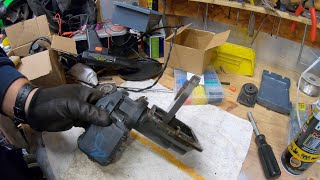
Shop the Parts Behind U1440
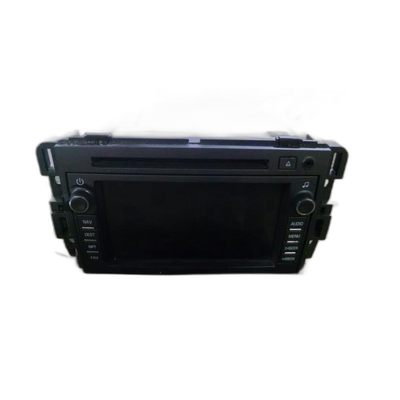
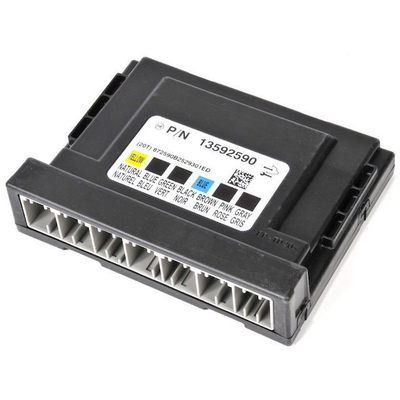
Below are the parts most often responsible for code U1440, ranked by how frequently each one is the actual culprit (per the diagnosis above). Tap any to see what we have for your vehicle.





The information in this article is provided for general reference and educational purposes only. Vehicle specifications, procedures, and part compatibility can vary by production date, trim level, and region. Always consult your vehicle's factory service manual and verify part numbers before purchasing or performing repairs. Safety-critical components such as airbags, seat belts, and braking systems should be installed by a qualified professional.
- 🧭 Diagnostic Flowchart
- 🎬 Helpful Videos
- 🛍️ Shop This Part
- What Does U1440 Mean?
- Can I Drive With U1440?
- Common Causes
- Symptoms
- Common Fixes & Costs
- DIY vs Professional
- Used vs. New Parts: Buying Guide
- What Happens If You Wait — Timeline
- Cost of Not Fixing It
- Diagnosis Steps
- When This Code Triggers (Freeze-Frame Conditions)
- Related Codes
- Climate & Environmental Factors
- How to Talk to a Mechanic About This Code
- Where to Take It: Dealer vs Independent vs Chain
- When to Walk Away From the Repair
- What Scan Tool You Need for This Code
- How to Clear the Code After You Fix It
- Will This Fail Emissions / State Inspection?
- Most Commonly Affected Vehicles
- Manufacturer-Specific Notes
- Real Owner Stories
- 2020 Ram 1500 with 55k miles - The Easy Fix
- 2020 Jeep Gladiator with 54k miles - A Misdiagnosis Story
- 2019 Ram 1500 at 22k miles - The Software Gremlin
- How to Prevent This Code From Triggering
- Frequently Asked Questions
- Can an oil change cause the U1440 code?
- What is a DTCM reflash?
- What are the most common misdiagnosis mistakes for U1440?
- Can I fix U1440 myself?
- Will clearing the code fix the problem?
- Is this covered under my powertrain warranty?
- How much will it cost to diagnose the U1440 code?
- Key Takeaways
- 🎟️ Get 5% Off