

OBD-II Code U1466: Implausible Shifter Signal Received
What U1466 means, why it triggers, and the definitive guide to fixing it
- Code U1466 indicates an electronic communication failure with the shifter module, not a mechanical transmission breakdown.
- Check the battery first; resting voltage below 12.4V triggers this code before any starting issues appear.
- Search for Technical Service Bulletins (TSBs) before buying parts, as a 1-hour dealer software update resolves this on many Jeep and Ram models.
- Target model-specific flaws first: replace the $150 PRNDL jumper harness on Jeep Cherokees or the $60 CAN star connector on Chrysler Pacificas before replacing the $500 shifter assembly.
What Does U1466 Mean?
Trouble code U1466 means the Transmission Control Module (TCM) is receiving a confusing or unbelievable signal from the electronic shifter. The vehicle's computer rejects the information it receives about which gear you are trying to select. This is a network communication error between two electronic modules, not a mechanical failure inside the transmission.
Technical definition: The official SAE/ISO definition for U1466 is "Implausible Driver Shift Request Signal Received On D-PT CAN". This indicates the Transmission Control Module (TCM) detected an incorrect or invalid signal identifier from the Electronic Shift Module (ESM) on the vehicle's Drivetrain-Powertrain (D-PT) CAN bus communication network.
Can I Drive With U1466?
No — Do Not Drive. Do not drive. You risk being stranded, as the vehicle will eventually fail to shift out of Park or fail to restart. An unexpected shift to Neutral while driving is a documented safety hazard that causes a loss of vehicle control. Continuing to drive guarantees a tow, costing $100 to $300+.
Common Causes
- Low Battery Voltage (Very Common) — A weak battery causes widespread electronic issues, including module communication faults. The ESM is highly sensitive to low voltage and triggers this code before starting issues occur.
- Faulty Electronic Shift Module (ESM) (Very Common) — The shifter assembly is the most frequent hardware failure point. Internal electronics in the rotary dial or shift lever wear out or short circuit from liquid spills, sending corrupted signals.
- Software Glitches (Common) — Outdated ESM or TCM software causes signal misinterpretation. A dealer software re-flash resolves this, as documented in multiple Technical Service Bulletins (TSBs).
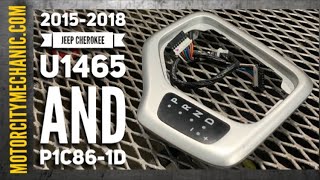
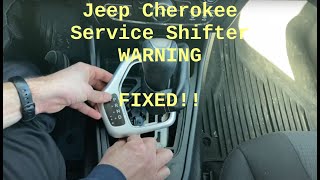
- Faulty PRNDL Bezel Jumper Harness (Common) — On Jeep Cherokee models, the small jumper harness connecting the PRNDL light bezel to the main shifter assembly fails frequently. TSB 08-054-18 Rev. A specifically addresses this. 🎬 Watch: How to replace the Jeep Cherokee PRNDL bezel and harness.
- Wiring and Connector Issues (Common) — Damaged wires or loose connections between the shifter assembly and the TCM interrupt the signal. This includes chafed wires, backed-out terminals, or corrosion from spilled drinks.
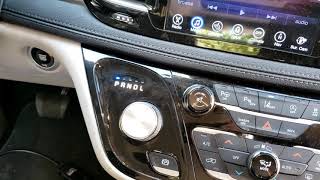
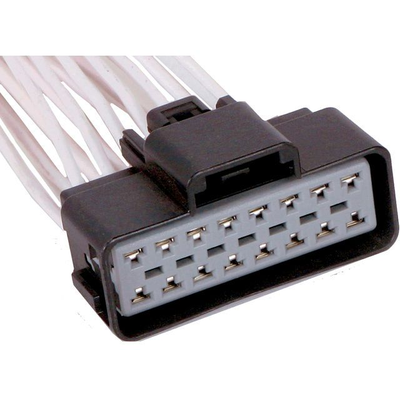
- Faulty CAN Bus Star Connector (Less Common) — On the Chrysler Pacifica, the CAN bus network wires meet at a central 'star connector' behind the glove box. Corrosion or poor pin tension here disrupts communication for the entire network.
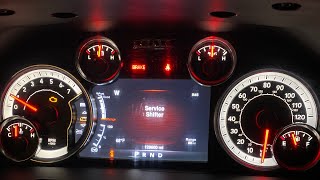
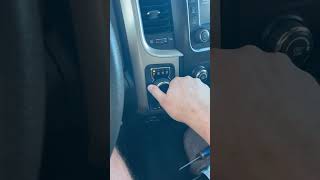
- Blown Shifter or TCM Fuse (Less Common) — A blown fuse cuts power to the ESM or TCM, causing a loss of communication. On 2013-2018 Ram trucks, fuse F94 in the under-hood fuse box powers the transmission shifter. 🎬 See this walkthrough for replacing a Ram 1500 dial shifter.
- Loose Ground Eyelets (Rare) — On vehicles like the Dodge Durango, ground eyelets for the shifter assembly under the center console loosen over time. Insufficient grounding causes erratic shifter behavior, especially in extreme cold.
- Faulty Transmission Control Module (TCM) (Rare) — The TCM itself rarely fails for this specific code. If it does, the receiving module is unable to correctly interpret a healthy signal from the shifter.
Symptoms
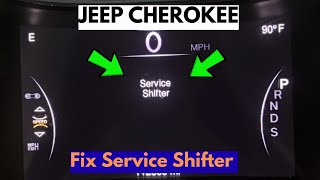
- Service Shifter Warning Light — A 'Service Shifter' message appears prominently on the instrument cluster display.
- Vehicle Stuck in Park or Will Not Shift — The shifter refuses to move out of Park, or the transmission fails to engage the selected gear even if the physical shifter moves.
- PRNDL Lights Not Illuminated or All Lit in Red — The indicator lights on the shifter fail to light up, or all illuminate simultaneously in red to indicate a critical internal fault.
- Vehicle Won't Start — A complete communication failure prevents the engine from cranking, as the vehicle cannot confirm it is safely in Park or Neutral.
- Intermittent or Erratic Shifter Behavior — The shifter works correctly sometimes but fails randomly, often influenced by extreme temperature changes or vehicle vibrations.
Diagnostic Flowchart
Tap your situation to follow the diagnostic path that matches what you're seeing on this code.
Common Fixes & Costs
- Replace Vehicle Battery — Parts: $150-$300, Labor: $0-$50, ~0.5 hr book time (DIY)
- Reprogram Electronic Shift Module (ESM) or TCM — Parts: $0, Labor: $100-$200, ~1 hr book time (Professional)
- Replace PRNDL Bezel and Jumper Harness
— Parts: $50-$150, Labor: $50-$150, ~1 hr book time
(DIY)
Jeep Cherokee (2015-2018): OEM 68397002AA (Harness), 5VK202X9AG (Bezel for Grand Cherokee) (Alt: OEM is the standard fix.) - Replace Electronic Shift Module (ESM) Assembly
— Parts: $150-$600, Labor: $100-$200, ~1.5 hr book time
(Intermediate)
Ram 1500 (2013-2018, Rotary): OEM 68292468AE (Alt: Dorman, Cardone)
Jeep Grand Cherokee (2016-2017): OEM 68428790AF (Alt: OEM or used recommended.)
Dodge Charger (2012-2014, T-Handle): OEM 5PL751XGAN (Alt: KarParts360 (4779653AG)) - Replace CAN Bus Star Connector
— Parts: $20-$60, Labor: $100-$200, ~1.5 hr book time
(Intermediate)
Chrysler Pacifica (2017+): OEM 68320995AA (20-way, white) (Alt: 68321746AA (green)) - Repair Wiring or Connectors — Parts: $10-$50, Labor: $100-$300, ~2 hr book time (Intermediate)
Used vs. New Parts: Buying Guide
When a used part is worth it: A used OEM Electronic Shift Module (ESM) from a reputable recycler saves 50-70% off retail and avoids aftermarket compatibility issues.
Donor-vehicle mileage cap: roughly under 100000 miles for the part to have meaningful remaining life.
Donor quality checklist:
- Match the OEM part number exactly, including any suffix letters.
- Visually match all buttons and features (e.g., 4WD controls) to your original part.
- Purchase from a seller offering at least a 30-day warranty.
- Reject parts with any signs of liquid damage or corrosion on the connector pins.
Decision logic:
- If The failure is a known software issue addressed by a TSB → Do not buy any part; pay for a dealer software re-flash first.
- If Vehicle is under warranty or the new OEM part is under $250 → Buy new for the longer warranty and guaranteed quality.
- If Vehicle is over 100,000 miles and the new OEM part is over $400 → Buy a used OEM part. The cost savings outweigh the risk of premature failure.
Warranty tradeoff: Used parts typically include a 30-90 day functional warranty. New OEM parts carry a 1-2 year warranty but are the most expensive option.
Worst-case if a used part fails: $200-$400 if a used part fails after the warranty period, requiring repeat installation labor and another replacement part.
What Happens If You Wait — Timeline
- 0-3 months: The 'Service Shifter' message appears intermittently and disappears after restarting the car. There are no physical shifting problems. (MPG impact: 0%% · Added cost: $0)
- 3-9 months: The warning appears weekly. The vehicle occasionally gets stuck in Park for a few moments, or the PRNDL lights fail to illuminate. (MPG impact: 0%% · Added cost: $0-$50 (in inconvenience and potential minor delays))
- 9-12 months: The fault is a daily occurrence. The vehicle is reliably difficult to get out of Park, requiring multiple restarts. High risk of being stranded. (MPG impact: 0%% · Added cost: $100-$300 (high likelihood of needing a tow))
- 12+ months: Complete failure. The vehicle will not start or shift out of Park. Temporary fixes like disconnecting the battery no longer work. The vehicle must be towed. (MPG impact: 0%% · Added cost: $400-$1100 (cost of the final repair plus towing))
Cost of Not Fixing It
- Immediate: Intermittent 'Service Shifter' warnings and occasional lockouts in Park requiring a restart to clear. (Added cost: Negligible)
- Weeks to Months: Increased frequency of being stuck in Park or unable to start. High risk of being stranded. (Added cost: $100-$300 (for towing))
- Long-Term: Complete failure of the shifter module. The vehicle will not start or shift out of Park. Potential for the vehicle to shift to Neutral while driving, creating a major safety hazard. (Added cost: $300-$1100 (towing plus eventual repair))
Diagnosis Steps
- Check Battery Voltage and Fuses
Use a multimeter to ensure the battery has at least 12.4 volts with the engine off. A weak battery is the primary cause of electronic communication errors. Next, inspect the vehicle's fuse boxes for any fuses related to the 'ESM', 'Shifter', or 'TCM' (e.g., fuse F94 on a Ram 1500).
Tools: Multimeter, fuse puller (Beginner) - Check for Technical Service Bulletins (TSBs)
Search for TSBs related to your vehicle's make, model, year, and the U1466 code. Manufacturers frequently release software updates to fix this exact issue, requiring a dealer re-flash but saving you from buying unnecessary parts.
Tools: Internet access (Beginner) - Scan for All Trouble Codes
Use an advanced OBD-II scanner to read manufacturer-specific and network codes. Multiple communication codes (like U1465, U1267, U0103) across different modules point to a network issue rather than a single failed part.
Tools: Advanced OBD-II scanner (Intermediate) - Inspect PRNDL Jumper Harness (Jeep Specific)
On Jeep Cherokee and Grand Cherokee models, if codes U1465 or P1C86 accompany U1466, the fault is almost certainly the jumper harness between the shifter bezel and the main shifter body (TSB 08-054-18).
Tools: Trim removal tools, OBD-II scanner (Intermediate) - Inspect Shifter Wiring and Connectors
Visually inspect the wiring harness behind the electronic shifter. Unplug the connector and check for chafing, bent pins, or corrosion from liquid spills.
Tools: Trim removal tools, flashlight (Intermediate) - Pro Tip: Perform a CAN Bus Resistance Check
With the ignition OFF and battery disconnected, measure resistance between CAN High (Pin 6) and CAN Low (Pin 14) at the OBD-II port. A healthy network reads ~60 Ohms. 120 Ohms indicates an open circuit; 0 Ohms indicates a short.
Tools: Multimeter (Advanced) - Pro Tip: Perform a CAN Bus Voltage Check
With ignition ON (engine off), check voltages at the OBD-II port against a ground (Pin 4). CAN High (Pin 6) should read ~2.6V. CAN Low (Pin 14) should read ~2.4V. Voltages stuck at 5V, 0V, or equal on both lines indicate a fault.
Tools: Multimeter (Advanced) - Advanced: Check ESM-Specific PIDs
Using an advanced scan tool, monitor 'ESM Gear Position' and 'TCM Commanded Gear'. A discrepancy between these live values confirms the communication failure.
Tools: Advanced OBD-II scanner with live data (Advanced) - Isolate the Faulty Module (Advanced)
If CAN bus tests fail, disconnect modules one by one (or at the star connector on Pacificas) until bus resistance/voltage returns to normal to isolate the short.
Tools: Multimeter, wiring diagrams (Professional)
When This Code Triggers (Freeze-Frame Conditions)
- Vehicle Speed: 0-75 mph (Any. Code sets at startup or while driving.)
- Engine RPM: 0-3000 RPM (Any. Fault is not RPM dependent.)
- Battery Voltage: 11.8-14.8V (Continuously monitored; triggers immediately if voltage drops or fluctuates.)
- Ignition Status: ON (Monitored continuously whenever the ignition is on.)
Related Codes
- U1465 — Nearly identical to U1466. Diagnostic process is the same, focusing on the shifter module.
- U0103 — Total communication failure. The TCM receives no signal at all. Focus on shifter power, ground, and direct CAN bus connections.
- U1267 — No Valid Data From ESM. Indicates data packets are entirely corrupt or absent, pointing to severe shifter failure or network shorts.
- P0705 — Generic powertrain code for transmission range sensor. U1466 is the more precise fault; P0705 sets as a secondary consequence.
- P0919 — Gear Shift Position Control Error. Indicates the shifter's reported position conflicts with the transmission's physical state.
Climate & Environmental Factors
- Cold Temperatures: Low temperatures exacerbate this code. Cold reduces battery efficiency, causing low voltage, and contracts loose ground connections (common on Dodge Durangos).
- Liquid Spills / High Humidity: Spilled drinks in the center console directly short circuit the ESM. High humidity accelerates corrosion in compromised connectors, like the Pacifica's CAN bus star connector.
How to Talk to a Mechanic About This Code
Say this: "I have a 'Service Shifter' warning and a U1466 code. Before replacing any major parts, I'd like you to first check for any available TSB software updates for the ESM or TCM, and verify the battery and charging system are healthy. Please start with the least expensive potential causes."
This directs the technician to perform a logical, cost-effective diagnosis instead of immediately defaulting to replacing the expensive shifter assembly. It establishes you as an informed consumer.
Avoid saying:
- 'My shifter is acting weird.'
- 'My check engine light is on, can you look at it?'
- 'Just fix it, I don't care what it costs.'
Questions to ask before authorizing the repair:
- Did you check for any software updates related to TSBs for the shifter?
- What was the battery's voltage and the alternator's output?
- If you are recommending a shifter replacement, how did you rule out a wiring problem, a blown fuse, or the star connector/jumper harness?
- Can you provide the part number for the replacement part and the warranty on both the part and the labor?
Where to Take It: Dealer vs Independent vs Chain
- Dealer:
Recommended if a software update is the known fix or if the vehicle is under warranty. For out-of-warranty hardware repairs, an independent shop is often better value.
Best for: Vehicles still under a factory or extended warranty., Cases where a known TSB requires a manufacturer-specific software re-flash.
Downsides: Highest labor rates., May be quick to replace an entire shifter assembly rather than diagnose a cheaper wiring or connector fault. (Typical cost: +50% vs. baseline) - Independent Shop:
Best overall fit for out-of-warranty repairs, provided you choose a well-regarded shop with strong diagnostic skills. They are more likely to trace a wiring fault than a dealer.
Best for: Out-of-warranty vehicles where the cause is likely a hardware failure (shifter, wiring, battery)., Diagnosing network or wiring issues that require more hands-on time.
Downsides: Quality and diagnostic capability vary widely. Ensure the shop has experience with modern vehicle electronics and CAN bus systems., May need to use a J2534 Pass-Thru device to perform software updates, which not all shops have. (Typical cost: +0% vs. baseline) - Chain Shop:
AVOID for diagnosing the root cause of U1466. Only use them if you have already confirmed the problem is a simple battery replacement.
Best for: Simple, related fixes like battery replacement.
Downsides: Technicians often lack the specialized training for complex network diagnostics., High pressure to upsell parts leads to misdiagnosis (e.g., selling a shifter when only a battery was needed). (Typical cost: -10% vs. baseline)
When to Walk Away From the Repair
If the estimated repair cost exceeds 50% of the car's private-party value, seriously consider selling the car as-is or trading it in.
- Car worth $15000, fix is $800: Fix it. The repair cost is a small fraction of the vehicle's value.
- Car worth $6000, fix is $1100: Borderline, but likely worth fixing. This is a significant repair but still well under the 50% threshold.
- Car worth $3500, fix is $1800: Walk away. The repair cost is over 50% of the car's value. It is not economically sensible to proceed.
What Scan Tool You Need for This Code
Minimum: A scanner that reads manufacturer-specific 'U' (network) codes for Stellantis vehicles. A basic code reader that only pulls generic 'P' codes is insufficient.
A basic scanner will not see the U1466 code or any other network-related faults. To diagnose this properly, you need to see codes from the Transmission Control Module (TCM) and Electronic Shift Module (ESM).
Budget: BlueDriver Pro (~$100) — Reads and clears enhanced codes (including 'U' codes) for Chrysler/Dodge/Jeep/Ram. Allows you to view live data PIDs to see the conflict between shifter and transmission modules.
Mid-range: Foxwell NT510 Elite for Chrysler (~$180) — Offers full-system diagnostics for Chrysler-family vehicles. Provides bidirectional control, allowing you to command actuators and run tests to isolate the fault without replacing parts.
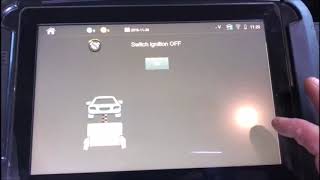
Professional: Autel MaxiCOM MK808 (~$500) — Provides full bidirectional control and access to all modules and live data streams. Performs advanced functions and resets, making it a powerful tool for diagnosing complex network issues.
Rent vs buy: You can borrow a basic scanner from auto parts stores for free, but they often cannot read the manufacturer-specific 'U' codes needed for this diagnosis. Buying a capable scanner like the Foxwell is a worthwhile investment.
How to Clear the Code After You Fix It
- Use an OBD-II scan tool to clear all diagnostic trouble codes.
- Disconnect the negative battery terminal for 30 minutes if a scanner is unavailable.
- Perform the specific manufacturer drive cycle to allow vehicle readiness monitors to run.
Drive cycle (~20 minutes): A general Stellantis (Chrysler/Dodge/Jeep/Ram) drive cycle includes: 1) Cold start and idle for 5 minutes. 2) Drive at a steady speed between 40-60 mph for 8 minutes. 3) Stop the vehicle and idle for 3 minutes. 4) Drive at a speed above 20 mph for 2 minutes. 5) Turn the ignition off and let the vehicle sit for 10 minutes.
Readiness monitors affected: Catalyst Monitor, Evaporative System Monitor, O2 Sensor Monitor
Before emissions retest: drive at least 50 miles to fully set monitors.
Watch out for:
- Clearing the code without performing a repair guarantees the code returns immediately.
- Taking the vehicle for an emissions test immediately after clearing codes results in a 'Not Ready' failure.
Will This Fail Emissions / State Inspection?
Yes — this code typically fails an OBD-II emissions inspection.
- California: An active U1466 code causes an automatic smog check failure. All readiness monitors must be 'Ready', preventing you from clearing the code right before the test.
- New York: An illuminated Check Engine Light for any code, including U1466, is an automatic NYS DMV inspection failure.
- Texas: In the 17 counties requiring emissions testing, a vehicle with code U1466 fails inspection and cannot be registered until repaired.
Most Commonly Affected Vehicles
- Ram 1500 (2013-2022) — Extremely common on rotary dial shifters. TSB 08-084-23 addresses software issues for 2022 models. The shifter fuse is typically F94.
- Jeep Grand Cherokee (2014-2017) — Subject to TSB 08-051-17 Rev. A for an ESM software update and shifter bezel replacement.
- Dodge Charger (2012-2014) — T-handle electronic shifters frequently fail. Included in NHTSA Recall 16V-240 for 'Auto Park' software updates.
- Dodge Durango (2014-2017) — Prone to rotary shifter failures and loose ground connections under the console, especially in extreme cold.
- Chrysler 300 (2012-2014) — Shares the T-handle shifter platform with the Charger; highly susceptible to identical ESM failures.
- Chrysler Pacifica (2017-2018) — The root cause is almost always a faulty CAN Bus star connector (P/N 68320995AA) behind the glove box, not the shifter itself.
- Jeep Cherokee (2015-2018) — Famous for setting U1465 and P1C86 alongside U1466 due to a faulty PRNDL bezel jumper harness (TSB 08-054-18 Rev. A).
Manufacturer-Specific Notes
- Chrysler/Dodge/Jeep/Ram: This code is almost exclusively found on Stellantis vehicles with electronic shifters. Always check battery voltage and TSBs before replacing parts.
- Chrysler (Pacifica): Slamming the glove box door temporarily restores shifter function if the CAN Bus star connector (P/N 68320995AA) behind it is failing.
- Jeep (Cherokee): Codes U1465/P1C86 alongside a 'Service Shifter' light guarantee a failed PRNDL bezel and jumper harness (P/N 68397002AA).
Real Owner Stories
2017 Chrysler Pacifica at 80K miles - The Misdiagnosis Saga
The 'Service Shifter' message appeared intermittently for a year. Eventually, the shifter locked, PRNDL lights failed, and multiple system warnings appeared.
What they tried:
- Dealer found low-voltage codes and replaced the battery for $554. The problem returned 2 days later.
- Dealer then diagnosed a faulty gear shifter module and replaced it.
- Owner found online forums suggesting the CAN bus star connector behind the glove box was the real culprit.
Outcome: The actual fix was the CAN bus star connector (P/N 68320995AA), a $60 part. Wiggling the connector or slamming the glove box door temporarily restored function, confirming the diagnosis.
Lesson: On a Chrysler Pacifica, suspect the CAN bus star connector behind the glove box before authorizing expensive battery or shifter replacements.
2016 Jeep Cherokee - The 'Easy' Fix That Isn't Obvious
The 'Service Shifter' light came on randomly, and all PRNDL lights illuminated in red. A scan revealed codes U1465 and P1C86 alongside U1466.
What they tried:
- The owner took it to a dealership, but the intermittent fault meant they couldn't diagnose it without an active code.
- Research pointed to Technical Service Bulletin (TSB) 08-054-18.
Outcome: The problem was fixed by replacing the PRNDL bezel and the small jumper harness connecting it to the main shifter body (P/N 68397002AA). Parts cost $150 and the repair took under an hour.
Lesson: If you have a 2015-2018 Jeep Cherokee with codes U1465 and P1C86, the problem is almost certainly the PRNDL jumper harness.
2014 Ram 1500 - Stuck in Park After Detailing
After having the truck detailed, the 'Service Shifter' message appeared, the rotary shifter knob would not turn, and the truck was stuck in Park.
What they tried:
- The owner suspected a connection to the interior cleaning.
- Checked fuses and battery voltage.
- Disconnected the battery to reset the system.
Outcome: Liquid from the detailing seeped into the rotary shifter electronics. A thorough drying period and replacing the shifter fuse (F94) resolved the issue. If it hadn't, the shorted module would have required replacement.
Lesson: Be extremely cautious with liquids around the electronic shifter. Even interior detailing introduces enough moisture to short out the module.
How to Prevent This Code From Triggering
- Use waterproof cupholder liners. (Once) — Liquid spills are a primary cause of direct electronic failure in the shifter module. Liners catch spills, preventing moisture from short-circuiting the shifter's circuit board.
- Test battery voltage quarterly and clean terminals annually. (Quarterly/Annually) — A weak battery causes random communication codes like U1466. Regularly checking for >12.4V ensures stable power for all modules.
- Request TSB checks during routine service. (Every oil change or service visit) — Manufacturers frequently release software updates to fix communication glitches. A 1-hour reprogramming procedure prevents future failures.
- Avoid using electronics with the engine off. (Daily habit) — Using accessories with the engine off drains the battery, contributing to a chronically undercharged state and low-voltage faults.
Frequently Asked Questions
Can I reset the U1466 code by disconnecting the battery?
Disconnecting the battery for 30 minutes temporarily clears the code, but it does not fix the underlying hardware or software problem. The code will return.
What does 'Service Shifter' mean on a Ram 1500 or Jeep?
It is the plain-language warning for codes like U1466. It indicates a fault in the electronic gear selection system requiring diagnosis.
Is it safe to drive with the U1466 code?
No. The shifter can fail at any time, leaving you stuck in Park or unexpectedly shifting to Neutral while driving.
Why did my shifter get stuck in Park?
The Transmission Control Module enters a fail-safe mode when it receives an implausible signal. It locks the shifter in Park to prevent unpredictable movement.
Does this code mean I need a new transmission?
No. This code indicates an electronic communication error with the shifter module, not a mechanical failure inside the transmission.
How can I get my car out of Park if the shifter is stuck?
Most vehicles have a manual park release. For example, the Chrysler Pacifica uses an orange cord in the driver's side footwell. Consult your owner's manual.
All the lights on my shifter (PRNDL) are lit up in red. What does that mean?
This indicates a critical internal shifter fault. When the electronics fail to communicate properly, the system illuminates all indicators to warn the driver.
What are the most common misdiagnosis mistakes for this code?
The biggest mistake is immediately replacing the expensive shifter assembly. Always rule out a weak battery, blown fuses, and model-specific quirks like the Pacifica star connector first.
Key Takeaways
- Code U1466 indicates an electronic communication failure with the shifter module, not a mechanical transmission breakdown.
- Check the battery first; resting voltage below 12.4V triggers this code before any starting issues appear.
- Search for Technical Service Bulletins (TSBs) before buying parts, as a 1-hour dealer software update resolves this on many Jeep and Ram models.
- Target model-specific flaws first: replace the $150 PRNDL jumper harness on Jeep Cherokees or the $60 CAN star connector on Chrysler Pacificas before replacing the $500 shifter assembly.
Helpful Videos
Shop the Parts Behind U1466
Below are the parts most often responsible for code U1466, ranked by how frequently each one is the actual culprit (per the diagnosis above). Tap any to see what we have for your vehicle.




The information in this article is provided for general reference and educational purposes only. Vehicle specifications, procedures, and part compatibility can vary by production date, trim level, and region. Always consult your vehicle's factory service manual and verify part numbers before purchasing or performing repairs. Safety-critical components such as airbags, seat belts, and braking systems should be installed by a qualified professional.
- 🧭 Diagnostic Flowchart
- 🎬 Helpful Videos
- 🛍️ Shop This Part
- What Does U1466 Mean?
- Can I Drive With U1466?
- Common Causes
- Symptoms
- Common Fixes & Costs
- Used vs. New Parts: Buying Guide
- What Happens If You Wait — Timeline
- Cost of Not Fixing It
- Diagnosis Steps
- When This Code Triggers (Freeze-Frame Conditions)
- Related Codes
- Climate & Environmental Factors
- How to Talk to a Mechanic About This Code
- Where to Take It: Dealer vs Independent vs Chain
- When to Walk Away From the Repair
- What Scan Tool You Need for This Code
- How to Clear the Code After You Fix It
- Will This Fail Emissions / State Inspection?
- Most Commonly Affected Vehicles
- Manufacturer-Specific Notes
- Real Owner Stories
- 2017 Chrysler Pacifica at 80K miles - The Misdiagnosis Saga
- 2016 Jeep Cherokee - The 'Easy' Fix That Isn't Obvious
- 2014 Ram 1500 - Stuck in Park After Detailing
- How to Prevent This Code From Triggering
- Frequently Asked Questions
- Can I reset the U1466 code by disconnecting the battery?
- What does 'Service Shifter' mean on a Ram 1500 or Jeep?
- Is it safe to drive with the U1466 code?
- Why did my shifter get stuck in Park?
- Does this code mean I need a new transmission?
- How can I get my car out of Park if the shifter is stuck?
- All the lights on my shifter (PRNDL) are lit up in red. What does that mean?
- What are the most common misdiagnosis mistakes for this code?
- Key Takeaways
- 🎟️ Get 5% Off