

U1487 on 2013-2015 Fiat 500e: Regenerative Braking Fault Causes and Fixes
This code is specific to the Fiat 500e electric model. It almost always indicates a software communication problem between the Anti-lock Brake (ABS) and Regenerative Brake Controller (RBC) modules. The primary fix is a software update performed by a dealer, as outlined in Fiat's Technical Service Bulletin (TSB) 08-045-16. If the software update doesn't work, the next most likely cause is a faulty wheel speed sensor.
- This code is specific to the Fiat 500e electric car.
- The most likely cause is a software issue that requires a dealer to perform an update according to TSB 08-045-16, especially for cars built before late 2015.
- Do not replace the ABS module or other expensive parts before having the software update performed.
- If the software fix doesn't apply or work, the next step is to test the wheel speed sensors using a scan tool with live data.
What's Unique About the 2013-2015 Fiat 500
This code is exclusive to the all-electric Fiat 500e because it directly involves the regenerative braking system, which gasoline-powered Fiat 500s do not have. The system blends traditional hydraulic brakes with slowing the car by using the electric motor as a generator. Fiat identified a common software glitch that causes this communication error and issued a specific TSB (08-045-16) to resolve it by reprogramming the control modules. The ABS module for the 500e is different from the gas model's due to this integration with regenerative braking.
Diagnostic Flowchart
Tap your situation to follow the diagnostic path that matches what you're seeing on this vehicle.
Symptoms You May Notice
- ABS warning light is on
- Electronic Stability Control (ESC) warning light is on
- Regenerative Brake Controller (RBC) warning light is on
- Hill Start Assist warning light may appear
- A noticeable 'click' or change in braking feel when the warning lights first appear
- Funny noises or a 'groan' from the brakes when stopped and pressing the pedal deeply
- Regenerative braking may be disabled or function incorrectly, leading to less deceleration when lifting off the accelerator
- Replacing the ABS module before performing the software update. The TSB clearly indicates that a software flash is the first and most common solution.
- Replacing a wheel bearing when the issue is the wheel speed sensor. A German forum user reported a shop suggested this before correctly identifying the sensor.
Most Likely Causes
- Outdated Module Software 🔴 High Probability Fiat officially documented this as a common issue for vehicles built on or before September 26, 2015, and released a software update (TSB 08-045-16) to fix it.
How to confirm: A dealership or a qualified shop with a wiTECH scan tool can check the current software version of the ABS and RBC modules and compare it against the update mentioned in TSB 08-045-16.
Typical fix: Reprogramming both the ABS module and the Regenerative Brake Controller (RBC) module with the latest software. This is a coordinated update that flashes both modules.
Est. part cost: $0 - Faulty Wheel Speed Sensor 🟡 Medium Probability → Shop ABS Wheel Speed Sensor Wheel speed sensors are exposed to the elements and road debris, making them a common failure point on many vehicles. A faulty sensor provides incorrect data, which can trigger communication-related fault codes in the ABS module.
How to confirm: Use a scan tool capable of reading live data (like AlfaOBD) to monitor the speed of all four wheels while driving. A sensor that reports a speed different from the others, drops to zero, or shows an erratic signal is faulty. A common diagnostic step is to swap the sensor with the one on the opposite side of the car and see if the problem moves.
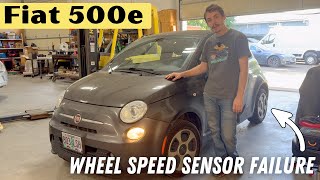
Typical fix: Replace the faulty wheel speed sensor and clear the codes. 🎬 Watch: How to fix a persistent ABS light by replacing the sensor. The front and rear sensors are different, but the left and right sensors on the same axle are typically interchangeable.
Est. part cost: $20-$80 - Failing ABS Module ⚪ Low Probability → Shop ABS Control Module While less common than software or sensor issues, the ABS module itself can fail electronically or internally. This is a diagnosis of exclusion after other causes are ruled out.
How to confirm: This is typically diagnosed by exclusion. If the software is up to date per TSB 08-045-16, all wheel speed sensors and wiring are confirmed to be good, and the code persists, the module itself is the likely culprit.
Typical fix: Replace the ABS module and have it professionally programmed to the vehicle's VIN using a tool like wiTECH. A 'Proxy Alignment' procedure is required after replacement to ensure the new module is recognized by the vehicle network. Sending the original module for repair can be a cost-effective alternative that may avoid the need for reprogramming.
Est. part cost: $300-$800 - Wiring or Connector Issues ⚪ Low Probability Damage to the CAN bus wiring between the ABS and RBC modules can corrupt the signal. This is more common on vehicles that have been in an accident (especially frontal impact) or have corrosion. The wheel speed sensor wiring is also susceptible to damage.
How to confirm: Visually inspect the wiring harness for chafing, breaks, or corrosion, particularly around the ABS module, RBC, and at each wheel hub. A multimeter can be used to check for continuity and proper resistance on the CAN bus lines.
Typical fix: Repair the damaged section of the wiring harness or clean/replace the corroded connector.
Est. part cost: $10-$100
Rare But Worth Checking
- Weak or Failing 12V Auxiliary Battery:
Diagnosis Steps
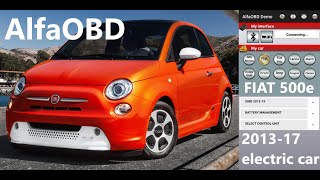
- Scan all vehicle modules for Diagnostic Trouble Codes (DTCs). Note the presence of U1487 and any accompanying codes 🎬 See how to use the AlfaOBD app for electric Fiat diagnostics. like U0001, U1200, or C-codes for wheel speed sensors.
- Verify the vehicle is a Fiat 500e. This code does not apply to gas models.
- Check for Fiat Technical Service Bulletin 08-045-16. This applies to vehicles built on or before September 26, 2015.
- If the TSB applies and the software has not been updated, the primary repair is to have a dealer or qualified shop perform the coordinated ABS and RBC module software update. This requires a wiTECH scan tool and a stable power supply that maintains battery voltage between 13.2 and 13.5 volts during the flash process.
- Clear all DTCs after the update and perform a test drive to see if the codes return.
- If codes return (or if the TSB did not apply), use a scan tool with live data capability (like AlfaOBD) to monitor the output from all four wheel speed sensors while driving. Look for any sensor that reads differently from the others.
- If a wheel speed sensor is identified as faulty, swap it with the sensor from the opposite side of the same axle to confirm the fault follows the sensor. If it does, replace the faulty sensor.
- If sensors are good and software is updated, perform a load test on the 12V auxiliary battery. A weak 12V battery is a known cause of spurious communication faults on the 500e.
- If the 12V battery is healthy, perform a detailed visual inspection of the wiring harnesses and connectors between the ABS module, RBC, and wheel speed sensors for any signs of damage, corrosion, or water intrusion. Check the main chassis ground point, often located below the battery tray, for corrosion.
- If all other steps fail to resolve the issue, the ABS module itself is likely faulty and requires replacement. After replacement, a 'Proxy Alignment' procedure must be performed to register the new module with the vehicle.
Parts You'll Likely Need
- ABS & RBC Module Software Update — This is not a physical part, but a service. It is the most common and manufacturer-recommended fix for this specific code on this vehicle, as per TSB 08-045-16. The labor time is estimated at 0.3 hours under warranty. Out of warranty, dealers may charge for one hour of labor ($150-$250).
OEM price range: $150-$250 - ABS Wheel Speed Sensor (Front)
(OEM #68073058AB)— If the software update does not fix the issue, a faulty wheel speed sensor is the next most likely cause. The front sensor fits left or right.
Trusted brands: Mopar, Bosch, Duralast
OEM price range: $60-$120
Aftermarket price range: $30-$80 - ABS Wheel Speed Sensor (Rear)
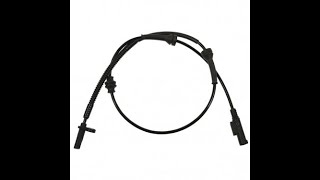
(OEM #68073206AD)— A faulty rear wheel speed sensor can also trigger the fault. The rear sensor (part number supersedes 68073206AC) 🎬 Watch this step-by-step rear wheel speed sensor installation guide. fits left or right.
Trusted brands: Mopar, Bosch, Duralast
OEM price range: $20-$60
Aftermarket price range: $20-$40
Related Codes That Often Appear With This One
- U0001-00 — This code for 'CAN C BUS' is explicitly mentioned in TSB 08-045-16 as occurring with U1487, indicating a general network communication fault.
- U1200-00 — Meaning 'Lost Communication with Power Inverter Module,' this code is also listed in the TSB and points to the widespread communication issue between the key EV components.
- C0037 — This code, indicating a fault with a specific wheel speed sensor (e.g., 'Rear Left wheel speed sensor Signal invalid'), often accompanies U1487 when a sensor is the root cause instead of the software glitch.
Technical Service Bulletins (TSBs) & Recalls
- 08-045-16: 'Flash: Anti Lock Brake (ABS) Module System Enhancements' - This TSB is the primary source for this issue, detailing the U1487, U0001, and U1200 codes and prescribing a coordinated software update for the ABS and RBC modules as the fix for NAFTA-market vehicles built on or before September 26, 2015.
Platform-Specific Known Issues
- A software communication conflict between the ABS and Regenerative Brake Controller (RBC) modules is a known issue on 2013-2015 models built before September 26, 2015, and is addressed by TSB 08-045-16.
Mechanic-Grade Diagnostic Values
- Battery Voltage During Module Flashing — expected: 13.2 - 13.5 Volts. Failure: Voltage dropping below 13.2V or climbing above 13.5V can cause the flash procedure to fail or corrupt the module.
Scan Tool Commands That Help
- wiTECH: Reprogram ABS and RBC modules — This is the primary repair step outlined in TSB 08-045-16 to resolve code U1487 on applicable vehicles. It is a coordinated flash of both modules.
- AlfaOBD / MultiECUScan / High-End Generic: Proxy Alignment Procedure — This procedure is required after replacing a major electronic module (like the ABS module or Body Control Module) to allow the vehicle's network to recognize the new part. Failure to perform a proxy alignment can result in a flashing odometer and other communication issues.
- AlfaOBD: ABS Live Data Monitoring (Wheel Speeds) — To diagnose a faulty wheel speed sensor. By graphing the live data from all four sensors while driving, a technician can easily spot a sensor that is dropping out, reading incorrectly, or not reporting at all.
Wiring & Ground Locations
- C012 — ABS Front Ground, likely on the chassis near the front of the vehicle.. A poor ground for the ABS module can cause a variety of electrical faults and communication errors. This information is from a gas Fiat 500 diagram but provides a likely location to check for corrosion or looseness.
- Main Chassis/Engine Ground Strap — Typically runs from the battery negative terminal to the chassis below the battery tray, and then continues to the gearbox/engine block.. This is the primary ground for the entire powertrain. Corrosion or breakage of this strap is a common Fiat issue and can cause widespread, difficult-to-diagnose electrical problems, including module communication failures.
- ABS Module Connector (M051 - based on gas model) — On the ABS hydraulic unit in the engine bay.. Knowing the CAN bus pin locations (Pins 26 & 14 for C-CAN on the gas model) allows for testing CAN bus integrity directly at the module.
Real Owner Repair Stories
- Out of Spec Renew (YouTube) (2016 Fiat 500e) — ABS, Regenerative Braking System, and ESC warning lights were illuminated on the dash.
❌ Tried (didn't work) No unnecessary parts were replaced. Diagnosis was performed first.
✅ What actually fixed it A faulty rear wheel speed sensor. This was confirmed by using AlfaOBD to view live sensor data, which showed one sensor giving erratic readings. The technician swapped the left and right rear sensors, and the fault moved with the sensor, confirming the sensor itself was bad. Replacing the sensor resolved the issue.
Model Year Variations Within This Range
- 2013 - 09/26/2015: Vehicles built on or before September 26, 2015, are prone to the software issue that causes U1487 and is fixed by TSB 08-045-16. Vehicles built after this date should already have the updated software from the factory.
Helpful Videos
We Have This Part in Stock



The information in this article is provided for general reference and educational purposes only. Vehicle specifications, procedures, and part compatibility can vary by production date, trim level, and region. Always consult your vehicle's factory service manual and verify part numbers before purchasing or performing repairs. Safety-critical components such as airbags, seat belts, and braking systems should be installed by a qualified professional.
- Fiat 500:
- 🧭 Diagnostic Flowchart
- 🎬 Helpful Videos
- 🛍️ Shop This Part
- What's Unique About the 2013-2015 Fiat 500
- Symptoms You May Notice
- Most Likely Causes
- Rare But Worth Checking
- Diagnosis Steps
- Parts You'll Likely Need
- Related Codes That Often Appear With This One
- Technical Service Bulletins (TSBs) & Recalls
- Platform-Specific Known Issues
- Mechanic-Grade Diagnostic Values
- Scan Tool Commands That Help
- Wiring & Ground Locations
- Real Owner Repair Stories
- Model Year Variations Within This Range
- 🎟️ Get 5% Off