

OBD-II Code U1502: LIN Bus Communication Failure
What U1502 means, why it triggers, and how to fix it
- U1502 indicates a communication failure on the single-wire LIN bus network, requiring an advanced scan tool to pinpoint the exact offline module.
- Test your battery first; voltage drops below 9V during startup are the leading cause of intermittent LIN bus communication errors.
- Inspect the wiring harness for chafing or water intrusion before replacing parts, as damaged wires account for over 50% of U1502 codes.
- A failed Active Grille Shutter (AGS) stuck closed causes engine overheating, while a failed Intelligent Battery Sensor (IBS) disables the auto start/stop system.
- Verify the LIN bus signal using a multimeter; a healthy data line toggles rapidly between 7V and 9V, while a steady 0V or 12V indicates a hard short.
What Does U1502 Mean?
U1502 is a network communication code. A main computer, like the Body Control Module (BCM), lost contact with a specific sensor or module. This communication happens on a simple, single-wire network called a LIN (Local Interconnect Network) bus, designed to manage less critical components cost-effectively.
Technical definition: The SAE defines U1502 as a Network & Vehicle Integration fault. A master control module sets this 'no communication' code because a specific slave device on the Local Interconnect Network (LIN) bus stopped sending signals. The master module expected a message but received nothing, indicating the slave module is offline.
Can I Drive With U1502?
Yes, But With Caution. Yes, but with significant caveats. A failed Intelligent Battery Sensor (IBS) 🎬 See how the IBS sensor works and how to test it. causes a no-start condition without warning. A stuck-closed active grille shutter causes engine overheating during highway driving or towing, leading to severe engine damage. Diagnose the issue promptly to prevent a sudden breakdown.
Common Causes
- Weak or Failing Battery (Very Common) — The LIN bus network requires stable system voltage above 9V to work correctly. A weak primary or auxiliary battery, or a failing alternator, causes voltage drops during startup that trigger intermittent communication errors between modules.
- Damaged Wiring or Corroded Connectors (Very Common) — The single wire for the LIN bus is highly prone to damage. It chafes, corrodes, or breaks in engine bays or under the vehicle. Moisture intrusion into connectors (like the transfer case actuator on GM trucks 🎬 Watch: How to find and repair corroded Chevy sensor wiring.) causes pin corrosion and total communication loss.
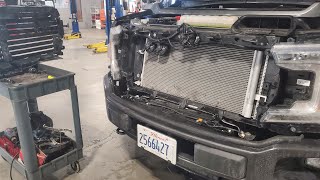
- Faulty Slave Module (Very Common) — The specific part that stopped communicating failed internally. Common culprits include the Intelligent Battery Sensor (IBS), the active grille shutter motor 🎬 Watch: Troubleshooting and fixing common Ford active grille shutter issues., a transfer case control module, or a front radar sensor.
- Blown Module Fuse (Common) — The failing module often has its own dedicated fuse. If that fuse blows, the module loses power and drops off the network. On Ford models, a single blown fuse disables multiple LIN-based modules simultaneously.
- Software Glitches and Required Updates (Common) — The communication failure is sometimes a software bug within a control module rather than a hardware fault. Manufacturers frequently release software updates (TSBs) to patch these logic errors, particularly on Stellantis and Nissan vehicles.
- Aftermarket Modifications (Uncommon) — Improperly installed aftermarket accessories, such as remote starters, LED lighting, or custom stereos wired directly to the battery, interfere with the LIN bus network. These devices introduce electrical noise or bypass the IBS, causing communication dropouts.
- Faulty Master Control Module (BCM or ECM) (Less Common) — The main computer controlling the LIN bus network fails internally. This is rare compared to wiring or slave module issues and should only be considered after verifying power, ground, and data line integrity.
Symptoms
- Check Engine Light On — The engine computer logs the U1502 code and illuminates the malfunction indicator lamp on the dashboard.
- Features Not Working — The feature controlled by the failed module stops functioning. A failed active grille shutter module stops opening or closing. A failed front radar disables Intelligent Cruise Control (ICC) and Automatic Emergency Braking (AEB).
- Specific System Warning Messages — The dashboard displays messages like 'Service 4WD,' 'Service Trailer Brake System,' 'Unavailable Front Radar Obstruction,' or warnings that the auto start/stop system is disabled.
- Battery or Charging System Warnings — If the Intelligent Battery Sensor (IBS) fails, the battery light illuminates, charging system warnings appear, and the auto start/stop feature disables itself.
- Unpredictable Electrical Behavior — A failing Intelligent Battery Sensor causes flickering headlights at idle or random electronic malfunctions as the vehicle struggles to manage system voltage.
- Engine Overheating or Slow to Warm Up (also visible on scanner) — A failed active grille shutter stuck closed causes engine overheating. A shutter stuck open forces the engine to take significantly longer to reach operating temperature in cold weather.
Diagnostic Flowchart
Tap your situation to follow the diagnostic path that matches what you're seeing on this code.
Common Fixes & Costs
- Replace Intelligent Battery Sensor (IBS)
— Parts: $50-$150, Labor: $75-$150, ~0.5 hr book time
(DIY)
Ford F-150 (2018-2020): OEM BT4Z-14B357-C (Alt: Standard Motor Products BSC9, Dorman 956-135)
Ram 1500 (2019-2023): OEM 68370876AB (Alt: Standard Motor Products, Dorman)
Chevy/GMC Silverado/Sierra (2019-2022): OEM Integrated with negative battery cable (e.g., GM 84526822) (Alt: NGK, Standard Motor Products) - Replace Active Grille Shutter Assembly
— Parts: $150-$400, Labor: $250-$650, ~2.5 hr book time
(Intermediate)
Ford F-150 (2018-2020): OEM JL3Z-8475-A (Alt: Dorman 601-341, TYC 2920152)
Chevy/GMC Silverado/Sierra (2019-2022): OEM 84363184 (Alt: Dorman 601-374, TRQ BDA71910)
Ram 1500 (2019-2023): OEM 68405073AD (Upper) (Alt: Dorman 601-426, Autopart Premium APAGS052) - Repair Damaged Wiring — Parts: $10-$30, Labor: $150-$500, ~1.5 hr book time (Intermediate)
- Replace Transfer Case Control Module (TCCM)
— Parts: $150-$400, Labor: $100-$200, ~1 hr book time
(Intermediate)
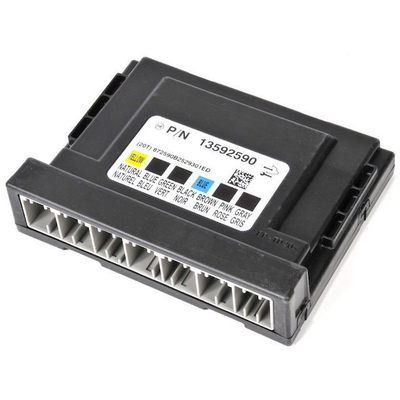
Chevy/GMC Silverado/Sierra (2019-2022): OEM 24298524, 24279973 (Alt: ACDelco, Dorman) - Replace Body Control Module (BCM)
— Parts: $300-$700, Labor: $150-$350, ~2 hr book time
(Professional)
Chevy/GMC Silverado/Sierra (2019-2022): OEM 13534086, 13508761 (Alt: Cardone Remanufactured)
Ford F-150 (2018-2020): OEM JL3T-14B476-xx (Varies by VIN) (Alt: Dorman Remanufactured)
Ram 1500 (2019-2023): OEM 68287182, 68357472AD (Alt: MAKS TIPM Rebuilders)
DIY vs Professional
- Replace Intelligent Battery Sensor (IBS) — Beginner: yes
Tools: Basic socket/wrench set, Scan tool for BMS reset. - Replace Active Grille Shutter Assembly — Beginner: no
Tools: Socket/wrench set, trim removal tools, ramps or jack stands. - Repair Damaged Wiring — Beginner: no
Tools: Multimeter, wire strippers, solder, heat shrink, wiring diagrams. - Replace Body Control Module (BCM) / Transfer Case Control Module (TCCM) — Beginner: no
Tools: Socket set, trim removal tools, OEM diagnostic tool with active software subscription.
Used vs. New Parts: Buying Guide
When a used part is worth it: For purely mechanical components like a shutter frame, a used part is cost-effective. For electronic items like an IBS or actuator motor, the risk of a used part failing is high. Used parts make sense for older, high-mileage vehicles on a strict budget.
Donor-vehicle mileage cap: roughly under 60000 miles for the part to have meaningful remaining life.
Donor quality checklist:
- Verify the exact part number matches; mid-year changes are common.
- For active grille shutters, inspect the plastic for brittleness and the linkage for binding.
- Avoid electronic parts from vehicles with flood or collision damage near the component's location.
Decision logic:
- If The part is an Intelligent Battery Sensor (IBS) → Buy new. The savings from a used part are minimal and the risk of getting a faulty one is high.
- If The part is a complete Active Grille Shutter assembly → Buy a new aftermarket unit (like Dorman) which incorporates design improvements over the OEM original.
- If The vehicle is over 10 years old and the repair is not critical to safety → A used part from a reputable salvage yard is a reasonable choice to save money.
Warranty tradeoff: Used parts offer a 30-90 day warranty. New aftermarket parts come with a 1-year to limited lifetime warranty. OEM parts have a 1-2 year warranty.
Worst-case if a used part fails: $300-800 if a used part fails after installation, requiring repeat labor costs.
What Happens If You Wait — Timeline
- 0-1 month: Check Engine Light is on. A specific feature (e.g., active grille shutters, auto start/stop) stops working. No other drivability symptoms are apparent. (MPG impact: 0-2%% · Added cost: $0)
- 1-3 months: A faulty IBS causes the main battery to charge improperly, reducing its lifespan. A grille shutter stuck closed causes the engine to run hotter than normal in traffic. (MPG impact: 1-3%% · Added cost: $50-$150)
- 3-6 months: A faulty IBS damages the battery, requiring replacement. A grille shutter stuck closed in hot weather causes a significant overheating event, potentially blowing a head gasket. (MPG impact: 3-5%% · Added cost: $400-$2500)
- 6+ months: Continued driving leads to cascading failures. Chronic overheating warps a cylinder head, requiring engine replacement. Persistent electrical instability damages other control modules. (MPG impact: 5-10%% · Added cost: $3000-$8000+)
Cost of Not Fixing It
- Immediate: Loss of function for the failed component. Reduces fuel economy by 1-3 MPG if the grille shutter fails open. (Added cost: Negligible)
- 1-6 months: A failed IBS damages the battery and alternator from improper charging. A grille shutter stuck closed causes engine overheating and severe damage in warmer months. (Added cost: $400 - $2500)
- 6+ months: Continued electrical instability stresses other electronic modules. Chronic overheating warps cylinder heads, requiring catastrophic engine replacement. (Added cost: $1500 - $8000+)
Diagnosis Steps
- Read the Codes with an Advanced Scan Tool
Use a scan tool capable of reading manufacturer-specific codes to identify the exact offline module. A basic code reader only shows 'U1502', but an advanced tool pinpoints the specific device (e.g., 'Lost Communication with Active Grille Shutter'), which is mandatory for diagnosis.
Tools: OBD-II Scan Tool (Advanced) (Beginner) - Test the Battery and Charging System
Verify the battery is fully charged (12.4-12.6V) and passes a load test. A weak battery causes LIN bus voltage to drop below the 9V threshold required for stable operation. Always test the auxiliary battery in vehicles equipped with start/stop systems.
Tools: Multimeter or Battery Tester (Beginner) - Perform a Visual Inspection
Inspect the wiring harness routing to the non-communicating module. Look for chafed wires, corrosion on connector pins, or loose grounds. On GM trucks, scrutinize the harness near the front upper control arm and where it crosses the engine.
Tools: Flashlight, Mirror (Beginner) - Check for Power and Ground at the Module
Disconnect the suspect module and use a multimeter to verify battery voltage and a solid ground (less than 0.1 ohms of resistance to chassis ground) at the connector pins. This confirms the module receives the necessary power to operate.
Tools: Multimeter, Vehicle-specific wiring diagram (Intermediate) - Check the LIN Bus Wire Voltage
With the ignition on, measure voltage on the LIN bus wire at the module's connector. A healthy LIN bus wire shows a toggling voltage averaging 7-9 volts on a multimeter. A steady 12V indicates a short to power or an open wire. A steady 0V indicates a short to ground.
Tools: Multimeter (Intermediate) - Isolate the Faulty Module
If multiple devices share the same LIN bus, unplug them one by one. Clear the codes after each disconnection. The module that restores network communication to the remaining devices when unplugged is the one shorting the bus.
Tools: Scan Tool, Basic hand tools (Advanced) - [PRO TIP] Perform a Parasitic Draw Test
If the U1502 code pairs with a dead battery overnight, a faulty module is staying 'awake'. Connect a multimeter in series with the negative battery cable. Wait 60 minutes for modules to sleep; draw should be under 50mA. If higher, pull LIN bus module fuses one by one until the draw drops.
Tools: Multimeter (with Amp reading), Fuse puller (Advanced) - [PRO TIP] Analyze the LIN Bus Signal with an Oscilloscope
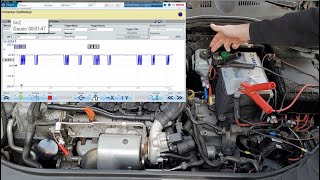
An oscilloscope provides definitive proof of network health. A proper LIN bus signal is a square wave toggling between a 'recessive' state (~12-13V) and a 'dominant' state (~1V). Rounded edges or incorrect voltage levels indicate high circuit resistance or a failing module.
Tools: Oscilloscope (Advanced)
When This Code Triggers (Freeze-Frame Conditions)
- Engine Coolant Temp: 180-205°F (Fully warmed up, during normal operation.)
- RPM: 1200-2500 (Often occurs during steady-state cruise or light acceleration.)
- Battery Voltage: 11.5-13.5V (Set during or after an engine crank, or if system voltage is unstable.)
- Vehicle Speed: 25-65 mph (Frequently logged during city or highway driving, not typically at idle.)
Related Codes
- U1510, U1524, U1556 — These are specific LIN bus communication failure codes. U1502 is generic, while these point to a specific bus or module. An advanced scan tool is required to differentiate them. The diagnostic process is identical.
- U0284 — This specifically means 'Lost Communication With Active Grille Shutter (AGS)'. If you have U1502 and U0284 together, the fault is isolated to the AGS, its wiring, or its fuse.
- U0401 — U1502 means 'No Communication' (the module is silent). U0401 means 'Invalid Data Received' (the module is talking, but the data is corrupt). U0401 points toward software glitches or an internal master module fault.
- P00FD — P00FD ('Battery B State Of Charge Performance') indicates a failed auxiliary battery. It appears with U1502 because the dead battery causes the Intelligent Battery Sensor (IBS) to stop communicating correctly.
Climate & Environmental Factors
- Cold Climates / Road Salt: Road salt and brine solutions are highly corrosive and destroy wiring and connectors exposed under the vehicle. Cold temperatures also reduce battery efficiency, causing system voltage to drop below the stable threshold required by LIN modules.
- High Humidity / Water Intrusion: In humid environments, compromised connector weather seals allow moisture to enter, leading to pin corrosion and high resistance. This degrades the LIN bus signal until it becomes unreadable.
- Altitude: Altitude puts additional strain on the engine's cooling system, making an active grille shutter failure (stuck closed) significantly more likely to result in a severe overheating event.
How to Talk to a Mechanic About This Code
Say this: "I have a U1502 communication code and need a diagnostic appointment. Please use a scan tool to identify which specific module on the LIN bus is offline, then test the battery and check for TSBs on the wiring harness."
This signals you understand U1502 is a network fault. It directs the technician to identify the module and check common causes like wiring and voltage, preventing them from guessing or replacing parts blindly.
Avoid saying:
- My check engine light is on, can you just fix it?
- I think my grille shutter is broken, can you replace it?
- Just do whatever you think is best.
Questions to ask before authorizing the repair:
- Which specific module did the scan tool identify as being offline?
- Did you test the power, ground, and the LIN data wire at that module's connector?
- What were the voltage readings on the LIN wire? Was it a steady 0V, 12V, or toggling?
- How did you rule out a wiring problem between the module and the BCM?
Where to Take It: Dealer vs Independent vs Chain
- Dealer:
A safe but expensive choice. Necessary if the fix is a software update or for complex, manufacturer-specific electrical issues.
Best for: Vehicles under warranty., Repairs requiring manufacturer-specific software updates (flashing)., Known issues covered by a Technical Service Bulletin (TSB).
Downsides: Highest labor rates., May default to expensive module replacement before thoroughly testing wiring. (Typical cost: +50% vs. baseline) - Independent Shop:
Best overall fit if you find a shop with strong electrical diagnostic skills. Ask if they have experience with network codes.
Best for: Out-of-warranty vehicles where cost is a factor., Shops with an L1 Advanced Engine Performance Specialist., Diagnosing common failures like wiring damage or known faulty parts.
Downsides: Diagnostic skill varies greatly; a parts-changer shop will struggle with this code., May lack access to the latest TSBs or security gateway modules for newer cars. (Typical cost: +0% vs. baseline) - Chain Shop:
AVOID. This network fault is outside the scope of most chain shops and results in a frustrating and expensive experience.
Best for: Simple, unrelated maintenance like oil changes or tires.
Downsides: Technicians are rarely equipped or trained for complex electrical diagnostics., High risk of misdiagnosis, leading to unnecessary replacement of parts. (Typical cost: -10% vs. baseline)
When to Walk Away From the Repair
If the repair cost exceeds 50% of the vehicle's private-party value, sell or trade it in.
- Car worth $5000, fix is $2800: Walk away. The repair cost is over 50% of the car's value, and you will not recoup that cost.
- Car worth $15000, fix is $1200: Fix it. The repair cost is well below the 50% threshold and is a reasonable investment.
- Car worth $3000, fix is $800: Borderline. While under the 50% rule, consider the car's overall condition. If other major repairs are looming, let it go.
What Scan Tool You Need for This Code
Minimum: A scanner that reads manufacturer-specific codes to identify which module is offline. A generic reader showing only 'U1502' is useless for this diagnosis.
A basic $30 code reader only tells you the U1502 code exists, not which of the 5-10 possible LIN bus modules failed. This leaves you guessing, costing more in the long run.
Budget: FOXWELL NT301 / ANCEL AD310 (~$70) — These are basic code readers and are NOT recommended. They cannot identify the specific module for a U-code, which is essential for this diagnosis.
Mid-range: XTOOL D7 / Topdon ArtiDiag Pro (~$350) — These offer full system scans that identify the specific non-communicating module. They provide bidirectional controls to test components like the active grille shutter, crucial for confirming a fix.
Professional: Autel MaxiCOM MK808S / Launch X431 series (~$500-1200) — Provides full OEM-level diagnostics, bidirectional controls, and access to wiring diagrams. Some perform ECU programming if a master module like the BCM needs replacement.
How to Clear the Code After You Fix It
- Reconnect any disconnected components.
- Reconnect the battery if it was disconnected.
- Use an OBD-II scan tool to clear the diagnostic trouble code.
- Perform a complete drive cycle to allow readiness monitors to reset.
Drive cycle (~25 minutes): A universal drive cycle includes a cold start, 2-3 minutes of idling, 5-10 minutes of mixed city driving (stops, starts, gentle acceleration), 10 minutes of steady highway speed (55-60 mph), and then allowing the vehicle to cool down completely.
Readiness monitors affected: Comprehensive Component Monitor (CCM)
Before emissions retest: drive at least 50 miles to fully set monitors.
Watch out for:
- Disconnecting the battery clears the code but resets all readiness monitors to 'Not Ready', guaranteeing an emissions test failure.
- The code returns immediately if the underlying hardware or wiring fault has not been properly repaired.
- Forgetting to perform a module-specific relearn procedure (e.g., Battery Monitoring System reset) causes the code to return.
Will This Fail Emissions / State Inspection?
Yes — this code typically fails an OBD-II emissions inspection.
- California: An illuminated Check Engine Light results in an automatic failure of the Smog Check. All readiness monitors must be 'Ready'.
- New York: The NYS DMV inspection includes an OBD-II scan. A U1502 code causes an automatic failure.
- Texas: In counties requiring an emissions test, an illuminated Check Engine Light is an automatic failure preventing registration renewal.
Most Commonly Affected Vehicles
- Chevrolet Silverado 1500 (2019-2022) — Prone to engine wire harness chafing and water intrusion at the transfer case actuator connector.
- GMC Sierra 1500 (2019-2022) — Shares the same platform and electrical systems as the Silverado, making it highly susceptible to transfer case control module communication issues.
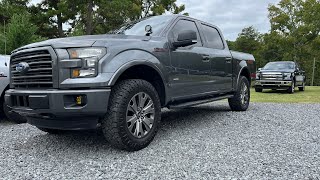
- Ford F-150 (2018-2023) — Commonly experiences failures of the Active Grille Shutter, indicated by a clicking noise from a broken plastic stop tab.
- Ram 1500 (2019-2023) — Shares electronic architecture with other Stellantis products, making it prone to communication codes. Issues on the interior CAN bus present similar symptoms.
- Chrysler Pacifica (2017-2019) — Known for complex electrical issues. TSBs frequently involve software updates to the PCM or address failures with the auxiliary battery for the start/stop system.
- Jeep Grand Cherokee / Wrangler (2017-2021) — Failures of the Intelligent Battery Sensor (IBS) or the auxiliary battery are a primary source of LIN bus codes on these models.
- Nissan Rogue / Altima (2017-2022) — Prone to issues with the front radar sensor, disabling Intelligent Cruise Control (ICC) and Automatic Emergency Braking (AEB). Addressed in TSB NTB19-033G.
- Ford Escape (2020-2022) — Experiences false Blind Spot Information System (BLIS) alerts due to Side Obstacle Detection Control Module faults. Addressed by TSB 23-2048.
Manufacturer-Specific Notes
- General Motors (Chevy/GMC): GM issued several TSBs for truck engine wiring harnesses chafing against the frame, causing shorts on the LIN bus. Always inspect harnesses in common rub-through areas before replacing modules.
- Stellantis (Chrysler/Jeep/Ram): On 2018+ vehicles, a 'Security Gateway Bypass' adapter is required to allow aftermarket scan tools to perform module isolation tests. Many communication issues are resolved via PCM software flash updates.
- Ford: LIN bus failures are rampant for Active Grille Shutters on F-150s due to a fragile plastic tab breaking. Look for extended warranty coverage programs tied to your specific VIN for module replacements.
- Nissan: Front radar sensor failures disabling safety systems are a known defect. TSB NTB19-033G addresses this, often requiring a software update or sensor replacement rather than wiring repairs.
Real Owner Stories
2022 Chevy Silverado 1500 with multiple communication codes
Owner scanned the truck and found multiple 'U' codes and low-voltage warnings. The remote start was disabled by the Check Engine Light.
Outcome: Replacing the aging battery fixed all codes. Communication codes are triggered by low system voltage during startup; replacing the battery is the simplest fix before complex wiring diagnostics.
Lesson: If you see multiple U-codes alongside low-voltage warnings, test and replace the battery if it is over 3 years old.
2018 Ford F-150 with U0284 and U1502
Owner installed an aftermarket upper active grille shutter (AGS). It stayed open and set a U0284 'Lost Communication with Active Grille Air Shutter' code.
Outcome: The issue was a break in the single LIN bus wire between the PCM and the shutter actuator. If communication is lost for 10 seconds, the shutter defaults to open as a fail-safe.
Lesson: Even if a part has power during a self-test, a communication code means the data line is broken. The fault is almost always in the wiring leading to the new part.
2017 Ram 1500 with strange electrical issues after adding accessories
Owner connected aftermarket LED lights directly to the battery. A year later, the power steering, brakes, and traction control systems failed. The dealer found IBS codes.
Outcome: The owner disconnected the lights. The IBS monitors all current flowing in and out of the battery. Bypassing it confuses state-of-charge calculations, leading to widespread electrical faults.
Lesson: Always connect aftermarket accessories to a fused power distribution point or chassis ground, NEVER directly to the battery terminals on vehicles with an IBS.
How to Prevent This Code From Triggering
- Clean battery terminals and ensure connections are tight (Every 12 months or with oil change) — Corrosion creates resistance, causing voltage drops that trigger communication codes. A clean connection ensures stable voltage for all modules.
- Apply dielectric grease to exposed connectors (When servicing a component) — Dielectric grease prevents moisture intrusion and corrosion inside connectors for parts like grille shutters, preventing shorts on the LIN bus.
- Inspect and secure wiring harnesses in chafe-prone areas (Every 24 months) — Vibrations cause wiring harnesses to rub against the frame, wearing through insulation and shorting the LIN wire. Secure harnesses with zip ties.
- Test battery health annually (Every 12 months for batteries over 3 years old) — A weak battery is a primary cause of intermittent communication codes. Annual testing catches a failing battery before it causes electrical gremlins.
- Avoid frequent, very short trips (Daily habit) — Short trips prevent the alternator from fully replenishing the battery's charge after startup, leading to a chronically undercharged state that causes voltage-related codes.
Frequently Asked Questions
What is a LIN bus?
A LIN (Local Interconnect Network) bus is a simple, low-cost, single-wire network used to connect less critical electronic components, like sensors and small motors, to a main computer.
What happens if my active grille shutter is stuck?
If stuck open, your engine warms up slowly and fuel economy decreases. If stuck closed, your engine is at high risk of overheating, especially in hot weather or when towing.
What are common misdiagnosis mistakes for U1502?
A frequent mistake is replacing a module without testing its power, ground, and LIN bus wire first. A good module won't work with bad wiring. Always trust the scan tool's report of which specific module is offline.
Why did my auto start/stop system turn off?
The auto start/stop system relies on the Intelligent Battery Sensor (IBS) to verify battery charge. If the IBS fails and sets a U1502 code, the start/stop system disables itself as a safety precaution.
Can I just disconnect the Intelligent Battery Sensor?
Disconnecting the IBS temporarily allows a vehicle to start if the sensor failed internally. However, the vehicle defaults to a basic charging strategy that shortens the life of the battery and alternator.
Why are my headlights flickering?
Flickering headlights at idle are a primary symptom of a failing Intelligent Battery Sensor (IBS). The faulty sensor provides incorrect data, causing voltage fluctuations that manifest as flickering lights.
Can I fix a U1502 code myself?
Replacing an Intelligent Battery Sensor is a DIY-friendly job requiring basic hand tools. However, diagnosing wiring shorts or replacing a Body Control Module requires professional programming and advanced diagnostic tools.
How much does it cost to diagnose a U1502 code?
Most repair shops charge a diagnostic fee ranging from $120 to $180. This covers the initial scan and electrical testing to pinpoint the source of the communication failure.
Key Takeaways
- U1502 indicates a communication failure on the single-wire LIN bus network, requiring an advanced scan tool to pinpoint the exact offline module.
- Test your battery first; voltage drops below 9V during startup are the leading cause of intermittent LIN bus communication errors.
- Inspect the wiring harness for chafing or water intrusion before replacing parts, as damaged wires account for over 50% of U1502 codes.
- A failed Active Grille Shutter (AGS) stuck closed causes engine overheating, while a failed Intelligent Battery Sensor (IBS) disables the auto start/stop system.
- Verify the LIN bus signal using a multimeter; a healthy data line toggles rapidly between 7V and 9V, while a steady 0V or 12V indicates a hard short.
Helpful Videos
Shop the Parts Behind U1502
Below are the parts most often responsible for code U1502, ranked by how frequently each one is the actual culprit (per the diagnosis above). Tap any to see what we have for your vehicle.



The information in this article is provided for general reference and educational purposes only. Vehicle specifications, procedures, and part compatibility can vary by production date, trim level, and region. Always consult your vehicle's factory service manual and verify part numbers before purchasing or performing repairs. Safety-critical components such as airbags, seat belts, and braking systems should be installed by a qualified professional.
- 🧭 Diagnostic Flowchart
- 🎬 Helpful Videos
- 🛍️ Shop This Part
- What Does U1502 Mean?
- Can I Drive With U1502?
- Common Causes
- Symptoms
- Common Fixes & Costs
- DIY vs Professional
- Used vs. New Parts: Buying Guide
- What Happens If You Wait — Timeline
- Cost of Not Fixing It
- Diagnosis Steps
- When This Code Triggers (Freeze-Frame Conditions)
- Related Codes
- Climate & Environmental Factors
- How to Talk to a Mechanic About This Code
- Where to Take It: Dealer vs Independent vs Chain
- When to Walk Away From the Repair
- What Scan Tool You Need for This Code
- How to Clear the Code After You Fix It
- Will This Fail Emissions / State Inspection?
- Most Commonly Affected Vehicles
- Manufacturer-Specific Notes
- Real Owner Stories
- 2022 Chevy Silverado 1500 with multiple communication codes
- 2018 Ford F-150 with U0284 and U1502
- 2017 Ram 1500 with strange electrical issues after adding accessories
- How to Prevent This Code From Triggering
- Frequently Asked Questions
- What is a LIN bus?
- What happens if my active grille shutter is stuck?
- What are common misdiagnosis mistakes for U1502?
- Why did my auto start/stop system turn off?
- Can I just disconnect the Intelligent Battery Sensor?
- Why are my headlights flickering?
- Can I fix a U1502 code myself?
- How much does it cost to diagnose a U1502 code?
- Key Takeaways
- 🎟️ Get 5% Off