

OBD-II Code U1505: Invalid or Missing Data from a Networked Component
The Ultimate Guide to Understanding, Diagnosing, and Fixing U1505
- Code U1505 indicates a communication failure on the single-wire LIN bus, typically pointing to a faulty active grille shutter, trailer brake module, or multifunction switch.
- Always test the component's connector for 12V power, ground, and a fluctuating 1-11V LIN signal before spending $300+ on a replacement module.
- Inspect the trailer brake module connector (often located above the spare tire) for green corrosion; cleaning it and applying $8 dielectric grease fixes the issue in over 50% of truck cases.
- If replacing a Ford trailer brake module or a Ram active grille shutter, you must use a bidirectional scan tool to initialize the new part, or the U1505 code will immediately return.
- Do not ignore a U1505 code tied to an active grille shutter stuck closed; this causes engine overheating under heavy loads and leads to $2,500+ in head gasket damage.
What Does U1505 Mean?
U1505 is a network communication code indicating a primary control module received an illogical message—or no message at all—from a networked component. This occurs on the Local Interconnect Network (LIN) bus, a single-wire system connecting secondary components like active grille shutters, trailer brake modules, and switches to a master computer.
Technical definition: The SAE/ISO definition for U1505 is manufacturer-specific, universally indicating a communication error on the LIN bus. Chrysler defines it as 'Implausible Message Data Length Received,' while GM uses it for a general 'Lost Communication' with a slave module. The master module expects a specific data format; when the received data is corrupt or missing, it sets code U1505.
Can I Drive With U1505?
Yes, But With Caution. Yes, but a specific feature will be disabled. If the active grille shutters are stuck open, highway fuel economy drops 1-3%. If stuck closed, the engine will overheat during heavy loads, causing severe damage. If the trailer brake control module fails, towing a trailer with electric brakes is illegal and unsafe. Address the issue promptly to restore functionality and pass emissions.
Common Causes
- Damaged Wiring or Corroded Connectors (Very Common) — The single LIN bus wire is highly susceptible to damage. Connector pins corrode rapidly in exposed areas like behind the grille (active shutters) or on the frame rail near the spare tire (trailer modules).
- High-Resistance or Corroded Ground Connection (Very Common) — A weak or corroded ground connection corrupts data signals by introducing electrical noise and voltage drops. A bad chassis ground causes multiple, seemingly unrelated electrical issues and is a frequent point of misdiagnosis.
- Physical Obstruction or Debris (Common) — For mechanical LIN devices like active grille shutters, ice, mud, or animal nests physically jam the mechanism. The module reports an invalid position because it cannot reach its commanded state.
- Faulty Slave Module (Actuator, Sensor, or Switch) (Common) — The component sending the data has an internal failure. Common examples are the active grille shutter actuator motor, trailer brake control module, or multifunction switch. The module powers up but sends garbled data.
- Low or Unstable Battery Voltage (Less Common) — LIN bus communication requires stable system voltage (9V-16V). A failing battery or alternator causes modules to behave erratically and drop off the network. Always test the battery before starting diagnostics.
- Module Software or Configuration Mismatch (Uncommon) — After replacing a part, the new module often requires a software update or initialization procedure to synchronize with the main computers. Skipping this step leaves the new part unrecognized, resulting in a communication code.
- Faulty Master Control Module (BCM, ECM) (Rare) — The main computer managing the LIN bus network fails. It stops sending commands or processing data from modules on that network, setting multiple communication codes simultaneously.
- Interference from Aftermarket Devices (Rare) — Poorly designed aftermarket accessories plugged into the OBD-II port (insurance dongles, fleet trackers) interfere with the vehicle's data networks and trigger unexpected communication codes.
Symptoms
- Check Engine Light is On — This is the most common initial symptom. The code is stored in a main control module, triggering the light.
- Malfunction of a Specific System — The feature controlled by the failing module stops working. Active grille shutters get stuck, or a 'Service Trailer Brake System' message appears.
- Warning Message on Instrument Cluster — A specific text-based warning related to the failed system, such as 'Service Trailer Brake' or 'Service Shutter System,' displays on the dash.
- Inoperative Comfort and Convenience Features — This code indicates problems with power mirrors, heated seats, climate control dampers, or the turn signal switch if they are controlled by a LIN bus module.
- Reduced Fuel Economy or Engine Overheating — If active grille shutters are stuck open, highway fuel economy decreases. If stuck closed, the engine runs hotter than normal or overheats under load.
Diagnostic Flowchart
Tap your situation to follow the diagnostic path that matches what you're seeing on this code.
Common Fixes & Costs
- Repair Damaged Wiring or Clean Connector — Parts: $10-$70, Labor: $150-$400, ~2 hr book time (Intermediate)
- Replace Active Grille Shutter Assembly
— Parts: $250-$500, Labor: $300-$750, ~2.5 hr book time
(DIY)
: OEM 84363184 (often superseded by 85043807) (Alt: Dorman 258-500)
: OEM 68303626AB (verify by VIN) (Alt: Dorman 258-501) - Replace Trailer Brake Control Module
— Parts: $150-$400, Labor: $120-$250, ~1.2 hr book time
(Intermediate)
: OEM JL3Z-19H332-AA (verify by VIN) (Alt: Dorman 601-225)
: OEM 84739798 (verify by VIN) (Alt: Dorman 601-233) - Clean or Replace Main Ground Connections — Parts: $5-$30, Labor: $75-$200, ~0.7 hr book time (DIY)
- Replace Multifunction (Turn Signal) Switch
— Parts: $75-$200, Labor: $100-$180, ~0.8 hr book time
(DIY)
: OEM 56046118AF (verify by VIN) (Alt: Dorman 978-5401) - Replace and Program Master Module (BCM or ECM) — Parts: $500-$1200+, Labor: $150-$350, ~2 hr book time (Professional)
DIY vs Professional
- Repair Damaged Wiring or Clean Connector 🟢 Beginner
Tools: Multimeter, wire strippers, crimpers, heat shrink tubing, connector cleaning kit - Replace Active Grille Shutter Assembly 🟢 Beginner
Tools: Basic socket set (7mm, 10mm), trim removal tools, flashlight - Replace Trailer Brake Control Module 🟢 Beginner
Tools: Socket set, advanced scan tool (like FORScan for Ford) or dealer visit - Clean or Replace Main Ground Connections 🟢 Beginner
Tools: Socket/wrench set, wire brush, dielectric grease - Replace Multifunction (Turn Signal) Switch 🟢 Beginner
Tools: Screwdrivers (Phillips, Torx), socket set, trim removal tools - Replace Master Module (BCM or ECM) 🟢 Beginner
Tools: Manufacturer-specific scan tool with programming subscription
Used vs. New Parts: Buying Guide
When a used part is worth it: For an active grille shutter assembly, a used part makes sense on an older vehicle (over 100k miles) where a new OEM part is prohibitively expensive. It restores function on a tight budget but carries a higher risk of failure.
Donor-vehicle mileage cap: roughly under 60000 miles for the part to have meaningful remaining life.
Donor quality checklist:
- Verify the donor vehicle had low mileage and was scrapped for reasons other than a front-end collision.
- Visually inspect the used part for cracks, debris damage, or a stiff/jammed mechanism.
- Match the OEM part number exactly. Superseded numbers have different software logic or connectors.
Decision logic:
- If Vehicle is under warranty or less than 5 years old → Buy a new OEM part to ensure longevity and compatibility.
- If Vehicle is over 10 years old and the new part costs more than 25% of the car's value → A used part from a reputable salvage yard is a reasonable choice.
- If A new aftermarket assembly (e.g., Dorman) is available with a lifetime warranty for a similar price to used → Choose the new aftermarket part for the warranty coverage.
Warranty tradeoff: Used parts typically come with a 30-90 day warranty covering only the part. New aftermarket parts offer a 1-year to limited lifetime warranty. New OEM parts carry a 1-2 year warranty.
Worst-case if a used part fails: $400-$800 if a used part fails shortly after the warranty period, requiring you to pay for the part and the significant labor cost (bumper removal) a second time.
What Happens If You Wait — Timeline
- 0-1 month: Check Engine Light illuminates. If the shutter is stuck open, highway MPG drops 1-3%. If stuck closed, the cooling fan runs more often but temperature remains stable in mild weather. Vehicle fails emissions testing. (MPG impact: 1-3%% · Added cost: $5-$20 in wasted fuel.)
- 1-3 months: If the shutter is stuck closed, the engine runs noticeably hotter in traffic or under load. The cooling fan runs constantly, causing extra wear on the fan motor and alternator. (MPG impact: 3-5%% · Added cost: $50-$200 in wasted fuel and added electrical system strain.)
- 3-6 months (in warm climate): Engine overheats in demanding situations (towing, climbing hills, hot traffic). Coolant boils over, forcing a shutdown. You will be stranded and require a tow. (MPG impact: 5-10%% · Added cost: $150-$500 for a tow truck and potential battery replacement.)
- 6+ months: Chronically ignoring an overheating condition caused by a stuck-closed shutter destroys the engine. Extreme heat warps the cylinder head or blows the head gasket, mixing coolant and oil. (MPG impact: N/A% · Added cost: $2,500-$5,000+ for head gasket replacement or engine rebuild.)
Cost of Not Fixing It
- Immediate (0-1 month): If the active grille shutter is stuck open, you experience a 1-3 MPG drop in fuel economy at highway speeds. If stuck closed, the engine cooling fan runs more frequently. The vehicle automatically fails state emissions inspections. (Added cost: $5-$15 per tank of gas (due to lost MPG).)
- Medium Term (1-6 months): If the shutter is stuck closed, the engine overheats during hot weather, while towing, or in stop-and-go traffic. This causes coolant to boil over and triggers limp mode or engine shutdown. (Added cost: $150-$500 (for a new battery if frequent fan use drains it, or for a tow if the engine overheats).)
- Long Term (6+ months): Ignoring an overheating condition caused by a stuck-closed shutter leads to catastrophic engine damage, such as a warped cylinder head or failed head gasket. (Added cost: $2,500-$5,000+ (for major engine repairs resulting from overheating).)
Diagnosis Steps
- Read All Trouble Codes from All Modules
Use an OBD-II scanner capable of reading codes from all vehicle modules (BCM, ECM, ABS), not just the engine. Note which module set the U1505 code and look for related codes (like U0284 or U1510) that pinpoint the specific component.
Tools: Advanced OBD-II Scanner (Beginner) - Perform a Comprehensive Visual Inspection
Locate the module identified in Step 1. Inspect the area for physical damage, debris blocking movement, and obvious wiring issues like chafed insulation or loose, corroded connectors.
Tools: Flashlight, Mirror (Beginner) - Check Battery Voltage and Ground Connections
Ensure the battery is fully charged (12.4V+ engine off) and the charging system works (13.5V-14.5V engine running). Inspect and clean the main battery ground, engine-to-chassis ground strap, and module-specific grounds. Perform a voltage drop test; a reading under 0.1V indicates a good ground.
Tools: Multimeter, Wire Brush (Intermediate) - Test for Power and Ground at the Module Connector
Unplug the connector at the suspect module. Using a multimeter and wiring diagram, confirm the module receives battery voltage on the correct pin and has a solid connection to ground. Use a test light to confirm the circuits carry a load.
Tools: Multimeter, Wiring Diagram, Test Light (Intermediate) - PRO TIP: Basic LIN Bus Voltage Check
With the key on and module plugged in, backprobe the LIN bus signal wire. A healthy LIN bus shows a fluctuating voltage, toggling between battery voltage (11-12V) and near-ground (<1V). A wire stuck at a constant 12V indicates a short to power. A wire stuck at 0V indicates a short to ground.
Tools: Multimeter (with backprobe pins) (Advanced) - PRO TIP: Isolate the Faulty Module on the Bus
If the LIN bus is shorted (stuck at 0V or 12V), isolate modules to find the fault. Unplug slave devices one by one. When the shorted module is disconnected, the voltage on the LIN wire returns to a normal toggling state. The last module unplugged is the culprit.
Tools: Multimeter, Wiring Diagram (Advanced) - Advanced Diagnosis: Scan Tool Live Data Analysis
Using an advanced scan tool, monitor live data PIDs for the suspect module. Command the active grille shutter from 0% to 100% and visually verify movement. A mismatch between commanded and reported position indicates a mechanical jam or faulty actuator.
Tools: Advanced Scan Tool (Advanced) - Perform Module Initialization or Calibration
If a module was replaced, check service information for a required re-learn or initialization procedure. Manufacturers like Ford require this step for trailer brake modules or active grille shutters. Skipping this leaves the new part unrecognized.
Tools: Advanced Scan Tool (Professional) - Advanced Diagnosis: Analyze the LIN Bus Signal with an Oscilloscope
Connect an oscilloscope to the LIN signal wire. A good signal shows clear data frames with a high voltage near battery voltage and a low voltage near ground. If the master sends a request but there is no response, the slave module or wiring is faulty.
Tools: Oscilloscope, Backprobe pins (Professional)
When This Code Triggers (Freeze-Frame Conditions)
- Engine Coolant Temp: 185-210°F (85-99°C) (The engine is fully warmed up. The code sets when the system expects a component to react to a temperature change (e.g., shutters opening for cooling) but it fails to respond.)
- Vehicle Speed: 45-65 mph (72-105 kph) (Steady highway driving. Active grille shutters are commanded closed here to improve aerodynamics. The fault triggers if the shutter fails to close or report its position.)
- RPM: 1500-2500 (Light-to-moderate throttle application consistent with highway cruising. The system monitors component status during stable operation.)
- Engine Load: 25-50% (Indicates the engine is not under heavy stress. The fault logs during a normal operational check rather than a high-demand situation.)
Related Codes
- U0284 — Specific: 'Lost Communication with Active Grill Air Shutter Actuator.' U1505 means 'invalid data,' while U0284 means 'no data.' If you see both, the grille shutter is confirmed as the problem area.
- U0137 — Specific: 'Lost Communication with Trailer Brake Control Module.' This code indicates the module is completely silent. U0137 points strongly to a complete power/ground loss or a dead module.
- U1510 — Nearly Identical (GM): 'Lost Communication with Device on LIN Bus.' On GM vehicles, U1510 is used interchangeably with U1505 and almost always points to the active grille shutter.
- P059F — Related Component: 'Active Grille Air Shutter 'A' Performance.' This is a performance code, meaning the shutter is physically stuck. It frequently appears alongside U1505 or U0284.
Climate & Environmental Factors
- Cold Weather / Snow & Ice: Ice, snow, or slush physically jams the active grille shutters, preventing movement and triggering a performance code. Some systems are programmed to not fully close in freezing temperatures to prevent freezing shut.
- High Humidity & Road Salt ('Salt Belt' Regions): Moisture and salt dramatically accelerate corrosion on exposed wiring connectors and chassis ground points. This is the primary cause of failure for trailer brake control modules located on the frame rail.
- Rodent Infestation: Rodents build nests within the active grille shutter assembly, physically obstructing movement. They also chew on wiring, easily severing or shorting the single LIN bus wire.
How to Talk to a Mechanic About This Code
Say this: "I have a U1505 communication code. I'd like to schedule a diagnostic appointment to determine which component on the LIN bus is failing. Please start by checking for any related technical service bulletins and inspecting the wiring and connectors for the most common culprits, like the active grille shutter or trailer brake module, before recommending module replacement."
This signals you understand the code relates to a network, not a single part. It directs the technician to perform a proper diagnosis (checking wiring and TSBs) instead of just replacing the most likely expensive part, saving you from a potential misdiagnosis.
Avoid saying:
- 'My check engine light is on.' (Too vague, invites a wide-ranging and expensive diagnostic).
- 'I think the grille shutter is broken, just replace it.' (You pay to replace a good part when the real problem is a cheap, broken wire).
- 'Just fix whatever is necessary.' (This is an open invitation for unnecessary upsells and repairs).
Questions to ask before authorizing the repair:
- Did you confirm the module has proper power and ground at its connector?
- What was the voltage reading on the LIN bus wire? Was it shorted, open, or showing activity?
- Can you show me the corroded connector or damaged wire that you found?
- Is a module initialization or programming step required after this repair?
- What is the warranty on the part and your labor?
Where to Take It: Dealer vs Independent vs Chain
- Dealer:
A necessary choice for warranty work or complex software issues, but the most expensive option for common out-of-warranty failures like wiring or corrosion.
Best for: Vehicles under warranty or with an active recall for this issue., Repairs requiring manufacturer-specific software updates or programming after part replacement (common on Ford)., Complex, multi-module communication issues that an independent shop has already failed to diagnose.
Downsides: Highest labor rates and OEM part prices., May be quicker to replace an entire assembly (e.g., grille shutter) rather than repair a simple wiring fault. (Typical cost: +50% vs. baseline) - Independent Shop:
Best fit for most U1505 scenarios on out-of-warranty vehicles, especially if the problem is suspected to be wiring or corrosion. A good independent shop provides the best balance of expertise and value.
Best for: Out-of-warranty vehicles where the cause is a known common problem (e.g., corroded TBCM connector on a GM truck)., Diagnosing and repairing wiring or connector issues, which they are often more inclined to do than dealers., Vehicles where the fix is a simple part swap with no programming, like a multifunction switch.
Downsides: Quality and diagnostic skill vary widely; choose a shop specializing in electrical diagnostics., May lack expensive, manufacturer-specific scan tools required for module programming on some brands. (Typical cost: +0% vs. baseline) - Chain Shop:
AVOID. Diagnosing a U1505 code requires a level of electrical and network expertise not typically found at a chain shop. They are highly likely to misdiagnose the issue.
Best for: Simple, unrelated maintenance like oil changes or tires.
Downsides: Technicians lack the specialized training for diagnosing complex data network faults., High pressure to meet sales targets leads to misdiagnosis and unnecessary parts replacement. (Typical cost: -10% vs. baseline)
When to Walk Away From the Repair
If the estimated repair cost for the U1505 fault exceeds 40-50% of your vehicle's private-party value (from a source like Kelley Blue Book), you should pause and seriously consider selling or trading in the vehicle.
- Car worth $15000, fix is $1200: Fix it. The repair cost is well below the 50% threshold and restores full functionality.
- Car worth $6000, fix is $2800: Walk away. The repair cost is nearly 50% of the car's value. This money is better put toward a replacement vehicle.
- Car worth $3500, fix is $1500: Borderline. The cost is ~43% of the value. Get a second opinion, and if the repair is confirmed, consider whether the vehicle has other pending maintenance needs before proceeding.
What Scan Tool You Need for This Code
Minimum: A scan tool that reads codes from ALL vehicle modules (BCM, ABS, SRS), not just the engine. A basic engine-only code reader will not see a U1505 code if it is stored in the Body Control Module.
A $20 engine code reader is blind to the modules where U1505 codes live. You need to know WHICH module is reporting the fault to know where to start looking. An all-module scanner is the absolute minimum.
Budget: Kingbolen Ediag Elite / XTOOL A30M (~$90) — These Bluetooth dongles pair with your smartphone. They provide an all-module scan to identify the fault's location, read and clear codes from body modules, and view live data. Some offer limited bidirectional tests.
Mid-range: Foxwell NT510 Elite / Innova 5610 / Autel MaxiCOM MK808 (~$150) — These handheld units or tablets offer full-system diagnostics and bidirectional control. This allows you to command a component, like an active grille shutter, to open or close from the scan tool to confirm if the part is truly broken.
Professional: Autel MaxiSys / Launch X431 Series / FORScan with compatible adapter (~$500-1200) — Provides full, dealer-level diagnostics. For Ford owners, FORScan is essential as it allows you to perform the 'Module Initialization' required after replacing a Trailer Brake Control Module. These tools offer advanced coding and programming.
Rent vs buy: Auto parts stores typically only rent basic engine code readers, which are insufficient for this code. If you plan to do your own diagnostics, investing in a budget-tier all-module scanner is necessary. For a one-time fix, paying a shop for a proper diagnosis is more cost-effective.
How to Clear the Code After You Fix It
- Fix the underlying mechanical or electrical fault.
- Use a quality OBD-II scan tool to clear the diagnostic trouble codes from all modules.
- Perform a complete drive cycle to allow the vehicle's readiness monitors to run their self-tests.
Drive cycle (~30 minutes): Start with a cold engine (left off for 8+ hours). Idle for 2-3 minutes. Drive for 15-20 minutes with mixed stop-and-go and steady driving. Include at least 5-10 minutes of steady highway speed driving between 50-60 mph. Allow the vehicle to cool down completely.
Readiness monitors affected: Comprehensive Component Monitor, Catalyst Monitor, Oxygen Sensor Monitor
Before emissions retest: drive at least 50 miles to fully set monitors.
Watch out for:
- Clearing the code without fixing the root cause results in the code returning almost immediately.
- Disconnecting the battery resets all readiness monitors to 'Not Ready', guaranteeing an emissions test failure.
- Taking the vehicle for an emissions test immediately after clearing the codes results in a failure due to 'Not Ready' monitors.
Will This Fail Emissions / State Inspection?
Yes — this code typically fails an OBD-II emissions inspection.
- California: An illuminated Check Engine Light is an automatic failure. After repair, a full drive cycle must be completed to set the readiness monitors before a re-test.
- New York: A vehicle with an active Check Engine Light automatically fails the OBD-II portion of the annual NYS inspection. You cannot pass until the fault is repaired and cleared.
- Texas: In counties requiring an emissions test, an illuminated Check Engine Light results in an automatic failure. The vehicle cannot be registered until it passes a re-inspection.
Most Commonly Affected Vehicles
- Chevrolet / GMC Silverado / Sierra 1500 (2014-2019) — Extremely common for the active grille shutter actuator to fail (GM P/N 84363184). This sets codes U1510 or U0284 alongside U1505. The actuator motor is not sold separately, requiring full assembly replacement.
- Chevrolet / GMC Trucks and SUVs (2500/3500, Tahoe, Suburban) (2015-2022) — Failure of the trailer brake control module (TBCM) or its wiring harness is covered by TSB #PIT5529A. Corrosion in the main connector above the spare tire is the typical cause.
- Chrysler / Dodge / Ram Grand Caravan / Town & Country (2008-2020) — The multifunction (turn signal) switch communicates via LIN bus. A failure causes erratic turn signals, wipers, or headlights. Part numbers vary based on features like rear wipers.
- Ford F-150, F-250/350, Expedition (2015-2024) — Issues with the Trailer Brake Control Module (TBCM) are common. After replacement, the module must be enabled in the vehicle's software using FORScan or by the dealer.
- Ram 1500 / 2500 / 3500 (2014-2019) — Ram trucks frequently experience active grille shutter failures. The code is often accompanied by U11E9. Replacement of the shutter assembly is the standard fix, and calibration is not typically required.
- Jeep Grand Cherokee (2020-2023) — Sets similar 'implausible data' codes for communication failures with modules like the Transfer Case Control Module (TCCM) or body components. Wiring and module failures are both potential causes.
- Hyundai / Kia Elantra, Sonata, various models (2018-2022) — Models experience issues with the Motor Driven Power Steering (MDPS) assembly, which communicates via a data network. A failure in the MDPS triggers communication codes.
- Hyundai Ioniq 5, Ioniq 6 (2022-2024) — A widely known issue involves the Integrated Charging Control Unit (ICCU), which manages the 12V battery. A fault in the ICCU causes a loss of power and various communication DTCs, subject to a safety recall.
Manufacturer-Specific Notes
- General Motors (Chevy/GMC): The most frequent cause for U1505 is a failed active grille shutter or a corroded trailer brake module connector on the frame rail. No calibration is typically needed after shutter replacement. Service update N222365750 corrects wiring harness routing that interferes with shutter movement.
- Chrysler / Dodge / Jeep (Stellantis): Defines U1505 as 'Implausible Message Data Length Received.' It is often linked to a failing multifunction switch in vans and SUVs, causing erratic wipers or turn signals. Software updates (like TSB 18-001-19 REV. B) resolve 'implausible data' codes without hardware replacement.
- Ford: Ford uses code P1505 for an Idle Air Control (IAC) system malfunction; do not confuse U1505 with P1505. For U-codes, Ford requires a 'module initialization' procedure with a scan tool after replacing parts like a trailer brake module.
- Hyundai: On Ioniq 5 and Ioniq 6 models, communication codes are triggered by a fault in the Integrated Charging Control Unit (ICCU). This is a known issue subject to safety recall 272 (NHTSA 24V-204), involving a software update and potential ICCU replacement.
- Subaru: Subaru bulletins (e.g., 15-251-19R) note that aftermarket devices plugged into the OBD-II port interfere with vehicle networks, causing communication DTCs. This is a potential cause on any modern vehicle where U1505 appears without a clear mechanical fault.
Real Owner Stories
2016 GMC Sierra 1500 with 'Service Trailer Brake System' Message
Check engine light and 'Service Trailer Brake System' message appeared intermittently, especially after driving in the rain. Truck has 75,000 miles.
What they tried:
- Ignored the code initially, but it became persistent.
- A shop quoted $600 to replace the Trailer Brake Control Module (TBCM).
Outcome: The owner found GM TSB #PIT5529A. They located the TBCM connector above the spare tire, found green corrosion on the pins, and noticed a missing cavity plug. They cleaned the pins, filled the connector with dielectric grease, and re-seated it. The code cleared permanently. Total cost: $8.
Lesson: Always inspect the wiring and connectors for the specific module before replacing it. For truck trailer brake issues, the exposed connector on the frame is the primary failure point, not the expensive module.
2016 Ram 1500 with CEL and U1505 at 68,000 miles
Check engine light illuminated. A code reader showed U1505. The owner noticed the active grille shutters were stuck open.
What they tried:
- Bought a new grille shutter assembly for $350 and replaced it.
- Cleared the code, but the check engine light returned the next day.
Outcome: The owner disconnected the battery for 30 minutes to perform a hard reset. After reconnecting, the code cleared and stayed off. The shutter began working normally.
Lesson: After replacing a module, a hard reset by disconnecting the battery is often necessary for the master computer to recognize the new part.
2019 Ford F-150 DIY Trailer Brake Controller Installation
Owner installed an OEM integrated trailer brake controller (TBC) in an F-150 not originally equipped with one.
What they tried:
- Installed the new switch in the dash.
- Used FORScan software to enable the module in the BCM and IPC computers.
- A 'Trailer Brake Control Module Failure' message appeared.
Outcome: The owner discovered the factory wiring harness was an unpowered pigtail. He manually tapped into a 12V power source to power the module. The error cleared immediately.
Lesson: When adding a factory component, never assume the wiring is plug-and-play. Always verify power, ground, and data lines are active at the connector.
2012 Dodge Grand Caravan with 110K miles and erratic wipers
Turn signals failed intermittently, and windshield wipers activated randomly. The check engine light illuminated with code U1505.
What they tried:
- Suspected a problem with the main computer (TIPM).
- A mechanic quoted over $1,200 to replace the TIPM.
Outcome: The owner replaced the multifunction (turn signal) switch on the steering column for $85. This completely fixed the erratic behavior and the U1505 code.
Lesson: On Chrysler/Dodge vehicles, a failing multifunction switch (a LIN bus device) causes communication codes and erratic electrical problems. Replace it before suspecting a major computer module.
How to Prevent This Code From Triggering
- Apply Dielectric Grease and Seat Cavity Plugs on Exposed Connectors (Once, or every 2-3 years in the Salt Belt) — Truck trailer brake module connectors are exposed to road spray. Filling the connector with dielectric grease and ensuring all rubber cavity plugs are seated seals the pins from moisture, preventing communication-killing corrosion.
- Periodically Clean Active Grille Shutter Area (Seasonally (especially before winter)) — Remove leaves, nests, snow, and ice from behind the grille. Debris physically jams the shutter mechanism, causing the motor to strain, fail, and trigger a performance code.
- Protect Wiring with Rodent-Repellent Tape (As needed, if parking in a rural or high-risk area) — Rodents chew soy-based wire insulation. Wrapping key harnesses in capsaicin-infused tape (e.g., Honda P/N 4019-2317) prevents them from severing the single LIN bus wire.
Frequently Asked Questions
How much does it cost to fix code U1505?
Repair costs range from $150 for a simple wiring fix to over $1,200 for a dealership to replace an active grille shutter assembly. Replacing a trailer brake module typically costs $300-$700. A DIY multifunction switch replacement is often under $200.
What are the most common misdiagnoses for U1505?
The biggest mistake is replacing an expensive component without verifying it has proper power, ground, and a LIN bus signal. A corroded ground or a broken wire is frequently the true cause. Always test the circuit before buying parts.
Does an active grille shutter need to be calibrated after replacement?
Most GM and Ram active grille shutters are plug-and-play and do not require calibration. However, Ford trailer brake modules and some other LIN devices require a 'module initialization' procedure using a bidirectional scan tool. Skipping this step guarantees the code will return.
Can I fix a U1505 code myself?
Yes, if the issue is a visible wiring break, a bad ground, or a straightforward part swap like a multifunction switch. Diagnosing the exact point of failure on a data network requires a multimeter and wiring diagrams. If you cannot isolate the electrical fault, take the vehicle to a professional.
Will clearing the code make it go away?
No. U1505 indicates a persistent hard fault in the communication network. The code will return within one or two key cycles until the underlying electrical or hardware problem is repaired.
What is a LIN bus?
A Local Interconnect Network (LIN) is a single-wire data network used in modern vehicles. It is a slower, cost-effective alternative to the main CAN bus. It controls non-critical components like power windows, active grille shutters, and trailer brake modules.
Can a bad battery cause a U1505 code?
Yes, communication networks are highly sensitive to voltage fluctuations. A weak battery or failing alternator causes modules to drop off the network, triggering U1505. Always verify your battery rests above 12.4V before starting complex diagnostics.
Key Takeaways
- Code U1505 indicates a communication failure on the single-wire LIN bus, typically pointing to a faulty active grille shutter, trailer brake module, or multifunction switch.
- Always test the component's connector for 12V power, ground, and a fluctuating 1-11V LIN signal before spending $300+ on a replacement module.
- Inspect the trailer brake module connector (often located above the spare tire) for green corrosion; cleaning it and applying $8 dielectric grease fixes the issue in over 50% of truck cases.
- If replacing a Ford trailer brake module or a Ram active grille shutter, you must use a bidirectional scan tool to initialize the new part, or the U1505 code will immediately return.
- Do not ignore a U1505 code tied to an active grille shutter stuck closed; this causes engine overheating under heavy loads and leads to $2,500+ in head gasket damage.
Shop the Parts Behind U1505
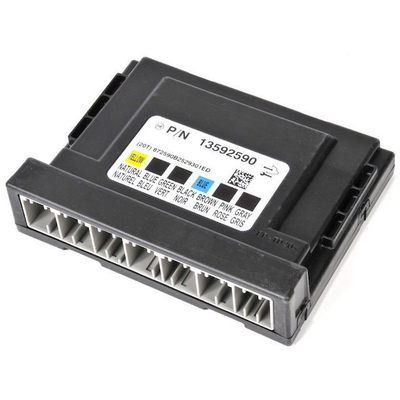
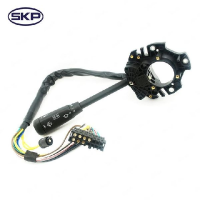
Below are the parts most often responsible for code U1505, ranked by how frequently each one is the actual culprit (per the diagnosis above). Tap any to see what we have for your vehicle.




The information in this article is provided for general reference and educational purposes only. Vehicle specifications, procedures, and part compatibility can vary by production date, trim level, and region. Always consult your vehicle's factory service manual and verify part numbers before purchasing or performing repairs. Safety-critical components such as airbags, seat belts, and braking systems should be installed by a qualified professional.
- 🧭 Diagnostic Flowchart
- 🛍️ Shop This Part
- What Does U1505 Mean?
- Can I Drive With U1505?
- Common Causes
- Symptoms
- Common Fixes & Costs
- DIY vs Professional
- Used vs. New Parts: Buying Guide
- What Happens If You Wait — Timeline
- Cost of Not Fixing It
- Diagnosis Steps
- When This Code Triggers (Freeze-Frame Conditions)
- Related Codes
- Climate & Environmental Factors
- How to Talk to a Mechanic About This Code
- Where to Take It: Dealer vs Independent vs Chain
- When to Walk Away From the Repair
- What Scan Tool You Need for This Code
- How to Clear the Code After You Fix It
- Will This Fail Emissions / State Inspection?
- Most Commonly Affected Vehicles
- Manufacturer-Specific Notes
- Real Owner Stories
- 2016 GMC Sierra 1500 with 'Service Trailer Brake System' Message
- 2016 Ram 1500 with CEL and U1505 at 68,000 miles
- 2019 Ford F-150 DIY Trailer Brake Controller Installation
- 2012 Dodge Grand Caravan with 110K miles and erratic wipers
- How to Prevent This Code From Triggering
- Frequently Asked Questions
- How much does it cost to fix code U1505?
- What are the most common misdiagnoses for U1505?
- Does an active grille shutter need to be calibrated after replacement?
- Can I fix a U1505 code myself?
- Will clearing the code make it go away?
- What is a LIN bus?
- Can a bad battery cause a U1505 code?
- Key Takeaways
- 🎟️ Get 5% Off