

U1510 on 2014-2015 Chevrolet Camaro: HVAC Problems, Causes, and Fixes
On a 2014-2015 Camaro, code U1510 almost always points to a software glitch in the Electronic Climate Control (ECC) module, causing blower motor or A/C issues. The most common fix is a dealer-performed software update, as outlined in GM Technical Service Bulletin #PIC5965C.
- Code U1510 on a 2014-2015 Camaro is a very specific code pointing to a problem with the climate control (HVAC) system.
- The most probable cause is a software bug in the Electronic Climate Control (ECC) module.
- The official fix, per GM Technical Service Bulletin PIC5965C, is to have a dealer reprogram the module. This should be your first step.
- Do not replace the blower motor or resistor module without first ruling out the software issue, as this can lead to unnecessary expense.
- If the reprogram does not work, the next items to check are the blower motor control module (resistor) and its wiring.
What's Unique About the 2014-2015 Chevrolet CAMARO
For the fifth-generation Camaro, this code is exceptionally specific. Unlike many other GM vehicles where U1510 often points to a faulty active grille shutter, on the 2014-2015 Camaro, GM has officially documented a software bug in the Electronic Climate Control module as the primary cause. This makes diagnosis much more direct. The first step is almost always a software update rather than a parts replacement or complex wiring trace, which was the initial recommendation in the first version of the TSB.
Diagnostic Flowchart
Tap your situation to follow the diagnostic path that matches what you're seeing on this vehicle.
Symptoms You May Notice
- Blower motor is completely inoperative (no air from vents).
- Blower motor speed cannot be changed.
- Blower motor and/or its indicator lights do not work at startup.
- Air conditioning is not blowing cold enough. [⭐ MANUFACTURER TSB — highest authority] Bulletin #PIC5965C (2014 ELECTRICAL SYSTEM, dated 2015-05-28)
- HVAC control panel is completely unresponsive.
- Heated seat controls may also be inoperative as they are linked to the HVAC module.
- Replacing the blower motor or blower motor resistor before checking for TSB PIC5965C. The software issue is the most likely cause and should be addressed first to avoid unnecessary parts replacement.
- Replacing the ECC/HVAC control module before attempting the reprogram. The TSB explicitly states the fix is a software update, not a hardware replacement.
Most Likely Causes
- Electronic Climate Control (ECC) Module Software Glitch 🔴 High Probability GM released a specific Technical Service Bulletin (PIC5965C) to address this known software issue in 2014-2015 Camaros built before Feb 10, 2015. An updated software calibration was released to fix the bug.
How to confirm: A GM dealer or a shop with a subscription to GM's Technical Information System (TIS) can check the current software calibration number in the K33 ECC module and verify that an update is available per the TSB.
Typical fix: Reprogram the Electronic Climate Control (ECC) module with the updated software calibration. This is a service performed at a dealership or qualified independent shop.
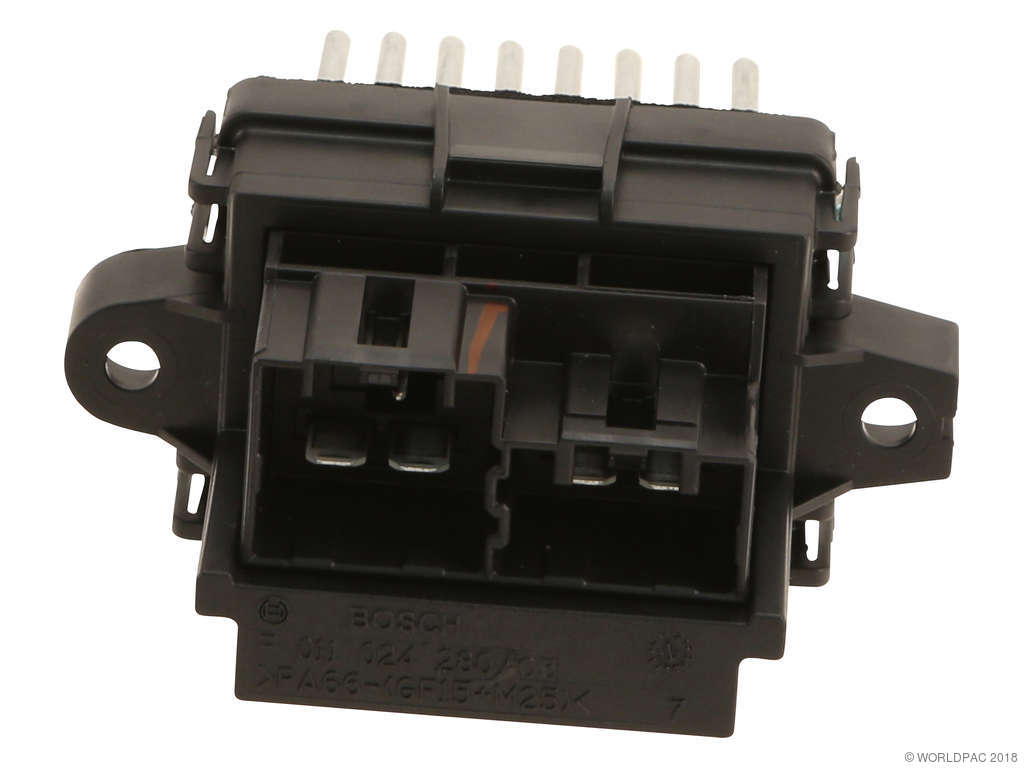
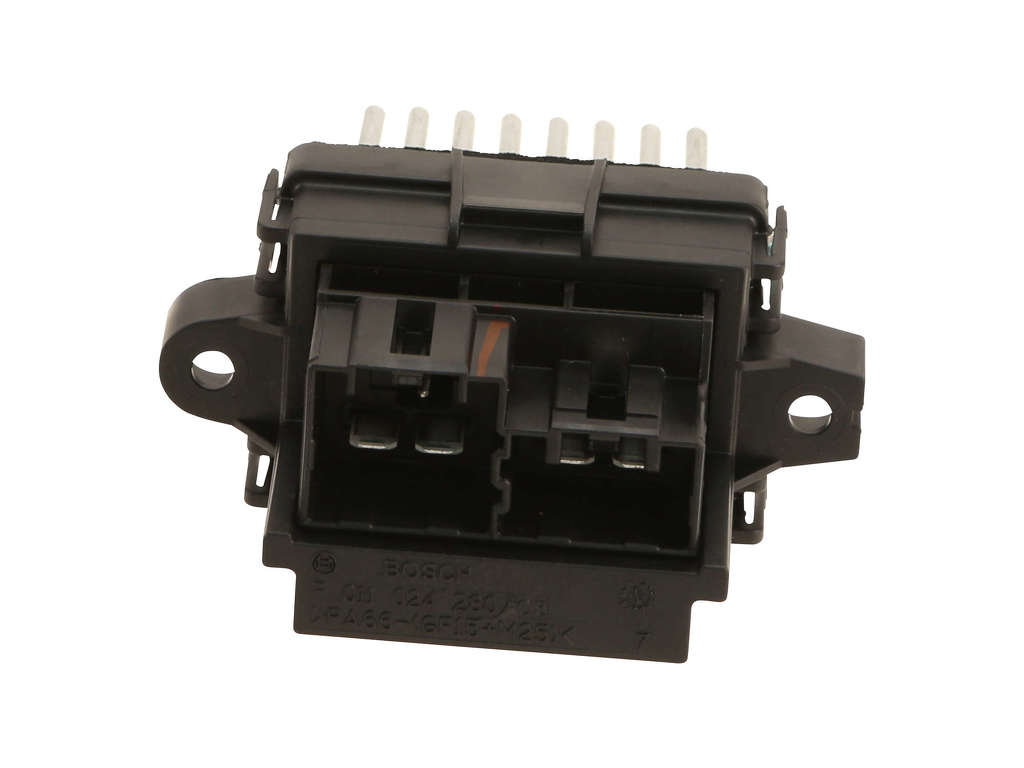
Est. part cost: $0 - Faulty Blower Motor Control Module (Resistor) 🟡 Medium Probability → Shop HVAC Resistor This module, which electronically controls the speed of the blower motor, is a common failure point in many vehicles. It can fail from heat and electrical stress over time, leading to a blower that is stuck on high, low, or is completely off.
How to confirm: If reprogramming the ECC module doesn't work, a technician will test for power, ground, and a signal at the module's connector. If power and ground are present but the module doesn't function, it has likely failed.
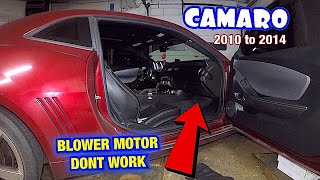
Typical fix: Replace the blower motor control module. It is located in the HVAC housing near the blower motor itself, accessible from under the passenger side dashboard. 🎬 Watch: How to replace the blower motor or resistor yourself.
Est. part cost: $30-$80 - Loose or Corroded Wiring/Connectors ⚪ Low Probability Vibrations can cause connectors to become loose. The original version of the TSB (PIC5965) specifically called for inspecting connectors at the HVAC control module and the radio faceplate before the software fix was identified as the primary solution.
How to confirm: A visual inspection and physical check of the connectors at the main ECC module (near the blower motor) and the radio faceplate is required. A technician may use specific test probes (J-35616-16 and J-35616-64B) to check terminal tension.
Typical fix: Clean and re-seat the connectors. If terminal pins are loose, they may need to be replaced or re-tensioned.
Est. part cost: $0-$25
Rare But Worth Checking
- Failed Blower Motor: While less common than the control module, the motor itself can fail. If it receives power but does not spin, it needs replacement. Sometimes tapping on the motor housing will make it work temporarily, confirming a worn-out motor.
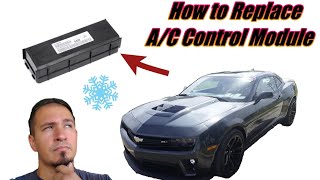
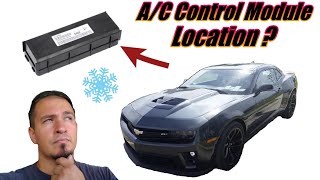
- Failed Electronic Climate Control (ECC) Module: In rare cases, the module itself may have an internal hardware failure that reprogramming cannot fix. If reprogramming fails and all wiring and components test good, the module itself may need to be replaced. 🎬 Watch: Step-by-step guide on how to replace the AC control module. A replacement can cost several hundred dollars plus programming.
Diagnosis Steps
- Scan all vehicle modules with a high-quality OBD-II scanner capable of reading manufacturer-specific codes (B, C, U-codes).
- Confirm that code U1510 is present in the K33 HVAC Control Module (ECC).
- Check for GM Technical Service Bulletin #PIC5965C, which directly addresses this code and its symptoms for vehicles built before February 10, 2015.
- If the TSB applies, the first and primary recommended step is to have a GM dealer or qualified shop reprogram the Electronic Climate Control (ECC) module with the latest software calibration.
- If reprogramming does not resolve the issue, or if the code returns, begin electrical diagnosis.
- Inspect the electrical connectors at the HVAC control module, located near the blower motor under the passenger side dashboard. Ensure they are fully seated and free of corrosion.
- As per the original TSB, also inspect the connectors at the A20 radio faceplate.
- Test for proper power, ground, and LIN bus signal at the blower motor control module (resistor).
- If power and ground are good but the signal is erratic or missing, trace the wiring. If the signal is present but the blower does not respond correctly, the blower motor control module is the likely culprit.
- If all else fails, the main ECC module may have a hardware fault and require replacement.
Parts You'll Likely Need
- Electronic Climate Control Module Reprogramming — This is a service, not a part. It is the most common and officially recommended first step to fix the software glitch that causes code U1510.
OEM price range: $120-$250 - Blower Motor Control Module
(OEM #ACDelco 15-81931)— If a software reprogram doesn't fix the issue, this module (also called a resistor) is the next most likely part to fail, causing loss of fan speed control.
Trusted brands: ACDelco, Dorman, TRQ
OEM price range: $80-$110
Aftermarket price range: $30-$80
Technical Service Bulletins (TSBs) & Recalls
- PIC5965C: Documents the final recommendation to reprogram the ECC module for blower motor/AC concerns and code U1510 for vehicles built before Feb 10, 2015.
- PIC5965B / PIC5965A: Earlier versions of the bulletin also recommending an ECC module reprogram for inoperative or unchangeable blower motor speeds. [31, 33, ⭐ MANUFACTURER TSB — highest authority] Bulletin #PIC5965B (2014 ELECTRICAL SYSTEM, dated 2015-03-10)
- PIC5965: The original bulletin identifying the link between various HVAC issues and code U1510, initially suggesting wiring checks at the HVAC module and radio faceplate. [17, 20, ⭐ MANUFACTURER TSB — highest authority] Bulletin #PIC5965 (2014 ENGINE AND ENGINE COOLING, dated 2014-02-19),
- PIT5383B: A related TSB for other 2015 GM vehicles (including Cadillac ATS) that lists U1510 as one of many HVAC-related codes fixed by reprogramming the K33 HVAC Control Module.
Platform-Specific Known Issues
- A known software bug in the Electronic Climate Control (ECC) module is the primary cause for this code and the associated HVAC symptoms on 2014-2015 models, as documented by GM in TSB PIC5965C. [⭐ MANUFACTURER TSB — highest authority] Bulletin #PIC5965C (2014 ELECTRICAL SYSTEM, dated 2015-05-28)
- Owners on forums report intermittent failure where the HVAC controls are completely dead, but may start working again after shutting the car off and restarting. This intermittent nature is a strong indicator of the software glitch.
- The evolution of the TSB from PIC5965 to PIC5965C shows GM's diagnostic process. Initial advice was to check wiring, but later updates confirmed a reprogram was the definitive fix.
Mechanic-Grade Diagnostic Values
- LIN Bus Voltage (at K33 HVAC Control Module) — expected: A toggling/fluctuating voltage with a peak near battery voltage (~12V) and a minimum near 1V. This requires a multimeter with a fast (1ms) peak min/max setting or an oscilloscope.. Failure: A steady, non-fluctuating voltage near 12V indicates no communication is occurring. A steady 0V indicates a short to ground. A steady voltage equal to battery voltage can indicate a short to power.
Scan Tool Commands That Help
- GM GDS2 (Global Diagnostic System 2): K33 HVAC Control Module: Programming and Setup — This is the specific service function required to perform the software update recommended by TSB PIC5965C to fix the root cause of the U1510 code. A stable battery voltage must be maintained during this procedure.
Wiring & Ground Locations
- K33 HVAC Control Module Connectors — Located next to the blower motor, accessible from under the passenger side of the dashboard.. The original TSB (PIC5965) recommended checking these connectors for being fully seated and for proper terminal tension before the software fix was identified as the primary solution. A poor connection here can directly cause the U1510 code.
- G202 / G203 — G202 is located under the right front of the center console. G203 is under the left front of the center console.. These are the primary ground points for the HVAC control module. A poor ground at these locations can cause erratic behavior or a loss of communication, setting a U1510 code.
- A20 Radio/HVAC Controls Connectors — Located behind the radio faceplate in the center dash.. The U1510 code specifically denotes a loss of communication between the K33 HVAC module and the A20 Radio/HVAC controls. A poor connection at the radio end of the LIN bus can also trigger this fault.
OEM Part Supersession History
ACDelco 15-81931 (Blower Motor Control Module)→GM 84178783— Standard part number update/revision.
Heads up: The new part number is the direct replacement for the original.
Model Year Variations Within This Range
- 2014 vs 2015: The A/C Control Module (the main unit in the dash) may have different part numbers. For example, one source lists part #15-74503 for 2014 models and #15-74504 for 2015 models. While the U1510 TSB applies to both, using the correct year-specific hardware is critical if replacement is necessary.
- Vehicles built after Feb 10, 2015: Vehicles built after this date should already have the updated Electronic Climate Control (ECC) module software from the factory, making the software glitch a much less likely cause for the U1510 code. Diagnosis on these later models should focus more on wiring and hardware.
Helpful Videos
We Have This Part in Stock

The information in this article is provided for general reference and educational purposes only. Vehicle specifications, procedures, and part compatibility can vary by production date, trim level, and region. Always consult your vehicle's factory service manual and verify part numbers before purchasing or performing repairs. Safety-critical components such as airbags, seat belts, and braking systems should be installed by a qualified professional.
- Chevrolet CAMARO:
- 🧭 Diagnostic Flowchart
- 🎬 Helpful Videos
- 🛍️ Shop This Part
- What's Unique About the 2014-2015 Chevrolet CAMARO
- Symptoms You May Notice
- Most Likely Causes
- Rare But Worth Checking
- Diagnosis Steps
- Parts You'll Likely Need
- Technical Service Bulletins (TSBs) & Recalls
- Platform-Specific Known Issues
- Mechanic-Grade Diagnostic Values
- Scan Tool Commands That Help
- Wiring & Ground Locations
- OEM Part Supersession History
- Model Year Variations Within This Range
- 🎟️ Get 5% Off